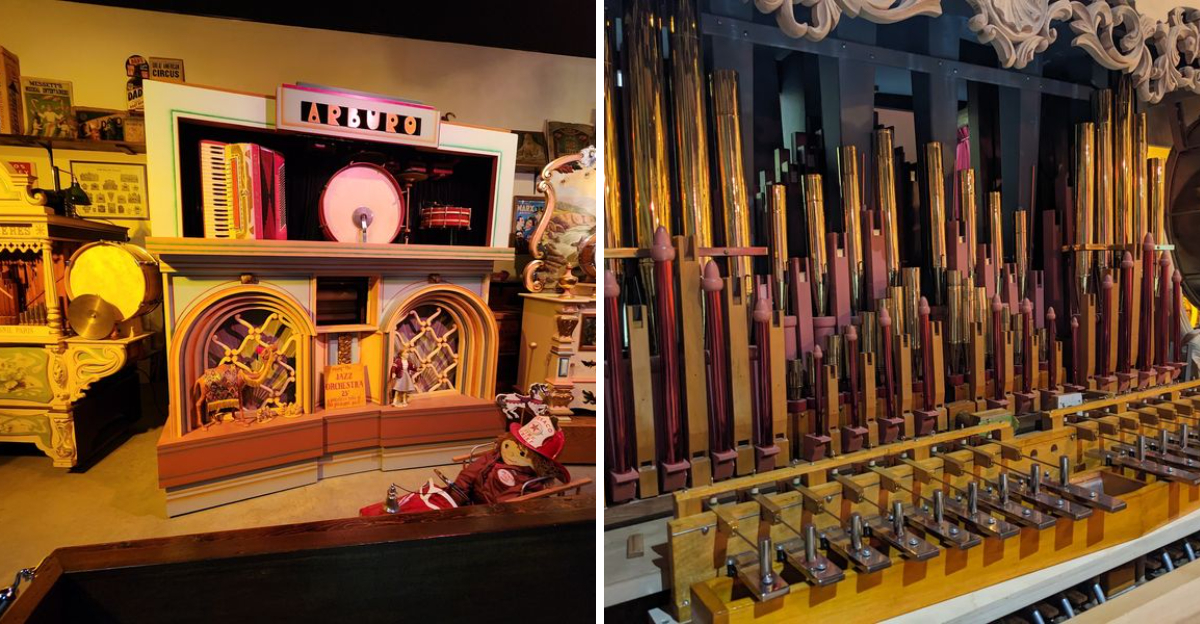
The piano is playing. Nobody is touching it.
Then a drum starts banging. A pipe organ joins in.
Suddenly, the quiet warehouse sounds like the world’s strangest concert hall. Inside this Indiana curiosity, enormous organs, self-playing pianos, drums, and mechanical marvels spring to life.
Gears turn. Pipes sing.
Levers move. Some machines once entertained crowds at European carousels and dance halls.
Then they vanished into storage for decades. Dr. Ted Waflart found them, restored them, and got them playing again.
Now the machines are polished, tuned, and ready for their next performance. It is a museum where the exhibits make the noise, move on their own, and absolutely do not need anyone to press play.
A Warehouse That Turns Into A Concert Hall
The parking lot gives no hint of what waits inside. There is a sign, a stretch of gravel, and not much else.
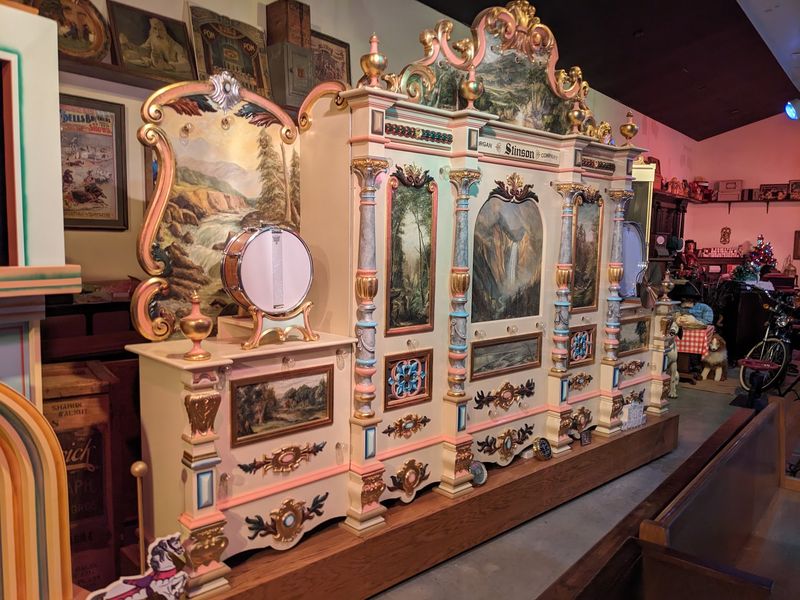
Then the door opens and the whole mood shifts. Ornate wooden facades line the walls, carved and gilded, some standing taller than a doorway and wider than a car.
Chairs are set out facing the instruments, which is the first clue that this is not a museum built around glass cases and quiet whispers.
Everything here is meant to be heard. Machines dating from the 1800s through the mid 1900s sit shoulder to shoulder, and when one of them fires up, the sound fills the room in a way recordings never quite capture.
Bellows breathe. Pipework hums.
Wooden cases vibrate slightly as air pushes through hundreds of channels.
Visitors often describe the experience as a private concert rather than a tour, and that description fits. The acoustics of a big open warehouse actually work in favor of these instruments, since most were originally built to be heard outdoors over crowds and carnival noise.
Sit near the middle of the room if given the choice. That spot catches the layered sound of pipes, percussion, and reeds all working together, which is exactly how audiences a century ago would have heard it.
The Man Behind The Machines And His 1907 Starting Point
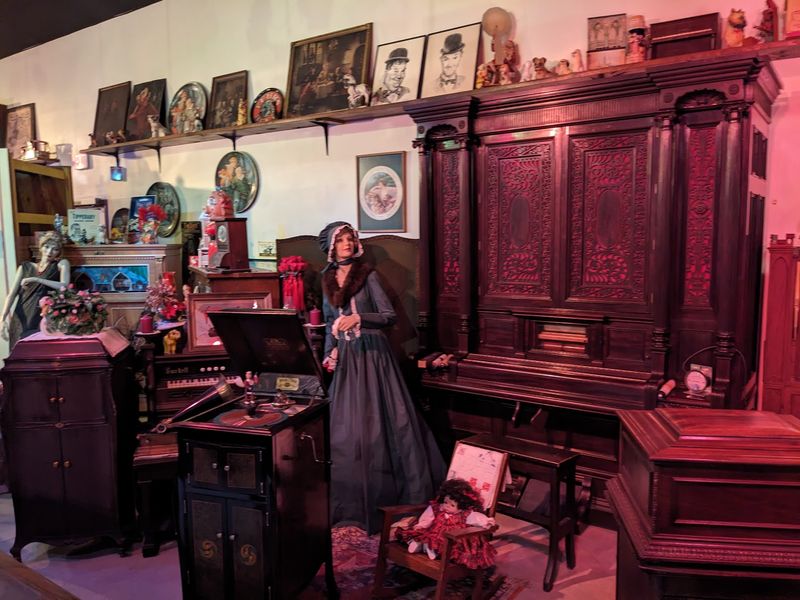
Every collection has an origin story, and this one begins in 1973 with a French fairground organ built in 1907. Dr. Ted Waflart bought it, took it apart, and put it back together in working order.
That single restoration set the course for decades of collecting. Trained first as a mechanical engineer and later as a physician, he brought an unusual combination of skills to the hobby, comfortable with both delicate precision work and stubborn mechanical problems.
Much of the collection came from travels through Europe, visits to aging amusement parks, and long-running friendships with collectors scattered around the world. Some pieces arrived complete.
Others showed up as sad shells missing crucial parts.
One Gavioli street organ needed its ornate carvings recreated from scratch, so European woodcarvers were commissioned to reproduce the details using historical photographs as reference. That level of research is normal here rather than exceptional.
Restoration work on a single machine can stretch across years, involving hand-cut leather, rebuilt valves, retuned pipes, and endless patient adjustment. What makes the collection compelling is not just its size but the fact that nearly everything still functions.
Ask about a specific instrument during the tour. The stories about how each one was found and repaired are often just as interesting as the music itself.
Fairground Organs Loud Enough To Fill A Carnival
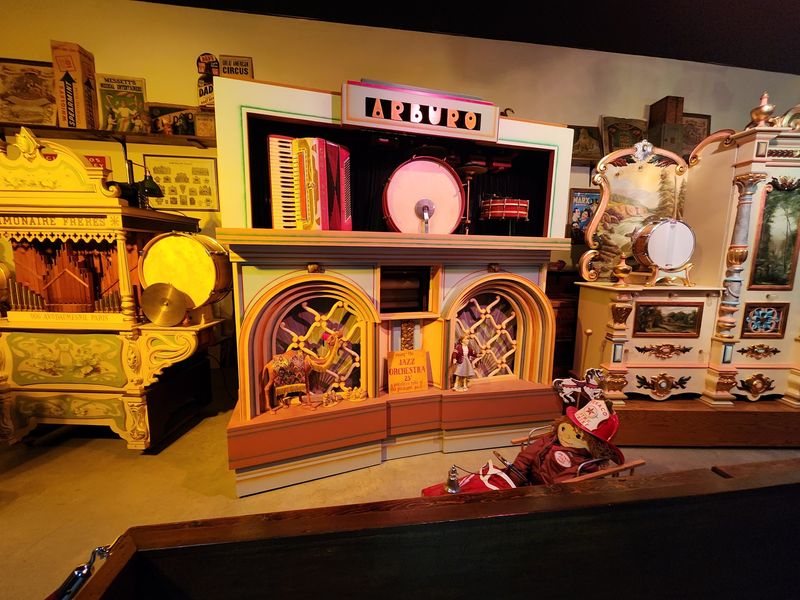
Now for the giants. The fairground and dance organs in this collection were built to overpower crowd noise, carousel machinery, and open air, which means they do not exactly whisper indoors.
A Wurlitzer organ built for merry-go-rounds in the early 1900s sits alongside three vintage carousel horses, and the pairing does a lot of imaginative heavy lifting. That instrument spent thirty years sitting in a warehouse before the Stinson Organ Company spent roughly a decade restoring it to playing condition.
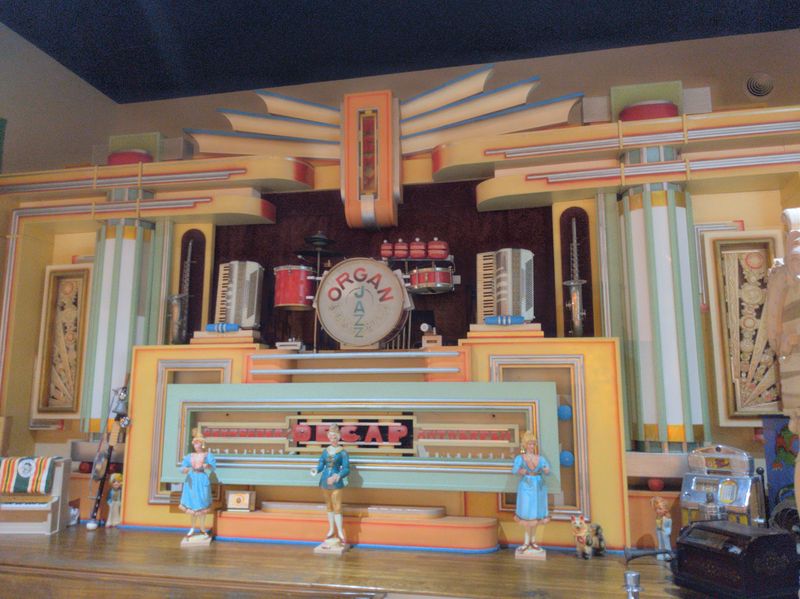
Then there is the Decap Belgian Dance Organ, a monster measuring about twelve feet by twenty-four feet and packing 535 pipes. Somehow, machines like that were once loaded up and hauled from town to town for dances.
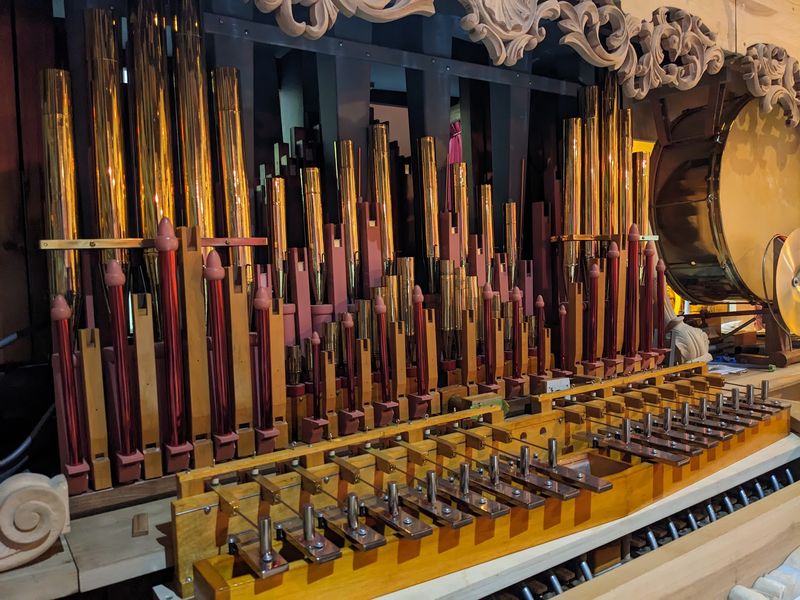
The Limonaire organ, made by the Limonaire Brothers in France, runs on what is called book music. Folded cardboard books punched with holes feed through the machine as it plays, and watching the paper march along is oddly hypnotizing.
Bellows expand. Accordion fronts fan open.
Drums and cymbals join in on cue.
Standing close to one of these while it plays is a full-body experience, not just a listening one. The floor carries the low notes, and the brighter pipes cut straight through, which explains how a single machine once kept an entire dance floor moving.
Nickelodeons, Player Pianos And The Jukebox Before Jukeboxes
Not everything here is enormous. Tucked among the towering organs are smaller machines that once brought music into parlors, taverns, and neighborhood gathering spots.
The Seeburg KT Special, built in Chicago around 1925, is a standout. It plays piano while working a drum, cymbals, a tambourine, and a triangle, with lights flashing along in time.
A one-machine band, essentially, and the direct ancestor of the jukebox.
Player pianos in the collection read perforated paper rolls, translating punched holes into full performances complete with expression and timing. Watching keys press down with nobody sitting on the bench never stops feeling slightly uncanny.
Smaller still is an eighteenth century serinette, a compact music box originally made to teach pet songbirds specific tunes. Yes, that was a real thing people did, and yes, it is a wonderful piece of trivia to carry home.
These pieces tell a different story than the big organs. Before electricity, radio, and recorded sound, this was how ordinary people heard music on demand.
The engineering is delicate. Tiny pins, brass combs, and rotating cylinders produce melodies with almost no volume at all, which makes for a nice contrast after the fairground giants have finished shaking the rafters.
Lean in close for these, since the details reward a careful look.
Antique Irons, Funhouse Mirrors And Other Odd Discoveries
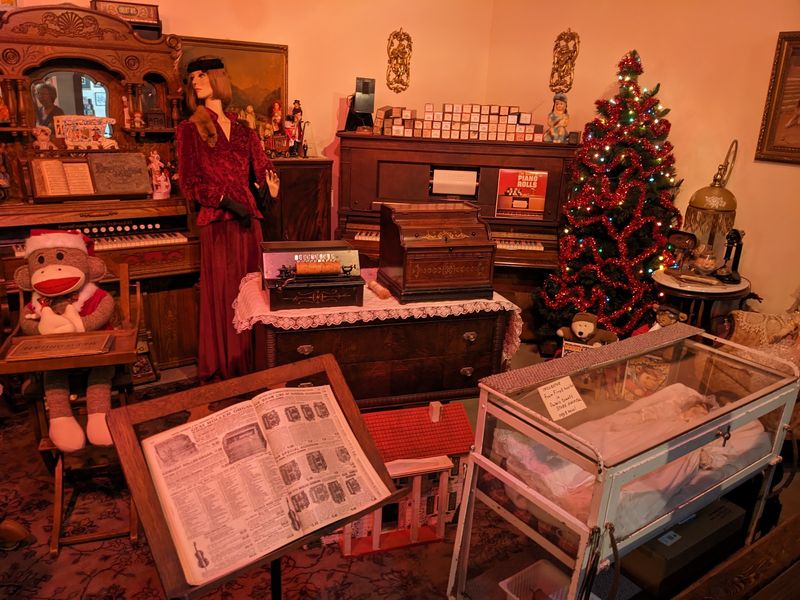
Music may be the headline act, but the supporting cast deserves attention too. Shelves and corners throughout the building hold collections that have nothing to do with pipes or piano rolls.
Rows of antique irons show how much work went into pressing a shirt before electricity showed up. Heavy, solid, and heated on a stove, they make modern laundry day look downright luxurious.
A set of funhouse mirrors adds a burst of silliness right in the middle of all that history. Stretched reflections and squashed proportions get a laugh out of just about everyone, and they echo the carnival spirit that runs through the organ collection.
Antique medical oddities appear as well, which makes sense given the collector’s background as a physician. Old instruments and devices sit in display cases, a reminder that medicine has come an enormous distance in a century.
Household items from generations past round things out, everything from kitchen tools to décor that once seemed perfectly ordinary. The mix feels less like a curated exhibit and more like a very well organized attic belonging to someone with excellent taste and serious patience.
Budget a little extra time to browse. The music will pull attention first, but the small stuff scattered around the room is half the charm of the visit.
Tours That Come With The Collector Himself
Booking matters here, and knowing that ahead of time saves a wasted drive. The museum operates by appointment, primarily hosting groups of fifteen or more, so calling in advance is essential rather than optional.
Tours generally run about an hour and a half. Guests are seated rather than shuffled along, and instruments are played one after another, which turns the visit into something closer to a performance with commentary.
Dr. Ted Waflart or his wife Mary Kay often lead these tours personally. Hearing about a machine’s history and restoration from the people who did the work adds a layer no plaque could match.
Cymbals crash. Accordion bellows fan open.
Keys move on their own while the group watches from a few feet away.
Details come out along the way, such as where a particular organ was discovered, what parts had to be rebuilt, and how long the whole process took. The technical explanations stay understandable, which is a real skill when the subject involves valves, tracker bars, and pneumatics.
Bus groups and clubs are a natural fit for this kind of visit. Smaller parties should call ahead and ask, since the schedule depends entirely on appointments rather than posted daily hours.
Phone: +1 812-937-4250 for arrangements.
Why These Machines Still Matter
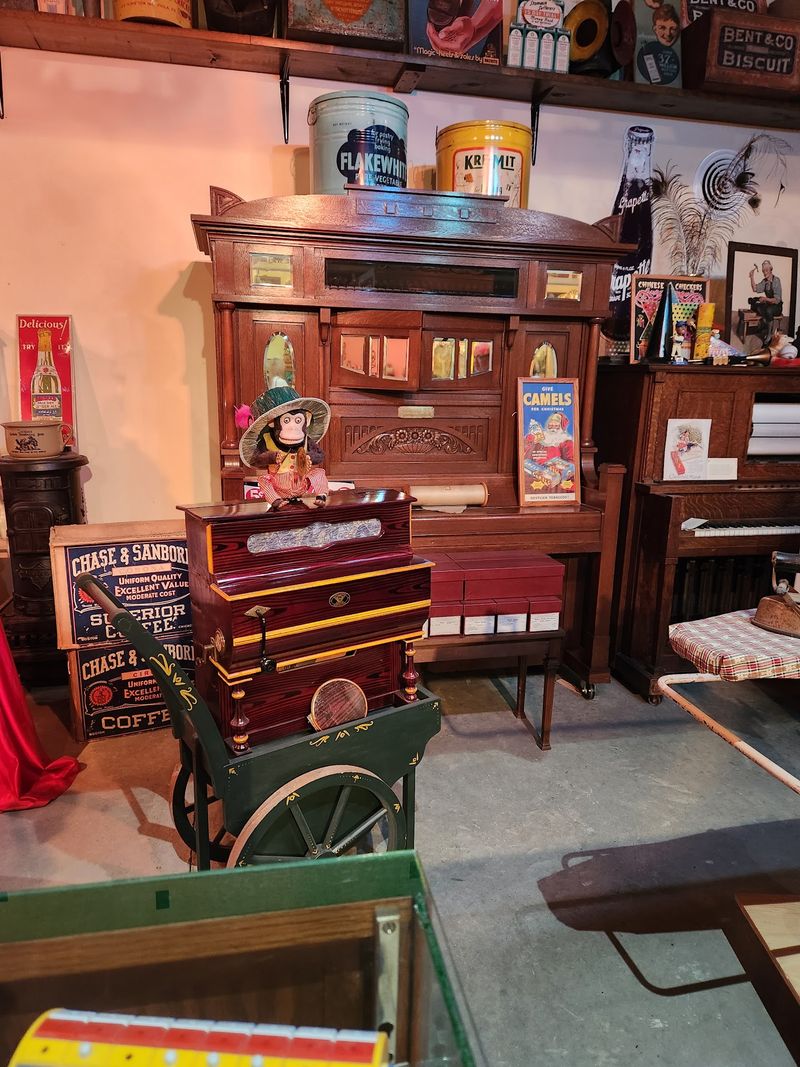
Strip away the gilded carvings and what remains is early automation. Perforated paper, punched cardboard, and pinned cylinders were storing and replaying information long before anyone typed a line of computer code.
That connection is part of what makes the collection worth a detour. These instruments sit at the crossroads of engineering and art, built by people solving a genuinely hard problem, namely how to make music happen without a musician present.
Preservation is the other half of the story. Machines like these fall apart quietly when nobody maintains them, and once the knowledge of how to repair them disappears, it rarely comes back.
Dr. Ted belongs to the Music Box Society International and takes part in yearly organ rallies, tying this Indiana warehouse into a worldwide community of people keeping the craft alive. It is a small field with dedicated members.
For visitors, the takeaway is simple. Hearing an authentic Gavioli or Wurlitzer play the way audiences heard it a hundred years ago is not something a video can replicate.
Southern Indiana is full of pleasant surprises, and this one hides behind a very plain exterior. Call first, bring a group if possible, and give the ears a treat they will not forget.
Address: 11896 South U.S. 231, Dale, Indiana
