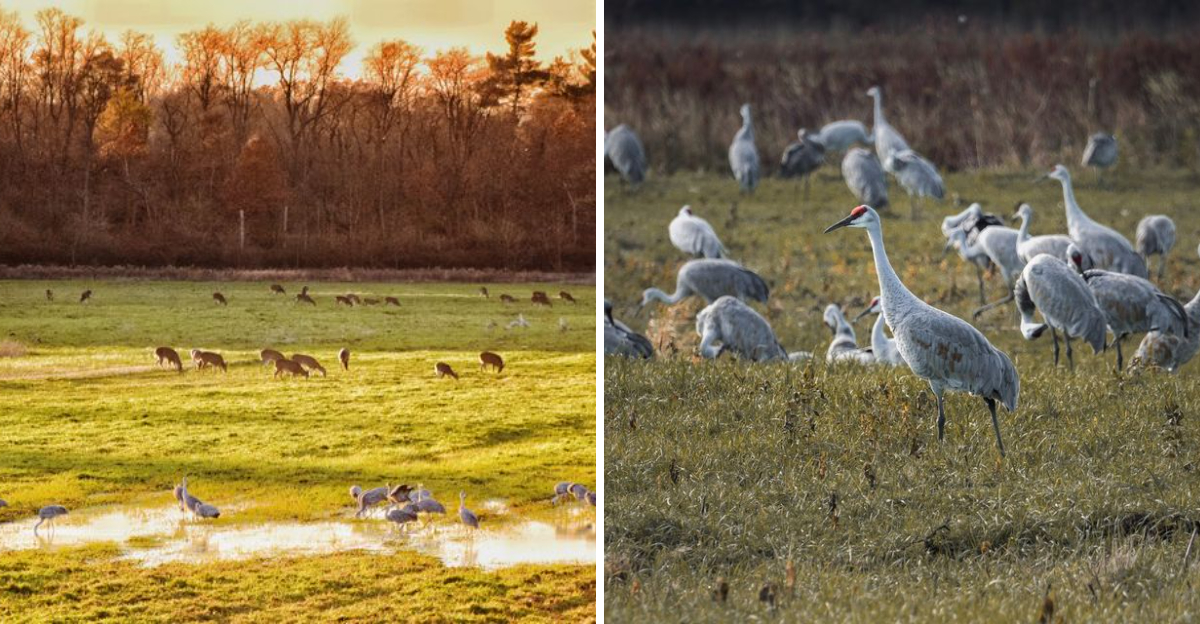
Something almost unbelievable happens in the flat farm fields of northwestern Indiana. Thousands of sandhill cranes gather, filling the sky with wings, bugling calls, and a kind of wild energy that is hard to put into words.
I grew up in the state and had no idea this spectacle was happening just a few hours away. Once I finally made the drive, I understood why people come back year after year, some making it an annual tradition they would never dream of skipping.
Whether you are a lifelong birder, a curious family looking for something different, or just someone who wants to feel genuinely connected to the natural world, this phenomenon delivers in a way that feels both surprising and deeply memorable.
The Sandhill Crane Migration Is One of Nature’s Most Jaw-Dropping Spectacles
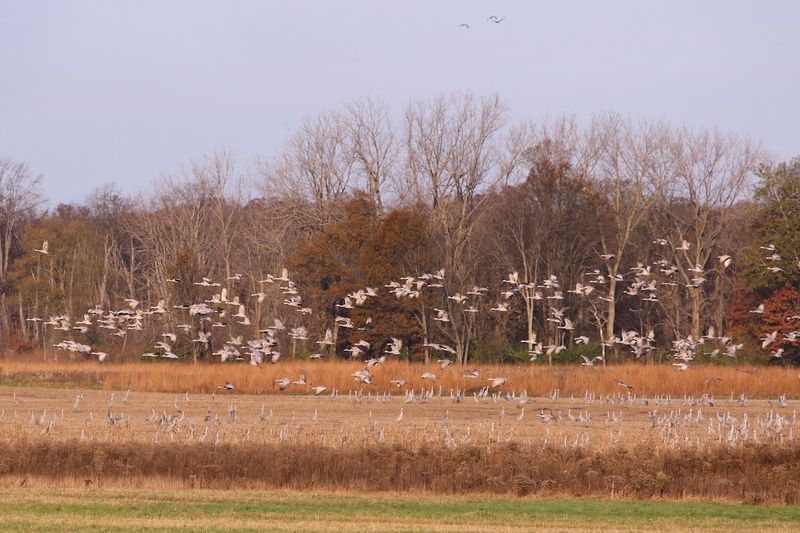
Few wildlife events in the entire Midwest compare to what unfolds at Jasper-Pulaski each fall. Sandhill cranes are ancient birds, part of a lineage that stretches back millions of years, and watching them gather by the thousands feels like stepping into a different era entirely.
The bugling calls they make carry across the open fields and hit you somewhere deep in the chest.
Peak numbers typically occur between late October and mid-November, though cranes begin arriving as early as September. On the best days, estimates have placed the gathering at over 20,000 birds in a single field.
That is not a typo. Standing at the observation platform and watching wave after wave of cranes spiral down from the sky is one of those experiences that genuinely stops time.
Sunrise and sunset are the magic windows. That is when the cranes take flight or come in to roost, and the movement of so many large birds at once creates something that looks almost choreographed.
Bring binoculars if you have them, but even without them, the sheer scale of the gathering means you will see plenty. The free permanent viewing scopes on the platform are solid, too, and they point right toward the fields where the cranes concentrate most heavily.
You Can Watch From Your Car Window On the Surrounding Country Roads
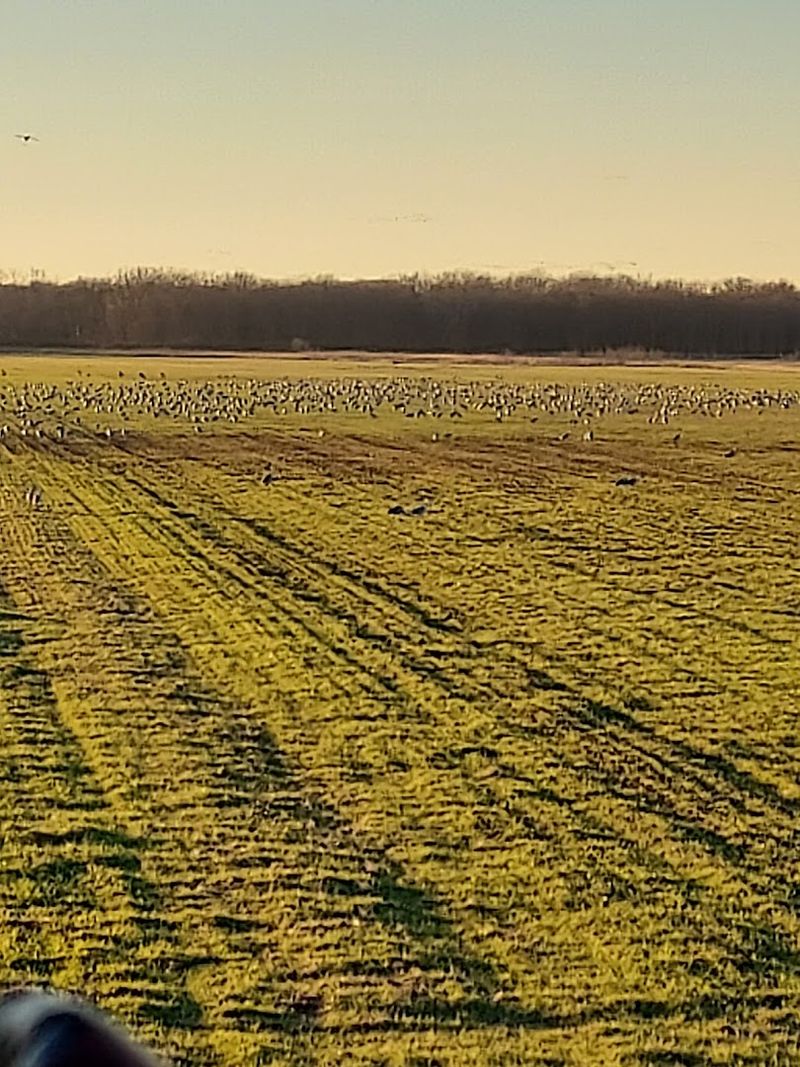
One of the most underrated ways to experience Jasper-Pulaski is something that gets mentioned quietly among regular visitors: drive the country roads that run south of the main viewing area. On those roads, cranes often feed right in the harvested cornfields alongside the pavement, sometimes so close you could roll down your window and practically reach out toward them.
There is something wonderfully low-key about sitting in a warm car on a cool October morning, coffee in hand, watching a group of cranes pace through a field just a few yards away. No hiking required.
No complicated gear. Just you, the road, and a prehistoric bird going about its business like you are barely there.
Some visitors have had to stop their cars and wait patiently while cranes crossed the road in front of them, which sounds inconvenient but is actually one of the best moments the area offers.
The roads around Fish and Wildlife Lane and the surrounding township roads give you a relaxed, personal encounter with the birds that the main platform sometimes cannot match. You lose the aerial view but gain proximity and quiet.
For families with young kids who might not stand patiently on a platform, or for anyone with mobility considerations, the car window approach is genuinely ideal. It is accessible, free, and completely unforgettable once the cranes are in the fields in full force.
The Elevated Observation Platform Offers Sweeping Views Over the Fields
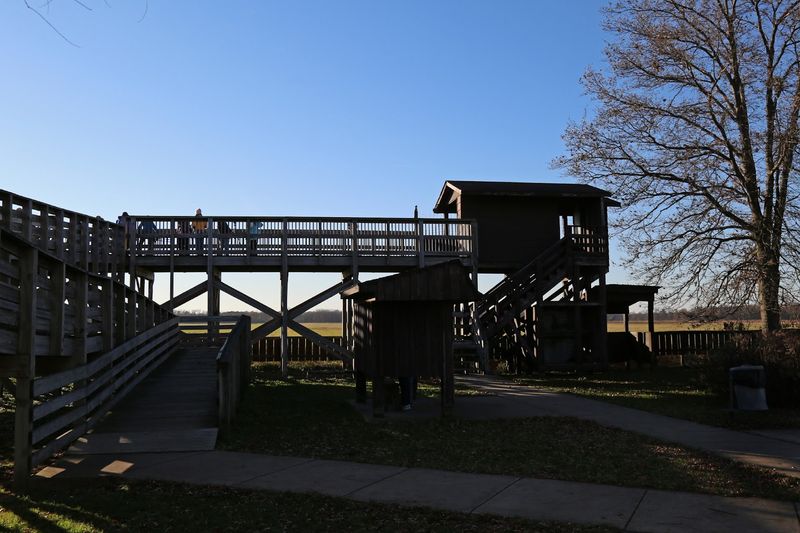
The viewing platform at Jasper-Pulaski is the heart of the crane-watching experience. Built high enough to give you a genuine aerial perspective over the surrounding wetlands and fields, it puts you at just the right angle to watch cranes land, take off, and mill around in enormous groups below.
On a good evening in November, the platform fills with a quiet crowd of people all facing the same direction, waiting for the show.
Getting up there is easy. There is both a staircase and an accessibility ramp, so the platform works for visitors of all physical abilities.
Free permanent binocular scopes are mounted along the railing, giving everyone a chance to zoom in on distant birds without needing their own equipment. A small covered section provides some shelter if the weather turns while you are up there, which in late fall Indiana is a real possibility.
Along the short paved trail leading from the main parking lot to the platform, you will find quiz questions about sandhill cranes posted on signs, with the answers revealed on a bulletin board at the end. It is a clever little educational touch that keeps kids engaged on the walk in.
The whole setup feels thoughtful and well-designed, like the people who built it actually wanted visitors to have a great experience rather than just checking a box. For first-timers especially, starting at the platform is the right move.
Timing Your Visit Around Sunrise or Sunset Changes Everything
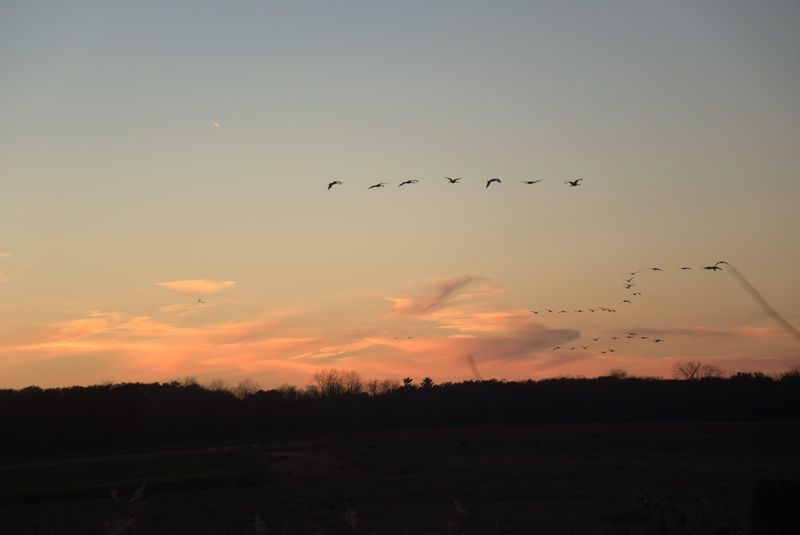
Timing is everything at Jasper-Pulaski. Show up at noon and you might see some cranes scattered across distant fields.
Show up thirty minutes before sunset and you might witness one of the most breathtaking natural events Indiana has to offer. The cranes spend their days feeding in harvested cornfields spread across the surrounding countryside, then pour back into the roost area as the light fades, arriving in wave after wave that can last for over an hour.
Sunrise works the same way in reverse. The birds lift off in large flocks as the morning light builds, filling the sky with movement and sound before dispersing to their feeding grounds.
Both windows offer something slightly different in terms of light and mood. Sunset tends to draw bigger crowds at the platform, while sunrise gives you a quieter, more solitary experience that some visitors actually prefer.
One practical note worth knowing: on bitter cold days, the cranes tend to wait until just fifteen minutes or so before full dark before coming in. So if you arrive an hour early on a freezing November evening and nothing seems to be happening, do not leave.
The wait is always worth it. Dress in serious layers because the platform sits in the open with no windbreak, and a northwest Indiana wind in late October has a way of cutting right through whatever you thought was warm enough.
Patience and preparation pay off enormously here.
Wildlife Variety Goes Well Beyond the Famous Cranes
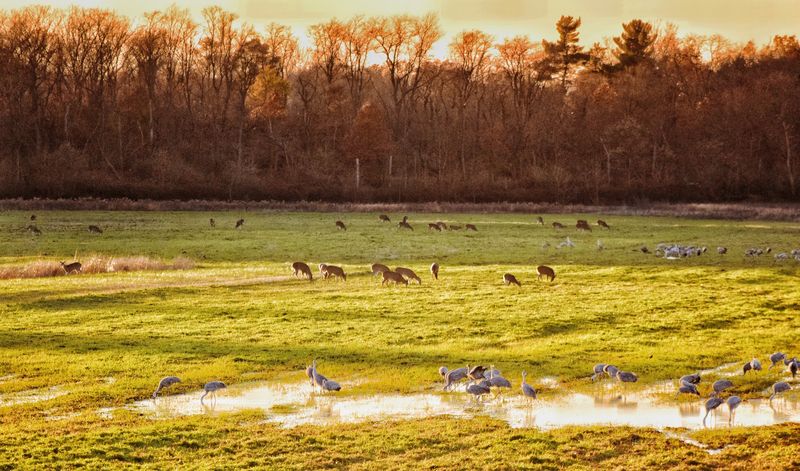
Sandhill cranes get all the headlines, and honestly they deserve them, but Jasper-Pulaski holds a lot more than just cranes. The area spans over 8,000 acres of wetlands, grasslands, and woodlands, creating habitat for an impressive variety of wildlife that rewards patient visitors throughout the year.
White-tailed deer are commonly spotted in the fields, especially during the fall rut when bucks become more active and visible during daylight hours.
Birders who visit outside of crane season find a surprisingly rich list of species to look for. The wetland areas attract waterfowl, shorebirds, and wading birds depending on the season.
Lucky visitors have occasionally spotted rare whooping cranes mixed in among the sandhill flocks during migration, which is a genuinely thrilling find for anyone who knows how critically rare those birds are. Keeping your binoculars ready and scanning carefully through the sandhill flocks is always worthwhile.
Beyond birds and deer, the property supports healthy populations of wild turkey, various raptors, and the usual cast of Indiana woodland creatures. Hunting and fishing are both permitted on the property under proper licensing, and the shooting range on site draws its own regular crowd of visitors.
The diversity of activities available means Jasper-Pulaski functions as a genuine multi-use wildlife area rather than a single-purpose destination. Whatever brought you out in the first place, there is usually something extra to discover once you start paying attention to everything around you.
Accessibility and Amenities Make It Welcoming for All Visitors
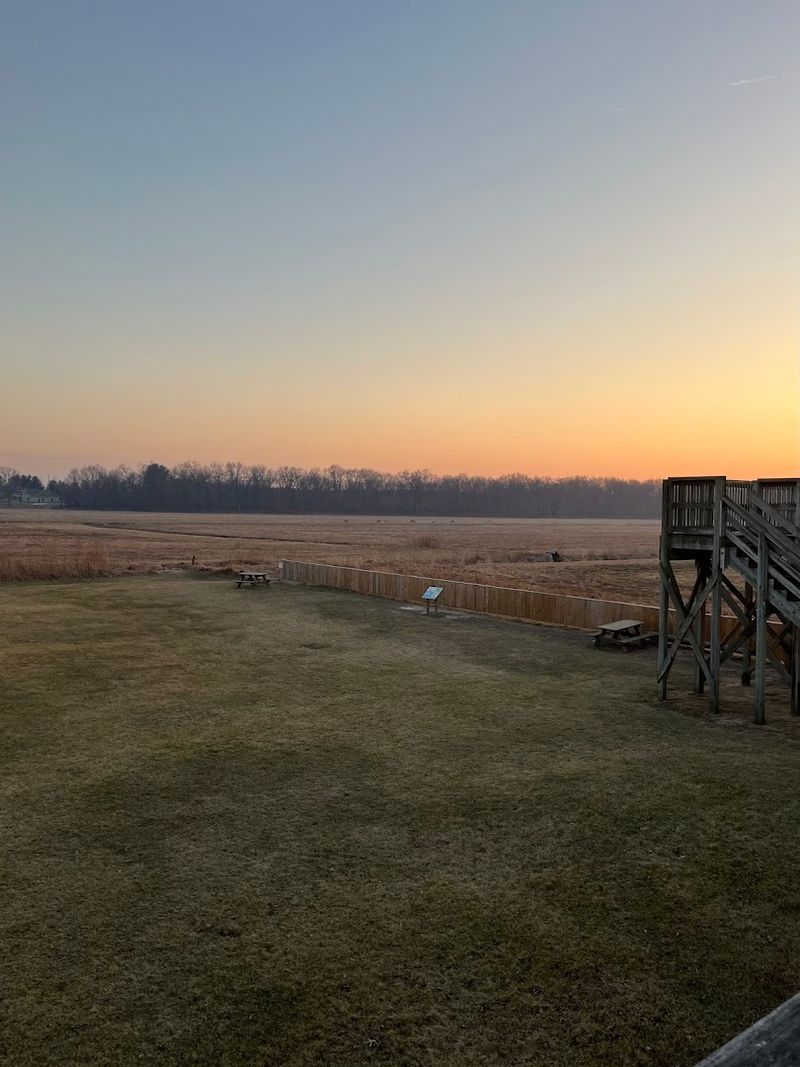
One thing that genuinely impresses me about Jasper-Pulaski is how much thought has gone into making the experience work for a wide range of visitors. The main observation area includes a paved parking lot, a paved trail to the platform, and both stairs and an accessibility ramp to reach the viewing deck.
That kind of practical design makes a real difference for families with strollers, older visitors, or anyone with mobility limitations who wants to be part of the crane-watching experience.
Restroom facilities are available at the main parking lot near the entrance, and porta-potties are set up closer to the crane viewing area during peak migration season. Handicap-accessible parking is located right next to the viewing area for those who need it.
The informational booth near the platform provides context about crane biology, migration patterns, and the ecological importance of the area, which adds genuine depth to the visit beyond just watching birds.
The property is open 24 hours a day, seven days a week, which means you can plan your visit entirely around the best viewing windows without worrying about gates or closing times. Admission to the wildlife viewing area is free.
There are no entry fees, no timed tickets, and no reservations required. For a family looking for an affordable and genuinely impressive outing, that combination of accessibility, facilities, and free entry makes Jasper-Pulaski hard to beat anywhere in Indiana.
Nearby Attractions Make It Easy To Build a Full Day Trip
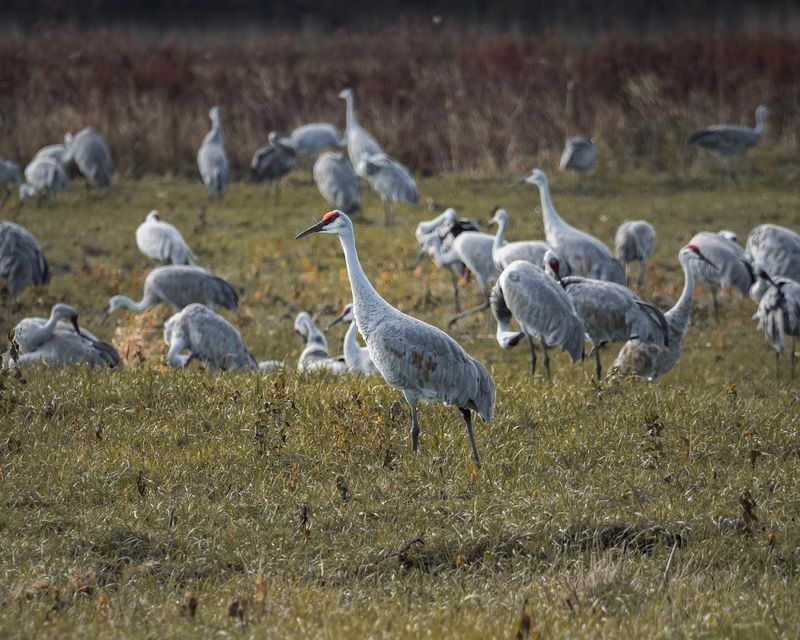
Jasper-Pulaski, located at 5822 Fish and Wildlife Ln, Medaryville, IN 47957, sits in Pulaski County, a part of Indiana that rewards explorers willing to spend a full day rather than just a quick stop. One nearby spot worth adding to your itinerary is Kankakee Sands Nature Preserve, managed by The Nature Conservancy, located to the west and home to a small herd of bison roaming restored prairie.
Watching bison move through tall grass in the same general region as thousands of cranes makes for a genuinely remarkable Indiana wildlife day.
Fair Oaks Farms, located at 856 N 600 E, Fair Oaks, IN 47943, is a popular agricultural attraction about 30 miles southwest that draws visitors for its farm tours and family-friendly programming. If you want something quieter and more local after a morning at the cranes, the Whistle Stop Restaurant near Monon, Indiana, offers a casual meal alongside a train memorabilia museum that has its own quiet charm.
The town of Medaryville itself is small and unhurried, the kind of place that feels genuinely off the tourist track. Bringing your own snacks and drinks for the crane-watching portion of the day is a smart move since food options near the wildlife area are limited.
Planning ahead with a cooler and a packed lunch lets you stay as long as you want without having to cut the visit short. The whole region moves at a slower pace that feels like a genuine break from everyday life.
Dear Reader: This page may contain affiliate links which may earn a commission if you click through and make a purchase. Our independent journalism is not influenced by any advertiser or commercial initiative unless it is clearly marked as sponsored content. As travel products change, please be sure to reconfirm all details and stay up to date with current events to ensure a safe and successful trip.
