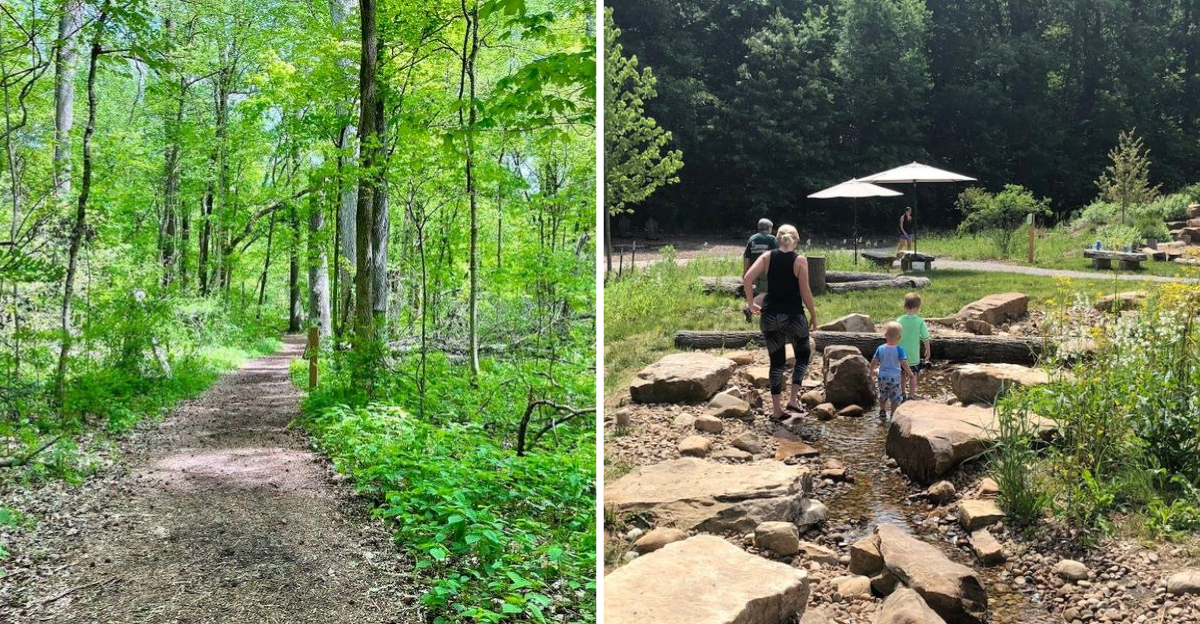
Some trails are for checking a box. Get your steps in.
Snap a photo. Head home.
This is not that kind of place. The paths wind through old growth forest, past trees that have been standing for longer than anyone living here can remember. Oak.
Hickory. Maple.
The kind of woods that feel ancient even if they are not. I heard woodpeckers before I saw them.
Spotted a fox watching me from a ridge. Walked for an hour without passing another person.
That is rare these days. Indiana has plenty of parks, but this preserve feels different.
Slower. Quieter.
Like the woods are doing you a favor by letting you visit.
Ancient Trees That Have Outlived Generations
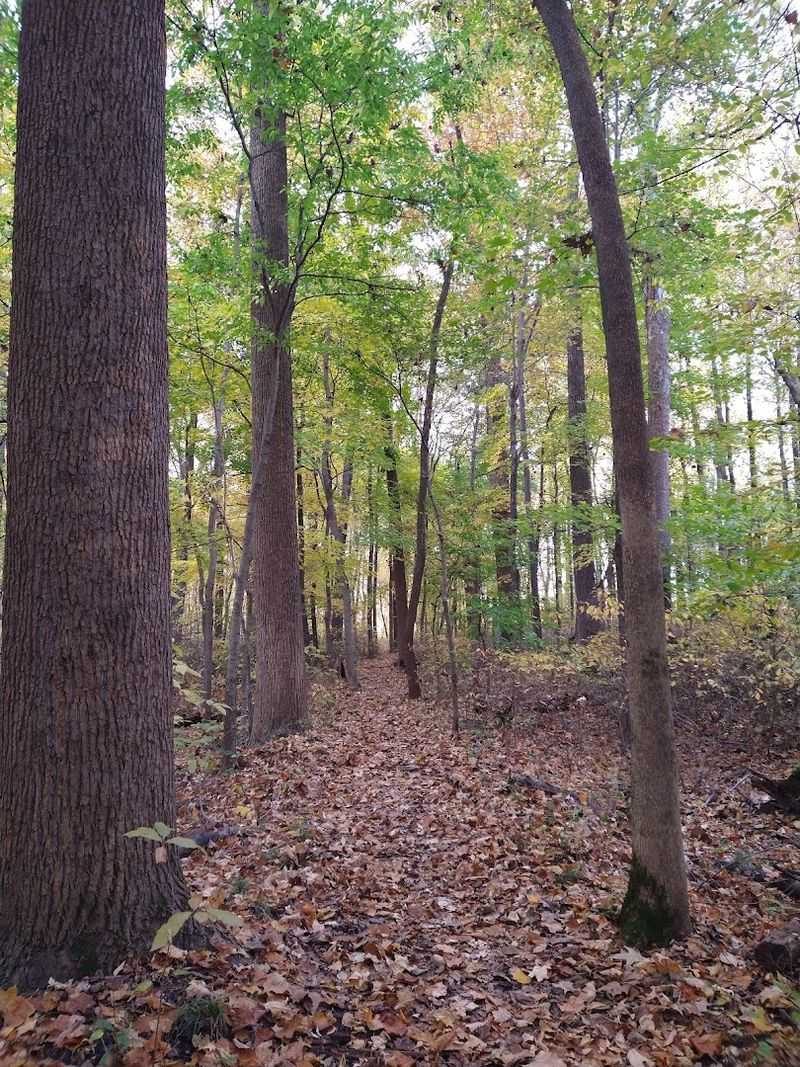
There is something humbling about standing next to a tree that was already old when your great-grandparents were children. Wesselman Woods is home to some of the most impressive old-growth hardwood trees in Indiana, including towering oaks, silver maples, and cottonwoods with trunks so wide it would take two people to wrap their arms around them.
These trees have been growing undisturbed for hundreds of years, which is rare in a state where so much of the original forest has been cleared for agriculture. The canopy they form is thick and layered, creating deep shade even on the brightest summer days.
Walking beneath it feels genuinely cool and quiet in a way that is hard to describe.
Old-growth forests like this one support far more biodiversity than younger woodlands. The decaying logs, hollow trunks, and deep root systems create habitat for insects, fungi, birds, and small mammals that simply cannot survive in replanted forests.
Every fallen tree here is doing important work. The sheer scale of these trees makes every walk feel like a lesson in patience and time.
Wildlife Sightings Around Every Bend
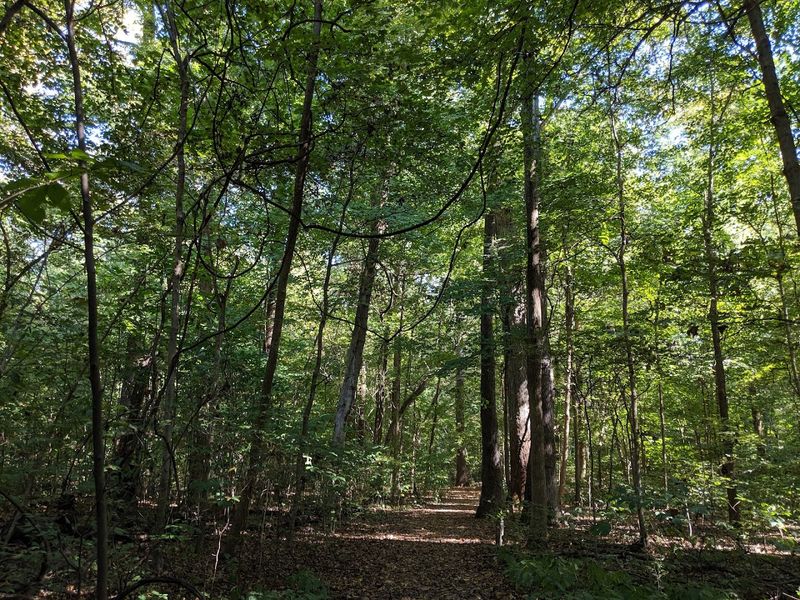
The wildlife at Wesselman Woods does not hide. On a slow morning walk, you might spot a great blue heron wading in the shallow water near the wetland edges, moving with that unhurried, almost regal patience herons seem to carry everywhere they go.
Deer are common here too, often visible near the trail margins at dawn and dusk.
Birders especially love this preserve. Over 200 species of birds have been recorded within the woods, including migratory warblers in spring, red-tailed hawks circling overhead in fall, and barred owls calling through the dark in winter.
Bringing a pair of binoculars is genuinely worth it.
What makes the wildlife experience here feel different from a typical park is the density of the old-growth habitat. The hollow trees, dense understory, and standing water create layered shelter that supports animals year-round rather than seasonally.
You are not just passing through their space. You are visiting a fully functioning ecosystem that has been operating on its own terms for a very long time.
Slow down, stay quiet, and the forest will show you things most people walk right past.
Quiet Trails Built For Unhurried Exploration

Not every trail needs to lead somewhere dramatic to be worth walking. The paths inside Wesselman Woods are gentle, mostly flat, and designed to take you deeper into the forest rather than just around its edges.
There are several miles of interconnected trails, and the layout encourages you to wander rather than rush.
The surface underfoot is natural and soft, packed earth and leaf litter rather than pavement or gravel. That alone changes the whole feel of the walk.
Your footsteps go quiet, the sounds of the city fade, and the only things competing for your attention are birds and wind moving through the upper canopy.
Families with young kids find these trails manageable because the terrain is not challenging. Older visitors and people looking for a meditative pace will appreciate that there is no pressure to keep moving fast.
The trails also connect to the nature center, so you can break up a longer walk with a stop inside to learn more about what you are seeing. Every section of trail feels a little different depending on the light and the season, which is exactly why so many regulars come back week after week.
The Nature Center And What It Teaches You
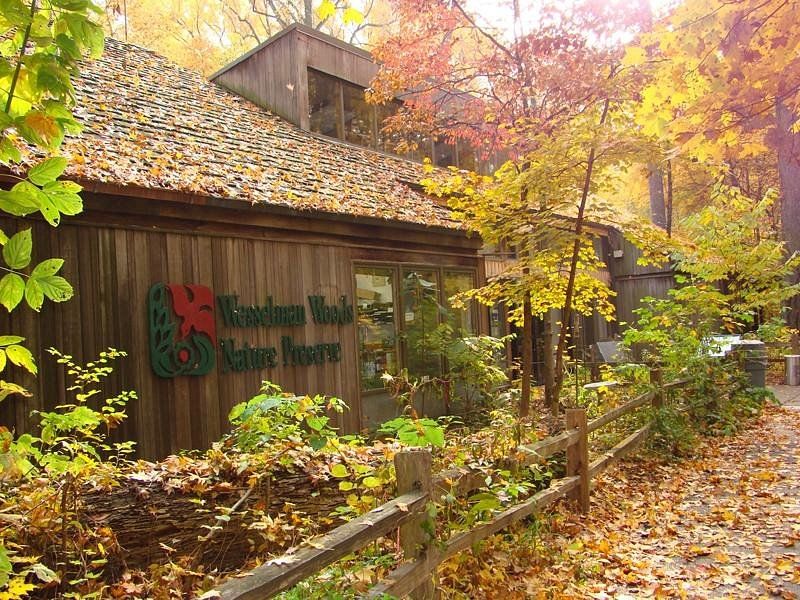
The nature center at Wesselman Woods is a genuinely good place to start your visit, especially if you are bringing kids or if you are new to the forest. The exhibits are hands-on and well put together, covering the ecology of old-growth forests, the animals that live here, and the history of this particular patch of woodland.
What I found most interesting was learning how rare urban old-growth forests actually are. Most cities expanded by clearing land, so the fact that this forest survived inside Evansville is partly luck and partly the result of deliberate conservation effort over many decades.
That context makes the whole place feel more significant once you step outside onto the trails.
The staff and naturalists at the center run programs throughout the year, from guided hikes to school group visits and seasonal nature events. Even if you have been hiking these trails for years, a guided walk with a naturalist changes what you notice.
They point out things most people overlook entirely, a particular lichen pattern, a bird call you could not identify, a tree scar that tells a story. The nature center turns a pleasant walk into something you actually remember.
Native Plants And The Understory Worth Noticing
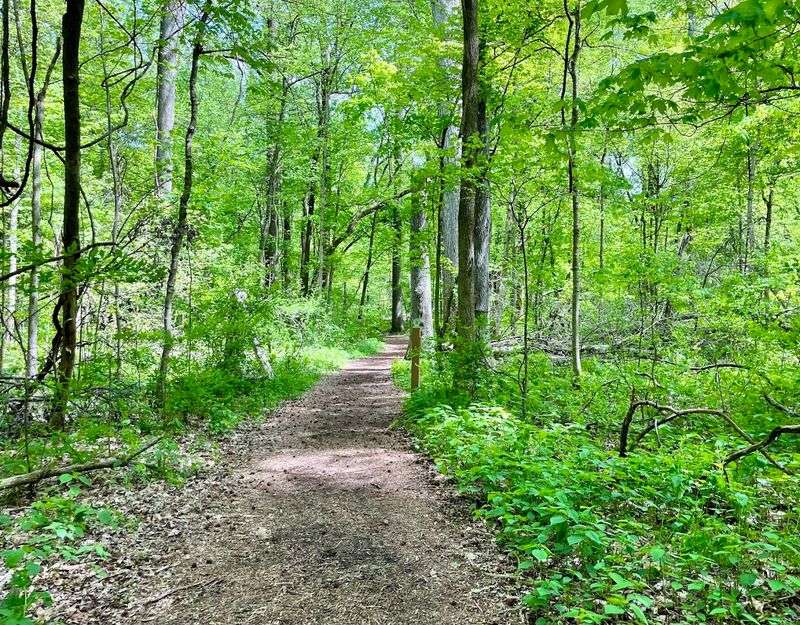
Most people walk through a forest looking up at the big trees, but the real detail is at knee height. Wesselman Woods has a remarkably intact native understory, meaning the plants growing beneath the canopy are the same species that would have been there before European settlement.
That is not something you find in most parks.
Spring is when the understory really performs. Wildflowers like trillium, wild ginger, and Virginia bluebells push up through the leaf litter before the canopy fully leafs out, taking advantage of the brief window of direct sunlight.
The forest floor goes from brown to color in the span of about two weeks, and if you time your visit right, it is genuinely stunning.
Summer brings dense fern growth and the deep green shade of pawpaw thickets, which are native fruit trees that produce a tropical-tasting fruit in late summer. Fall turns the whole understory amber and rust.
Each season layers something new onto the same trail, which is part of why repeat visitors never feel like they are seeing the same forest twice. Paying attention to the plants at ground level completely changes the experience of any walk through these woods.
Wetlands And Water Features Inside The Forest
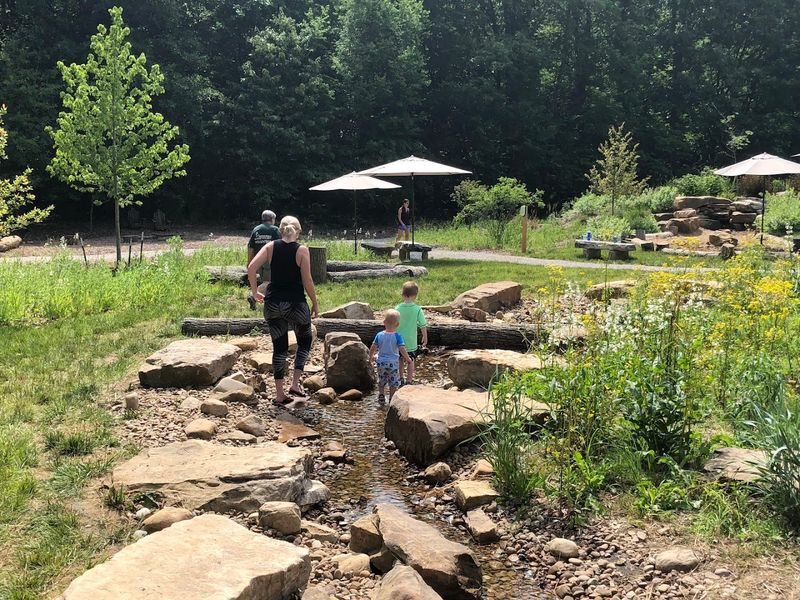
Tucked within the forest are wetland areas that add a completely different texture to the preserve. These low-lying zones collect seasonal water and support species that would not survive in the drier upland sections of the woods.
The transition between forest floor and wetland edge happens gradually, and that gradient is where a lot of the most interesting wildlife activity occurs.
Frogs are loud here in spring, almost absurdly so on warm evenings. The chorus of spring peepers and American toads can be heard from the trails well before you reach the water.
Turtles sun themselves on logs near the water’s edge, and dragonflies patrol the surface in summer with that mechanical precision they always seem to have.
The wetlands also play a practical role in the health of the broader forest. They filter runoff, recharge groundwater, and buffer the trees from drought stress during dry summers.
Old-growth forests and wetlands tend to support each other in ways that take centuries to develop, which is another reason why preserving places like this one matters beyond just recreation. Visiting during or just after a rain is worth it.
The smells alone are reason enough to go.
Why Wesselman Woods Feels Different From Other Parks
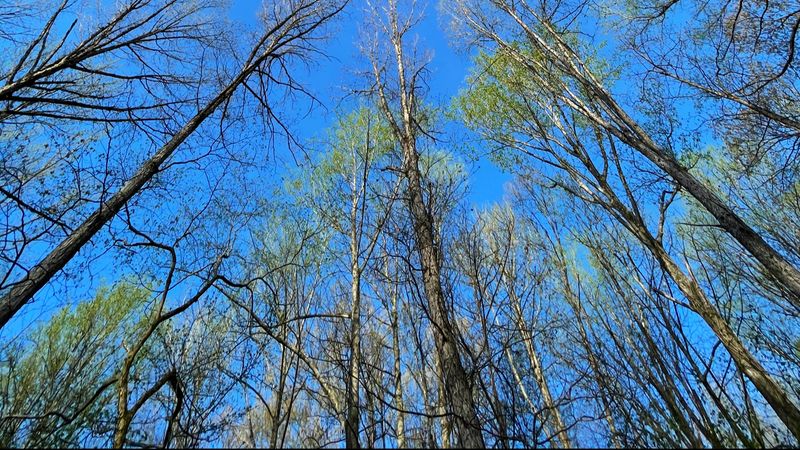
A lot of parks feel like managed green space, mowed edges, maintained paths, and a general sense that humans are firmly in charge. Wesselman Woods does not feel that way.
The age of the trees, the density of the canopy, and the way the forest operates as a complete ecosystem gives it a weight that most parks simply do not have.
Being inside a city makes that contrast even sharper. You can hear traffic faintly from some spots near the perimeter, but twenty steps deeper into the forest and it disappears entirely.
That kind of acoustic shift is surprisingly powerful. It is the same forest it has always been, indifferent to the neighborhood that grew up around it.
For anyone living in or visiting Evansville, Wesselman Woods is the kind of place that rewards repeated visits across all four seasons. It is not a destination you check off a list.
It is a place you return to when you need to slow down and remember what quiet actually sounds like. The trails are open year-round, the wildlife is always doing something worth watching, and the old trees are not going anywhere anytime soon.
Address: 551 N Boeke Rd, Evansville, Indiana.
