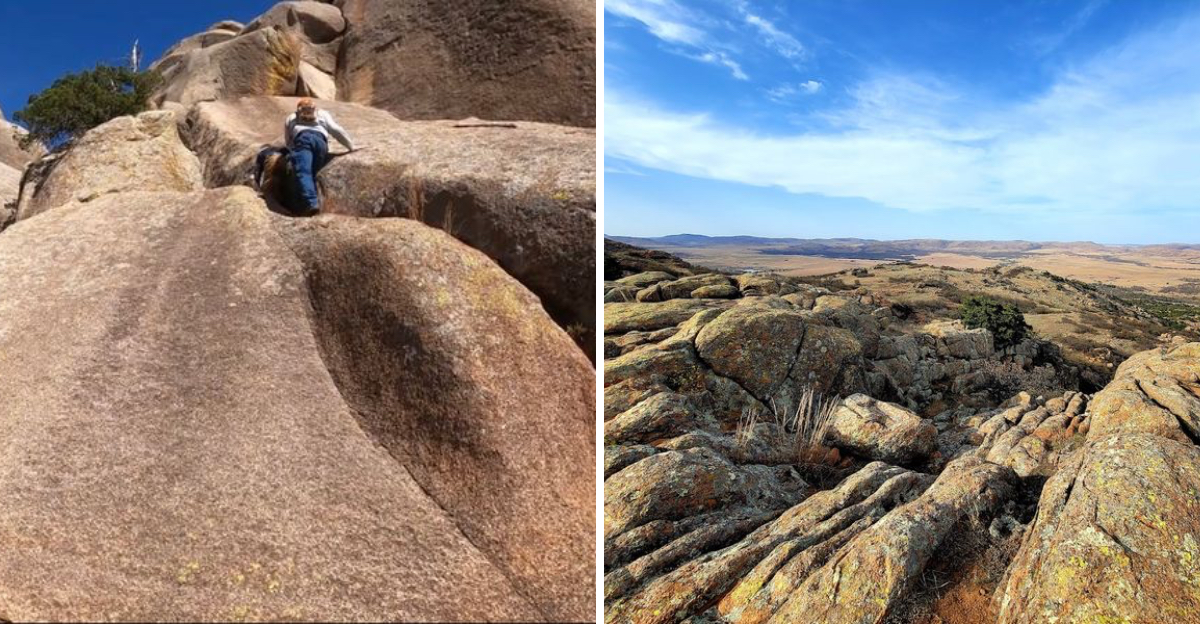
Most people picture Oklahoma as flat, wide-open prairie stretching to the horizon. Then you hike this mountain, and everything you thought you knew gets flipped upside down.
Standing at the summit, surrounded by ancient granite boulders, sweeping canyon views, and wild bison roaming far below, it feels like you accidentally wandered into New Mexico.
Located inside the Wichita Mountains Wildlife Refuge near Lawton, Oklahoma, delivers a jaw-dropping 360-degree panorama that honestly has no business being this dramatic.
If you love the outdoors and have never made this hike, keep reading, because this one is worth every step.
The Ancient Geology Behind the Drama
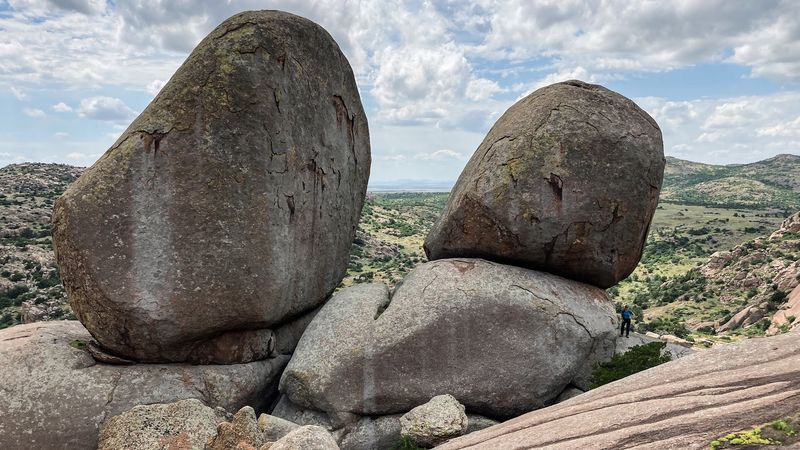
Few mountains in the United States carry a geological resume quite like Elk Mountain. The Wichita Mountains are among the oldest mountain ranges in all of North America, with rocks formed over 500 million years ago.
That is older than most of the major mountain ranges on the continent. Standing on the summit, you are literally touching some of the most ancient exposed granite on Earth.
The rocks here are not your typical smooth, rounded hill stones. They are massive, jagged, and stacked in ways that look almost intentional, like nature was showing off.
Wind and rain have spent hundreds of millions of years carving these formations into smooth, sculpted shapes on the west side of the mountain. The result is a landscape that feels completely out of place compared to the rest of Oklahoma.
Understanding this deep geological history makes the hike feel even more meaningful. Every boulder you scramble over has been sitting there longer than most life forms have existed on the planet, and that kind of perspective is hard to shake once you feel it firsthand.
The Trail Itself Is a Rewarding Challenge
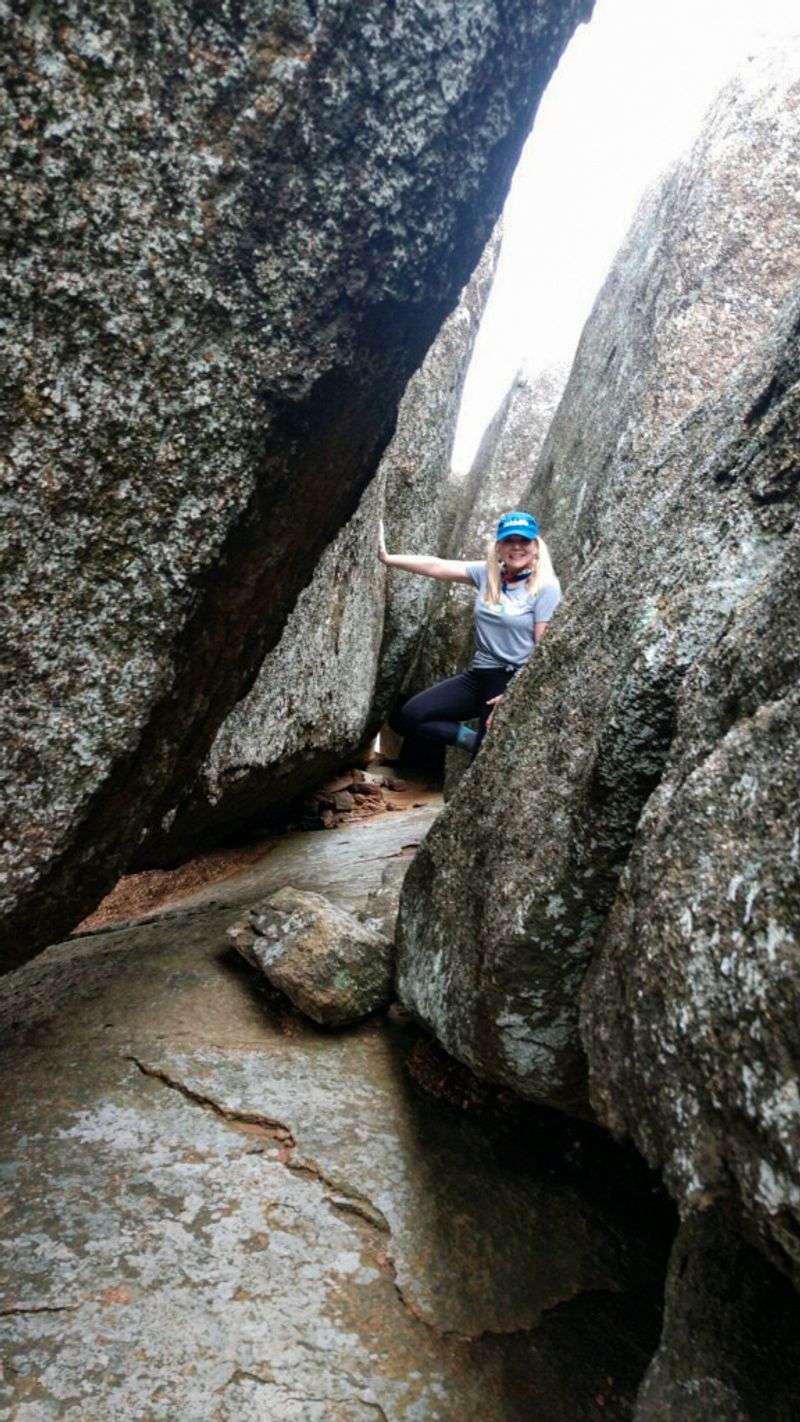
The hike to the top of Elk Mountain covers approximately 2.2 miles round-trip, which sounds easy until you factor in the 561-foot elevation gain packed into that short distance.
The trail starts at the Sunset Pool parking area and wastes no time getting steep. Natural rock staircases carved by years of foot traffic guide you upward through the lower section.
The path is generally easy to follow once you get past the first quarter mile, which can feel a little unclear. An offline map downloaded before you lose cell service at the base is a genuinely smart move.
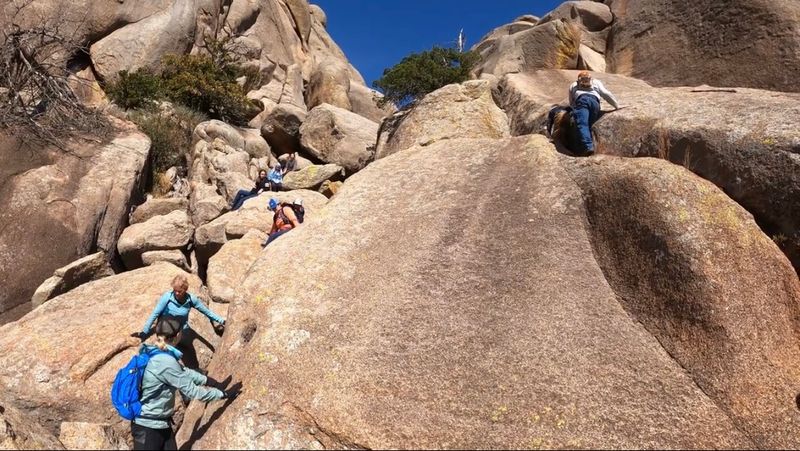
Near the summit, the trail gives way to open granite slabs and minor bouldering sections. Nothing technical, but you will use your hands a few times, and that is part of the fun.
Plan for about 40 minutes to reach the top, and then budget another two to three hours to actually explore the summit area. Rushing this hike would be like driving through a national park without stopping, technically possible, but completely missing the whole point of being there.
What the 360-Degree View Actually Looks Like
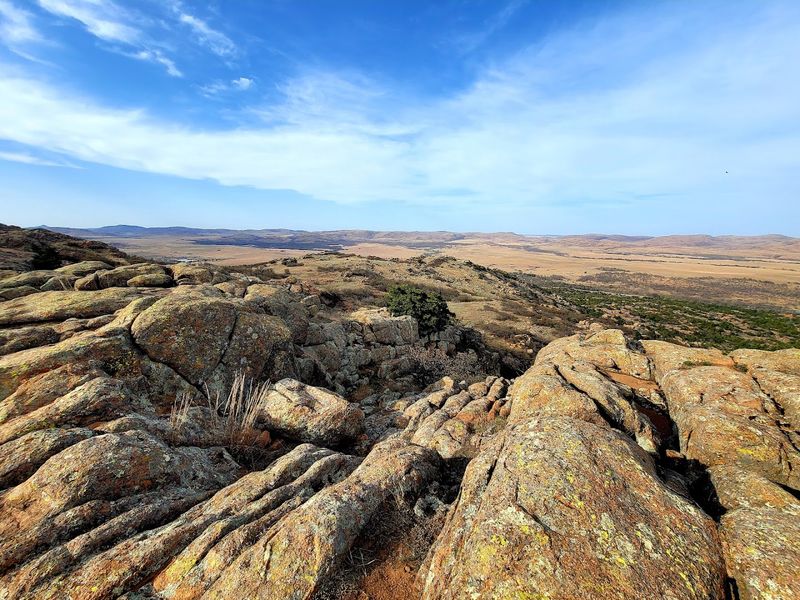
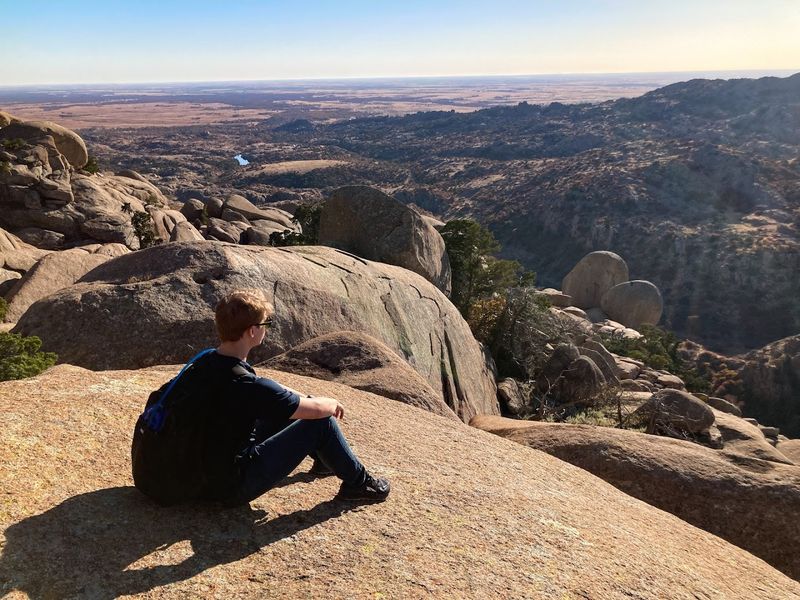
Nothing fully prepares you for the view at the top. From the summit of Elk Mountain, the landscape unrolls in every direction without a single building or road interrupting the scene.
To the west, the jagged peaks of the Charon’s Garden Wilderness rise up like something from a different part of the country entirely. To the east and south, the plains of Oklahoma spread out in a broad, golden patchwork.
On a clear day, you can see for what feels like forever. The contrast between the rocky, rugged terrain directly below and the flat prairie in the distance is genuinely striking.
The light changes constantly up here. Morning hikes reward you with soft golden tones across the granite, while late afternoon turns everything amber and dramatic.
Wildlife dots the landscape far below. Bison herds move slowly across the refuge floor, and if you scan carefully, you might spot longhorn cattle near the tree lines.
The whole scene has a raw, unfiltered quality that makes you want to just sit on a boulder and stare at it for a long time, which is exactly what I did.
The Summit Is Its Own World to Explore
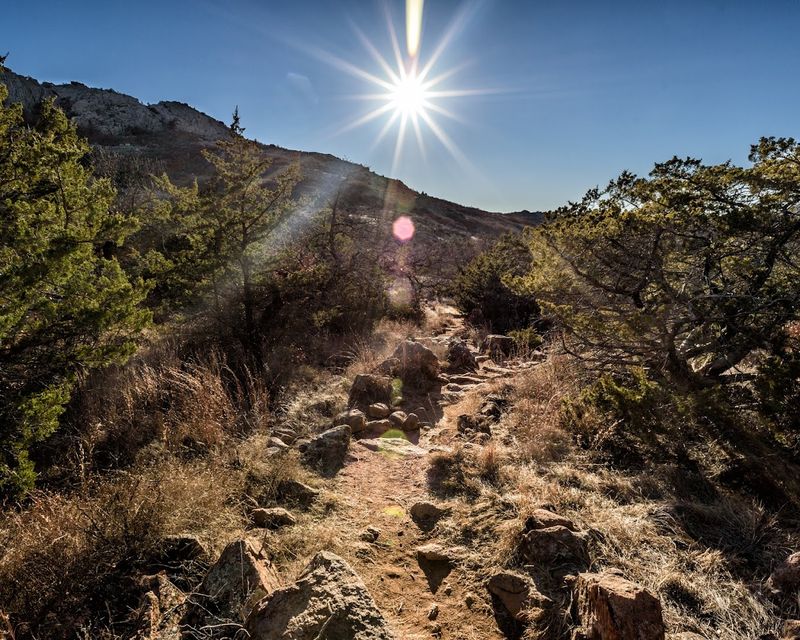
Reaching the top of Elk Mountain is not the end of the adventure. It is actually the beginning of a completely different kind of exploration.
The summit area is enormous, featuring three large canyons, house-sized boulders scattered across the plateau, and natural rock arches that appear almost out of nowhere as you wander.
There is no marked trail up here. The path fades completely, and you are free to roam wherever curiosity takes you.
That freedom feels genuinely rare in a world where most hiking experiences are carefully managed and roped off.
The west side of the summit holds the most dramatic geology, where wind-carved smooth granite formations create shapes and textures that look almost sculptural. Spending time on this side of the mountain is worth the extra steps.
Bring a downloaded map or have GPS ready, because it is easy to lose your bearings among the boulders. Cell service actually returns on the summit, which helps with navigation.
The summit rewards slow, curious exploration far more than a quick photo-and-go approach, so give yourself real time to wander and discover what hides between the rocks.
Wildlife Encounters Are a Real Part of the Experience
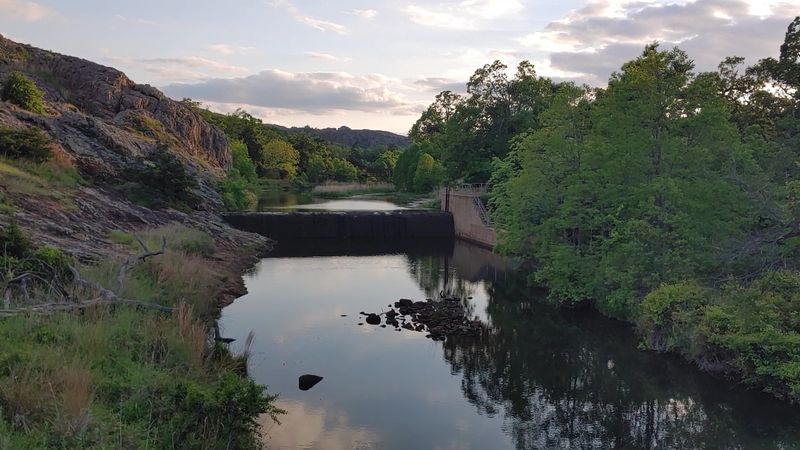
The Wichita Mountains Wildlife Refuge exists to protect some of the most iconic animals in North American history, and hiking Elk Mountain puts you right in the middle of their territory.
Bison herds roam freely across the refuge floor below the mountain. Watching them from the summit gives a perspective that feels almost cinematic, these massive animals moving slowly across the plains exactly as they have for thousands of years.
Longhorn cattle share the space with the bison, and their horns are unmistakable even from a distance. Roadrunners dart along the lower sections of the trail, and they are much faster in real life than any cartoon ever suggested.
The trail also passes through habitat where the colorful Boomer Lizard makes an appearance. Spotting one on the rocks adds a fun little bonus to the hike, especially for younger hikers who appreciate that kind of discovery.
Wildlife in the refuge is wild and unpredictable, so keeping a respectful distance from bison is always the right call. These animals are not tame, and the refuge takes their protection seriously.
Sharing space with them, even from a distance, is one of the most memorable parts of visiting this corner of Oklahoma.
How Elk Mountain Compares to the Rest of Oklahoma
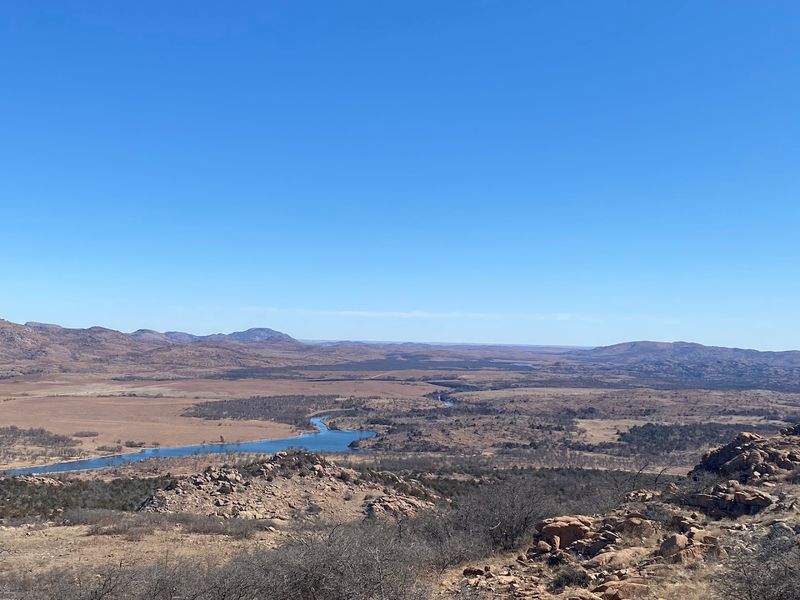
Oklahoma is not a state that gets much credit for dramatic landscapes, and that reputation makes Elk Mountain all the more surprising when you finally see it.
The mountain stands as one of the highest points in the state. That alone makes it worth seeking out for anyone who wants to see Oklahoma from a genuinely elevated perspective.
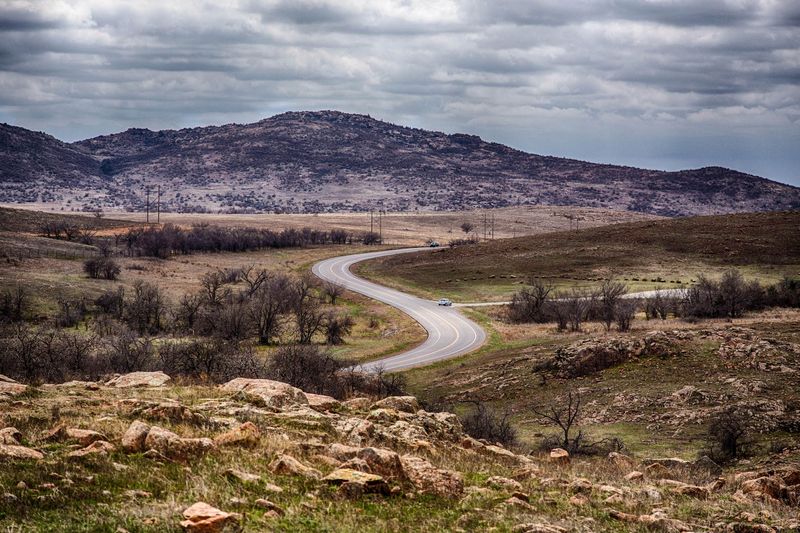
The Wichita Mountains region sits in the southwestern part of the state, near the city of Lawton. Most of the surrounding area is rolling prairie, which makes the sudden appearance of granite peaks feel almost surreal when you drive toward them for the first time.
Oklahoma has plenty of beautiful natural spaces, but few of them create this kind of visual contrast. The transition from flat plains to rugged mountain terrain happens quickly and dramatically along this stretch of the state.
For anyone who lives in Oklahoma or is passing through, skipping Elk Mountain would mean missing one of the state’s most genuinely unexpected natural experiences.
The mountain quietly challenges every assumption about what this part of the country looks like, and it wins that argument convincingly every single time.
The Best Time to Visit and What to Expect
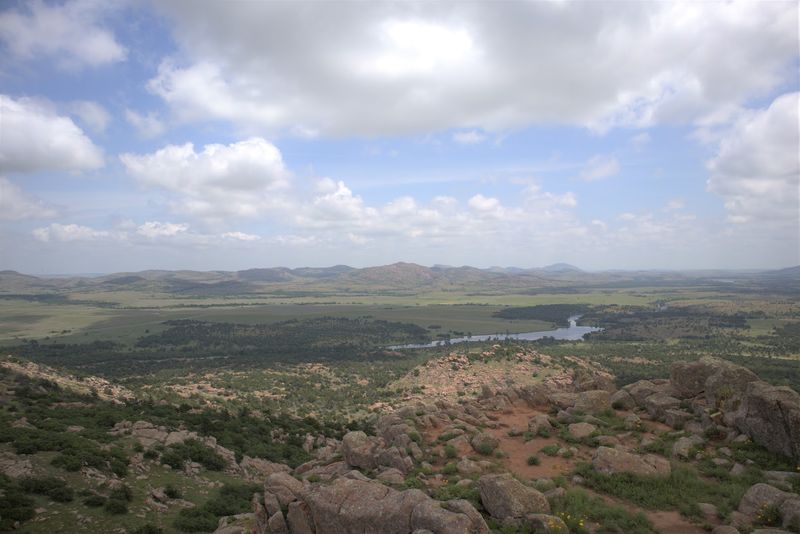
Spring is widely considered the best time to hike Elk Mountain, and the reasons become obvious the moment you step onto the trail in April or May.
Wildflowers bloom along the lower sections of the path, temperatures stay comfortable for climbing, and the refuge feels alive with activity. The light in spring also tends to be softer and more photogenic than the harsh summer sun.
Summer hikes are absolutely possible but require serious preparation. Temperatures in southwestern Oklahoma can climb well above 90 degrees Fahrenheit, and the exposed granite on the upper trail offers zero shade.
Starting early in the morning is the only sensible approach during summer months.
Fall brings cooler air and a subtle color change to the vegetation around the refuge. Winter hikes are quiet and peaceful, though wet granite can become slippery, so traction-appropriate footwear matters more in cold months.
Regardless of season, packing more water than you think you need is essential. The hike is short in distance but demanding in effort, and the summit exploration can extend your time outdoors significantly.
Arriving prepared makes the difference between a comfortable adventure and a miserable slog back down the mountain.
Practical Tips for Making the Most of Your Hike
A little preparation goes a long way on Elk Mountain, and a few simple steps separate a great hike from a stressful one.
Park at the Sunset Pool parking area, which serves as the standard trailhead for the Elk Mountain hike. There is no cell service in the parking lot, so download an offline map before you arrive.
Gaia GPS and similar apps work well for this trail.
Wear sturdy hiking shoes with grip. The lower trail is manageable in trail runners, but the bouldering near the summit benefits from shoes with solid ankle support and rubber soles that hold on granite.
Bring at least two liters of water per person, and more if you plan to spend extended time on the summit. Sunscreen and a hat are non-negotiable during warm months, as the upper mountain is completely exposed.
Plan to spend a minimum of two to three hours on the summit if you want to properly explore the canyons, boulders, and arches. Budget the full morning or afternoon for the experience rather than treating it as a quick detour.
The mountain rewards patience, and the people who linger up top almost always leave with the best stories.
The Atmosphere of Charon’s Garden Wilderness
Elk Mountain sits within the Charon’s Garden Wilderness, one of the most rugged and remote-feeling sections of the Wichita Mountains Wildlife Refuge. The name alone sets a certain mood.
This designated wilderness area covers thousands of acres of granite peaks, deep canyons, and boulder fields that have barely changed in appearance over millennia. Entering it feels like stepping into a landscape that has no interest in accommodating modern life.
The wilderness designation means no motorized vehicles, no maintained roads, and minimal human infrastructure. What you get instead is raw terrain that demands attention and rewards effort.
Charon’s Garden has long attracted rock climbers, backcountry campers, and photographers who want something more challenging than a paved overlook. The granite cliffs offer climbing routes for various skill levels, from beginner-friendly faces to technical routes that require real experience.
Backcountry camping permits were historically available for those who wanted to spend the night inside the wilderness area. Waking up inside Charon’s Garden at dawn, surrounded by ancient rock and open sky, is the kind of experience that stays with you for years.
The atmosphere here is unlike anything else in Oklahoma, and it earns every bit of the reputation it carries among serious outdoor enthusiasts.
Why Elk Mountain Deserves a Spot on Your Oklahoma Bucket List
Oklahoma has a habit of surprising people, and Elk Mountain might be the state’s single greatest geographic plot twist. Nothing about a drive through southwestern Oklahoma prepares you for what waits at the end of that trail.
The combination of ancient geology, genuine wildlife, dramatic summit views, and free-roam exploration creates an experience that checks almost every box for outdoor adventure. It is accessible enough for motivated beginners and rewarding enough for seasoned hikers who have covered trails across the country.
The hike does not require special permits, technical gear, or expert fitness. What it does require is a willingness to push through a moderately steep climb and an open mind about what Oklahoma can actually deliver.
Families, solo hikers, photographers, and nature lovers all find something meaningful on this mountain. The summit has enough space and variety to give every type of visitor their own version of the experience.
Elk Mountain sits at coordinates 34.7247891, -98.7234009, within the Wichita Mountains Wildlife Refuge, Oklahoma 73552, near Lawton.
If you are anywhere near southwestern Oklahoma and you skip this hike, you will spend the drive home wondering what the view from that summit actually looked like, and that is a regret worth avoiding.
Dear Reader: This page may contain affiliate links which may earn a commission if you click through and make a purchase. Our independent journalism is not influenced by any advertiser or commercial initiative unless it is clearly marked as sponsored content. As travel products change, please be sure to reconfirm all details and stay up to date with current events to ensure a safe and successful trip.
