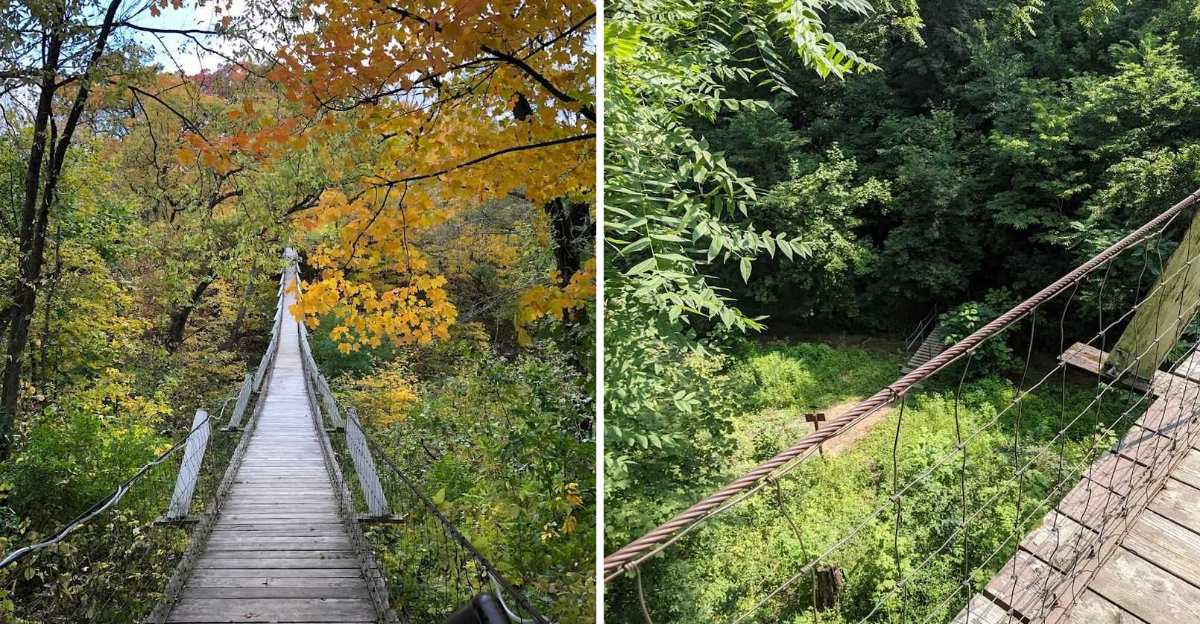
Wooden planks and cable stretch across a deep forest ravine in Iowa. The bridge sways gently, looking like something out of a storybook.
On a sunny afternoon, the whole place feels almost magical. I remember pulling off the highway and thinking this is one of those spots that reminds you how much quiet wonder exists in small town America. This swinging bridge has been part of the community since the nineteen twenties. It carries a name wrapped in legend, a history marked by collapse and rebuilding, and a reputation that makes even the bravest visitors think twice about crossing after dark.
The locals know the stories. They just do not always share them.
The Bridge That Has Survived Everything
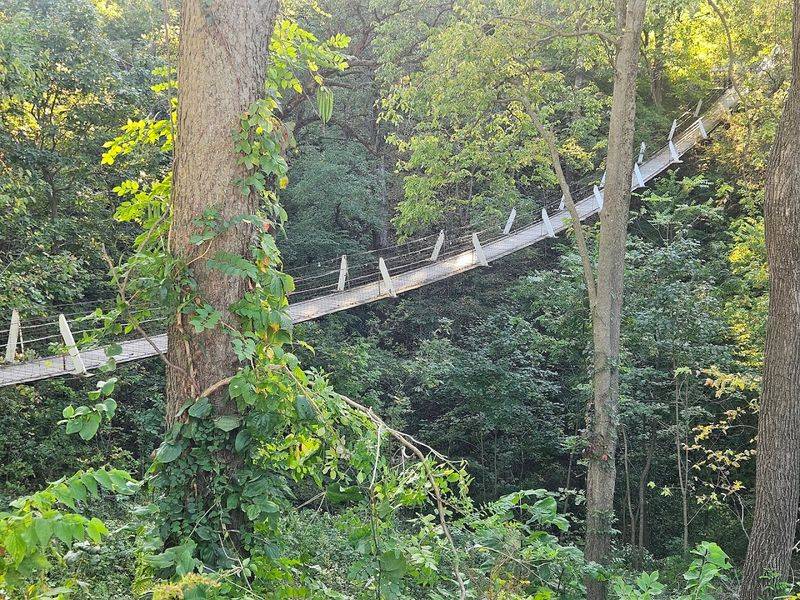
Few structures in Iowa have had as dramatic a life as this one. The Lover’s Leap Swinging Bridge is actually the third bridge built at this exact spot, and each version has its own chapter worth reading.
The first went up around 1880, cobbled together from salvaged barrel wood by a man named Josiah Stewart who just needed a shortcut across the ravine. It was condemned by 1902.
A second bridge replaced it in 1904, and that one lasted until 1920 when it collapsed while two teenagers were crossing it. Remarkably, they walked away without a scratch, which some locals still find hard to explain.
The current bridge was built in 1922 and has been inspected by engineers every year since. It stretches 262 feet across the ravine and sits roughly 100 feet above the forest floor below.
That is about eight stories of open air beneath your feet when you step onto those wooden planks. The bridge connects Fourth Street and Third Street and sits inside Swinging Bridge Park, right off Iowa Highway 92.
It is sturdy, certified, and maintained, but knowing all that history somehow does not make crossing it feel any less like a leap of faith.
A Legend That Gave the Bridge Its Name
The name Lover’s Leap does not come from a sweet romance. It comes from grief.
A local legend tells of a Native American maiden who learned her lover had passed in battle and, overcome with sorrow, threw herself from the edge of the ravine into the forest below. Some versions of the story say she was buried at the bottom, never found, never forgotten.
Near the bridge entrance, a sign reads something that sticks with you: “The trees know, and they won’t tell.” That single line does more atmospheric work than a whole horror movie trailer. It sets a tone that follows you across every plank.
Legends like this one are common across the American Midwest, but what makes this version feel different is how naturally it fits the landscape. The ravine is genuinely deep and dramatic.
The trees close in from every side. When the wind moves through the branches at the right moment, it is easy to understand why people started telling this story in the first place.
Whether you believe it or not, the name Lover’s Leap gives this bridge a weight that the scenery alone could never fully carry.
What Crossing It Actually Feels Like
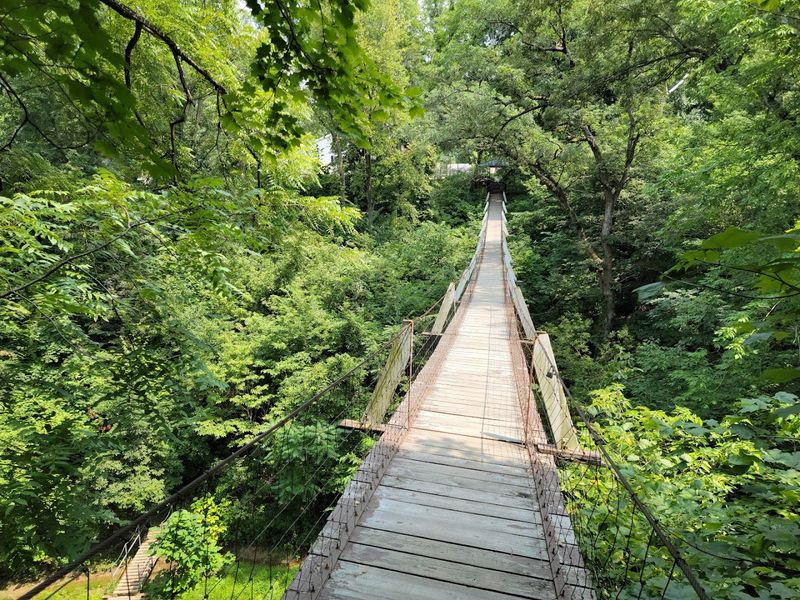
The moment you step onto the first plank, the bridge responds. It shifts under your weight in a way that is completely different from any solid structure you have ever walked across.
The cables tighten and loosen with each step, and if someone else is crossing at the same time, the whole thing starts to sway in a rhythm that your stomach notices before your brain does.
At the midpoint, you are standing 100 feet above the ravine floor with nothing but forest below you and open sky above. It is one of those rare moments where your body and your brain have a small disagreement about whether this is a good idea.
Most visitors say the experience is thrilling rather than terrifying, which sounds like exactly what someone who just barely made it across would say. The planks are solid, the cables are inspected annually, and the park is well maintained.
But knowing all of that does not stop your knuckles from going white on the ropes. Leashed dogs are allowed on the bridge, which means some very brave golden retrievers have made the crossing without a second thought, which is honestly a little humbling.
Why Nobody Crosses After Sunset
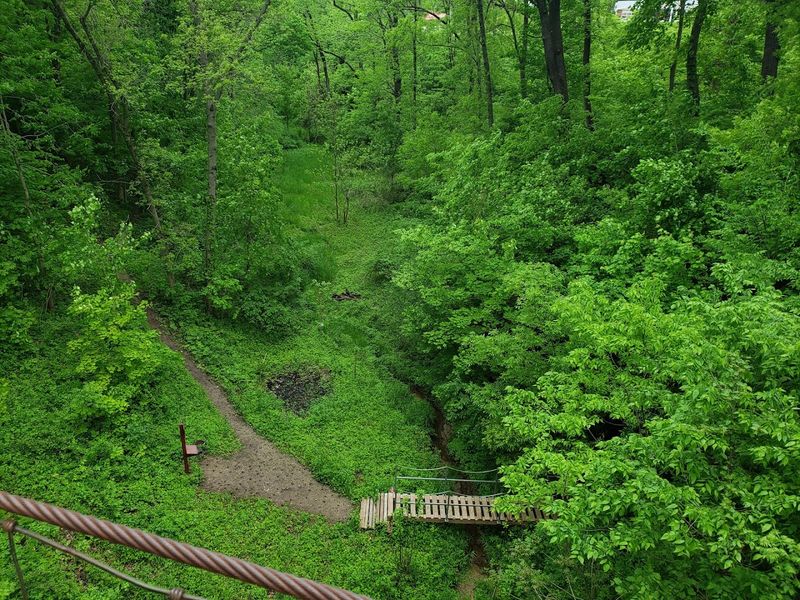
Daytime visitors describe the bridge as scenic and fun. After dark, the story changes completely.
People who have crossed at night report hearing sounds from below that do not match any animal or wind pattern they can easily explain. Some describe it as a low, mournful sound, like crying that gets quieter the more you try to focus on it.
Others mention a feeling of being watched, not from the trees exactly, but from somewhere beneath the bridge. The ravine gets very dark very fast once the sun drops, and the natural creaking of the cables takes on a completely different character at night.
The bridge already groans and shifts during the day when multiple people cross. Alone, in the dark, those same sounds feel less like physics and more like something that has a reason to be unhappy.
Whether you chalk it up to the legend, the acoustics of the ravine, or just an overactive imagination, the effect is real enough that most people choose not to test it. There is a reason the park draws daytime visitors and not many after-hours explorers.
Some places earn their reputation without needing to try very hard.
The Possum Hollow Trail and What It Reveals
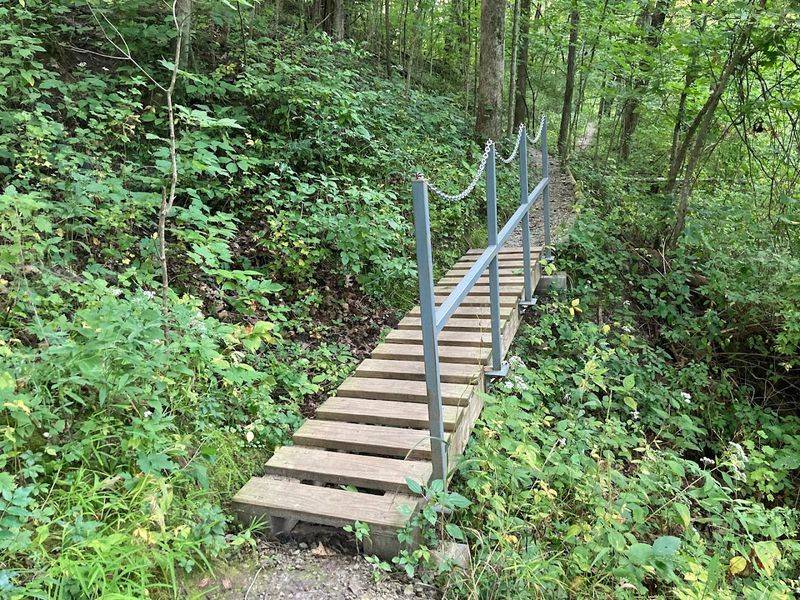
One of the best-kept secrets about this park is that you can actually see the bridge from underneath it. The Possum Hollow Trail drops down into the ravine and gives you a completely different view of the structure, one that makes the height feel even more dramatic than it does from above.
The trail has stairs built directly into the hillside, rope railings along the steep sections, and small wooden bridges crossing the lower path. It is a moderate hike, not exhausting, but not something to attempt in wet conditions since the embankments get slippery after rain.
From below, the bridge looks impossibly thin against the canopy. You can see the cables, the wooden planks, and the gentle sway even when no one is on it.
That movement, caused by nothing but wind, is the detail that tends to stay with people long after they leave. The trail also passes through some genuinely beautiful sections of forest, and in fall the color overhead is the kind of thing that makes you stop walking just to look up.
There is a Monarch Garden near the bridge entrance as well, which adds a quiet, colorful contrast to the wilder parts of the park.
When to Visit for the Best Experience
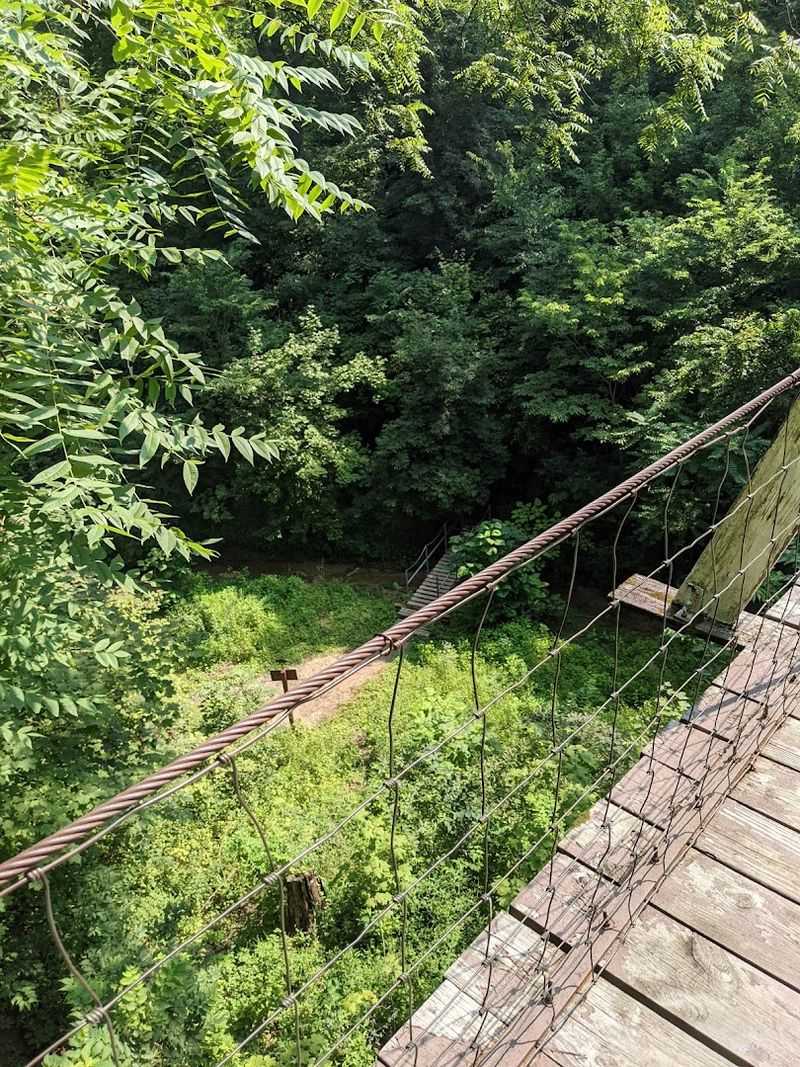
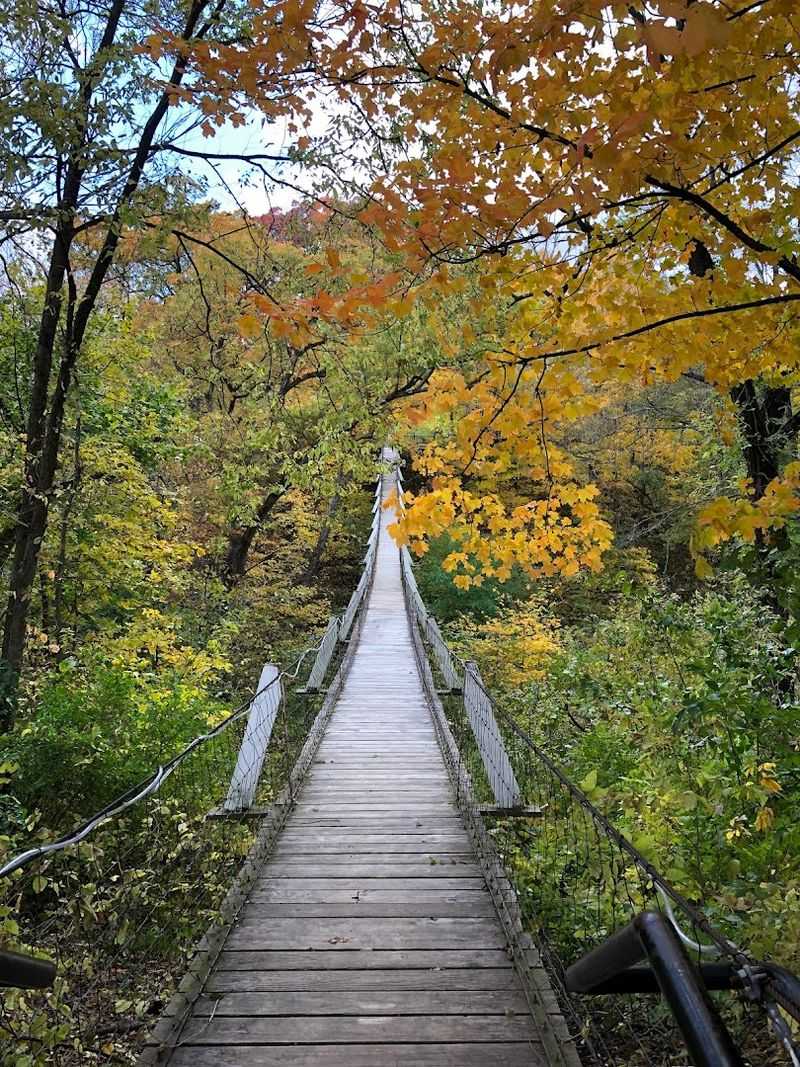
Fall is the undisputed best season to visit the Lover’s Leap Swinging Bridge. The forest that surrounds the ravine turns every shade of orange, red, and gold, and the views from the bridge look like something a painter would spend weeks trying to get right.
A few visitors have made it a yearly tradition to photograph the bridge on the first day of fall, which honestly sounds like a perfect ritual.
Summer visits are popular too, though the heat and bugs can make the experience feel a bit more demanding. Bringing water is a genuine recommendation, not just a formality, especially if you plan to spend time on the Possum Hollow Trail.
Spring brings muddy conditions on the lower trail, so footwear choices matter more than you might expect. The park sits in a residential neighborhood, which means being respectful of noise levels and parking matters.
There is a small gravel lot near the entrance. The bridge is right there once you find it, and the whole visit, including the trail, runs under thirty minutes for most people.
That makes it an ideal road trip stop rather than a full-day destination. Short, memorable, and genuinely unlike anything else in Iowa.
Small Town, Big Personality
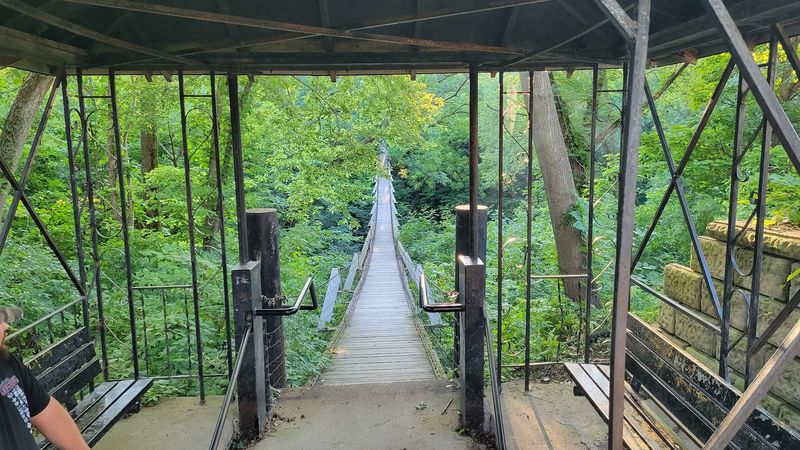
Columbus Junction is a small town in Louisa County, and the swinging bridge is clearly its most famous resident. The park around it has been thoughtfully developed over the years, with picnic tables, a fire pit area, a Monarch Garden, and even a children’s story trail featuring a dog named Noodles that winds through the park for younger visitors.
Padlocks from visitors are attached to the bridge in memory of loved ones, which gives it a deeply personal dimension beyond the tourist experience. It is the kind of detail that stops you mid-step and reminds you that places like this mean something real to the people who live nearby.
The community clearly takes pride in maintaining this landmark. It is clean, well-signed, and genuinely welcoming to anyone who wanders in off the highway.
There are no restrooms on site, which is worth knowing before you arrive. Parking is available near the entrance, and the bridge itself is just a short walk from the lot.
For a town this size, the Lover’s Leap Swinging Bridge punches well above its weight as a destination. It is the kind of place that earns a five-star review not because it is grand, but because it is exactly what it promises to be.
Address: 303 Oak St, Columbus Junction, Iowa
