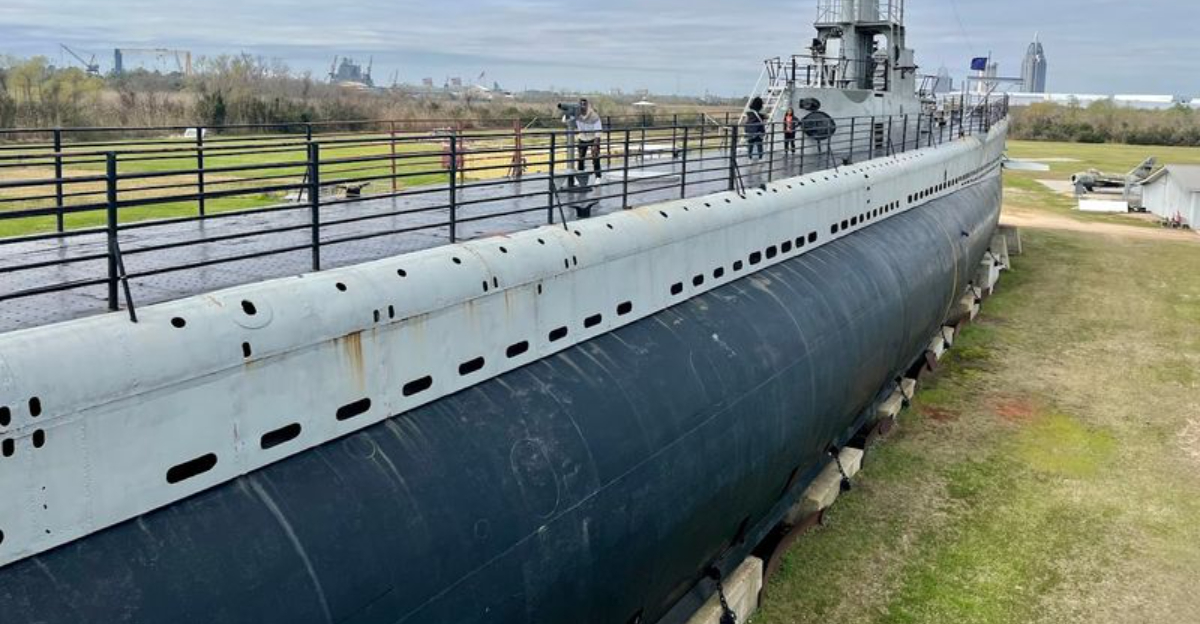
Hidden in plain sight along the Alabama waterfront sits one of the most remarkable relics of World War II. A historic submarine on display in Mobile is a real vessel you can actually walk through, and it holds the distinction of being one of the oldest American WWII submarines open to the public.
Resting within a waterfront military park, this iron giant tells the story of 72 brave men who once lived and fought beneath the ocean waves in some of the most intense conditions of the war.
Tight corridors, preserved control rooms, and original equipment give visitors a rare, immersive look at life below the surface.
It is both humbling and fascinating, offering a perspective on naval history that textbooks can’t fully capture. If you love history, adventure, or simply want to experience something truly one of a kind, this destination deserves a spot on your travel list.
Do Not Miss Its Jaw-Dropping Combat Record

Thirteen war patrols. Twelve battle stars.
Fifteen enemy ships confirmed sunk, totaling over 80,580 tons of enemy shipping. Those numbers are not from a movie.
They belong to the USS Drum, and they rank it eighth among all U.S. submarines for confirmed tonnage destroyed during World War II.
Reading those facts on a screen is one thing. Standing inside the actual vessel where those missions were planned and carried out is something else entirely.
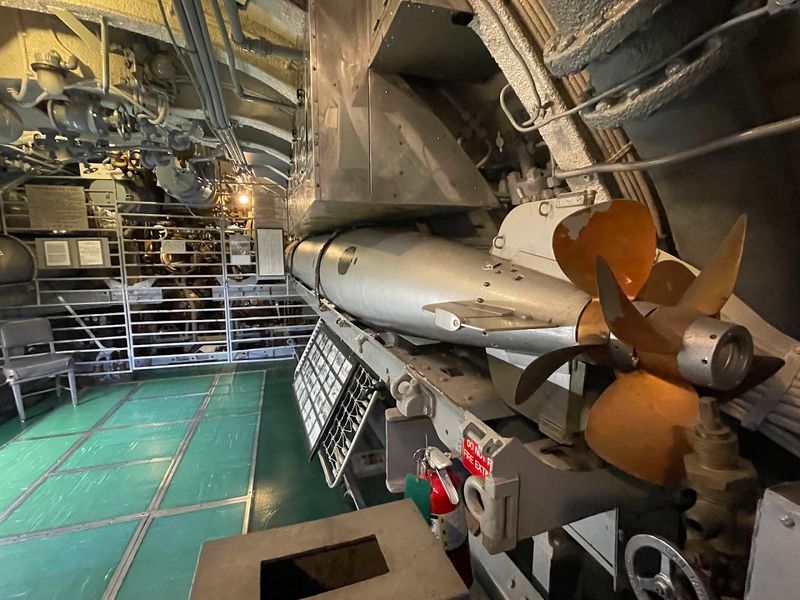
The control room, the torpedo bays, the cramped navigation area all of it becomes real when you realize the crew used these exact spaces to plan strikes against enemy ships in the Pacific.
Each battle star represents a specific war patrol where the crew faced danger, mechanical failure, depth charges, and the constant pressure of operating underwater in enemy territory. The Drum proved time and again that it was one of the most effective submarines in the U.S. fleet.
History classes teach facts, but the USS Drum shows you what those facts looked like in steel, gauges, and narrow corridors. Slow down when you tour it.
Read the signs posted throughout. Those short paragraphs carry incredible weight when you understand the combat history attached to this boat.
This is not background history. This is front-line American military legacy you can reach out and touch.
Come Feel How Tight Submarine Life Really Was
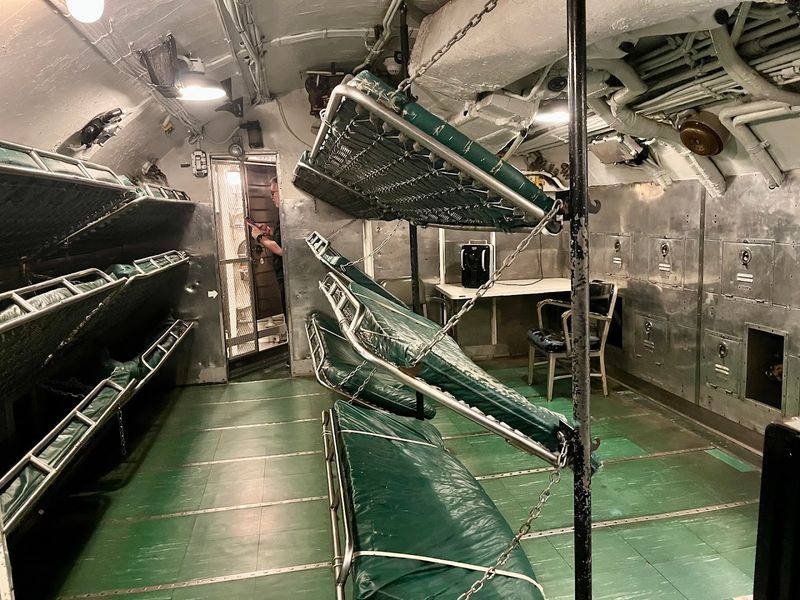
Movies make submarine life look manageable. The USS Drum, right here in Alabama, will quickly correct that impression.
The moment you climb down into the hull and start moving through the interior, the reality of what 72 men endured on long war patrols hits you hard. The passageways are genuinely narrow, and the bulkhead doors require you to lift your knees and bend your body to pass through.
Tall visitors will feel this especially. Some people have described lifting their knees nearly to their chest just to get through certain openings.
The crew quarters are stacked tight, with barely enough room to roll over. The idea of spending weeks or months in this environment, under enemy fire, in the dark Pacific Ocean, is almost impossible to fully process.
That physical experience is exactly what makes the USS Drum so powerful as a historical site. You are not reading about hardship.
You are temporarily living a small version of it. The headroom inside is surprisingly decent in certain sections, but the overall sense of confinement is constant.
Visitors who take their time and read the posted stories about daily life on board tend to leave with the deepest appreciation for what submariners sacrificed. Wear comfortable clothes and leave large backpacks behind.
They will catch on equipment and slow you down in the tighter sections of the tour.
Plan to See Its National Historic Landmark Status Up Close
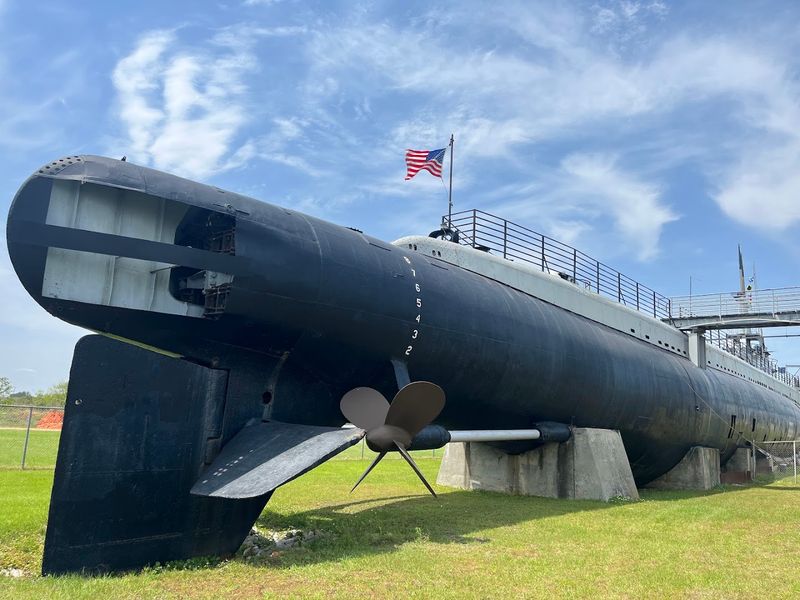
In 1986, the United States government designated the USS Drum a National Historic Landmark. That is one of the highest recognitions any historical site can receive in this country, and the Drum earned it based on its genuine significance to American military history.
Very few submarines anywhere hold this distinction.
National Historic Landmark status means the Drum has been officially recognized as irreplaceable. It cannot simply be retired or scrapped.
It must be preserved for future generations, which is why the restoration work done on this vessel has been so thorough and careful. When you walk through it, you are seeing an authentically preserved piece of wartime America, not a recreation.
The landmark designation also speaks to how well the submarine has been maintained over the decades. The original equipment, gauges, controls, and fittings are still in place throughout the vessel.
There is something deeply moving about touching a gauge that a real sailor once checked during a combat patrol in the Pacific. The Drum is not just a symbol.
It is a working artifact of a specific moment in American history. Visiting a National Historic Landmark carries a different weight than visiting a regular attraction.
You leave knowing you stood somewhere officially recognized as essential to the story of this nation. That feeling stays with you long after you drive away from the park.
You Are Standing on the Oldest WWII Submarine

Not many places in the world let you stand on a piece of history this old and this significant. The USS Drum, designated SS-228, earned its place in the record books as the oldest American submarine from World War II that the public can actually tour.
That title alone makes it worth the trip.
Built in 1940 and commissioned in 1941, the Drum was the first Gato-class submarine to enter combat during World War II. That means every other submarine museum in the country is measuring itself against this one.
Visiting it feels less like a museum stop and more like a time machine moment.
The submarine is located at 2703 Battleship Parkway, Mobile, AL 36602, inside Battleship Memorial Park. When you approach it, the sheer size of the vessel is striking.
It stretches out long and low, resting on dry land so visitors can see every curve of its hull up close. No other WWII submarine on public display can claim this level of historical seniority.
Arriving early in the day gives you the best chance to explore without crowds pressing in around you, which makes the experience feel far more personal and immersive.
Make Time to Explore the Full Battleship Memorial Park
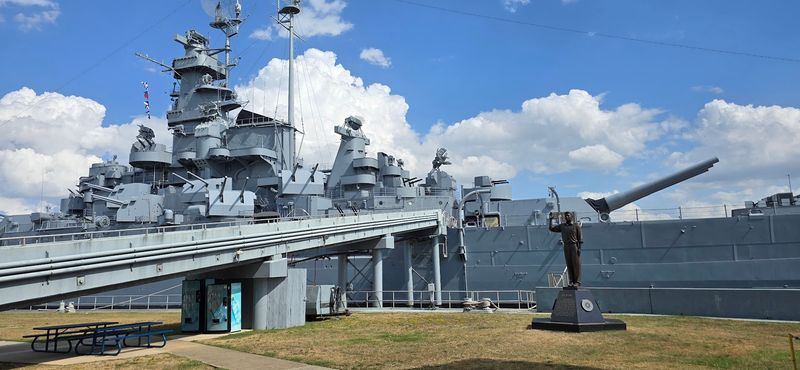
The USS Drum does not stand alone. It sits inside Battleship Memorial Park, one of the most impressive military heritage sites in the entire southeastern United States.
Your admission ticket covers everything in the park, which means one price gets you access to a full day of extraordinary history.
The park also features the iconic USS Alabama battleship, a massive warship that dwarfs everything around it. Beyond the ships, an aircraft pavilion houses more than 25 historic planes, including an A-12 Blackbird, which is one of the rarest aircraft on public display anywhere.
Tanks, artillery pieces, and military memorials fill the grounds as well.
Smart visitors tour the USS Drum first, before crowds build up inside the submarine. Then they spend the rest of the day working through the aircraft and the battleship at a relaxed pace.
The park is large enough that you can easily spend three to four hours exploring without feeling rushed. Families with kids especially love the variety, since there is something new and surprising around every corner.
The combination of a WWII submarine, a full battleship, and a collection of rare aircraft in one location is genuinely rare. Most military history parks focus on one type of vehicle or era.
Battleship Memorial Park covers it all, and the USS Drum anchors the experience with its remarkable story and age.
Try Spotting the Walt Disney-Designed Submarine Emblem
Here is a detail that catches most visitors completely off guard. The original emblem of the USS Drum was designed by Walt Disney.
During World War II, Disney Studios contributed artwork and design work to the U.S. military, creating emblems and insignia for various units and vessels. The Drum was one of the lucky recipients of that creative partnership.
Finding that emblem during your visit adds a fun layer of discovery to the tour. It connects the submarine to a piece of American cultural history that most people never associate with military hardware.
Walt Disney and a WWII combat submarine might seem like an unlikely combination, but the wartime era brought together all kinds of American talent in support of the military effort.
That quirky historical footnote is a perfect example of why slowing down and reading the signs throughout the Drum pays off so well. Details like this are scattered throughout the exhibit, waiting for curious visitors who take a few extra minutes to look closely.
The Drum is full of surprises beyond its combat record. It is a vessel that touched multiple parts of American life, from naval warfare to popular culture.
Kids especially love hearing that a famous animator had a hand in decorating this iron war machine. It gives the history a human, creative dimension that makes the whole story more memorable and engaging for everyone.
Skip Crowds by Going Early on Weekday Mornings
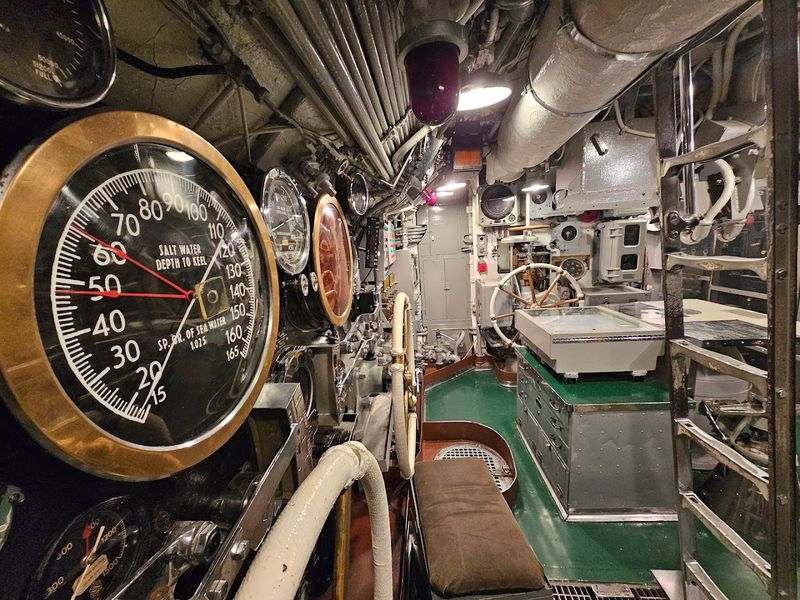
Timing your visit to the USS Drum makes a real difference in how much you enjoy it. The submarine is a confined space, and when groups of people pack into the narrow corridors at the same time, it becomes harder to stop, look around, and actually absorb what you are seeing.
Going early, especially on a weekday morning, gives you room to breathe and think.
Arriving when the park opens means you often have sections of the submarine almost entirely to yourself. That quiet is rare and valuable.
Standing alone in the torpedo room or the control room, with no crowd pushing you forward, lets the history of the place actually settle in. You can picture the crew at their stations without distraction.
The self-guided tour format works beautifully when you set your own pace. Most visitors move through in about 20 to 30 minutes, but the people who get the most out of the experience are the ones who slow down and read the posted stories and historical notes along the way.
Some sections of the lower level are not fully accessible, but the main deck provides a complete walk-through of the submarine from bow to stern. Before you leave, take a moment outside to look at the full hull from a distance.
The scale of the vessel becomes even more impressive when you step back and take it all in from the outside.
