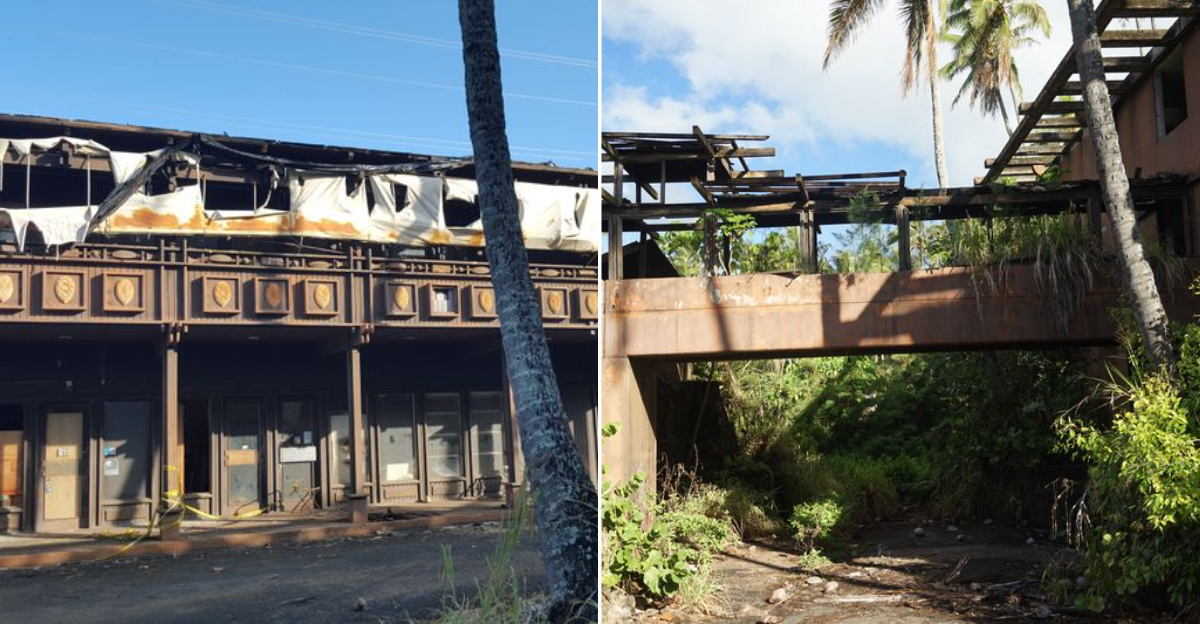
Have you ever seen a place that once defined luxury but now sits in silence, its grandeur fading into ruins? That’s the story of the Coco Palms Resort in Kapaa, Hawaii.
Decades ago, it was the kind of destination people dreamed about: famous guests, tropical elegance, and a reputation that made it one of Hawaii’s icons. Today, though, walking past it feels very different.
The resort stands as a reminder of what it used to be, with broken windows, empty halls, and overgrown grounds where life once buzzed.
Locals know the history well, but many avoid talking about it. It’s both a source of pride and a symbol of loss.
Visitors who stumble upon it often feel a mix of curiosity and sadness, wondering how such a celebrated place could be left behind.
Coco Palms isn’t polished anymore, but that’s what makes it striking.
It’s a piece of Hawaii’s past that still whispers stories, even in its ruined state. Sometimes, the places that have fallen tell the most powerful tales.
Where Paradise Fell Apart
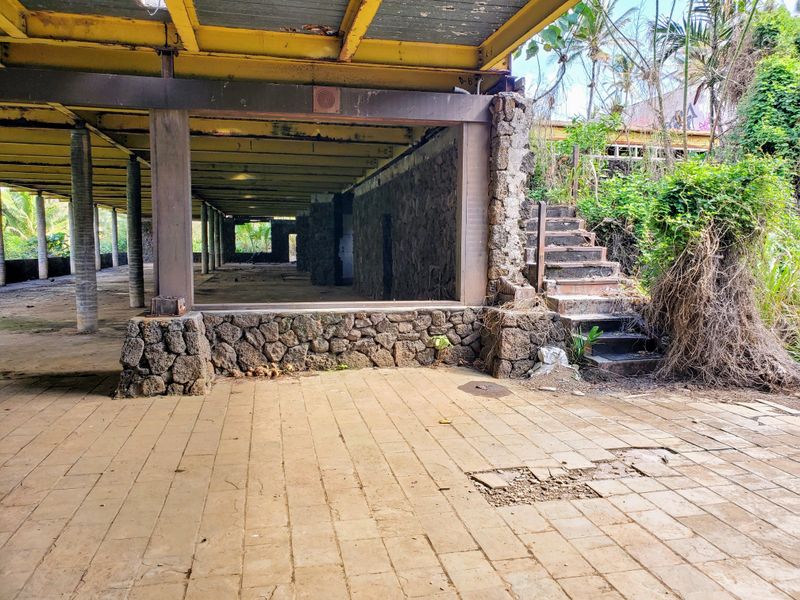
You know that feeling when a place starts talking before you even step out of the car?
Coco Palms at 5400 Kuhio Hwy, Kapaa, HI 96746, does that the second the palms come into view along the highway.
The bones of old Hawaii luxury lean into the light, and the light feels like it remembers more than it shows.
This used to be the resort people dreamed about. You can almost hear the soft shuffle of luggage wheels and the hush of pool water if you stand still.
I like to pause by the fence and trace the outline of balconies with my eyes, imagining layered stories tucked into each corner.
The location in Kapaa keeps everything grounded, even while the ruins push your thoughts a little higher. Hawaii feels very present here, not as a backdrop, but as the main character.
You look and you realize nature is the quiet author, rewriting the page in green.
If you are traveling with friends, this stop becomes a shared pause. You trade quick impressions, you point, you guess, you wonder where the lobby once hummed.
Then the breeze moves across the lagoon and answers nothing, which somehow feels right.
There is no rush with a place like this. You give it a minute and it gives you a mood that lingers all afternoon.
And when you drive off, you check the mirrors twice, because leaving feels like turning a page you might want to read again.
A Resort That Defined Old Hawaii Luxury
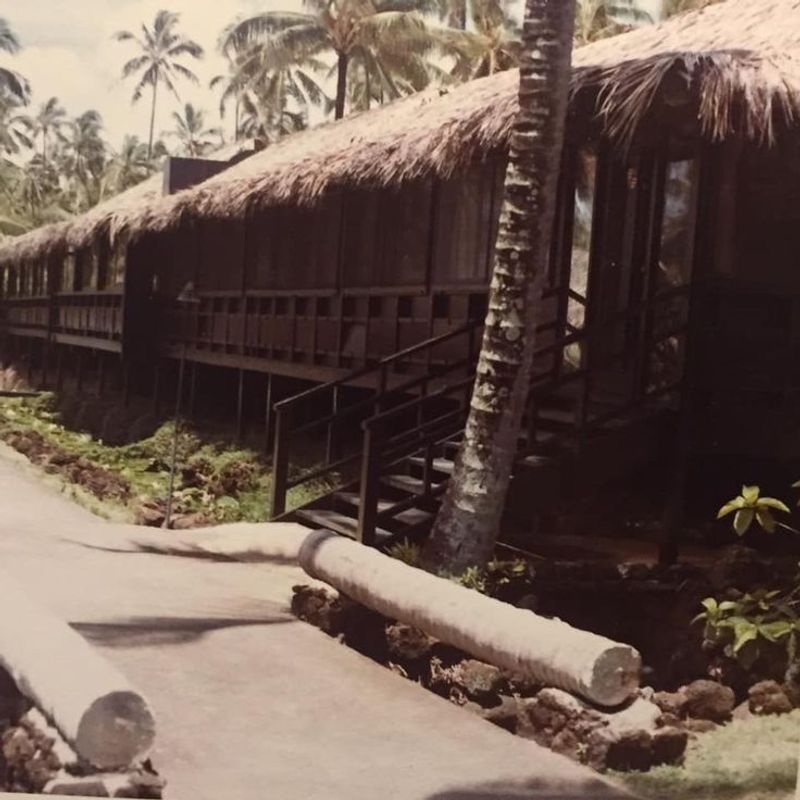
This place did not chase flash. It shaped a softer idea of luxury that felt local, patient, and rooted.
You can sense it in the layout, in the way walkways drift toward water and not away from it.
Back when Hawaii travel soared, Coco Palms carried itself with a cultural backbone.
Ceremonies, music, and little gestures of respect threaded through the guest experience. That energy still hangs around, even with walls sagging and roofs giving in.
I like imagining the arrivals. Not the grand kind, just the quiet excitement of stepping into air that smells like salt and plumeria.
You can picture a bell greeting, a lei, and a smile that did not rush you to the next thing.
The cool part is how the design mirrored the island instead of competing with it. Low lines, open air halls, breezes doing the work of machines.
I feel like that vision reads as wise now.
Walking the edge of the site today feels like flipping through a family album where half the photos are sun faded.
You still see the people and what they cared about. And even if the pages are curled, the feeling turns clear and bright, which is why this stop sticks.
Elvis Turned It Into A Pop Culture Icon
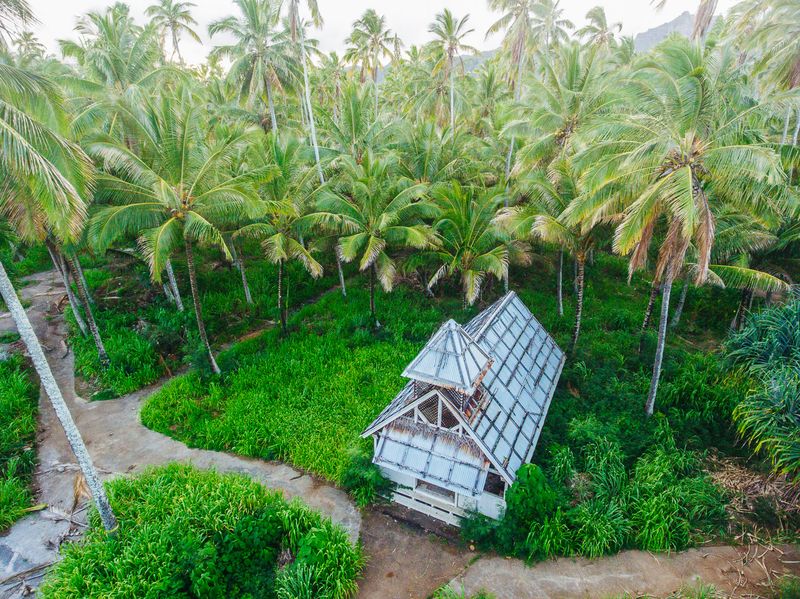
Here is the pop culture hook that still echoes. Elvis filmed Blue Hawaii here, and that single fact keeps the name Coco Palms looping through conversations far from Kauai.
Even folks who have never been can picture the vibe.
I am not much for chasing celebrity trails, but the film thread adds a playful charge to the ruins.
You look at the courtyards and think about choreographed movement, bright costumes, and that easy charm. Then you glance back at the walls and feel the years.
It is wild how a movie can paste itself onto a place. The resort became an idea people carried on postcards and in daydreams.
Standing near the lagoon, the soundtrack sort of hums in your head without asking permission.
If you grew up with those images, this stop delivers a little goosebump moment. The stage is still here, just weathered and quiet.
You supply the chorus, and the palms do a slow sway that feels on beat.
What I love is the contrast. Fame feels loud, but the site whispers now, which makes you listen harder.
Hurricane Iniki Changed Everything
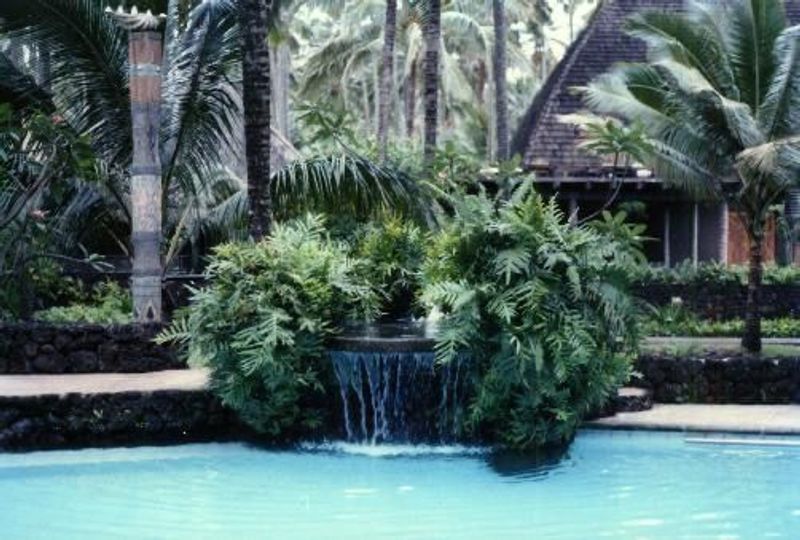
There is a clear before and after here. Hurricane Iniki rolled through and rewrote the entire story in one fierce chapter.
You can read the impact in every collapsed beam and exposed corridor.
Nature is not cruel in Hawaii, but it is direct. The storm arrived, and the resort never truly found its way back.
When I stand by the fence, I feel that turning point in my chest.
It helps to remember the island frame. Kauai holds power and softness at once, and storms are part of that rhythm.
The palms bend, the ocean breathes deeper, and buildings either adapt or fade.
I do not linger on tragedy, though. What I see is honesty.
The site tells you what happened without a guide, without a plaque, just with light, wind, and the lines of broken rafters.
If you are road tripping, this stop invites a quiet minute. Let the trade winds move your thoughts around.
Then keep going with a new respect for how fast things can shift in this state, and how the land keeps the long view.
Luxury Slowly Gave Way To Silence
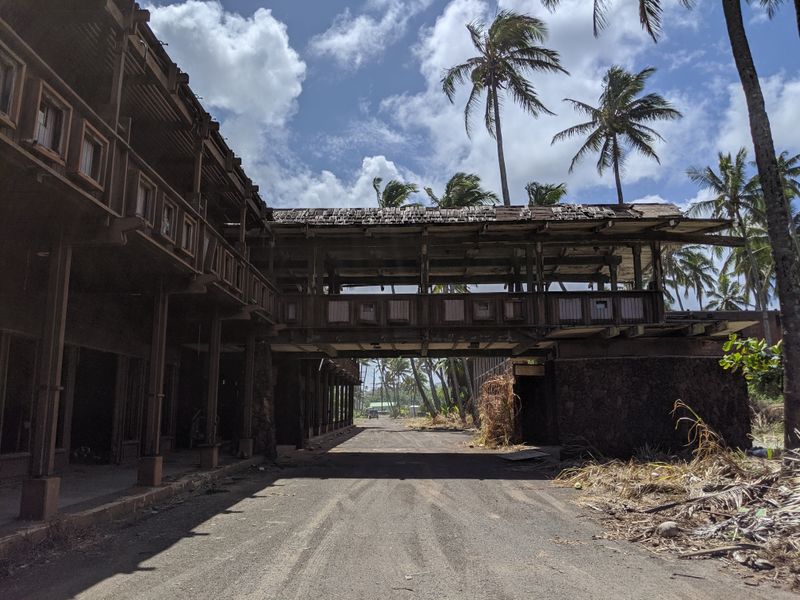
This is where the quiet really sinks in. No carts rolling, no footsteps, no soft lobby chatter, just wind threading through broken frames and birds cutting arcs across the lagoon.
I walk the roadside edge and picture time working like water. Every season smooths one more corner, settles another roof line, and brushes a fern across forgotten tile.
The silence feels gentle in my opinion, not empty.
There is a lesson in the way luxury fades here. Towels and turndown service leave the stage, and the island steps forward.
If you let your eyes relax, the old glamour still shimmers. It is not a postcard shine, more like a memory that will not quite leave.
I find it oddly comforting, like the place is exhaling after a very long shift.
Give yourself a few breaths to match that rhythm. You will start to notice tiny details, like a hinge holding on or a paint color refusing to quit.
That is when the silence stops being sad and starts feeling like perspective.
Ruins Sit In Plain Sight
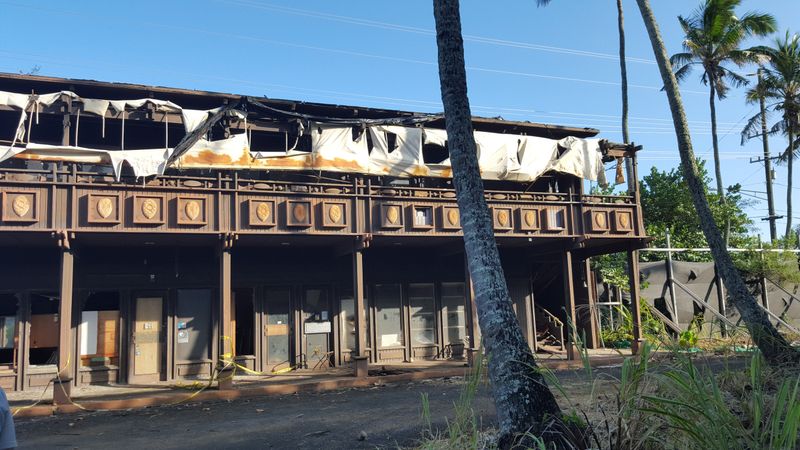
No need to hunt for this place. The ruins sit right by the flow of cars, like a memory parked on the shoulder.
I actually like that it is public facing. It forces an honest look at what happens when plans stall and weather gets the last word.
Every commuter glances over, even if they say they do not.
The fence keeps everything respectful, and you stay on your side of the line. That line, though, becomes a frame.
Palms, concrete, windows, sky, and you on the outside taking it in.
Hawaii is not shy about contrast, and this is a bold one. Blue sky above, traffic hum below, and in between, a quiet chapter of island history turning another page.
It is all right there without a brochure.
If you like road trips with real conversation, this stop sets one up. You point, your friend nods, and someone asks the question nobody answers quickly.
That is the moment when a drive becomes a story you will tell later.
A Sacred Location Beneath
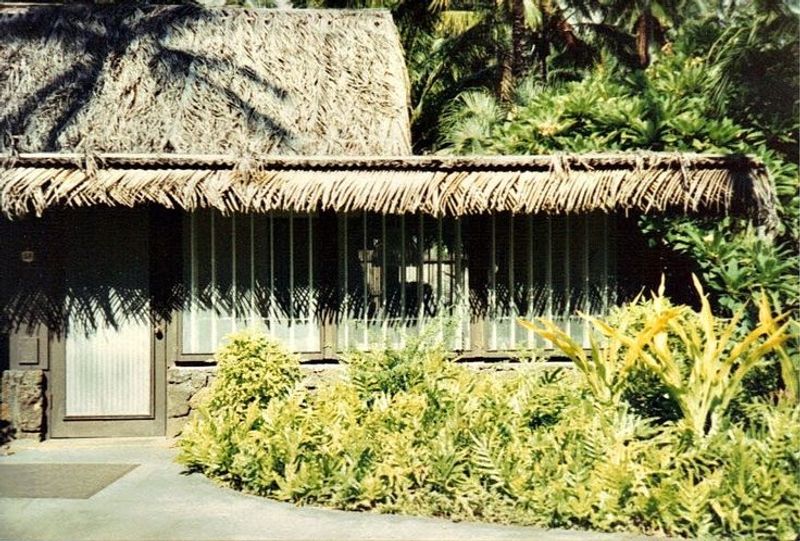
Under the peeling paint, the land speaks older truths. This site ties into stories of ali?i, fishponds, and gatherings that shaped how people lived on Kauai.
You feel that depth the moment the breeze shifts.
I try to stand still and listen a bit longer here. The sacred layer is not loud, and it should not be pushed.
Let the palms do the talking and keep your voice low.
There is a reason redevelopment feels complicated. Culture is not a backdrop, it is the root.
Any plan has to consider what cannot be replaced or moved.
This state holds memory in water, rock, and trees. The lagoon mirrors that perfectly, showing everything and hiding a little at the same time.
I think that is why so many people care deeply about what happens next.
As a traveler, the best move is respect. Stay on the public side, keep the camera thoughtful, and read up later.
Walking away with more questions than answers is the right way to leave a place like this.
Redevelopment Plans Keep Stalling
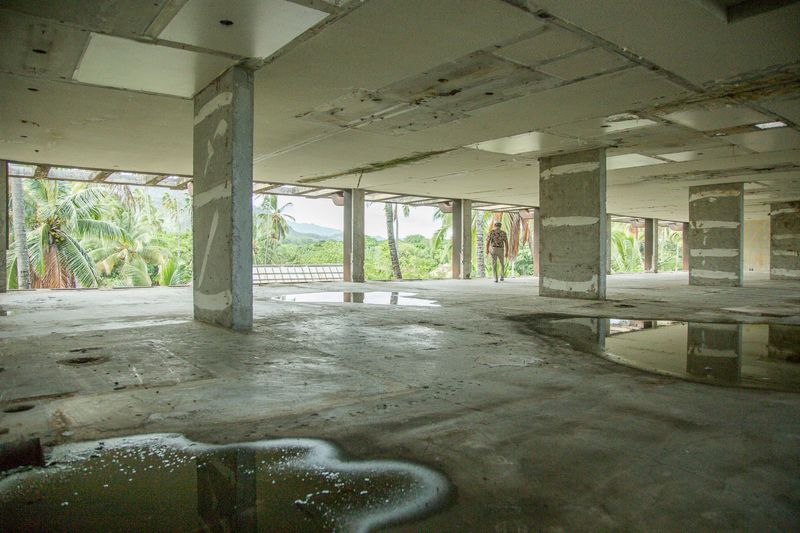
If you have followed the news here, you know the cycle. A plan appears, hopes rise, concerns get voiced, and then the timeline drifts.
The site keeps waiting while conversations circle.
It is not drama for the sake of it. Community voices in Hawaii are strong, which is a good thing, and legal layers add weight.
Culture and place ask to be handled with care.
I stand by the highway and imagine different futures. Some look polished, some look light and respectful, some never quite add up.
Meanwhile, the palms keep waving like they have time.
There is a lesson in patience tucked inside all this. Rushing a place rarely ends well, listening usually does.
If you are just passing through, the backstory adds texture to the view. It turns the ruins into a living question, not just a photo stop.
That question stays with you for the rest of the drive and maybe longer.
Locals See A Warning, Not A Curiosity
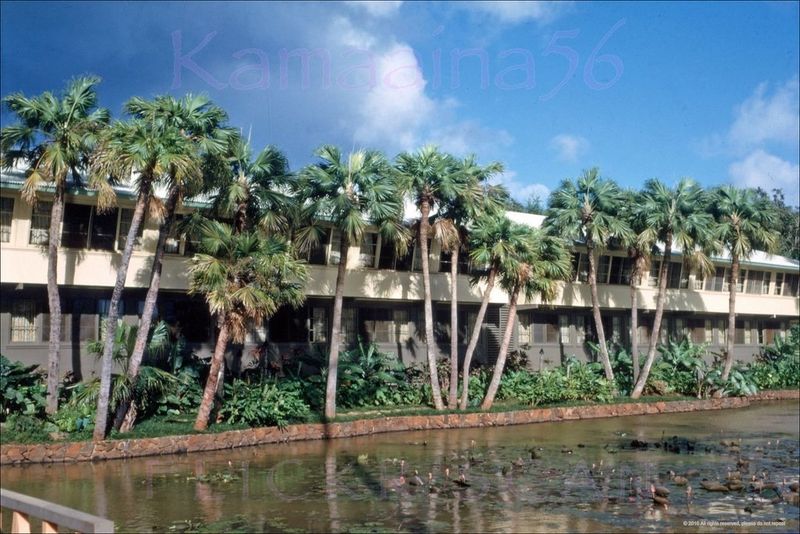
Spend a little time on Kauai and you hear it. For many residents, this site is not a novelty.
It is a reminder about promises made to Hawaii that did not age well.
I try to hold that in mind when I look through the fence. Curiosity is normal, but respect needs to lead.
The island carries stories longer than our trips do.
The warning is not shouted. It is more like a steady note in the background.
Think before you cheer for bigger, brighter, faster.
When the wind moves through the palms, you can almost hear that note, soft, but there. It shapes how you talk about the place after.
Travel changes when you listen to locals first. Roads feel different, stops feel smarter, and the day gains a calmer pace.
I think that is the best way to meet Hawaii, not just see it.
Urban Explorers Are Drawn To This Place
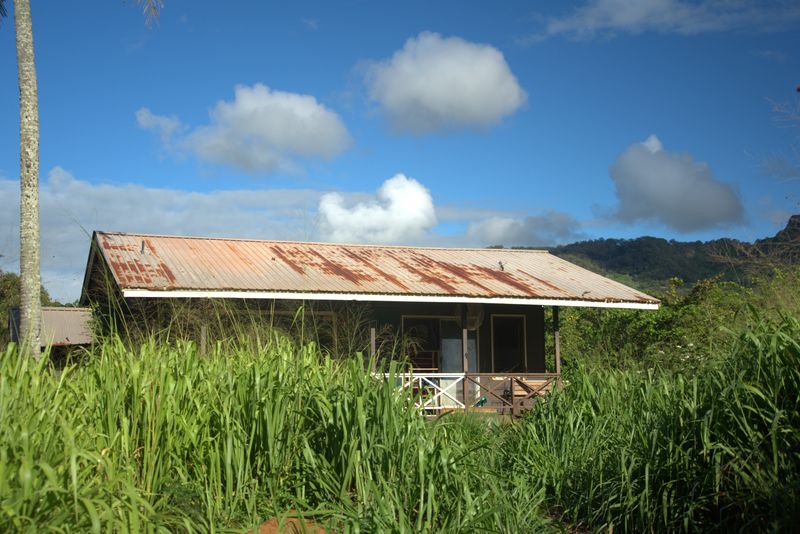
I get the fascination. Big empty spaces pull the eye, and the camera loves a cracked tile with a vine sneaking through.
But this spot has fences and clear rules, and that matters.
From the road, the angles still deliver plenty. Sun flares off glass, shadows cut across hallways, and palms lean into open roofs.
Your lens can tell a story without stepping over a line.
I have seen the online photos. Some feel haunting, some feel thoughtful, and a few feel like they missed the respect piece.
The best images honor distance and let the place breathe.
The state does not need us to push into unsafe corners to make a point. The mood is powerful right from the sidewalk.
Also, the light near sunset is unreal without any extra drama.
Make sure to take the careful route. Frame the lagoon, the repeating windows, the palm reflections.
Leave the rest to memory and keep the day easy.
The Lagoon And Grounds Still Feel Magical
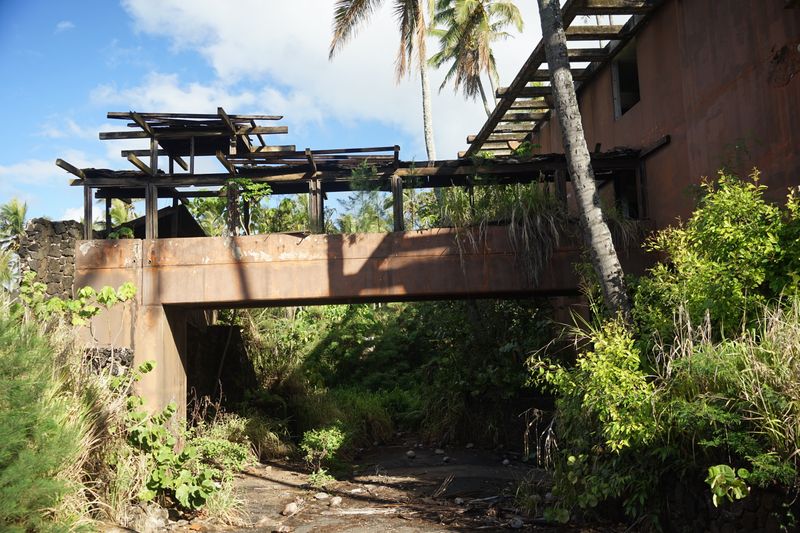
Even with the buildings slumping, the lagoon refuses to lose its calm. The water throws back the sky, and the palms trace slow arcs like metronomes.
It is simple, and it works on you.
I like to stand where the view opens up and let the mountains sit in the background. The layers come together cleanly, almost like a stage set without actors.
Your shoulders drop a notch without you asking them to.
The resort tried to frame beauty, but the land does that just fine on its own. You can feel that clarity settling in.
If you hit it near sunset, the reflections get glassy and thoughtful. Everything turns soft without going dim.
It is the kind of light that makes you talk quieter.
Bring patience, not plans, let the scene find you, and take the road slow when you leave. The mood lingers down the highway and might follow you through the next few days.
Time Froze The Resort In A Different Era
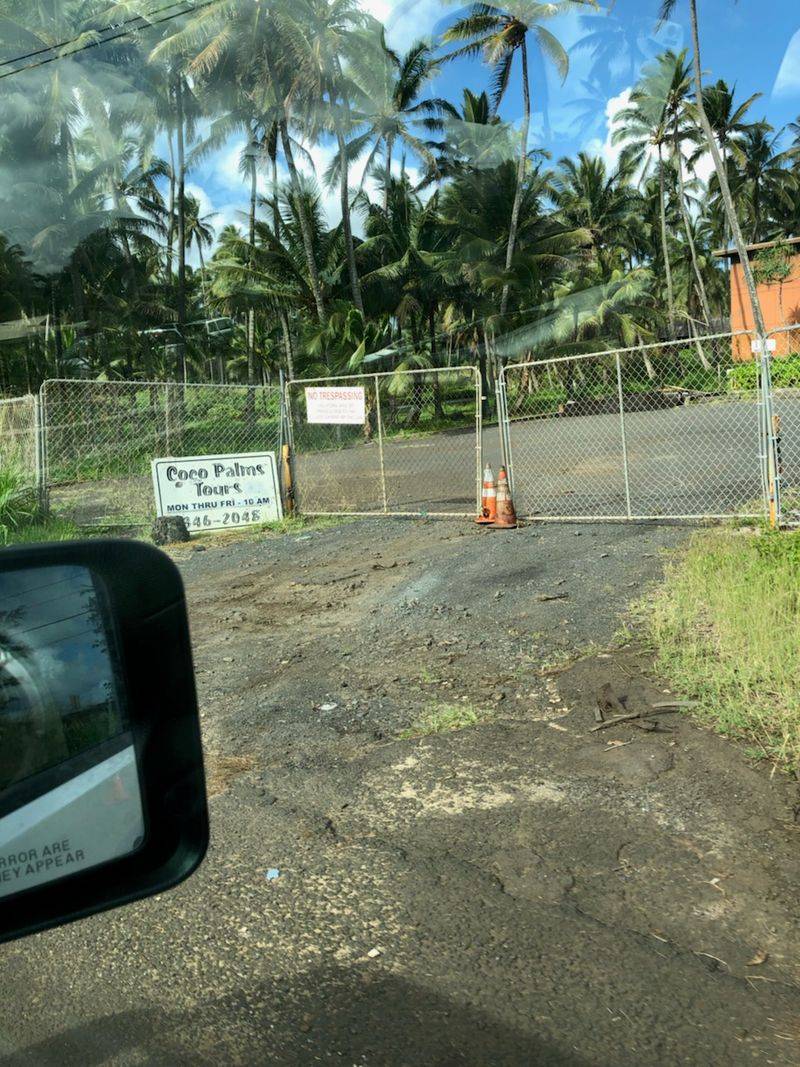
Some places evolve, some just pause. Coco Palms feels paused in mid century Hawaii, like a film strip halted between frames.
The details give it away, from the railings to the breezeways.
It is oddly moving to see that style standing against a wall of green. You realize how design carries the taste of a time.
Then you watch nature nudge that taste toward quiet.
I like catching the morning here when the light is kind. Angles soften, and the whole site looks like it might wake up.
It never does, but the feeling is gentle and good if you ask me.
The past is not asking to be restored by force. It is inviting a thoughtful read.
Think about what should remain, and what should return to the trees. By the time you pull away, the era sits with you like a song you half remember.
Hawaii has a way of doing that, turning memory into weather, and this stop is a long, warm breeze from another time.
Dear Reader: This page may contain affiliate links which may earn a commission if you click through and make a purchase. Our independent journalism is not influenced by any advertiser or commercial initiative unless it is clearly marked as sponsored content. As travel products change, please be sure to reconfirm all details and stay up to date with current events to ensure a safe and successful trip.
