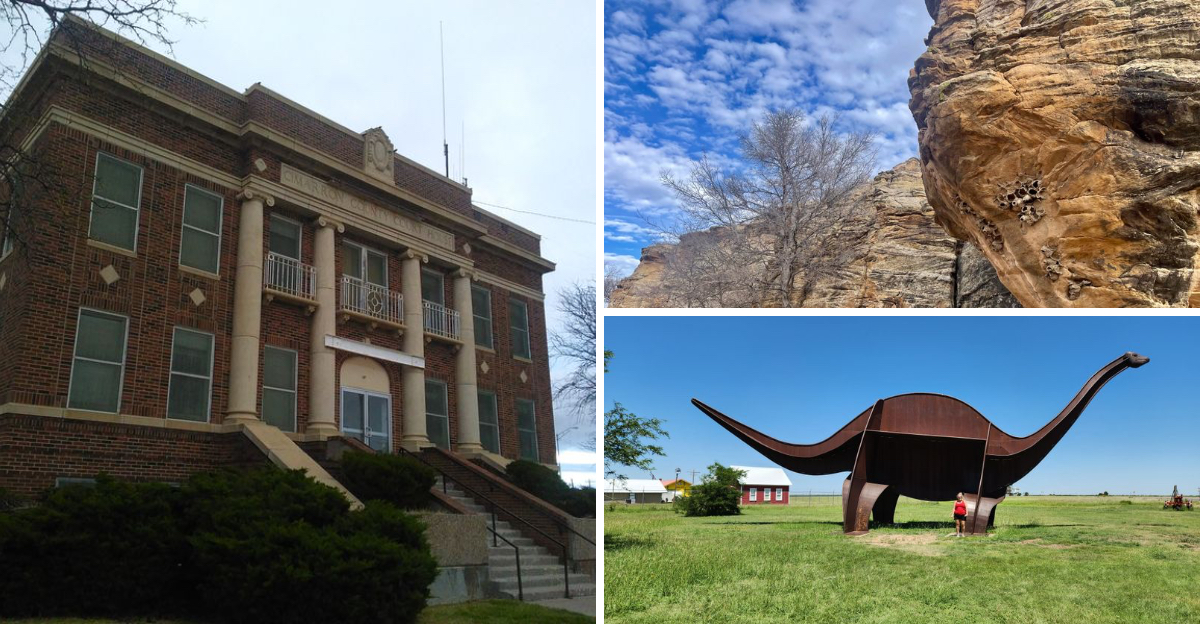
Far from the rolling green hills and dense forests most people picture when they think of Oklahoma, Boise City sits in the state’s narrow Panhandle, where the landscape stretches flat and endless under a sky that seems twice as wide.
This remote county seat of Cimarron County feels like another world entirely, shaped more by wind, wide horizons, and High Plains grit than by the oil fields and red dirt roads found elsewhere in Oklahoma.
With just over a thousand residents, Boise City carries a quiet dignity born from decades of surviving droughts, dust storms, and isolation.
The town’s remoteness is part of its charm. Travelers who venture this far west discover a place where history runs deep, where the scars of the Dust Bowl still echo in local memory, and where the pace of life slows to match the rhythm of the plains.
Unlike bustling cities in central Oklahoma, Boise City offers something rare: solitude, open space, and a genuine connection to the land. Here, you can stand in the middle of Main Street and feel the weight of the sky pressing down, unobstructed by skyscrapers or traffic.
It’s a place that rewards the curious, the quiet, and those willing to look beyond the surface to find stories etched into every weathered storefront and dusty trail.
A County Seat at the Edge of Nowhere
Boise City holds the distinction of being the only incorporated town in Cimarron County, making it both the county seat and the social hub for one of the most sparsely populated regions in Oklahoma.
The town was founded in 1908 during a land boom fueled by promises of fertile soil and plentiful water, though reality proved harsher than the promotional brochures suggested.
Early settlers arrived with high hopes, only to face relentless wind, scarce rainfall, and soil that required constant coaxing to yield crops.
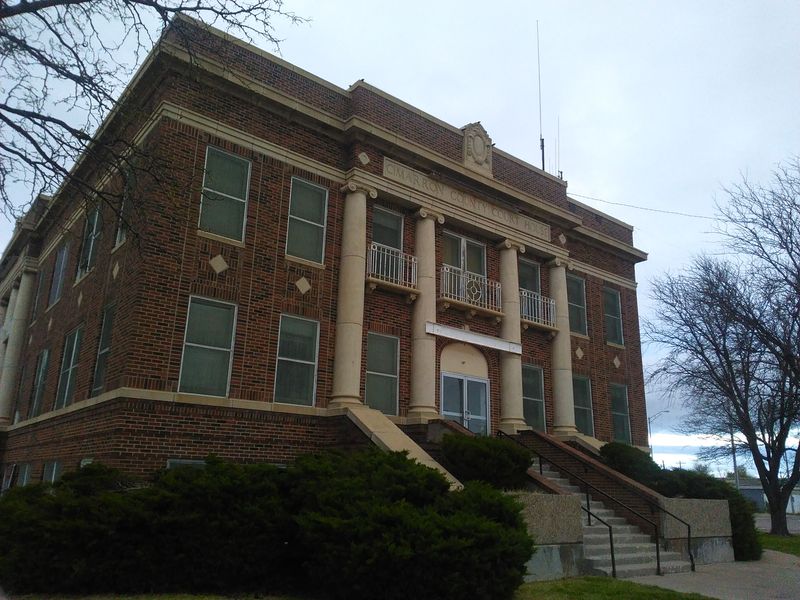
Despite these challenges, Boise City endured. The courthouse, built in the 1920s, still anchors the town square, a testament to the community’s determination to establish order and civility even in the harshest conditions.
Walking around the square today, you can see remnants of that early optimism in the brick storefronts and wide streets designed for a population that never quite materialized.
The town’s isolation shaped its character. With the nearest city of any size hours away, residents learned to rely on each other, creating a tight-knit community where everyone knows their neighbors.
This sense of interdependence remains strong today, visible in the way locals gather at the café for morning coffee or pitch in during harvest season.
For visitors, Boise City offers a rare glimpse into small-town life at its most authentic. There are no chain restaurants or big-box stores here, just locally owned businesses that have served the community for generations.
The town’s remoteness, once seen as a liability, has become its greatest asset, preserving a way of life that has vanished elsewhere in Oklahoma.
The Only Town Bombed During World War II
Among Boise City’s many claims to fame, perhaps the most unusual is its status as the only place in the continental United States to be bombed during World War II. On a summer night in 1943, a B-17 bomber crew from Dalhart Army Air Base in Texas mistook the town’s brightly lit courthouse square for their practice target range.
The crew dropped six practice bombs on the sleeping town, damaging a garage, cratering a street, and giving residents the fright of their lives.
Remarkably, no one was injured in the incident, and the town took the mistake in stride. The bomber crew, mortified by their error, apologized profusely, and the event became part of local lore rather than a source of lasting anger.
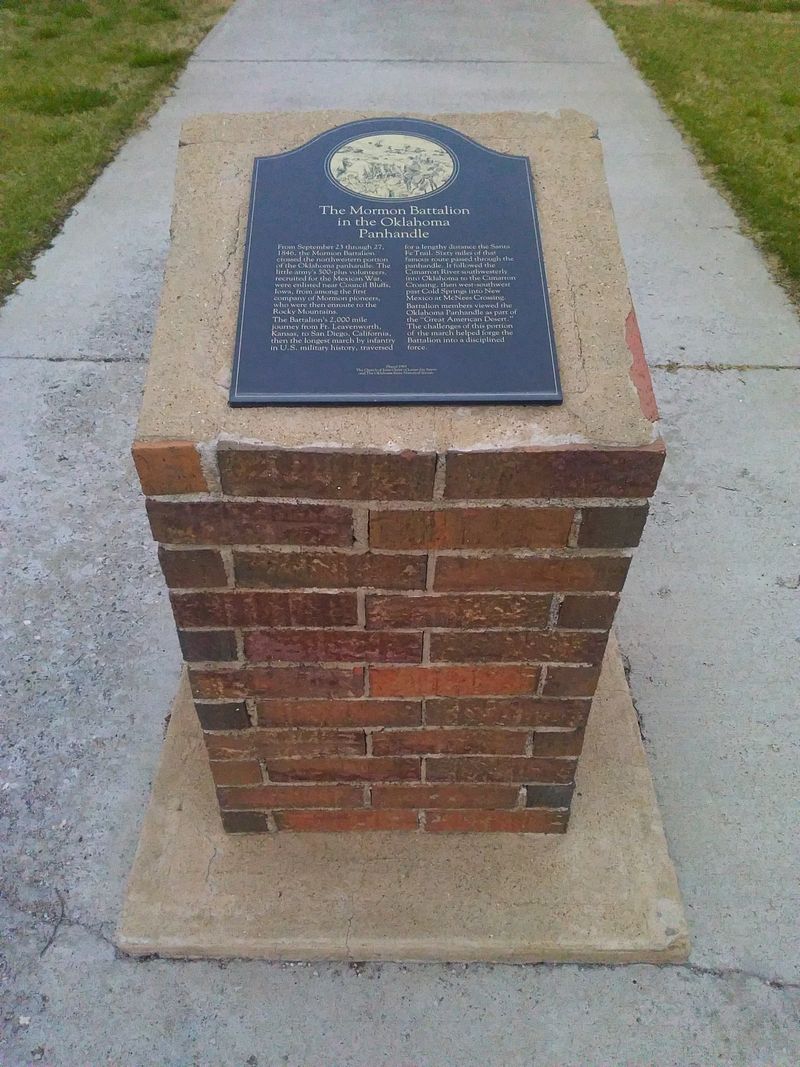
Today, a historical marker near the courthouse commemorates the bombing, drawing curious visitors who want to hear the full story from locals who delight in retelling it.
The incident speaks to the town’s character. Rather than dwelling on the mishap, residents turned it into a point of pride, proof that even in the middle of nowhere, Boise City could make history.
The story also highlights the area’s importance during the war years, when military training bases dotted the High Plains and pilots practiced bombing runs over the vast, empty landscape.
Visitors can learn more about the bombing at the Cimarron Heritage Center, where exhibits detail the event and its place in the broader context of the town’s history. It’s a reminder that even the most isolated places can find themselves caught up in world events.
Cimarron Heritage Center Museum
Housed in a former Catholic church building, the Cimarron Heritage Center serves as the cultural and historical heart of Boise City, preserving the stories of the people who carved out lives in one of Oklahoma’s most challenging environments.
The museum’s collection spans from prehistoric times through the pioneer era, the Dust Bowl, and into the modern day, offering visitors a comprehensive look at how human determination has shaped this remote corner of the state.
Exhibits include Native American artifacts, pioneer tools, farming equipment, and personal belongings of early settlers.
One particularly moving display focuses on the Dust Bowl, with photographs showing the massive dust storms that engulfed the town and firsthand accounts from survivors describing what it was like to live through years of relentless drought and wind.
Another section commemorates the 1943 bombing, complete with fragments from the practice bombs and newspaper clippings from the time.
The museum also houses an impressive collection of historical photographs that document the town’s evolution from a hopeful frontier settlement to a resilient community that has weathered every challenge thrown its way.
These images provide a visual timeline of Boise City’s story, showing how the town looked in its early days and how it has changed over the decades.
Knowledgeable volunteers staff the museum, many of them longtime residents with deep roots in the area who can answer questions and share stories not found in any exhibit.
Their personal connections to the material make a visit feel less like a traditional museum experience and more like an afternoon spent listening to a friend recount their family history.
Address: 1300 North Cimarron Avenue, Boise City, Oklahoma
Autograph Rock and Prehistoric Signatures
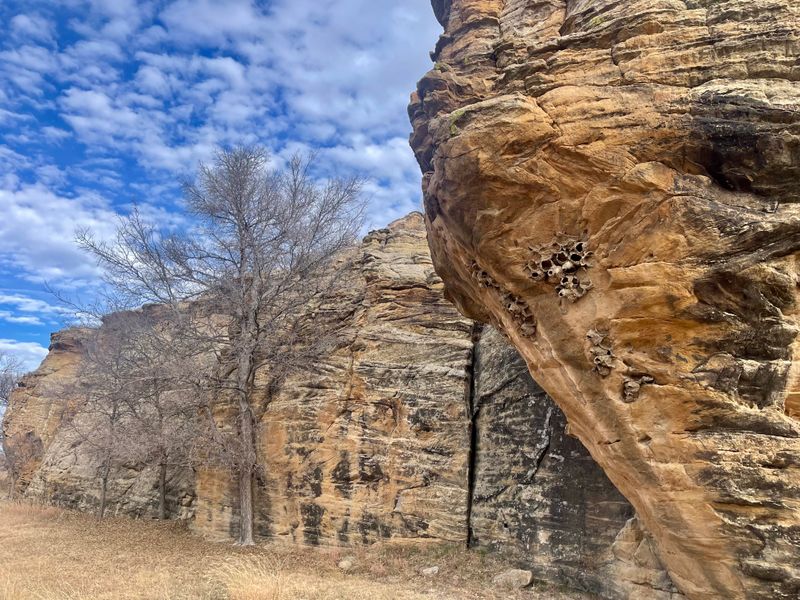
About 30 miles northwest of Boise City, along the banks of the Cimarron River, stands Autograph Rock, a massive sandstone outcropping covered in signatures, dates, and messages carved by travelers passing through the region over the past two centuries.
This remarkable landmark served as a guestbook for pioneers, traders, soldiers, and cowboys who paused here to rest and leave their mark for posterity.
The earliest dated inscription on the rock goes back to 1849, though many undated carvings likely predate that. Names of Santa Fe Trail travelers appear alongside those of Civil War soldiers, cattle drovers, and early settlers.
Reading these inscriptions is like flipping through pages of history, each name representing a person who journeyed across this vast, lonely landscape and felt compelled to announce their presence to whoever might come after.
Beyond the historical graffiti, the site itself holds geological and archaeological significance. The surrounding area contains evidence of much older human presence, including petroglyphs created by Native peoples who inhabited the region long before European contact.
The rock formations, shaped by millions of years of erosion, create a dramatic backdrop that makes the site worth visiting even without the historical inscriptions.
Reaching Autograph Rock requires driving on unpaved county roads that can become impassable after rain, so checking conditions before heading out is essential. The journey reinforces just how isolated this part of Oklahoma remains, with miles of empty grassland stretching in every direction.
Standing at the rock, surrounded by silence and endless sky, you can almost imagine what it must have been like for those early travelers to cross this unforgiving landscape with nothing but determination and hope.
Black Mesa State Park and Nature Preserve
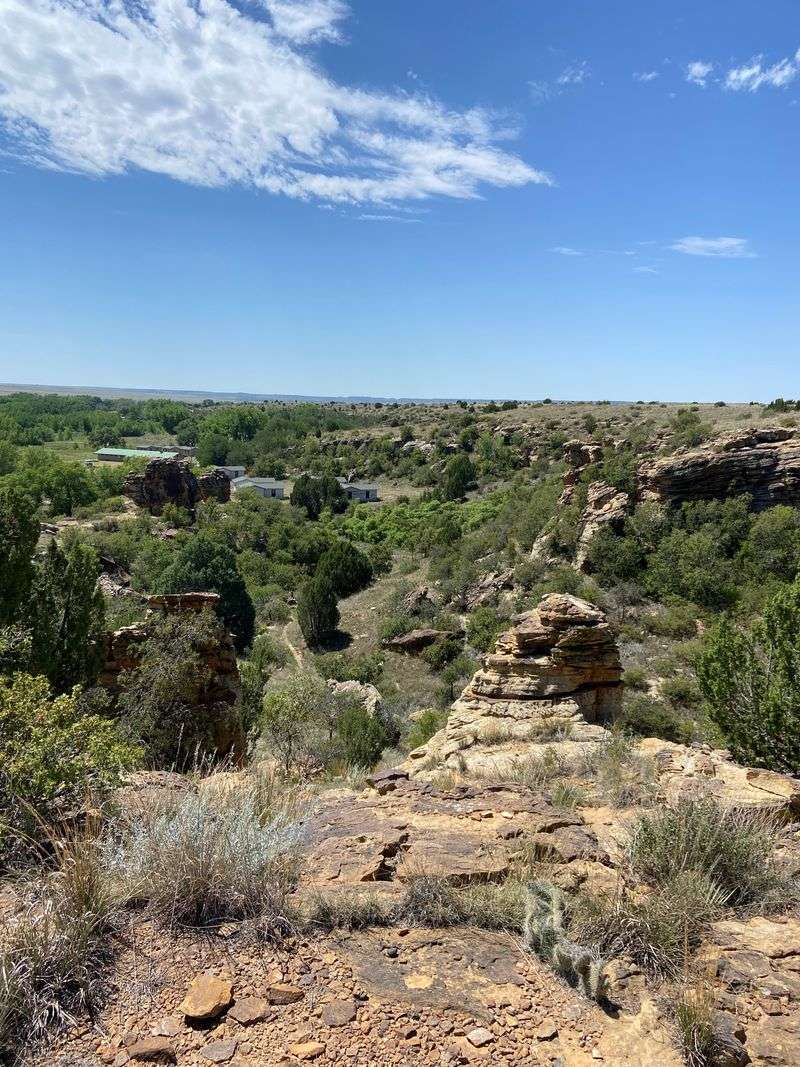
Though Black Mesa State Park lies about 30 miles west of Boise City near the tri-state corner where Oklahoma meets Colorado and New Mexico, it remains the premier natural attraction for anyone visiting the Panhandle.
The park encompasses over 300 acres of High Plains landscape, with the mesa itself rising to 4,973 feet, making it the highest point in Oklahoma.
The stark beauty of the terrain, with its mesas, buttes, and wide-open vistas, feels more like the Southwest than the Oklahoma most people imagine.
Hiking trails lead from the state park to the mesa’s summit, a moderately challenging trek of about eight miles round trip that rewards hikers with panoramic views extending into three states.
Along the way, you pass through different ecological zones, from shortgrass prairie to piñon-juniper woodland, each supporting its own community of plants and wildlife.
Keep your eyes open for pronghorn antelope, mule deer, roadrunners, and golden eagles.
The mesa holds geological significance as well, its layers of rock revealing millions of years of earth history. Fossils and dinosaur tracks have been found in the area, adding another dimension to the landscape’s appeal.
The night sky here ranks among the darkest in Oklahoma, making the park a favorite destination for stargazers who want to see the Milky Way in all its glory, undiminished by light pollution.
Camping facilities at the park are basic but well-maintained, offering a chance to spend a night under those spectacular stars. Waking up to a High Plains sunrise, with the land stretching away in shades of gold and amber, provides a moment of connection to the natural world that’s increasingly rare in modern life.
Main Street’s Timeless Character
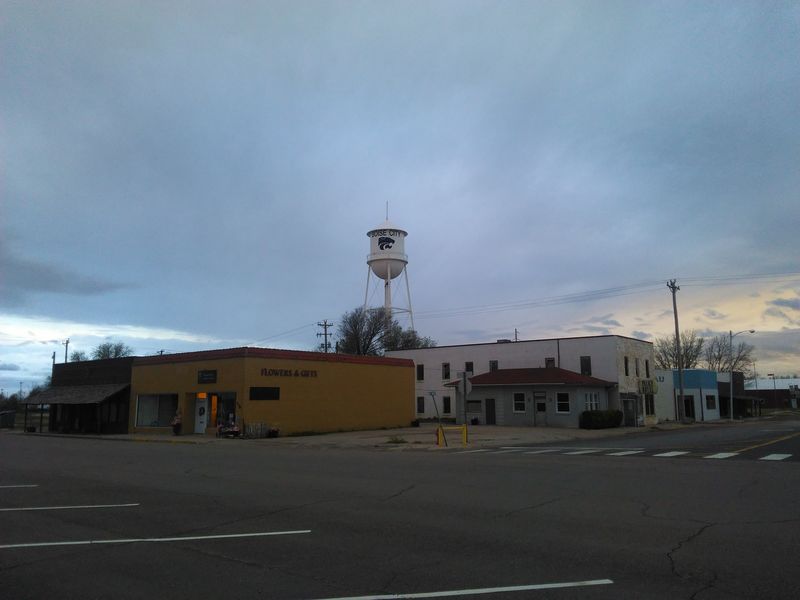
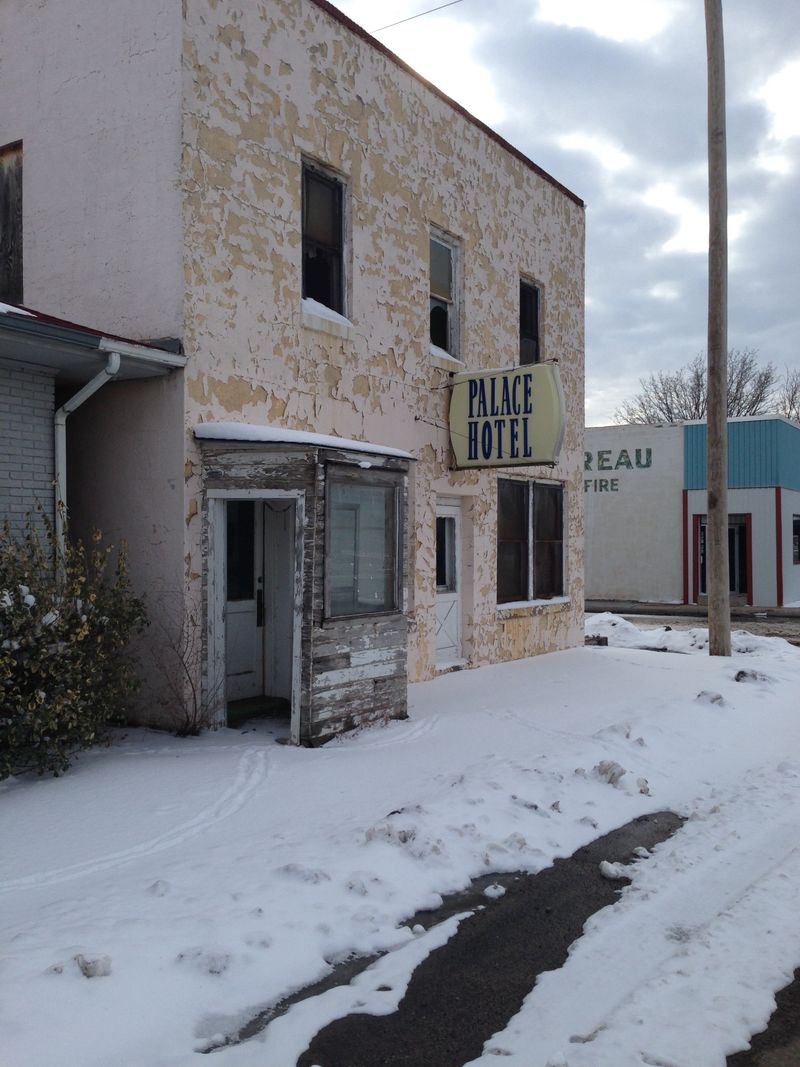
Walking down Boise City’s Main Street feels like stepping into a different era, not because the town is frozen in amber but because it has retained an authenticity that’s vanished from most American small towns.
The wide street, originally designed to allow wagons to turn around easily, is lined with single-story brick buildings that have housed businesses for generations.
Some storefronts stand empty now, casualties of changing economics and population decline, but others continue to serve the community as they have for decades.
The local café opens early to serve farmers and ranchers their morning coffee and breakfast before they head out to work. Conversations flow easily here, with newcomers welcomed into discussions about weather, cattle prices, and local news.
A few doors down, the hardware store stocks everything from fence posts to work gloves, its shelves organized with the kind of practical efficiency that comes from knowing exactly what customers need.
What makes Main Street special isn’t architectural grandeur or trendy boutiques. Instead, it’s the sense that this is a real working town where people still depend on local businesses and know the owners by name.
There’s no pretense here, no attempt to create a tourist-friendly façade. Boise City is what it is, a small agricultural community doing its best to survive in a challenging environment.
Photographing Main Street requires patience and respect. This isn’t a movie set or living history museum.
Real people live and work here, and they deserve to have their privacy honored. But for those who take the time to look closely, the street reveals layers of history in its faded signs, weathered brickwork, and the determined faces of residents who choose to stay.
Agricultural Heritage and Working Ranches
Agriculture defines Boise City and the surrounding Panhandle region, though the type of farming practiced here differs dramatically from the cotton and peanut fields of southern Oklahoma or the wheat farms of the central part of the state.
The Panhandle’s climate and soil favor cattle ranching and dryland wheat farming, both enterprises that require substantial land, water management expertise, and the ability to withstand years of unpredictable weather.
Driving the roads around Boise City, you pass working ranches that span thousands of acres, with cattle grazing on native grassland that’s been carefully managed to prevent the kind of overgrazing that contributed to the Dust Bowl.
Modern ranchers employ sustainable practices learned through hard experience, rotating pastures, maintaining windbreaks, and using technology to monitor soil moisture and grass health.
It’s a far cry from the destructive farming methods of the early 20th century.
Wheat fields stretch to the horizon in geometric patterns, their color changing with the seasons from the bright green of spring growth to the golden amber of harvest time. Center-pivot irrigation systems dot the landscape, drawing water from the Ogallala Aquifer to supplement scarce rainfall.
The sustainability of this water use remains a constant concern, as the aquifer is being depleted faster than it can recharge.
For visitors interested in agricultural tourism, some local ranches offer tours by appointment, providing insight into modern High Plains ranching. These experiences offer a chance to understand the challenges and rewards of making a living from this harsh but beautiful land, and to meet the families who have dedicated their lives to it.
Stargazing Under Unpolluted Skies
One of Boise City’s greatest natural assets is something that can only be fully appreciated after dark. With virtually no light pollution and clear, dry air typical of the High Plains, the night sky here reveals itself in stunning detail.
On a moonless night, the Milky Way stretches overhead like a river of light, and thousands of stars invisible in urban areas shine with brilliant clarity.
The town’s isolation, once considered a disadvantage, has become an unexpected gift for amateur astronomers and anyone who appreciates the beauty of an unspoiled night sky. Standing in the middle of town or driving a few miles out into the countryside, you can see celestial objects that require telescopes to view from more populated areas.
Meteor showers put on spectacular displays here, with shooting stars streaking across the sky every few minutes during peak events.
Local residents take this nightly spectacle somewhat for granted, having grown up under these magnificent skies, but visitors from cities often find the experience profoundly moving.
There’s something humbling about seeing the universe displayed in such glory, a reminder of how small we are and how vast the cosmos beyond our planet.
The silence of the Plains at night adds to the experience, broken only by the occasional call of a coyote or the whisper of wind through grass.
Photography enthusiasts find Boise City ideal for astrophotography, with the dark skies allowing for stunning long-exposure shots of star trails, the Milky Way, and deep-sky objects. Even a simple camera on a tripod can capture images that would be impossible in light-polluted areas.
Bring warm clothes, though. Even summer nights can turn cool on the High Plains.
Community Spirit and Annual Celebrations
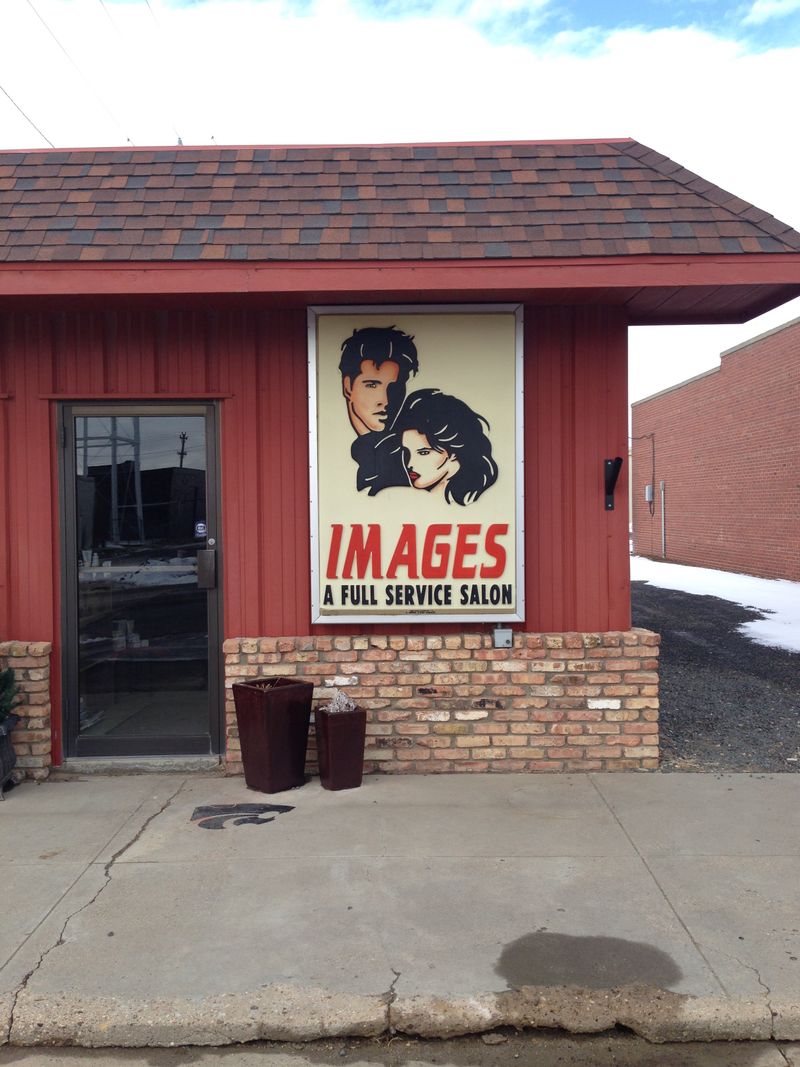
Despite its small size and isolation, Boise City maintains a strong sense of community that expresses itself through annual events and celebrations that bring residents together and welcome visitors.
The town’s remoteness has actually strengthened social bonds, as people here understand they can only depend on each other when times get tough, whether that means helping a neighbor repair storm damage or supporting local businesses through economic downturns.
The annual Cimarron County Fair, held each summer, showcases the agricultural heritage that sustains the region. Livestock shows, baking competitions, and exhibits of local crafts fill the fairgrounds, while kids compete in everything from pig scrambles to talent shows.
It’s a genuine community event, not a tourist attraction, though visitors who happen to be passing through are warmly welcomed.
Other events throughout the year mark the turning of seasons and provide excuses for residents to gather and socialize. Christmas brings a light display and community dinner, while summer sees barbecues and outdoor concerts in the park.
These gatherings might seem modest compared to festivals in larger towns, but they serve an essential function in maintaining the social fabric of a place where people are spread thin across a vast landscape.
What strikes visitors most is the genuine warmth of local residents, who are happy to chat with strangers and share stories about their town. There’s no standoffishness here, no suspicion of outsiders.
People are simply friendly, curious about what brings you to their corner of Oklahoma, and proud to show off their community to anyone interested enough to stop and look around. That hospitality, more than any landmark or attraction, makes Boise City memorable.
Dear Reader: This page may contain affiliate links which may earn a commission if you click through and make a purchase. Our independent journalism is not influenced by any advertiser or commercial initiative unless it is clearly marked as sponsored content. As travel products change, please be sure to reconfirm all details and stay up to date with current events to ensure a safe and successful trip.
