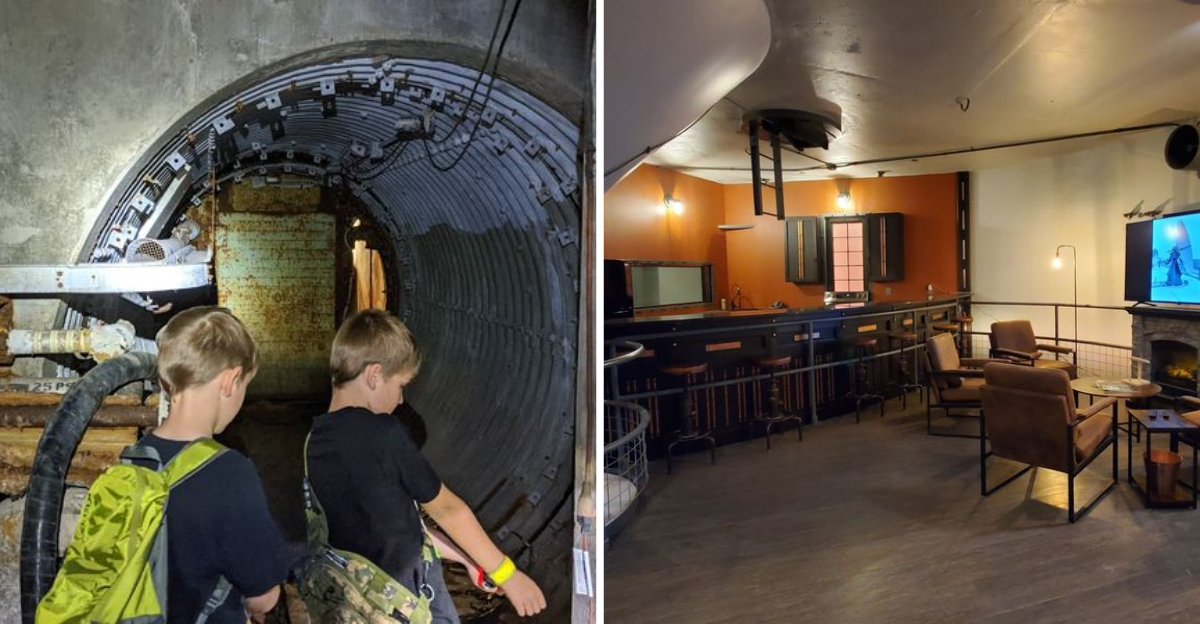
Wheat fields roll on forever in Kansas, the sky impossibly wide. Buried beneath it all is one of the most extraordinary Cold War secrets you can actually visit today. A former missile site once housed a nuclear tipped intercontinental ballistic missile capable of reaching targets thousands of miles away.
It was decommissioned in the nineteen sixties, but the concrete, the blast doors, and the weight of history never went anywhere. Something about this place stays with you long after you drive away. I think that is exactly the point.
The Cold War Origins of the S-8 Atlas Missile Site
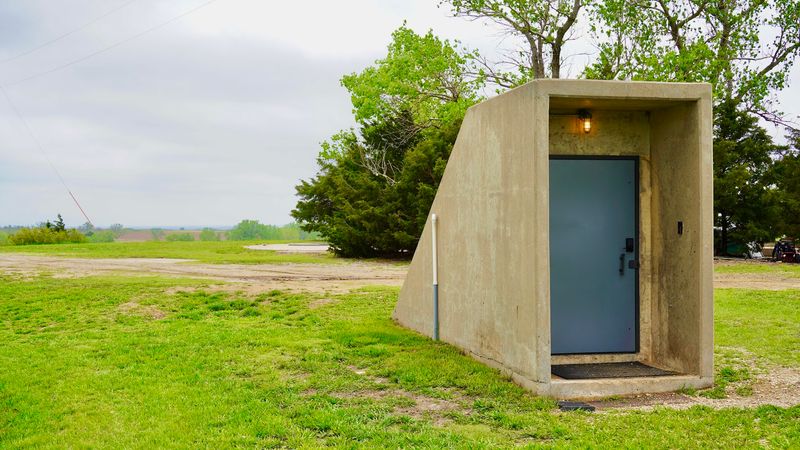
Few places in the American Midwest carry the kind of quiet, bone-deep history that sits beneath the Kansas plains near Wilson. The S-8 Atlas Missile Site was built between 1959 and 1961, a direct response to the Soviet Union launching Sputnik into orbit and rattling the nerves of an entire nation.
The U.S. Air Force needed a fast, powerful counter.
The Atlas F intercontinental ballistic missile was their answer, and more than 70 silos were built across the country, with 12 clustered around Salina, Kansas alone. These were not modest structures.
They were engineered to survive a nuclear blast and still launch a retaliatory strike.
The missiles housed here could travel between 5,500 and 8,700 miles, carrying a nuclear warhead far more destructive than anything used in World War II. The whole operation ran under the doctrine of mutually assured destruction, meaning both sides would be destroyed if either fired first.
That grim logic kept the peace, at least in theory. The site operated as a top-secret Air Force base, and most people living nearby had no real idea what was buried under the ground they walked on every day.
By 1965, the Atlas F was already considered outdated. The more advanced Titan missile made it obsolete, and the site was quietly decommissioned.
The hardware was removed, the doors were sealed, and the Kansas wind kept blowing over a secret that had been buried 176 feet underground.
Engineering a Fortress 176 Feet Underground
Getting your head around what it actually took to build this place is part of what makes visiting so jaw-dropping. The silo descends 176 feet straight down into the Kansas earth, and every inch of it was built to take a punch from a nuclear explosion and keep functioning.
The rebar used in construction was over three inches thick. The concrete was mixed with a special epoxy resin that made it both strong and slightly flexible, able to absorb shockwaves rather than simply crack under pressure.
The surface concrete alone was nine feet thick.
The blast doors are something else entirely. They weighed 675 tons and were made of manganese, a metal chosen specifically for its toughness.
Only one blast door could be open at any given time, a security protocol that also served as a pressure management system.
Inside the Launch Control Center, the floor was not resting on the ground like a normal building. It was suspended from the ceiling using air shocks, essentially floating, so that even during a nearby explosion the crew inside could stay stable and operational.
The two-thousand-pound interior doors added another layer of protection. Every design choice was deliberate, every material selected for a specific purpose.
This was not just a building. It was a machine built to survive the end of the world and still do its job.
Seeing all of this in person makes the engineering feel almost surreal, like something from a science fiction story that turned out to be completely real.
Decommissioning and the Hole in the Blast Door
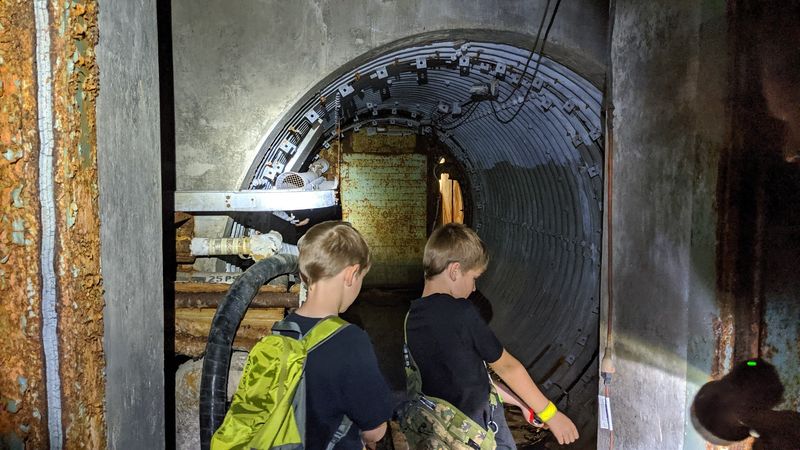
There is a detail about the decommissioning of this site that stops most visitors in their tracks the moment they hear it. When the U.S. government shut down the Atlas F sites in 1965, they needed to prove to the Soviet Union that the missiles were truly gone and the sites were no longer operational.
The solution was blunt and almost theatrical. A hole was physically cut into one of the massive blast doors, the same doors that had been engineered to withstand nuclear blasts.
That deliberate damage was the proof, a visible scar that said clearly: this weapon is no longer a threat.
It is a strange thing to stand in front of and think about. The door that once represented the most serious kind of military deterrence was punctured as a gesture of transparency between two superpowers who had been staring each other down for years.
That hole is still there today. You can see it on the tour, and it hits differently than you might expect.
It is not dramatic or loud. It is just a hole in a very thick door, and somehow that makes it more powerful, not less.
The whole process of decommissioning stripped the site of its missiles and most of its equipment, but it could not strip the place of its atmosphere. The tunnels, the chambers, the sheer scale of the underground network all remained.
History has a way of sticking to concrete, and this place is proof of that.
Atlas Ad Astra Adventure Resort: A Silo Reborn
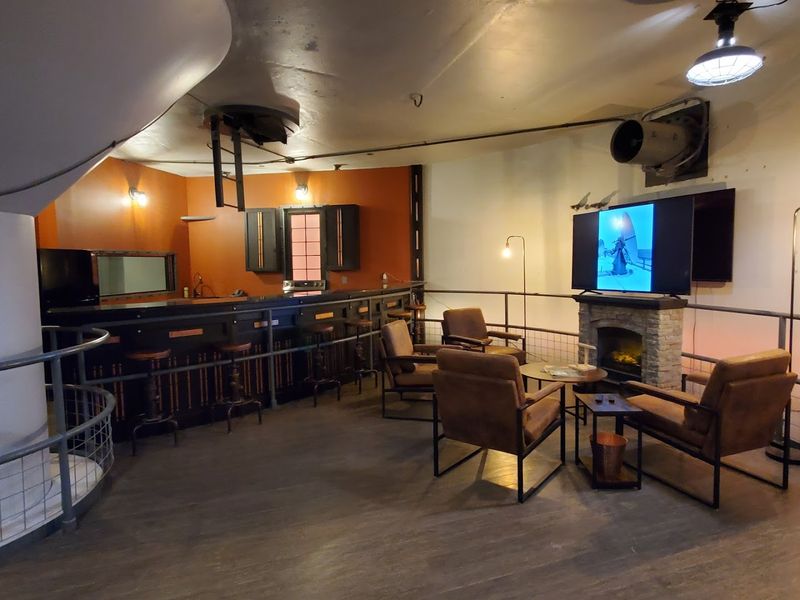
The word “resort” might raise an eyebrow when paired with a Cold War missile silo, but once you arrive at Atlas Ad Astra near Wilson, Kansas, the combination starts to make perfect sense. The property has been transformed into an educational adventure destination that somehow manages to feel both historic and genuinely welcoming.
Matthew, the owner and host, has poured serious energy into this place. He gives guided tours of the silo and the underground Launch Control Center, and his knowledge of the site is the kind you only get from someone who has spent years researching and restoring every corner of it.
The tour covers both the above-ground structures and the underground facilities, giving visitors a real sense of the full scale of the original installation. Matthew brings the history to life in a way that feels personal rather than like a rehearsed script.
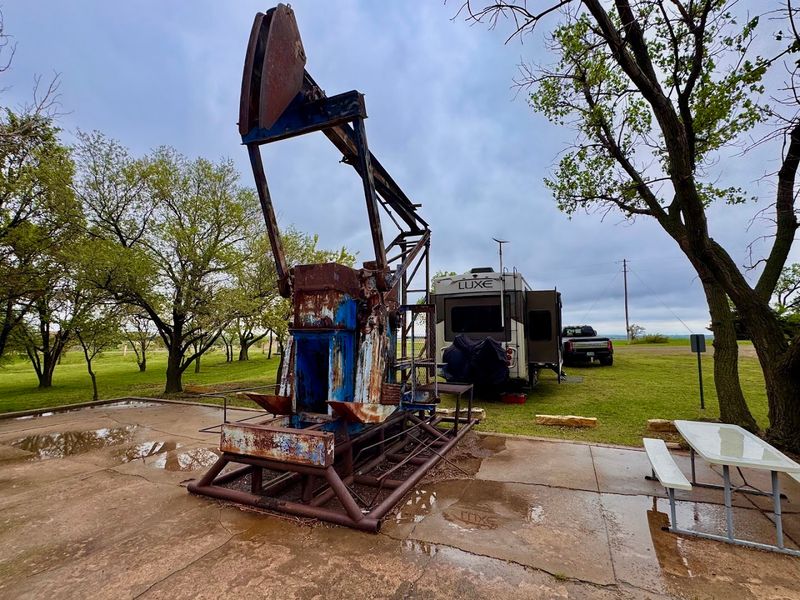
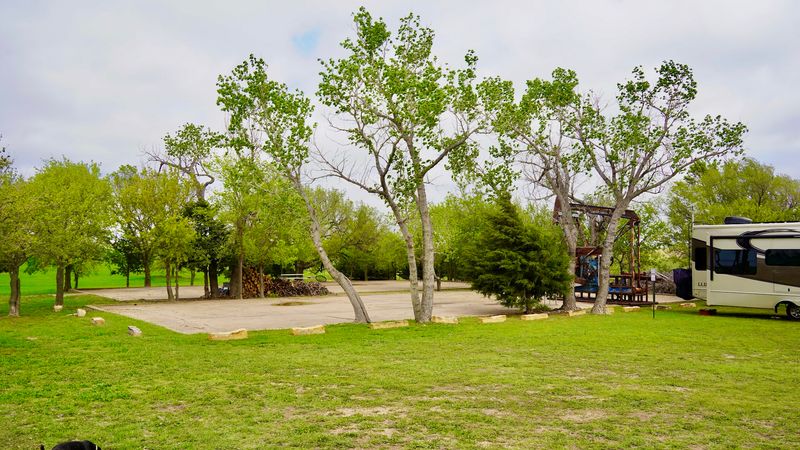
Beyond the tours, the site offers camping, glamping, and RV parking, making it easy to turn a quick stop into a full overnight stay. The Kansas sunsets from the property are genuinely spectacular, and with almost no light pollution in the area, the night sky is the kind that city people rarely get to experience.
For those who want to go all in, the former Launch Control Center has been converted into a fully furnished two-bedroom Airbnb. Sleeping inside an actual nuclear missile facility is not something most people can say they have done, and that novelty alone draws visitors from across the country.
What It Feels Like to Tour the Underground Launch Center
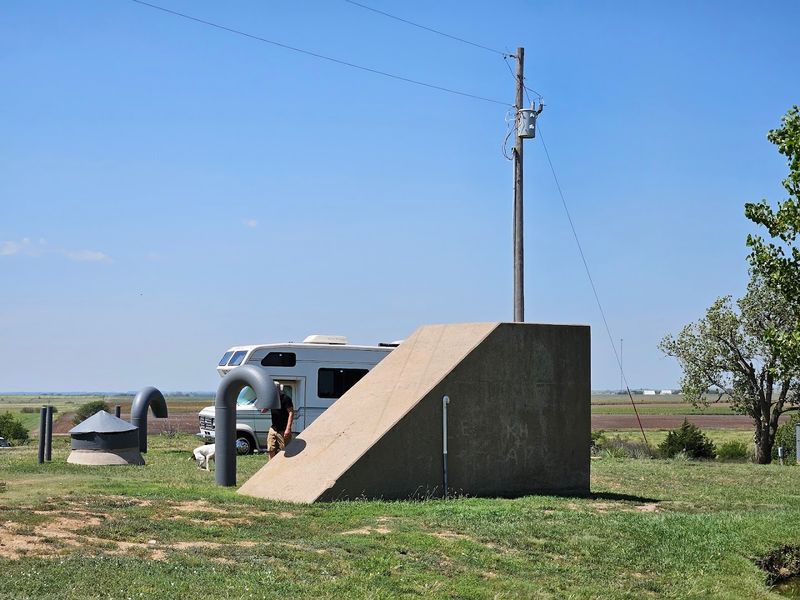
There is a moment during the tour when you step through one of those heavy doors and the air changes. It gets cooler, denser somehow, and the sound of the Kansas wind disappears completely.
The underground Launch Control Center has a stillness to it that feels loaded with everything that happened here.
The suspended floor is one of the first things that catches your attention once you understand what you are looking at. Knowing that it was designed to float during an explosion gives the room a slightly unsettling quality, even now when everything is calm and the threat has been gone for decades.
Matthew walks visitors through the purpose of each space, explaining how the crew would have lived and worked during an alert, what the launch sequence looked like, and how the communication systems functioned. The history comes through in layers, each one more specific than the last.
There are a lot of stairs involved, which visitors with mobility concerns should plan for ahead of time. The descent into the silo is physically demanding, but the payoff at the bottom is worth every step.
The scale of the structure does not fully register until you are standing inside it.
Buying tickets online in advance is strongly recommended since tours can fill up, especially during peak travel season. The site is conveniently located just off Interstate 70, making it an ideal stop for anyone crossing Kansas rather than just passing through it without stopping to look around.
Why the Legacy of This Place Refuses to Fade
Some places carry their history loudly, with plaques and monuments and guided audio tours. This site does something quieter and maybe more effective.
The weight of what happened here settles over you gradually, the way a cold front moves across the plains.
The S-8 Atlas Missile Site was never meant to be seen by the public. It was classified, buried, and operated in secrecy for the better part of a decade.
The people who built it, maintained it, and stood ready to launch from it were doing something they believed was necessary to prevent a war that could have ended everything.
That sense of purpose, urgent and enormous and now frozen in time, is what refuses to leave this place. The concrete absorbed it.
The blast doors hold it. Even the hole cut into the door as proof of decommissioning feels like a message that never quite finished being delivered.
Matthew’s vision for the site adds another layer to the legacy. He sees the underground structures as a model for future space habitat design, a bridge between Cold War survival engineering and the challenges of long-term human habitation beyond Earth.
That is a genuinely fascinating reframe of something built entirely for destruction.
Visitors consistently leave talking about how the experience stayed with them, not because it was frightening but because it was so unexpectedly human. Real people built this, maintained it, and then walked away from it.
That story does not get old, and this place makes sure you never forget it.
Address: 354 4th Rd, Wilson, KS 67490
