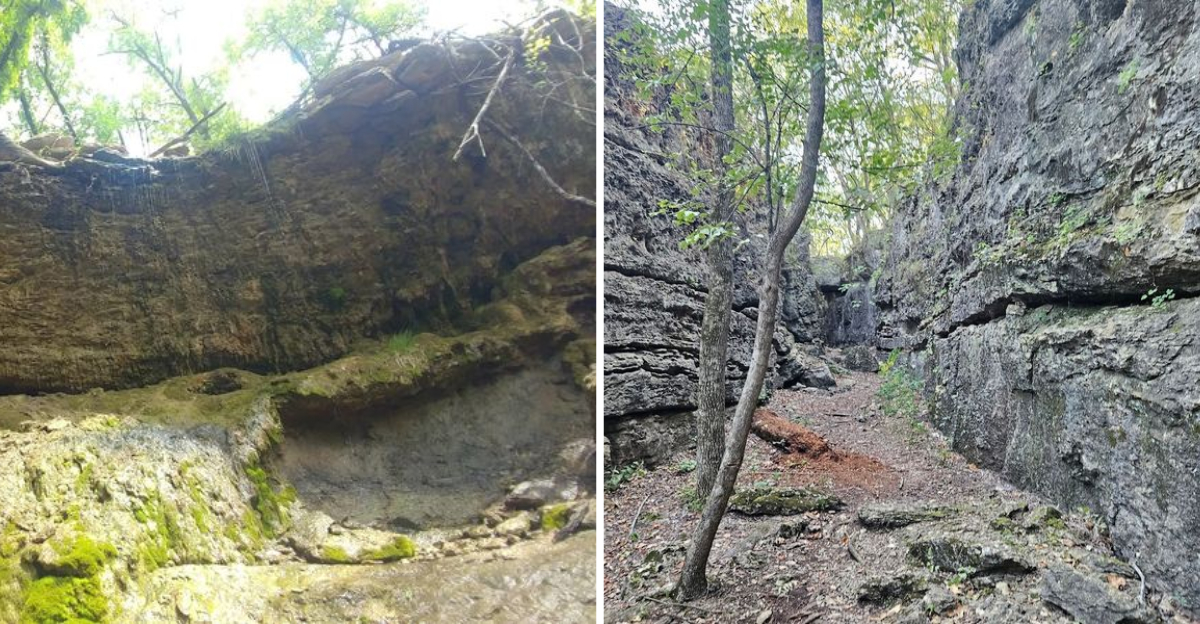
Fifteen mile trail packed with limestone bluffs, narrow canyons, and passages through rock tunnels that swallow the light whole. This Kansas trail does not feel like it belongs in the Sunflower State. I stumbled onto it almost by accident, and the moment I squeezed through the first rock chasm, I understood why hikers call it unlike anything else in Kansas.
Most people drive right past this part of the state without a second thought, which means the trail stays refreshingly quiet even on a good weekend. You can walk its entire length without crossing paths with more than one or two other people. Raw terrain, hidden geology, and genuine solitude.
The Rock Tunnels and Chambers That Eat the Light
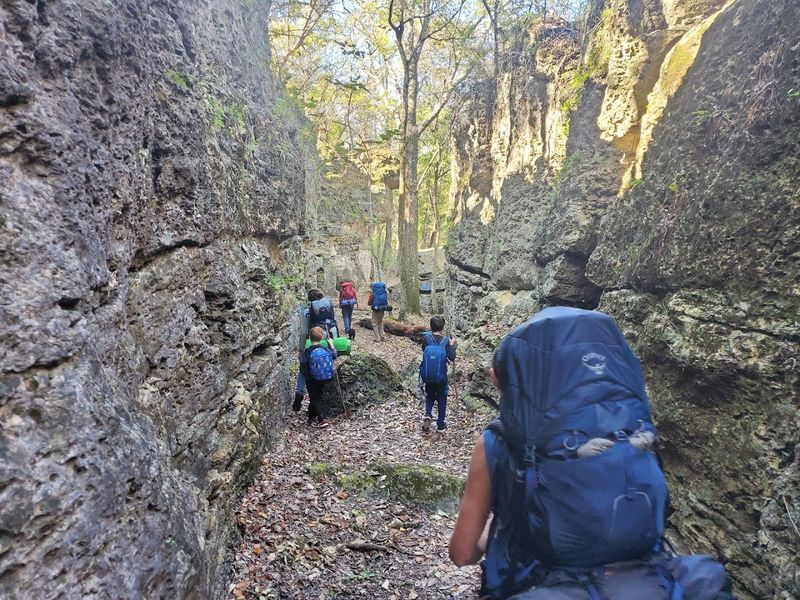
Nothing prepares you for the moment the walls close in. One second you are picking your way along a rocky ridge with open sky overhead, and the next you are pressing sideways through a limestone chasm so tight that your shoulders brush both walls at once.
The Elk River Hiking Trail near Elk City, Kansas, is full of these moments, and they hit you like a plot twist every single time.
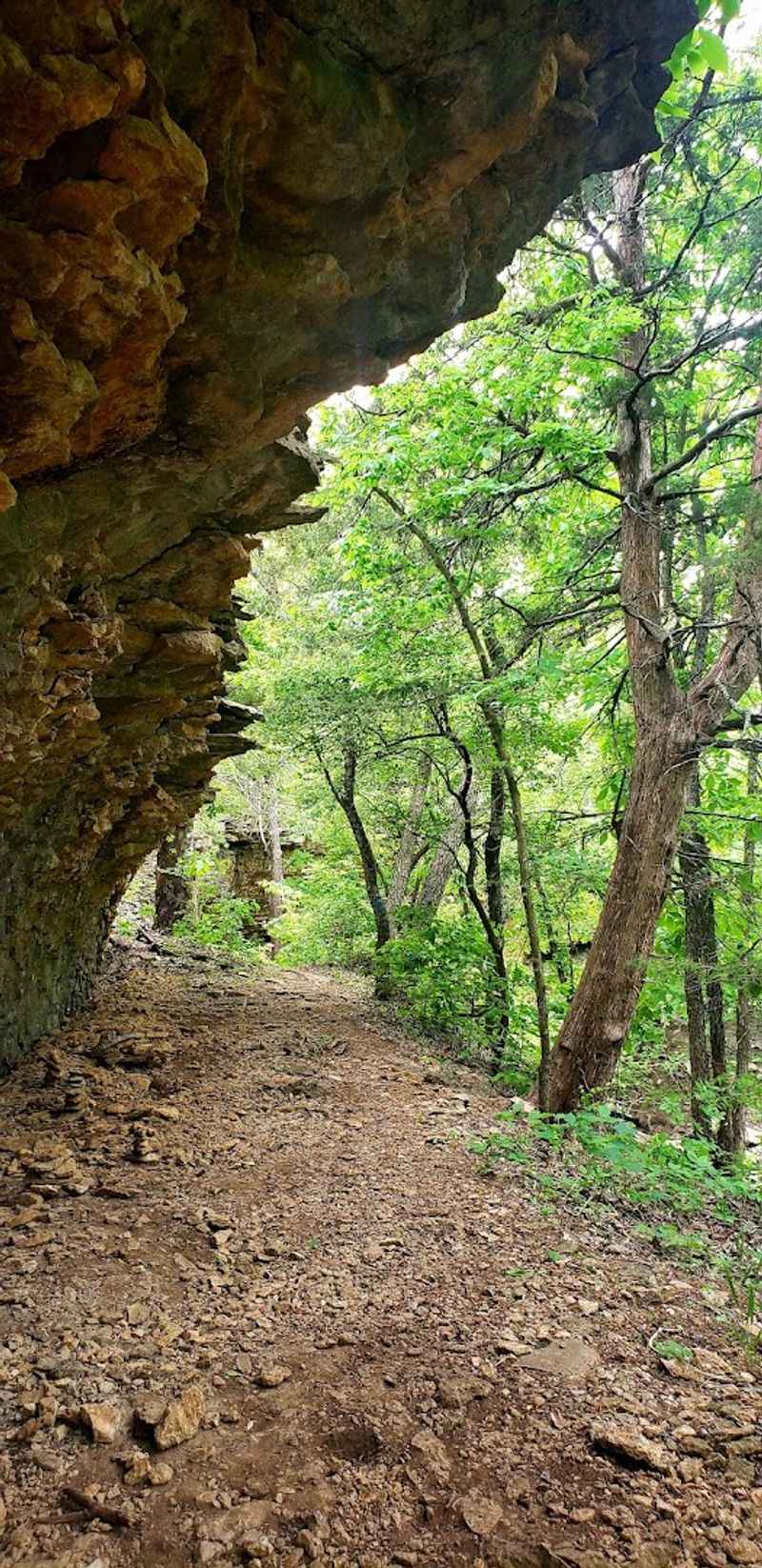
The rock tunnels and chambers along this trail are not marked on most casual hiking maps, which is part of what makes discovering them feel so personal. Some of these passages are wide enough to walk through upright, while others require ducking, turning sideways, or lowering yourself down a short rock face before reaching back up for your pack.
The geology here is limestone, and thousands of years of water and pressure have carved these spaces into something almost theatrical.
Inside the deepest chambers, daylight disappears almost completely. Your eyes adjust slowly, and for a few seconds you are genuinely in the dark, listening to the drip of water and the muffled sounds of wind above.
It is the kind of experience that sticks with you long after the drive home.
Bring a small headlamp even on a sunny day, because some of these passages are darker than they look from the outside. The rock surfaces can also be slick after rain, so traction matters more than you might expect.
Plan to move slowly through these sections and enjoy every second of them.
You come out the other side blinking, covered in dust, and grinning. The light feels different when you finally step back into it.
The air smells like dry stone and oak leaves. You turn around and look back at the dark opening, already planning your next visit.
That is the hold this place has on you.
A Trail That Refuses to Feel Like Kansas
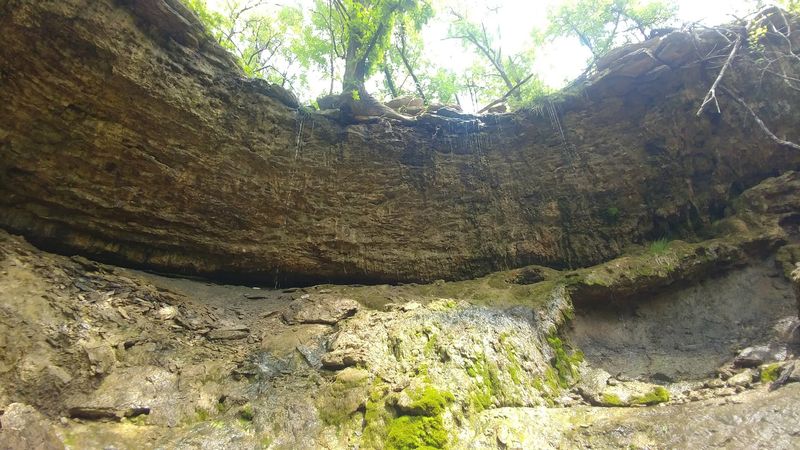
The first thing most people say when they reach the limestone bluffs is that it does not look like Kansas. That reaction is completely understandable.
The Elk River Hiking Trail winds along the north ridge above Elk City Lake, and the terrain it crosses looks more like something you would find in the Ozarks or the hill country of Texas than in a state most people picture as flat and featureless.
Sheer rock walls rise on one side while the Elk River winds through the tree canopy far below. The trail dips into narrow canyons, climbs short but steep rocky faces, and then opens onto ridge views that stretch for miles.
It is the kind of landscape that keeps rewarding you the longer you push forward.
Late spring is widely considered the best time to visit. The trees are fully leafed out, wildflowers push through the rocky soil, and the whole corridor feels alive in a way that winter simply cannot match.
Summer brings heavy shade from the canopy, which is a genuine relief on hot Kansas afternoons, though water sources become less reliable the further into the season you go.
The trail is blazed with blue markers and is well maintained for its length and difficulty level. Even so, the rugged character of the terrain means this is not a casual stroll.
Proper hiking shoes with solid grip make a real difference, especially on the steeper descents where loose rock can shift underfoot without much warning.
What 15 Miles of Rugged Terrain Actually Means
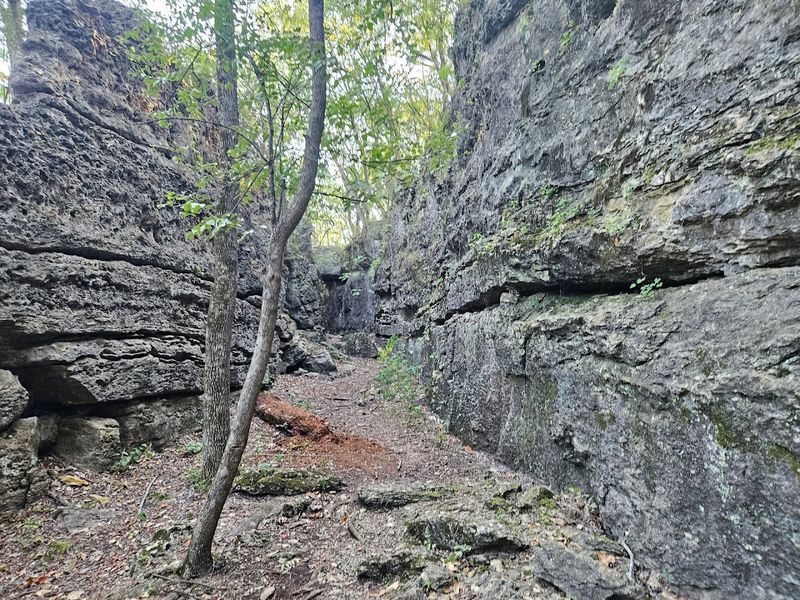
Fifteen miles sounds manageable until you factor in what kind of 15 miles these actually are. The Elk River Hiking Trail is rated intermediate to advanced in several sections, and that rating earns its credibility fast.
Within the first two miles from the east trailhead, you will hit a narrow descent where the move is to set your pack down on the rock, climb down about five or six feet, and then reach back up to retrieve your gear. It is not dangerous, but it is a preview of what the trail expects from you.
The ascents along the ridge are steep but mercifully short. You work hard for a few minutes, catch your breath on a flat stretch, and then do it again.
The rhythm becomes its own kind of meditation after a while. Rocky sections dominate the trail surface, so your ankles and knees are constantly making small adjustments, which adds up over a full day of hiking.
The full 15 miles takes most groups somewhere between nine and eleven hours to complete. The trail is one-directional end to end, so if you plan to go the full distance, you either need a shuttle vehicle waiting at the far trailhead or a solid plan to hike back.
Many people choose to do five to ten miles as an out-and-back, which still delivers plenty of the dramatic scenery and geological highlights without requiring a full-day commitment.
Carry more water than you think you need. The trail is demanding, the shade helps, but hydration is non-negotiable on this kind of rocky terrain.
Camping Under the Stars Along the Ridge
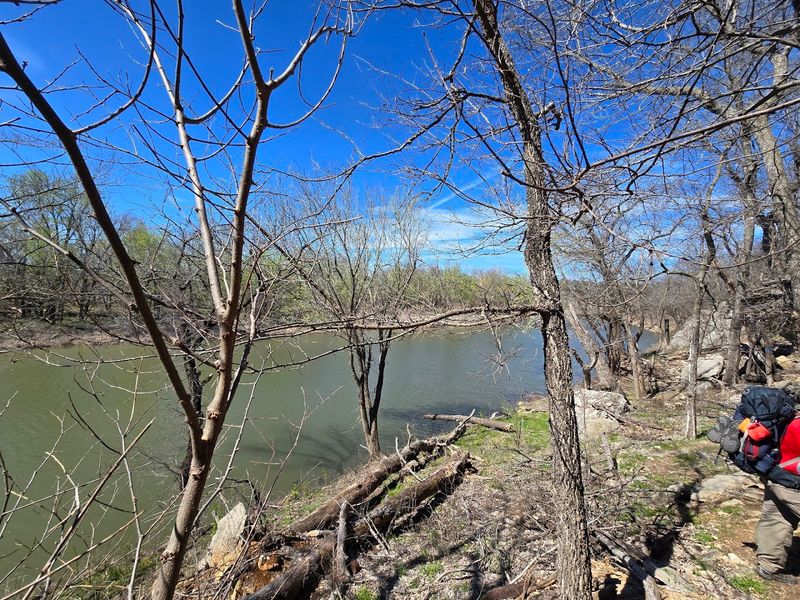
Primitive camping along the Elk River Hiking Trail is one of those quiet rewards that most day hikers never get to experience. There are no designated campgrounds with numbered sites or picnic tables.
Instead, the trail offers a series of natural clearings and flat spots where you simply set your pack down, pick a view, and call it home for the night.
About half a mile from the west trailhead, there is a large open area to the left of the trail that hikers consistently point to as one of the best spots on the whole route. The sky opens up here in a way that makes it genuinely excellent for stargazing.
Southeast Kansas does not carry much light pollution in this corridor, and on a clear night the stars are remarkable.
Further along, around the two-mile mark from the east trailhead, a bench marks a small cluster of camping areas tucked behind it. These spots are sheltered and close enough to the trail to be convenient without feeling exposed.
Around mile ten, a camping area sits right along the creek, and that particular spot has a reputation among backpackers who do the trail over multiple days as one of the most peaceful overnight stops in the whole state.
There are no restrooms anywhere along the trail, so come prepared with proper leave-no-trace supplies. Cell service is surprisingly decent on much of the ridge, but carrying a GPS locator is still a smart move given how rugged and remote some sections feel once you are deep into the trail.
Practical Tips Before You Hit the Trailhead
A little preparation goes a long way on a trail like this one. The Elk River Hiking Trail is open 24 hours a day, every day of the week, which means you have total flexibility on timing.
That said, the trail has zero facilities, including no restrooms and no water stations, so everything you need has to come in on your back from the moment you leave your car.
Water is the biggest variable to plan around. In spring, the trail has several natural water sources, and with a reliable filter you can resupply without issue.
By midsummer, those sources thin out considerably, especially on the higher ridge sections. Carrying at least two to three liters per person is a reasonable starting point for a half-day hike, more if the temperature is climbing.
Tick and mosquito activity can be significant depending on the season, so long pants and a good insect repellent are worth the minor inconvenience. Poison ivy is also present in sections of the trail, particularly in lusher, shadier areas closer to the river.
Learning to identify it before you go takes about five minutes online and saves a miserable few days afterward.
The trail is blazed with blue markers throughout, making navigation fairly straightforward even in dense sections. If you plan to access the trail from the east side after recent rainfall, conditions tend to be slightly more manageable than the west approach.
Solid, ankle-supporting hiking shoes are non-negotiable here, not trail runners, not sandals, real footwear built for rocky scrambling.
Address: Elk City, KS 67344
