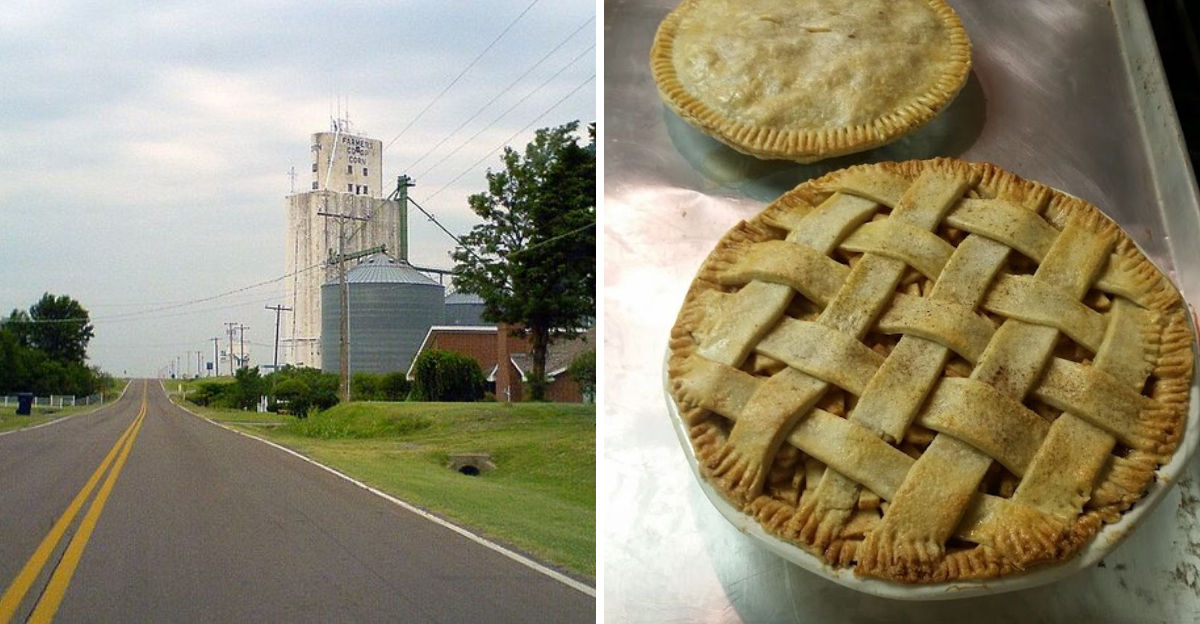
Picture a place so small and unhurried that the loudest sound you might hear on a Tuesday afternoon is a tractor rolling down the main road. No traffic jams, no crowds, no overpriced lattes with foam art on top.
Just wide open skies, the smell of fresh-baked pie drifting through screen doors, and neighbors who actually wave at you without needing a reason.
Oklahoma has plenty of surprising corners worth exploring, but few of them carry the kind of quiet, unassuming charm that makes you slow your drive down to a crawl just to soak it all in.
This is the kind of town where time moves differently, where the pace feels like a gentle exhale after a long, chaotic week. The community is tight-knit in the best possible way, shaped by generations of farming families, deep faith, and a stubborn pride in keeping things simple.
You might drive through and think you’ve seen it all in five minutes, but stick around a little longer and you’ll start to understand why people who grew up here rarely want to leave. There’s a particular kind of magic in places like this, and once you feel it, it’s hard to shake.
The Slow, Satisfying Rhythm Of Small-Town Life
There’s a particular kind of peace you feel the moment you realize no one here is in a hurry. The streets don’t buzz with urgency.
People don’t walk fast, talk fast, or drive fast. Everything moves at a pace that feels almost revolutionary compared to city life.
In a town with fewer than 600 residents, the whole community fits together like a well-worn puzzle. You pass the same faces at the grain store, at the church parking lot, and at the edge of someone’s field.
It’s repetitive in the most comforting way imaginable.
The rhythm here is tied to the land and the seasons. Planting time brings a certain focused energy.
Harvest brings long days and dusty boots and something that feels like collective pride. In between, life settles into a gentle, predictable cadence.
What surprises most first-time visitors is how quickly they adjust. The shoulders drop.
The jaw unclenches. The phone goes back into the pocket.
Small-town life has a way of resetting something inside you without announcing it’s doing so. Corn operates on its own internal clock, and after about an hour, you find yourself gladly surrendering to it.
Farmland Views Worth Pulling Over For
Flat land gets a bad reputation from people who’ve never really looked at it. There’s an assumption that without mountains or coastlines, a landscape has nothing to offer.
Standing at the edge of a wheat field outside this little town will change that assumption fast.
The fields here roll out in every direction with an almost theatrical confidence. In early summer, the wheat turns a shade of gold so rich it looks like someone cranked up the saturation on the whole horizon.
In winter, the bare earth has its own kind of stark, honest beauty.
Oklahoma’s western plains are famous for their enormous skies, and this part of Washita County delivers on that promise completely. The clouds here are worth watching.
They build and shift and turn colors at sunset in ways that feel almost performative, like the sky knows it’s the main attraction.
Pulling off the road to just stand there and look around is not a tourist move. It’s the right move.
The silence out in those fields is deep and clean, broken only by wind moving through the grass or the distant hum of a piece of farm equipment. Moments like these are why road trips through rural Oklahoma deserve more credit than they get.
Tractors Are Practically The Town’s Spirit Animal

You will see tractors here the way you see taxis in New York City. They are simply part of the visual language of this place, and nobody gives them a second glance except visitors who find them quietly thrilling.
Agriculture is not a background detail in Corn. It is the whole story.
The town exists because of farming, grew up around farming, and continues to breathe in sync with the agricultural calendar. When a big piece of equipment rolls through the center of town, traffic waits.
That’s just how it works, and everyone accepts it with zero drama.
There’s something deeply grounding about being in a community where the machines that feed people are treated with the same respect as anything else considered essential. Tractors aren’t quaint props here.
They’re working tools that represent livelihoods, generations of knowledge, and a way of life that doesn’t apologize for itself.
If you happen to catch a farmer doing field work near the road, slow down and watch for a minute. The precision involved in working a large piece of land with heavy equipment is genuinely impressive.
It’s a skill passed down through families, refined over decades. There’s artistry in it, even if the farmer would probably laugh at being called an artist.
Pie Culture Here Is Deeply, Seriously Real

Some towns have a food identity built around a famous restaurant or a chef with a television show. This town’s food identity is built around kitchens, church basements, and the kind of pie recipes written on index cards with flour fingerprints on the edges.
Pie in small-town Oklahoma is not a dessert. It’s a cultural expression.
People bake pies for funerals, for celebrations, for potlucks, for absolutely no reason at all other than because they wanted to. The tradition runs deep, and the skill level is quietly extraordinary.
The varieties you’re likely to encounter include pecan, cherry, apple, and cream-based pies that are rich enough to make you close your eyes on the first bite. These are not delicate, architectural pastry-chef creations.
These are pies built for comfort, made with confidence, and served in generous slices.
Community gatherings in this part of Oklahoma almost always involve some kind of shared meal, and pie tends to anchor the dessert table with authority. If you’re lucky enough to be invited to one of these events during your visit, say yes immediately.
The food alone will make the trip feel worthwhile, but the warmth of the people around the table is what you’ll actually remember long after you’ve driven back home.
The Mennonite Heritage Runs Deeper Than You’d Expect
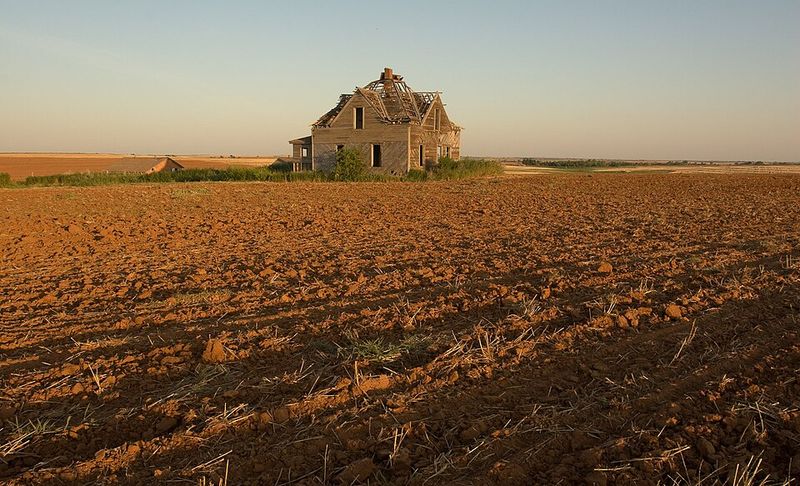
The name of this town is not accidental. Corn was settled by Mennonite immigrants in the late 1800s, and their influence on the culture, architecture, and community spirit here is still very much alive and visible today.
Mennonite communities have historically valued simplicity, hard work, faith, and strong communal bonds. Walk around this small town and you can feel all four of those values embedded in the way things look and function.
The buildings are unpretentious. The people are direct and warm.
The sense of collective responsibility is palpable.
The Mennonite church presence here shaped not just the religious life of the community but also its social structure. Neighbors helping neighbors isn’t a slogan here.
It’s a lived practice rooted in a centuries-old tradition that traveled across the ocean and planted itself firmly in Oklahoma soil.
For visitors with even a passing interest in American immigration history or religious heritage, this place offers something genuinely layered. You don’t need to be a historian to appreciate it.
Just paying attention to the details, the architecture, the community bulletin boards, and the way people interact with each other tells a rich and quietly compelling story about who built this place and why they chose to stay.
Grain Elevators Stand Tall Like Rural Landmarks
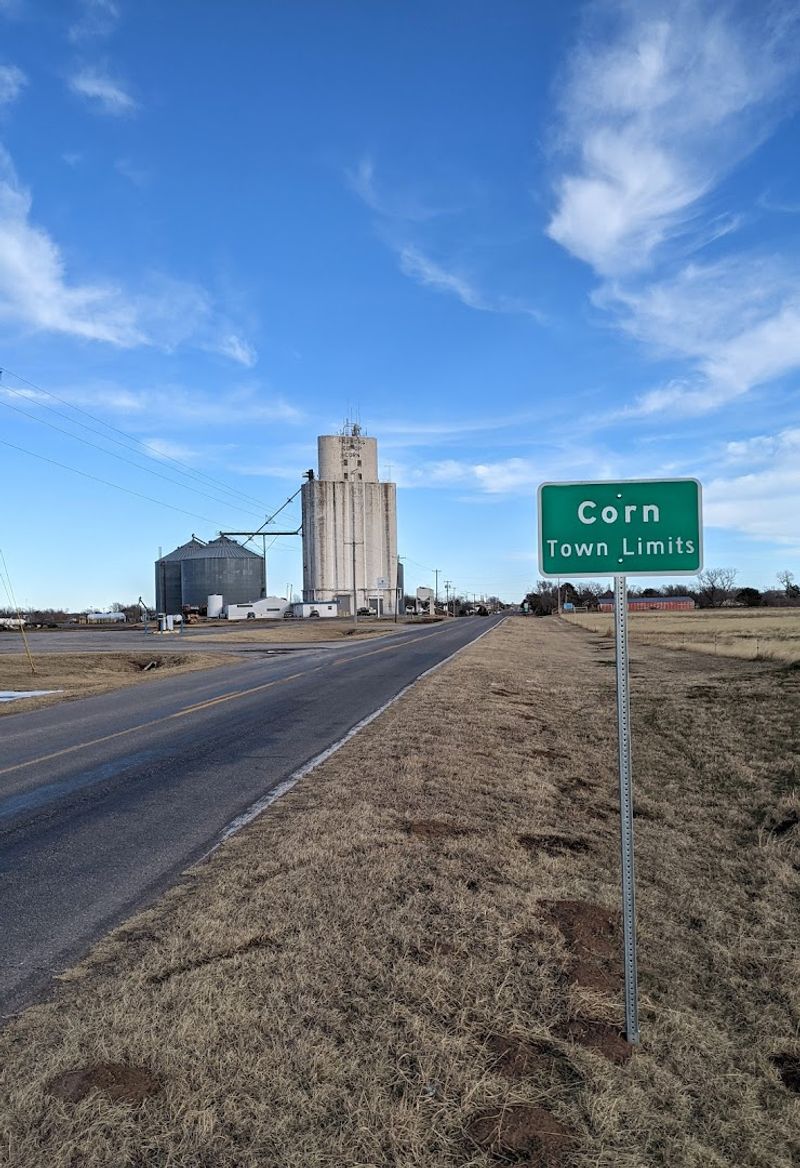
If you want to understand what a place values, look at what it builds tall. In small farming towns across the Great Plains, the answer is almost always grain elevators.
These structures are the cathedrals of agricultural communities, and they carry the same kind of quiet authority.
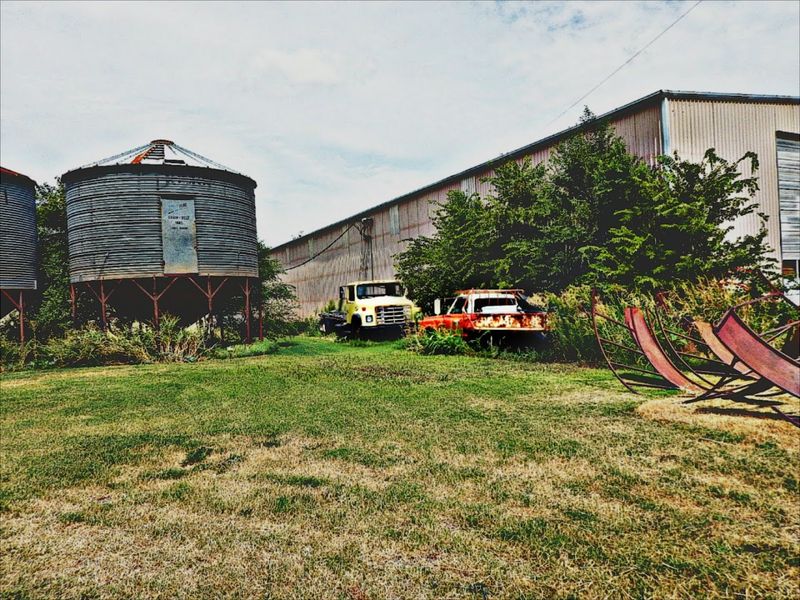
The grain elevators near Corn are hard to miss, which is entirely the point. They’re designed to be visible from a distance, serving as landmarks across the flat terrain in a way that makes them part of the town’s visual identity.
Farmers have been bringing their harvests to structures like these for generations.
Standing near one and looking up gives you an immediate sense of the scale of agriculture in this part of the country. These aren’t decorative.
They hold enormous quantities of grain, serve as economic anchors for the surrounding farming community, and operate on schedules tied directly to the harvest season.
For visitors, they’re also just visually striking. The geometry of a grain elevator against a wide prairie sky is the kind of image that sticks with you.
Photographers who appreciate industrial and rural aesthetics tend to get a little obsessive about them. If you find yourself pulling over to photograph one, know that you’re in good company and completely justified in doing so.
The Quiet Streets Hide Surprisingly Rich Stories
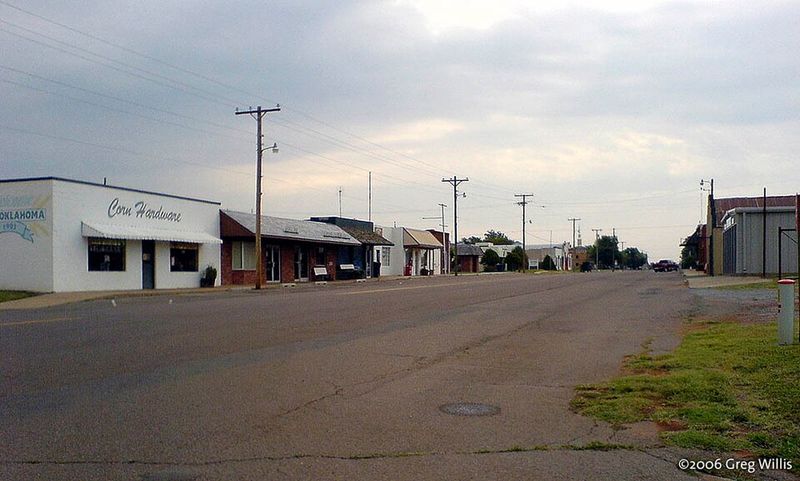
A town this size can look like there’s nothing going on, and that’s exactly the kind of first impression that rewards the patient traveler. The stories here don’t announce themselves loudly.
They surface gradually, the more time you spend paying attention.
The history of how this community was built, by immigrant farming families who chose this particular stretch of Oklahoma prairie and decided to make it home, is layered into every old building and every family name on the local church roster.
Settlement history in rural Oklahoma is often more dramatic and complex than people expect.
Early settlers in this region faced a landscape that was beautiful but unforgiving. Drought, isolation, and the sheer physical labor of breaking new ground shaped the character of these communities in ways that still echo today.
The self-reliance and neighborly cooperation that define modern Corn didn’t appear from nowhere.
Spending time in a small historic library or local museum, if one is accessible during your visit, can unlock a lot of this context quickly.
Even without that, just walking slowly and looking carefully at the details of older buildings, reading the names on a local war memorial, or chatting with a longtime resident can open up a surprisingly vivid picture of a place with more depth than its size suggests.
Why This Kind Of Place Deserves Your Attention
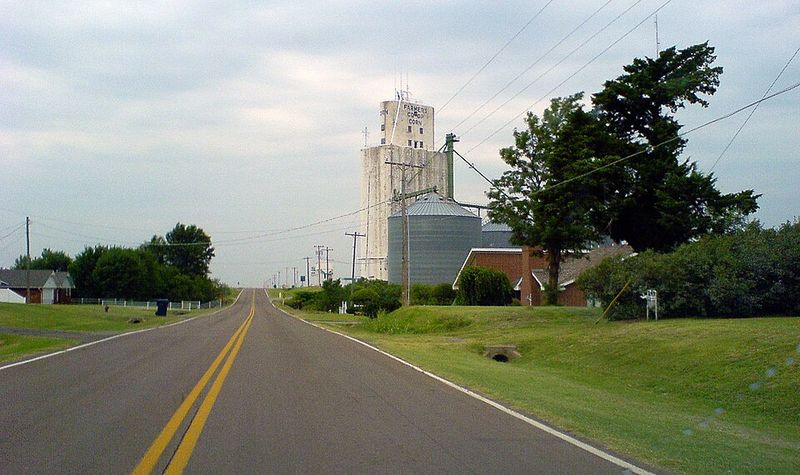
Road trips through rural America often follow the same predictable routes, hitting the well-known landmarks and skipping the places in between. The places in between are almost always where the real trip happens.
A town like this one doesn’t show up on many travel bucket lists, and that’s a shame worth addressing out loud. The value of a place isn’t measured by the number of tourists it attracts or the number of Instagram tags it generates.
Sometimes the most meaningful travel experiences happen in the spots nobody told you to visit.
Corn sits in Washita County in the western part of the state and has a population of around 580–600 residents. Its history is rooted in Mennonite settlement, wheat farming, and the kind of close community bonds big cities rarely manage to create.
The town’s ZIP code is 73024, and getting there is part of the experience.
Visiting a place like this isn’t about checking a box or collecting a story to tell at a dinner party. It’s about slowing down long enough to remember what life can look and feel like when it’s built around people and land rather than speed and noise.
That reminder, quiet and unhurried as it is, might be the most valuable thing you bring home.
Dear Reader: This page may contain affiliate links which may earn a commission if you click through and make a purchase. Our independent journalism is not influenced by any advertiser or commercial initiative unless it is clearly marked as sponsored content. As travel products change, please be sure to reconfirm all details and stay up to date with current events to ensure a safe and successful trip.
