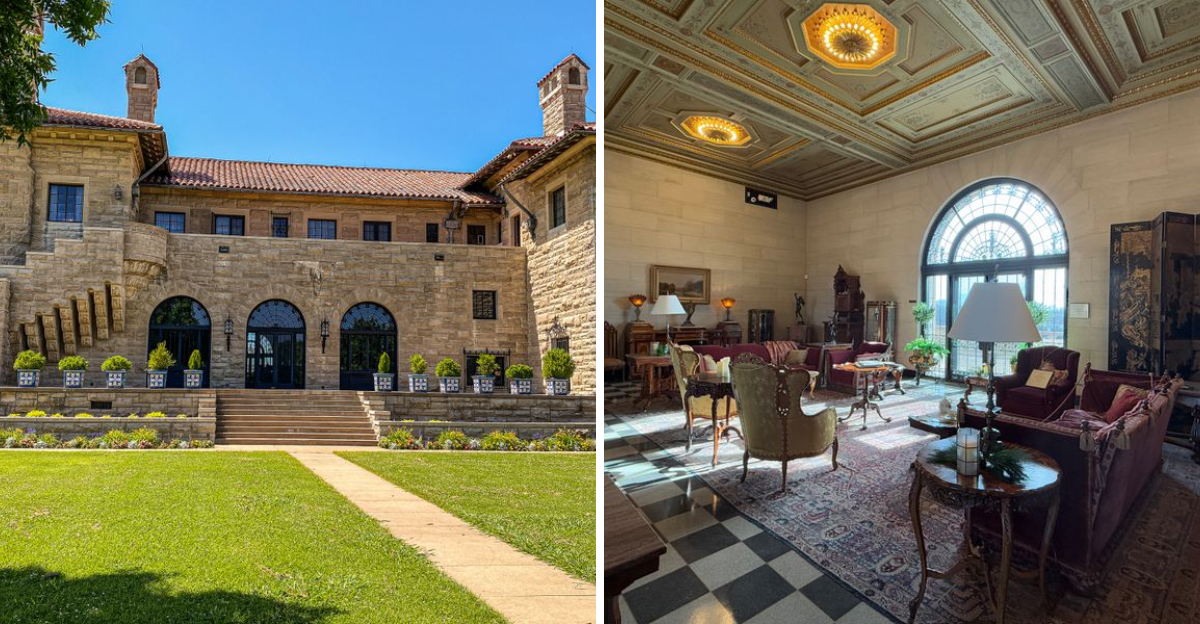
What happens when oil money, ambition, and scandal collide on the Oklahoma prairie? Spoiler alert: you get a 55-room palace that could rival European estates, complete with gold-leaf ceilings, a scandalous family saga, and enough plot twists to fill a Netflix series.
This Mansion in Ponca City stands as one of Oklahoma’s most jaw-dropping landmarks, but here’s the kicker, the man who built it lost everything, adopted his own wife, and watched his empire crumble faster than you can say “black gold.”
Some call it a testament to the Roaring Twenties excess, others see it as a cautionary tale about fortune and fate. Is this Oklahoma’s most underrated treasure or just an overblown relic of oil baron ego?
Locals swear it’s a must-see, but visitors from out of state are often shocked they’ve never heard of it. Whether you’re Team History Buff or Team “I Just Want to See a Castle in Oklahoma,” this mansion delivers drama, beauty, and stories that’ll leave you speechless.
Ready to explore the most fascinating estate you never knew existed?
A Rags-to-Riches Empire Built on Black Gold
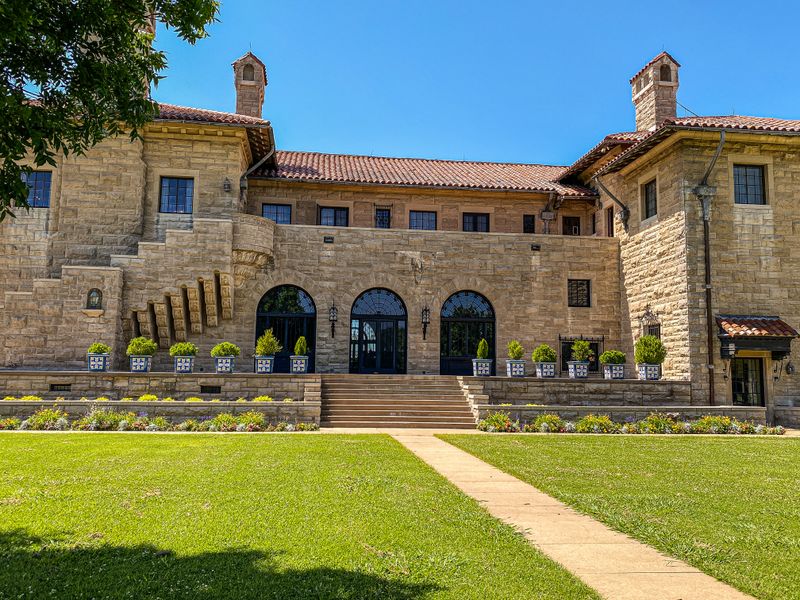
Ernest Whitworth Marland arrived in Oklahoma with little more than grit and geological know-how, transforming himself from a struggling lawyer into one of the wealthiest oilmen in America.
His company, Marland Oil, became a titan of the industry during the 1920s, controlling vast reserves and pioneering drilling techniques that revolutionized petroleum extraction.
Picture this: a self-made millionaire who owned more oil than he could count, rubbing elbows with Rockefellers and hosting lavish parties that put Great Gatsby soirees to shame.
Marland’s fortune grew so rapidly that he decided the prairie deserved a palace worthy of his success. Construction began in 1925, and no expense was spared, Italian artisans were flown in to craft intricate plasterwork, rare marbles were imported from across the globe, and every detail screamed opulence.
The mansion wasn’t just a home; it was a statement that Oklahoma had arrived on the world stage.
Yet even as the walls rose higher, the seeds of Marland’s downfall were already taking root. His generosity bordered on recklessness, funding hospitals, schools, and civic projects with the same enthusiasm he poured into his estate.
When the financial tides turned, that same big-hearted spending would haunt him, proving that even oil empires can crumble when the well runs dry.
55 Rooms of Pure Jaw-Dropping Extravagance
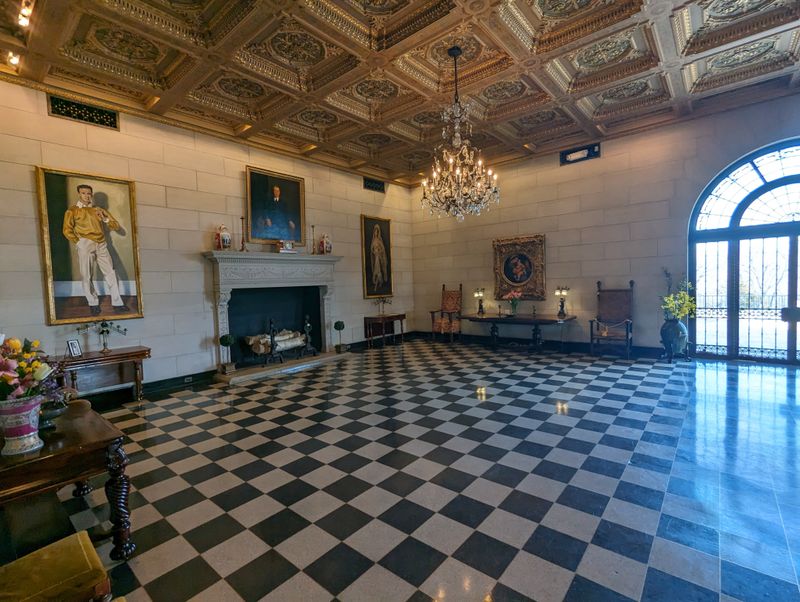
Walking through the Marland Mansion feels like stepping into a time machine set for the Jazz Age on steroids. Spanning over 43,000 square feet, this architectural marvel boasts 55 rooms, each more stunning than the last, with details that would make even the pickiest interior designer weep with joy.
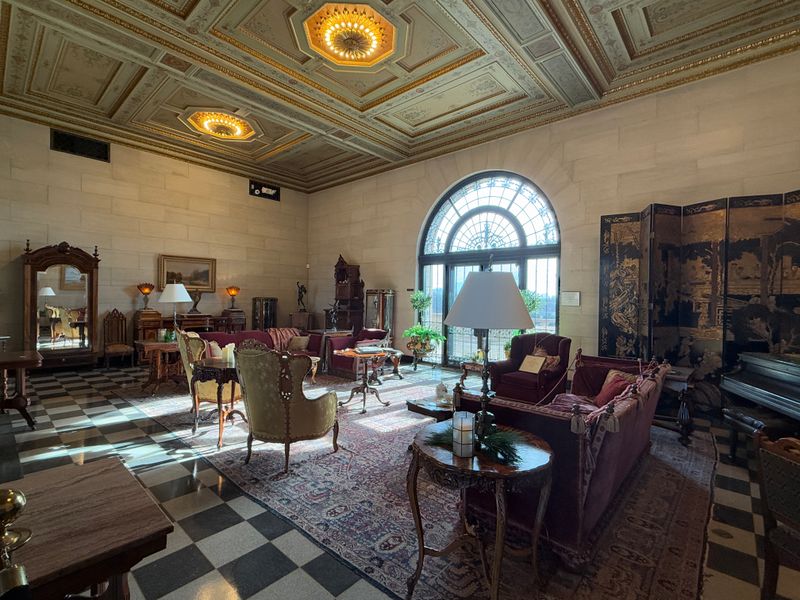
Gold-leaf ceilings catch the light in the grand halls, while hand-painted murals transport you to Italian villas and English gardens without ever leaving Oklahoma soil.
The mansion’s design blends Mediterranean Revival with a touch of Tudor flair, creating a unique aesthetic that stands out against the flat prairie horizon.
Marble fireplaces imported from Europe anchor living spaces large enough to host small orchestras, and the woodwork, oh, the woodwork, showcases craftsmanship that simply doesn’t exist anymore.
Every doorknob, light fixture, and window frame was custom-designed, turning functional elements into works of art.
What really gets visitors talking are the unexpected luxuries that were cutting-edge for the 1920s: central air conditioning, an elevator system, and an intercom network that allowed Marland to communicate across the sprawling estate.
These weren’t just fancy additions; they represented the pinnacle of modern living at a time when most Americans still used iceboxes and outhouses.
The mansion proved that Oklahoma oil money could buy anything, even comfort that rivaled European royalty.
The Scandalous Adoption That Shocked High Society
Buckle up, because this is where the Marland story takes a hard left into soap opera territory. After his first wife Virginia tragically died, E.W.
Marland legally adopted his wife’s niece, Lydie, raising her as his own daughter in the mansion’s luxurious surroundings. Society seemed fine with this arrangement, until Marland shocked everyone by marrying Lydie just two years after the adoption papers were signed.
Yes, you read that correctly: he married his adopted daughter. The scandal rocked Ponca City and high society circles across the nation, with whispers and gasps echoing through country clubs and parlors from coast to coast.
Some defended the union, pointing out that Lydie wasn’t blood-related and that adoption laws were murkier back then, while others condemned it as a gross violation of social norms and paternal trust.
Lydie herself remains something of an enigma in historical accounts, was she a willing participant swept up in genuine affection, or a young woman trapped by circumstance and social pressure?
A portrait of her hanging in the mansion reportedly contains a serpent painted near her feet, allegedly added by an artist who disapproved of the marriage.
Visitors still debate whether the awkward angle of her leg in the painting was intentional sabotage or just poor artistic skill, but either way, the portrait captures the controversy that defined their relationship.
From Oil Baron to Oklahoma Governor in Political Twist
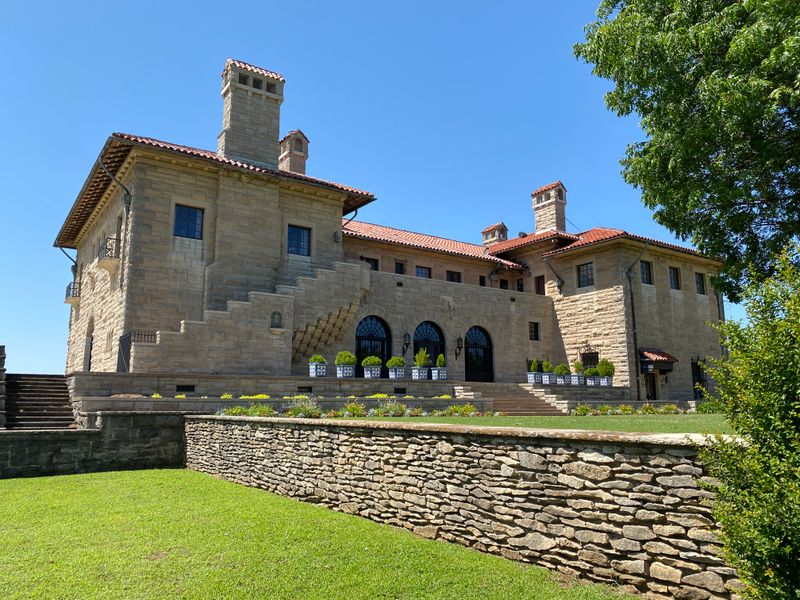
Just when you thought the Marland saga couldn’t get more dramatic, E.W. pivoted from petroleum to politics, winning the Oklahoma governorship in 1934 during the depths of the Great Depression.
His campaign promised hope to struggling Oklahomans who’d watched their farms blow away and their savings evaporate, and voters responded by electing the man who’d once symbolized prosperity and generosity.
Governor Marland championed progressive policies that were radical for their time, pushing for old-age pensions, unemployment insurance, and labor protections that put him at odds with the conservative establishment.
He fought to bring New Deal programs to Oklahoma, believing government had a responsibility to help citizens weather economic storms.
His political career showed a man trying to rebuild not just his own fortunes but those of an entire state ravaged by dust and despair.
Yet even the governor’s mansion couldn’t restore Marland’s former glory. By the time he took office, he’d already lost his oil company to a hostile takeover by J.P.
Morgan’s banking interests, watching helplessly as Marland Oil was absorbed and renamed Continental Oil Company (later Conoco).
The irony wasn’t lost on anyone: the man living in Oklahoma’s grandest private residence was serving as governor while essentially broke, his political power a hollow echo of the financial empire he’d once commanded across the prairie.
Italian Artisans and European Craftsmanship on the Prairie
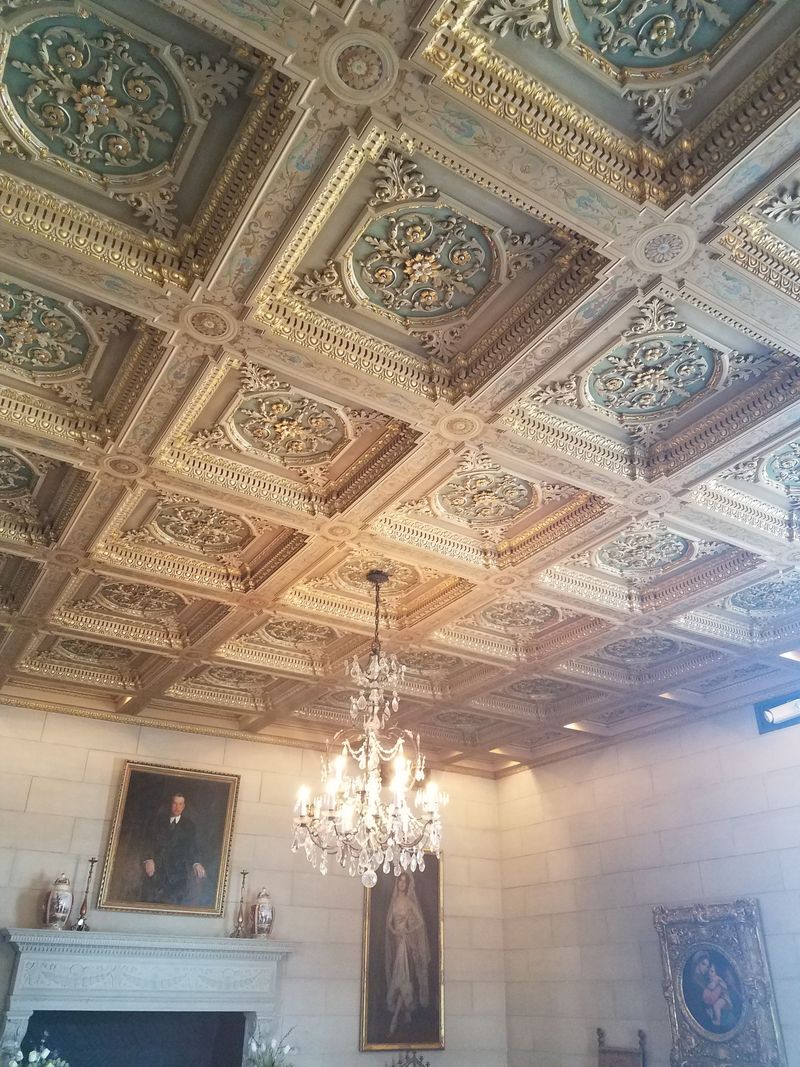
Marland didn’t just want a nice house, he wanted a masterpiece that could hold its own against the great estates of Europe, and he was willing to import the talent to make it happen.
Skilled craftsmen from Italy arrived in Ponca City, bringing centuries-old techniques to the Oklahoma plains, creating plasterwork so intricate you’d swear it was carved from stone rather than molded from humble materials.
These artisans spent months creating elaborate ceiling medallions, decorative cornices, and architectural details that showcase Renaissance-era artistry. The level of skill required for such work has largely vanished from modern construction, making the mansion’s ornamentation irreplaceable.
Every cherub, every floral motif, every geometric pattern was hand-formed by masters who’d learned their craft in the shadow of Italian cathedrals and palazzos.
The fusion of European sophistication with prairie location created something uniquely American, a testament to the melting pot of talent and ambition that defined the early 20th century.
Marble from Italy, wood from rare forests, and artistic vision from across the Atlantic combined to prove that geographical isolation didn’t mean cultural backwardness.
Marland’s mansion declared to the world that Oklahoma wasn’t just cowboy country; it was a place where wealth and taste could flourish as richly as anywhere on Earth, even if that flourishing was ultimately fleeting.
The Art Collection That Rivals Major Museums
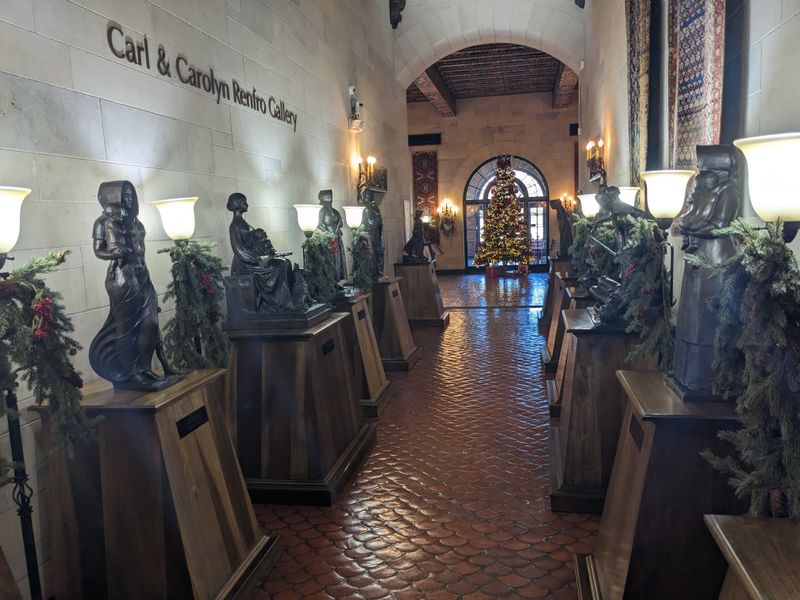
Beyond the architectural splendor, the Marland Mansion houses an art collection that would make curators at major metropolitan museums jealous.
Original paintings, sculptures, and decorative arts fill the rooms, ranging from European masters to Native American pieces that reflect Oklahoma’s indigenous heritage.
Marland was a serious collector who understood that true wealth meant surrounding yourself with beauty that transcended mere monetary value.
Visitors often spend hours examining the artwork, discovering new details with each viewing, a signature hidden in a landscape, symbolism in a portrait, or craftsmanship in a bronze sculpture that reveals itself only upon close inspection.
The collection wasn’t assembled randomly; Marland had advisors and his own educated eye guiding acquisitions, creating a cohesive narrative about taste, culture, and the civilizing influence of art on frontier society.
What makes the collection particularly poignant is knowing that Marland eventually lost most of his personal fortune but managed to preserve these treasures for future generations.
The artwork remains in the mansion today, allowing visitors to experience the same cultural richness that once surrounded the Marland family during their glory days.
It’s a reminder that while financial empires crumble and oil wells run dry, art endures, carrying stories and beauty forward through decades of change and uncertainty on the Oklahoma prairie.
Grounds and Gardens Designed for Grand Entertaining
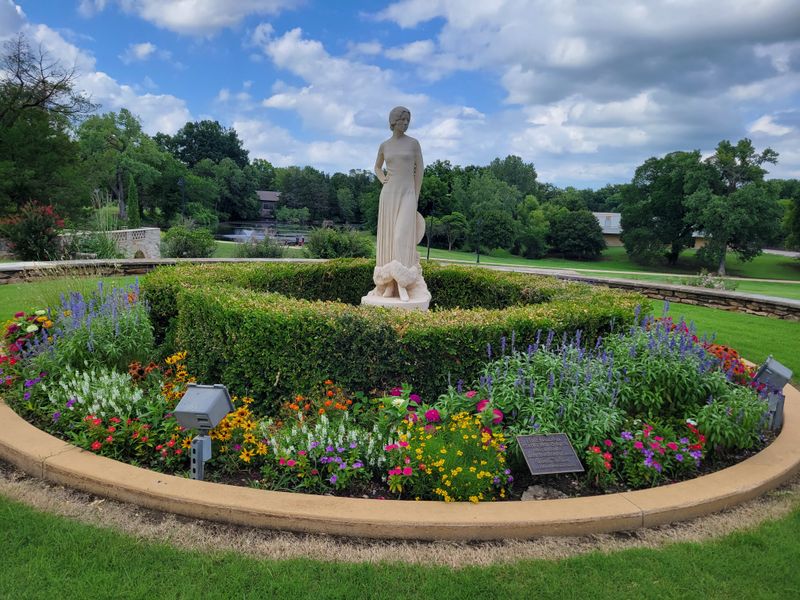
The mansion’s interior magnificence extends outdoors to meticulously designed grounds that once hosted garden parties, political gatherings, and social events that defined Ponca City’s elite scene.
Formal gardens with geometric precision give way to more naturalistic landscaping, creating varied outdoor spaces perfect for everything from intimate conversations to large-scale celebrations under the Oklahoma sky.
Statues dot the landscape, adding classical elegance to the prairie setting, while pathways invite leisurely strolls through grounds that change character with the seasons.
Visitors today can walk the same paths the Marlands once traversed, imagining the swish of evening gowns and the clink of champagne glasses during parties that brought together oil barons, politicians, and cultural figures from across the nation.
The grounds also feature a chapel and additional buildings that housed staff and guests, creating a self-contained estate that functioned almost like a small village.
One reviewer mentioned longing to see the pool restored to its former glory, and it’s easy to understand why, the idea of a grand swimming pool on the prairie during the 1920s represents the kind of audacious luxury that defined Marland’s vision.
The grounds prove that the mansion wasn’t just about interior showmanship; it was about creating an entire lifestyle that transported residents and guests far from the dusty reality of Oklahoma into a world of refined leisure and beauty.
Modern Museum Experience and the Petroleum Hall of Fame
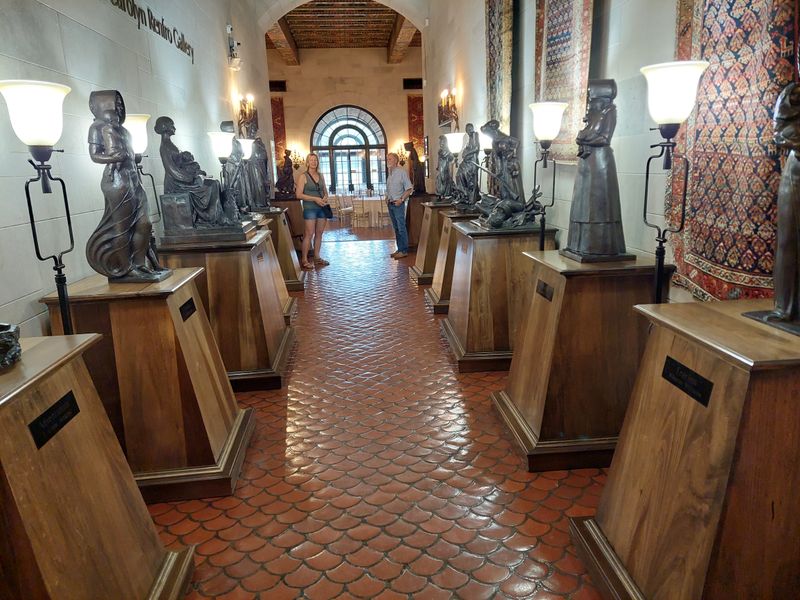
Today, the mansion operates as a museum that tells both the Marland family story and the broader narrative of Oklahoma’s oil industry through the Petroleum Hall of Fame housed on the lower level.
Visitors can choose between self-guided tours that let you explore at your own pace or guided experiences where knowledgeable staff share stories and details you’d never discover on your own.
Most reviewers strongly recommend the guided option, praising tour leaders who bring the mansion’s history alive with anecdotes and insights that transform rooms from pretty spaces into chapters of a compelling human drama.
The museum experience typically takes two to three hours if you’re thorough, and trust me, you’ll want to be thorough, there’s simply too much to absorb in a quick walkthrough.
From the basement Petroleum Hall of Fame celebrating the industry titans who shaped Oklahoma’s economy to the attic spaces that once housed servants, every level offers something worth your attention.
The staff clearly takes pride in preservation, maintaining the mansion in remarkable condition considering it’s nearly a century old.
Special events like Oktoberfest and weddings bring contemporary life to the historic space, proving the mansion isn’t just a static monument but a living venue that continues serving the community.
The blend of museum education and active use creates an interesting dynamic, though it occasionally means calling ahead to confirm availability, especially on weekends when private events might limit access.
Address: 901 Monument Rd, Ponca City, Oklahoma
The Tragic Arc From Fortune to Financial Ruin
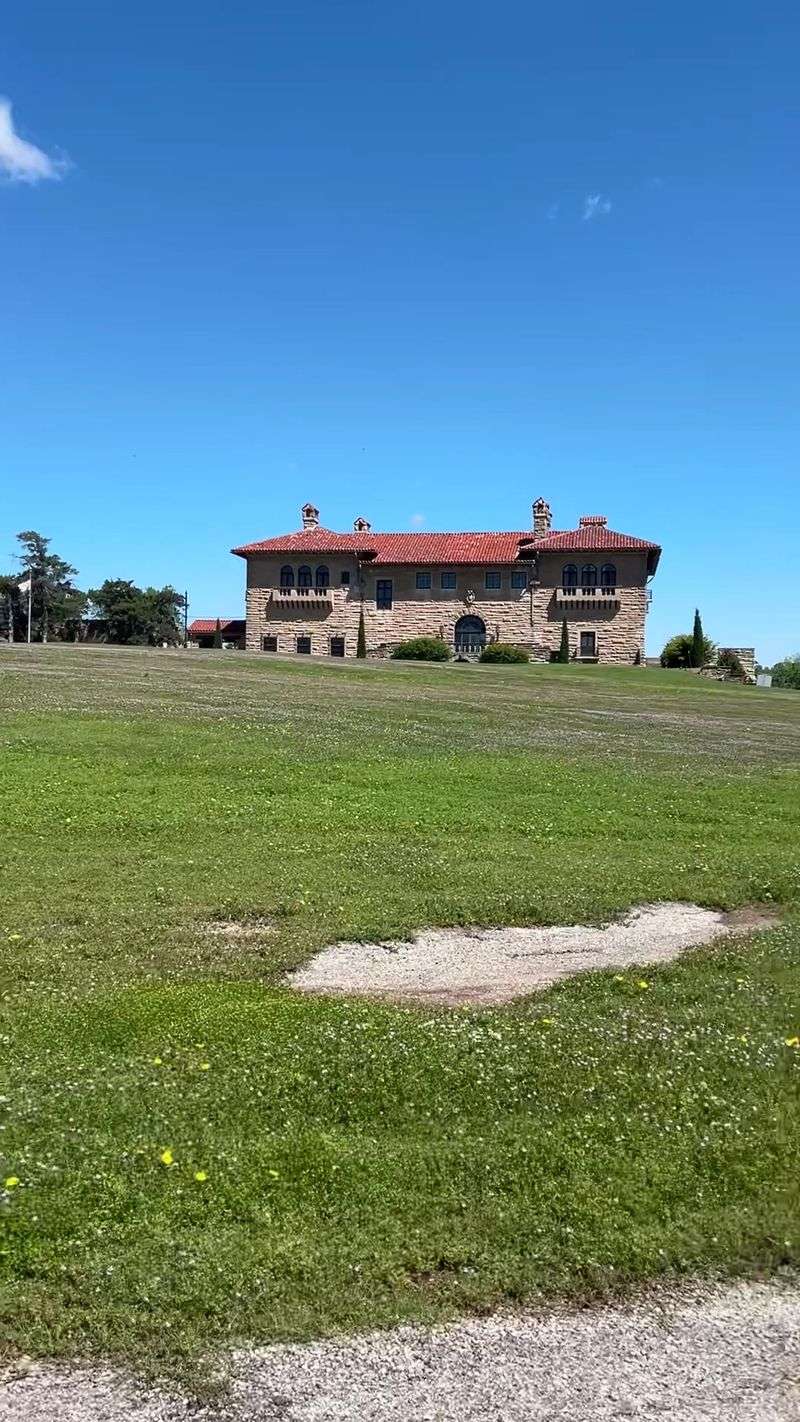
Perhaps the most compelling aspect of the Marland Mansion isn’t its beauty but the bittersweet story it represents, a cautionary tale about how quickly fortune can reverse course. At his peak, E.W.
Marland controlled an oil empire worth hundreds of millions in today’s dollars, employing thousands and shaping Oklahoma’s economic landscape. Then came a series of financial missteps, over-leveraging, and ultimately a hostile takeover that stripped him of everything he’d built.
The mansion he’d constructed as a monument to success became a symbol of his downfall, a palace he could no longer afford to maintain. Marland was forced to sell the estate, watching strangers inhabit the rooms where he’d entertained presidents and planned business empires.
The man who’d once given generously to build hospitals and fund civic improvements found himself dependent on a modest governor’s salary and the kindness of friends.
Yet there’s dignity in how Marland handled his reversal of fortune, channeling his remaining energy into public service rather than bitter retreat.
His story resonates because it’s fundamentally American, the boom and bust cycle, the self-made man brought low, the resilience required to keep going when everything falls apart.
The mansion stands as a testament not just to wealth but to the fragility of fortune and the enduring human spirit that survives even when the oil wells run dry and the bank accounts empty on the Oklahoma prairie.
Dear Reader: This page may contain affiliate links which may earn a commission if you click through and make a purchase. Our independent journalism is not influenced by any advertiser or commercial initiative unless it is clearly marked as sponsored content. As travel products change, please be sure to reconfirm all details and stay up to date with current events to ensure a safe and successful trip.
