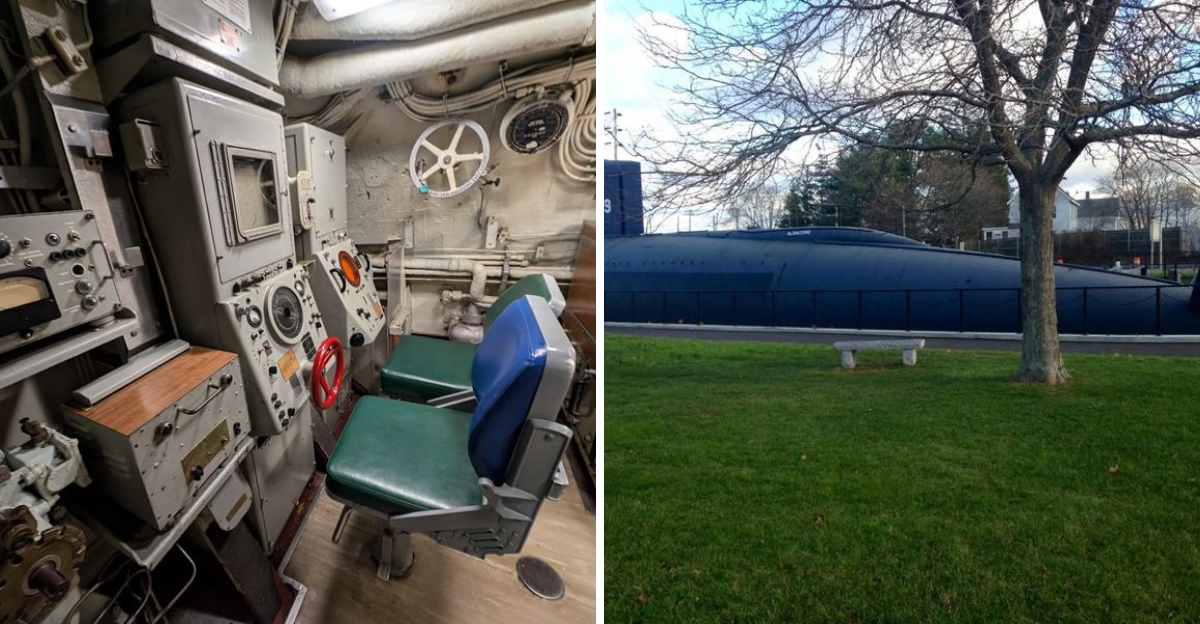
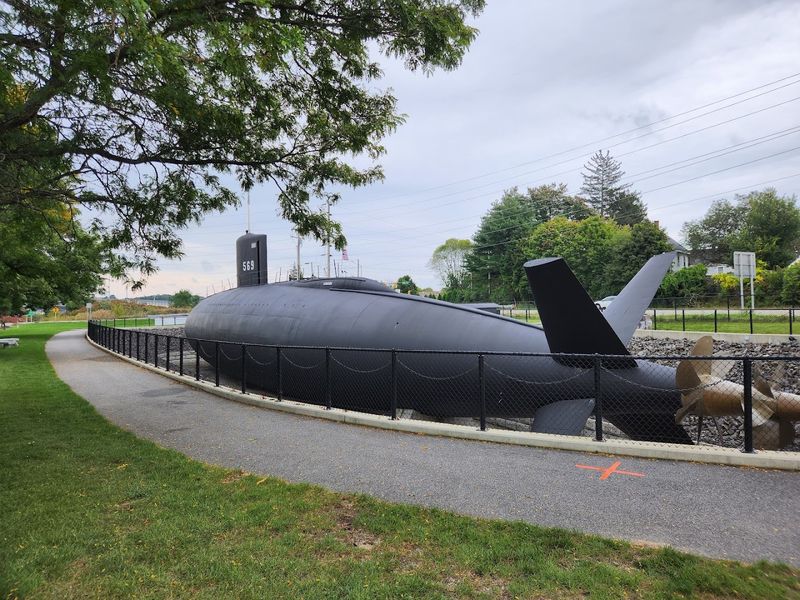
Most people drive right past it without even noticing. The submarine sits on dry land now, pulled from the water and placed in a park in New Hampshire.
It looks small from the outside, almost harmless. But the moment you step inside, you understand what kind of place this really is.
The USS Albacore was a secret Cold War vessel, built to test new technologies that would change submarine design forever. The corridors are narrow and cramped.
The ceilings are low. Every inch of space is packed with pipes and wires and gauges.
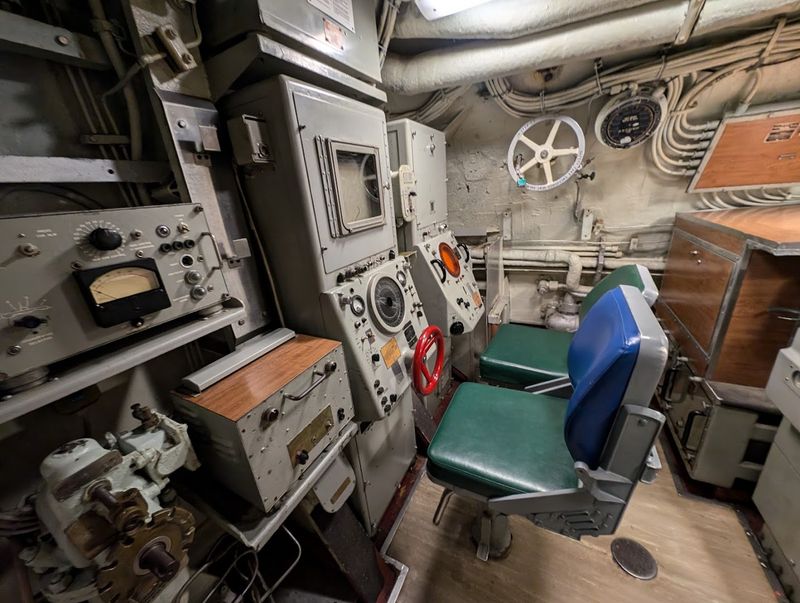
I walked through the control room and tried to imagine what it felt like to be underwater in this thing for months at a time. The men who served here were young and brave and probably a little bit scared.
You can feel their presence in the metal walls and the tight quarters. This is not a polished museum with velvet ropes and gift shops.
It is a time capsule, preserved exactly as it was. New Hampshire has some strange attractions, but this one is truly unforgettable.
The Teardrop Hull That Changed Everything
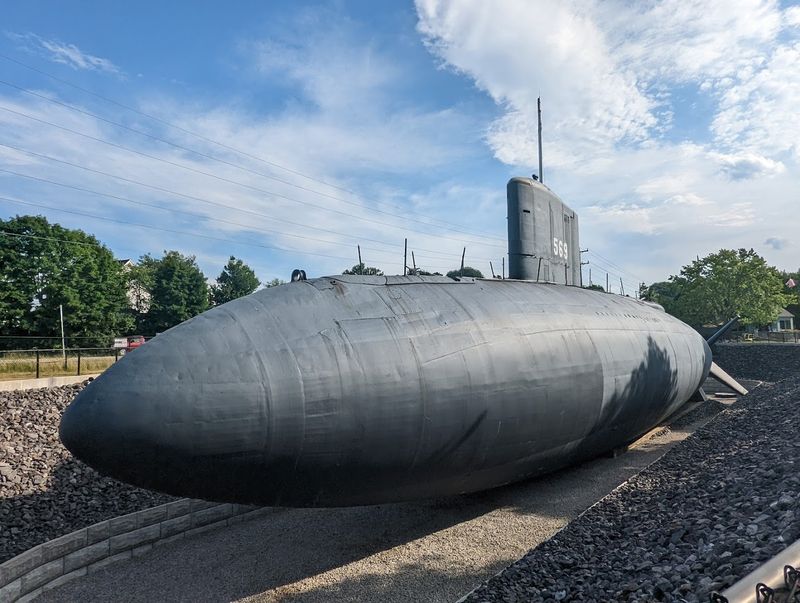
Long before sleek nuclear submarines ruled the ocean depths, one bold design decision flipped the entire world of naval engineering upside down. The USS Albacore introduced the now-famous teardrop hull, a smooth, rounded shape inspired by the natural hydrodynamics of fish and marine mammals.
Before this breakthrough, submarines were basically surface ships that happened to sink, built with flat decks and boxy frames that created enormous underwater drag.
Naval engineers at the Portsmouth Naval Shipyard looked at the problem differently. Speed and maneuverability underwater mattered far more than anything else, and a rounded, whale-like body was the answer.
The results were staggering. The Albacore sliced through water faster than anything the Navy had ever tested beneath the surface.
Every single U.S. Navy submarine built after the Albacore borrowed this revolutionary hull shape.
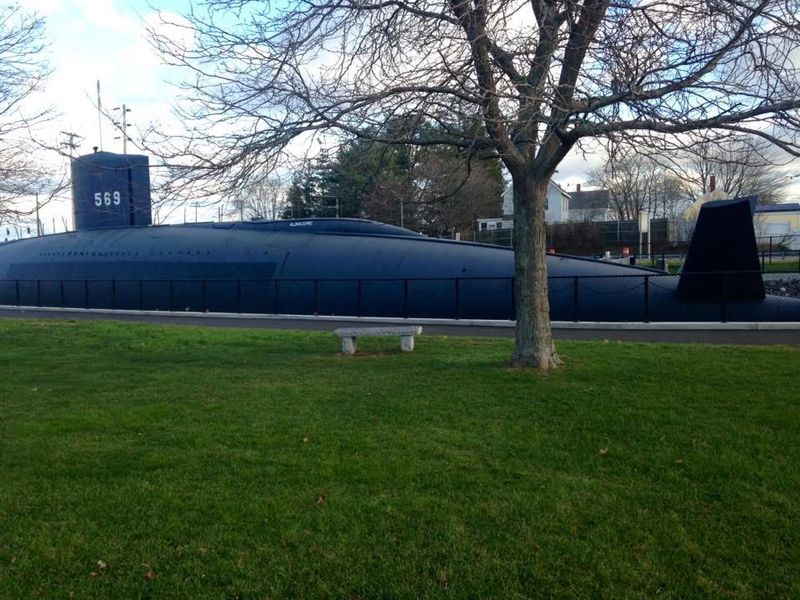
Nuclear-powered boats, fast attack submarines, ballistic missile subs, all of them owe their sleek profiles to this one daring experiment. Walking around the exterior at Albacore Park today, you can still feel the quiet genius of that original design radiating from every curved inch of her hull.
A Full-Scale Testbed for Cold War Technology
Most military vessels carry weapons. The Albacore carried ideas.
Built entirely without armaments, this extraordinary submarine existed purely to test cutting-edge Cold War technologies in real ocean conditions.
Engineers needed a full-scale laboratory that could actually dive, maneuver, and push boundaries, and the Albacore delivered exactly that for nearly two decades.
The experiments conducted aboard were remarkable in scope. High-strength HY-80 steel was tested here before becoming standard in submarine construction across the fleet.
Contra-rotating propellers, which spin in opposite directions to maximize thrust and reduce vibration, were evaluated during sea trials. Even an experimental X-shaped tail configuration replaced the traditional cross-shaped control surfaces at one point, dramatically improving underwater agility.
Dive brakes, advanced sonar systems, and sound-quieting techniques all got their proving ground aboard this one submarine. The Cold War demanded stealth and speed in equal measure, and New Hampshire’s most famous naval vessel delivered both.
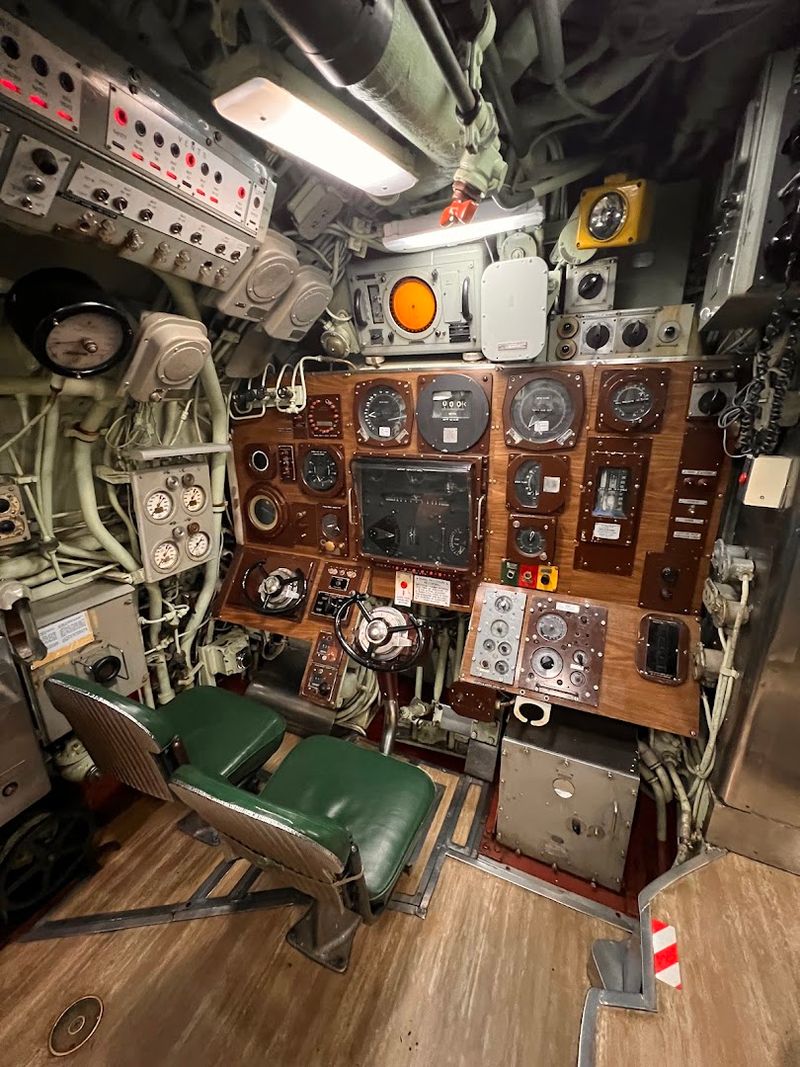
Touring the control room today, surrounded by original gauges and mechanical controls, feels like stepping directly into a classified government research lab frozen perfectly in time. The atmosphere is genuinely electric for anyone fascinated by military history or engineering innovation.
Setting World Records Beneath the Waves
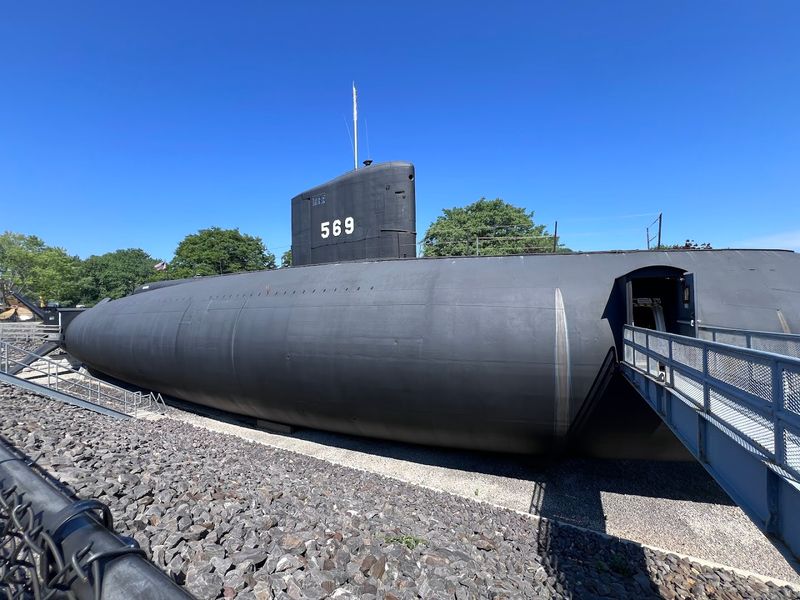
Speed records and submarines rarely appear in the same sentence, but the Albacore made that combination legendary. During active service, this remarkable vessel set world records for submerged speed, reaching nearly forty miles per hour beneath the surface.
For context, that is faster than most recreational motorboats travel on top of the water.
Achieving that kind of velocity underwater required every innovation the Albacore carried. The teardrop hull eliminated drag.
The contra-rotating propellers converted engine power into forward thrust with stunning efficiency. The streamlined control surfaces kept the vessel stable even at speeds that would have sent earlier submarines tumbling through the water column.
Navy test pilots, essentially what the crew members functioned as during those high-speed runs, described the sensation as unlike anything else in naval service.
The submarine responded instantly to control inputs, rolled and pitched with precision, and carved through deep water with an almost predatory grace.
Standing inside the cramped engineering spaces today at Albacore Park, it is genuinely hard to imagine this compact vessel once held the title of fastest submarine on earth. New Hampshire can claim that remarkable world record with tremendous pride.
Life Aboard Was Tight, Loud, and Unforgettable
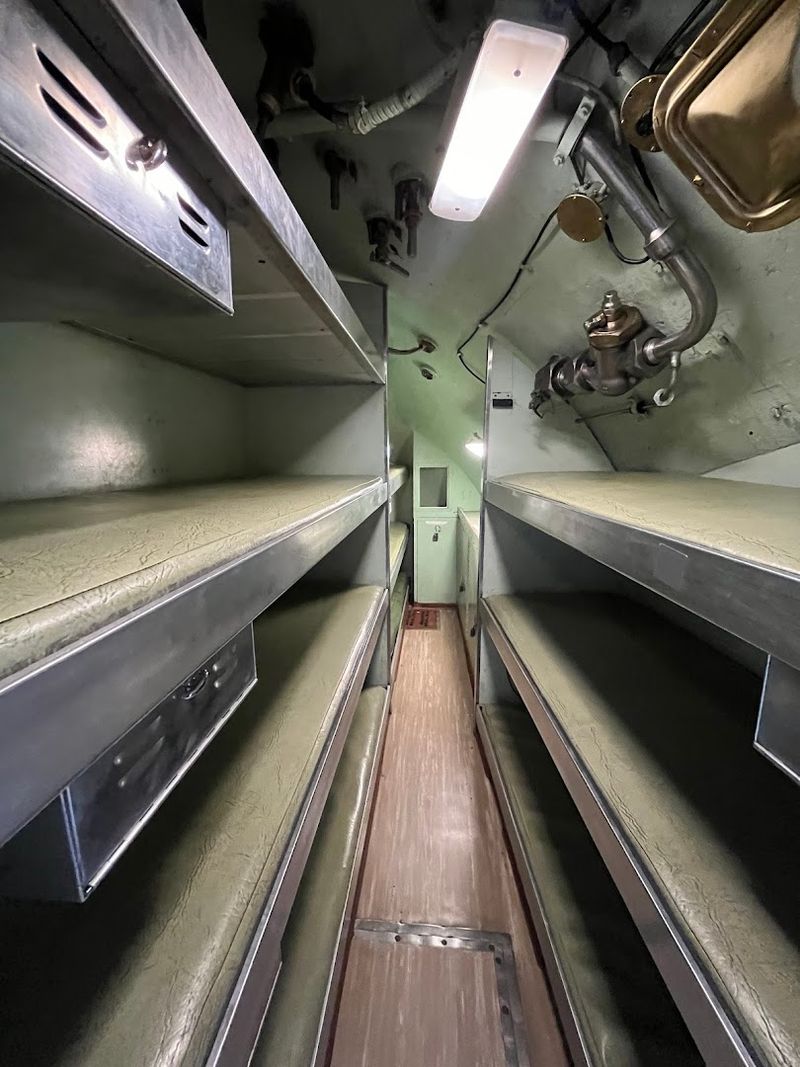
Forget everything you think you know about personal space. Life aboard the Albacore was an exercise in radical togetherness, with a crew of roughly fifty-four men sharing a vessel where every square inch served a purpose.
Bunks were stacked four high in spaces barely wide enough to turn around in, and the ceiling in many sections hovered just above head height.
Walking through the sleeping quarters today requires ducking, twisting, and occasionally holding your breath as you squeeze through watertight doors. Tall visitors get a particularly vivid appreciation for what submariners endured on every patrol.
The passageways are narrow by any modern standard, and the engineering spaces feel even more claustrophobic once you realize people actually worked in those conditions for extended periods.
Audio narration throughout the self-guided tour brings the human experience to life in a genuinely moving way. Former crew members recorded their own stories at various stations throughout the submarine, and their voices add warmth and personality to every compartment.
Hearing a real sailor describe sleeping just inches from a shipmate or working double shifts in the engine room transforms a history lesson into something deeply personal and memorable. New Hampshire history rarely feels this intimate.
The Self-Guided Tour That Puts You in the Captain’s Chair
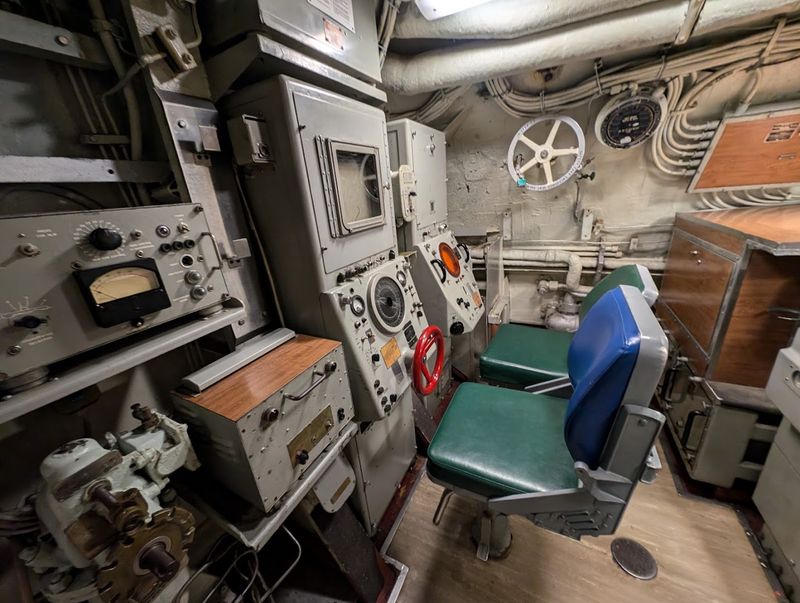
Most museum experiences keep you firmly behind a velvet rope. Albacore Park throws out that rulebook entirely.
The self-guided tour format here means you move at your own pace, linger in spaces that fascinate you, and actually touch the equipment that Cold War-era sailors operated daily.
Red buttons mounted throughout the submarine trigger recorded audio narration from former crew members, turning every compartment into its own story.
The control room is an absolute highlight. Standing at the helm controls, surrounded by original gauges, dials, and mechanical systems, creates a vivid sense of what it felt like to pilot this groundbreaking vessel.
The periscope station is another crowd favorite, offering visitors a chance to peer through the actual optics used during sea trials.
Engineering spaces reveal the mechanical heart of the Albacore, with diesel engines and electric battery systems displayed in their original configurations.
Each section of the tour builds naturally on the last, creating a coherent narrative arc from the vessel’s experimental origins to its record-breaking achievements.
Families with curious kids will find the interactive elements especially engaging. Just come prepared to duck your head frequently, wear comfortable shoes, and embrace the wonderfully disorienting sense of stepping back into Cold War-era New Hampshire history.
The Visitor Center and Museum Worth Exploring
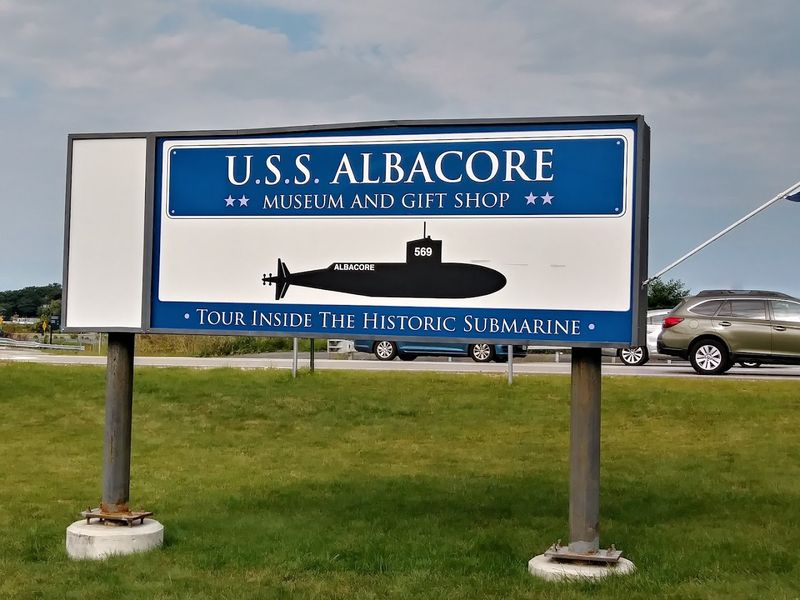
The submarine itself gets most of the attention, but the visitor center at Albacore Park deserves serious credit in its own right.
Naval artifacts, historical photographs, and detailed exhibits trace the Albacore’s journey from experimental concept to celebrated National Historic Landmark.
The displays are thoughtfully arranged and genuinely informative without ever feeling overwhelming or overly academic.
Exhibits explain the engineering challenges that naval designers faced during the Cold War, illustrating why the Albacore’s innovations mattered so profoundly for national security. Scale models, technical diagrams, and archival materials give context to what you experience inside the submarine itself.
The museum functions as an excellent primer before boarding or a satisfying epilogue afterward.
A well-stocked gift shop rounds out the experience, offering submarine-themed memorabilia, books, and souvenirs perfect for history enthusiasts of all ages.
The staff throughout the facility are notably knowledgeable and genuinely enthusiastic about sharing the Albacore’s story.
Outside the visitor center, several monuments pay tribute to the submariners who served throughout American naval history.
The entire park has a quiet dignity that feels entirely appropriate for honoring both the technological achievement and the human sacrifice that defined Cold War service in the United States Navy.
From Portsmouth Naval Shipyard to National Historic Landmark
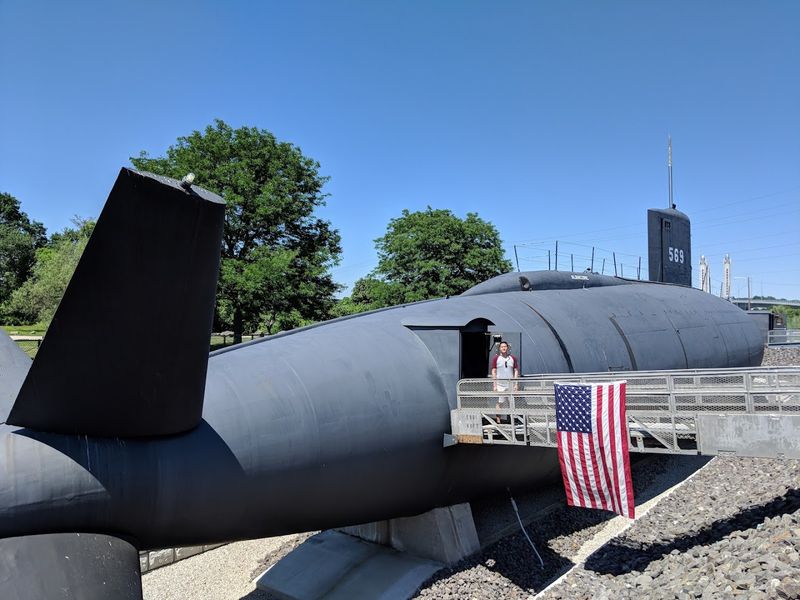
The Albacore’s story began just across the Piscataqua River at the Portsmouth Naval Shipyard in Kittery, Maine, one of the oldest and most storied naval facilities in American history.
Built and launched there, the submarine carried the shipyard’s engineering excellence into every sea trial it conducted.
Its motto, Praenuntius Futuri, translates beautifully to Forerunner of the Future, a phrase that proved prophetic beyond anyone’s initial expectations.
After decommissioning, the Albacore sat in Philadelphia for years before a passionate citizens’ group launched a remarkable grassroots campaign to bring her home to Portsmouth.
The logistical challenge of transporting a full-sized submarine overland was considerable, requiring careful planning and genuine community commitment.
That effort paid off spectacularly when the vessel was finally settled into its permanent dry basin and opened to the public.
Earning National Historic Landmark status cemented the Albacore’s place in American history at the highest official level. Very few vessels achieve that designation, and the recognition reflects just how transformative the submarine’s contributions genuinely were.
Today, Albacore Park stands as a proud symbol of New Hampshire’s deep connection to naval innovation, military service, and the extraordinary human ingenuity that defined the Cold War era.
The Innovations That Built the Modern Submarine Fleet
Every major advancement in submarine technology carries a direct line back to experiments conducted aboard the Albacore. HY-80 steel, developed and tested here, became the structural backbone of American submarine construction for generations.
This high-strength alloy allowed submarines to dive deeper than ever before while maintaining structural integrity under crushing oceanic pressure.
The contra-rotating propeller system tested on the Albacore solved a persistent engineering problem. Traditional single propellers create rotational torque that pushes a submarine sideways, requiring constant correction from the helmsman.
Two propellers spinning in opposite directions cancel out that torque entirely, producing cleaner, more efficient forward thrust. It was an elegant solution to a stubborn mechanical challenge.
Sound-quieting techniques developed during Albacore trials proved equally transformative. In Cold War submarine warfare, silence was survival.
Every vibration, every mechanical noise, every turbulence-induced sound signature could betray a submarine’s position to enemy sonar. The lessons learned aboard the Albacore made subsequent American submarines dramatically quieter and therefore far more survivable in contested waters.
Walking through the engineering spaces today, surrounded by the actual machinery where those breakthroughs happened, carries a weight that no textbook can fully replicate. This is where the modern submarine was truly invented.
Planning Your Visit to Albacore Park
Getting to Albacore Park is genuinely easy, and the location makes it a natural stop for anyone exploring the Portsmouth area or passing through coastal New Hampshire.
The park sits conveniently near the highway bridge connecting New Hampshire to Maine, making it an obvious and rewarding detour during any New England road trip.
Parking is available on site, though the lot is modest in size, so arriving earlier in the day works best during peak summer months.
The museum opens daily throughout most of the year, welcoming visitors from morning through mid-afternoon. Self-guided tours move at whatever pace suits you, so a quick visit can be satisfying and a longer exploration even more so.
Families should note that children under two are not permitted inside the submarine itself for safety reasons, and the interior is not accessible for individuals with mobility limitations due to the tight passageways and watertight doors.
Comfortable, flexible clothing makes navigating the submarine considerably easier. Taller visitors especially should mentally prepare for some creative contortion through the lower doorways.
The full address is 569 Submarine Way, Portsmouth, NH 03801, and the park can be reached by phone at 603-436-3680. More details are available at ussalbacore.org.
New Hampshire rarely offers history this hands-on and this thrilling.
Why the USS Albacore Deserves a Spot on Every History Lover’s Bucket List
Some historical landmarks simply exist as reminders of the past. The USS Albacore functions as something far more dynamic, a living engineering lesson, a Cold War time capsule, and a genuine tribute to human ingenuity all wrapped into one streamlined hull.
Few museums anywhere in New England offer this combination of hands-on access, authentic atmosphere, and genuine historical significance.
The submarine shaped the entire trajectory of American naval power during one of the most tense and consequential periods in modern history.
Without the Albacore’s experiments, the nuclear submarine fleet that became America’s ultimate Cold War deterrent would have developed far more slowly, and far less effectively.
That is not a small legacy. That is a world-altering one.
Portsmouth itself is a fantastic destination with a rich maritime heritage, charming historic downtown streets, and easy access to the wider New Hampshire seacoast. Adding Albacore Park to any Portsmouth itinerary requires almost no extra effort and delivers enormous reward.
It doesn’t matter whether you spend thirty minutes or two hours exploring the vessel and its exhibits.
Either way, you will leave with a deeper appreciation for the sailors, engineers, and visionaries who built America’s underwater edge during the Cold War. Pack your curiosity and go.
New Hampshire is waiting.
