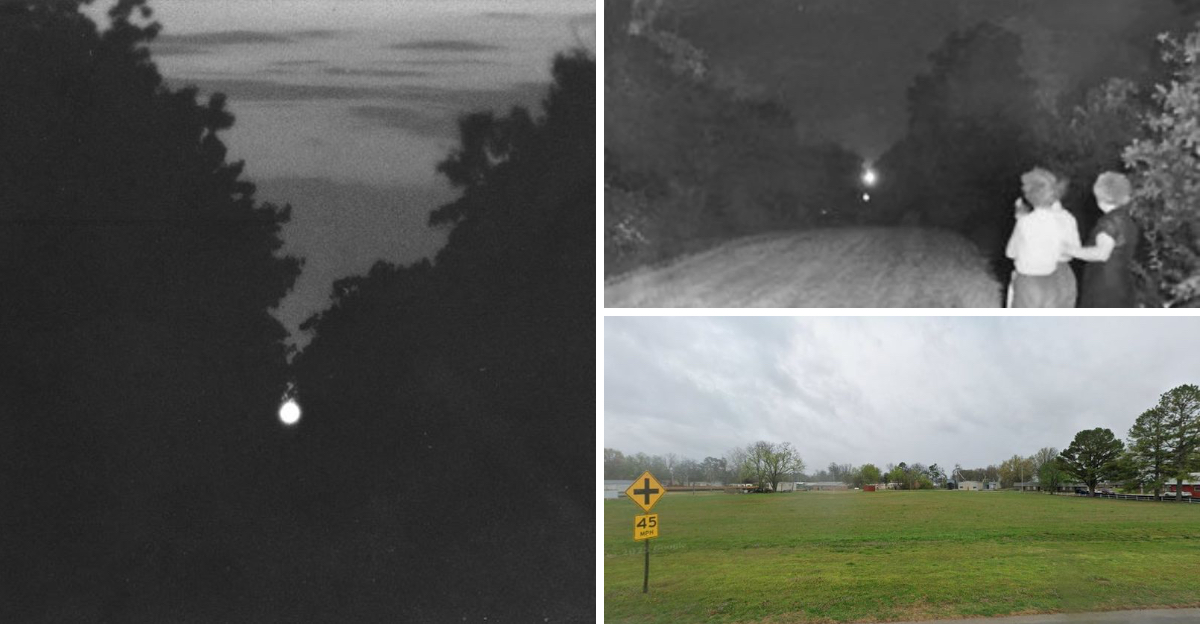
Along a lonely stretch of dirt road near Quapaw in northeastern Oklahoma, something strange flickers in the darkness.
For more than a century, witnesses have reported seeing a mysterious orange light that dances, bounces, and moves with no apparent source or explanation.
Known as the Hornet Spook Light, this paranormal puzzle has baffled scientists, intrigued paranormal investigators, and drawn curious travelers from across the country.
The light appears most often along a four-mile gravel route locals call the Devil’s Promenade, bobbing and weaving through the night air like a living thing.
Some describe it as an orange orb, others as a glowing sphere that shifts colors from red to white to yellow.
It moves east to west, sometimes splitting into multiple lights, sometimes chasing cars down the remote road.
Despite countless investigations and theories ranging from swamp gas to car headlights, no one has definitively explained what causes this eerie phenomenon.
Located in the far northeastern corner of Oklahoma near the borders of Missouri and Kansas, this area became known for the light long before modern times.
Legend suggests Native Americans traveling the Trail of Tears first witnessed the strange glow in 1836, though the first documented report appeared in print in 1881.
Today, the Spook Light remains one of Oklahoma’s most enduring mysteries, drawing believers and skeptics alike to a dark country road where the unexplained still flickers just beyond reach.
A Glowing Mystery on the Devil’s Promenade
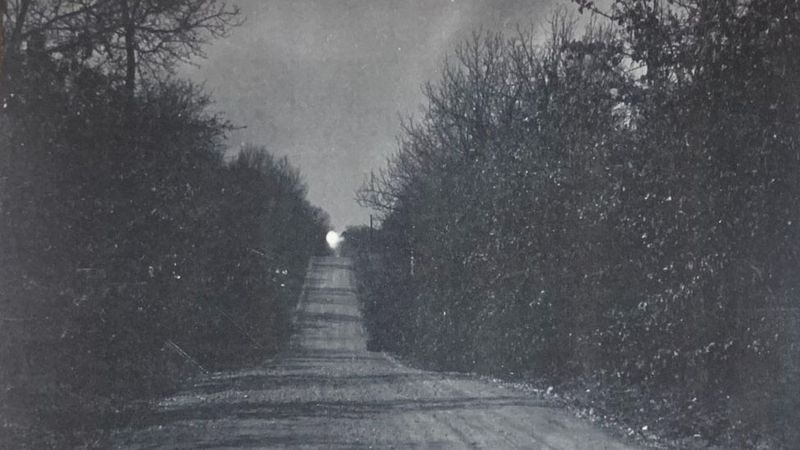
The four-mile stretch of gravel road where the Spook Light appears has carried an ominous nickname for generations.
Locals call it the Devil’s Promenade, a name that reflects both the mystery and the unease that surrounds this remote Oklahoma location.
The road itself looks unremarkable during daylight hours, just another rural route cutting through farmland and scattered trees.
But after dark, this ordinary path transforms into something far stranger.
Witnesses consistently describe an orange ball of light that appears without warning, moving along or above the road with purposeful motion.
The light doesn’t simply glow in one spot.
Instead, it travels, sometimes approaching vehicles before retreating, other times splitting into multiple orbs that dance independently.
Some visitors report the light following them for extended distances, maintaining a steady pace that feels almost intentional.
What makes the phenomenon particularly unsettling is its unpredictability.
Some nights, dozens of people gather along the road and see nothing.
Other evenings, lone travelers encounter a brilliant display that defies explanation.
The light has been photographed and filmed countless times, yet the footage never quite captures the strangeness witnesses describe in person.
Scientists have attempted to study the phenomenon with various equipment, measuring electromagnetic fields and atmospheric conditions, but no conclusive data has emerged.
The road’s isolation adds to the experience.
With minimal light pollution and few nearby homes, the darkness here feels absolute.
When the Spook Light appears against this backdrop, it becomes impossible to dismiss as a simple reflection or distant vehicle.
Address: Southeast 50th Avenue & Stateline Road, Oklahoma 74363
Trail of Tears Connection and Ancient Sightings
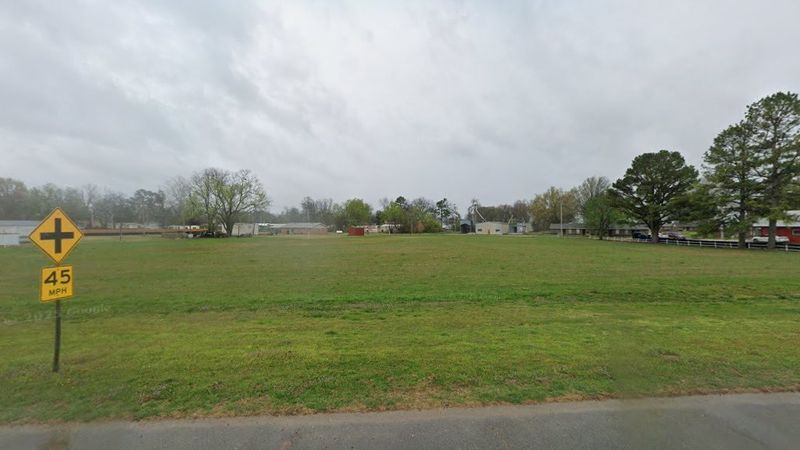
Long before modern investigators turned their attention to the Spook Light, indigenous peoples reportedly witnessed the strange glow.
According to local tradition, Native Americans traveling the Trail of Tears in 1836 observed unexplained lights along this route.
This connection adds a layer of historical depth to the mystery, suggesting the phenomenon predates European settlement and modern technology that skeptics often blame for the sightings.
The Trail of Tears forced thousands of Cherokee, Chickasaw, Choctaw, Creek, and Seminole people from their ancestral lands in the southeastern United States to territories west of the Mississippi River.
The route passed through what is now northeastern Oklahoma, an area that would later become associated with the Spook Light.
Some legends suggest the light represents the spirit of a Native American chief still searching for his lost family, though such stories likely emerged after the phenomenon became widely known.
Whether the 1836 sightings actually occurred remains unverifiable, as oral traditions and later folklore often blend together.
What’s certain is that by the late 1800s, reports of the mysterious light had become common enough to warrant published accounts.
The first documented reference appeared in a publication called the Ozark Spook Light in 1881, describing a luminous phenomenon that locals already considered well established.
This historical continuity distinguishes the Spook Light from many paranormal claims that emerge suddenly and fade quickly.
For nearly two centuries, generation after generation has reported seeing something unexplained along this stretch of Oklahoma countryside.
The consistency of these accounts across time periods and cultural backgrounds lends the mystery a credibility that purely modern phenomena lack.
Why Joplin and Hornet Claim the Oklahoma Light
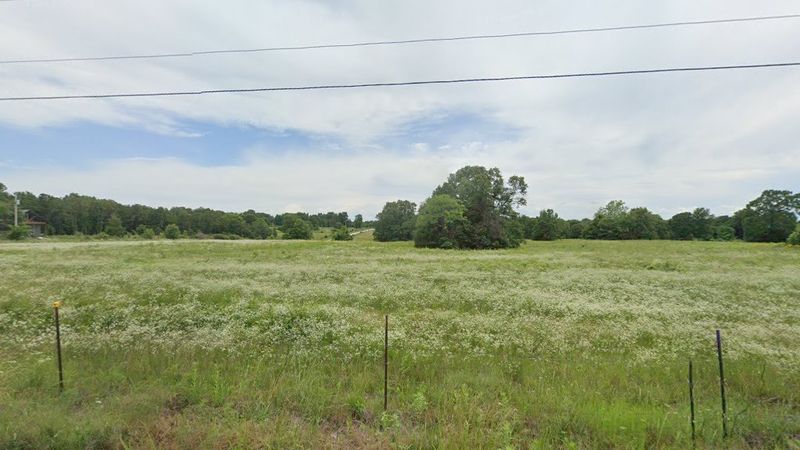
Geography creates confusion when people try to pinpoint the Spook Light’s location.
Although the phenomenon occurs in Oklahoma near the small town of Quapaw, it’s often called the Joplin Spook Light or the Hornet Spook Light, both names referencing Missouri communities.
This naming quirk stems from the viewing angle and the tri-state nature of the area where Oklahoma, Missouri, and Kansas meet.
The light typically moves from east to west along the gravel road, meaning observers usually watch it from the eastern end, which places them closer to Missouri.
Hornet is a tiny hamlet just across the state line, while Joplin is a much larger and better-known city about twelve miles to the east.
Visitors from Missouri naturally associated the phenomenon with their home state, and the names stuck even though the actual sightings occur on Oklahoma soil.
Quapaw, the nearest Oklahoma town, sits about nine miles west of the Spook Light road.
This small community in Ottawa County has a population of fewer than a thousand residents.
Many locals have grown up with stories of the mysterious light, and some have witnessed it personally multiple times over the years.
Yet Quapaw rarely receives top billing in Spook Light discussions, overshadowed by the Missouri names that appeared in early newspaper accounts and paranormal literature.
This geographic confusion actually adds to the legend’s appeal.
The tri-state location gives the phenomenon a liminal quality, existing in a borderland space that belongs fully to no single community.
Oklahoma claims the actual site, but Missouri towns claim the viewing tradition and much of the historical documentation.
The result is a shared regional mystery that transcends state lines.
Eyewitness Accounts That Defy Simple Explanations
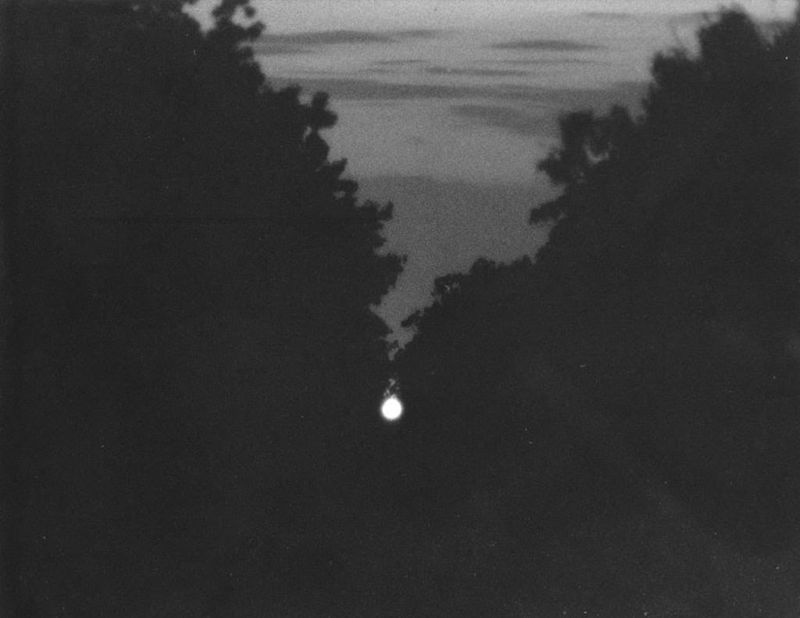
Personal testimonies about the Spook Light share remarkable consistency despite spanning decades.
Visitors describe an orange glow that appears suddenly, often starting as a small point of light that grows larger as it approaches.
The light moves with fluid motion, rising and falling, swaying side to side, sometimes advancing rapidly before retreating just as quickly.
These movement patterns distinguish it from stationary lights or predictable sources like vehicles.
One particularly compelling account comes from longtime observers who conducted their own informal experiment.
They positioned friends at both ends of the road while others waited in the middle.
When the light appeared, dancing between the observation points, the stationed lookouts reported seeing no vehicles, no people, and no other light sources.
This simple test eliminated the most common skeptical explanation: that viewers are simply seeing car headlights from a distant highway.
Multiple witnesses report the light responding to human presence.
Cars driving along the Devil’s Promenade sometimes find the orb following them, maintaining a consistent distance as they speed up or slow down.
Others describe the light approaching their parked vehicles before suddenly vanishing or shooting away at impossible speeds.
These interactive qualities give the phenomenon an almost sentient character that purely natural explanations struggle to address.
Color variations add another layer of strangeness.
While orange remains the most common description, witnesses also report red, white, yellow, and even green hues.
Some see the light split into multiple orbs that move independently before merging back together.
The light’s intensity also varies, from a faint glow barely visible against the darkness to a brilliant sphere that illuminates the surrounding landscape.
Scientific Investigations and Persistent Puzzles
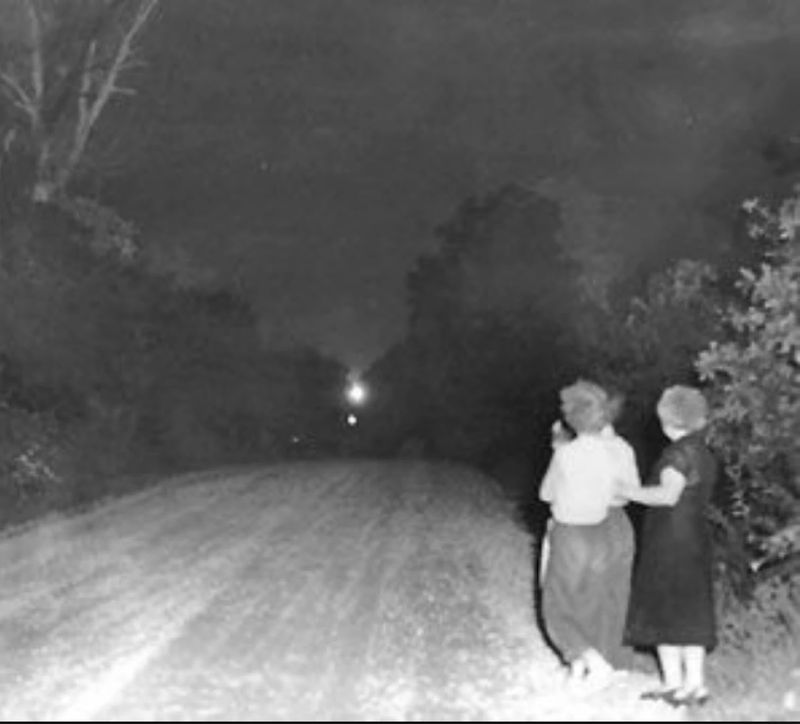
Over the decades, various researchers have attempted to solve the Spook Light mystery using scientific methods.
In 1946, the Army Corps of Engineers conducted an investigation, ultimately attributing the light to vehicle headlights from Route 66, which runs several miles to the south.
This explanation satisfied some skeptics but failed to account for sightings that occurred before automobiles became common or for observations made when the highway had no traffic.
Later investigations brought more sophisticated equipment to the Devil’s Promenade.
Researchers measured electromagnetic fields, tested for radioactivity, analyzed soil and air samples, and used various detection instruments hoping to identify an unusual energy source.
These studies produced inconsistent results.
Some detected minor electromagnetic anomalies, while others found nothing out of the ordinary.
No investigation has produced repeatable, conclusive evidence explaining what causes the light.
The swamp gas theory, often applied to unexplained lights, faces challenges in this location.
While the area has some wetland features, the geology doesn’t support the kind of methane production that creates sustained, moving lights.
Additionally, swamp gas typically produces brief, flickering flames rather than the coherent, mobile orbs witnesses describe.
The phenomenon’s consistency and longevity also argue against a simple geological explanation.
Atmospheric conditions like temperature inversions can create optical illusions, causing distant lights to appear closer or to seem to move strangely.
However, the Spook Light appears under various weather conditions and seasons, not just when specific atmospheric factors align.
Witnesses report sightings in summer heat and winter cold, during clear nights and overcast evenings.
This reliability across conditions suggests something more than occasional atmospheric tricks.
The Social Experience of Spook Light Hunting
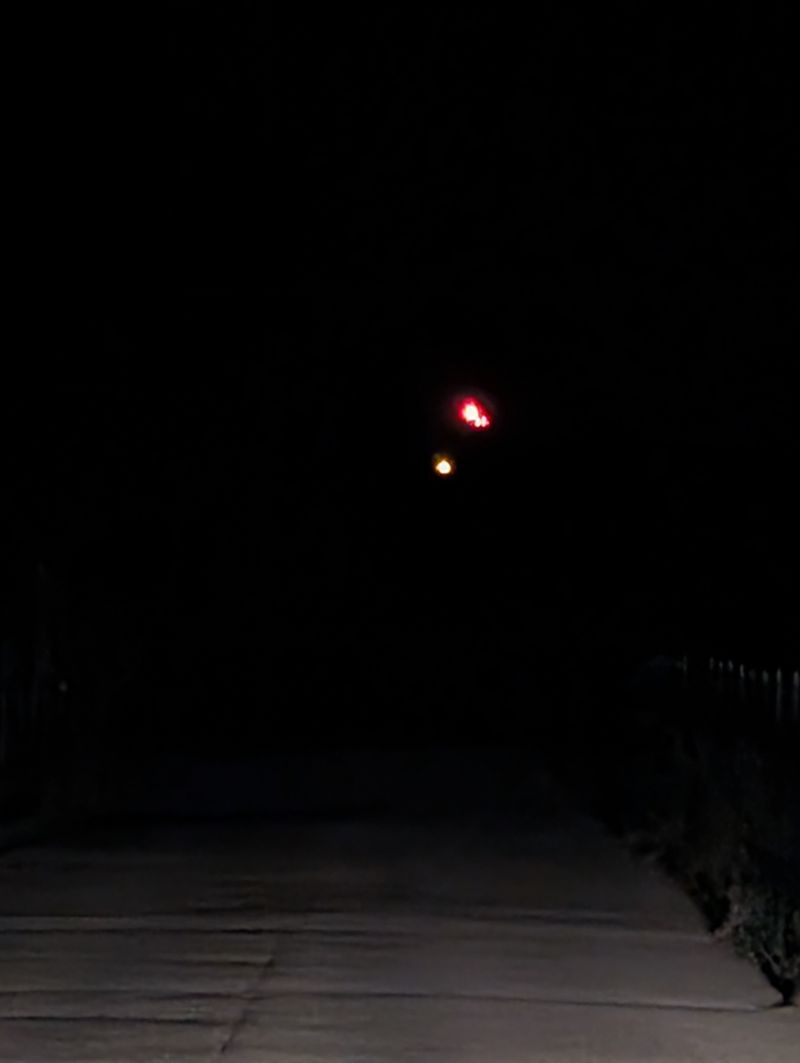
Visiting the Spook Light has become a rite of passage for teenagers and young adults in northeastern Oklahoma and nearby Missouri.
For generations, groups of friends have piled into cars for late-night adventures along the Devil’s Promenade, combining the thrill of potential paranormal encounters with the social bonding that comes from shared experiences.
The isolated location and spooky reputation make it an ideal destination for dates and group outings.
During peak times, especially on weekend nights in warmer months, the road can become surprisingly busy.
Cars park along the shoulder while occupants watch for the mysterious light, creating an impromptu gathering of believers, skeptics, and curious newcomers.
This social dimension transforms the experience from solitary mystery to communal event.
Stories get shared, theories debated, and sightings compared as strangers become temporary companions united by their quest to witness something unexplained.
The atmosphere along the road shifts between excitement and genuine unease.
When nothing appears for extended periods, the gathering can feel almost festive, with laughter and conversation filling the darkness.
But when someone spots a light, the mood changes instantly.
Voices drop to whispers, engines cut off, and attention focuses completely on the phenomenon.
Even skeptics report feeling their skepticism waver when confronted with something they can’t immediately explain.
Local culture has embraced the Spook Light as a point of pride and curiosity.
Older residents remember when the road was even more isolated, with overhanging trees creating a tunnel of complete darkness.
Some recall when bikers regularly gathered at the site, creating an edgier atmosphere than today’s family-friendly visits.
These generational memories add depth to the experience, connecting current visitors to decades of Spook Light tradition.
Legends and Folklore Surrounding the Light
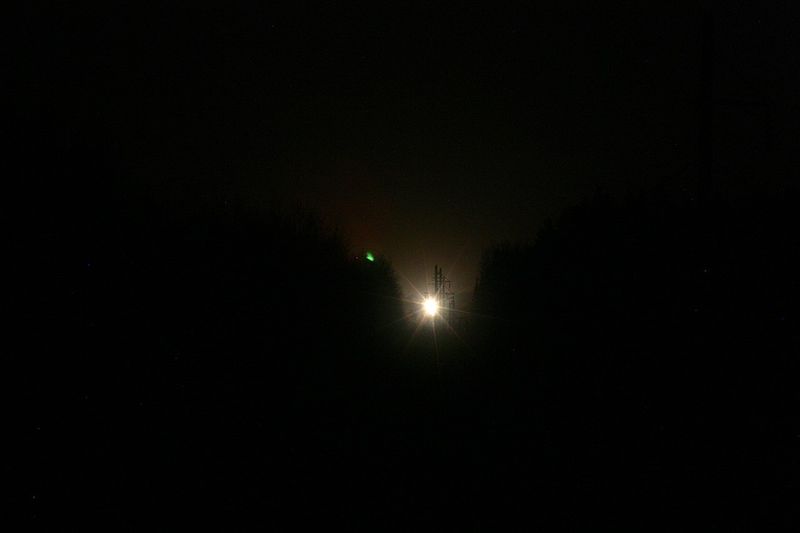
As with any long-standing mystery, numerous legends attempt to explain the Spook Light’s origin.
One popular story tells of a Native American chief who was separated from his family and now wanders the area with a lantern, eternally searching for his lost loved ones.
Another tale describes a miner who was decapitated in an accident and now carries his head as he walks the road looking for it.
These stories follow familiar folklore patterns, assigning tragic human drama to unexplained phenomena.
Other legends focus on more recent history.
Some versions claim the light represents the spirits of Civil War soldiers still fighting battles in the borderland region where Missouri and Oklahoma meet.
This area saw significant conflict during the war, with guerrilla warfare and raids creating lasting trauma.
The notion that restless spirits might linger fits the regional historical consciousness, though it doesn’t explain why the light behaves so consistently or why it appeared before the Civil War according to some accounts.
A particularly dark variation suggests the Devil’s Promenade earned its name because the light serves as a lure, drawing curious travelers to their doom.
According to this telling, those who follow the light too far into the darkness never return.
While no actual disappearances have been documented, the story adds an element of danger that makes the experience more thrilling for visitors seeking a scare.
These legends reveal more about human psychology than about the light itself.
When confronted with something inexplicable, people create narratives that provide meaning and context.
The stories make the phenomenon personal, transforming an abstract mystery into an emotionally resonant tale of loss, tragedy, or supernatural intervention.
Whether any truth underlies these legends remains unknown, but they’ve become inseparable from the Spook Light experience.
The Role of Isolation and Darkness
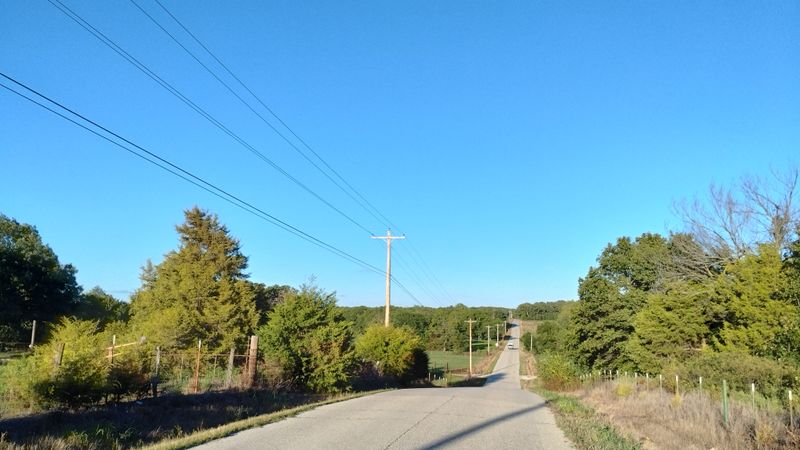
Understanding the Spook Light experience requires appreciating the profound darkness of rural northeastern Oklahoma.
Far from city lights, with minimal development and sparse population, this region offers a kind of darkness increasingly rare in modern America.
On moonless nights, the blackness feels almost tangible, pressing in from all sides.
Human eyes struggle to adjust, finding no ambient light to grasp.
In this environment, even a small light source becomes dramatically visible and potentially disorienting.
The dirt road itself contributes to the atmosphere.
Unlike paved highways with clear markings and predictable surfaces, this gravel route feels primitive and uncertain.
Ruts and washboard patterns shake vehicles, creating a physical discomfort that heightens psychological unease.
The road’s isolation means help would be far away if something went wrong, adding a subtle current of vulnerability to the experience.
Visitors become acutely aware of their distance from civilization.
Trees and vegetation along portions of the road create natural tunnel effects, blocking what little starlight might otherwise penetrate.
Witnesses from earlier decades describe the road as being completely canopied by overhanging branches, creating absolute darkness that made the Spook Light even more dramatic when it appeared.
While some trees have been cleared over the years, sections still offer this enclosed feeling that amplifies the mystery.
This darkness also eliminates visual reference points.
Without clear sight of the horizon, landscape features, or other landmarks, human perception becomes unreliable.
Distant lights can seem much closer, stationary objects can appear to move, and judging size or distance becomes nearly impossible.
These perceptual challenges don’t explain away the Spook Light, but they do help explain why the experience feels so profoundly strange and why witnesses struggle to describe exactly what they’re seeing.
Dear Reader: This page may contain affiliate links which may earn a commission if you click through and make a purchase. Our independent journalism is not influenced by any advertiser or commercial initiative unless it is clearly marked as sponsored content. As travel products change, please be sure to reconfirm all details and stay up to date with current events to ensure a safe and successful trip.
