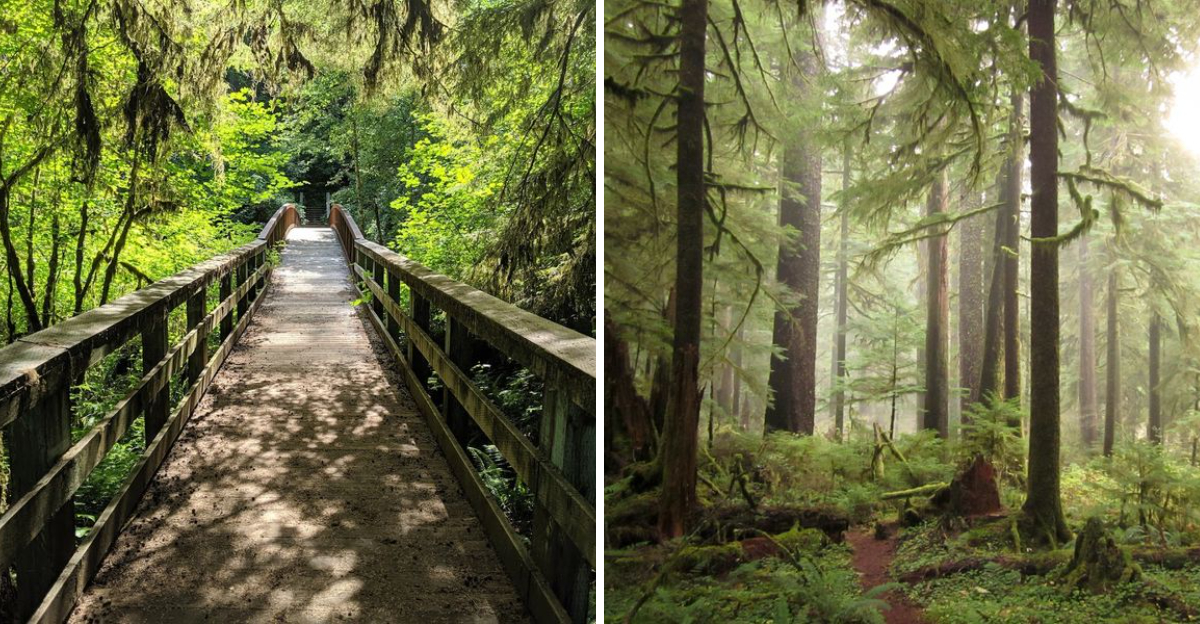
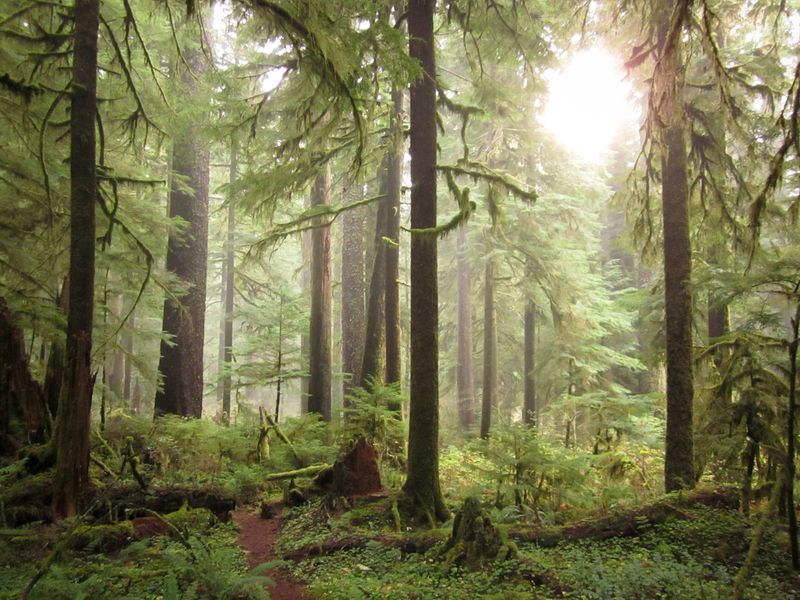
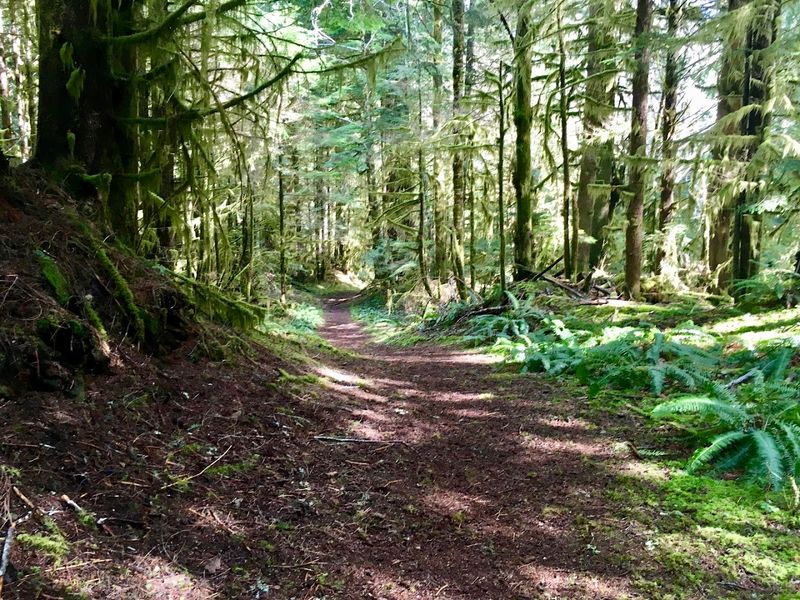
There’s something magical about walking among trees that have stood for centuries, and Oregon gave me that exact feeling on my recent adventure. I followed a narrow trail that wound through massive, moss-covered trunks, and it truly felt like I was strolling through the pages of a fairy tale.
The air was cool and fragrant, and the light danced on the forest floor like glittering ink on parchment. I found quiet moments to sit on a fallen log, watching squirrels dart and birds flit overhead, all while the forest seemed to breathe around me.
It’s the kind of place that resets your mind and fills you with wonder. I’m still smiling thinking about that serene walk, and I know you’ll want to experience it yourself.
The Ancient Douglas Firs That Stop You in Your Tracks
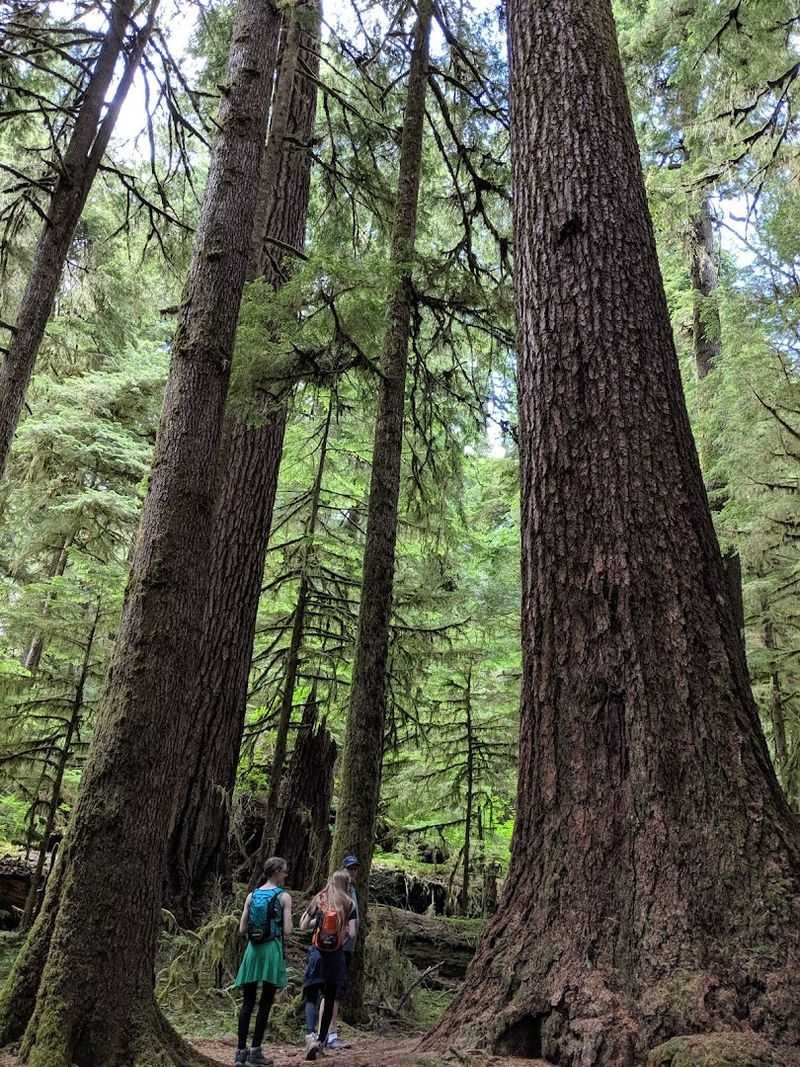
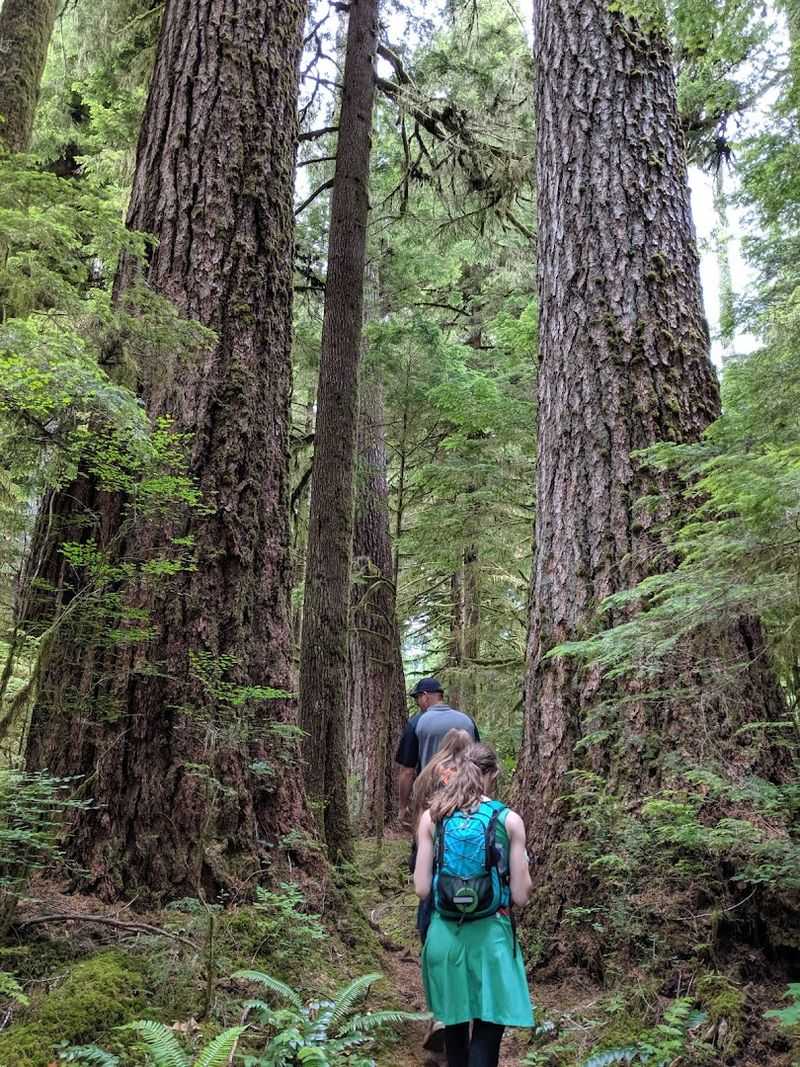
Nothing quite prepares you for the moment you walk up to one of these trees and realize its trunk is wider than your living room. The Douglas firs here are roughly 400 years old, which means they were already mature when European settlers first arrived in North America.
Standing next to one feels less like a hike and more like meeting a monument.
The bark is deeply furrowed and reddish-brown, almost warm-looking up close. Some trunks are so wide that a small group of people holding hands couldn’t wrap around them.
You find yourself slowing down, looking up, then looking up even more.
Valley of the Giants once held what was considered the second-largest Douglas fir in Oregon, until it fell in 1981. That kind of history hangs in the air as you walk.
These trees are not just big, they are genuinely ancient, and spending time with them shifts your sense of scale in a way that’s hard to shake after you leave.
Getting There Is an Adventure All on Its Own
The drive to the Valley of the Giants trailhead is not something you stumble into by accident. You’ll travel roughly 30 miles of gravel logging roads through active timber country, and your GPS will almost certainly try to lead you somewhere unhelpful.
The golden rule among hikers here is simple: do not follow Google Maps.
The correct route starts in Falls City, Oregon. Cross the bridge and continue straight, following the main gravel road through what used to be the town of Valsetz.
Keep an eye out for small orange road markers labeled VOG, because those little signs are your best friends out here.
A truck or vehicle with decent ground clearance makes the drive more comfortable, though people have reportedly made it in regular passenger cars. Plan for about 1.5 to 2 hours of driving from Falls City to the trailhead.
Download offline maps before you leave, because cell service disappears quickly once you head into the hills. The scenery along the way, rivers, ridgelines, and mossy forests, is worth every mile.
A Loop Trail That Rewards Every Step
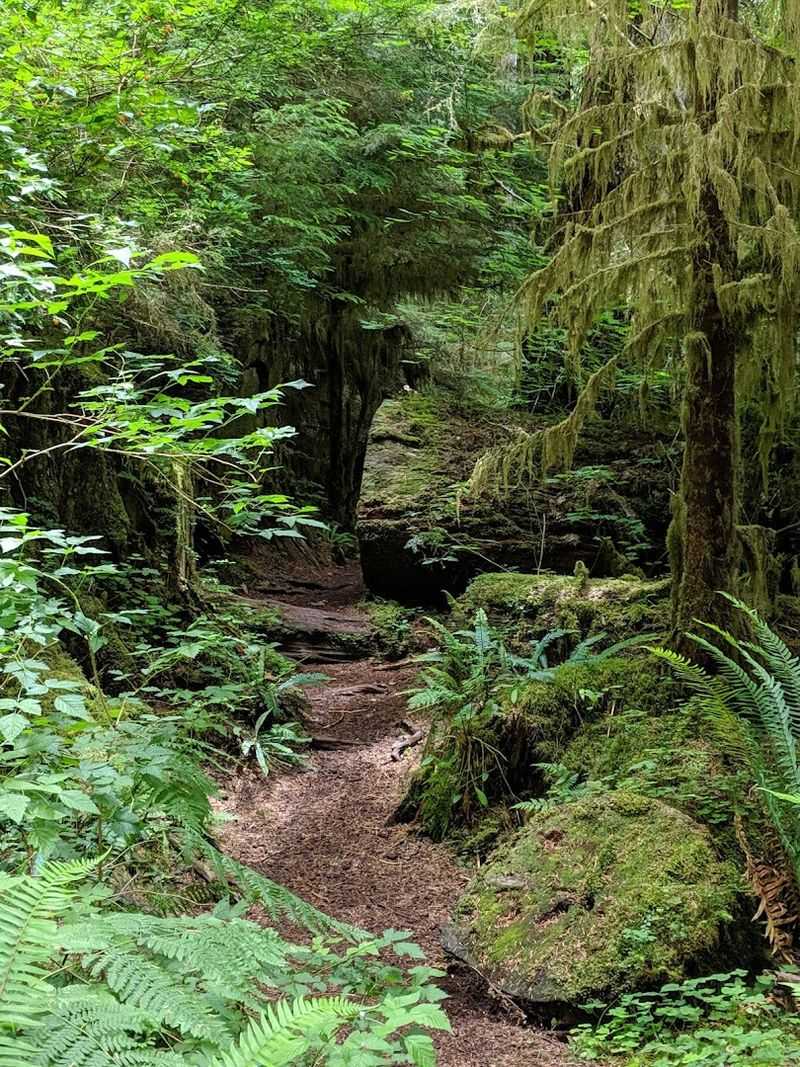
The main trail at Valley of the Giants runs about 2.2 miles in a loop, with roughly 1,200 feet of elevation change packed into that short distance. You hike down into the valley first, which means the climb back out comes at the end when your legs are already tired.
It keeps things interesting, to say the least.
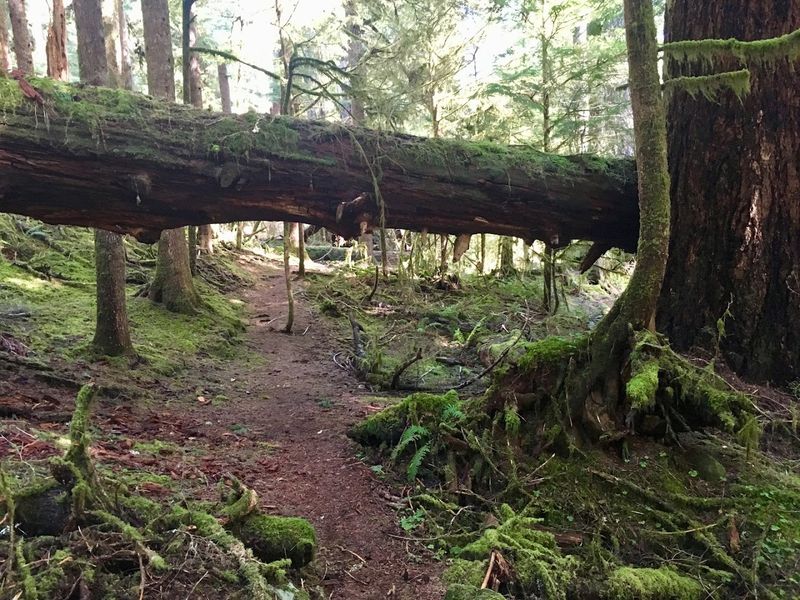
Parts of the trail are steep and can get slippery after rain, so sturdy footwear with good grip is a smart call. Tree roots cross the path in several spots, and the ground stays damp for most of the year.
Trekking poles are a nice bonus if you have them.
The trail is well-maintained overall, with five small footbridges helping you cross creeks and uneven terrain along the way. Most hikers finish the loop in about an hour, though many take longer simply because the scenery keeps pulling you to a stop.
The combination of elevation, roots, and raw forest beauty makes this trail feel genuinely rewarding rather than just a walk in the park.
The Siletz River Footbridge Moment
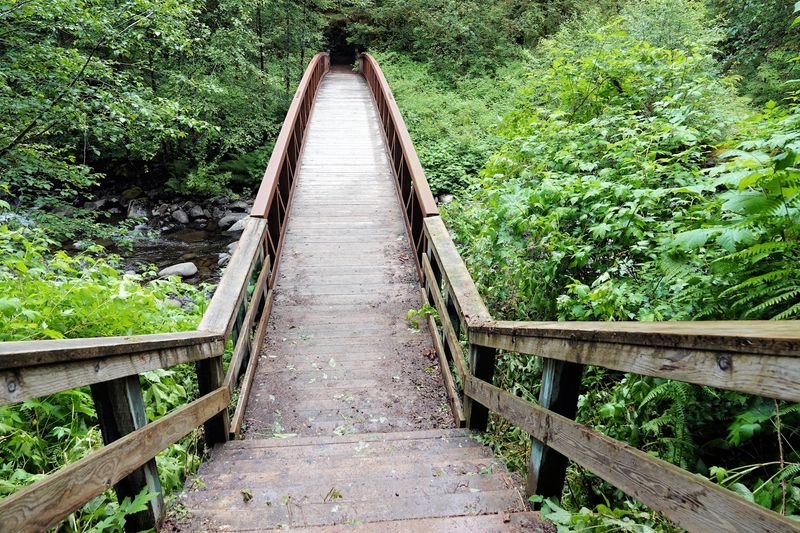
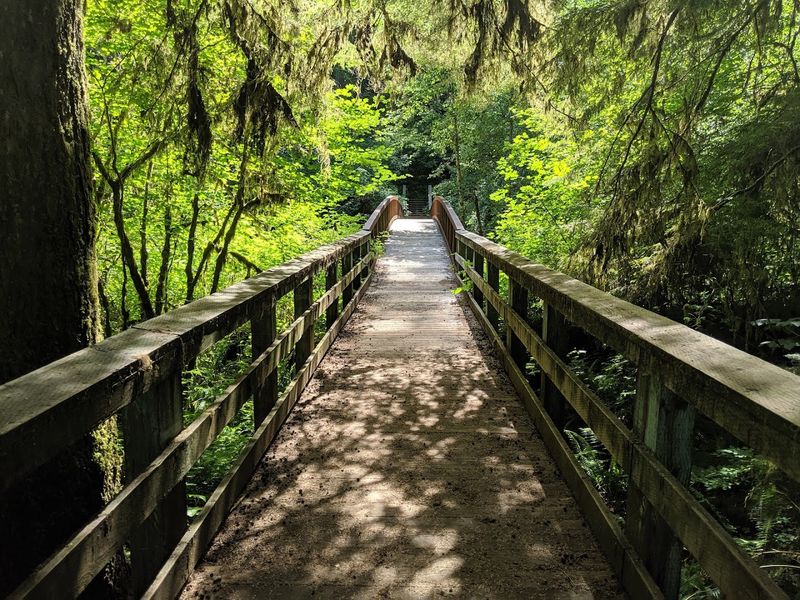
Crossing the Siletz River footbridge early in the hike is one of those moments that just lands differently. The river runs clear and cold below you, framed by mossy banks and the enormous trunks of trees that have stood here for centuries.
It’s quiet except for the water, and that quiet feels earned after the long drive in.
An old-growth log once served as the original footbridge here, which gives the spot an extra layer of history. The current steel bridge replaced it, but the location remains the same, and the view hasn’t changed much.
Pausing here for a few minutes before continuing up into the valley is absolutely worth it.
The river itself is a striking shade of green-blue, especially on overcast days when the light softens everything around it. Elk have been spotted near the riverbanks on occasion, so it pays to move quietly and keep your eyes open.
This crossing marks the point where the hike shifts from descent to ascent, and somehow crossing that bridge makes the whole adventure feel more official.
Moss, Ferns, and That Unmistakable Forest Smell
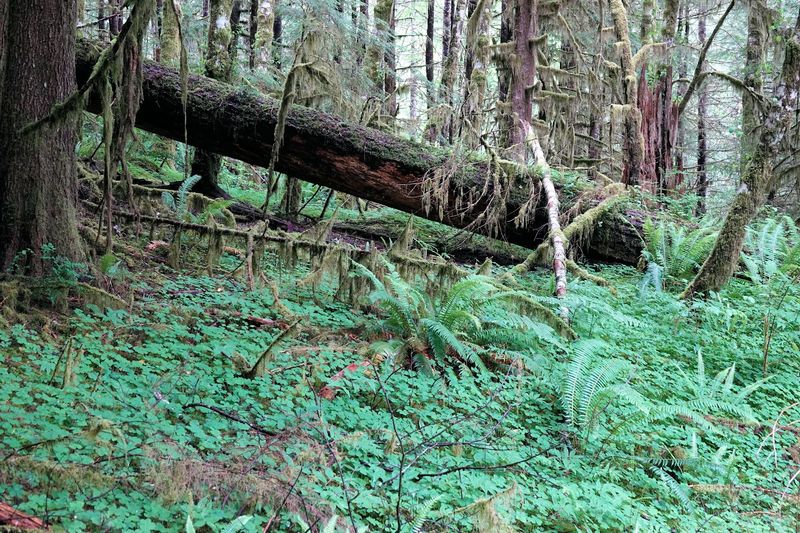
Every surface in this forest seems to be wearing a coat of moss. Logs, rocks, roots, and even low-hanging branches are draped in layers of green that make the whole place look like it belongs in a fairy tale.
The ferns grow thick between the trees, waist-high in some spots, adding to the feeling that you’ve walked into a world that time forgot.
The smell is something else entirely. It’s earthy and damp, with a sharp freshness underneath, like the forest is breathing right along with you.
I kept stopping just to take it in, and I wasn’t even embarrassed about it.
Old-growth rainforests like this one develop their layered, lush appearance over hundreds of years. The fallen trees, called nurse logs, slowly decompose and feed the next generation of plants and seedlings.
You can actually see young hemlocks and firs sprouting in neat rows along the tops of fallen giants, a process called colonization that takes generations to unfold. The whole ecosystem feels alive in a way that a younger forest simply doesn’t.
Wildlife You Might Spot Along the Way
The Valley of the Giants area is home to more than just impressive trees. Roosevelt elk roam through this part of the Oregon Coast Range, and hikers have spotted them near the trail and along the river.
Seeing one of these animals moving quietly through the old-growth understory is an experience that sticks with you.
Birds are active throughout the forest, and the canopy above you is often full of sound even when the trail feels silent. Varied thrushes, winter wrens, and woodpeckers are common in old-growth habitats like this one.
Moving slowly and keeping noise low gives you a better shot at noticing what’s around you.
Smaller critters, including banana slugs, salamanders, and various frogs, inhabit the damp forest floor. They’re easy to miss if you’re focused on the big trees, so it’s worth occasionally glancing down as well as up.
The biodiversity packed into this small 51-acre preserve is genuinely impressive, a reminder that old-growth ecosystems support life at every level, from the canopy all the way down to the soil.
What to Pack Before You Head Out
Preparation makes a real difference on a hike this remote. There are no bathrooms at the trailhead, no food vendors, and absolutely no cell service once you leave Falls City.
Going in with everything you need is not optional, it’s just the way this place works.
Water is essential, and bringing more than you think you’ll need is always the right move. Pack a lunch or solid snacks since the drive alone takes a couple of hours each way.
A rain jacket is smart any time of year, because the Oregon Coast Range stays wet, and the forest floor stays slippery even after the rain stops.
Charged devices matter here too, not for calls, but for photos. The scenery along the drive and throughout the hike is the kind of thing you’ll want to document.
Download offline maps or grab a BLM brochure with directions from the Salem office before you go. Wearing layers is wise because the valley floor stays cool, while the hilltop section of the trail can feel more exposed and breezy.
The Best Time of Year to Visit
Late spring through early fall tends to be the most popular window for visiting Valley of the Giants. The roads are more reliable, the trail is drier, and the long daylight hours give you plenty of time to make the drive without feeling rushed.
Summer days here are cool and pleasant under the canopy, even when it’s warm in the valley below.
Fall brings a different kind of beauty. The understory plants shift color, morning mist settles between the massive trunks, and the forest feels even more atmospheric than usual.
Visitor numbers also drop off a bit, which means you might have the trail largely to yourself.
Winter and early spring visits are possible but come with real challenges. The logging roads can become muddy and dangerous after heavy rain, and landslides have closed the access road in past years.
Road conditions change, and a quick phone call can save you hours of frustration.
The Scale of These Trees Changes Your Perspective
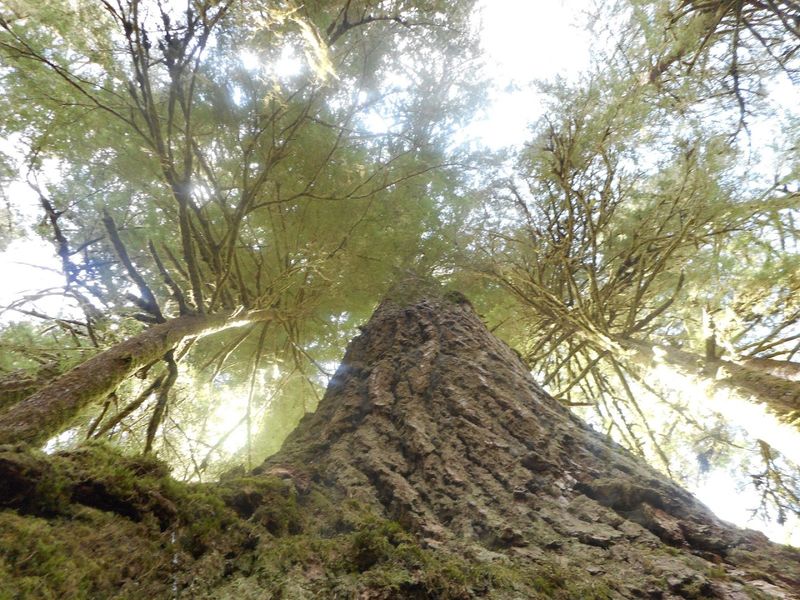
There’s a specific kind of humility that comes from standing next to a tree that was already old when your great-great-great-grandparents were born. The Douglas firs in this valley are not just tall, they are wide, deeply rooted, and completely commanding.
You don’t look at them so much as you look up at them.
Photos genuinely don’t capture the scale. You can see the size in an image, but you can’t feel it the way you do when you’re actually standing there, neck craned back, trying to find the top.
It’s one of those rare experiences that can only be fully understood in person.
One visitor described the trees as skyscrapers in a city of trees, and that comparison lands pretty well once you’re walking among them. The preserve covers just 51 acres, which makes the density of massive old-growth even more striking.
Every direction you look, another enormous trunk rises from the forest floor.
Why This Place Deserves to Be on Your Oregon Bucket List
Valley of the Giants is the kind of place that earns its name completely. It’s not easy to reach, and it doesn’t try to be.
The long drive on gravel logging roads, the lack of amenities, and the genuine remoteness all feel intentional.
The 51-acre preserve represents a rare surviving fragment of what the Oregon Coast Range once looked like across its entire stretch. Surrounded by logged land on all sides, it stands as a living record of what old-growth forests can become when left alone for centuries.
That context makes walking through it feel meaningful beyond just the visual beauty.
People leave this place changed in small but real ways. The quiet, the scale, and the age of everything around you create a kind of perspective reset that’s hard to find elsewhere.
Planning a full day for the experience is strongly recommended, because rushing through it would be a genuine shame.
Dear Reader: This page may contain affiliate links which may earn a commission if you click through and make a purchase. Our independent journalism is not influenced by any advertiser or commercial initiative unless it is clearly marked as sponsored content. As travel products change, please be sure to reconfirm all details and stay up to date with current events to ensure a safe and successful trip.
