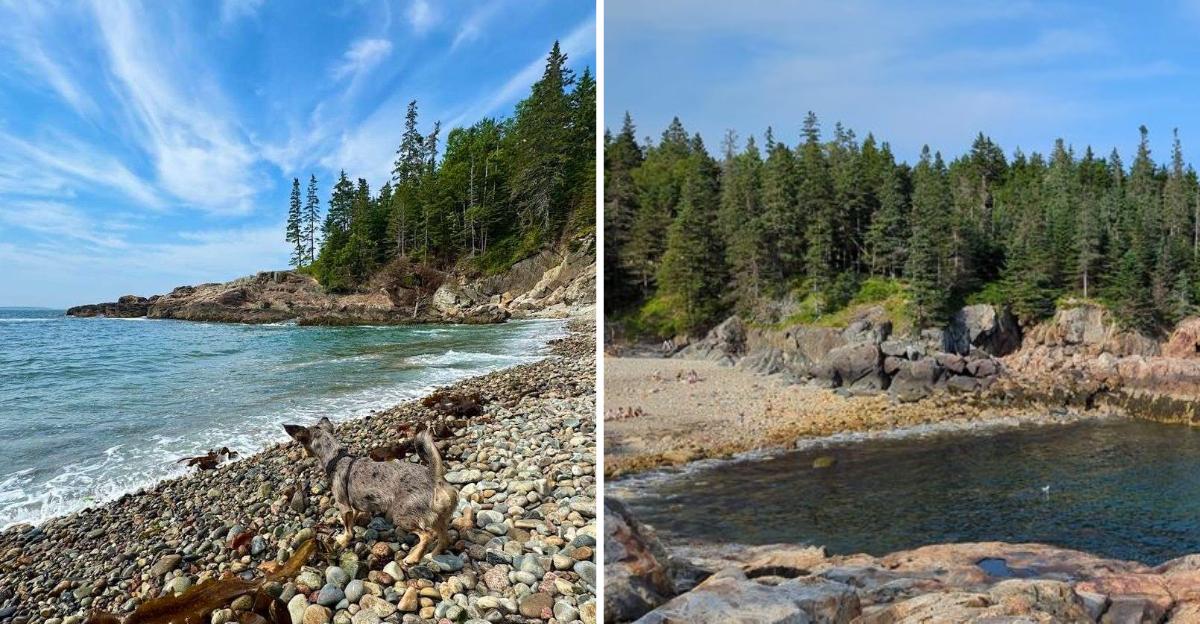
You walk for a mile or two, maybe three, breathing in the pine and salt air. The trail is beautiful, no question.
But the real magic does not happen while you are moving. It happens when you stop.
When you sit on a rock near the water and let the quiet settle around you. When you notice the way the light filters through the trees or the small purple flowers growing out of a crack in the granite. This Maine trail rewards the people who slow down, who take breaks, who pay attention to the details instead of just the destination. I found a spot near a small cove, sat down, and watched a seal pop its head up to see what I was doing.
That moment was better than any view from the summit. Maine knows that sometimes the point of a hike is not the hiking at all.
The Cobblestone Sound That Stops You Cold
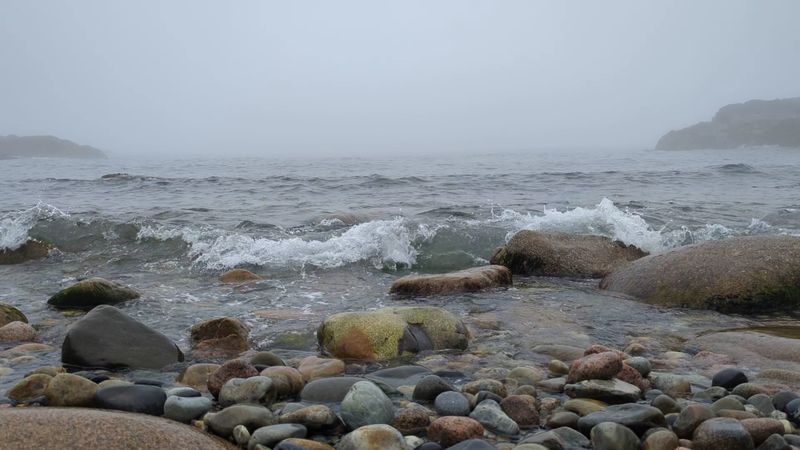
There is a sound at Maine’s Little Hunters Beach that nobody really warns you about, and that is exactly why it hits so hard. The ocean here does not crash onto sand.
It rolls, pulls, and tumbles hundreds of smooth rounded cobblestones in a continuous, layered rhythm that sounds almost musical. Some people describe it like marbles rolling together.
Others say it is closer to a deep, watery percussion that you feel as much as hear.
The stones at this beach were shaped over thousands of years by glacial activity and relentless wave action. Each rock is unique, ranging from palm-sized ovals to larger rounded boulders near the waterline.
Colors shift from pale grey to deep rust, dusty pink, and dark green, depending on the light and how wet the surface is.
What makes the sound so hypnotic is the layering. Each wave produces a slightly different pitch and rhythm depending on which stones it reaches, how far it pulls back, and how quickly the next wave follows.
No two moments sound exactly alike. It creates a kind of natural white noise that clears your head almost immediately.
Sitting on the upper part of the beach, away from the slippery seaweed-covered lower stones, is the best way to experience it. Bring a jacket because the ocean breeze keeps things cool even in summer.
Just settle in, close your eyes if you want, and let the cobbles do what they have been doing for centuries. It is genuinely unlike anything else in Acadia.
A Hidden Gem Tucked Off Park Loop Road
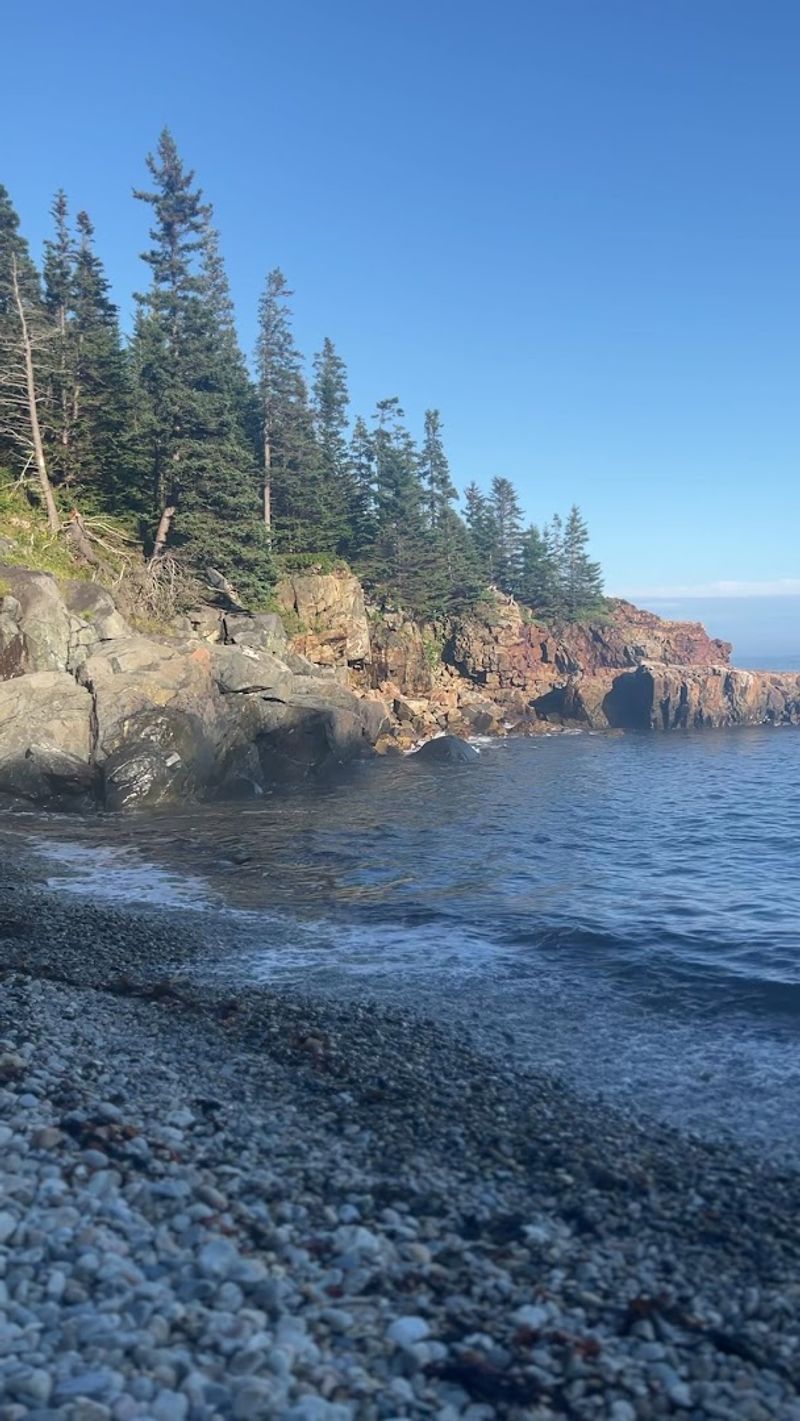
Finding Little Hunters Beach for the first time feels like cracking a code. There is no large sign announcing it from the road.
No big parking lot. Just a small pull-off along Park Loop Road with a set of wooden stairs disappearing down toward the water.
If you are not looking at your park map, you will drive right past it.
That low profile is actually part of its charm. While other spots in Acadia fill up quickly on summer mornings, this cove tends to stay quieter throughout the day.
The limited parking keeps the crowds small, which means you can often settle onto the stones without feeling like you are sharing a concert hall with strangers.
The approach itself is short and easy. A brief walk from the pull-off leads to the staircase, which descends to the beach in just a few dozen steps.
It is accessible enough for most visitors, though the rocky surface of the beach itself requires sturdy footwear and careful footing. Wet cobblestones and seaweed near the waterline can be slippery.
Once you arrive, the cove opens up in a way that feels surprisingly spacious. Towering cliffs border both sides, and dense evergreen forest frames the top of the beach.
The deep blue of the Atlantic fills the open horizon ahead. It is the kind of place that makes you wonder how it stays off so many visitor itineraries.
Check your Acadia park map before your visit, and make this pull-off a non-negotiable stop.
Tide Pools and Low-Tide Exploration
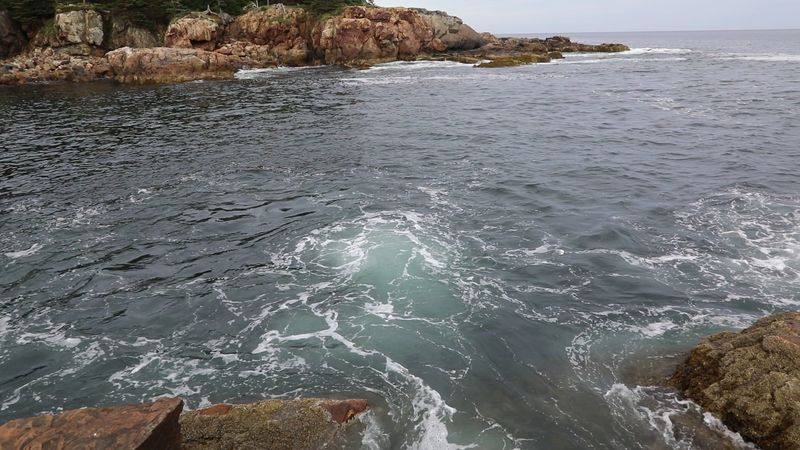
Low tide at Little Hunters Beach reveals a whole other world that most visitors never think to plan around. When the water pulls back, small tide pools appear along the rocky edges of the cove, tucked between boulders and exposed ledges.
These shallow pockets of seawater hold an impressive collection of coastal life.
Tiny crabs pick their way across the bottom. Sea anemones open and close in the shallow water.
Periwinkle snails cling to wet rock surfaces, and occasionally a small fish darts through a pool before you even realize it was there. None of it is dramatic or rare, but it is genuinely fascinating up close, especially for kids who have never crouched beside a tide pool before.
The key to tide pool exploration here is patience and timing. Checking the tide schedule before your visit makes a real difference.
Arriving within an hour or two of low tide gives you the best access and the clearest pools. Rubber-soled shoes with good grip are essential because the rocks around the pools can be dangerously slick with algae.
One important note: the rocks, stones, and any creatures in the tide pools are protected within Acadia National Park. Looking is absolutely encouraged.
Removing anything, including the cobblestones themselves, is prohibited. The park takes this seriously because the habitat depends on staying undisturbed.
Treat it like a living museum where everything stays exactly where you found it. That respect is what keeps places like this beautiful for every visitor who comes after you.
Photography and Painting en Plein Air

There is a reason local artists keep coming back to this beach with their easels. The combination of textures, colors, and light here is genuinely hard to replicate anywhere else on the island.
The cobblestones shift in color depending on whether they are wet or dry, catching warm afternoon light in ways that make them look almost painted already.
Photographers find the beach compelling from nearly every angle. The wooden staircase leading down from the road makes a strong compositional element on its own.
The cliffs on either side of the cove create natural framing. Early morning fog rolling off the water adds a moody, atmospheric quality that feels cinematic without any effort.
For painters, Little Hunters Beach has become something of a quiet tradition. En plein air painting, which means working outdoors directly from the landscape, suits this spot perfectly.
The scenery changes constantly with the tide, the light, and the weather. Visitors are encouraged to bring their own supplies if painting is something they enjoy.
There is no formal program, just an open invitation from the landscape itself.
The best light for photography tends to arrive in the early morning and again in the late afternoon when the sun hits the cliffs at a lower angle. Golden hour here is genuinely stunning.
If you are visiting with a camera, try shooting from the small overlook trail off to the side of the main staircase. It offers elevated views of the entire cove that are hard to get from beach level.
Bring extra memory cards. You will use them.
Stargazing and Full Moon Nights
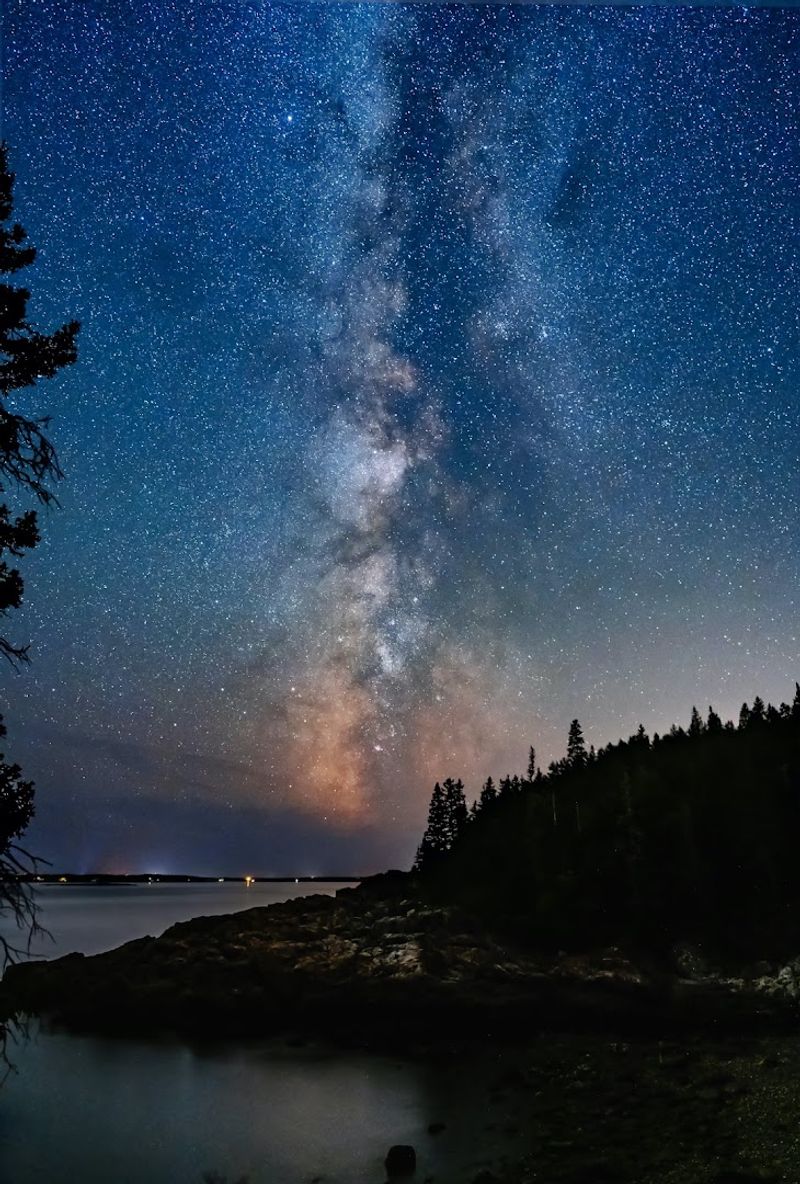
Most visitors see Little Hunters Beach in daylight, which means most visitors are missing half the experience. After sunset, this cove transforms into one of the more rewarding stargazing spots in Maine’s Acadia National Park.
Mount Desert Island benefits from relatively low light pollution compared to most of coastal New England, and this particular beach sits far enough from the main visitor areas to feel genuinely dark at night.
On clear nights, the Milky Way becomes visible above the open ocean horizon. The cobblestone beach stretches out quietly below while the sky does something extraordinary overhead.
During a full moon, the light reflects off the smooth wet stones in a way that feels almost surreal. The whole cove glows in a pale silver light that photographers specifically plan trips around.
Returning after dark does require preparation. The staircase and beach surface are uneven, and the rocks become harder to read without daylight.
A headlamp or reliable flashlight is essential. Wearing layers is smart too because ocean temperatures keep the air noticeably cooler than inland areas, even in late summer.
The payoff for that little bit of effort is hard to overstate. Sitting on the upper cobblestones in the dark, hearing the waves move the stones below you, watching stars appear one by one above the Atlantic, it is the kind of experience that does not fit neatly into a photo.
It just lives in your memory. Check the moon phase calendar before planning a night visit and aim for a clear forecast.
That combination is rare and worth chasing.
Quiet Reflection and the Art of Slowing Down
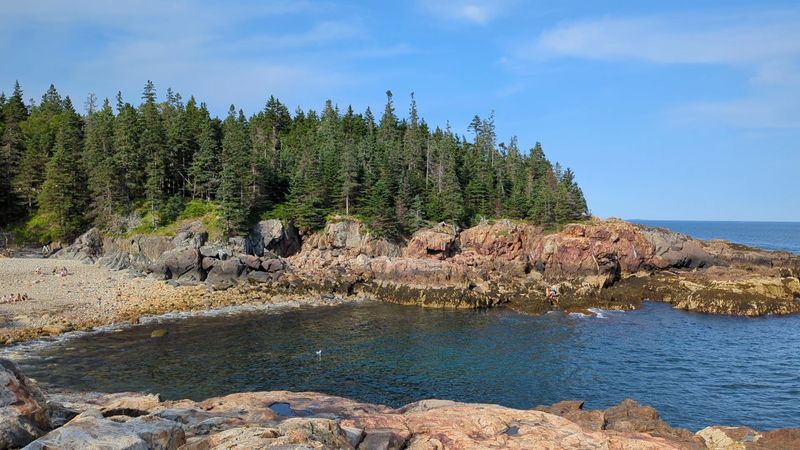
Some places reward speed. Little Hunters Beach rewards the opposite.
The visitors who get the most out of this cove are the ones who arrive, find a comfortable spot on the upper stones, and simply decide to stay for a while without any particular agenda. That is harder than it sounds in a park full of trails and viewpoints competing for your attention.
What this beach offers, more than scenery or sound, is a genuine sense of removal from everything busy. The limited parking keeps foot traffic low.
The lack of signage means it never becomes a destination for large tour groups. Even on a full summer weekend, there is something about the scale and the setting that encourages people to spread out and keep to themselves.
Bringing a folding chair or a blanket makes a real difference here. The cobblestones are beautiful but unforgiving to sit on for long stretches without cushioning.
A thermos of something warm and a good book can turn a quick stop into a two-hour reset that leaves you feeling genuinely restored rather than just checked off a list.
Little Hunters Beach is one of those places that reminds you why you came to Acadia in the first place. Not for the summits or the crowds or the famous carriage roads, but for that specific feeling of being somewhere wild and quiet and real.
The ocean does not care about your schedule here. The stones have been rolling for thousands of years.
Sitting with that for even an hour feels like a gift worth going out of your way for.
Address: Mt Desert, ME 04660
