That 37-acre tract of land along the Shark River might be the Jersey Shore’s best kept secret.
It began in 1914 as one of Marconi’s pioneering wireless stations, a high-tech hub that helped relay the Titanic’s distress calls.
The U.S. government seized the property for World War I, and it evolved into a top secret military base where Army scientists perfected the radar technology that helped win World War II and even bounced the first signals off the moon.
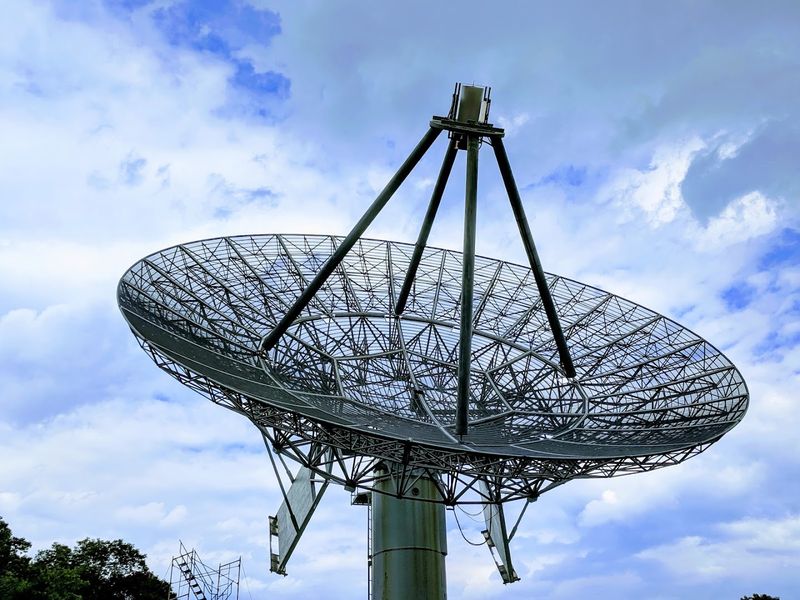
Today, this National Historic Landmark is a volunteer run museum campus where you can explore vintage computers, military jeeps, and the very dish that touched the lunar surface.
The Marconi Wireless Station: Where It All Began in 1914
Standing in front of one of the original Marconi buildings feels oddly electric, like the air still hums with old signals.
Between 1912 and 1914, the Marconi Wireless Telegraph Company of America built its East Coast headquarters right here in Wall Township.
Those 500-foot towers were not just impressive for the era, they were essential links in a global transatlantic communication network.
This station, known as the Belmar Station, connected continents at a time when that seemed almost impossible. It played a central role in shaping how the world communicated across vast distances.
Guglielmo Marconi himself chose this location strategically, and the choice paid off enormously.
Three of the original station buildings have been carefully restored by dedicated volunteers. Walking through them gives you a real sense of scale, both physical and historical.
The craftsmanship of the era is still visible in the architecture, and the exhibits inside make the technology surprisingly easy to understand even if you have never touched a radio dial in your life.
World War I and the U.S. Navy Takeover
When war broke out, the U.S. Navy did not wait around.
The strategic importance of this station for transatlantic military communication made it an immediate wartime asset, and the Navy took control without hesitation.
The station became a vital hub linking Washington to American forces fighting in Europe. Messages crossed the Atlantic in real time, which was genuinely revolutionary for military coordination at that scale.
But perhaps the most fascinating wartime development happened right here on this property.
Engineers at the Belmar Station developed a method that significantly reduced static interference during transmissions. That breakthrough allowed Allied forces to intercept German messages without being detected themselves.
Think about what that means: a quiet innovation in a New Jersey field changed the course of intelligence gathering during a world war.
The exhibit covering this period does a remarkable job of putting that achievement in context. It is not just about wires and frequencies.
It is about how a technical solution in one building rippled outward into history in ways that are still felt today.
Camp Evans: The Birth of a Top-Secret Military Lab
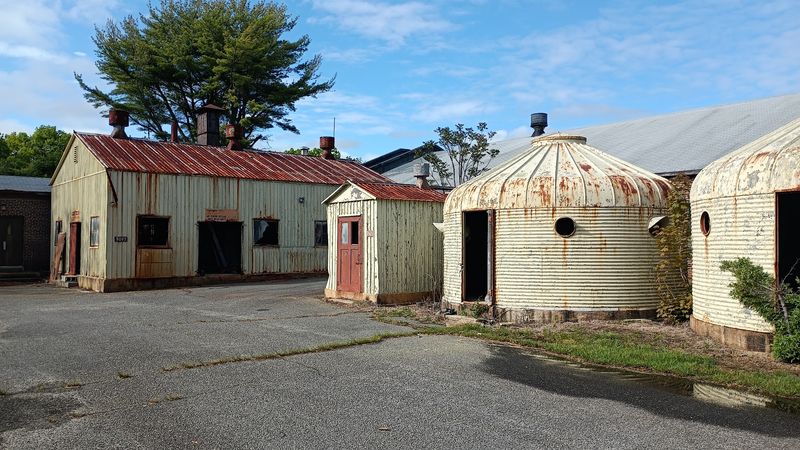
By 1942, the property had a new name and a much heavier mission. Designated Camp Evans in honor of Lieutenant Colonel Paul W.
Evans, the site transformed into one of the most classified research facilities in the United States under the Army Signal Corps.
Radar research became the primary focus, and the work done here pushed the boundaries of what radar technology could do. Weather radar, long-range detection systems, and experimental electronics were all developed and tested on these grounds.
The buildings that housed those projects still stand today, which makes walking through them feel genuinely surreal.
Security was tight, secrecy was absolute, and the stakes were enormous. The facility attracted serious government attention, including a visit from Senator Joseph McCarthy in 1954 who came to investigate its classified operations.
That level of scrutiny only underlines how significant the work being done here truly was.
Seeing the original lab spaces with equipment still present makes the history tangible in a way that textbooks simply cannot replicate. The atmosphere inside those buildings is something you carry with you long after you leave the campus.
Project Diana: The Day Humans Bounced a Signal Off the Moon
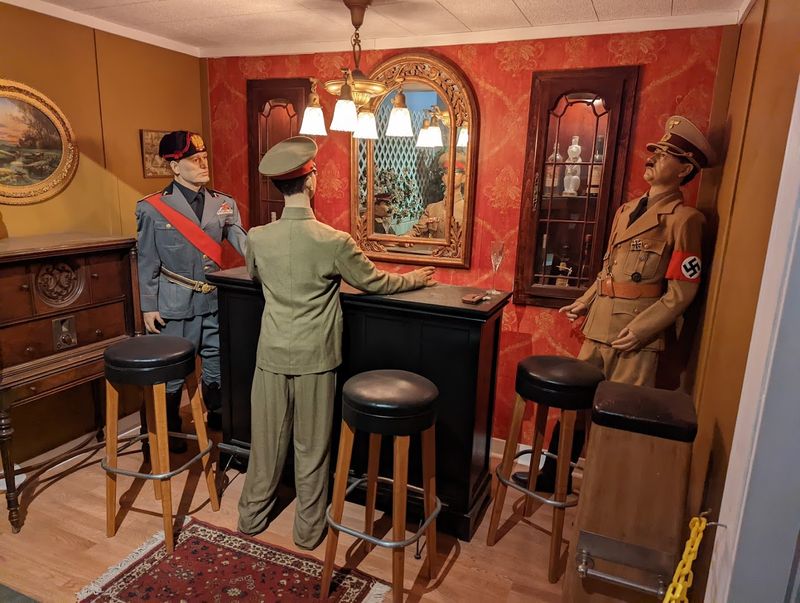
Few moments in scientific history are as quietly jaw-dropping as what happened here on January 10, 1947. A team of researchers at Camp Evans successfully bounced an electronic signal off the surface of the moon and received it back on Earth.
That experiment, called Project Diana, was a landmark achievement in the history of space communication.
It proved for the first time that communication with spacecraft was not just science fiction. It was entirely possible.
That single experiment laid groundwork for everything from satellite communication to deep space exploration that followed in the decades ahead.
The exhibit dedicated to Project Diana at InfoAge does a wonderful job of explaining both the technical challenge and the enormous significance of the achievement. It helps you appreciate just how bold the idea was for its time.
Radar had been around for a few years, but aiming it at the moon and actually getting a signal back was something else entirely.
Standing in the building where that experiment was coordinated gives you genuine chills. Science history happened in this exact spot, and the museum makes sure you feel every bit of it.
Cold War Secrets and Atomic Surveillance at Camp Evans
After World War II ended, Camp Evans did not slow down. The Cold War brought an entirely new set of challenges, and this facility stepped up to meet them with classified intensity.
The site became an atomic weapons surveillance location, developing systems designed to detect nuclear blasts anywhere on the planet.
Researchers here explored what was called Pulse Power technology, which was later tied to President Reagan’s Strategic Defense Initiative. The ambition of these projects was staggering, and the secrecy surrounding them was absolute for decades.
Most people driving past on the highway had no idea what was happening just beyond the tree line.
What makes the Cold War section of InfoAge so compelling is how it humanizes that era of tension. The equipment on display is not behind glass and untouchable.
Some of it you can actually get close to, examine, and appreciate in a way that museum visitors rarely get to experience.
The story of how this one property went from radio towers to atomic surveillance in just a few decades is genuinely one of the most remarkable institutional journeys in American technological history. The exhibits capture that arc beautifully.
The Radar Research Legacy That Changed Weather Forecasting Forever
Radar research at Camp Evans did not only serve military purposes. Some of the most significant civilian applications came directly out of the work done in these buildings, and weather forecasting is the most widespread example of that legacy.
The development and refinement of weather radar technology here changed how meteorologists understood and predicted storms. Before that work, forecasting was far more guesswork than science.
The advances made at Camp Evans helped shift it toward something much more reliable and precise.
Every time a weather app on your phone accurately predicts a thunderstorm, there is a thread of connection running back to the research conducted in Wall Township. That is not an exaggeration.
It is the kind of historical footnote that makes visiting this place feel deeply relevant to everyday modern life.
The exhibits explaining the radar research are accessible and engaging even if you have no science background. Clear diagrams, original equipment, and well-written panels make the technology easy to follow.
The volunteers who staff the area add a layer of enthusiasm and depth that transforms a simple display into a real conversation about how science shapes the world.
The Radio Technology Museum: A Love Letter to Broadcasting History
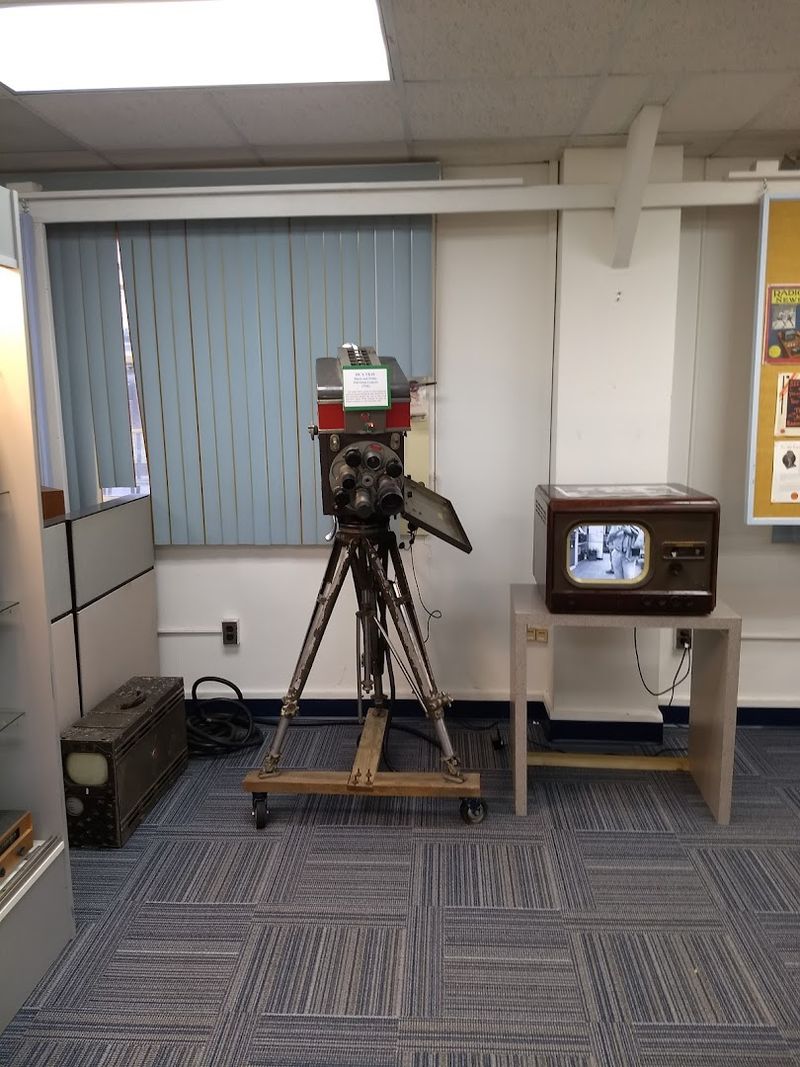
There is something deeply nostalgic about walking into a room lined with radios from across the decades. The Radio Technology Museum at InfoAge is exactly that kind of space, and it pulls you in immediately with its warmth and depth.
From early crystal sets to AM and FM transmitters to military communication gear, the collection spans an extraordinary range of broadcasting history.
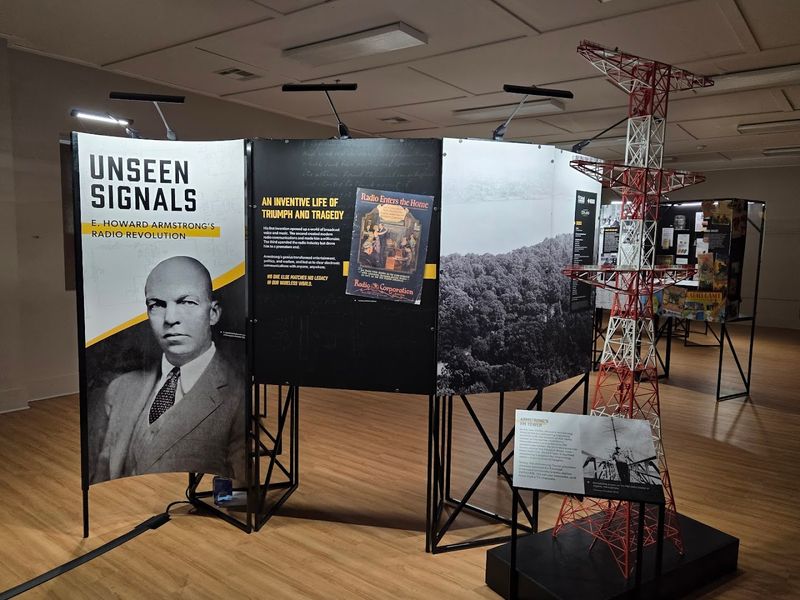
A visiting exhibit on Edwin Howard Armstrong, the New Jersey native who made foundational contributions to FM radio, adds serious technical depth to the experience.
Armstrong’s innovations shaped how we listen to everything today.
The exhibit is detailed enough to satisfy engineers and enthusiasts but also approachable enough that younger visitors leave with a real understanding of why FM radio was such a game-changer. That balance is genuinely hard to achieve, and InfoAge pulls it off with confidence.
Spending time in this room feels less like visiting a museum and more like sitting with someone who truly loves the subject and wants to share every fascinating corner of it.
The collection is curated with obvious care, and the context provided around each piece makes the technology feel alive rather than archived.
Vintage Computers and the Computer Learning Center Museum
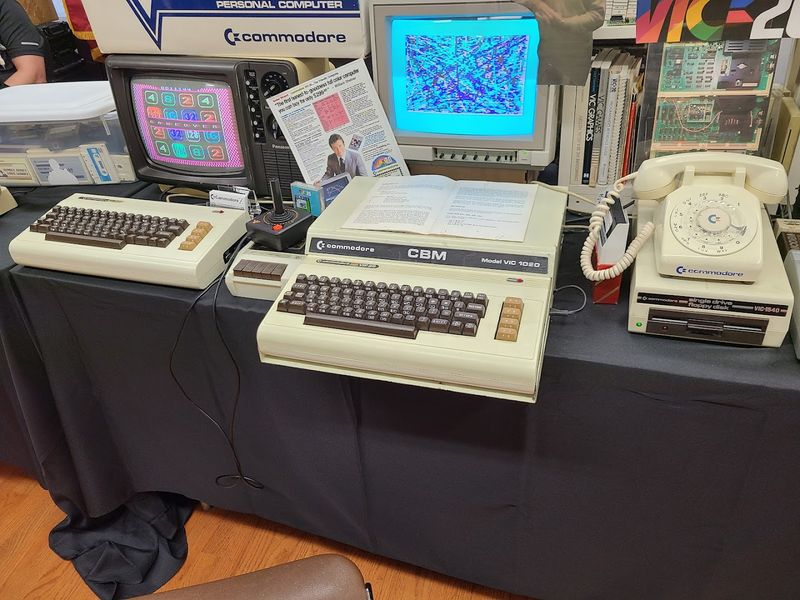
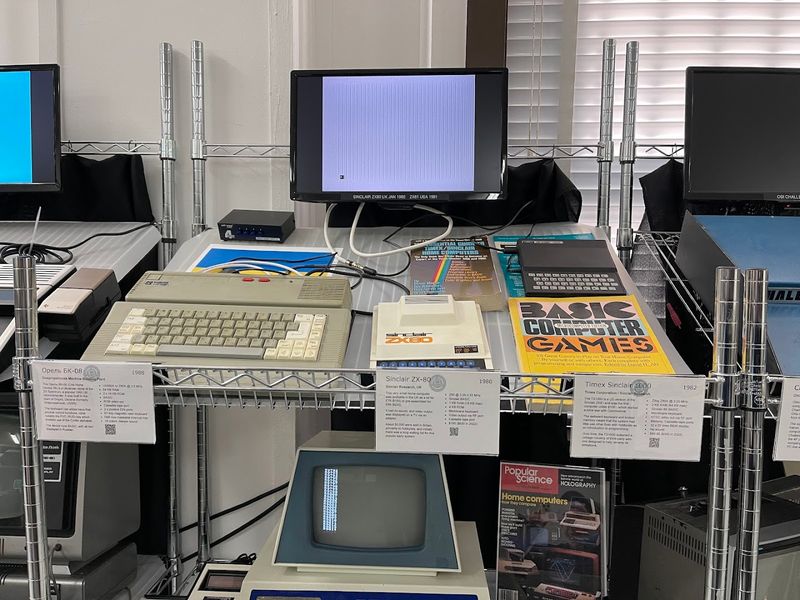
Walking into the Computer Learning Center Museum at InfoAge is like stepping directly into a childhood memory for anyone who grew up in the 1970s, 1980s, or 1990s.
Rows of vintage machines line the space, from Atari and Commodore home computers to early Apple Macintosh units and IBM PCs that once felt futuristic.
The collection also includes ancient minicomputers from DEC that most people have never seen outside of a textbook. Seeing those machines in person, understanding their scale and complexity, reframes how quickly computing technology has evolved.
It is humbling and fascinating in equal measure.
What sets this exhibit apart from a simple display is the interactive element. Visitors can engage with some of the technology directly, getting a hands-on sense of how early computing actually worked.
Punch card programming demonstrations bring a whole new appreciation for how far we have come in just a few decades.
Kids respond to this room with genuine curiosity, and adults respond with a mix of recognition and awe. Both reactions are completely valid.
The Computer Learning Center is one of those rare exhibits that works on multiple levels for every type of visitor who walks through the door.
Military Vehicles and WWII Equipment That Stop You in Your Tracks
Some exhibits you read. This one you experience with your whole body.
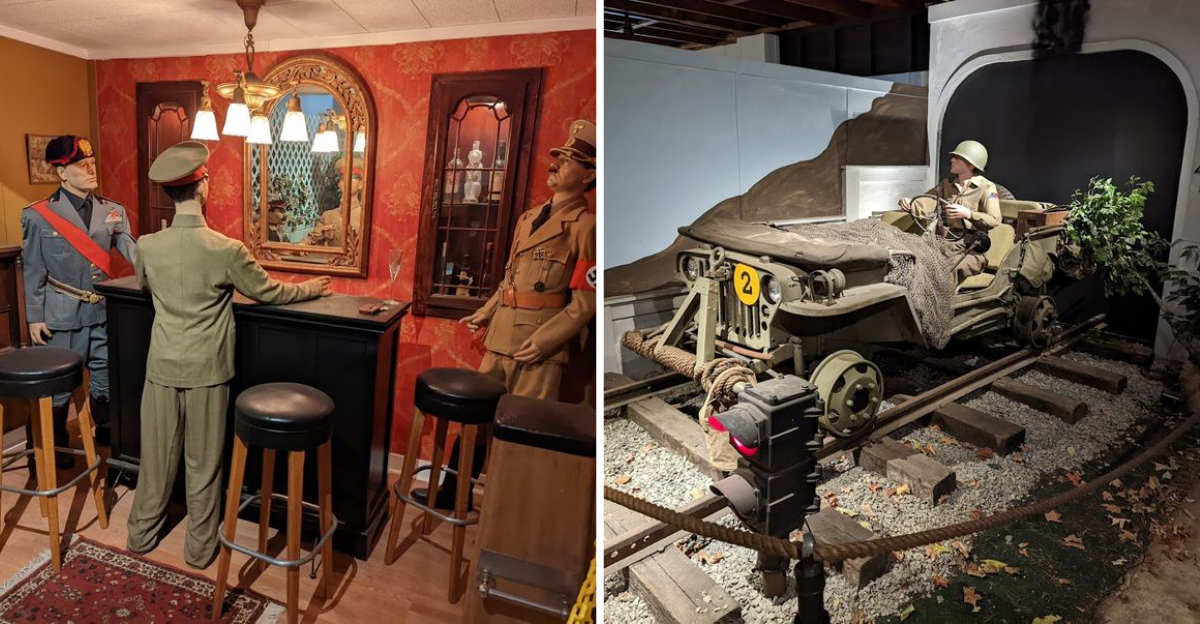
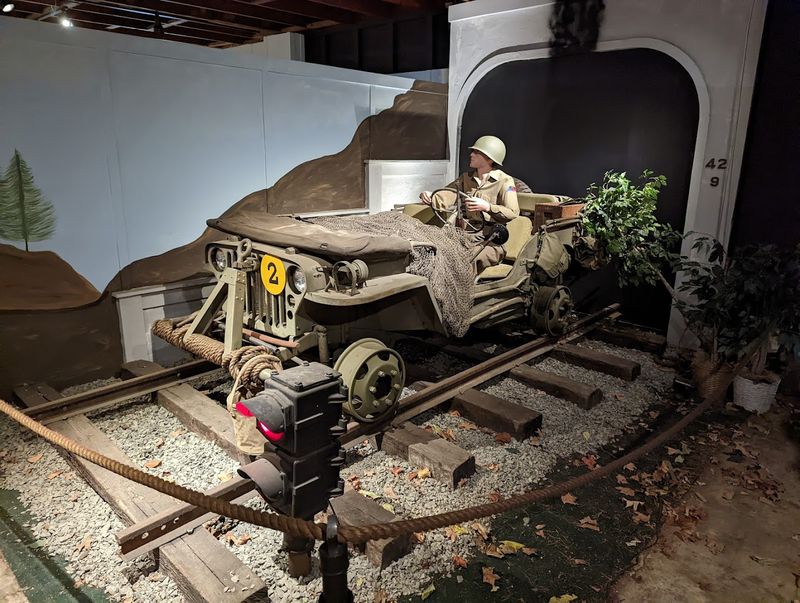
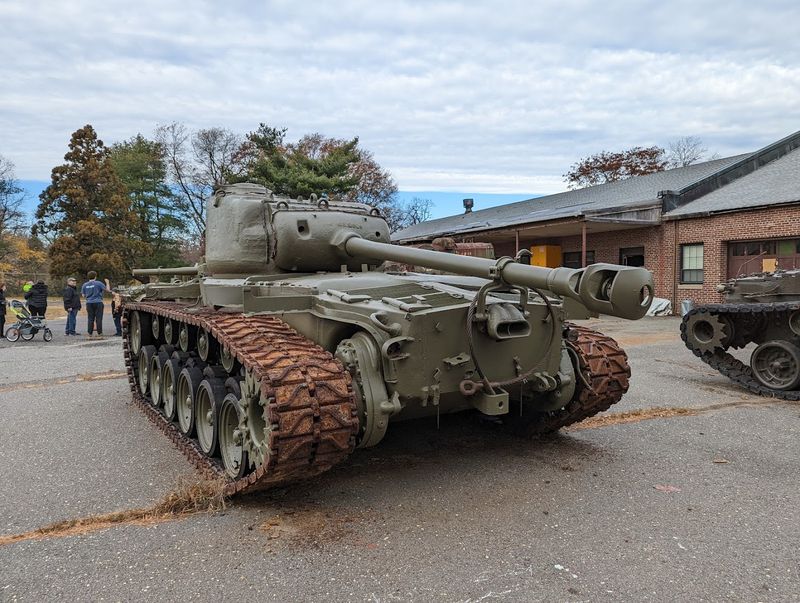
The military vehicle collection at InfoAge is the kind of display that makes you stop walking and just stand there for a moment, taking in the sheer presence of the machines around you.
WWII jeeps, armored vehicles, and military transport equipment fill the building with a weight that goes beyond the physical. Each vehicle carries history in its frame, and the accompanying displays explain not just what these machines did but what they meant to the people who used them.
The collection is particularly popular with kids, and it is easy to see why. There is something about the scale and the mechanical detail of these vehicles that captures imagination immediately.
Adults tend to linger longer, reading the context panels and absorbing the stories behind each piece.
The building itself adds to the atmosphere. Original wartime construction, maintained with care, gives the space an authenticity that modern museum facilities rarely achieve.
Spending time in this exhibit feels like a genuine encounter with history rather than a curated presentation of it. It is one of the strongest highlights on the entire InfoAge campus.
Planning Your Visit to InfoAge: What to Know Before You Go
Getting the most out of InfoAge takes a little planning, and it is absolutely worth the effort. The campus is open on Wednesdays, Saturdays, and Sundays from 12 to 5 PM, so checking the schedule before heading out is a smart first step.
Arriving early gives you the best chance of covering multiple buildings without rushing.
Wear comfortable walking shoes. The campus spans multiple restored buildings spread across a historic military base, and moving between them involves some outdoor walking on level ground.
It is accessible for most visitors, including seniors, and the parking is free which is a genuinely pleasant surprise.
Guided tours are strongly recommended over self-guided exploration. The volunteers here bring an energy and depth of knowledge that transforms the experience entirely.
They have authentic connections to the technology and history on display, and their enthusiasm is contagious in the best possible way.
With over 20 museums and exhibits spread across the campus, a single visit rarely feels like enough. Many visitors return specifically for new exhibits or seasonal events like the Christmas train show.
Plan for at least three to four hours, and come with curiosity fully switched on.
Address: 2201 Marconi Rd, Wall Township, NJ
