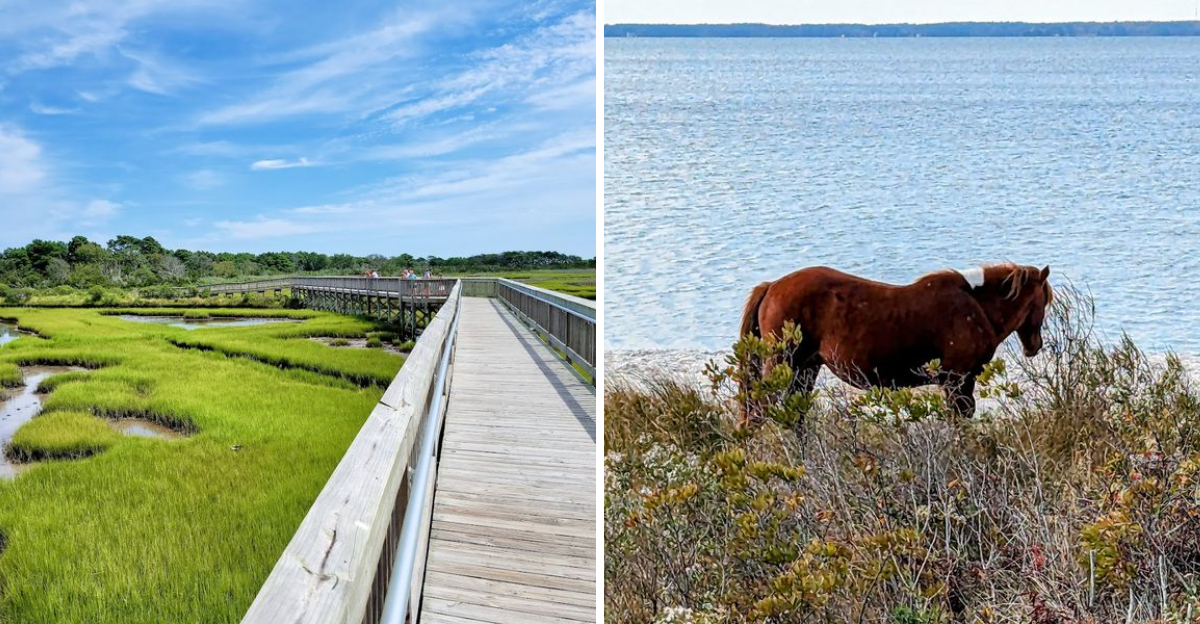
You do not need to hike for miles to see something beautiful. This Maryland trail proves it.
A wooden boardwalk winds through a peaceful marsh where the only sounds are birds and the wind. Herons stand still as statues.
Turtles sunbathe on logs. The water reflects the sky like a quiet painting.
No crowds, no traffic noise, just nature doing its thing. The walk is easy enough for little legs and old knees, but pretty enough to make you stop and take photos every few steps.
Locals come here when they need to clear their heads. Visitors stumble upon it and feel like they found a secret.
That is the beauty of a simple Maryland boardwalk. Big peace, no effort, and a front row seat to the wild side.
A Boardwalk Built to Last, Even After a Hurricane
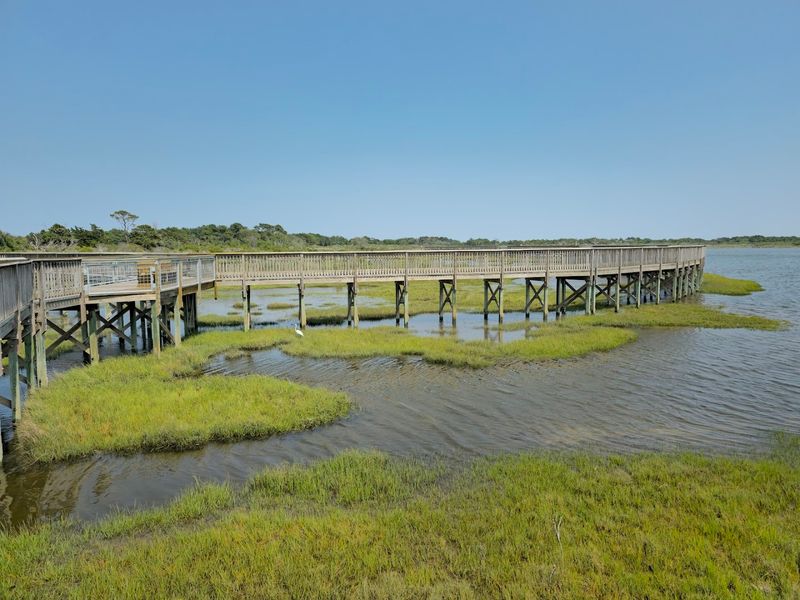
Not every trail comes with a comeback story, but this one does. Hurricane Sandy tore through Assateague Island in 2012 and completely destroyed the original Life of the Marsh boardwalk.
The rebuilt version that stands today is stronger, more accessible, and honestly more beautiful than many trails twice its length.
The elevated structure keeps you above the marsh surface, which means you get a genuine bird’s-eye perspective on the ecosystem below. You are not just walking beside the marsh; you are floating above it.
That slight elevation changes everything about how you see the water, the grasses, and the creatures moving through them.
The loop measures about half a mile, which sounds short, but most people slow way down once they get out over the water. There is simply too much to look at.
The boardwalk transitions from a shrubby thicket near the parking area into open marsh views almost immediately, and that shift feels like pulling back a curtain.
Ramps along the route make the trail fully wheelchair accessible, which is a thoughtful detail that not every nature trail gets right. The park service has also added amphitheater-style seating areas at key viewpoints, so you can sit, breathe, and take it all in without rushing.
For a trail that was once completely washed away, it came back remarkably well.
Birds That Call This Marsh Home
Birdwatching on this trail is genuinely one of its best features, and you do not need to be an expert to enjoy it. Great blue herons are practically regulars here, standing motionless in the shallows with that prehistoric patience that makes them so fun to watch.
Great egrets show up just as reliably, their white feathers almost glowing against the green marsh grass.
Sandpipers work the muddy edges during warmer months, moving in quick little bursts that are almost comical to watch. Gulls drift overhead without much urgency.
In winter, ducks and waterfowl move into the area, and the marsh takes on a completely different character than it has in summer.
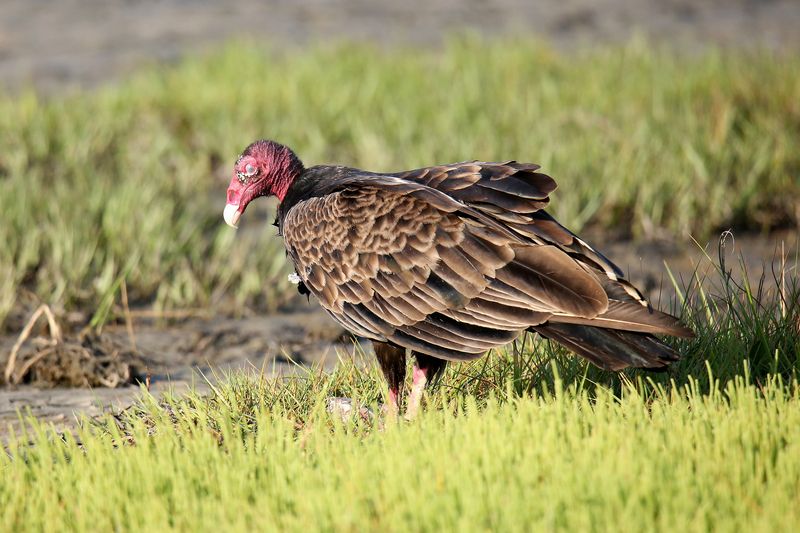
Black vultures have also been spotted along the trail, which surprises some visitors but makes perfect ecological sense given the food sources nearby. The variety of species here reflects just how healthy and diverse the habitat is.
A half-mile loop rarely delivers this much birdlife in one go.
Bringing a pair of binoculars makes a real difference on this trail. The elevated boardwalk gives you great sightlines across open water, but some of the more interesting birds hang back near the grass edges where they feel safer.
Early morning visits during spring and fall tend to offer the best mix of activity, with lower mosquito pressure and higher bird diversity at the same time.
The Salt Marsh Ecosystem and Why It Matters
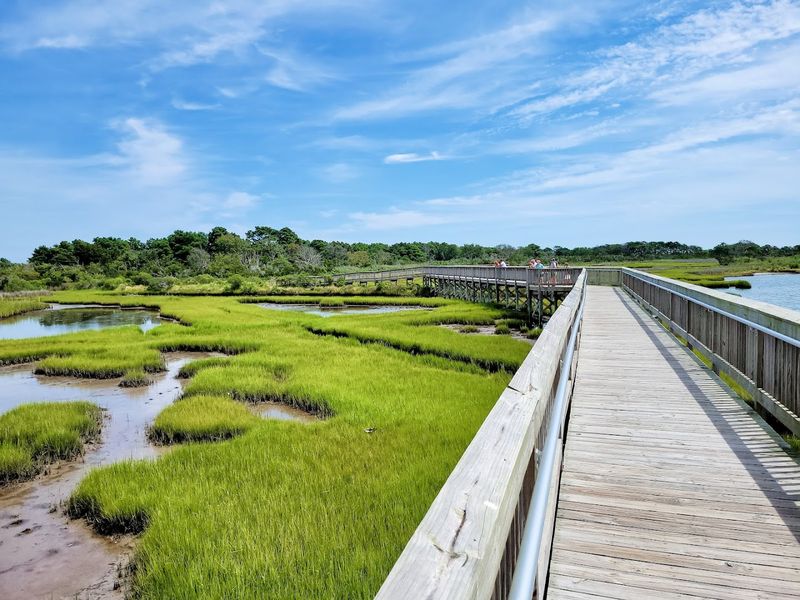
Salt marshes do not always get the credit they deserve. They look like flat, grassy wetlands from a distance, but up close they are one of the most productive ecosystems on the planet.
The marsh along this trail is part of the larger Sinepuxent Bay system, and it supports an enormous web of life from the mud up.
Cordgrass dominates the landscape, and it plays a critical role in filtering water, trapping sediment, and providing shelter for juvenile fish and invertebrates. The tidal channels that cut through the marsh carry nutrients in and out twice a day.
That constant rhythm is what keeps the whole system alive and thriving.
The information panels placed along the boardwalk do a genuinely good job of explaining all of this without being overwhelming. They are written clearly enough for kids to follow but detailed enough to teach adults something new.
I read every single one on my first visit, which is not something I usually do.
Understanding what you are looking at makes the experience richer. When you know that those tiny bubbles in the mud mean fiddler crabs are moving around below the surface, or that the dark channels are highways for blue crabs, the marsh stops looking empty and starts looking incredibly busy.
It is a whole city down there, just running on a different schedule than ours.
Wild Horses, Deer, and the Mammals You Might Spot
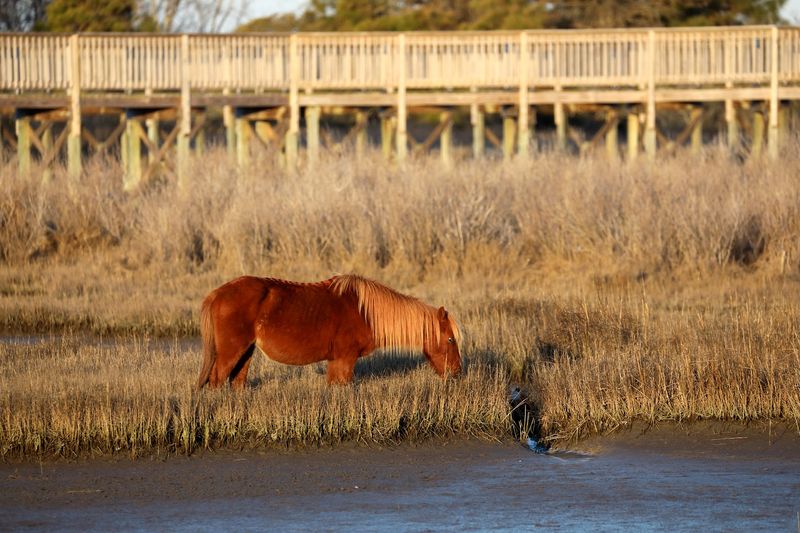
Assateague Island is most famous for its wild horses, and while the Life of the Marsh trail is not a guaranteed sighting spot, the ponies do wander throughout the national seashore.
Seeing one near the marsh boardwalk is entirely possible, especially in the early morning when they graze along the bay-side areas.
The experience of watching a wild horse move through a salt marsh landscape is one of those moments that stays with you.
White-tailed deer are also common here, moving quietly through the shrub thicket near the trailhead. Sika deer, a non-native species originally from Asia, have established a strong population on the island as well.
They are smaller than white-tails and tend to be a bit bolder around humans, which makes them easier to observe.
Otters, raccoons, and foxes round out the mammal list for the area, though they are less predictable in their appearances. Otters in particular are a treat to spot near the tidal channels, where they hunt for fish in the shallow water.
Patience and quiet movement are your best tools for any mammal encounter on this trail.
The marsh environment actually works in your favor when it comes to wildlife spotting. The open sightlines from the elevated boardwalk let you scan wide areas without disturbing anything.
Animals that might bolt in a forest setting often continue their normal behavior when they realize you are up on the boardwalk and not approaching at ground level.
Crabs, Turtles, and the Aquatic World Beneath the Boardwalk
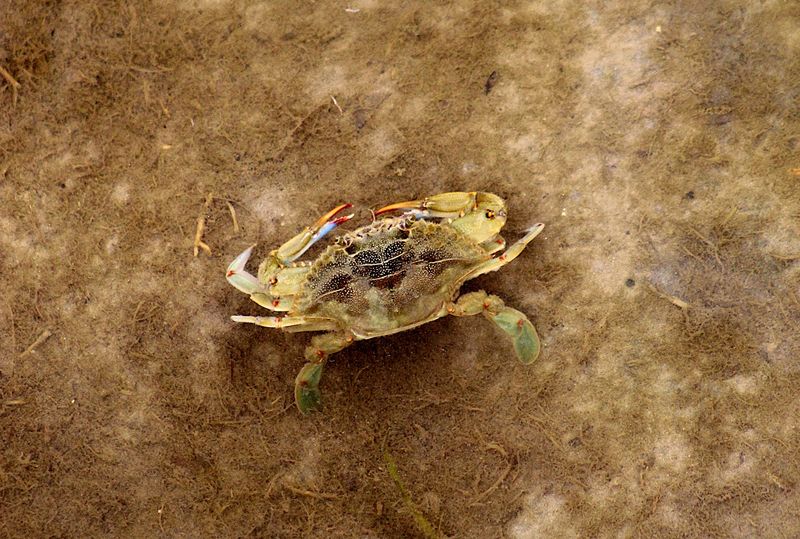
One of the most entertaining things about this boardwalk is looking straight down through the gaps in the planks. The water beneath you is clear enough in many spots to see what is happening below the surface.
Small minnows and killifish dart through the shallows in quick silver flashes, and if you stay still long enough, you start to notice just how much movement there is down there.
Fiddler crabs are a constant presence along the muddy edges, especially at low tide. The males wave their oversized claws in a way that looks almost theatrical, like they are all auditioning for something.
Blue crabs move through the tidal channels, and spotting one from above feels like a small victory every time.
Diamondback terrapin turtles live in this marsh as well, making them one of the more exciting potential sightings on the trail. They are not always visible, but during warmer months they surface to bask on exposed mud or grass clumps near the water’s edge.
Terrapins are one of the few turtle species that live specifically in brackish water coastal marshes, which makes them a genuinely special find.
The combination of fish, crabs, and turtles makes the underwater layer of this ecosystem feel as rich as the sky above it. Spending time at the seating areas along the boardwalk and just watching the water is one of the most rewarding things you can do here.
It requires zero effort and delivers a lot.
Sinepuxent Bay Views That Make You Stop Walking
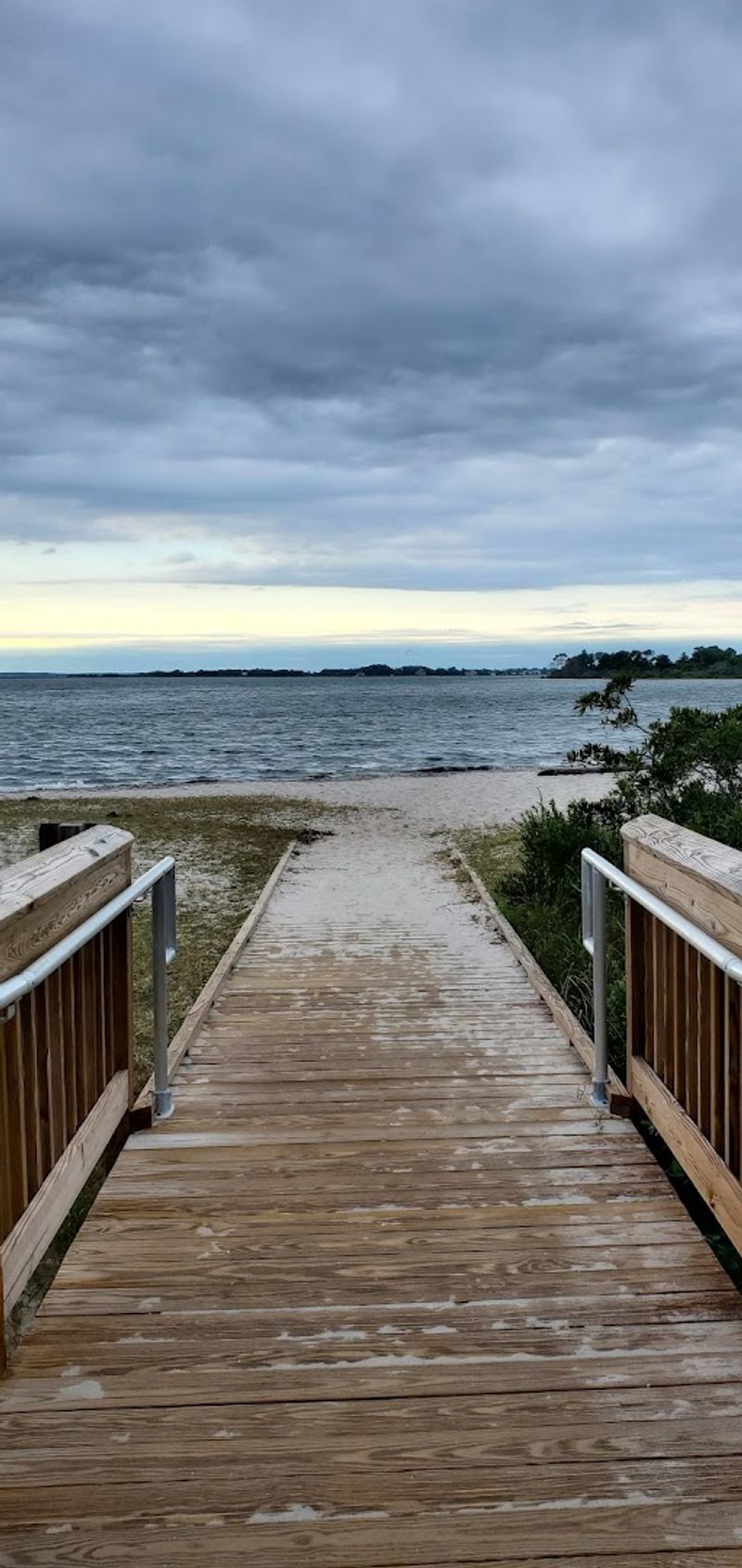
The views from this boardwalk are the kind that make you forget you were in a hurry to get somewhere. From the elevated sections, you can see across Sinepuxent Bay in three directions, south, west, and north, which is a surprisingly expansive panorama for a half-mile trail.
The bay stretches out flat and wide, broken up by distant tree lines and the occasional boat moving through the channel.
Tidal marshes, shallow open water, and small forested islands all appear within the same frame, giving the view a layered quality that changes depending on where you are standing. At certain points on the loop, the horizon feels enormous.
The sky takes up most of the view, which on a clear day is genuinely spectacular.
Sunset visits have become popular for good reason. The western-facing sections of the boardwalk catch the late light beautifully, and the reflection across the bay adds a warmth to the whole scene that photographs cannot fully capture.
I have seen sunsets from beaches and rooftops and mountain overlooks, and the one I watched from this boardwalk was quieter and more personal than most of them.
Sunrise works just as well if you are an early riser. The trail is open 24 hours a day, seven days a week, which means you can plan your visit around whatever light you want to catch.
Bringing a camera is worth it, but honestly, just standing there and looking is enough.
The Best Times to Visit and What Each Season Offers
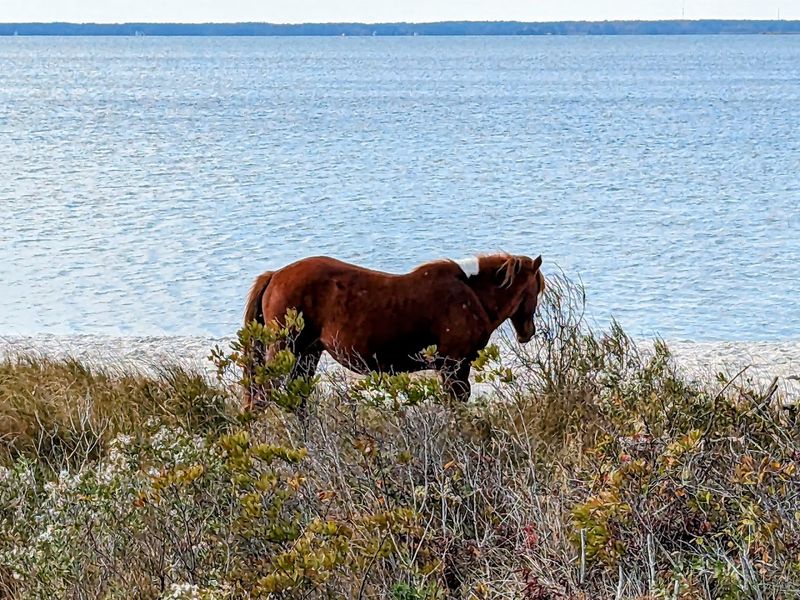
Every season on this trail has something worth showing up for, which is not something you can say about every nature trail. Summer brings the most visitors and the most wildlife activity, but it also brings humidity and mosquitoes that can make the experience less comfortable.
Mornings are significantly better than afternoons in July and August, both for wildlife and for your own comfort.
Spring and fall are the sweet spots. Temperatures are mild, mosquito pressure drops considerably, and migratory birds pass through in impressive numbers.
Fall in particular has a quality of light over the marsh that feels almost cinematic, with the cordgrass turning golden and the bay sitting perfectly still on calm mornings.
Winter visits surprise a lot of people. The crowds disappear almost entirely, waterfowl move into the bay in large numbers, and the bare marsh takes on a spare, quiet beauty that is completely different from the lush summer version.
Layers are necessary, but the solitude is its own reward. I visited in late November once and saw more birds in an hour than I had seen in three summer visits combined.
The trail is open every day around the clock, so there is no wrong time to show up in terms of access. That said, early morning remains the single best window for wildlife viewing regardless of the season.
Animals are most active in that first hour or two of daylight, and the light for photography is also at its best during that window.
Why This Trail Deserves a Spot on Your Eastern Shore Itinerary
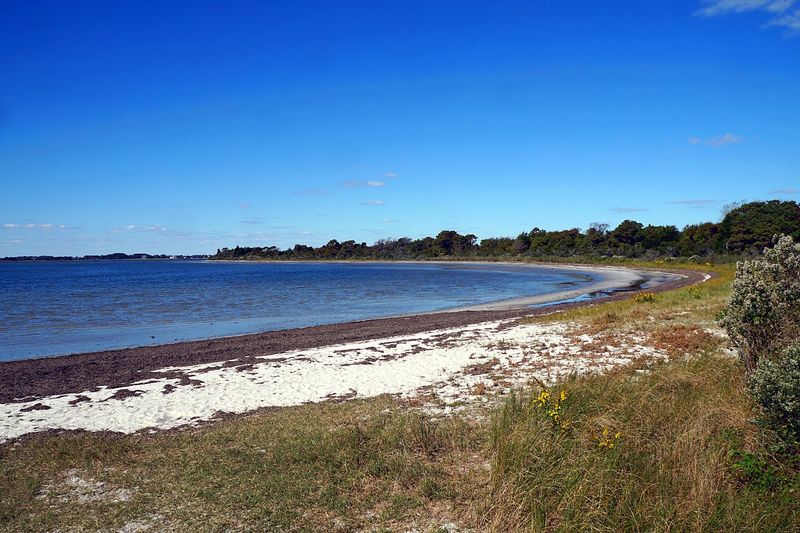
The Eastern Shore of Maryland has no shortage of beautiful places, but this trail occupies a category of its own. It is short enough for anyone to complete without preparation, accessible enough for almost any visitor, and rich enough in wildlife and scenery to reward multiple return trips.
That combination is rare and genuinely worth seeking out.
Most people who visit Assateague Island come for the beach and the wild horses, which makes complete sense. But skipping the Life of the Marsh trail means missing one of the most distinctive natural experiences the island offers.
The ocean beach and the salt marsh are completely different environments, and experiencing both in the same visit gives you a much fuller picture of what makes this island so ecologically special.
The trail pairs well with a longer day at the national seashore. You can walk the boardwalk in the morning, spend the afternoon at the beach, and catch the sunset back at the bay-side viewpoints without ever leaving the park.
That kind of layered day feels satisfying in a way that a single-activity visit rarely does.
There is no admission fee specifically for the Life of the Marsh trail, though the national seashore does charge an entrance fee to access the Maryland District. That fee covers the entire park, so the value is easy to justify.
Getting There Without Getting Lost
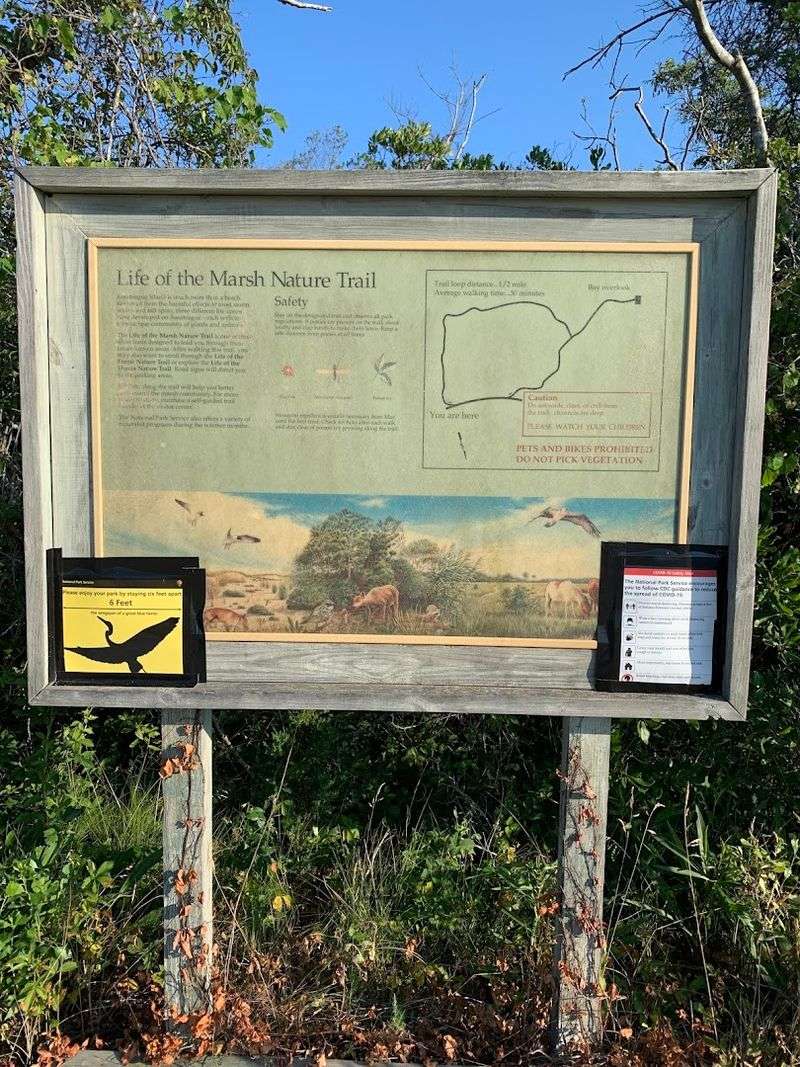
Finding the trailhead is straightforward once you know the one turn that most people miss. After entering Assateague Island National Seashore through the Maryland District off Bayberry Drive, you take a right onto Bayside Drive.
The parking area for the Life of the Marsh trail appears shortly after, and it is easy to spot.
The address is 7206 National Seashore Lane, Berlin, MD 21811, which will get you to the general area using any navigation app. From Ocean City, the drive takes about 20 minutes and the route is scenic the whole way.
You cross the bridge onto the island and immediately feel the shift from beach traffic to something quieter.
Parking is available near the trailhead and tends to fill up on summer weekends, especially in the morning. Arriving early is always a good idea, not just for parking but because the wildlife is far more active before the heat settles in.
I arrived around 7 a.m. on a Saturday and had the entire boardwalk to myself for nearly an hour.
No bikes or pets are allowed on this particular trail, so leave those at the car or the campsite. The rest of the national seashore has plenty of other areas where both are welcome.
Keeping the marsh trail quiet and undisturbed is part of what makes the wildlife viewing so reliable here.
