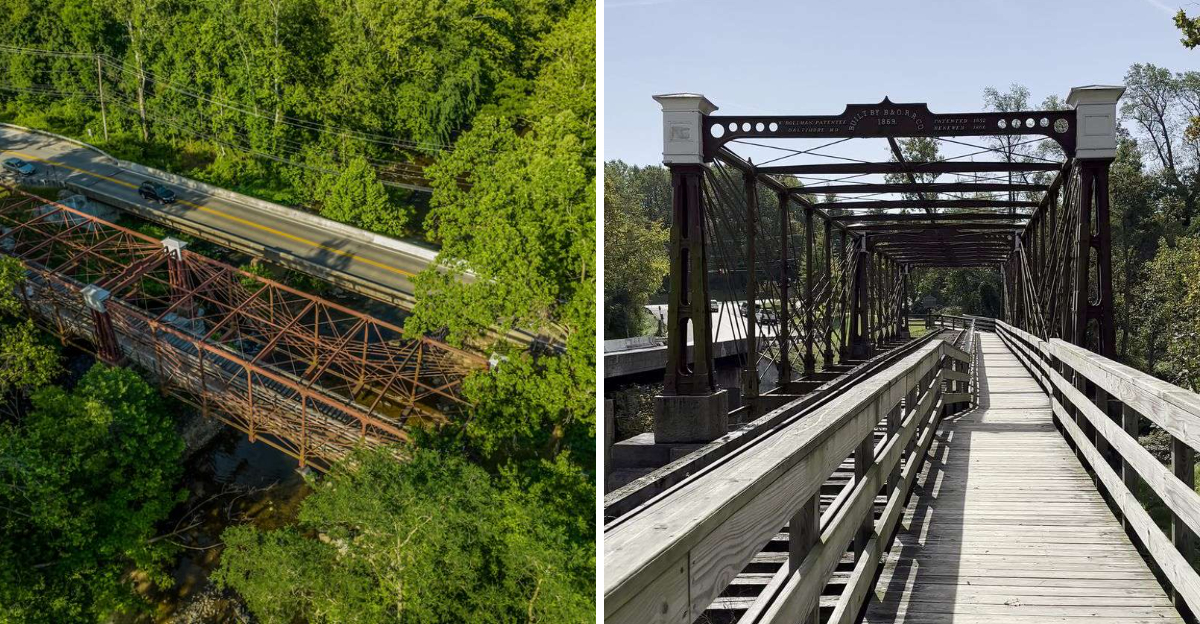
Maryland has old bridges, and then it has the kind that quietly rewrote the rules of American railroad engineering.
Built from iron using Wendel Bollman’s distinctive truss system, this 19th-century structure is the last surviving bridge of its type in the United States, a pretty impressive résumé for something many drivers could pass without realizing what they are looking at.
The design was once used widely by the Baltimore and Ohio Railroad and helped prove that iron could replace timber in major railroad bridges.
Today, the bright metal framework looks almost decorative until you realize every diagonal member is part of an engineering idea that was genuinely innovative for its time.
For Maryland history fans, this is the rare landmark where staring at a bridge for several minutes is completely justified.
The Last of Its Kind, and Nobody Warns You
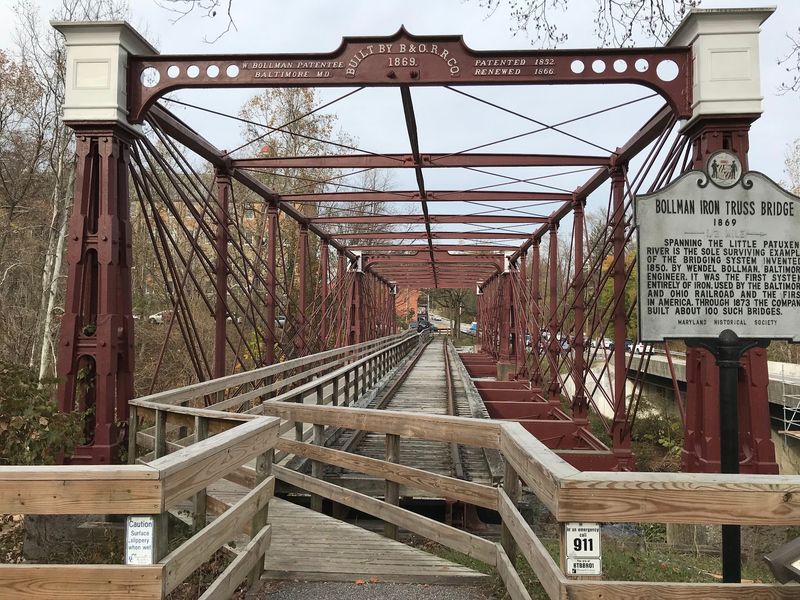
Over one hundred Bollman truss bridges once carried trains across rivers and creeks in the eastern United States. Exactly one is left standing.
That single fact is what makes the walk down Foundry Street so surprising, because there is no dramatic gateway or ticket booth announcing it.
Between roughly 1850 and 1875, the Baltimore and Ohio Railroad leaned heavily on this design as it pushed westward. Iron replaced timber, spans went up faster, and the rail network expanded at a speed that would have been impossible with wooden trestles alone.
Then progress did what progress does. Locomotives got heavier, newer truss designs took over, and Bollman bridges were scrapped one by one for their metal value.
The survivor at Savage made it through partly by luck. Shifted onto a quiet mill spur in the 1880s, it was spared the punishment of main line traffic and simply kept standing while its siblings disappeared.
Recognition came later. The American Society of Civil Engineers named it the first National Historic Civil Engineering Landmark in 1966, it joined the National Register of Historic Places in 1972, and it became a National Historic Landmark in 2000.
What strikes me most is how casual the setting feels. Kids ride scooters across it, joggers pass without pausing, and the river keeps rolling underneath.
Rarity here does not come with fanfare, which honestly makes discovering it more fun. Read the small metal inscriptions near the portals and the weight of the place lands quietly.
Wendel Bollman, the Carpenter Who Rewrote Bridge Design
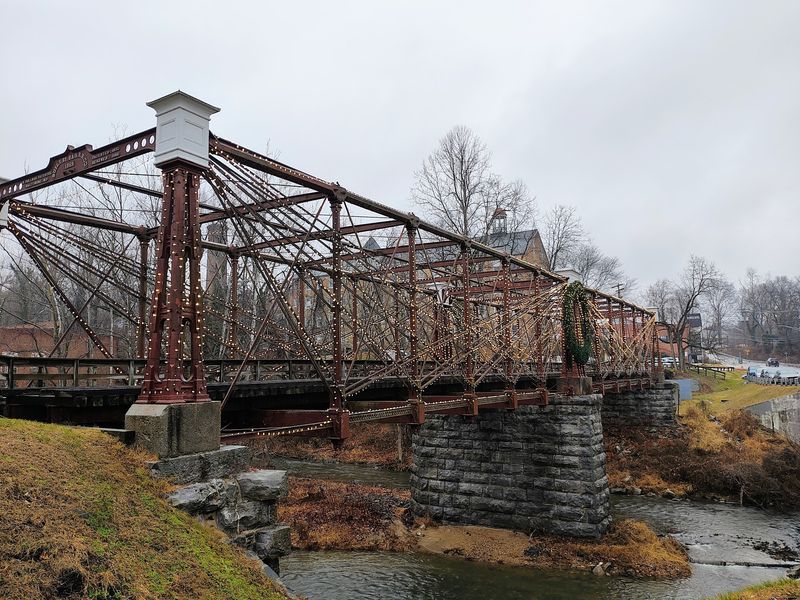
A teenager who joined the Baltimore and Ohio Railroad in the late 1820s does not sound like the start of an engineering revolution. Wendel Bollman had no formal training, no university degree, and no famous mentor.
He started with carpentry tools and curiosity.
By 1840 he held the title of Master of Road for the B&O, meaning every bridge on the line fell under his responsibility. That is a remarkable climb for someone who taught himself the mathematics of load and tension.
His patent came through on January 6, 1852, covering what became known as the Bollman suspension truss. It was the first all-metal bridge system that American railroads adopted widely and kept using year after year.
Bollman did not stop there. In 1858 he left the railroad and founded his own firm, believed to be the first American company that designed, fabricated, and erected iron bridges under one roof.
He lived from 1814 to 1884, which means he saw his design rise to dominance and then start slipping out of favor within his own lifetime.
Standing on the deck, I find that story more interesting than the metal itself. Someone figured this out by trial, observation, and stubbornness.
His name is stamped right there on the portal strips, reading W. BOLLMAN, PATENTEE.
Replicas replaced the originals during restoration work, but the credit stayed exactly where it belongs.
Worth a slow read before crossing.
Why the Ironwork Looks Like a Spiderweb
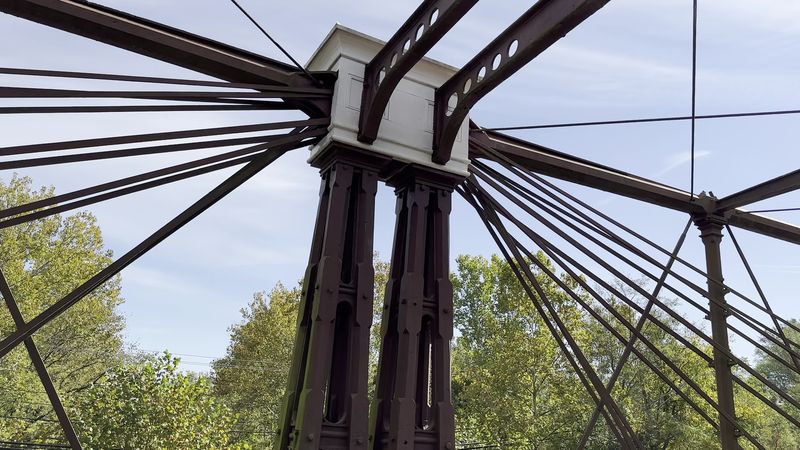
Look up from the middle of the deck and the overhead pattern makes no sense at first. Thin rods radiate outward from the tops of the cast iron end posts, crossing each other in a fan that people often compare to a spiderweb.
There is a logic behind it.
Bollman split the work between two metals based on what each does best. Wrought iron handled tension in the rods and eyebars, while cast iron took the compression loads in the top chord and the vertical members.
The real cleverness sits in how each floor beam hangs. Every single one is suspended independently from those end posts, making the structure a hybrid of a rigid truss and a suspension bridge.
Practically speaking, that meant safety. If one diagonal tension rod failed, only that one floor beam dropped instead of the entire span collapsing, which was a genuine problem with other truss types of the era.
For railroads gambling money and lives on new routes, that redundancy was a serious selling point.
The paint scheme helps visitors read the design. Red oxide marks the towers and heavier compression pieces, while ivory picks out the lighter tension members.
Once that colour code registers, the whole thing becomes legible even to someone who has never studied engineering. I ended up tracing lines with my finger in the air like a slightly obsessed tourist.
Doric-styled vertical members add a decorative touch nobody strictly needed.
A Bridge That Moved House in the 1880s
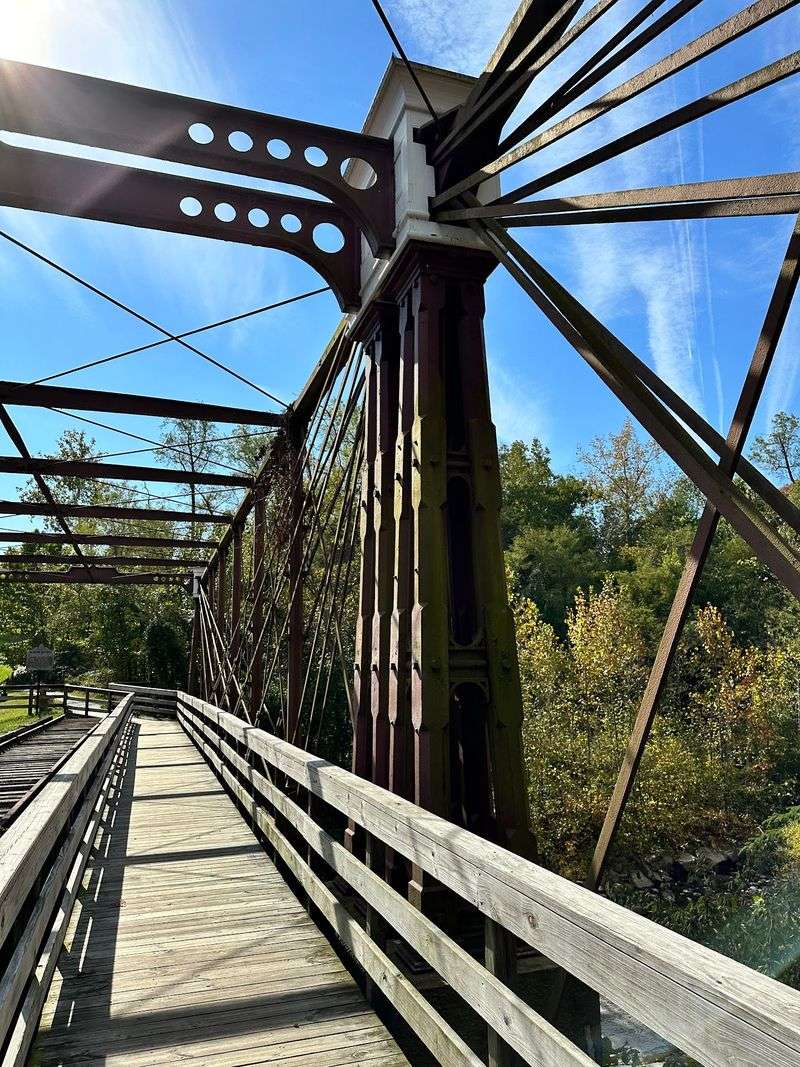
Here is a detail that surprised me. The bridge visitors walk across today was not built for this spot at all.
Fabrication happened in 1869, most likely at the B&O Railroad’s Mount Clare Shops in Baltimore. It then went to work somewhere along the B&O main line, though the exact original location has not been pinned down.
In 1887 or 1888 crews dismantled it and reassembled it over the Little Patuxent River, on a short spur line that served the Savage Mill. Changes at the mill, awkward local topography, and ever heavier locomotives on the main line all pushed the decision.
The plot thickens a little. Whatever stood here before was the very first Bollman bridge ever built, erected at Savage back in 1850.
So this location held both the debut and the survivor, one after the other. Losing the original stings a bit, but there is something fitting about the replacement becoming the sole heir to the design.
Small letters on the portal strips record fragments of that timeline, including BUILT BY B&O R.R. CO., BALTIMORE, MD., the year 1869, and a puzzling RENEWED 1866 inscription.
Reading those lines while leaning on the railing feels like flipping through a maintenance logbook written in metal.
Nineteenth century railroads recycled hardware constantly, moving spans around like spare parts. That habit is exactly why this one is still here.
A lucky reassignment saved it.
Crossing on Foot Along the Savage Mill Trail
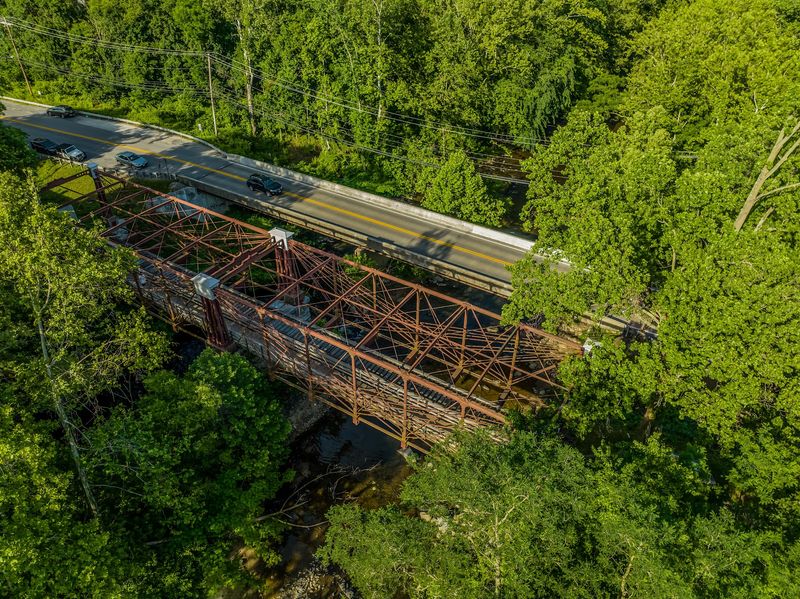
No trains rumble through anymore, which means the bridge belongs entirely to walkers now. The Savage Mill Trail runs straight across it, linking the mill area with wooded paths on the far bank.
Footsteps on the deck make a hollow, pleasant sound. Underneath, the Little Patuxent slides over rocks and creates just enough noise to soften traffic from the surrounding neighbourhood.
The crossing itself takes under a minute if hurried, but rushing defeats the point. Pausing halfway gives the best angle on the river bend, with iron framing the view on both sides.
Trail conditions are easy, mostly flat near the bridge, with some gravel and packed dirt sections beyond. Sturdy sneakers are plenty.
Autumn gets my vote for the prettiest visit, when the surrounding canopy turns and the red oxide paint suddenly matches the leaves. Winter has its own appeal, since bare branches expose the full geometry of the truss.
Early mornings tend to be quietest. Weekend afternoons bring families, dog walkers, and cyclists heading out along the trail network.
Photographers should walk down to the riverbank for a lower vantage point, where the span reads against the water and the whole suspension logic becomes obvious.
Street parking is available nearby, and it fills up fastest on pleasant weekends. Arriving a bit early solves that.
Bring water, especially in summer, because shade is generous but Maryland humidity does not negotiate.
Simple pleasures, honestly.
Historic Savage Mill Sits Right Next Door
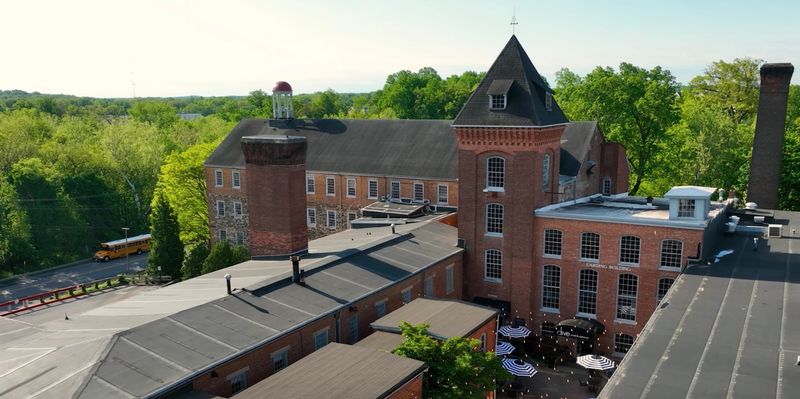
Pair the bridge with the mill and a quick stop turns into a proper afternoon. The Historic Savage Mill complex stands just steps away, its heavy stone and brick buildings once devoted to textile production.
Redevelopment turned those old workrooms into shops, studios, and places to eat. Exposed beams, worn floorboards, and thick walls survived the conversion, so the industrial character never got polished away.
Antique dealers, craft vendors, and small independent businesses fill the interior corridors. Wandering without a plan works better than hunting for anything specific.
The connection between mill and bridge is direct rather than coincidental. That spur line existed to serve the mill, hauling raw materials in and finished goods out.
Understanding that relationship changes how the bridge reads. It stops being a decorative relic and becomes the practical tail end of a working industrial operation.
Grabbing coffee inside and then walking out to the span makes for a nice rhythm. Warm mug, cool iron, moving water.
Rainy days work surprisingly well here, since the mill offers plenty of indoor space while the bridge still photographs beautifully under grey skies.
Restrooms and seating are available within the complex, which matters when travelling with children or older relatives.
Allow at least an hour for the mill if browsing appeals, longer if the shops pull you in.
Between the two, this small corner of Howard County packs in far more history than its size suggests.
Address: 8600 Foundry Street, Savage, Maryland.
Savage Park, Picnic Spots, and Ropes in the Trees
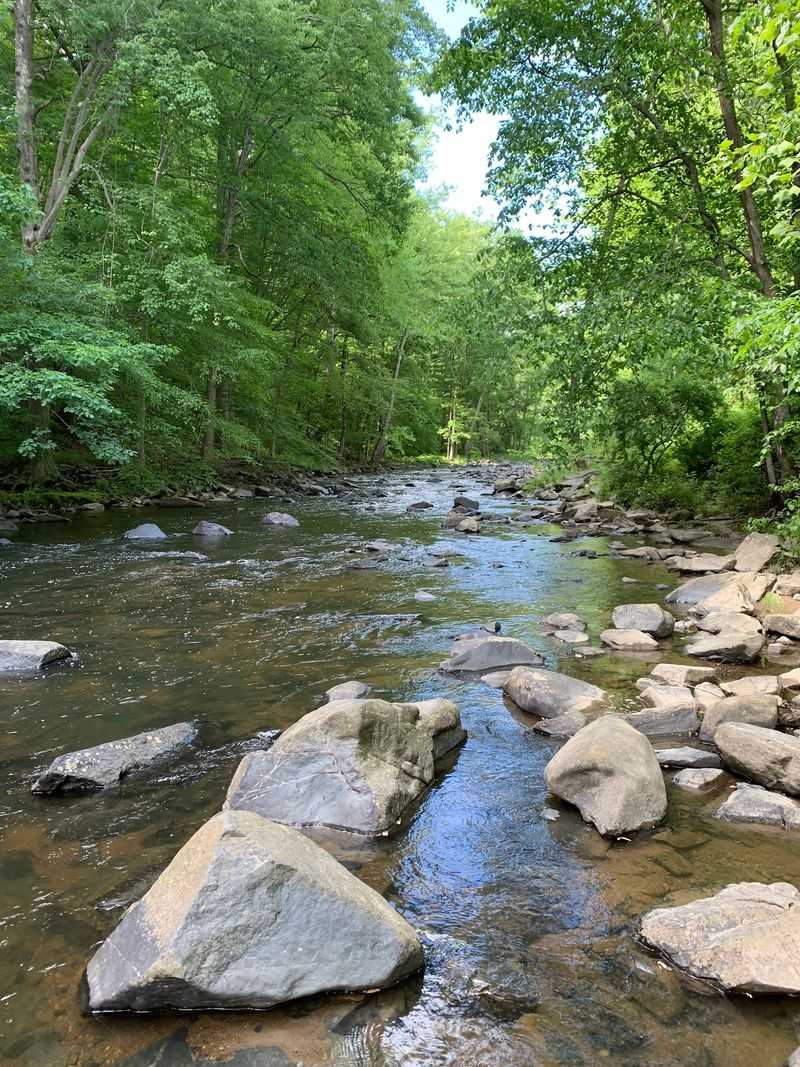
Anyone travelling with restless kids should know the bridge is only one part of the package. Savage Park spreads out nearby with picnic grounds, shaded tables, and trails threading through the woods along the river.
Adventure activities operate in the area too, including a rope course strung up among the trees. Harnesses, platforms, and a fair amount of nervous laughter are involved.
Families often combine all three: a picnic, a climb, and a walk across a National Historic Landmark. Not a bad ratio of history to fun.
Green space here feels genuinely wooded rather than manicured. Birds are loud in spring, and the river adds a constant background hum.
Packing lunch is a sensible move. Tables tend to be claimed early on warm weekends, so a picnic blanket serves as backup.
The terrain includes some slopes and uneven ground away from the paved sections, so decent footwear beats sandals.
Dogs on leads are a common sight along the trails, and the bridge deck handles paws without any trouble.
For a low effort itinerary, start at the mill, cross the bridge, follow the trail into the park, and loop back. Two hours covers it comfortably.
Longer visits reward the patient. Sitting by the water for a while, watching light shift across the ironwork, is oddly calming.
Insect repellent in summer earns its place in the bag.
Address: 8600 Fair Street, Savage, Maryland.
Restoration Work That Kept the Old Iron Standing
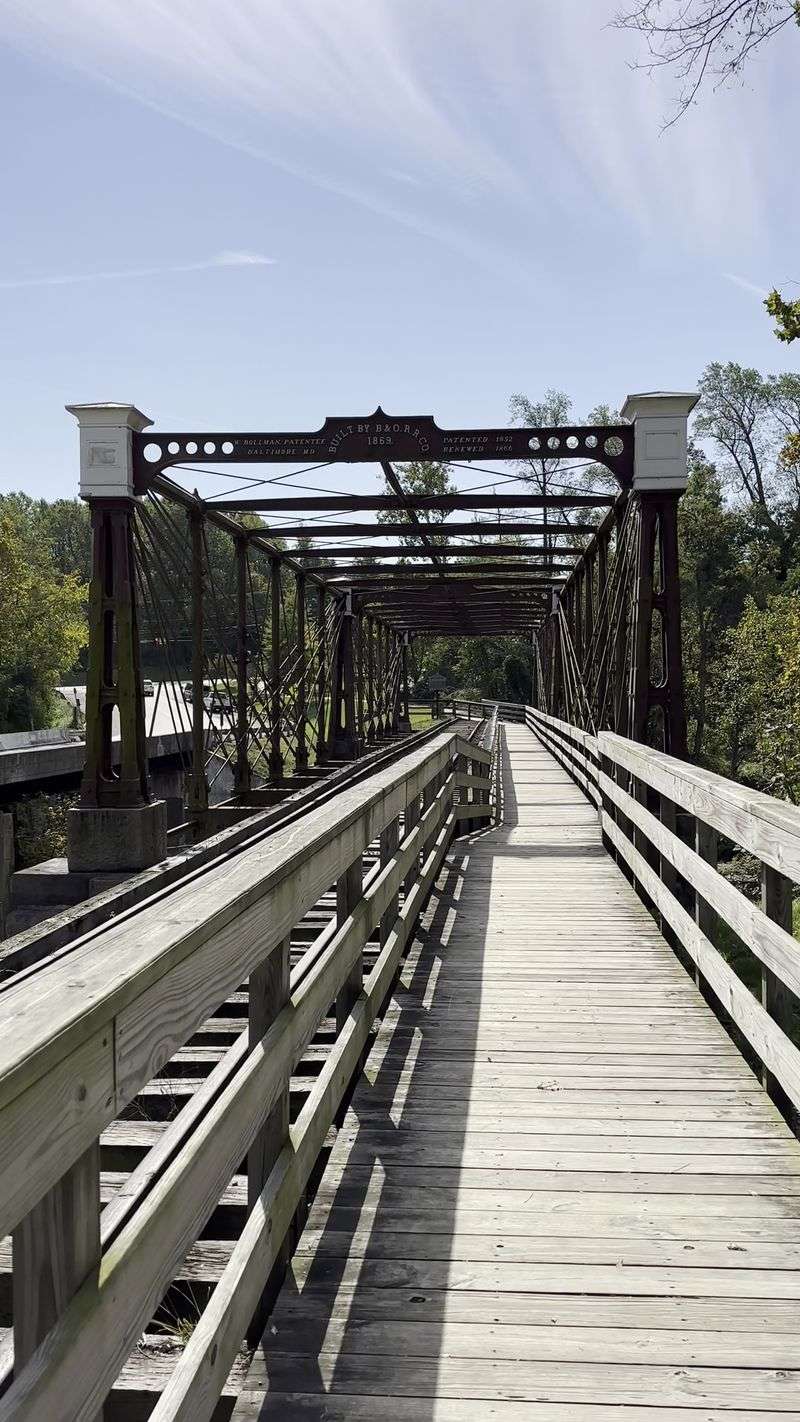
Surviving 150 plus years outdoors does not happen without help. Restoration campaigns in 1968, 1983, and 2000 kept this structure sound while other historic bridges quietly rotted or got demolished.
Vandalism took a toll along the way. A decorative metal enclosure at the top of the towers vanished entirely and had to be recreated during repair work.
Those small inscribed strips at the portals were also lost, so accurate replicas now sit in their place. Reading W.
BOLLMAN, PATENTEE on the metal is a reproduction, but a faithful one.
The two tone paint job came out of restoration decisions as well. Red oxide coats the towers and heavy compression members, ivory highlights the slender tension rods.
That choice does double duty, protecting the iron while teaching visitors how the structure works. Clever, and easy on the eye.
Ownership and care now rest with the Howard County Commission, which maintains the bridge as the centrepiece of a public park rather than a fenced off artifact.
Public access shapes the whole experience. Being allowed to touch, cross, and lean on a National Historic Landmark is rarer than it sounds.
Respecting that access matters. No climbing on the trusses, no carving, no rubbish left behind.
Preservation like this only works when visitors treat the place gently. Photograph it, admire it, then walk on.
Somewhere between an engineering lesson and a quiet riverside stroll, this bridge earns the detour.
Address: 8650 Foundry Street, Savage, Maryland.
