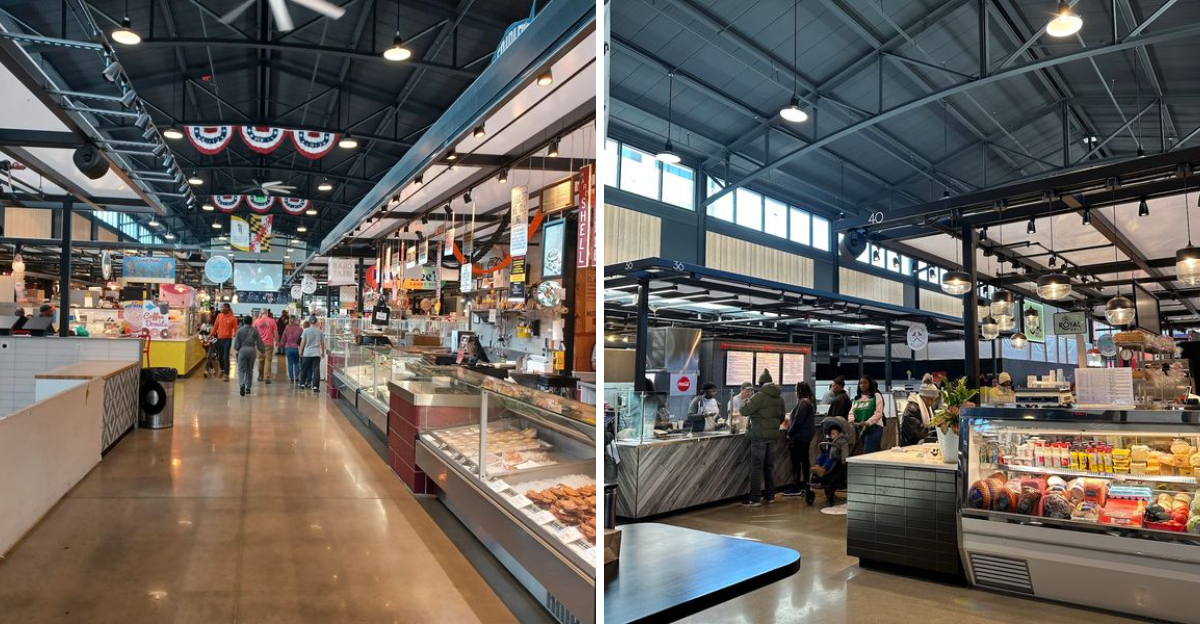
A lot can change in more than two centuries, but apparently Maryland’s appetite is extremely dependable.
This historic food market traces its beginnings to 1782, when merchants began gathering to sell their goods, and it has grown into the longest continually operating public market in the country.
Today, it still brings together local businesses and food vendors, so visiting feels less like knocking out a grocery list and more like trying to decide how many things it is socially acceptable to eat in one outing.
There is history here, obviously, but thankfully nobody expects you to admire it on an empty stomach.
For anyone who likes Maryland attractions that combine old stories with very current cravings, this market has had more than 240 years to perfect the formula.
A Storied Beginning and Enduring Legacy
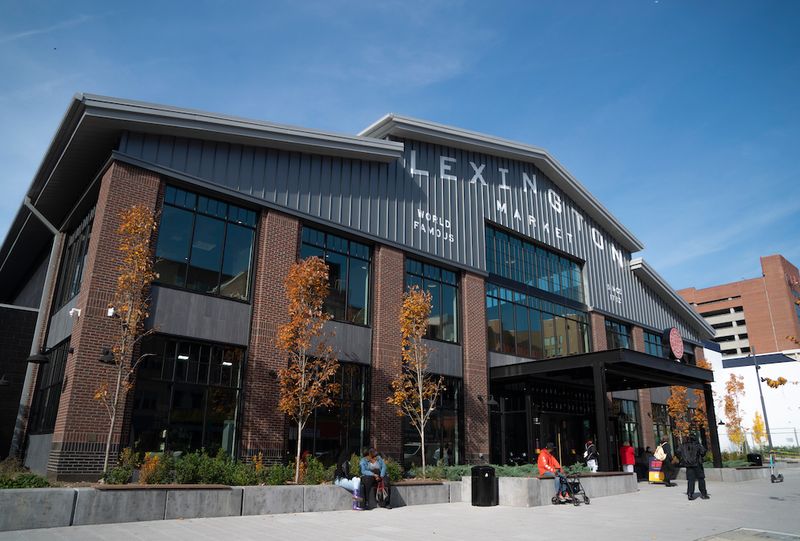
Few markets in America can claim a birth year that predates the U.S. Constitution, but Lexington Market does exactly that.
Founded in 1782, it began as an informal trading post on the western edge of Baltimore City, a scrappy, energetic hub where farmers, fishermen, and merchants gathered to exchange goods.
The land was donated by General John Eager Howard, a Continental Army hero, and the market was eventually renamed to honor the Battle of Lexington.
Throughout the 19th century, Baltimore’s growing port economy fueled the market’s expansion. Waves of immigrants arrived in the city and found both opportunity and community within its stalls, drawn in by low vendor rents and a welcoming, open spirit.
By the early 1900s, essayist Ralph Waldo Emerson reportedly called it the “gastronomic capital of the world,” which is a bold claim that the market has spent two centuries quietly justifying.
A devastating fire in 1949 could have ended the story entirely. Instead, the market was rebuilt in 1952 and kept going without missing much of a beat.
That kind of resilience isn’t accidental. It reflects how deeply Lexington Market is woven into Baltimore’s identity.
Today it stands as the oldest continuously operating public market system in the entire United States, a record that deserves far more fanfare than it usually gets. History doesn’t always shout.
Sometimes it just quietly keeps the lights on and the crab cakes coming.
The New Building That Honors the Old Soul
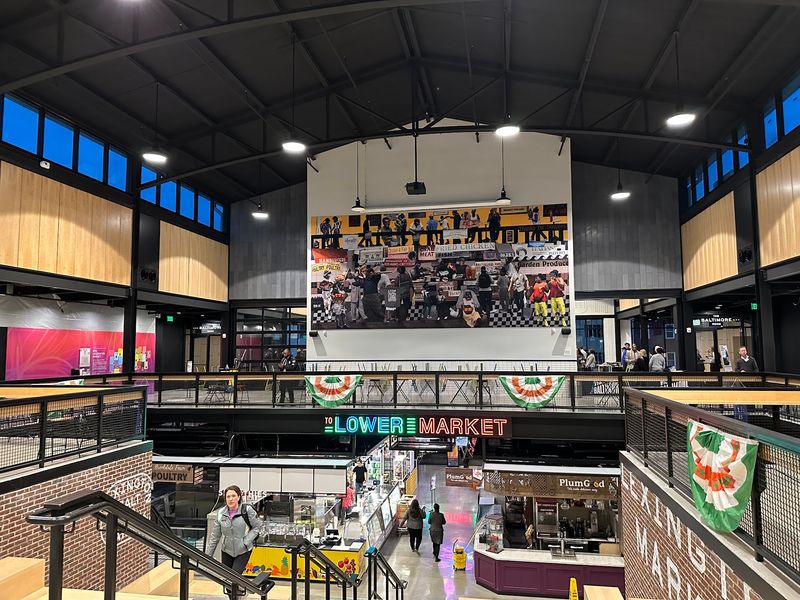
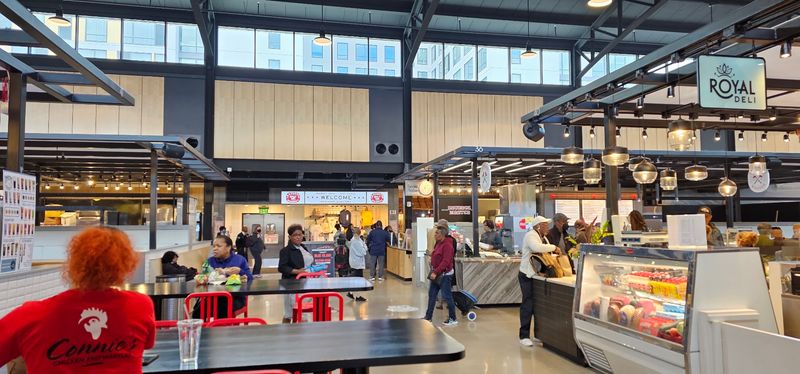
After more than two centuries of operation, Lexington Market underwent its most ambitious transformation yet. A major redevelopment project launched in 2020 led to the opening of a brand-new 60,000-square-foot market building in late 2022 and early 2023.
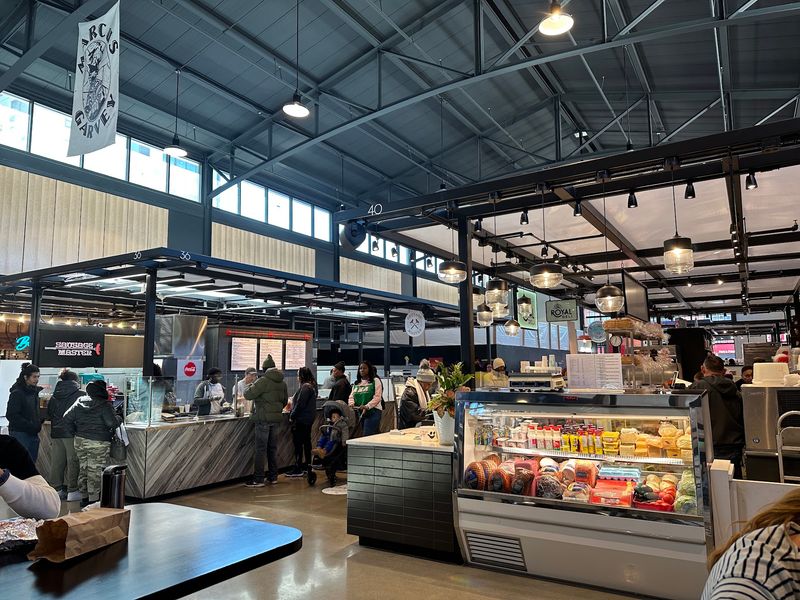
The result is genuinely impressive without feeling cold or corporate. The soaring industrial-chic roof pulls in floods of natural light, and the black and yellow color palette, framed by exposed brick, warm wood, and steel accents, pays tribute to a beloved renovation from 1871.
The building spans an entire city block, which gives it a generous, unhurried feeling inside. There’s room to wander, to pause, to double back when something catches your eye.
That kind of breathing space matters in a market. It shifts the experience from errand to exploration.
Adjoining the main hall is a block-long public plaza stretching between Eutaw and Paca Streets, decorated with sculptures and murals by local Baltimore artists.
What strikes me most is how the new structure manages to feel simultaneously fresh and familiar. Nothing about it screams generic renovation.
The design choices feel intentional and respectful, like someone genuinely cared about getting it right. Around 50 to 55 merchants and kiosks now fill the space, each bringing their own energy and flavor to the mix.
The market feels modern enough to attract new visitors while remaining rooted enough to keep longtime regulars coming back without hesitation. That balance is surprisingly hard to pull off, and Lexington Market nails it.
The Seafood You Simply Cannot Skip
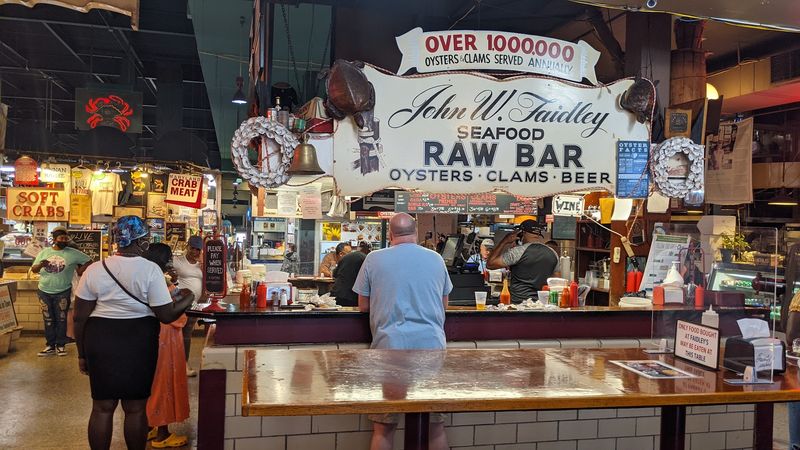
Baltimore and seafood share a relationship that borders on devotion, and nowhere is that more obvious than at Lexington Market. The Chesapeake Bay sits practically at the city’s doorstep, and the market has always reflected that proximity with pride.
Fresh blue crabs, plump shrimp, and gleaming fish fillets are a regular sight at the seafood stalls, especially during the summer months when the Bay is at its most generous.
Faidley’s Seafood is the undisputed legend of this particular corner of the market. Operating since 1886, it has built a reputation for lump crab cakes that people genuinely travel to Baltimore just to eat.
They’re thick, barely bound, and packed with sweet crab meat in a way that makes most other versions feel like impostors. Honestly, one bite and you understand why the line is always worth it.
Beyond Faidley’s, the market’s broader seafood offerings reflect a commitment to freshness that feels rare in an era of frozen everything. Home cooks come here specifically to source their ingredients, knowing that quality and variety are reliably on offer.
The seafood section also connects the market to something larger, to Baltimore’s identity as a port city with deep roots in the water. Picking up a pound of fresh crab at Lexington Market isn’t just a grocery run.
It’s participation in a culinary tradition that has defined this city for generations, and that context makes every bite taste just a little bit better.
A Community Built Around the Stalls
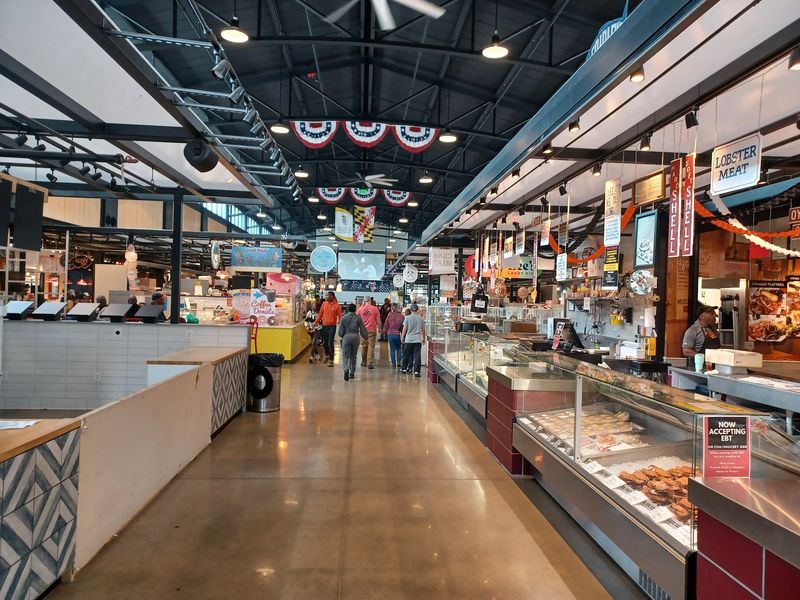
Markets reveal a city’s character more honestly than almost any other public space. Lexington Market has always been a place where different people, from different backgrounds and different walks of life, end up standing side by side, waiting for the same plate of food.
That kind of shared experience builds something quietly powerful over time. City workers, university students, longtime locals, and first-time visitors all move through the same aisles, drawn by the same irresistible smells.
Historically, the market played a significant role in supporting immigrant communities arriving in Baltimore. Low stall rents made it one of the more accessible places for new arrivals to start a small business, and many did exactly that.
The cultural diversity that resulted is still very much present today. Vendors representing a wide range of backgrounds bring their culinary traditions into the space, creating a mosaic that feels organic rather than curated.
Several vendors also champion meaningful social causes. A “Pay It Forward” program offers hot meals to people who need them, and the market participates in civic events like the Preakness Crab Derby, which raises money for local charities.
These aren’t flashy gestures. They reflect a market that genuinely sees itself as part of the neighborhood rather than separate from it.
The market also prioritizes Black-owned, women-owned, and city-resident-owned businesses, which adds real intention to its vendor mix. Lexington Market isn’t just feeding people physically.
It’s nourishing the community in ways that go well beyond the plate.
Global Flavors Under One Roof
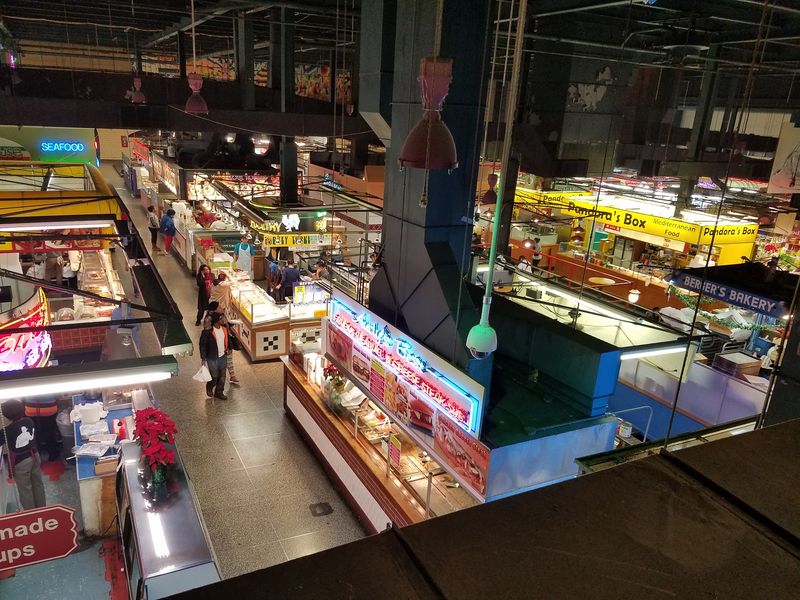
One of the most genuinely exciting things about Lexington Market is how much culinary ground it covers in a single building. This isn’t a place with a narrow focus or a single regional specialty.
The vendor lineup reads more like a world food map than a traditional American public market, and that range is a direct reflection of Baltimore’s multicultural makeup.
Jamaican jerk chicken shares the same corridor as Korean bento boxes and tacos. Malaysian stir-fries sit near German specialty dishes and Latin American comfort food.
West African classics like suya and jollof rice show up alongside all-day breakfast plates and fresh-made Italian deli sandwiches. The variety is genuinely overwhelming in the best possible way.
I always end up second-guessing my first choice, which I consider a sign of a great market.
Sweet options are equally well represented. Berger Cookies from DeBaufre Bakeries are a Baltimore institution that belongs on every visitor’s must-try list.
Artisanal breads, freshly baked pastries, unique ice cream flavors, and specialty confections fill the gaps between savory stalls with impressive creativity. Fresh-squeezed lemonade and healthy smoothies from Garden Produce round out the offerings for anyone looking for something lighter.
The point is that no matter what you’re craving when you walk in, Lexington Market almost certainly has it covered. That kind of comprehensive, crowd-pleasing range is rare, and it’s one of the main reasons people keep coming back long after their first visit.
Art, Culture, and the Bromo Arts District
Lexington Market doesn’t exist in isolation. It sits at the heart of Baltimore’s Bromo Arts and Entertainment District, a neighborhood that layers creative culture over historic architecture in a way that makes even a short walk feel interesting.
The market’s surrounding plaza is adorned with murals and sculptures created by local Baltimore artists, giving the outdoor space a gallery-like quality that most food markets simply don’t have.
Inside, a branch of the Baltimore Museum of Art offers free art programs, which is one of those details that quietly elevates the entire experience. It signals that the market sees itself as more than a commercial space.
Art belongs here alongside the food, and that combination gives Lexington Market a depth that’s easy to feel but harder to immediately explain. It’s the kind of place where you might wander in for lunch and leave having learned something unexpected.
The surrounding district also contributes to the market’s identity as a cultural anchor rather than just a shopping destination. Galleries, performance spaces, and historic buildings create a rich backdrop that rewards exploration.
Spending an afternoon at Lexington Market and then wandering through the Bromo Arts District feels like a genuinely satisfying way to spend time in Baltimore.
The market earns its place in that creative ecosystem not by trying to be something trendy but by simply continuing to be what it has always been: open, welcoming, and deeply connected to the people and culture of its city.
The Vendors Who Make It Personal
Markets are only as good as the people running the stalls, and Lexington Market has always attracted vendors with genuine passion for what they sell. Super Fried Chicken has been serving its buttermilk-battered recipe since 1985.
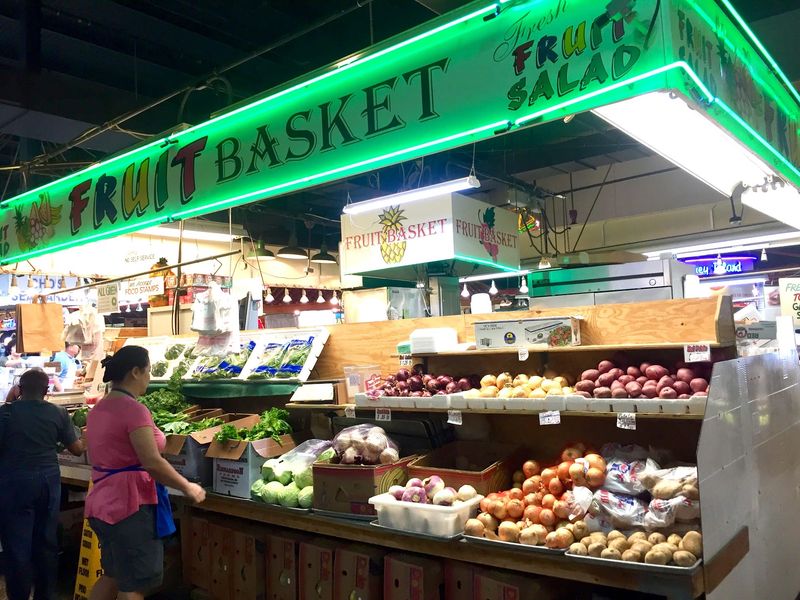
Sausage Master has been feeding the lunchtime crowd since 1986. Garden Produce has offered fresh smoothies and healthy options since 2014.
These aren’t pop-up concepts or trendy experiments. They’re businesses built on consistency, quality, and real relationships with their regulars.
There’s something reassuring about that kind of longevity. It tells you that the market isn’t just surviving on nostalgia but actually delivering enough value, day after day, to keep people coming back.
The vendors who thrive here tend to have a directness and warmth that you don’t always find in more polished dining environments. Orders are taken with efficiency, food arrives fast, and the interaction feels genuine rather than scripted.
I find that the personal stamp each vendor puts on their space is part of what makes wandering through the market so enjoyable. A hand-lettered sign here, a particular arrangement of product there, a recipe that’s been tweaked over decades of feedback.
These small details accumulate into something that feels irreplaceable. Chain restaurants can replicate a menu, but they can’t replicate this.
The individuality of each stall contributes to a collective character that belongs entirely to Lexington Market, and that character is honestly one of the best reasons to visit Baltimore in the first place.
Your Invitation to Experience History and Flavor
Lexington Market is one of those rare places that earns its reputation without needing to shout about it. Over 240 years of continuous operation is a fact that speaks quietly but with enormous weight.
The market opens Monday through Friday from 6 AM to 5 PM and on Saturdays from 7 AM to 5 PM, making it accessible whether you’re an early riser chasing the first fresh-baked goods of the day or a lunchtime visitor with an hour to spare.
Security is present throughout, and the environment feels comfortable and welcoming for everyone, from solo travelers to families with young kids. The market is easy to reach from most parts of downtown Baltimore, and its central location makes it a natural stop on any city itinerary.
First-time visitors often underestimate how much time they’ll want to spend there. Plan for more than you think you need.
What Lexington Market offers isn’t just a meal. It’s a connection to a place that has fed, supported, and reflected Baltimore through wars, fires, economic shifts, and cultural transformations.
Every vendor, every dish, and every shopper is part of a story that started in 1782 and shows no signs of slowing down. Whether you’re chasing the perfect crab cake, looking for an authentic slice of Baltimore life, or simply hungry and curious, this market delivers.
Come with an appetite and leave with a memory worth keeping.
Address: 112 N Eutaw St, Baltimore, MD
