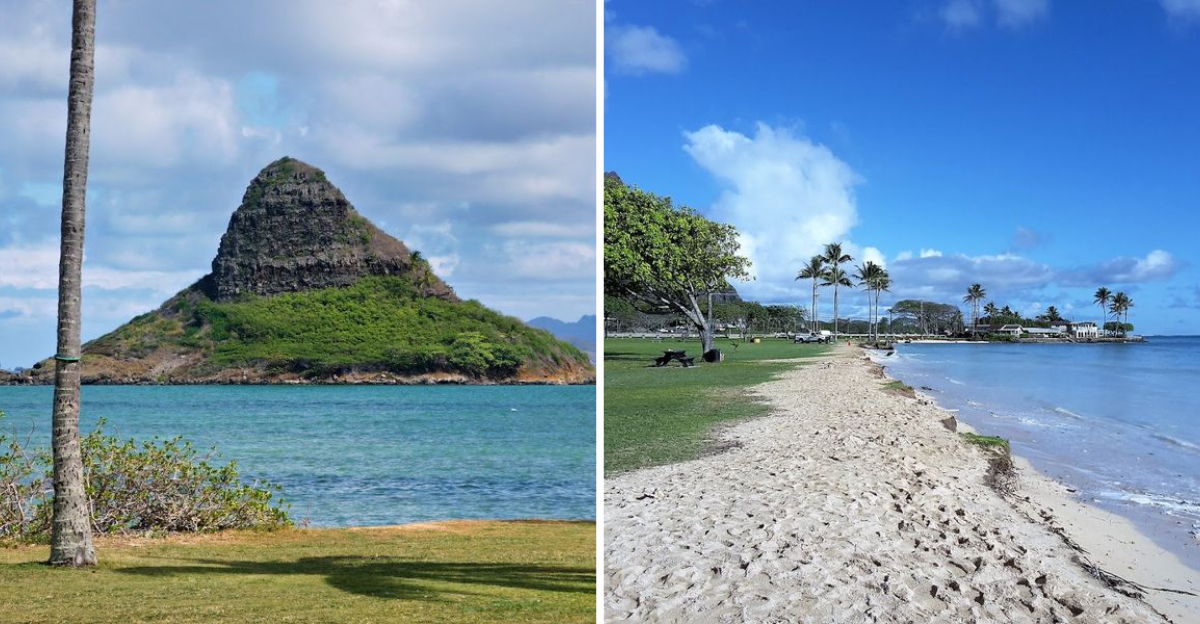
Rising 206 feet above turquoise water, that tiny island off the coast of Hawaii looks exactly like a hat floating on the ocean. The first time I spotted it from the shore, I could not believe a place like that actually existed.
Paddling out to it on a kayak felt like heading toward something out of a storybook. I launched on a calm morning and spent the next hour crossing the bay, the island growing bigger with each stroke.
I landed on a small beach, climbed a steep trail, and watched the ocean stretch out in every direction from the top. The island holds history, wildlife, and a secret beach on its back side that most visitors never find.
I sat there for a while, the water lapping at the shore, feeling like I had stumbled onto my own private corner of Hawaii. That trip sticks with you long after you leave.
The Kayak Paddle Across Kaneohe Bay
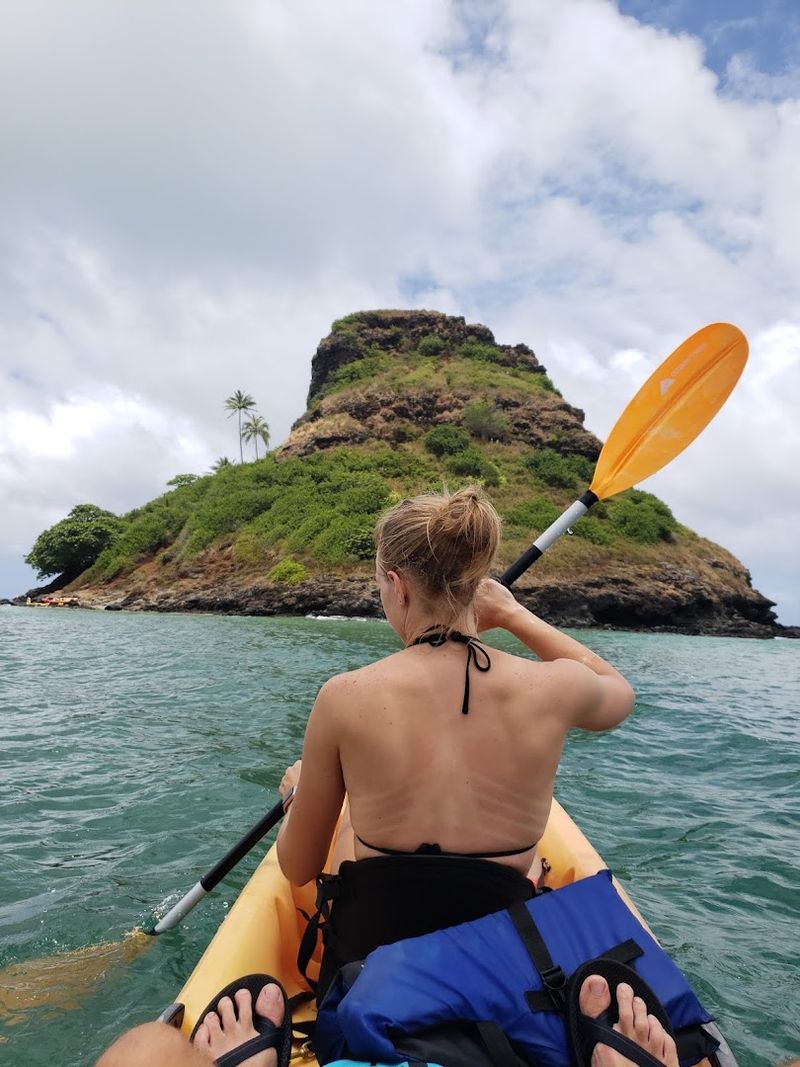
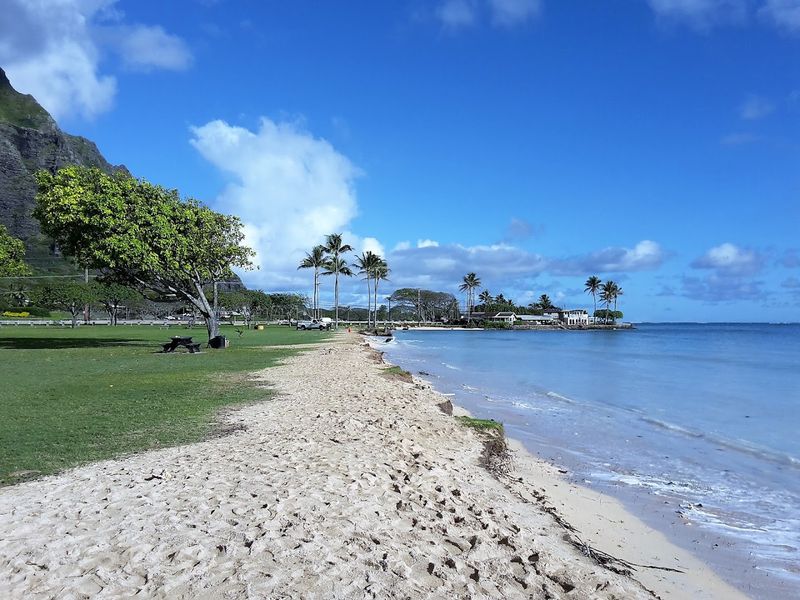
There is something quietly thrilling about pushing a kayak off the sand at Kualoa Regional Park and watching that small conical island grow larger with every stroke. The water in Kaneohe Bay is generally calm near the shoreline, protected by a barrier reef that keeps the swells manageable, especially in the morning when conditions tend to be at their gentlest.
Most paddlers cover the roughly 500-yard crossing in about 20 to 30 minutes.
Kayak rentals are available through local operators, some of whom will even deliver equipment right to the beach. Following the recommended paddle route matters more than you might think.
Taking shortcuts across the bay can put you against stronger currents, which turns a relaxed crossing into a workout you were not planning for.
Gear worth packing includes reef-safe sunscreen, a dry bag for your phone and valuables, plenty of water, water shoes with real grip, and a rash guard. The sun out on the water is no joke, and there is zero shade once you are paddling.
A lifejacket is non-negotiable, and sunglasses help cut the glare off the surface.
Once you reach the island, pull your kayak well above the waterline and anchor it to nearby foliage so it does not drift while you explore. The rocky shoreline requires careful footing on arrival, so those water shoes earn their place immediately.
Conditions can shift in rougher weather, so always check forecasts before heading out and time your trip around low tide for the easiest landing.
The Legend and History Behind the Island
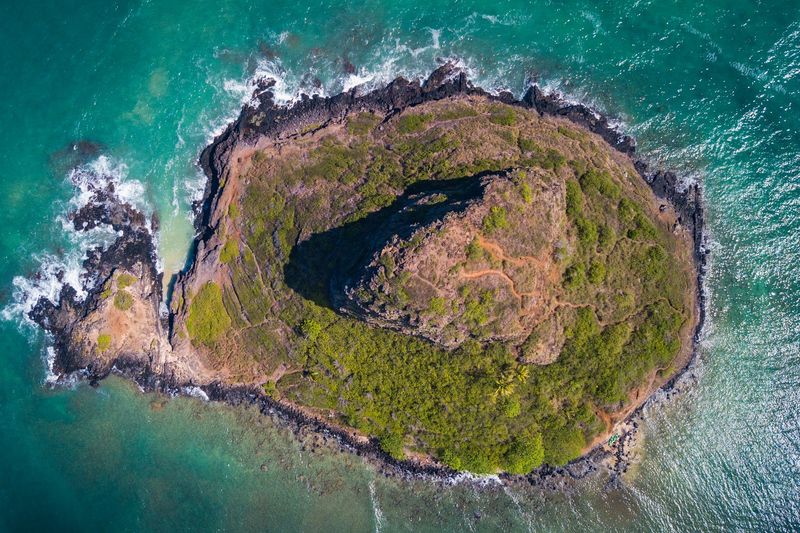
Mokolii translates to “little lizard” in Hawaiian, and that name is rooted in a story far older than any tourist map. According to Hawaiian legend, the island is the severed tail of a giant mo’o, a lizard deity, that was defeated by the goddess Hiaka, sister of Pele, and hurled into the sea.
That dramatic origin gives the island a weight that its small size does not immediately suggest.
Another legend frames it differently, describing the island as the hat of a giant fisherman, which is where the more widely used nickname Chinaman’s Hat comes from. Both stories reflect how deeply this small piece of basalt is woven into the cultural fabric of the windward coast.
The island formed roughly 6,000 years ago through volcanic activity and was later separated from Oahu by marine erosion over thousands of years.
Today, the island is owned by the City and County of Honolulu and falls within the boundaries of Kualoa Regional Park. Its geological and cultural significance makes it more than just a scenic landmark.
Spending a few minutes reading about its background before your trip genuinely changes how you experience it once you arrive.
Kualoa Ranch, famous as a filming location for major Hollywood productions, sits just across the street from the park. Seeing that mountain backdrop from the water while knowing the layers of history beneath you adds a richness to the whole outing that a simple beach day rarely delivers.
The Secret Beach on the Back Side
Most people who kayak to Mokolii pull up on the front side of the island and call it good. The ones who walk around to the back discover something that feels almost unfairly beautiful.
Tucked into the east side of the island is a small sandy cove, sheltered from the wind, with water so clear you can see the bottom without even getting in.
Reaching it requires a short scramble around the rocky shoreline, which is where those grippy water shoes become absolutely essential. The path is not marked or maintained, so you are picking your way over basalt and tidal pools with a bit of care.
It takes maybe ten minutes to get around, and the payoff is immediate once the cove comes into view.
The beach itself is compact and quiet, the kind of spot that feels like it belongs to you alone. The water is calm enough for a swim and clear enough for casual snorkeling without much effort.
Some visitors have also reported a small cave on this back side of the island, adding a bit of extra exploration to the experience.
Because this area is less visited, it is especially important to leave it exactly as you found it. No trash, no disturbed rocks, no picked shells.
The fragile coastal environment here supports nesting seabirds and the occasional Hawaiian Monk Seal resting on the shore. Giving wildlife a wide berth and keeping noise low is the kind of respect that keeps places like this worth visiting for everyone who comes after you.
The Summit Hike to the Top
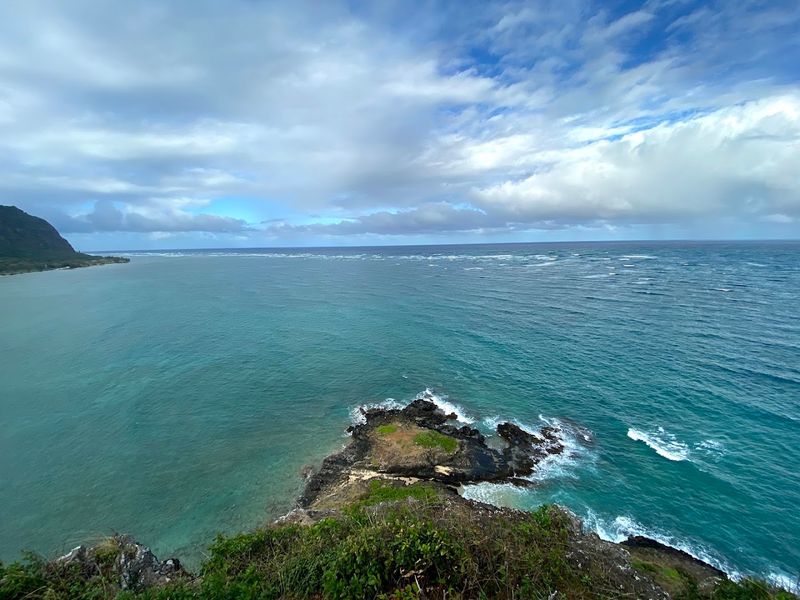
Hiking to the top of Mokolii is not something you stumble into casually. The trail is steep almost from the start, the basalt surface gets slippery after rain, and the final stretch to the summit involves actual rock climbing with the help of fixed ropes.
Know your fitness level honestly before committing to the climb.
That said, the view from the top is one of those rewards that erases every complaint you had on the way up. The Ko’olau Mountain Range unfolds across the horizon in every shade of green imaginable.
Kaneohe Bay spreads out below in a patchwork of turquoise and deep blue, and on a clear day, you can see across to the Kualoa coastline and far beyond.
The hike itself takes roughly 20 minutes one way, though that estimate assumes dry conditions and a comfortable pace. Wet rock and heat can both slow things down significantly.
Bringing more water than you think you need is genuinely good advice here, not just a standard safety reminder. Heat exhaustion has required helicopter rescues on this trail, so that detail is worth taking seriously.
Overcast days are actually ideal for the climb because the dark basalt absorbs heat intensely under direct sun, making the rocks almost too hot to grip comfortably. Early morning starts help too, both for cooler temperatures and for quieter conditions on the island overall.
The summit experience is worth every careful step, but the mountain does not owe you a safe trip if you are underprepared.
Wildlife You Might Encounter on the Island
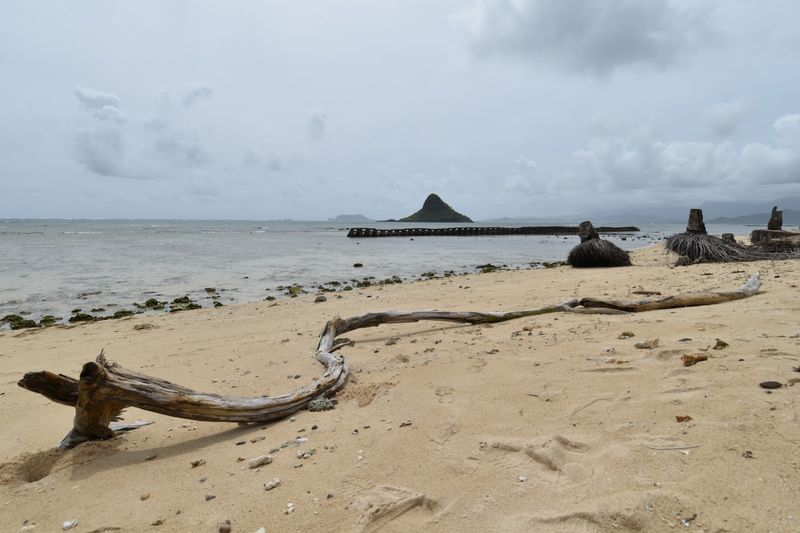
Mokolii is not just a scenic stop. It is an active habitat for some of Hawaii’s most remarkable and vulnerable wildlife, and that changes how the whole visit feels once you are aware of it.
Wedge-tailed shearwaters nest here in burrows dug into the soil, and during nesting season the island becomes especially important to protect. These birds are endangered, and foot traffic near burrow areas can cause real damage.
Green sea turtles, known locally as honu, are spotted regularly in the waters around the island. Paddling out and catching a glimpse of one surfacing beside your kayak is the kind of moment that stops conversation entirely.
Hawaiian Monk Seals occasionally haul out on the shoreline to rest, and seeing one up close, even from a respectful distance, feels genuinely rare.
The rule for all of this wildlife is simple: keep your distance, stay quiet, and do not approach. Federal and state laws protect Hawaiian Monk Seals and sea turtles, and disturbing them carries serious consequences.
Binoculars are worth tossing in your dry bag for a better look without getting closer than you should.
Other seabirds also use the island, and the tidal pools along the rocky shoreline hold their own small ecosystem of creatures worth pausing to observe. The island rewards slow, attentive visitors far more than those rushing from one highlight to the next.
Treating Mokolii as a living place rather than just a destination makes the experience feel entirely different, and honestly, much more worthwhile.
Planning Your Visit to Kualoa Regional Park and Beyond
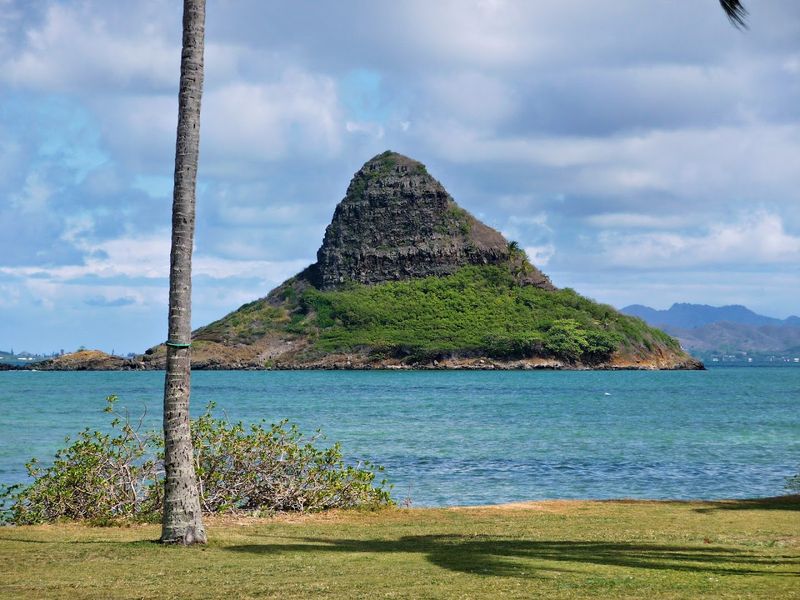
Kualoa Regional Park is the natural starting point for any Mokolii adventure, and it earns its reputation as one of the most scenic parks on the entire island. The park sits at 49-479 Kamehameha Highway in Kaneohe and offers parking, restrooms, picnic tables, and direct beach access for launching kayaks.
Arriving early is a smart move, both for parking and for calmer water conditions before the trade winds pick up mid-morning.
The park is open from dawn to dusk, and visiting Mokolii follows the same hours. There is no overnight camping allowed on the island itself, so plan your day accordingly and build in enough time for the paddle, the beach, the hike, and the return crossing without feeling rushed.
Two to three hours on the island feels about right for covering the main highlights.
Just across Kamehameha Highway, Kualoa Ranch offers guided tours through the valley that has served as a backdrop for dozens of major films. It is a completely different experience from the kayak trip but pairs well if you are spending a full day in the area.
The Byodo-In Temple and the Ho’omaluhia Botanical Garden are also within reasonable driving distance and worth building into a longer windward coast day.
Pack out everything you bring in. The park and the island both depend on visitors who genuinely care about leaving things better than they found them.
Respect the land, greet locals warmly, and support the small businesses that make experiences like this possible.
Address: 49-479 Kamehameha Hwy, Kaneohe, HI 96744.
