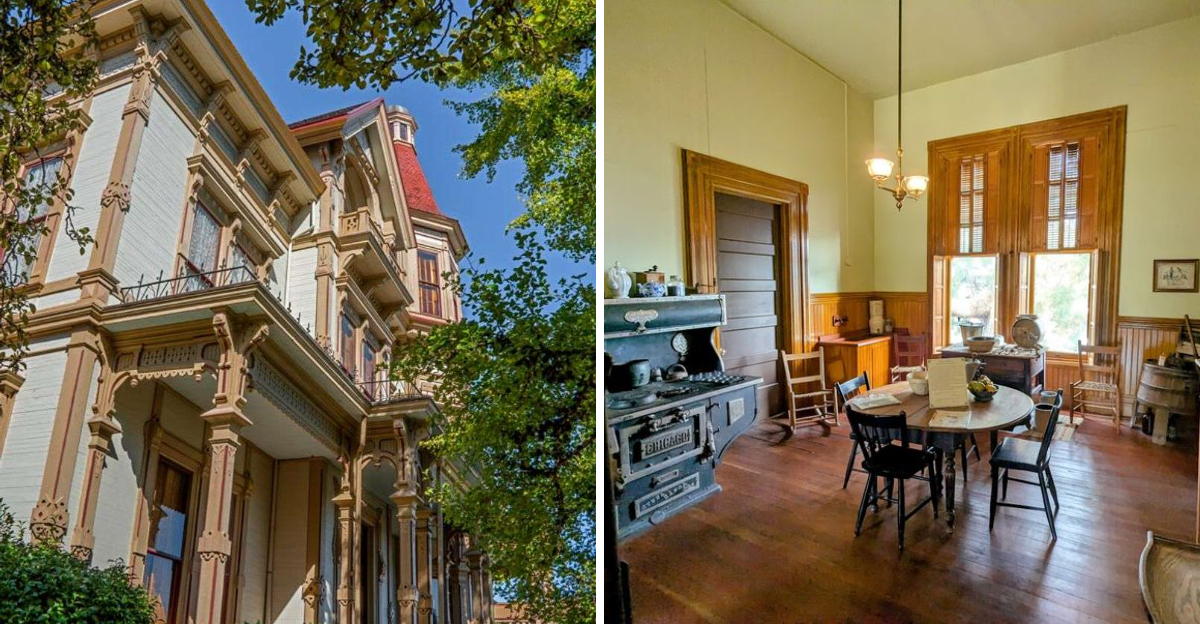
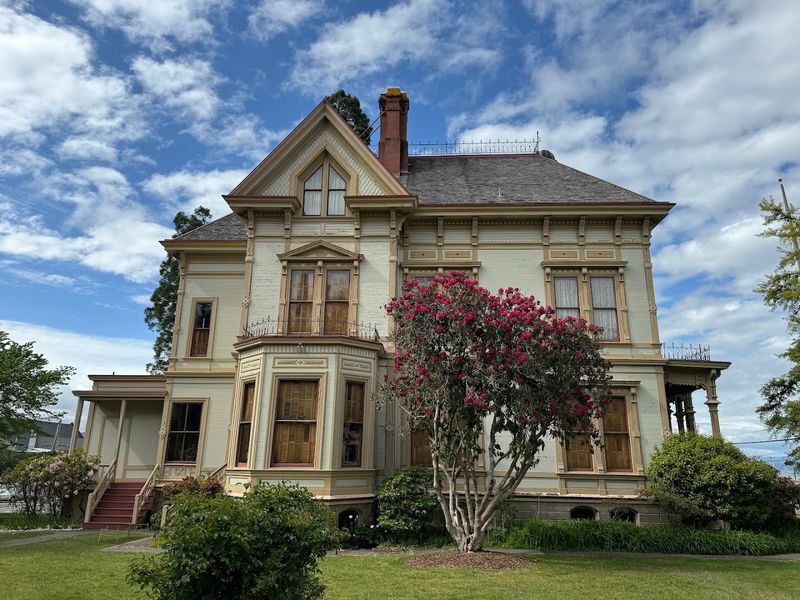
A four story octagonal tower rises from this Victorian mansion like something out of a storybook. Oregon’s very first millionaire built it back when Astoria was still a wild river town.
I walked up the front steps and felt instantly transported to a time of horse carriages and fancy hats. The tower has windows on every side so the millionaire could watch his ships come and go easily.
Woodwork inside is so detailed that your eyes do not know where to look first honestly. Oregon really knows how to preserve a piece of history without making it feel like a boring museum.
The staircase alone is worth the visit with its curved railings and warm creaky wood beneath your feet. I stood in the parlor and imagined lavish parties happening right where my dusty boots were standing.
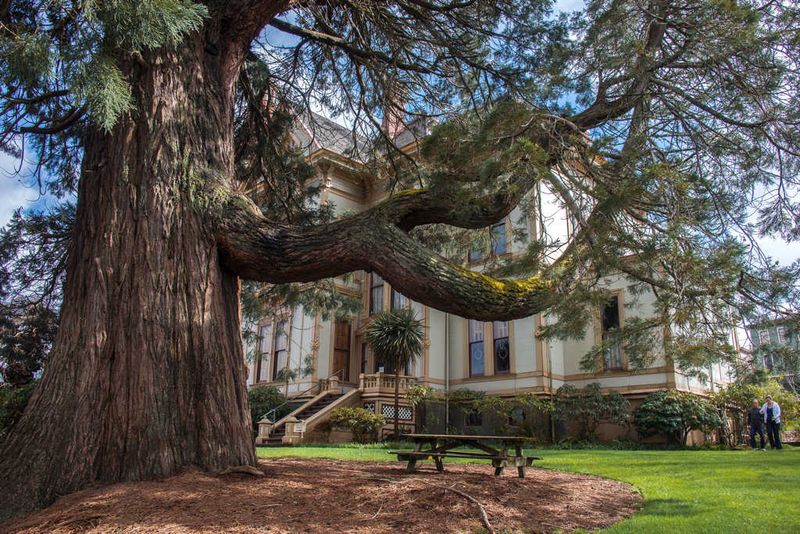
The grounds are peaceful and green and perfect for a slow afternoon of pretending to be rich. Some houses just have presence and this Oregon mansion has it in every single beautiful room.
Captain George Flavel: Oregon’s First Millionaire
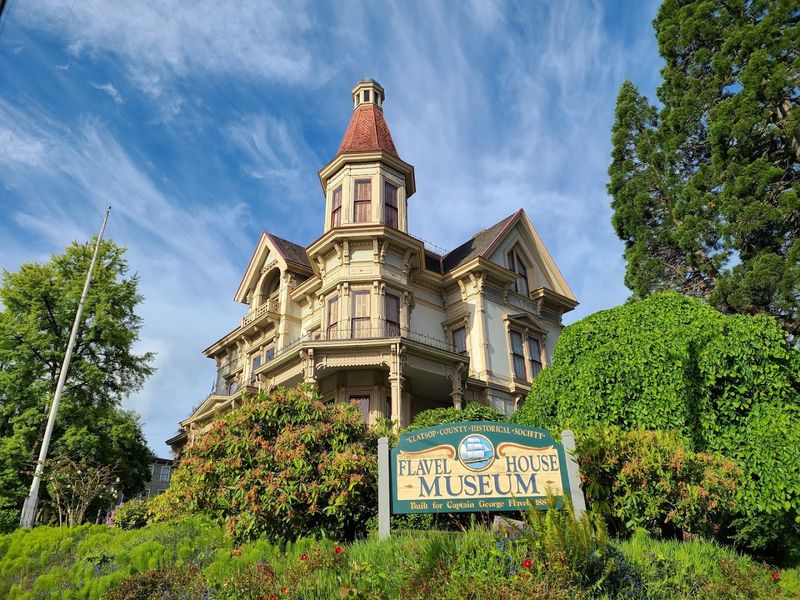
Not many people build a legend from scratch on the Oregon coast. Captain George Flavel did exactly that.
He arrived in Astoria in the 1840s and worked his way up from bar pilot to one of the most powerful men in the Pacific Northwest.
Flavel controlled the Columbia River bar piloting business for years. Ships could not safely cross that treacherous stretch of water without his pilots, and that gave him enormous influence.
He invested his earnings into real estate, banking, and shipping.
By the time he commissioned his mansion in 1885, he was widely recognized as Oregon’s first self-made millionaire. The house was a statement of that success.
It occupied an entire city block and made clear that Astoria was not just a fishing town.
His story is woven into every room of the house. Visiting this place without knowing who Flavel was feels like reading the last chapter of a book first.
His ambition literally built the walls around you.
The Queen Anne Architecture That Demands a Second Look
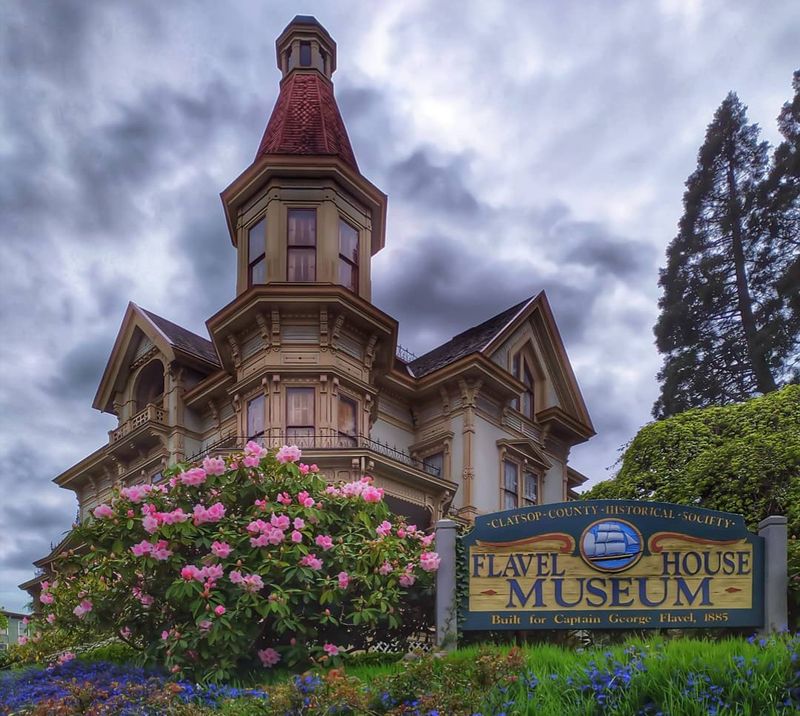
The first thing you notice is the sheer audacity of the design. Queen Anne architecture from the 1880s was never meant to be subtle, and the Flavel House leans fully into that idea.
Every surface has something going on.
Decorative shingles, carved woodwork, wraparound porches, and bay windows stack on top of each other in the most satisfying way. The color palette is rich and warm.
Standing on the sidewalk, I kept finding new details I had missed thirty seconds earlier.
The style was popularized during the Victorian era and celebrated asymmetry, texture, and ornamentation. Builders used multiple materials on a single facade just to show they could.
The Flavel House checks every single one of those boxes.
At over 11,000 square feet, it commands its full city block with confidence. Architects and history lovers consistently rank it among the finest examples of Queen Anne design in the entire Pacific Northwest.
It earns that reputation without trying too hard.
The Four-Story Octagonal Tower Up Close
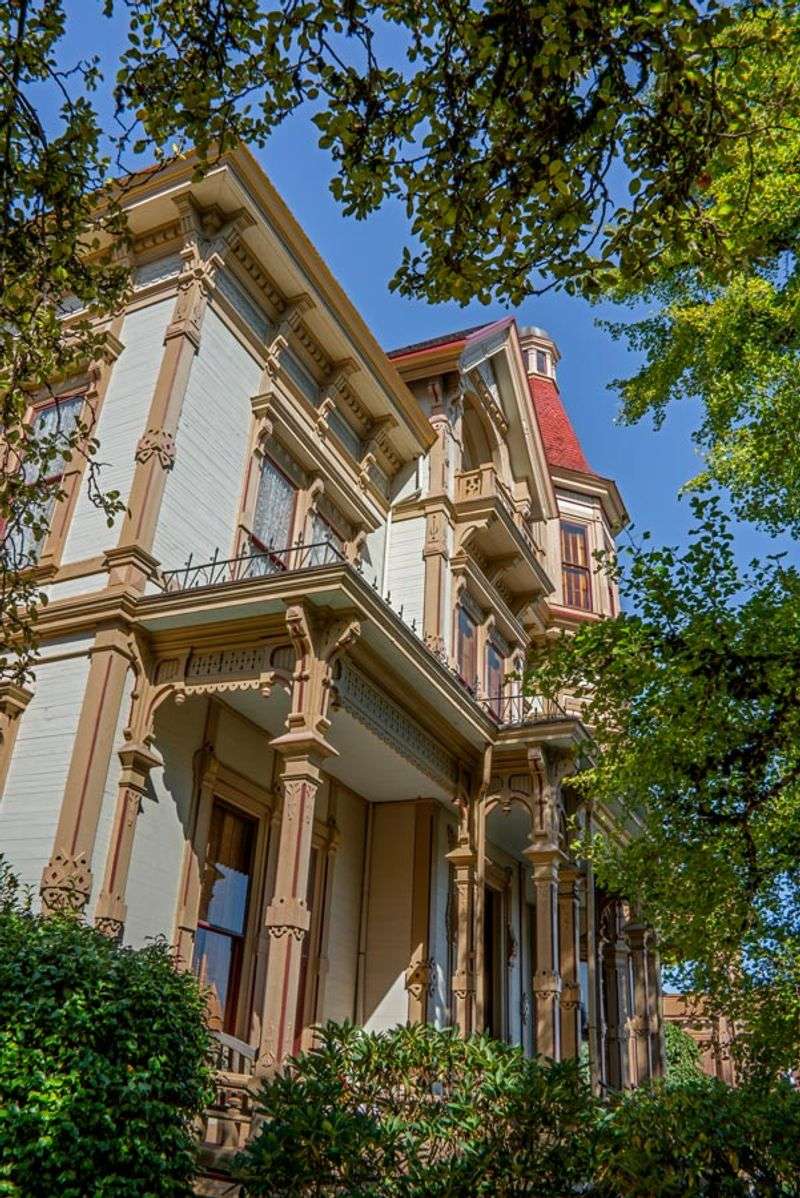
That tower is the thing everyone photographs first. It anchors the corner of the house like an exclamation point, rising four full stories above Exchange Street.
Up close, it is even more impressive than it looks from a distance.
Each level of the tower has its own window arrangement and decorative treatment. The shingles change pattern as you move upward.
It is the kind of detail that shows a builder who cared deeply about the finished product, not just the budget.
Octagonal towers were a popular Victorian status symbol. They added visual drama and also created unique interior spaces that felt special to occupy.
Inside the Flavel House, those tower rooms have a curved, intimate quality that feels completely different from the rest of the mansion.
Standing beneath it and tilting your head back is genuinely dizzying in the best way. It is hard to believe this structure was built without modern equipment.
The craftsmanship involved is something that stops conversations and makes people go quiet for a moment.
Stepping Inside: The Grand Entry Hall
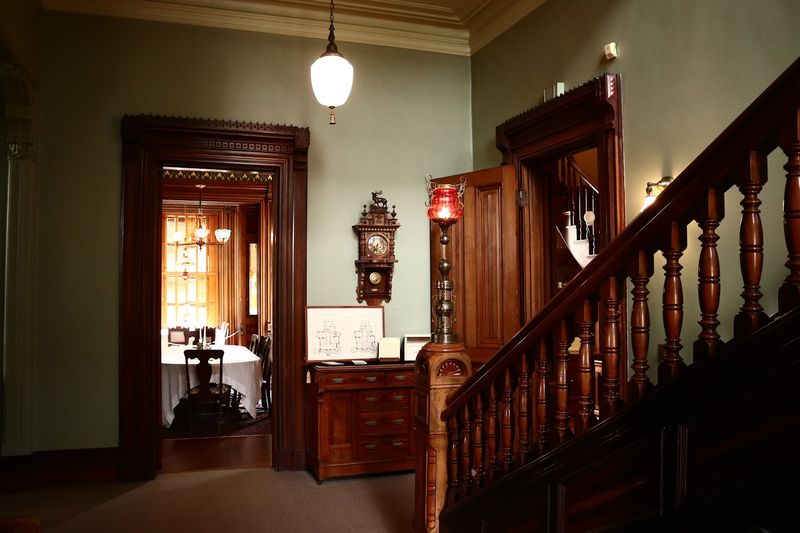
Walking through the front door feels like crossing a threshold into another century. The entry hall greets you with soaring ceilings and woodwork so detailed it almost looks like lace carved from oak.
Your eyes do not know where to land first.
Tall doors with original hardware line the hallway. The floors are original hardwood, warm and slightly worn in all the right places.
The scale of everything is generous, built for a family that wanted guests to feel the weight of their prosperity immediately.
Period-appropriate wallpaper and furnishings have been carefully restored throughout. Some pieces actually belonged to the Flavel family.
That mix of original items and thoughtfully chosen period pieces gives the space an authenticity that many house museums struggle to achieve.
The self-guided tour begins here, and it moves through the house in a logical, unhurried way. Informational plaques are placed throughout each room.
They are detailed enough to satisfy history buffs but easy enough to follow for visitors who are just discovering Victorian life for the first time.
The Music Room and Its Period Instruments
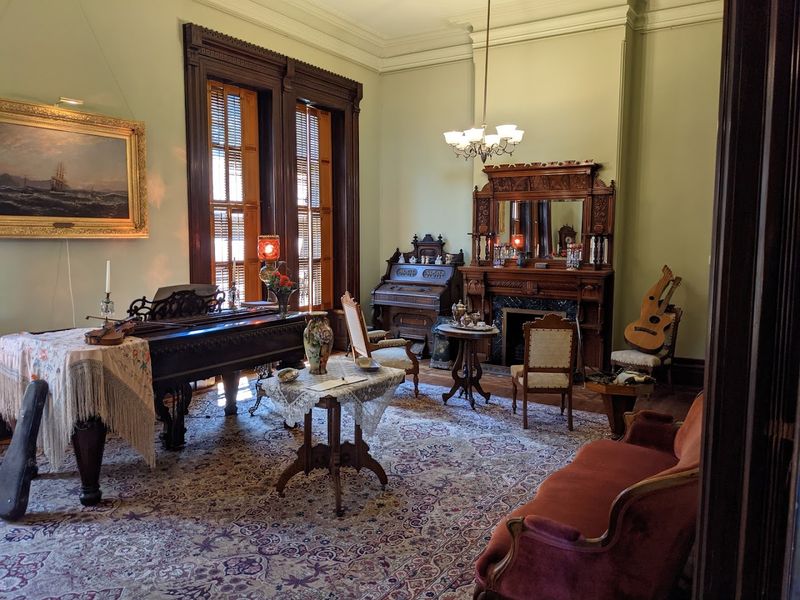
There is something quietly magical about the music room. It sits off the main hall with a formality that feels both welcoming and a little untouchable.
The instruments arranged inside look ready to be played at any moment.
Music was central to upper-class Victorian social life. A family like the Flavels would have entertained regularly, and this room was designed for exactly that kind of gathering.
The acoustics, the furniture arrangement, and the decorative choices all point toward performance and conversation.
Seeing the instruments up close made history feel suddenly personal. These were not props.
They were objects that real people chose, cared for, and gathered around. That connection across more than a century is something you feel in your chest, not just your head.
The room is one of the most photographed spaces in the house for good reason. Natural light filters through lace curtains and lands on the polished surfaces in a way that feels almost staged but is completely genuine.
Spend a few extra minutes here. It rewards slow looking.
The Kitchen and the Story of Domestic Life
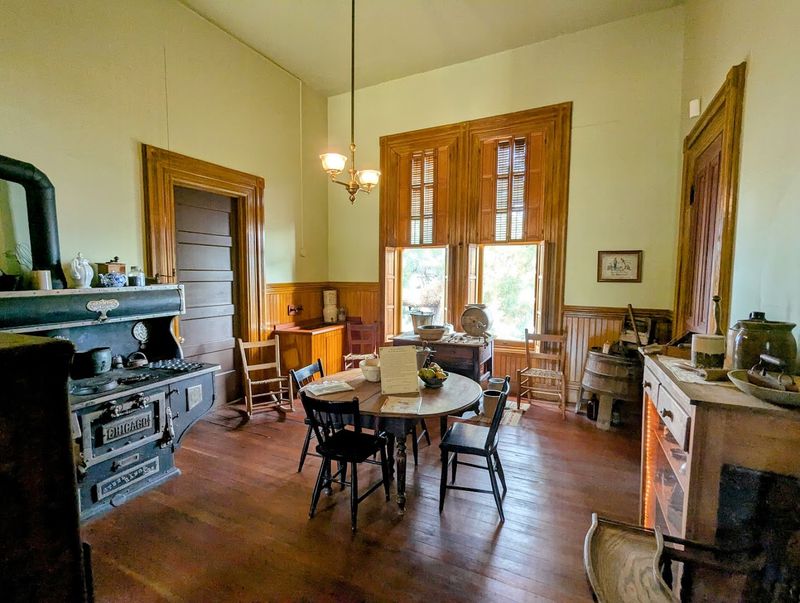
Most grand Victorian homes of this era kept the kitchen well out of sight from guests. At the Flavel House, the kitchen is one of the most visited rooms on the tour.
It tells a completely different story than the parlors and sitting rooms upstairs.
A large firewood stove dominates the space. Cast iron pots and period cooking tools are arranged just as they would have been in the 1880s.
It is easy to imagine the noise and warmth that filled this room on an ordinary morning.
The kitchen humanizes the house in a way the formal rooms cannot. Wealth created the parlors, but daily life happened here.
Cooks, domestic workers, and family members all moved through this space with purpose and routine.
Details like the storage areas, the work surfaces, and the ventilation design reveal how much thought went into making a functional kitchen at that scale. It was labor-intensive work, and the room makes that clear without a single word of explanation.
You just feel it standing there.
Victorian Bathrooms That Were Actually Revolutionary
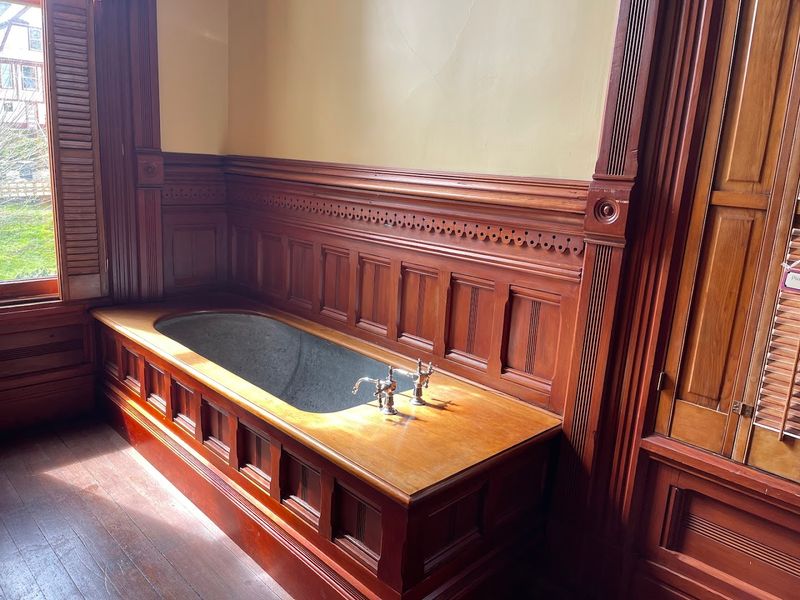
Indoor plumbing in 1885 was not something most American households had. The Flavel House was built with bathrooms that reflected the very cutting edge of domestic technology at the time.
Walking into one of them feels like discovering a small miracle of the era.
Clawfoot tubs, period fixtures, and original cabinetry are all intact. The level of preservation here is remarkable.
These spaces have not been modernized or retrofitted in ways that would break the visual spell of the 1880s.
Visitors consistently mention the bathrooms as one of the most surprising highlights of the tour. That reaction makes sense.
Most people expect the grand rooms to impress. The bathrooms catch you off guard with their elegance and their ingenuity.
They also offer a glimpse into how the Flavel family understood comfort and status. Having a proper bathroom was itself a form of display in that period.
It said something about your access to resources and your commitment to modern living. That message still comes through loud and clear today.
The Carriage House and How to Start Your Visit Right
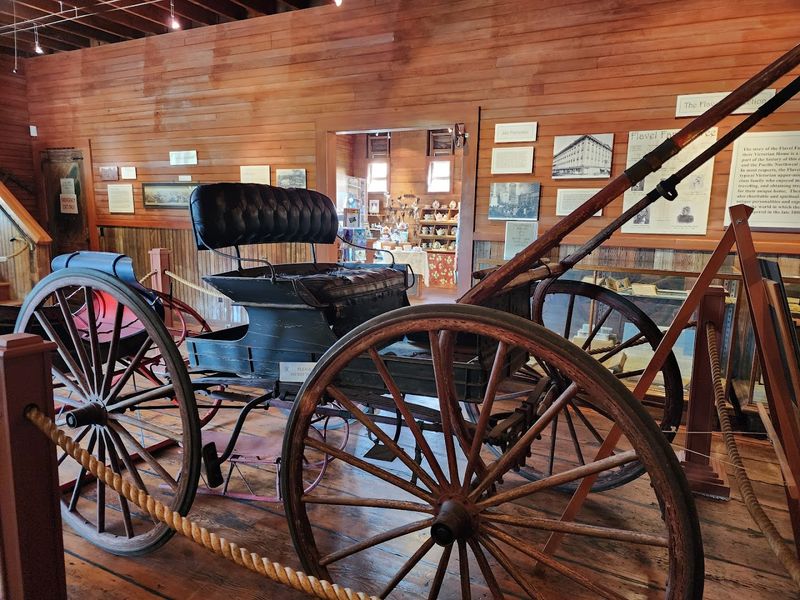
Here is something most first-time visitors do not know: you do not enter through the mansion’s front door. Tickets are sold in the carriage house next door, and that is actually the perfect place to begin.
Do not skip it.
Inside the carriage house, a short introductory video plays and sets the historical context for everything you are about to see. Visitors consistently say the video makes the main house tour significantly richer.
It fills in the backstory so the rooms speak for themselves.
Additional exhibits are also displayed in the carriage house. They cover the Flavel family history, Astoria’s development as a port city, and the broader context of Victorian life on the Oregon coast.
It is genuinely interesting material, not just a formality.
The carriage house staff are known for being warm and helpful. They answer questions with real enthusiasm and point out things worth looking for inside the mansion.
Starting here rather than rushing straight to the house makes the whole experience feel intentional and complete rather than scattered.
How the Historical Society Saved the House from Demolition
It is almost impossible to imagine now, but the Flavel House nearly became a parking lot. In the 1940s, the property sat unwanted after the Flavel family had difficulty finding anyone to take it.
The city of Astoria considered demolishing it entirely.
The Clatsop County Historical Society stepped in and changed that outcome. They recognized the mansion for what it was: an irreplaceable piece of Pacific Northwest history.
Their intervention saved a structure that could never be rebuilt or replicated.
Decades of careful restoration work followed. The society worked to return the house to its original condition, sourcing period-appropriate materials and preserving original features wherever possible.
The result is what visitors experience today: a house that feels lived-in rather than frozen.
Knowing this history adds a layer of appreciation to every room. The beauty you see was not inevitable.
It required deliberate, sustained effort by people who believed the story of Captain Flavel and Victorian Astoria was worth preserving. That commitment shows in every restored inch of this remarkable building.
Planning Your Visit to the Flavel House Museum
The Flavel House Museum is open every day of the week from 10 AM to 4 PM. That consistent schedule makes planning straightforward, and the hours leave plenty of time to combine the visit with other Astoria attractions nearby.
Many visitors pair the Flavel House with a trip to the Astoria Column, which offers complimentary museum tickets as part of the column experience. Checking the current terms of that offer before your visit is always a smart move.
It can make the trip even more rewarding.
Plan for at least 30 to 45 minutes inside the mansion itself. History enthusiasts and architecture lovers often stay longer.
The self-guided format means you move at your own pace, which suits both quick visitors and those who want to read every label.
Address: Flavel House Museum, 714 Exchange St, Astoria, OR 97103.
