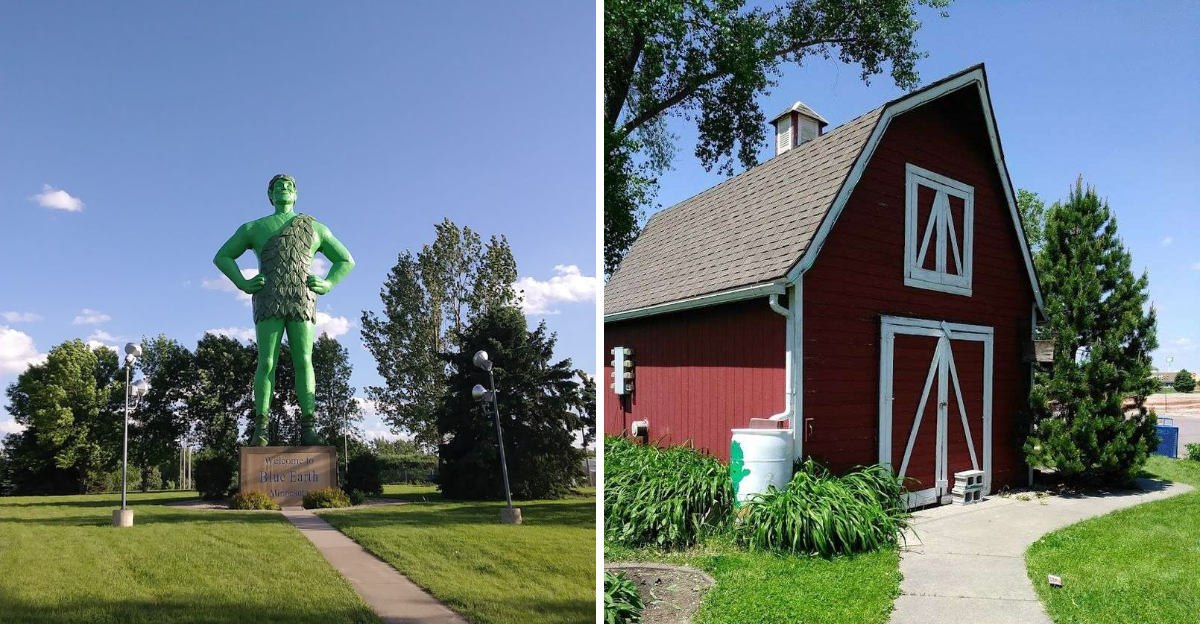
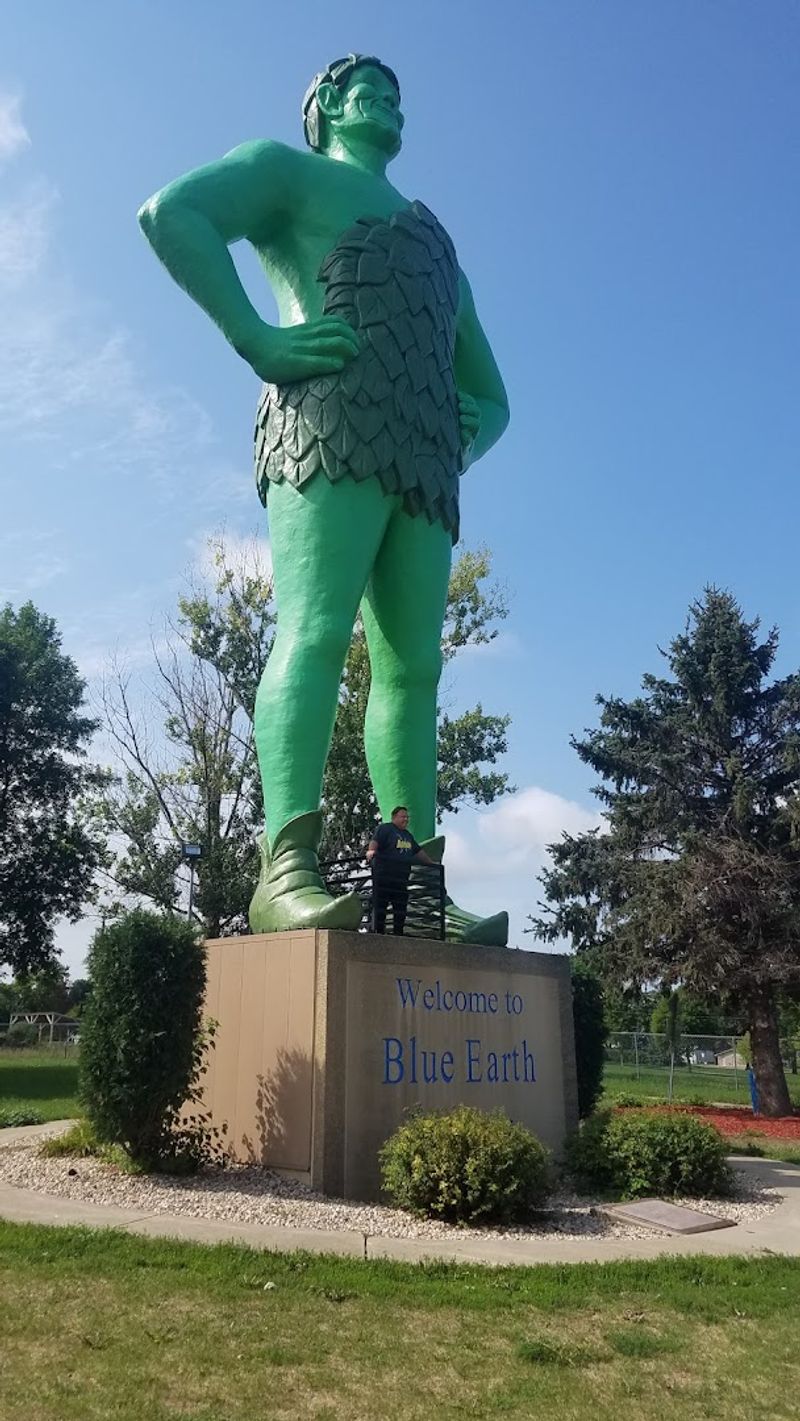
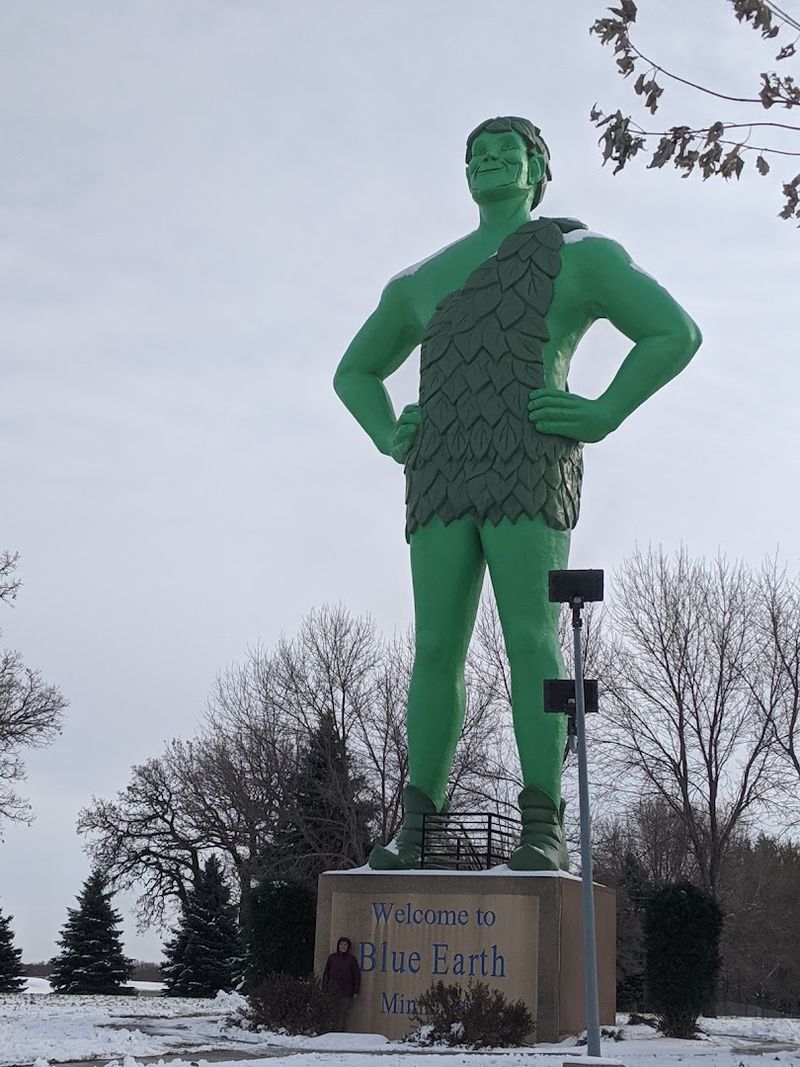
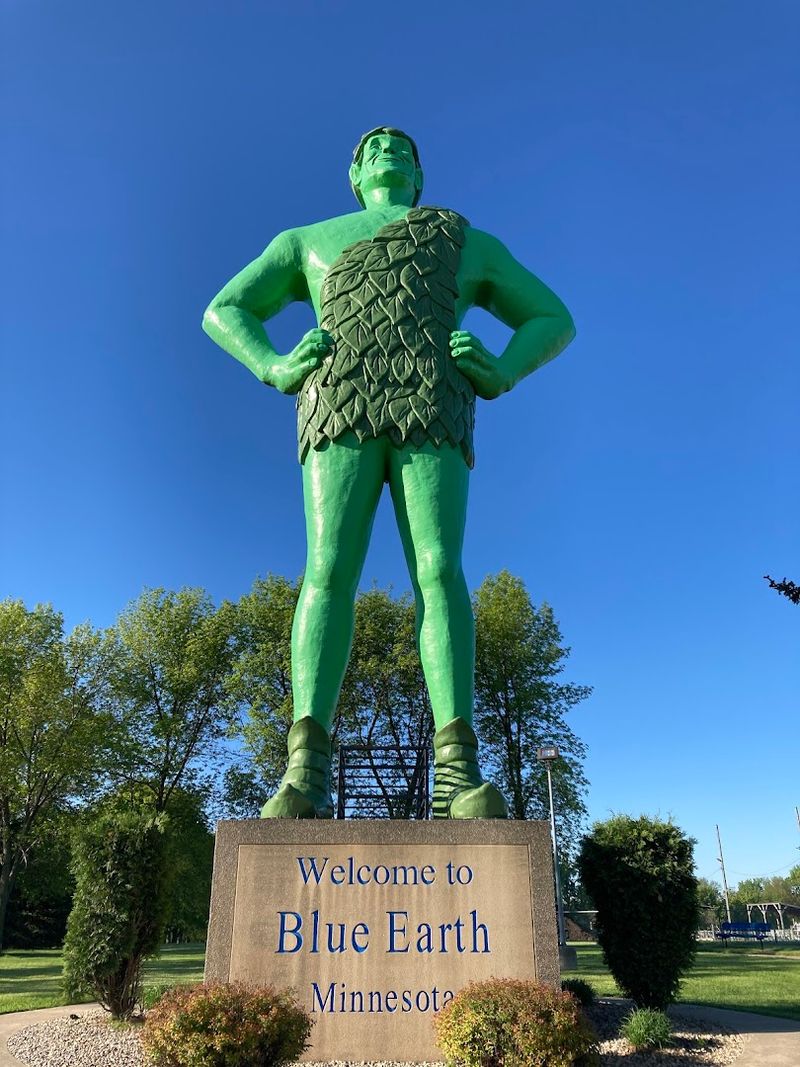
A fifty five foot tall green giant stands in a Minnesota cornfield, and people drive from all over just to feel small. That is exactly the point.
The Jolly Green Giant’s hometown leans hard into its vegetable loving mascot, and the result is equal parts odd and wonderful. The statue towers over visitors with a cheerful wave and a smile that is somehow not terrifying despite its size.
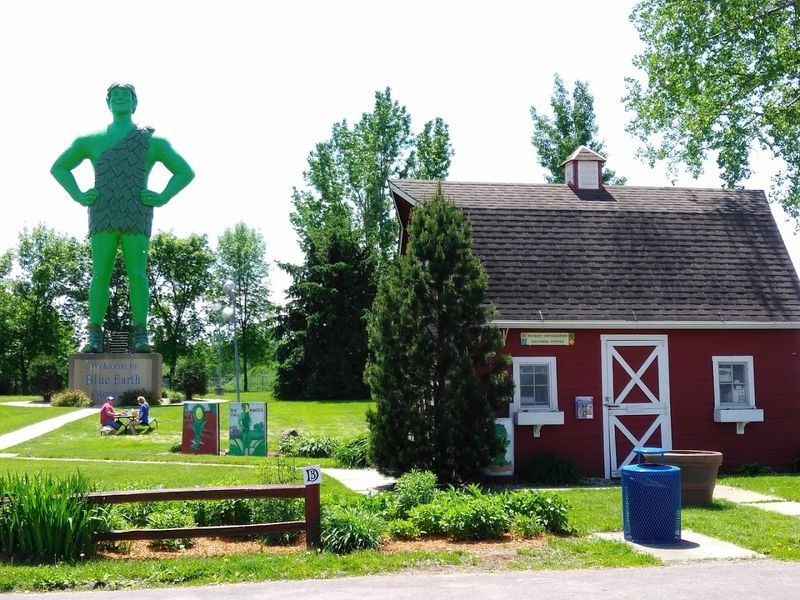
You can climb stairs up to the base and look out over fields that stretch to the horizon. A smaller Sprout character stands nearby in case the big one was too intimidating.
The gift shop sells everything with the giant’s face on it, from keychains to sweatshirts to cans of peas that are probably collectible now. Kids shriek with delight and adults take the obligatory goofy photo stretching their arms up like they are trying to match his height.
The whole town seems in on the joke, embracing their oversized claim to fame with genuine pride. You will leave feeling like a tiny speck in the best possible way.
The Jolly Green Giant Statue: A Colossus Worth Every Mile
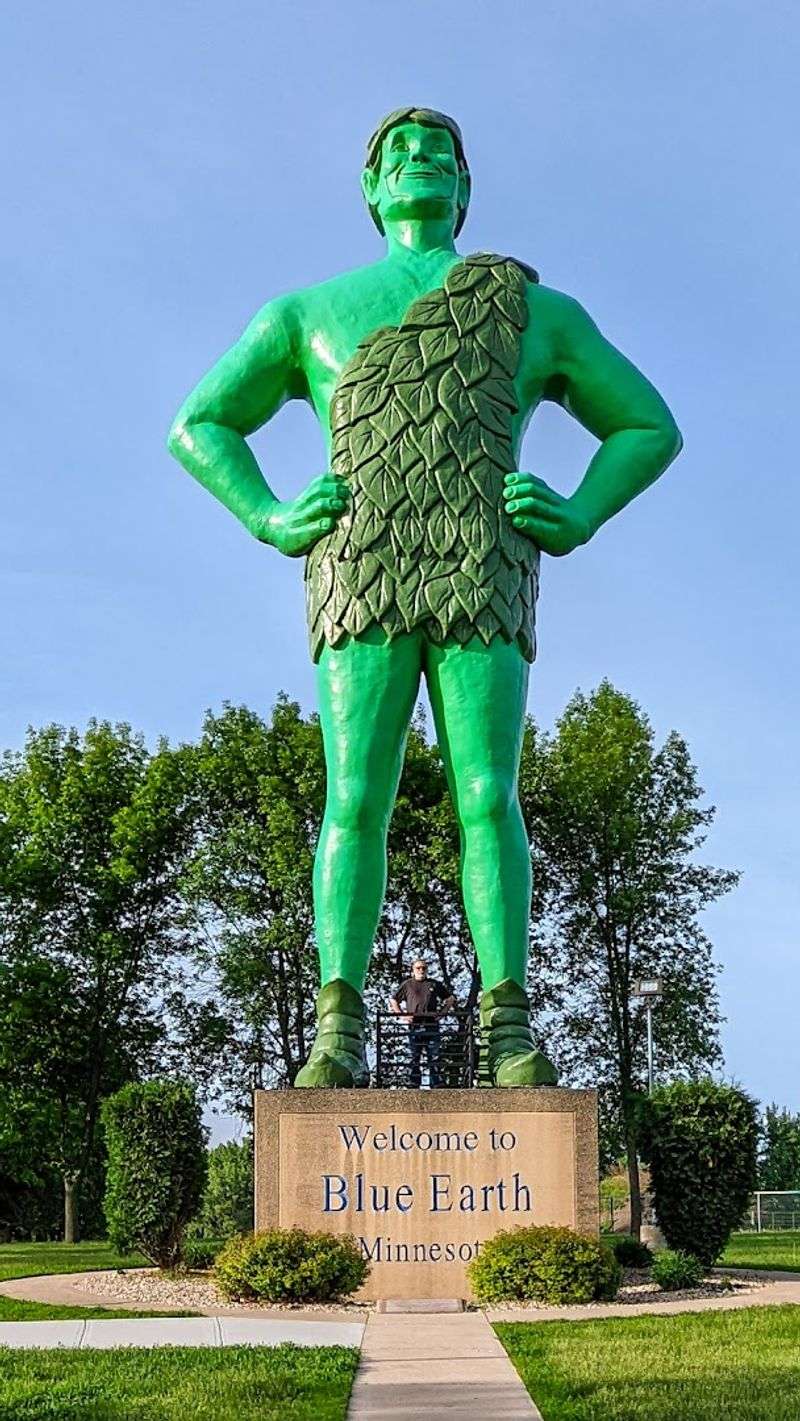
Standing at the base of this thing, you genuinely feel small. The Jolly Green Giant statue rises 55 feet into the Minnesota sky. It was built in 1979 and has been pulling road-trippers off the highway ever since.
The statue was created to celebrate Blue Earth’s connection to the Green Giant Company. Canned vegetables, especially peas and corn, were a huge part of this region’s agricultural identity. The giant wears his classic leaf outfit and holds a proud, wide-eyed expression.
Kids love climbing up to the viewing platform nearby. Adults tend to stand there, necks craned back, just absorbing the sheer size of the thing.
It is genuinely one of the most memorable roadside attractions in the Midwest. Bring a camera, because photos never quite capture how enormous he actually is.
This is the kind of landmark that earns its own postcard rack.
Faribault County Seat: A Small Town With Real Roots
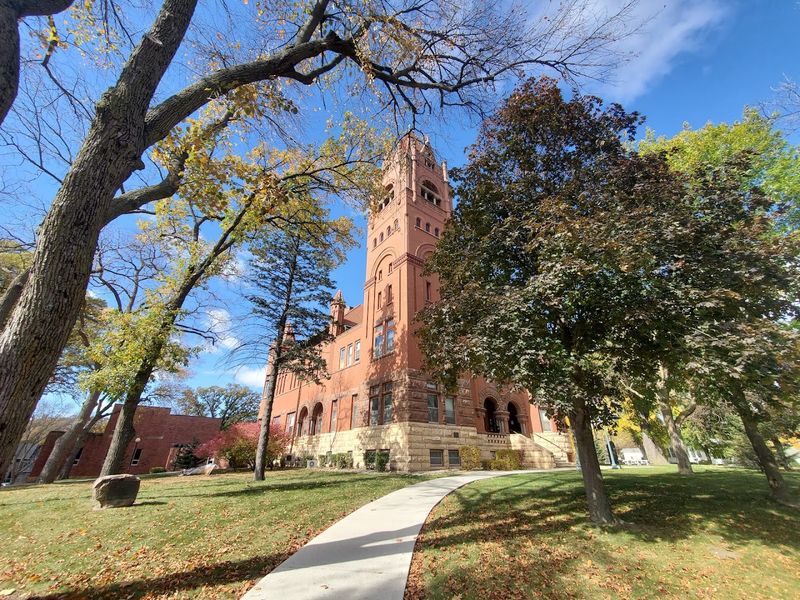
Blue Earth is not just a quirky stop on the map. It is the county seat of Faribault County, which means it has real civic bones.
The downtown area has that classic Midwestern courthouse square feeling that never gets old.
The Faribault County Courthouse sits at the center of everything. It is a handsome building with a long history and a sense of permanence that modern buildings rarely achieve.
Walking around it gives you a sense of how towns like this were built to last.
Local government, community services, and small businesses all orbit around this central hub. There is a quiet pride here.
People wave at strangers. Shop owners actually know their customers by name.
It feels like a place where community is not just a word on a sign. Blue Earth has about 3,174 residents according to the 2020 census.
Small in number, but not small in character. That distinction matters more than most people realize when they first pass through.
Blue Earth River: Where Two Branches Become One
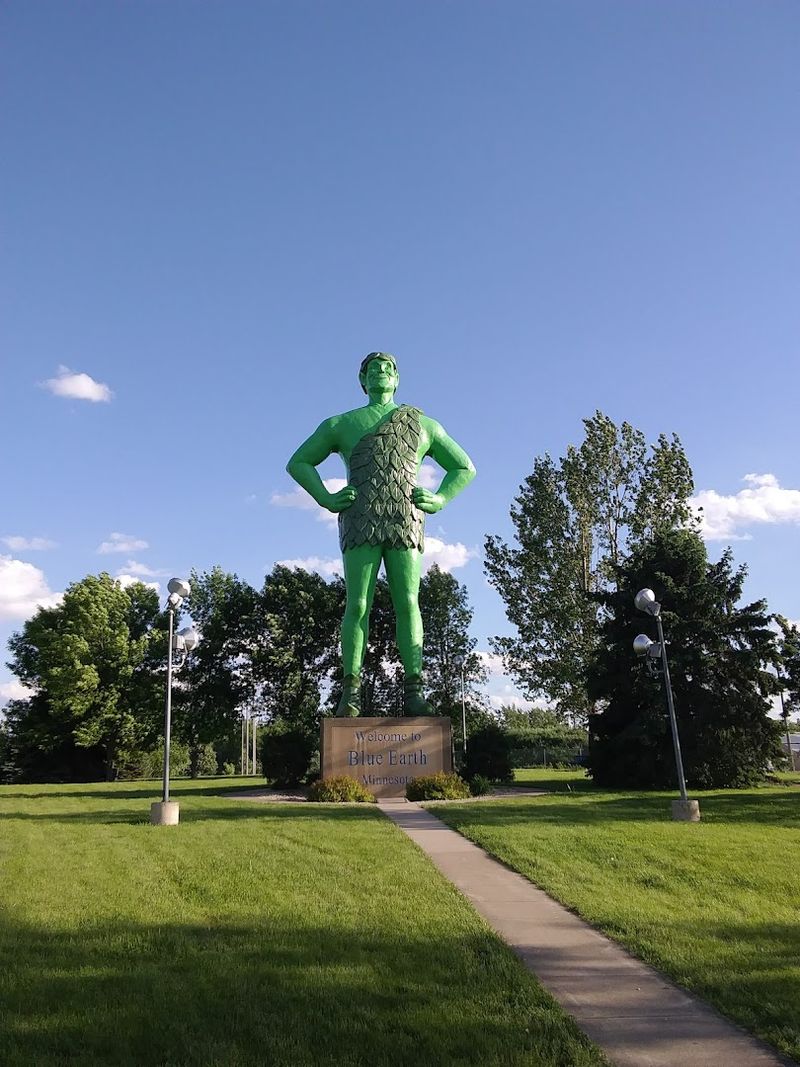
The city gets its name from something genuinely beautiful. Blue Earth sits right at the confluence of the east and west branches of the Blue Earth River.
That meeting point gives the whole area a natural sense of purpose.
The river itself runs calm and quiet through the landscape. Walking along its banks is one of those simple pleasures that reminds you why small towns near water always feel a little more alive.
The greenery along the edges is thick and lush in summer.
Local residents fish, walk, and simply sit by the water. There are no crowds, no entrance fees, and no lines.
Just the sound of moving water and birdsong. The Blue Earth River was historically significant to Native American communities long before European settlers arrived.
That layered history adds depth to an already lovely natural feature. It is worth taking a slow walk along the riverbank before heading back to the main road.
Nature does not need a gift shop to be memorable.
Roadside America Stop: Why Blue Earth Is on Every Road Trip List
Blue Earth has earned a genuine spot on the Roadside America circuit. That is the unofficial collection of weird, wonderful, and deeply American stops that road-trippers seek out.
The Jolly Green Giant statue is the obvious anchor attraction.
But the town itself rewards slow exploration. There is something deeply satisfying about discovering a place that has no pretension about what it is.
Blue Earth knows it is a small farming community with a giant green statue, and it leans into that identity with full confidence.
Interstate 90 runs close by, making Blue Earth an easy and logical stop between larger cities. Many travelers heading across Minnesota or Iowa add it to their route specifically because of the giant.
Once they arrive, most stay longer than planned. The local diner culture, the quiet streets, and the genuine friendliness of residents tend to hold people.
Road trips are better when the stops feel real. Blue Earth feels very, very real.
Pioneer Village: Stepping Back Into Minnesota History
History buffs will find a rewarding stop at the Faribault County Historical Society. The grounds include a pioneer village setup with original and reconstructed buildings from the region’s early settlement era.
It is the kind of place that makes history feel touchable.
Old schoolhouses, farm equipment, and period household items fill the displays. The detail is impressive for a small-town historical society.
Volunteers who staff the place clearly love what they do, and that enthusiasm is contagious.
Walking through the village gives you a real picture of what life looked like for early Minnesota settlers. The winters were brutal.
The work was relentless. But communities like Blue Earth grew anyway.
That resilience is woven into every exhibit. Children often respond well to hands-on historical environments like this one.
It turns abstract history into something they can actually picture. The pioneer village is not a theme park.
It is a genuine effort to preserve a story that deserves to be remembered.
Address: 405 E 6th St, Blue Earth, MN 56013.
Agricultural Heritage: Fields That Feed a Nation
You cannot spend time in Blue Earth without noticing the fields. They stretch out in every direction, flat and impossibly wide.
This is farming country in the most literal and serious sense of the word.
Corn, soybeans, and peas have been grown here for generations. The Green Giant connection was no accident.
The soil and climate around Blue Earth are genuinely well-suited to vegetable agriculture. That is why the company set up operations in this region in the first place.
Driving the rural roads outside of town gives you a real appreciation for the scale of Midwestern farming. These are not hobby gardens.
These are working fields that contribute to the national food supply in meaningful ways. Farmers around Blue Earth take enormous pride in that role.
Agriculture here is not background scenery. It is the main event.
The town’s identity, economy, and even its famous mascot all trace back to what grows in these fields.
Hometown Diners and Local Eats: Real Food, Real People
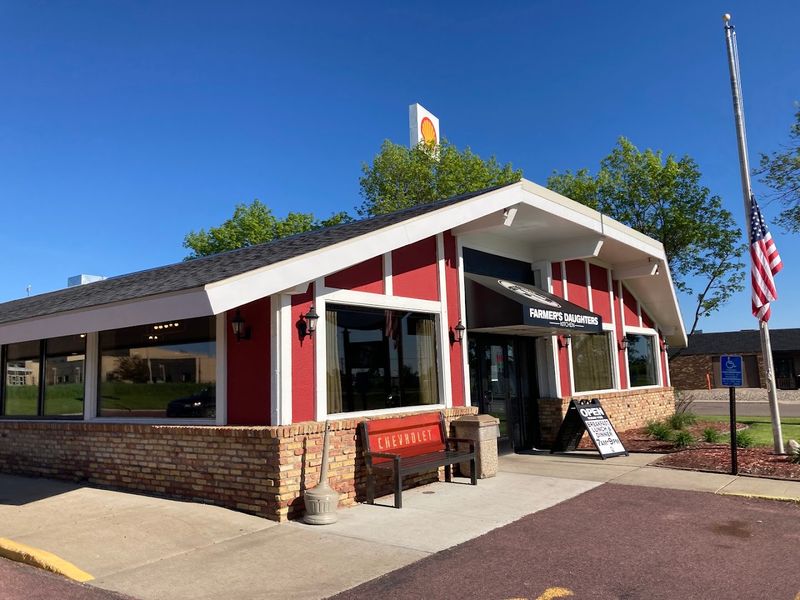
Small towns in Minnesota do not mess around when it comes to comfort food. Blue Earth has local spots that serve generous plates of real, unpretentious food.
Nothing is deconstructed or artisan-labeled here.
Breakfast at a local diner means eggs cooked exactly how you order them, thick toast, and coffee that keeps coming without asking. Lunch might be a hot beef sandwich or a bowl of soup that actually tastes homemade.
These places run on regulars and reputation.
Eating at a small-town diner is a social experience as much as a culinary one. You hear local conversations.
You get recommendations from the person sitting next to you at the counter. The staff remember faces.
That kind of warmth is increasingly rare in bigger cities. Blue Earth’s dining scene is not going to win any national food awards.
But it will leave you full, satisfied, and maybe a little nostalgic for something you did not know you missed.
Green Giant Museum: The Story Behind the Legend
Right near the statue, there is a small but packed little museum dedicated entirely to the Green Giant brand. Walking in felt like stepping into a vintage grocery store.
Old cans, original labels, and early advertising posters line the walls.
The museum tells the real story of how a vegetable company became a cultural icon. It started in Le Sueur, Minnesota, and grew into a nationally recognized brand.
Blue Earth played a central role in that agricultural story.
There are interactive displays that kids genuinely enjoy. Adults get a hit of nostalgia from the old packaging designs.
The whole experience takes maybe thirty minutes, but it leaves a real impression. You leave understanding why this community takes such pride in a cartoon vegetable mascot.
It is quirky, local history told with genuine heart. The museum does not try to be flashy.
It just tells an honest, interesting story about farming, branding, and one very green giant. Address: 1126 Giant Dr, Blue Earth, MN 56013.
Sesquicentennial Park: Green Space in the Heart of Town
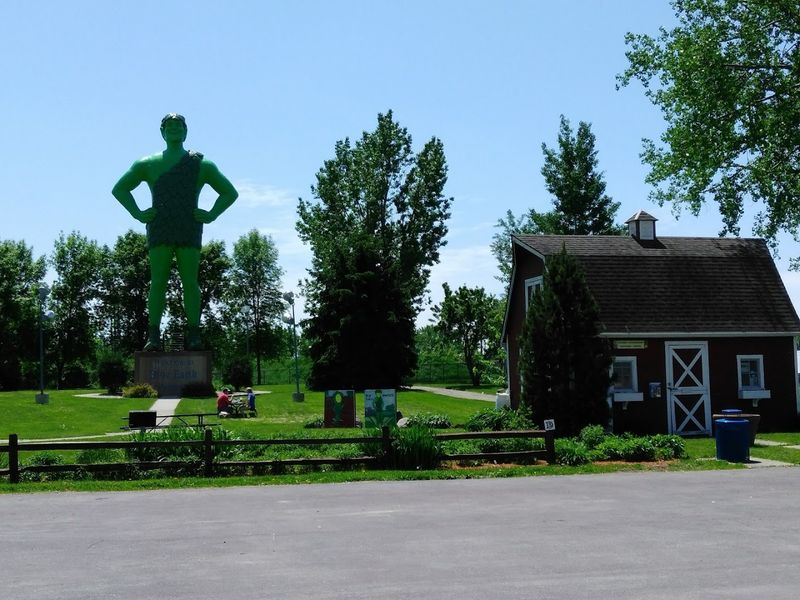
Every good small town has a park where people actually gather. Blue Earth has Sesquicentennial Park, a welcoming green space that sits comfortably in the community’s fabric.
It is not fancy, but it is genuinely pleasant.
Families bring kids here on warm evenings. Dog walkers circle the paths in the morning.
In summer, the grass stays green and the shade trees do real work. It is the kind of park that feels used and loved, not just maintained.
Parks like this one reveal a lot about a town’s character. Blue Earth invests in shared outdoor space because residents actually use it.
There are picnic areas, open lawn, and a calm atmosphere that encourages people to slow down. After spending time at the Giant statue and the museum, a walk through Sesquicentennial Park offers a nice change of pace.
It is quieter and more reflective. Sometimes the best part of visiting a small town is finding the ordinary places that locals love.
Why Blue Earth Deserves More Than a Quick Stop
Most people who stop in Blue Earth do so because of the giant. They take a photo, laugh a little, and then drive away.
That is a real missed opportunity. This town has genuine layers worth exploring.
The history runs deep. The landscape is honest and wide open.
The people are the kind of friendly that does not feel performed. Blue Earth is not trying to be a tourist destination.
It just happens to be a great one.
Spending a full afternoon here, rather than just an hour, changes the experience completely. You start to see the town as a living community rather than a novelty stop.
That shift in perspective is valuable. Not every destination needs a theme park or a famous restaurant to be worth your time.
Some places earn their spot on the map through authenticity, history, and the kind of quiet pride that does not need a billboard. Blue Earth earns it every single day.
