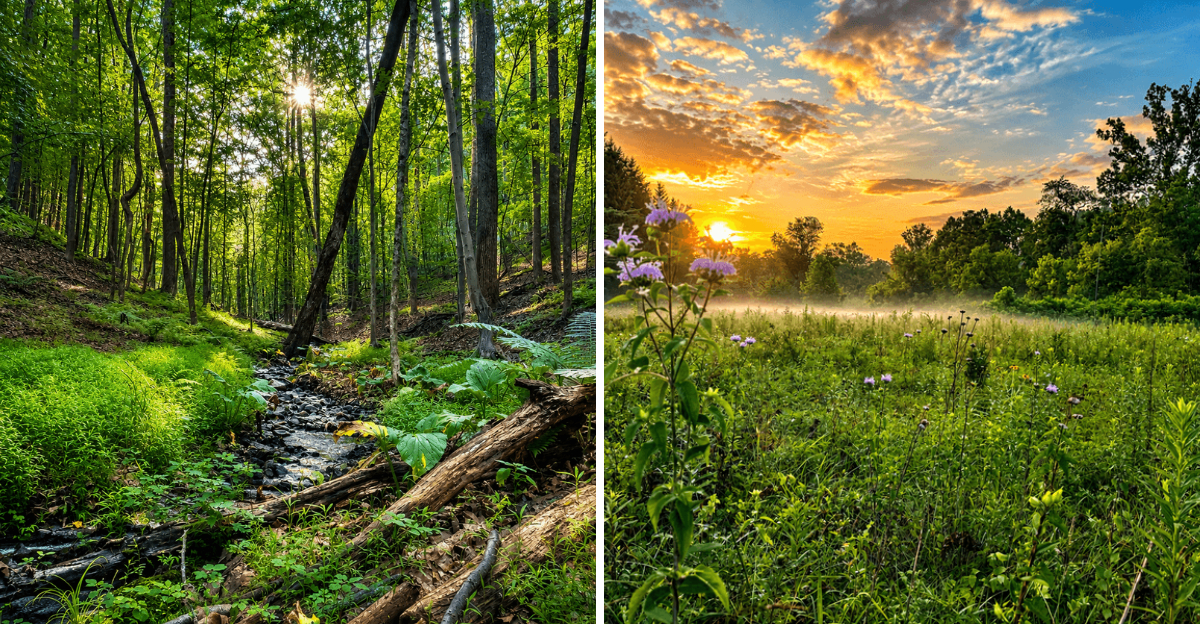
Nature centers can be hit or miss. Some are small, a few exhibits and a short loop trail.
Others are sprawling, offering real opportunities to connect with the outdoors. This Maryland nature center falls into the second category.
Miles of woodland trails wind through forests, past streams, and into quiet clearings where wildlife is often spotted. You might see deer, birds of prey, or turtles sunning themselves on logs.
The trails are well marked and accessible for all skill levels. The center itself offers educational exhibits, but the real draw is the land around it.
A place where you can walk, explore, and maybe spot something unexpected.
Wandering the Woodland Trail Network
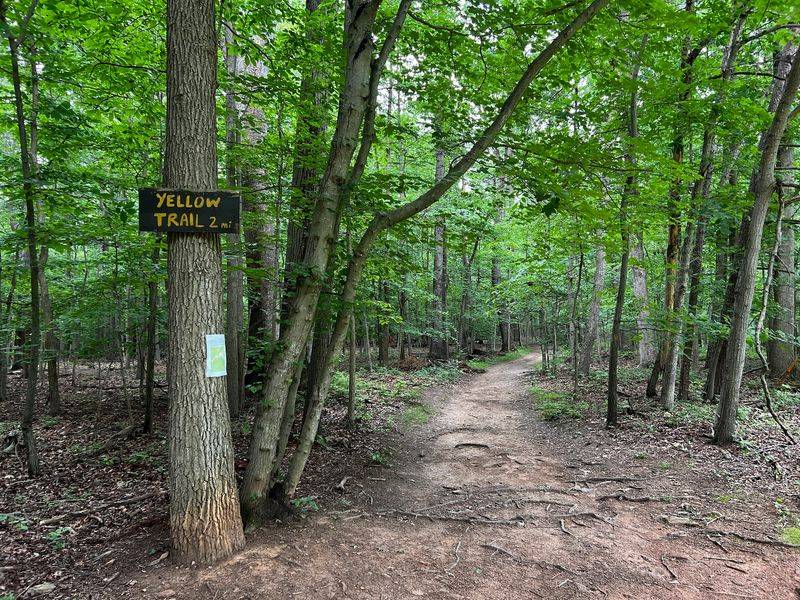
There is a moment on the Loggers Trail at Oregon Ridge when the trees get dense enough that you genuinely lose track of which direction you came from. That is not a complaint.
The park offers over six miles of hiking paths threading through roughly 1,100 acres of mixed woodland, and the variety is impressive.
Some routes are gentle and flat, ideal for a relaxed afternoon stroll, while others climb steadily and reward you with sweeping views from the top of what was once an old ski slope.
The Marble Quarry Loop is a favorite for families. It runs near the nature center, features paved sections, and includes interpretive signs that explain the land’s fascinating mining history.
Strollers can handle it without much trouble. For those who want more challenge, the S.
James Campbell and Ivy Hill Trail involves stream crossings and steeper terrain, so good footwear is worth thinking about ahead of time.
Trail surfaces range from packed dirt and exposed roots to gravel and pavement, so conditions shift depending on which path you choose. I found the trail markers reliable and easy to follow, which matters when you are deep in the woods.
The forest itself changes noticeably with the seasons. Spring brings wildflowers pushing up through the leaf litter, summer is thick and green, autumn turns everything amber and gold, and even winter has its own stark beauty here.
No matter when you visit, the trail network at Oregon Ridge feels genuinely alive.
The Forest of Hope Art Installation
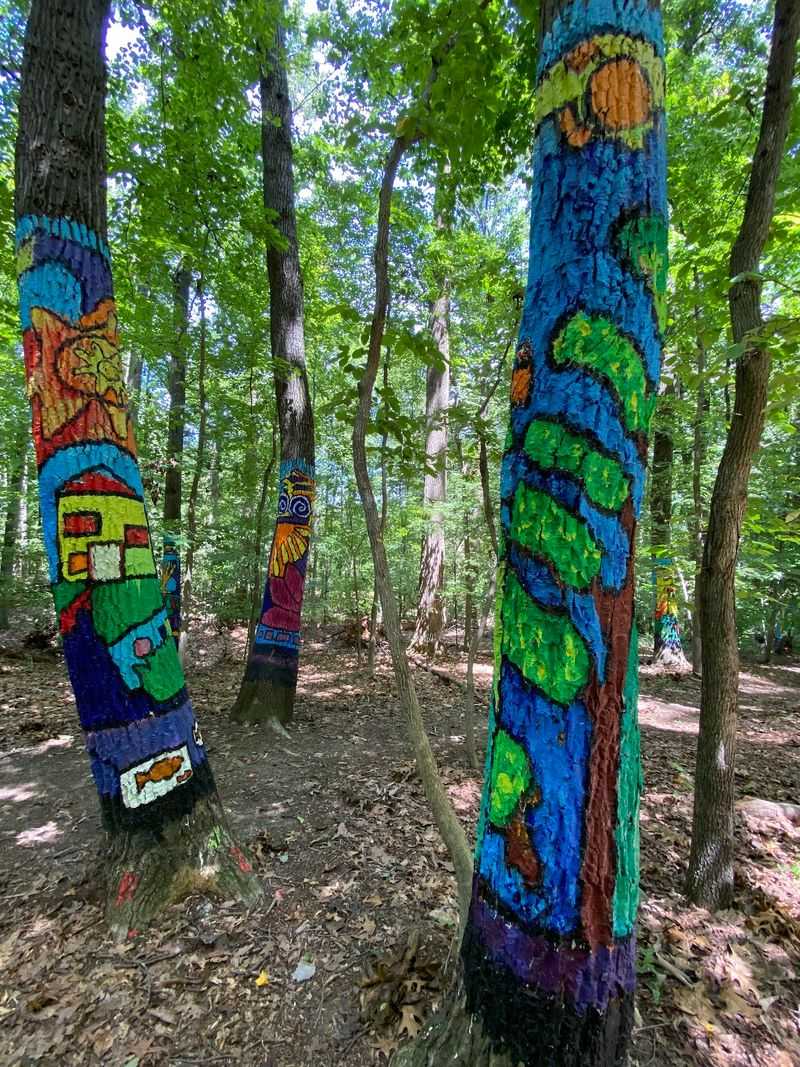
Nobody warned me about the painted trees, and honestly, stumbling upon them made the whole experience feel a little surreal in the best way.
Deep within the woods at Oregon Ridge, certain tree trunks have been transformed into vivid works of art, splashed with bold blues, warm yellows, fiery reds, and soft greens.
Some of the designs are abstract, swirling patterns that seem to pulse in the filtered light. Others are more figurative, with faces and shapes emerging from the bark.
This is the Forest of Hope, a community art project rooted in themes of healing and resilience. It is not random decoration.
Each painted tree carries meaning, and the cumulative effect of walking through the installation is genuinely moving. The contrast between the natural forest tones and the vivid paint creates a kind of visual conversation that stays with you long after you have left the trail.
Children absolutely love this section. I watched a few kids dart from tree to tree, pointing and laughing, trying to find their favorite colors.
Adults tend to slow down here, pausing longer than they expected. The light plays differently in this part of the forest, and the colors shift depending on cloud cover and time of day.
Early morning visits give the installation a softer, almost dreamlike quality. Late afternoon light makes the colors pop sharply against the bark.
Either way, the Forest of Hope is one of those unexpected discoveries that elevates a good hike into something genuinely memorable.
Wildlife Encounters Inside and Outside the Nature Center
The nature center building itself has that classic Maryland woodland charm, all wood paneling and earthy tones, with a layout that feels cozy rather than institutional. Inside, a rotating collection of live animal exhibits showcases creatures native to the region.
Snakes coiled in glass enclosures, turtles moving with slow deliberation, fish gliding through tanks, and amphibians hidden into their humid corners, all of it is surprisingly captivating up close.
Honeybee colonies are also part of the exhibit space, and watching the activity inside a hive through a viewing panel is oddly hypnotic. The center does a good job of providing context for each animal, explaining their roles in the local ecosystem rather than just labeling them.
Kids tend to gravitate toward the snakes, which is either endearing or alarming depending on your perspective. I found myself spending more time than expected reading the informational panels.
Outside the building, the wildlife encounters become less predictable and far more exciting. Deer move through the underbrush in the early morning hours, and squirrels are a constant, energetic presence in the canopy above.
The park has documented over 170 bird species, making it a well-regarded birdwatching site in Baltimore County. Red-shouldered Hawks and Red-tailed Hawks are regular overhead sights.
During migration season, warblers and orioles add flashes of color to the treetops. The combination of curated indoor exhibits and genuinely wild outdoor encounters makes Oregon Ridge feel like two experiences layered into one visit.
Mining History Preserved Along the Trails
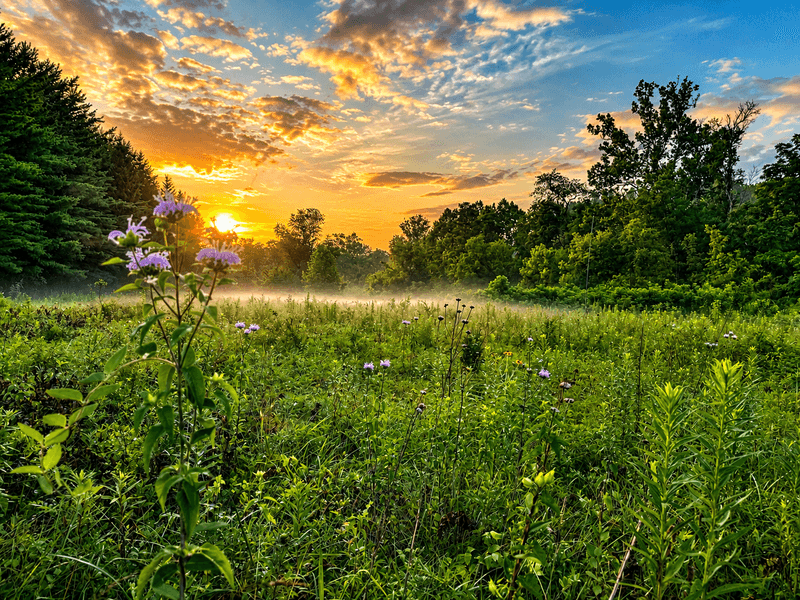
Long before Oregon Ridge was a nature preserve, it was an industrial hub. During the 19th century, the land was actively mined for marble and iron ore, and the landscape still carries visible evidence of that era.
Old quarry pits, now partially filled with water and ringed by vegetation, dot the forest floor. Some are marked with educational signage that explains what the area looked like when hundreds of workers lived and labored here.
The iron-smelting furnace that operated along the Oregon Branch stream from 1844 to 1858 produced thousands of tons of pig iron annually.
That kind of output shaped the local economy and drew a diverse workforce, including Irish immigrants and emancipated slaves who formed a small industrial village on this land.
A reconstructed tenant house offers a tangible glimpse into the daily lives of those workers. It is a quiet, respectful nod to a history that could easily have been forgotten.
Hiking past these remnants adds a layer of meaning to the experience that a purely natural park cannot offer. There is something grounding about recognizing that the peaceful forest around you was once a noisy, productive industrial site.
The transformation from iron works to woodland sanctuary took generations. Knowing that history makes the birdsong and rustling leaves feel even more like a gift.
I spent a good twenty minutes at the old quarry site just sitting with that thought, watching dragonflies hover over the still water below.
The Outdoor Nature Playspace for Families
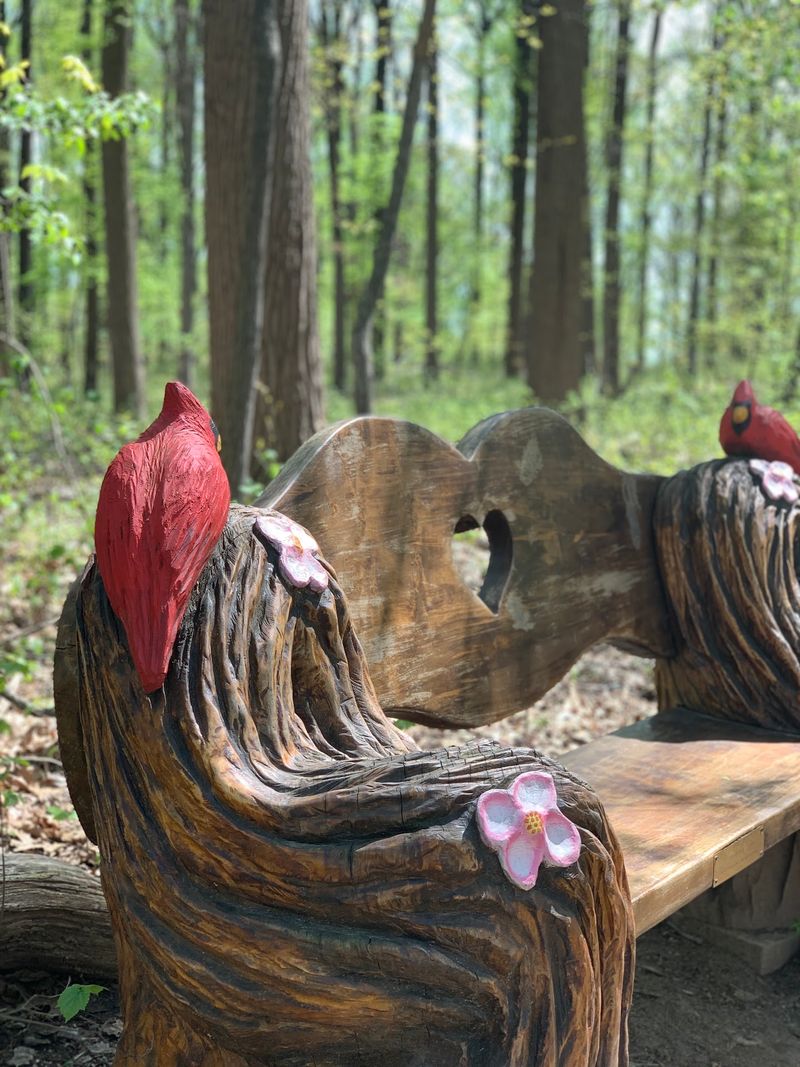
Most playgrounds feel the same after a while. Brightly colored plastic, the same slide shapes, the same swing set configuration.
The outdoor nature playspace at Oregon Ridge takes a completely different approach, and it works beautifully.
The equipment here is made from natural materials, logs of varying heights, thick tree stumps arranged for balancing and jumping, rope elements, and loose sticks that kids can use however their imaginations dictate.
There is a large log circle that functions as a natural gathering space, perfect for group storytelling or a spontaneous outdoor lesson. I watched a group of younger children use it as the base for an elaborate game that seemed to involve pirates and a dragon.
Nobody needed instructions. The space is designed to invite open-ended play, the kind where kids become the architects of their own adventure rather than following a predetermined path through fixed equipment.
Parents tend to linger here too, which says something. The setting is shaded and comfortable, with benches and nearby picnic tables making it easy to settle in for a while.
For families who want a more traditional playground option after a hike, the adjacent Oregon Ridge Park area includes swings and slides as well. But the nature playspace is the real draw.
It encourages children to touch, build, balance, and create, giving them a direct physical relationship with natural materials that a plastic structure simply cannot replicate. It is one of those rare spots that earns genuine enthusiasm from kids of every age.
Year-Round Programs and Seasonal Events
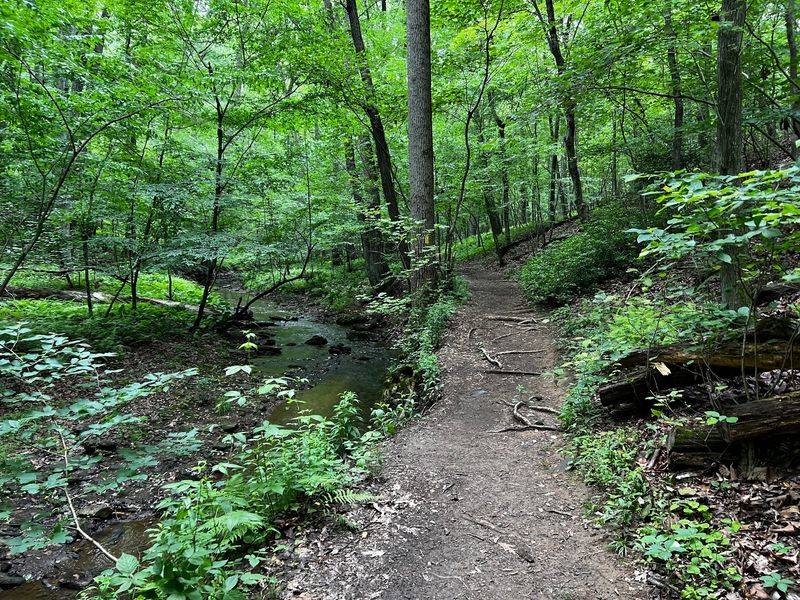
Oregon Ridge Nature Center runs a remarkably full calendar throughout the year, and it is worth checking before you visit because there is almost always something happening.
Summer camps are among the most popular offerings, giving children an immersive multi-day experience that covers habitats, resident animals, crafts, and trail exploration.
The camps tend to fill up, so early registration is a smart move for families planning ahead.
Seasonal events add a festive rhythm to the park’s programming. The winter maple sugaring festival is a crowd favorite, walking visitors through the process of tapping trees and collecting sap, complete with tree identification and traditional methods.
The Honey Harvest Festival celebrates the park’s resident honeybees with hands-on activities that are genuinely fascinating for both kids and adults. These events feel rooted in the place rather than generic, which makes them worth attending even if you have visited the park many times before.
For adults, the center offers a Speakers Series, a Nature Book Club, and recurring programs like guided Nature Walks led by knowledgeable naturalists who highlight what is seasonally relevant.
Homeschool Nature Days and Bookworm Storytime sessions provide structured learning opportunities in a setting that is hard to replicate in a classroom.
The Creek to Stream to Bay program is particularly compelling, allowing participants to study aquatic life and water quality in the park’s own streams. Each program feels thoughtfully designed, and the variety ensures that repeat visitors always find something fresh to engage with.
Pollinator Gardens and Community Growing Spaces
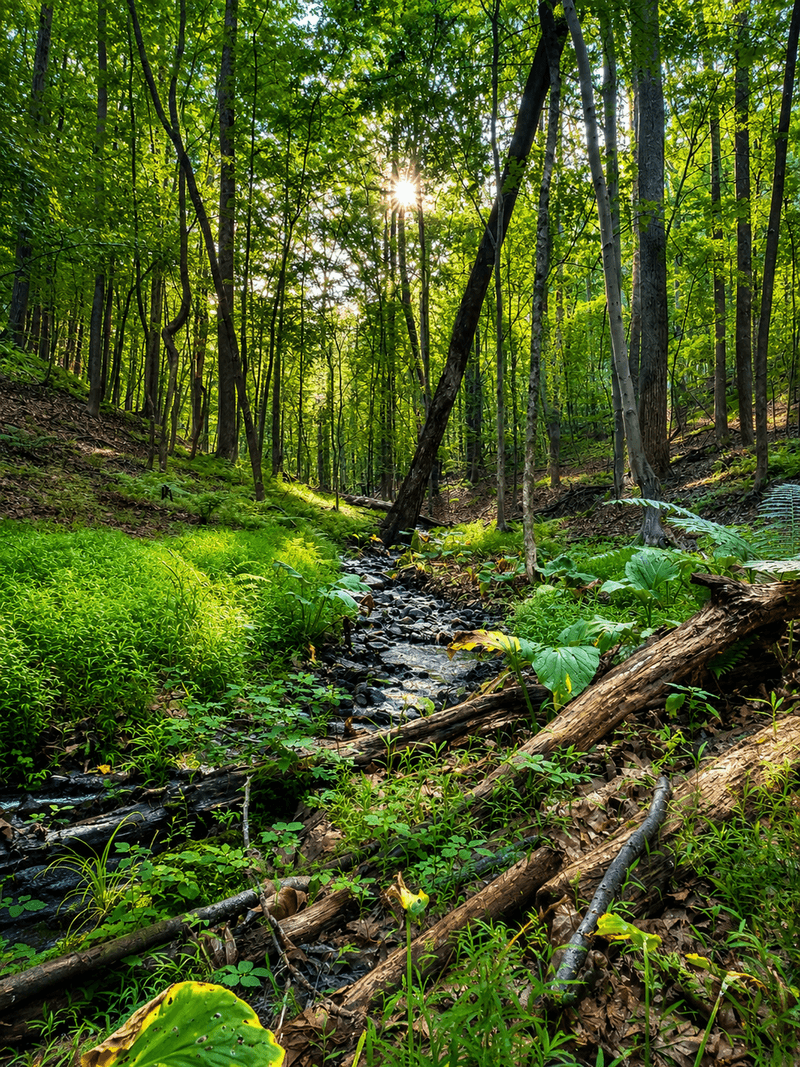
Right around the nature center building, the cultivated gardens create a striking transition between the managed and the wild. The pollinator garden is the most immediately captivating of these spaces.
On a warm afternoon, it hums with activity, bees moving methodically from flower to flower, butterflies pausing just long enough to admire, and the occasional hummingbird making a brief, electric appearance.
It is one of those spots where you can stand completely still and feel like you are watching a whole small world operate.
The garden is more than decorative. Its purpose is ecological, providing critical habitat and food sources for native pollinators whose populations face real pressure from habitat loss.
Educational signage throughout explains which plants attract which insects and why that relationship matters. It is the kind of information that sticks with you and might even change what you plant in your own backyard.
That ripple effect is clearly part of the intent.
The community garden plots nearby add a different kind of energy to the space. Individual gardeners tend their assigned sections with obvious care, and the variety of what grows there reflects a genuine diversity of tastes and traditions.
Visiting during peak growing season means you might catch someone harvesting tomatoes or staking tall sunflowers. There is something quietly joyful about a shared garden, the sense that a piece of land is being looked after by many hands with a common purpose.
Together, these garden spaces round out the Oregon Ridge experience with beauty, intention, and a strong connection to the living world just outside the treeline.
Quarry Lake and the Streams of Oregon Ridge
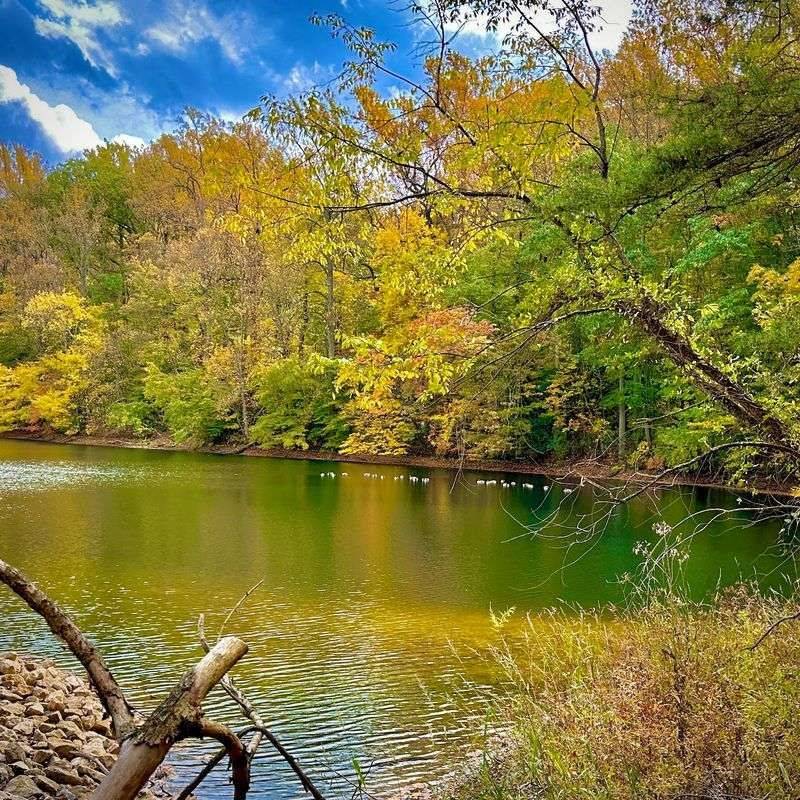
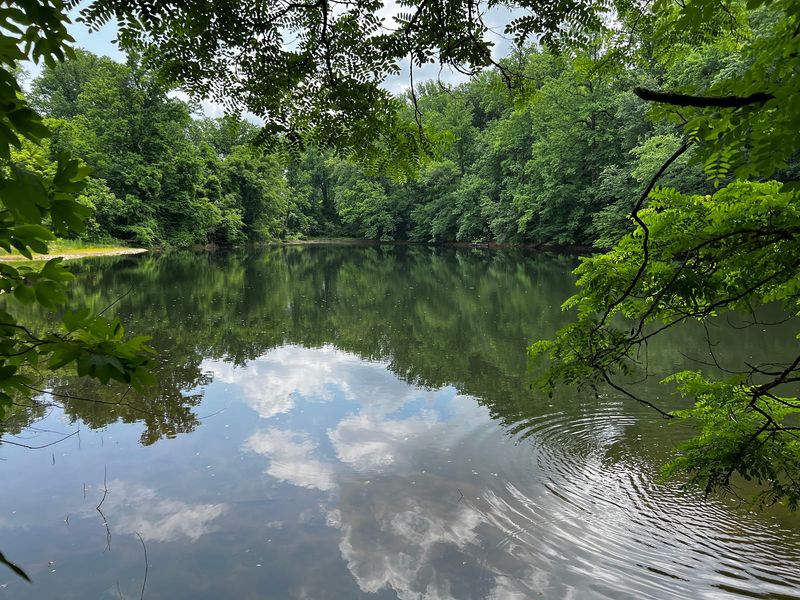
Quarry Lake sits at the center of the park with a quiet authority. Four acres of still water occupying what was once an active iron ore mining pit, it has transformed completely over the decades into a genuinely beautiful natural feature.
The lake’s surface mirrors the surrounding forest on calm days, creating a reflection so crisp it looks almost painted. It is the kind of view that makes you reach for your phone and then decide to just look instead.
Swimming is no longer permitted at the lake, but it remains an active site for Baltimore County programming. Canoeing sessions bring the water to life in a different way, and cane pole fishing gives younger visitors a patient, low-pressure introduction to the sport.
Even without those activities on a given day, the shoreline is a wonderful place to sit quietly and observe. Herons occasionally stalk the shallower edges, and dragonflies are a near-constant presence in warmer months.
Beyond the main lake, smaller water-filled mining pits scattered across the landscape have evolved into valuable wetland habitats. The park’s two primary streams, Oregon Branch and Baisman Run, wind through the forest and feed into the broader Chesapeake Bay watershed.
Both support diverse aquatic life and serve as focal points for educational programs that examine water quality and stream ecology.
The presence of moving water throughout the park adds an auditory layer to the experience, a background soundtrack of soft rushing and trickling that makes every trail feel just a little more peaceful.
Address: 13555 Beaver Dam Rd, Cockeysville, MD 21030
