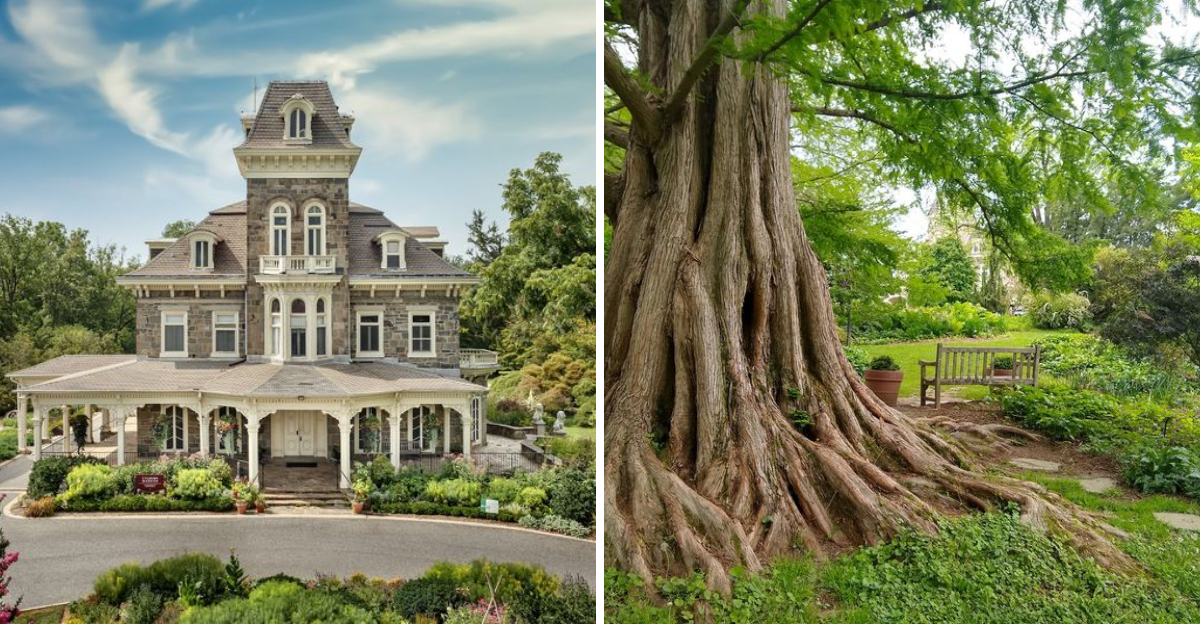
You know that feeling when something is so pretty it almost does not look real? That is this Maryland nature preserve.
Wildflowers bloom in waves of color, scattered across meadows and along peaceful trails. Purple, yellow, pink, white, it looks like a painting that came to life.
Bees buzz happily, butterflies drift by, and the whole place feels like a secret garden. You can wander for hours and find something new around every corner.
Spring and summer bring the most dramatic displays, but there is beauty here almost year round. Birdwatchers love it.
Photographers cannot get enough. Anyone who loves nature will want to stay all afternoon.
That is the power of a Maryland wildflower preserve. Too beautiful to rush, too stunning to forget, and always worth the visit.
Peak Bloom Season, Why Late March Through April Is the Time to Visit
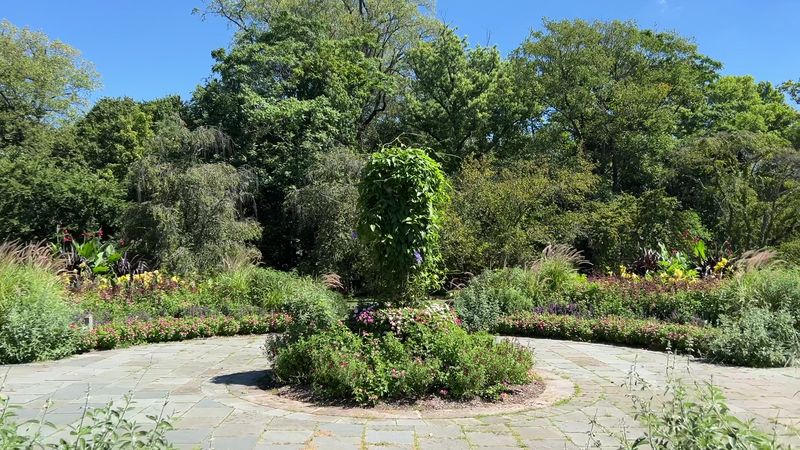
There is a specific window at Cylburn when the entire arboretum seems to exhale color all at once. Late March through April is peak bloom season, and if you can only visit once, this is the time to make it happen.
The transformation from bare winter branches to full floral explosion happens fast, and it is genuinely breathtaking to witness.
Magnolias open up in soft whites and deep pinks. Cherry blossoms drift overhead like the trees are celebrating something.
Daffodils appear in clusters throughout the grounds, their yellow and cream tones catching the early spring light in a way that feels almost staged for a photo shoot.
What makes this season feel extra special is the layering of blooms. Nothing arrives all at once and then disappears.
Instead, one wave of flowers gives way to the next, so each visit during this stretch rewards you with something slightly different than the last time. The air carries a floral sweetness that is light and not overwhelming.
Birds are active, bees are working, and the whole place hums with a kind of productive joy. Even on cloudy days, the color pops in a way that lifts your mood almost immediately.
If you are planning a spring trip to Baltimore, carving out a morning at Cylburn during peak bloom should be at the very top of your list without any hesitation.
Wildflower Diversity That Earns Its Preserve Status
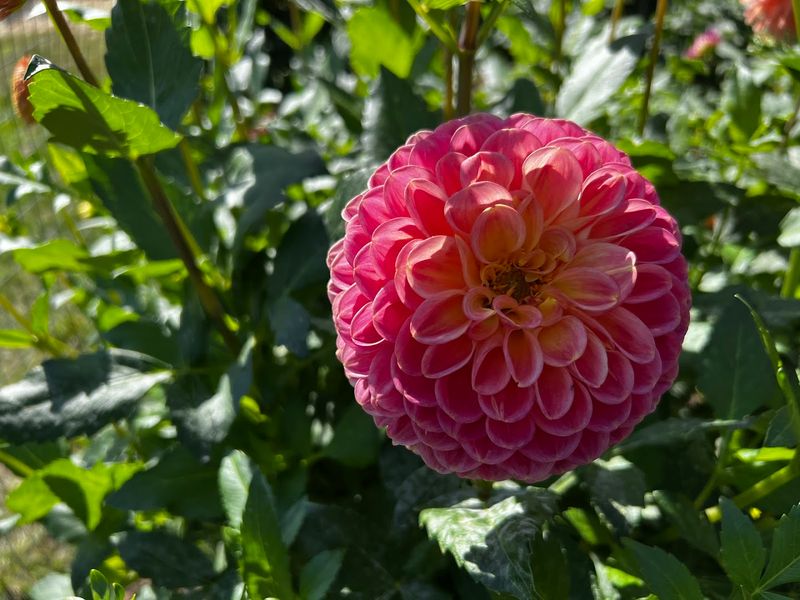
Cylburn did not earn the title of Wildflower Preserve by accident. The variety of wildflowers spread across the arboretum’s trails and garden beds is genuinely impressive, especially for an urban park nestled inside a major American city.
Native species mix with cultivated plantings in a way that feels both wild and intentional at the same time.
The diversity here goes beyond just visual appeal. Different wildflower species attract different pollinators, which means the ecological activity happening across the grounds is rich and layered.
Spend a few quiet minutes near a flower bed and you will notice just how much is going on at ground level.
Identification markers placed along the Circle Trail help visitors actually learn what they are looking at, which adds a satisfying educational dimension to any visit. I found myself stopping more than once to read a small sign and then looking back at the flower with a new appreciation.
It is one thing to admire a bloom. It is another to know its name, its habits, and why it matters to the surrounding ecosystem.
The arboretum’s commitment to wildflower preservation also means that the landscape changes naturally with the seasons, giving repeat visitors a reason to return throughout the year. Spring may steal the spotlight, but summer and fall bring their own quieter wildflower moments worth seeking out.
The sheer range of species here makes every single visit feel like a slightly different experience.
The History Behind the Beauty, Jesse Tyson’s Estate and Its Remarkable Transformation
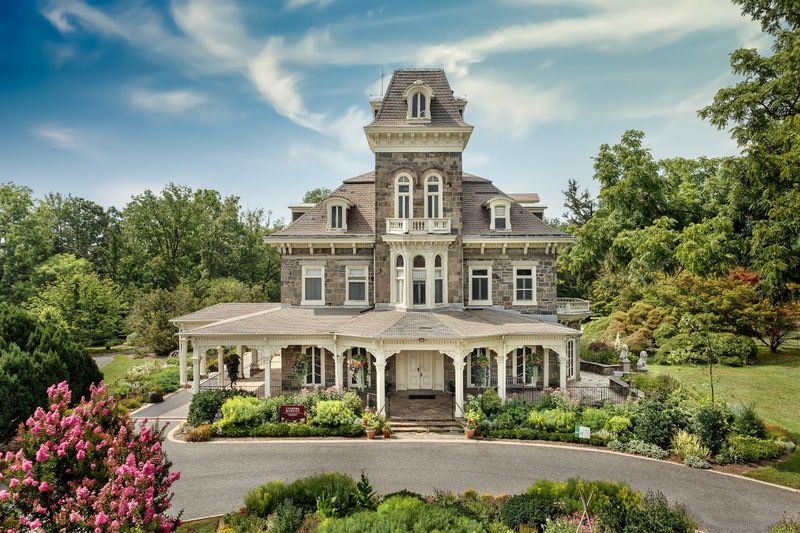
Long before Cylburn became one of Baltimore’s most beloved green spaces, it was the private dream of one man. Jesse Tyson, a wealthy Baltimore merchant, purchased the land in 1863 and began shaping it into a grand personal estate.
The mansion he built, completed in 1888, still stands today as a striking example of Victorian Renaissance Revival architecture.
That building is now listed on the National Register of Historic Places, which tells you just how significant it really is. Walking the grounds near the mansion, you get this layered feeling of history and horticulture existing side by side.
The formal gardens planted close to the house feel intentional and elegant, like they were designed to impress from the very beginning.
In 1954, the property was officially established as the Cylburn Wildflower Preserve and Garden Center, marking a new chapter in its life. The name Cylburn Arboretum came later, in 1982, cementing its identity as a public nature destination.
What makes this history so satisfying is how seamlessly the past blends into the present experience. You are not just walking through a park.
You are moving through over 160 years of intentional care and transformation, from a private estate to a community treasure that anyone can visit for free.
Over 3 Miles of Trails, Finding Your Own Pace Through the Grounds
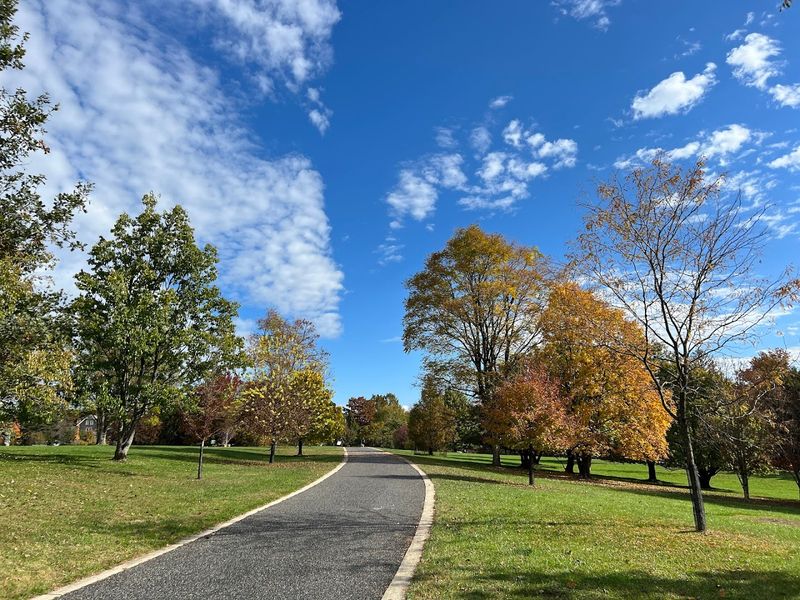
Not every great natural space needs a dramatic overlook or a famous landmark to justify the trip. Sometimes the best thing a place can offer is simply good trails and the freedom to wander.
Cylburn delivers exactly that with over three miles of paths that wind through wooded areas, open garden beds, and quiet corners most visitors never find.
The trail system includes both dirt paths and paved areas, which makes it accessible for a range of visitors. Families with strollers can navigate the paved sections comfortably.
Those who want a more immersive nature experience can head into the wooded stretches where the canopy closes in and the city disappears entirely.
The Circle Trail is probably the most popular route, looping around the mansion lawns and passing through some of the most densely planted garden areas. But veering off onto the smaller connector paths is where Cylburn starts to reveal its quieter personality.
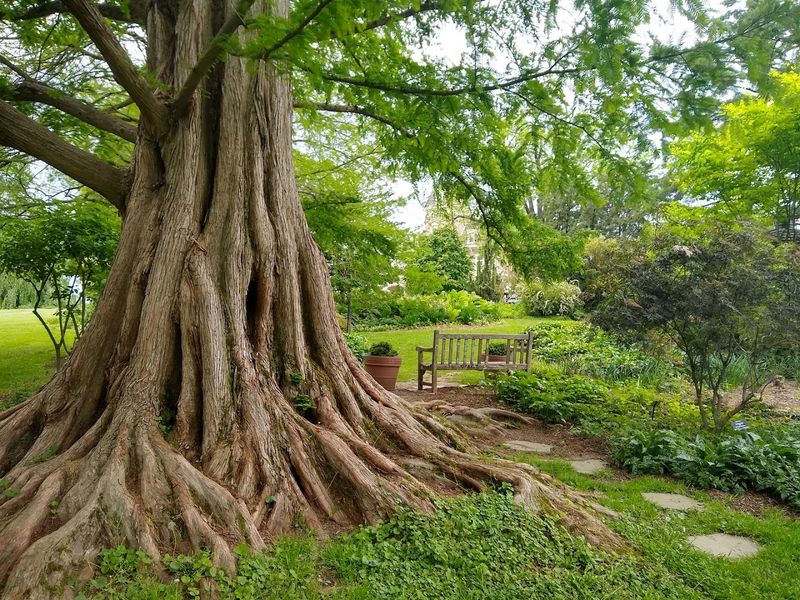
You might find a hidden-away bench, a particularly dense wildflower patch, or a tree so old and wide it commands its own moment of respect.
Trail pace here is entirely up to you. Some people move briskly for exercise.
Others barely cover half a mile in an hour because there is simply too much to stop and look at. Either approach works perfectly.
The grounds open at 8:00 am daily and close at sunset, giving you a generous window to explore at whatever speed feels right on that particular day.
Magnolias, Daffodils, and Cherry Blossoms, the Arboretum’s Signature Spring Lineup
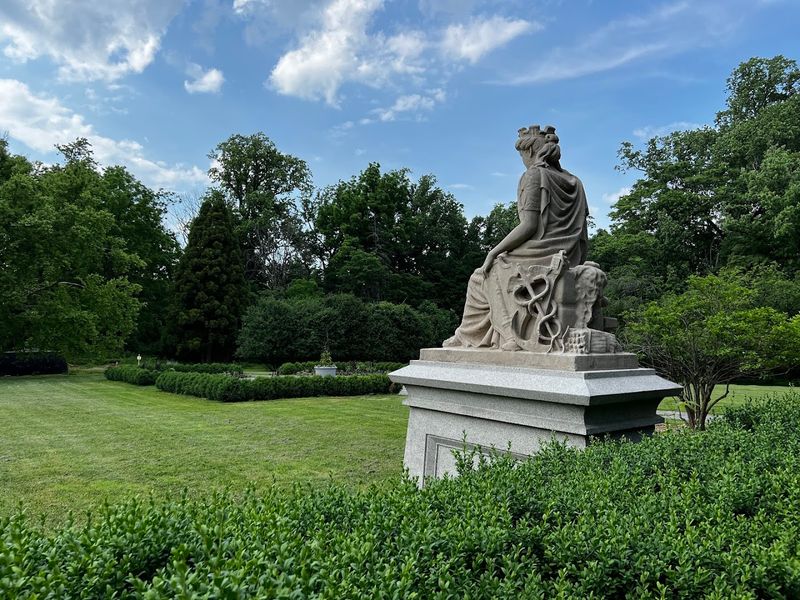
There are certain combinations of flowers that just work together in a way that feels almost unfair to everyone else. At Cylburn, the spring lineup of magnolias, daffodils, and cherry blossoms hits that sweet spot every single year.
Each one is stunning on its own. Together, they create a sensory experience that is hard to put into words without sounding like you are exaggerating.
Magnolias tend to open first, their large cup-shaped blooms appearing before most other trees have even thought about leafing out. The contrast of those bold flowers against bare grey branches is one of the more striking images early spring has to offer.
Then daffodils emerge across the grounds in clusters, planted thoughtfully near the mansion and along garden borders in a range of yellows, creams, and soft oranges.
Cherry blossoms arrive a little later, draping the paths in soft pink and white petals that collect on the ground like a slow, fragrant snowfall. The timing of all three overlapping, even briefly, creates a kind of floral crescendo that feels almost theatrical.
I remember standing near the mansion on one particular visit when all three were visible from a single spot, and it genuinely stopped me in my tracks.
These are not rare or exotic plants, but the way Cylburn has arranged and maintained them over the decades elevates the experience beyond what you might expect from a free public arboretum. The care put into this place shows in every bloom.
The Circle Trail and Wildflower Identification Markers, Learning While You Walk
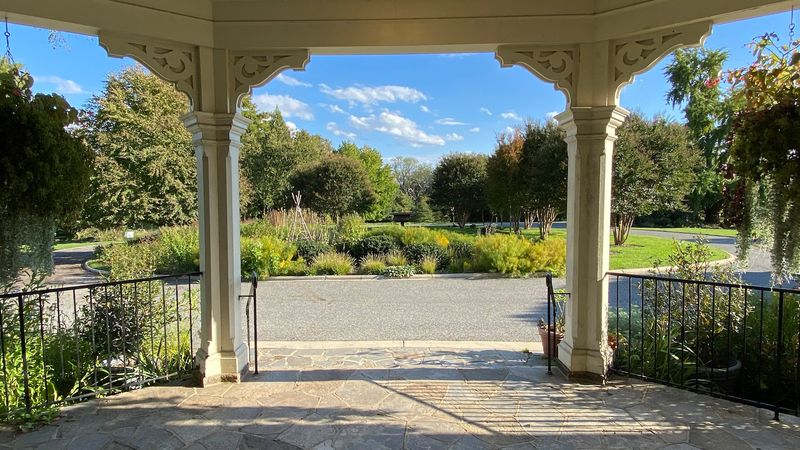
Most nature trails ask you to simply observe. The Circle Trail at Cylburn goes a step further by actually teaching you what you are looking at.
Wildflower identification markers are placed throughout the route, giving visitors the names and context of the plants growing right beside the path. It is a small addition that makes a surprisingly big difference.
For families with curious kids, these markers turn a casual walk into something interactive. Children who might otherwise rush through a garden start pausing, reading, and pointing things out to each other.
That shift in attention is genuinely fun to watch.
The Circle Trail itself loops around the mansion lawns, which means you get a mix of formal garden aesthetics and wilder plantings all within the same route. The mansion serves as a visual anchor throughout, its Victorian silhouette visible through gaps in the trees at various points along the path.
That combination of architecture and nature gives the trail a distinctive character that sets it apart from a standard park loop.
Even if botany is not your thing, the markers add a layer of engagement that keeps the walk from feeling repetitive. You start noticing details you would have walked right past otherwise.
A cluster of blooms that seemed generic suddenly has a name, a native range, and a role in the local ecosystem. That kind of small revelation happens repeatedly along the Circle Trail, and it is one of the reasons Cylburn rewards slower, more attentive visitors far more than those who rush through.
Fall at Cylburn, the Quieter Season That Still Delivers
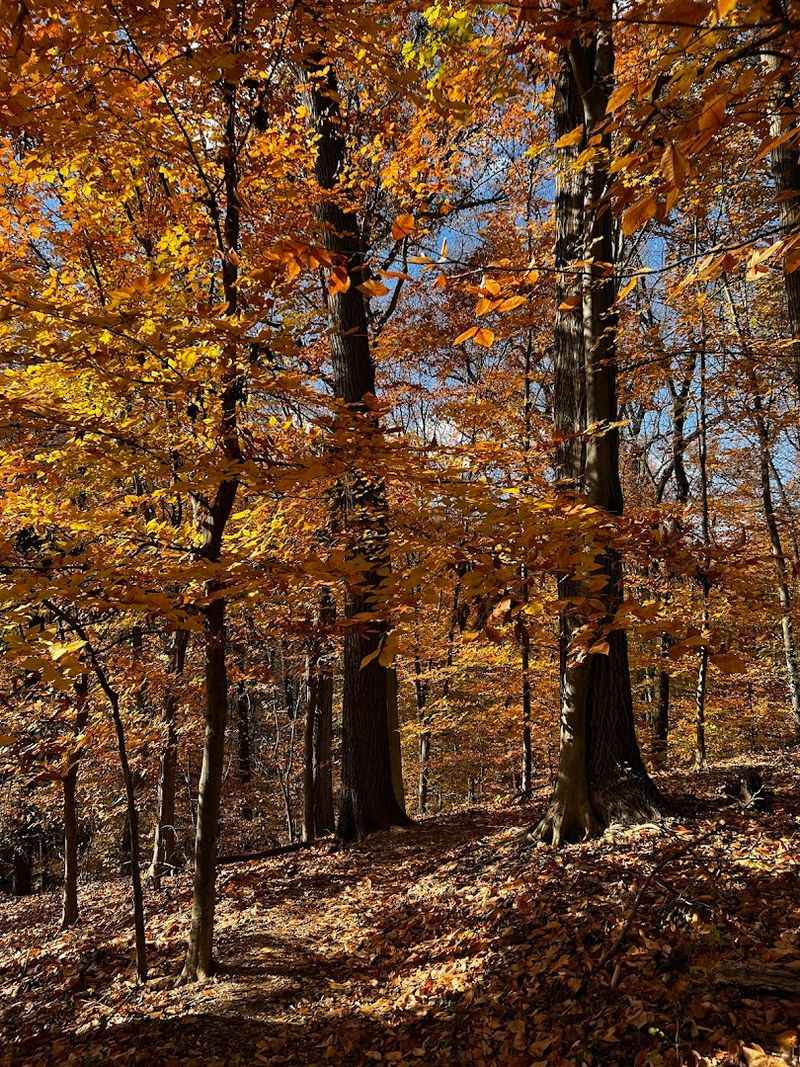
Spring gets all the attention at Cylburn, and honestly, it deserves it. But fall has its own understated appeal that tends to surprise first-time autumn visitors.
The arboretum does not shut down between seasons. It shifts tone, moving from the bright exuberance of spring into something warmer and more reflective.
Marigolds in deep golds and burnt oranges fill some of the garden beds. Grasses turn a soft, luminous gold that catches afternoon light beautifully.
Late-season blooms hold on in the more sheltered spots, mixing with the changing foliage in ways that feel genuinely painterly. It is a different kind of beautiful than spring, quieter and less showy, but no less real.
The trails feel different in fall too. Fallen leaves soften the sound of footsteps on the dirt paths.
The canopy opens up as leaves drop, revealing views through the trees that are completely hidden during summer. You can suddenly see the mansion from angles that were invisible just a few weeks earlier.
Visitor numbers tend to drop after the peak spring season, which means fall visits feel more personal and unhurried. You might have a whole section of trail entirely to yourself on a weekday morning.
That kind of solitude inside a major city is genuinely rare and worth seeking out. The grounds are open until sunset, and fall sunsets through the golden canopy of Cylburn are the kind of thing you remember for a long time afterward.
The Nature Education Center and Vollmer Visitor Center, More Than Just a Park
Cylburn Arboretum is not just a place to walk and look at flowers. The presence of a Nature Education Center and the Vollmer Visitor Center signals something more intentional about what this space is trying to do.
These facilities give the arboretum a programmatic depth that goes well beyond a typical public garden.
The Nature Education Center supports environmental learning for school groups and community visitors alike. Programs offered through the center connect people to the ecological systems at work across the arboretum’s 200-plus acres.
For younger visitors especially, these programs make the natural world feel accessible and genuinely exciting rather than abstract.
The Vollmer Visitor Center serves as a welcoming hub for newcomers to the grounds. It is a practical starting point if you want to orient yourself before heading out on the trails.
Staff and volunteers there can point you toward whatever is currently blooming or highlight any seasonal highlights worth catching.
Having these resources available at a free public space is not something you should take for granted. Many arboretums and botanical gardens charge significant admission fees for access to educational programming.
Cylburn offers all of this without a price tag, which speaks to the arboretum’s commitment to keeping nature accessible to every resident of Baltimore regardless of background or budget.
That open-door philosophy is woven into the fabric of the place, and you feel it from the moment you arrive and step through the entrance.
Free Admission and Daily Access, A Public Treasure With No Price Tag
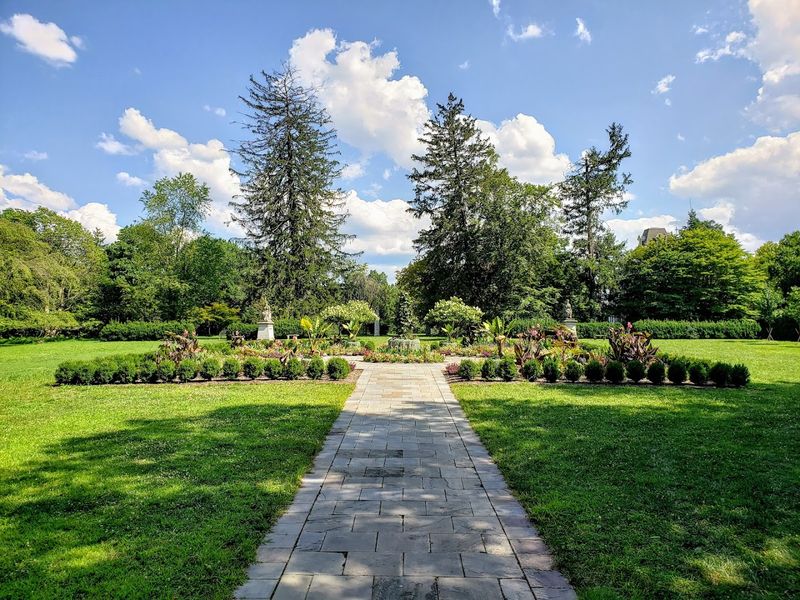
There are not many places in a major American city where you can spend an entire morning surrounded by 200 acres of gardens, wildflowers, historic architecture, and wooded trails without spending a single dollar.
Cylburn Arboretum is exactly that kind of place, and it is worth appreciating just how unusual that actually is.
Free admission means the arboretum is genuinely accessible to everyone. Families, students, retirees, solo walkers looking for a quiet hour away from the city’s pace, all of them show up here and all of them leave with something valuable.
That democratic openness gives Cylburn a community energy that feels different from more exclusive botanical spaces.
The grounds open at 8:00 am daily, which makes it a viable option for early risers who want to catch the morning light on the flower beds before the crowds arrive. Closing at sunset gives afternoon and evening visitors a generous window as well.
The flexibility of that schedule makes Cylburn easy to fit into almost any kind of day.
Some facilities within the arboretum have specific operating hours, so it is worth checking ahead if you want to visit the visitor center or access specific programming. But the trails and gardens themselves are available during those daily open hours without any reservation or ticket required.
That kind of frictionless access is a big part of why Cylburn has such a loyal following among Baltimore residents and why it continues to attract visitors from well beyond the city limits year after year.
Planning Your Visit to Cylburn Arboretum, What to Know Before You Go
Getting to Cylburn is straightforward. The arboretum sits in Baltimore, Maryland, in the city’s northwest corner.
Parking is available on site, and the location is reachable by public transit as well. The neighborhood around it is residential and quiet, which adds to the sense of stepping away from the busier parts of the city.
Wearing comfortable walking shoes is a smart call regardless of which trails you plan to use. The paved sections are easy going, but the dirt paths can be uneven, especially after rain.
Bringing water is always a good idea, particularly during warmer months when the sun hits the open garden areas with full intensity.
Spring visits benefit from arriving early in the week if possible. Weekends during peak bloom season draw larger crowds, and while Cylburn never feels overwhelmingly packed, weekday mornings offer a noticeably more peaceful experience.
The light is also better for photography in the morning hours, which matters if you are hoping to capture the wildflower displays at their most vivid.
Dogs on leashes are generally welcome on the grounds, making Cylburn a popular destination for pet owners looking for a scenic walk. The arboretum is also stroller-friendly along the paved routes, which makes it a practical outing for families with young children.
No matter when you visit or how long you stay, Cylburn Arboretum delivers a genuine natural experience that feels both effortless and extraordinary.
Address: 4915 Greenspring Ave, Baltimore, MD
