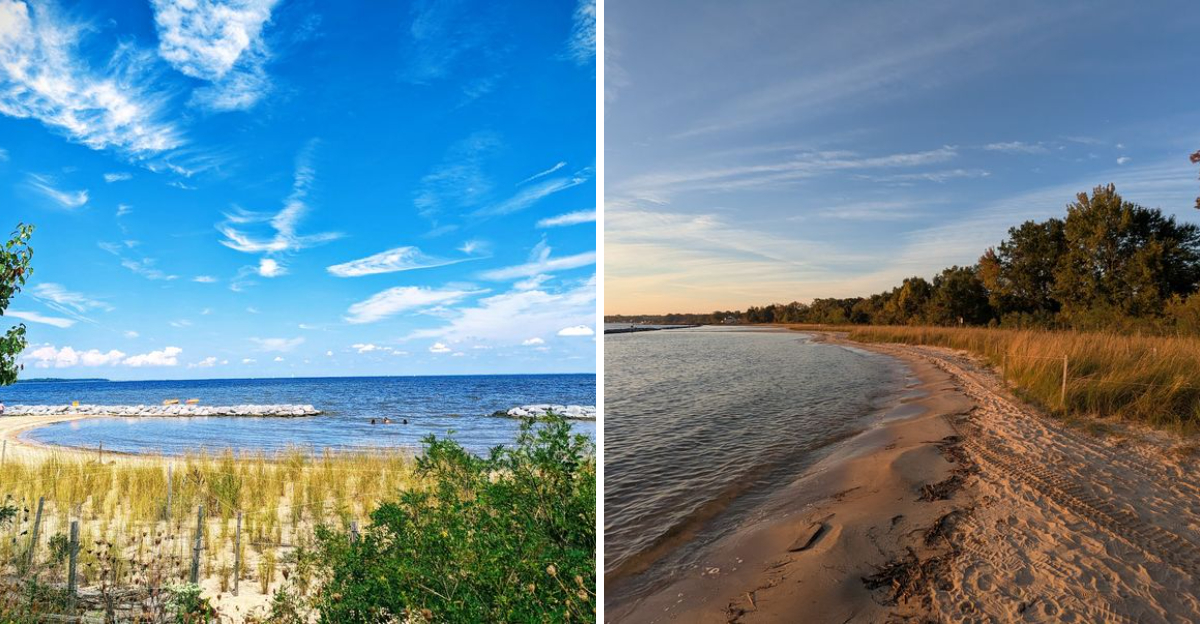
Maryland waterfront parks can get overshadowed by destinations with louder boardwalks and significantly more souvenir T-shirts, which is exactly why this one feels like such a useful discovery.
The park sits along the water with beaches, walking trails, a playground, historic military remains, and a 380-foot fishing pier, giving visitors considerably more options than simply finding a bench and staring at the bay.
Its history adds another layer, since the property once served as a coastal defense installation built around the turn of the 20th century, and old gun batteries and barracks remain on the grounds.
That makes it possible to mix fishing, shoreline time, walking, picnicking, and a little history into one uncomplicated Maryland outing.
Not bad for a park many drivers probably never put on their weekend radar.
The Long Pier That Reaches Toward Baltimore
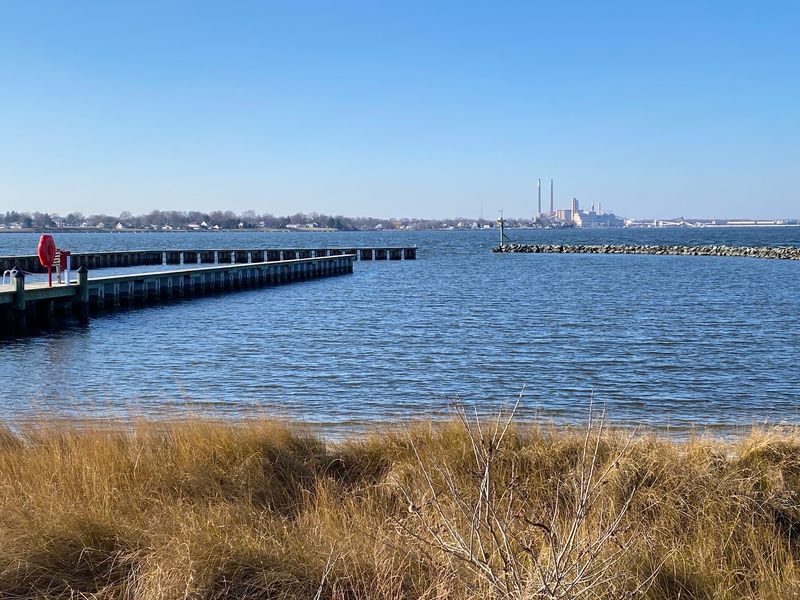
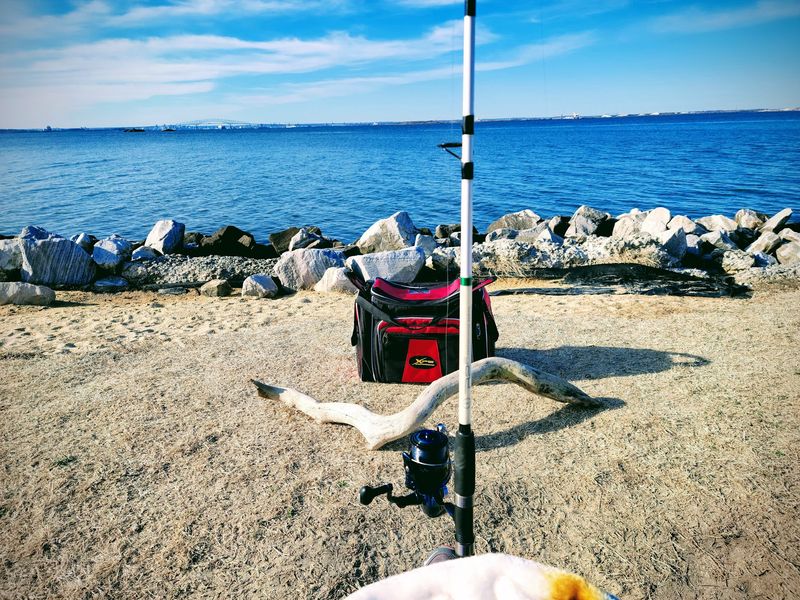
The Bill Burton Fishing Pier is the reason a lot of locals show up here in the first place. It stretches around 380 feet out over the water, which feels much longer once you are actually walking it with the breeze pushing against you.
Halfway out, the shoreline behind you shrinks and the Bay takes over completely.
Anglers set up along the railings with buckets, coolers, and a level of patience I genuinely admire. Perch, rockfish, catfish, and croaker all pass through these waters depending on the season, and conversations between strangers happen easily out there.
Nobody seems in a rush.
Look northwest and the view turns unexpectedly industrial. The outline of Sparrows Point, home of the former Bethlehem Steel plant, sits low on the horizon, and cargo ships slide past on their way toward Baltimore Harbor.
That contrast between quiet water and working port is one of the more memorable things about the spot.
Bring a hat, because there is almost no shade on the pier once you pass the halfway mark. Sunrise and the hour before sunset tend to be the most comfortable, and the light on the water at those times is worth the early alarm.
Birdwatchers use the pier too, scanning for gulls, terns, and ospreys working the current.
Even without a rod in hand, walking to the end and back is a small event. The water changes color as you go, and the sound of it slapping the pilings underneath sticks with you longer than expected.
A Shallow, Calm Beach Made for Wading
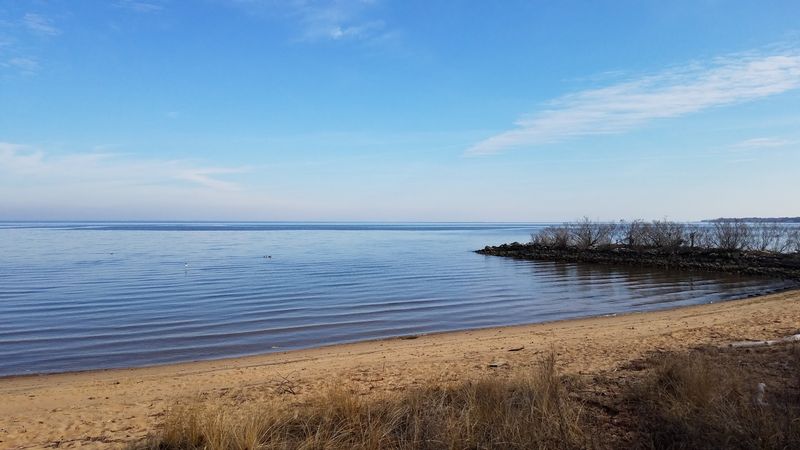
Families with toddlers tend to find their way to this beach quickly, and it makes sense once you see the water. It stays shallow for a long stretch, and the waves barely qualify as waves at all.
Kids can wade out and still be knee deep.
Parts of the sand are soft and easy to walk on barefoot. Other stretches turn pebbly, rocky, or scattered with broken shells, so water shoes are a smart thing to toss in the bag before leaving home.
The texture changes every few dozen feet.
Something important to know before packing the swimsuits is that the beaches here are unprotected, meaning no lifeguards are on duty and swimming is at your own risk.
Official guidance also recommends staying out of the water for at least 48 hours after a half inch or more of rainfall, since bacteria levels can climb after heavy runoff.
Checking the forecast the night before saves disappointment.
Shoreline repair work has been underway in the bayfront and dog beach access areas, with completion expected in July depending on weather, so it is worth confirming access before making the drive.
Even when swimming is off the table, the beach still delivers. Shell hunting, skipping stones, and watching boats slide past Rock Creek fill an afternoon without much effort.
Renovated restrooms with showers sit near the beach, which quietly makes this a far more comfortable stop than most small waterfront parks manage.
Birding Territory With More Than 260 Species Recorded
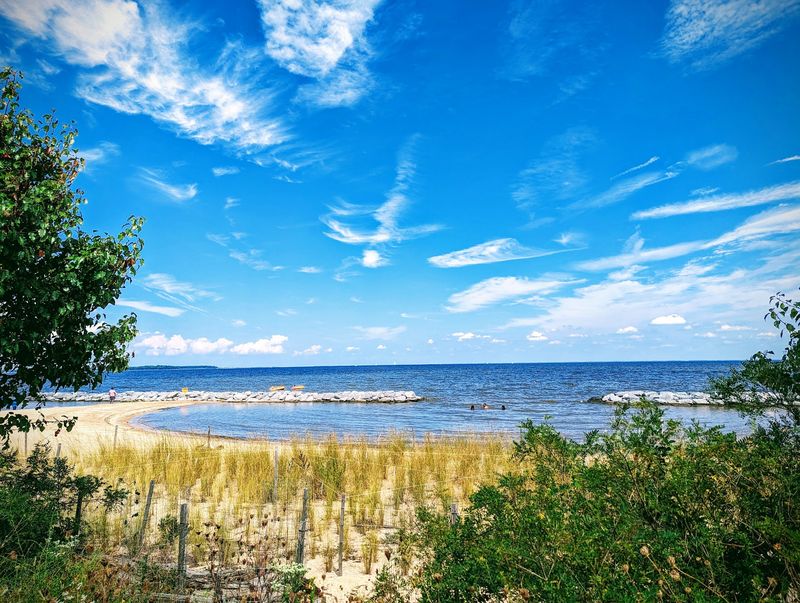
Serious birders talk about this park with a kind of reverence, and the numbers back them up. More than 260 bird species have been recorded here, which is remarkable for a site of this size.
The variety of habitats does the heavy lifting.
Within a short walk you pass a freshwater pond, mature woodlands, open grassy areas, a rock jetty, and open Bay shoreline. Each one pulls in different birds, so a slow loop around the park can produce a surprisingly long list.
Warblers in the trees, shorebirds on the rocks, ducks on the water.
Autumn is when things get exciting, because the park hosts an annual hawk watch. The peninsula shape funnels migrating raptors right overhead, and on a good day with the right wind the sky stays busy for hours.
People bring folding chairs and just look up.
Binoculars help enormously, though plenty is visible without them. Ospreys nest in the area, herons stalk the shallows near the beach, and gulls hang around the pier looking for opportunities.
Early morning offers the calmest water and the most activity.
What makes birding pleasant here is the practicality of it. Paved parking sits close to the good viewing spots, restrooms are nearby, and the terrain stays flat, so there is no serious hiking required to see something worthwhile.
Even casual visitors who came for the beach end up noticing the birds. Hard not to when an osprey drops out of the sky twenty feet away.
Picnic Spots, the Gazebo, and Cedar Pavilion
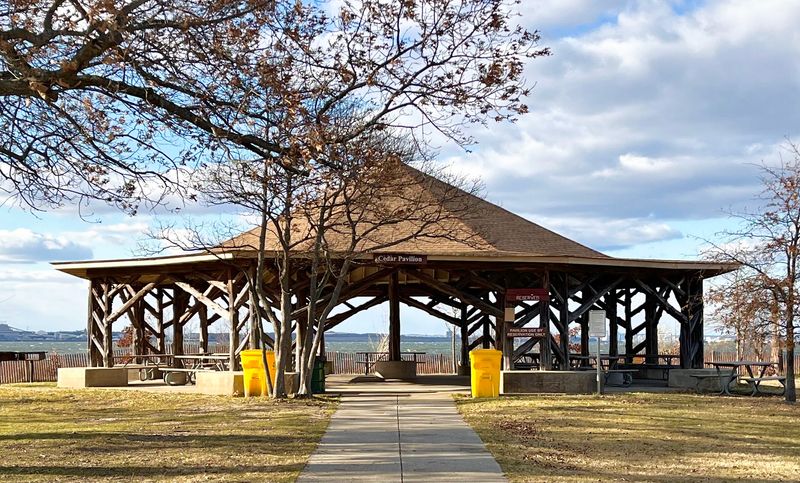
Grills going, coolers open, somebody’s speaker playing quietly under the trees. Weekend afternoons at the picnic areas have a relaxed neighborhood feel that is hard to manufacture.
Tables sit scattered across grass and shade.
Designated picnic areas are spread through the park, some hidden near the woods and others closer to the water where the breeze does the cooling for you. Shade matters here in July, and the mature trees deliver plenty of it.
Arriving before noon secures the better tables.
A gazebo gives smaller groups a shady base and makes a decent rain backup if a summer shower rolls through. It also happens to be a pleasant place to sit and do absolutely nothing.
Highly recommended activity.
For bigger gatherings, the historic Cedar Pavilion is available for group rentals, which local families use for reunions and birthday celebrations. Reserving ahead is the practical move during warm months since demand climbs quickly.
The building carries real character from the park’s earlier decades.
Packing thoughtfully improves the day a lot. Trash bags, sunscreen, extra water, and a blanket for the grass cover most situations, and the renovated restrooms near the beach mean nobody has to cut things short.
Dogs on leashes are welcome in the southernmost stretch of beach, so the family pet does not have to stay home.
What makes eating here memorable is not the facilities so much as the soundtrack. Water, wind, gulls, and distant laughter from the beach make even a simple sandwich taste like vacation food.
Trails, Playground, and Easy Wandering
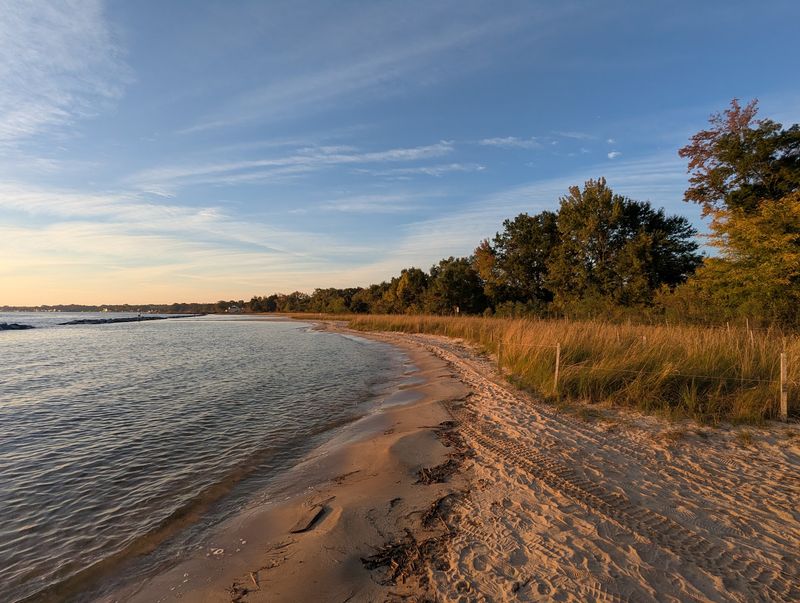
Nothing here requires hiking boots or a trail map, which is genuinely refreshing. Walking paths loop through woods and open grass, connecting the beach, the pier, the batteries, and the picnic areas without much elevation change.
You can wander without a plan.
The woodland stretches feel cooler and quieter than the shoreline, with birdsong replacing the sound of water. Then the trees thin out and the Bay reappears through the branches.
That reveal never gets old.
A children’s playground keeps younger visitors busy when they need a break from sand, and it sits close enough to the picnic areas that adults can stay comfortably parked at a table. Practical design, clearly shaped by decades of family use.
Parents appreciate the sightlines.
Strollers handle most of the main paths fine, and grandparents can join the walk without struggling. That accessibility is part of why the park works for multi-generation outings.
Everybody gets to participate.
Watch for the freshwater pond on your loop, since it draws frogs, turtles, dragonflies, and a rotating cast of birds. Kids tend to spend more time there than anyone predicted.
Bring bug spray in late spring and summer, especially near the wooded and pond areas in the evening. A small thing that saves a lot of complaining.
Because the park closes at sunset and opens at 5:30 AM, the best wandering windows sit at the edges of the day. Golden light, cool air, and hardly anyone else on the paths.
Boat Launch Access All Year Long
Kayakers and small boat owners have quietly known about this launch for years. Facilities include both hard ramp and soft launch options, which covers everything from a trailered motorboat to a paddleboard carried down by hand.
Access runs year-round.
Launching straight into the meeting point of three waterways is a rare treat. Paddlers can hug the sheltered Rock Creek shoreline on breezy days or push out toward the open Bay when conditions cooperate.
Options matter when the wind shifts.
Morning is the smart choice for paddling, since afternoon winds on the Chesapeake can build fast and turn a pleasant outing into hard work. Checking marine conditions before loading up is basic but easy to skip.
Do not skip it.
Anglers with boats gain access to water that is otherwise a long run from other ramps, and the winter months bring a completely different crowd of dedicated fishermen bundled against the wind.
The parking area handles trailers, though busy summer weekends fill it early.
From the water, the park looks entirely different. The pier stretches overhead, the old fort walls disappear into green, and the beach becomes a thin pale line along the peninsula edge.
Worth paddling out just for that perspective.
Safety gear, sun protection, and a plan for how far out to go are all sensible additions, since there are no lifeguards anywhere in the park. The Bay rewards preparation and does not offer much sympathy to those who wing it.
Why Travelers Keep Missing It, and How to Visit Well
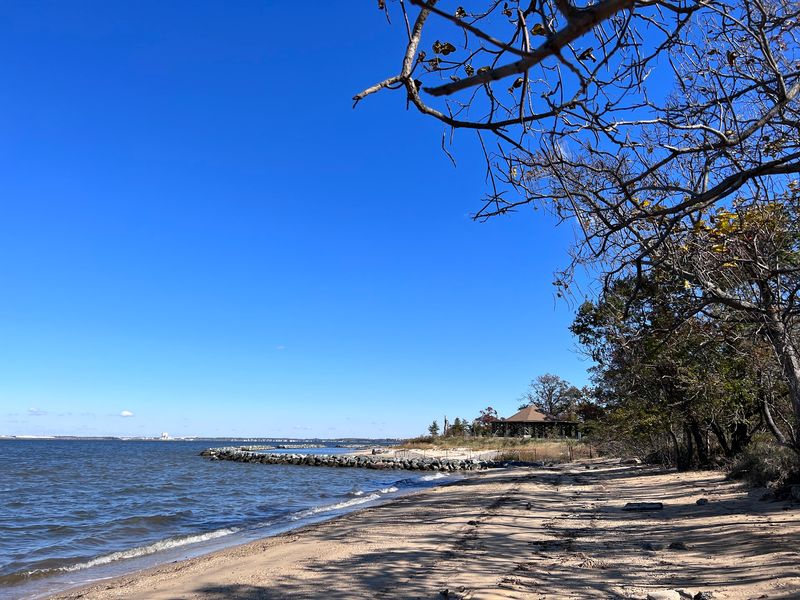
Decades ago this stretch of shoreline was a popular Bay destination, drawing crowds who arrived to swim and picnic by the water. Then the Chesapeake Bay Bridge opened, and traffic started flowing toward ocean beaches and larger resorts instead.
The park never disappeared. It just stopped being on the way to anything.
That accident of highway geography is exactly why it feels like a local secret today. Visitors driving toward Annapolis or the Eastern Shore rarely detour onto this peninsula, so the beach stays manageable even on warm weekends.
Their loss, honestly.
Gates open daily at 5:30 AM and the park closes at sunset, which makes early visits and evening stops both realistic. Sunrise regulars and after-work walkers keep the place gently busy at both ends of the day.
Midday summer weekends are the busiest window.
Practical planning helps. Water shoes for the pebbly sand, sunscreen for the shadeless pier, binoculars for the birds, and a quick check on shoreline repair progress before counting on beach access.
Leashed dogs are welcome on the southernmost beach section.
Pairing a visit with the pier at sunrise, a picnic under the trees, and a slow loop past the old batteries makes for a full and satisfying half day without spending much energy.
Some places earn attention through noise and marketing. Fort Smallwood earns it by simply sitting at the end of a quiet road, doing what it has done for over a century.
Address: 9500 Fort Smallwood Road, Pasadena, Maryland 21122
