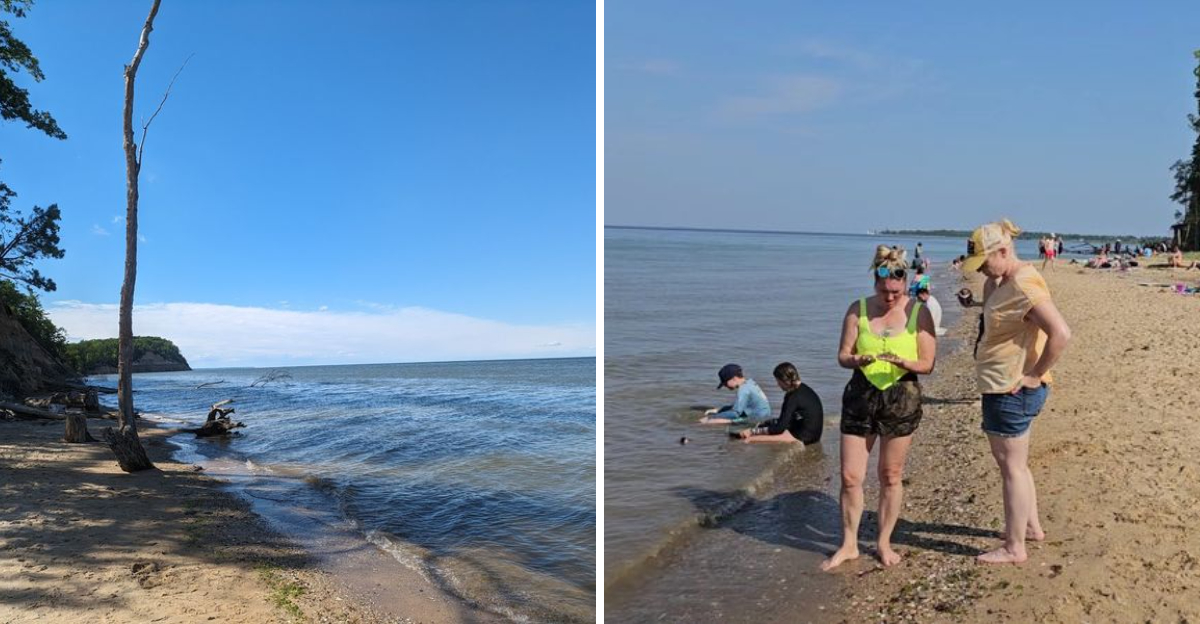
How often do you get to hold something that is millions of years old? At this Maryland park, you can do exactly that.
Calvert Cliffs is famous for its fossil hunting, and people come from all over to try their luck. Sharks teeth, whale bones, and ancient shells wash up along the shore, just waiting to be found.
You do not need any special skills, just a sharp eye and a little patience. The walk to the beach is beautiful too, with cliffs towering above and the bay stretching out in front of you.
Kids love the adventure of digging through the sand. Adults get hooked just as fast.
That is the magic of this Maryland spot. A hike, a beach day, and a trip back in time all in one visit.
The Miocene Epoch Fossils That Wash Up on the Beach
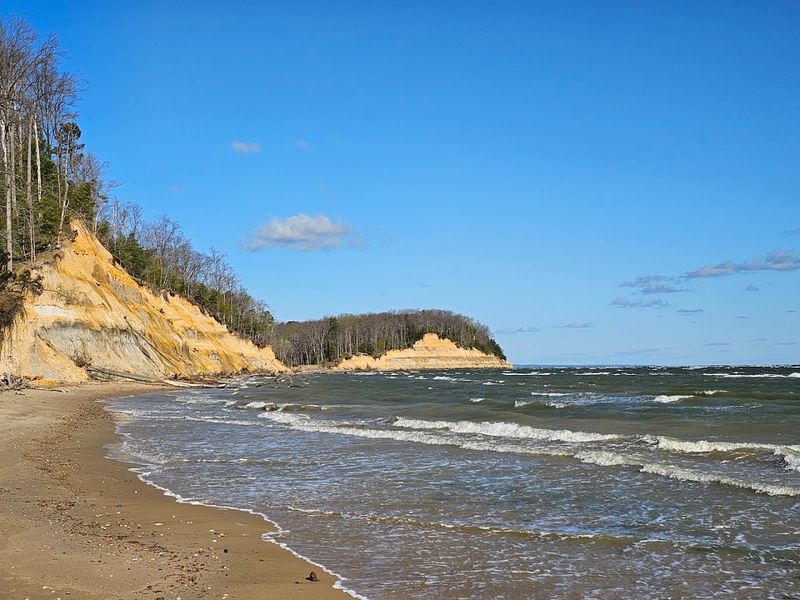
Picking up a fossil on a public beach is not something most people expect to do on a Saturday afternoon, but at Calvert Cliffs State Park, it is genuinely part of the experience. The fossils here come from the Miocene epoch, a stretch of geological time that spans roughly 6 to 20 million years ago.
The Calvert Formation, the main rock layer exposed in the cliffs, is estimated to be between 15 and 18 million years old.
What makes this place special is that the cliffs are constantly eroding. Rain, wind, and wave action chip away at the sediment and deposit fossils directly onto the beach below.
You do not need to dig into the cliffs, and doing so is actually prohibited for safety reasons. The beach does the work for you, especially after storms or during low tide when fresh material gets exposed.
Over 600 species of fossils have been identified in the Calvert Cliffs. That number alone gives you a sense of how rich this site really is.
Marine life dominates the finds, but the variety is surprising. Ancient scallops, whale bones, ray teeth, and crocodile remnants have all turned up here at some point.
The fossils are not just a novelty. They are a genuine scientific record of a warm, shallow sea that once covered this entire region.
Holding one feels less like a souvenir and more like borrowing a page from the planet’s own diary.
The Red Trail Hike to the Fossil Beach
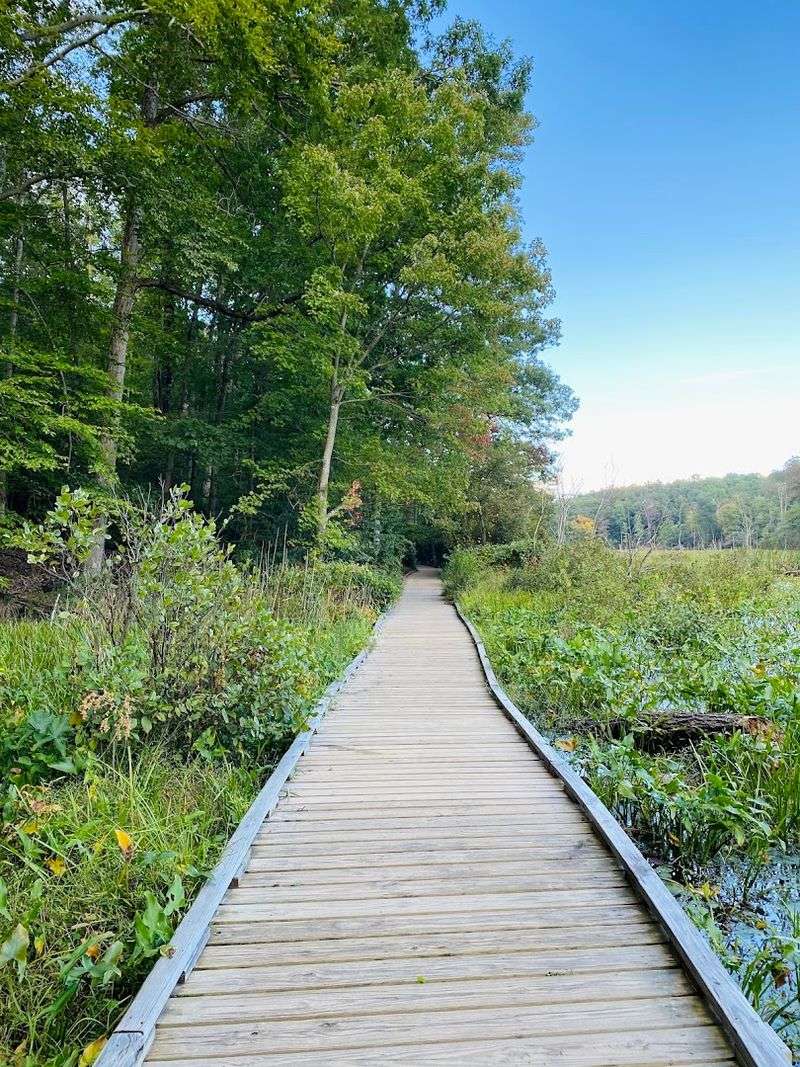
Getting to the fossil beach is not a matter of walking from the parking lot to the shore. The designated Red Trail stretches about 1.8 to 2 miles one way, winding through a mix of forest and wetland before opening up at the Chesapeake Bay.
It is a straightforward hike, but worth planning for, especially if you are bringing kids or gear.
The trail itself is honestly enjoyable. Tall trees shade most of the path, and the sounds of birds and rustling leaves make the walk feel more like a nature experience than a chore.
There are some wooden boardwalk sections over marshy areas, which kids tend to love. The whole route takes about 30 to 45 minutes at a relaxed pace.
Wear comfortable, closed-toe shoes because the trail can get muddy after rain. Once you hit the beach, the terrain shifts to sand and rocky sediment, so footwear that can handle both is smart.
Bringing water is a must since there are no facilities near the beach end of the trail. The payoff when you finally emerge from the tree line and see those towering white cliffs rising above the shoreline is genuinely dramatic.
After the hike back, most people feel that mix of satisfying tiredness and quiet happiness that only a good trail walk delivers. The round trip clocks in around 4 miles total, making it accessible for most fitness levels without feeling too short to be meaningful.
Megalodon Shark Teeth, the Most Sought-After Find
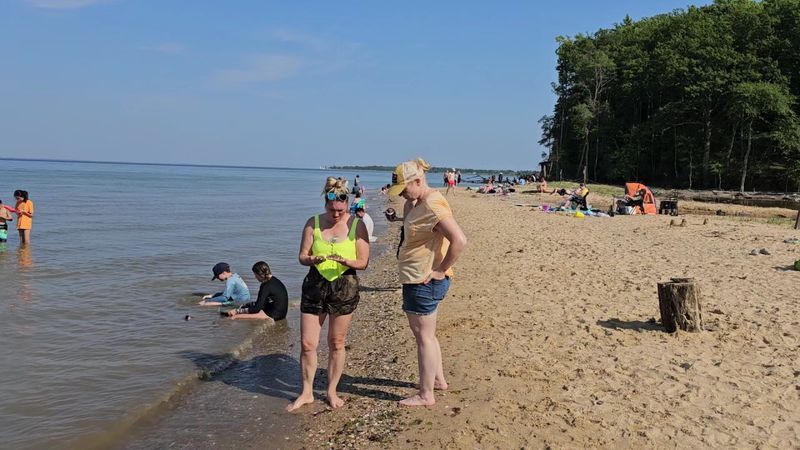
Few things match the thrill of spotting a Megalodon tooth half-buried in wet sand. These massive fossilized teeth are the crown jewel of any Calvert Cliffs visit, and finding even a small fragment can make the whole trip feel worthwhile.
Megalodon was one of the largest predators that ever lived, and its teeth can range from the size of a thumb to the size of a human hand.
The Chesapeake Bay region was once a warm, shallow sea teeming with marine life, which made it prime hunting ground for Megalodon. That ancient ecosystem is exactly why so many of its teeth ended up preserved in the sediment layers of the Calvert Formation.
When those layers erode and tumble onto the beach, the teeth come with them.
Most teeth found by visitors are smaller fragments or juveniles, but even those are impressive up close. The serrated edges and triangular shape are unmistakable once you know what to look for.
A good tip is to get low to the ground and scan the waterline slowly, especially after a storm has stirred things up. Black or dark gray triangular shapes are your target.
They can look almost like broken shells at first glance, so patience matters. Bringing a small mesh sieve makes it easier to sift through sand efficiently.
The feeling when you finally spot one is genuinely hard to describe, equal parts disbelief and pure excitement.
Fossil Hunting Rules and What You Are Allowed to Keep
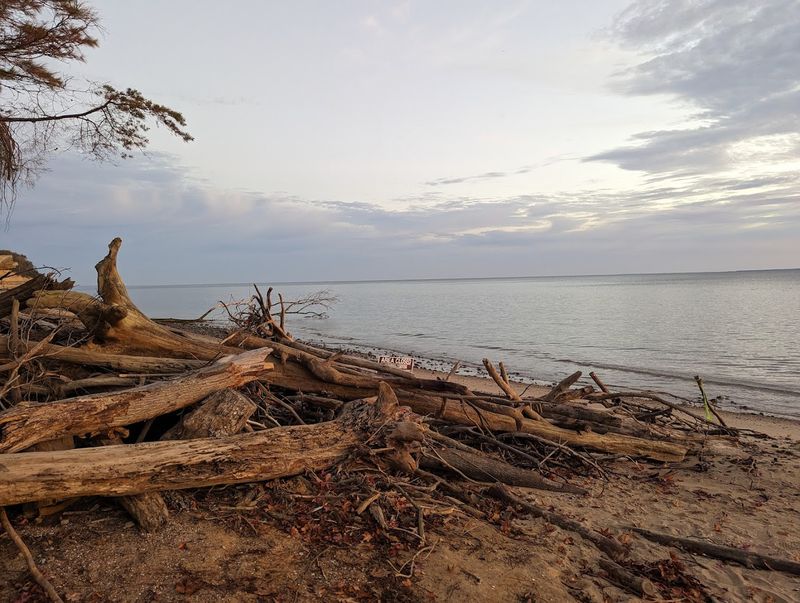
Before you start filling your pockets, it helps to know the ground rules. Fossil hunting at Calvert Cliffs is legal and encouraged, but there are clear boundaries that keep the site safe and sustainable.
The most important rule is that you cannot dig into or disturb the cliffs themselves. They are unstable, prone to sudden collapses, and protected from that kind of interference for good reason.
Collection is limited to fossils found on the beach surface or in the sand. You are welcome to use sieves and small shovels to sift through material along the shoreline, which is actually the most effective method.
No special permits are needed for casual collecting, which makes this one of the more accessible fossil sites in the country.
There is no official limit on how many fossils you can take home, but the spirit of the place encourages taking what you find personally meaningful rather than clearing out the beach. Common sense goes a long way here.
The best conditions for finding fossils are after a storm, when fresh sediment has been churned up, or during low tide, when more of the beach is exposed. Checking tide charts before your visit is a genuinely useful habit to develop.
Arriving early also helps since the beach can get busy on weekends, especially in warmer months. Respectful collecting means future visitors get the same thrill you did, and that feels like a fair trade for walking away with a piece of ancient history.
Ancient Marine Life Beyond Shark Teeth
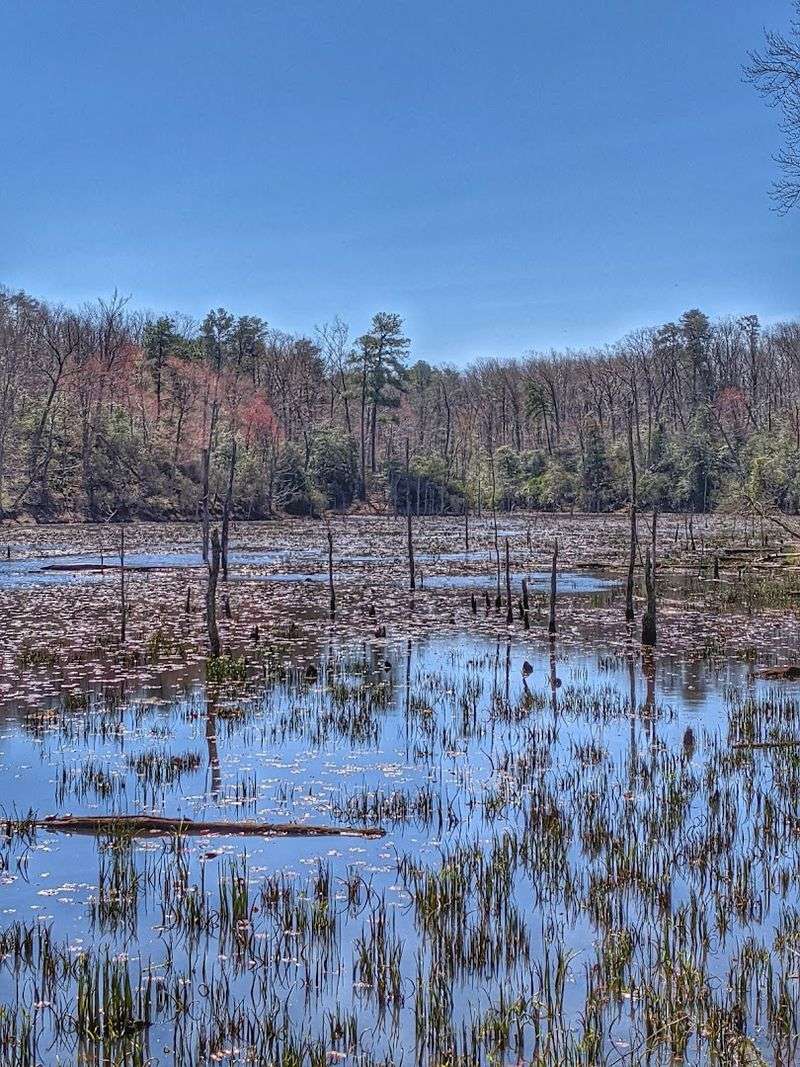
Shark teeth get most of the attention, but the fossil record at Calvert Cliffs goes much deeper than Megalodon. The cliffs have yielded remains from an astonishing range of ancient marine animals, and stumbling across something unexpected is part of what keeps people coming back.
Ancient whales, dolphins, seals, and sea cows all swam in this region millions of years ago, and fragments of their bones occasionally appear on the beach.
Ray teeth are another common find, and they are easy to overlook because they look almost like small pebbles at first. Once you recognize the shape, a flat, pavement-like surface with a slightly glossy finish, they start showing up everywhere.
Extinct scallop species like Chesapecten nefrens are also found here, and their fan-shaped shells are surprisingly beautiful even after millions of years in the ground.
Seabird fossils, ancient fish vertebrae, and even occasional crocodile teeth round out the diversity of what has been discovered in the Calvert Formation. The cliffs preserve a snapshot of an entire ecosystem, not just a handful of species.
That ecological richness is part of why paleontologists have studied this site so extensively. For a casual visitor, it means every scoop of sand holds genuine potential.
The variety keeps the experience fresh even on return visits. You might find a shark tooth one trip and a ray plate the next, and both feel like genuine discoveries worth bringing home.
The Towering Cliffs and the Chesapeake Bay View
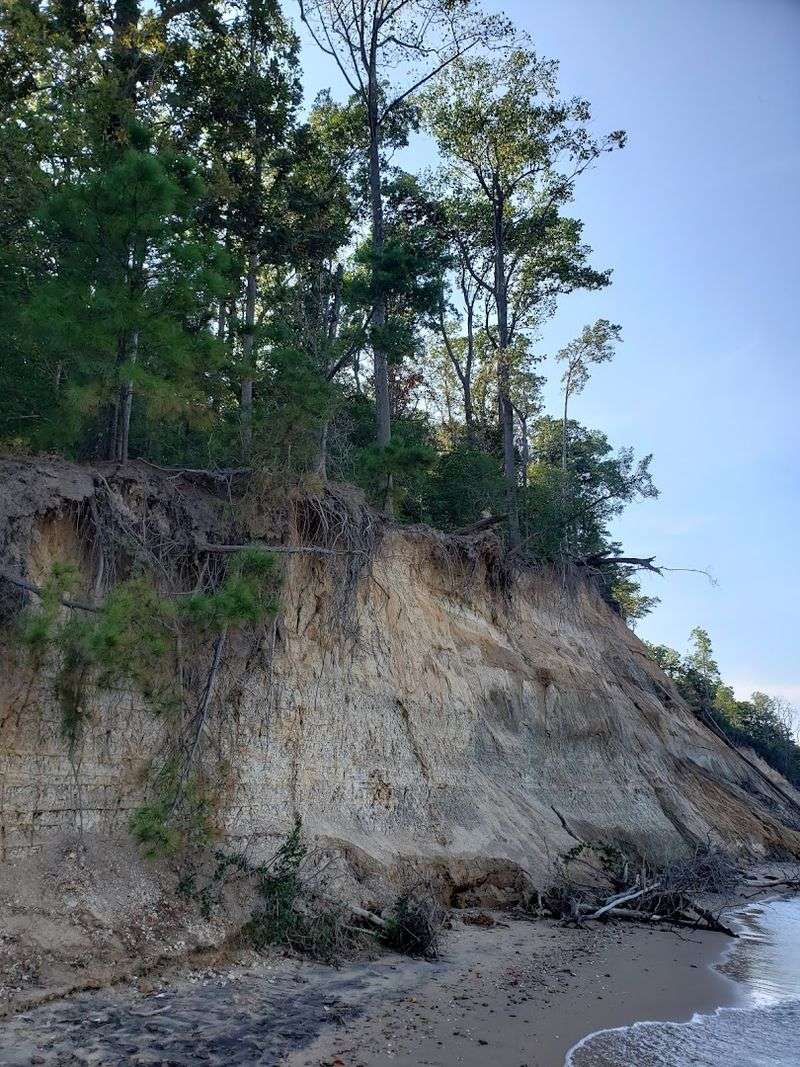
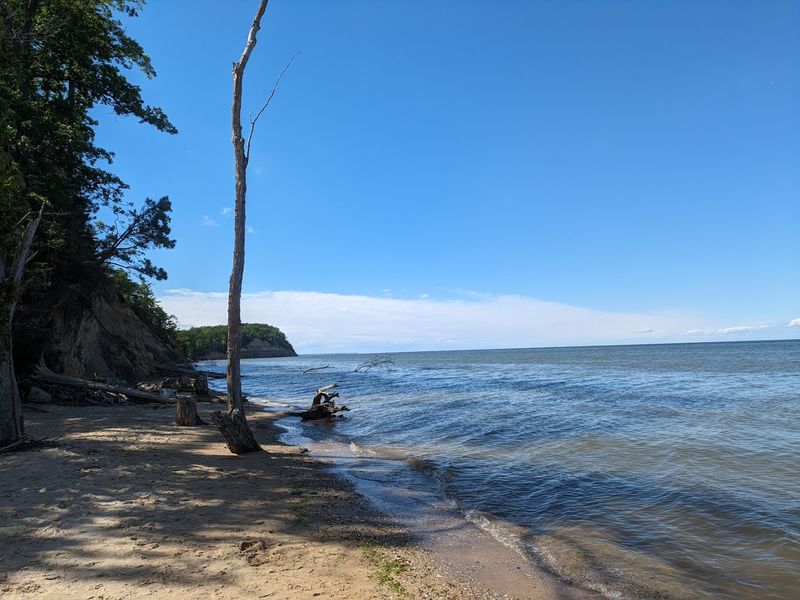
Even if you never find a single fossil, the view from the beach at Calvert Cliffs is worth every step of the hike. The cliffs rise dramatically from the shoreline, their layered white and gray sediment walls cutting a sharp line against the sky.
They stretch for roughly 24 miles along the Chesapeake Bay, one of the longest stretches of exposed fossil-bearing cliffs on the entire East Coast.
The scale of them hits differently in person. Photos do not quite capture how tall and imposing they feel when you are standing directly below.
The layers visible in the rock face represent millions of years of compressed ocean sediment, each band a different chapter in the region’s prehistoric story. It is the kind of thing that genuinely makes you feel small in the best possible way.
The Chesapeake Bay itself stretches out in the other direction, wide and calm on most days, with a horizon that seems to go on forever. Watching the water from the base of the cliffs while the wind carries a faint briny smell is a surprisingly peaceful experience.
Sunlight hits the cliff face in interesting ways depending on the time of day, and late morning tends to offer the best light for photos.
The combination of geological drama and open water makes this one of the more visually striking spots in Maryland, the kind of landscape that stays with you long after you have driven home.
Practical Tips for Planning Your Visit
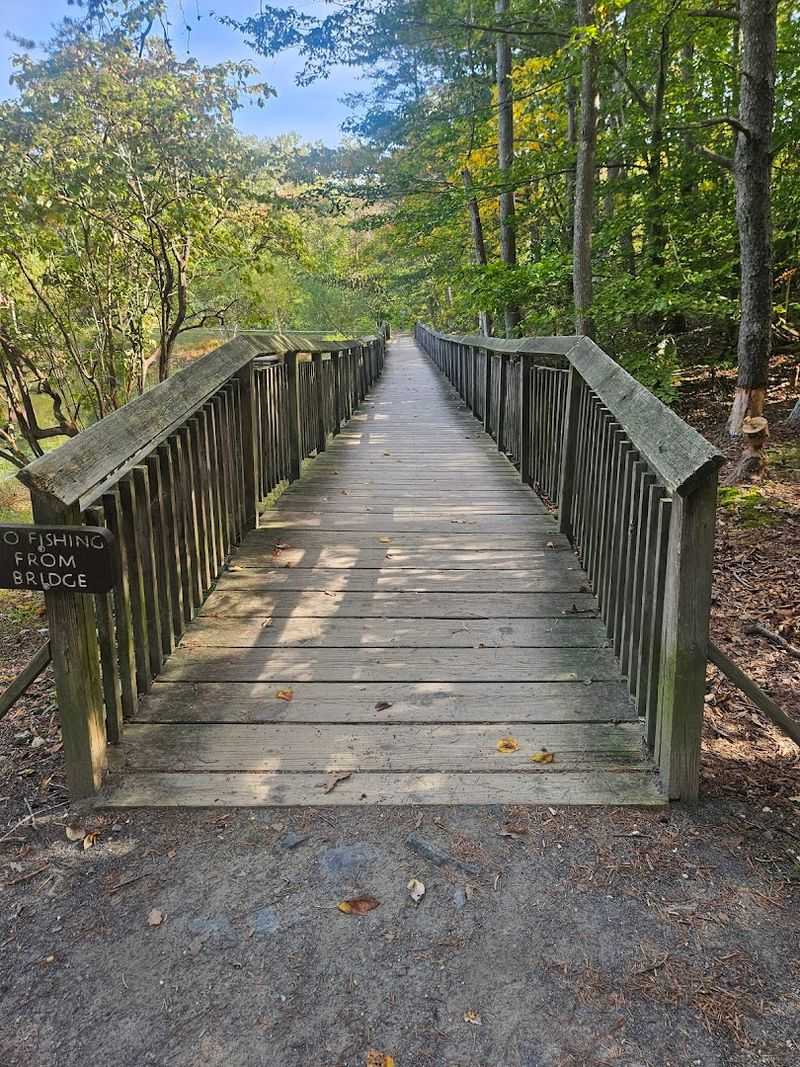
A little preparation goes a long way at Calvert Cliffs, and the difference between a frustrating trip and an amazing one often comes down to a few small decisions made before you leave home. The park is open daily from sunrise to sunset and operates as a day-use facility, so overnight stays are not an option.
Entry fees are modest, running slightly higher for out-of-state vehicles than for Maryland residents.
Parking fills up fast on weekend mornings, especially from spring through early fall. Arriving by 9 a.m. gives you a much better shot at a spot and means you hit the beach before the crowds do.
Weekdays are noticeably quieter if your schedule allows for it. The park also features 13 miles of total hiking trails beyond the Red Trail, a playground, picnic areas, and fishing access for those with a Maryland non-tidal fishing license.
Pack light but smart. Water, sunscreen, snacks, and a small bag for your fossil finds are the essentials.
A mesh sieve and a small hand shovel are not required but genuinely improve your fossil hunting odds. Leashed dogs are welcome on the trails, which makes it a solid outing for pet owners too.
Swimming near the cliffs is not recommended due to ongoing erosion and unstable conditions along the shoreline. Cell service can be spotty near the beach, so downloading a trail map before you go saves headaches.
The whole experience runs about half a day, which feels just right.
Why Calvert Cliffs Is Unlike Any Other Maryland State Park
Maryland has no shortage of beautiful state parks, but Calvert Cliffs sits in its own category. It is one of the few places in the entire country where everyday visitors, not just scientists or permit holders, can legally collect real fossils from a world-class paleontological site.
That accessibility makes it genuinely rare, and it creates a kind of shared excitement among strangers on the beach that is hard to find elsewhere.
There is something about the mix of elements here that works so well together.
The hike through quiet forest, the dramatic reveal of the cliffs at the end of the trail, the wide open bay, and the tangible possibility of finding something millions of years old all combine into an experience that feels layered and satisfying.
It is not just a pretty walk. It is a walk with a purpose and a payoff.
Families with curious kids tend to have a particularly good time here because the fossil hunting gives everyone a shared goal. Adults who have never thought much about geology find themselves genuinely absorbed in the hunt.
Even people who walk away empty-handed usually leave saying they want to come back, which tells you something real about the place. Calvert Cliffs has a way of making the ancient feel personal and immediate.
Address: 10540 H G Trueman Rd, Lusby, Maryland.
