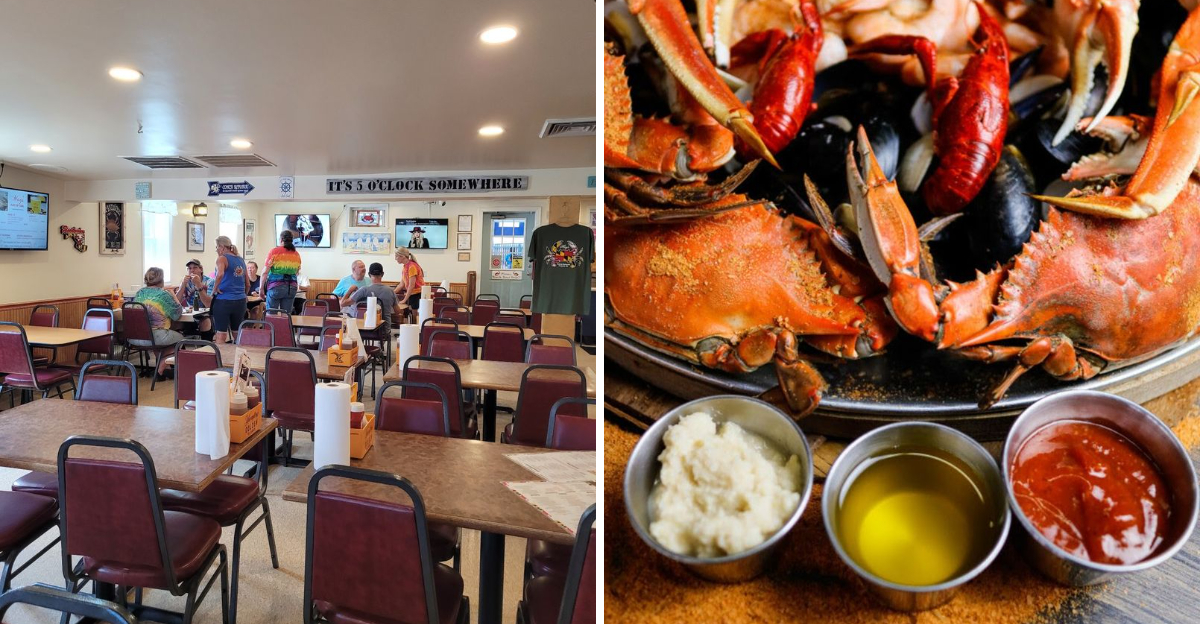
Thirty-five years is a long time to keep Maryland diners interested, especially when seafood fans tend to have very strong opinions about where their crabs should come from.
This family-run restaurant first opened in 1991 and remains known for its all-you-can-eat seafood offerings, with a menu that now stretches beyond seafood into chicken, burgers, sandwiches, desserts, and more than 100 dishes overall.
The operation has stayed within the family, and longtime customers have even influenced what comes back to the menu, including the return of breakfast after regulars asked for it. That kind of relationship is difficult to manufacture with a trendy dining room or clever social media campaign.
Maryland has plenty of newer seafood spots competing for attention, but surviving since the early 1990s suggests this one figured out long ago how to keep people hungry.
A Family Kitchen That Opened Its Doors in 1992
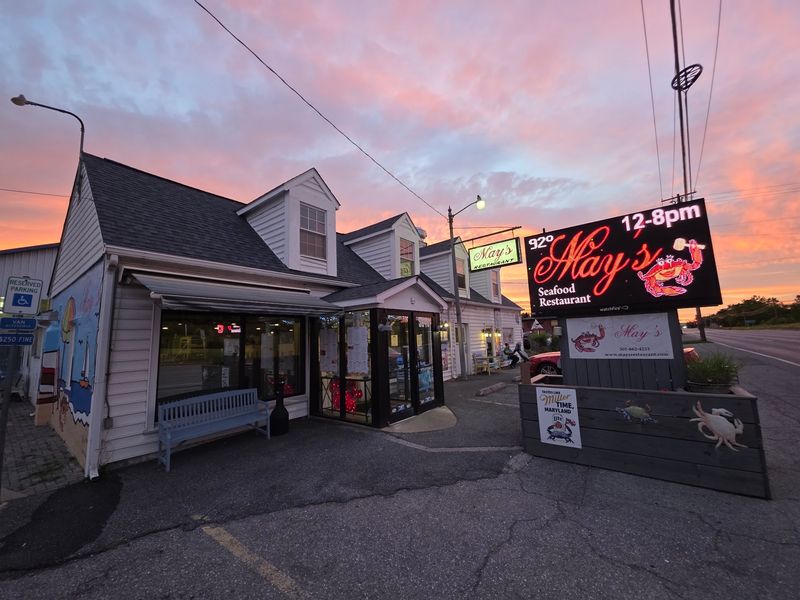
Thirty-plus years is a long run for any restaurant, and May’s has managed it by staying family-run since 1992. That kind of longevity rarely happens by accident.
Recipes get refined over decades. Suppliers become familiar.
Staff learn the rhythm of a Friday night crab rush without needing a manual.
Frederick County has changed a great deal since the early nineties, with new neighborhoods and shopping centers filling in the fields. Through all of it, the restaurant has kept its footing by focusing on regional seafood rather than chasing whatever food trend happens to be popular.
The consistency is the selling point. Guests who visited as kids now bring their own children, and the crab cakes taste like they remember.
Family ownership also shapes the tone of the place. Decisions about portion sizes, seasoning, and daily specials come from people who eat the food themselves and answer directly to the regulars sitting in the dining room.
Practical tip for first-timers: treat the visit as a meal, not a quick stop. Seafood takes time to prepare properly, especially steamed crabs and whole platters.
Plan on relaxing for an hour or more. Order an appetizer, let conversation stretch out, and let the kitchen work at its own pace.
Restaurants that survive three decades usually do so because they earned trust one plate at a time. May’s fits that description, and the proof shows up nightly in a parking lot filled with local plates.
Maryland Blue Crabs Handled the Traditional Way
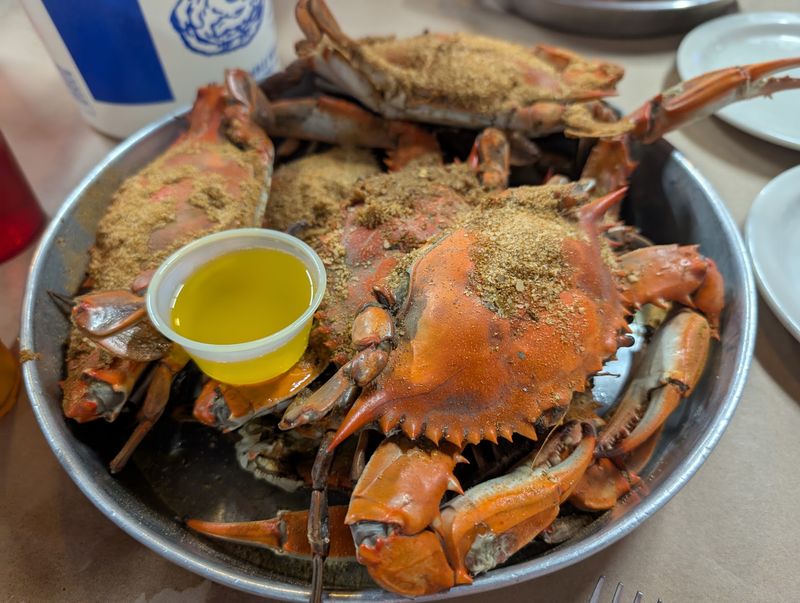
Steamed blue crabs served over brown paper are as close to a Maryland ritual as food gets, and May’s leans fully into it. Mallets, seasoning, and messy hands are all part of the deal.
Picking crabs is a skill that takes practice. Newcomers should not feel embarrassed about working slowly, since even lifelong Marylanders started somewhere.
The technique goes roughly like this: twist off the legs and claws, pop the apron on the underside, lift the top shell, clean out the gills, then break the body in half to reach the sweet lump meat inside. Claws crack easily with a mallet or the flat side of a knife.
Authentic Maryland crab at May’s has landed on Frederick’s Best of the Best list, which says something about how seriously the kitchen takes its steaming and seasoning.
All-you-can-eat crab specials show up on the lineup as well, which appeals to anyone who wants to settle in for a marathon session. Bring an appetite and low expectations about staying tidy.
A few practical notes help. Wear clothes that can handle spice and splatter, keep napkins within reach, and drink plenty of water since the seasoning has real kick.
Crab sizes and availability change with the season, so asking a server about the day’s supply is smart. Late spring through early fall usually brings the heaviest, meatiest crabs to Maryland tables.
Crab Cakes That Earned Their Reputation
Ask around Frederick about crab cakes and May’s name comes up quickly. The kitchen treats them as a signature item rather than just another menu line.
Good Maryland crab cakes follow one rule above all others: lots of crab, very little filler. Big pieces of meat should hold together with just enough binder to survive the heat.
What separates a memorable crab cake from a forgettable one usually comes down to texture. Chunks of lump meat should be visible, and the outside should carry a light golden crust while the inside stays moist.
Crab cakes at May’s appear in several forms across the menu, from platters with sides to sandwich versions hidden into a bun. Both approaches let the crab stay the star.
For anyone visiting Maryland for the first time, ordering a crab cake is practically required homework. It is the state’s most recognizable dish, and tasting a well-made version explains why the reputation exists.
Pairing suggestions are easy. A cup of cream of crab soup ahead of the plate makes for a seafood-heavy meal that locals order without hesitation, while coleslaw or fries round things out.
Skip the heavy sauce at first. Take a bite plain to judge the crab itself, then add tartar or a squeeze of lemon if desired.
Oyster Wednesdays and Thursday Crab Legs
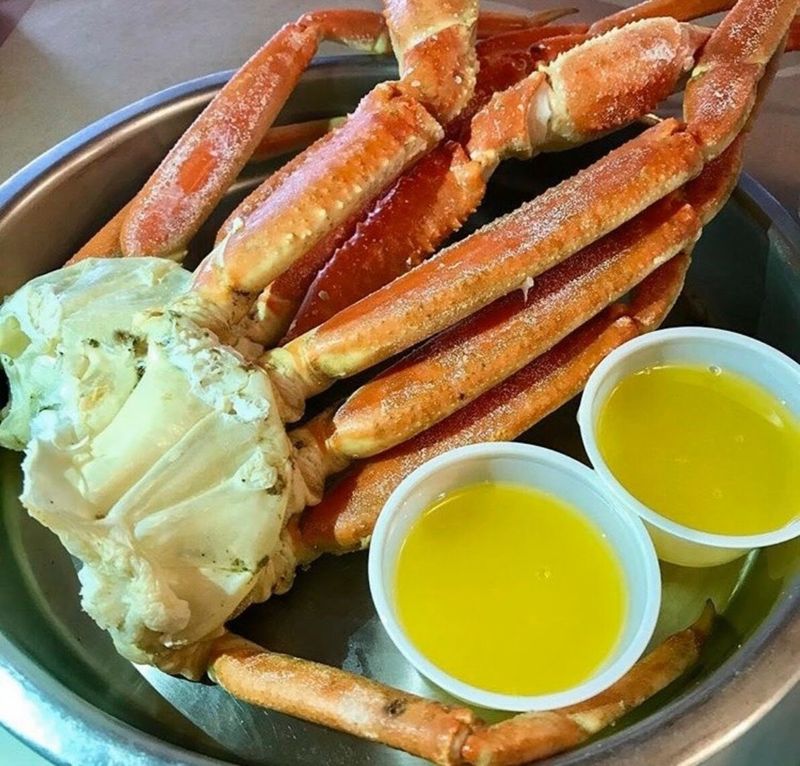
Weekday specials give regulars a reason to build routines around the calendar. At May’s, Wednesday belongs to oysters and Thursday belongs to snow crab legs sold by the pound at a discounted price.
Both nights tend to draw a crowd, so arriving early makes a noticeable difference.
Oysters come raw, steamed, or fried, which covers just about every comfort level. Raw on the half shell suits purists who want clean brine and cold ice, while fried versions win over anyone still warming up to shellfish.
Steamed oysters land somewhere in the middle, with softer texture and gentler flavor.
Snow crab legs on Thursday work differently from blue crabs. The meat pulls out in long, clean pieces, so the work is easier and the payoff comes fast.
Ordering by the pound lets a group scale the meal up or down depending on how hungry everyone is.
Smart strategy for special nights: call ahead to confirm the deal is running, since promotions can shift with seasons and supply. Prices tied to seafood markets do move.
Groups should also consider splitting a mix of items rather than everyone ordering identical plates. A pound of crab legs, a dozen oysters, and a shared appetizer covers more ground and lets the table sample widely.
Weekday visits generally feel calmer than weekends, another reason midweek specials are worth planning around for a relaxed seafood dinner.
Seafood Platters Built for Serious Appetites
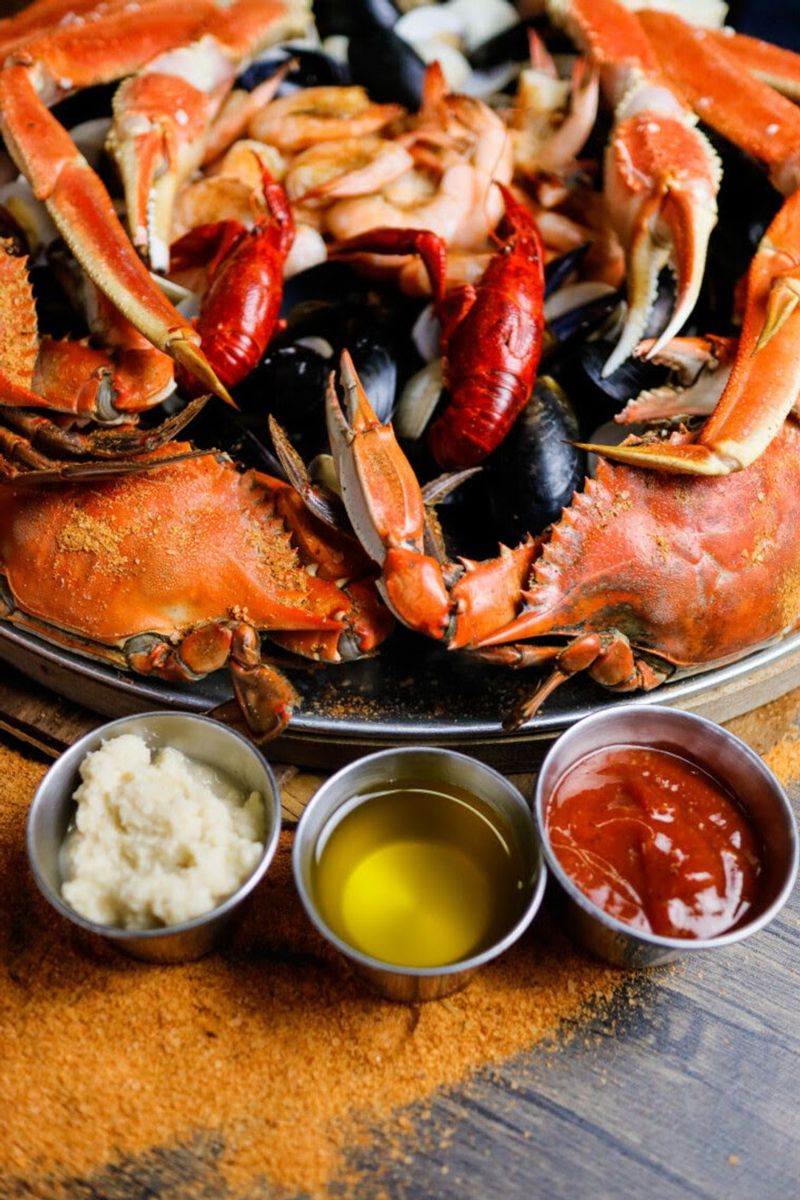
Indecision has a solution here, and it comes on an oversized plate. The May’s Seafood Platter loads fried fish, shrimp, clams, and oysters together so nobody has to pick a favorite.
Sampler options and all-you-can-eat seafood selections stretch the idea even further.
Fried seafood done well is trickier than it sounds. The coating needs to stay crisp without turning greasy, and each item cooks at a slightly different pace, which means the kitchen has to time everything carefully.
Platters make sense for a few types of diners. First-timers get a broad tour of what the kitchen does, undecided eaters avoid regret, and couples can split one order alongside a soup or appetizer.
A word of warning on portions: these plates are generous. Ordering appetizers, soup, and a full platter often leads to leftovers, which is not a bad outcome but worth planning for.
Sides typically round out the plate, and a squeeze of lemon brightens fried seafood considerably. Cocktail sauce and tartar sauce cover the classic pairings.
Beyond the platters, individual items are available for lighter appetites. Fish and chips, fried shrimp, and single-item baskets keep things simple.
Anyone dining with a mixed group will find platters useful for sharing. Set one in the middle of the table, pass around small plates, and let everyone taste a bit of each before committing to a favorite for the next visit.
Warm Wood, Soft Light, and an Open-Air Escape
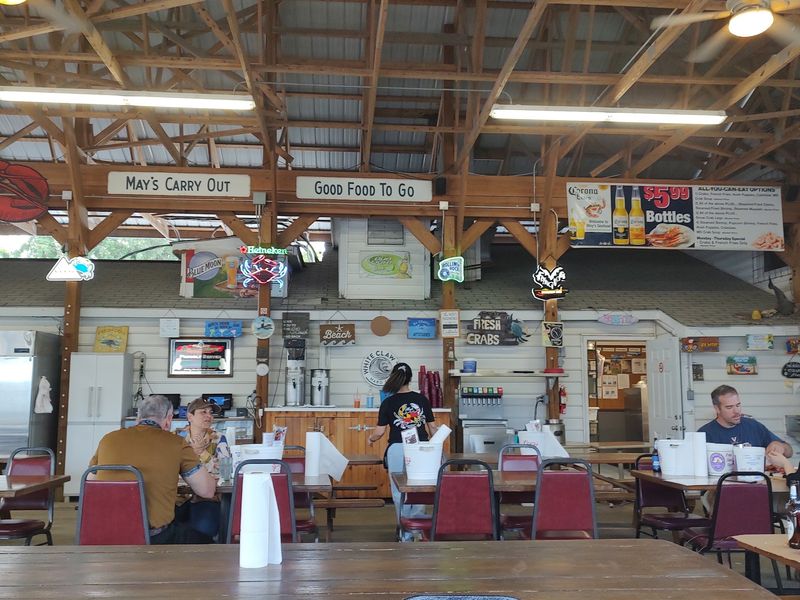
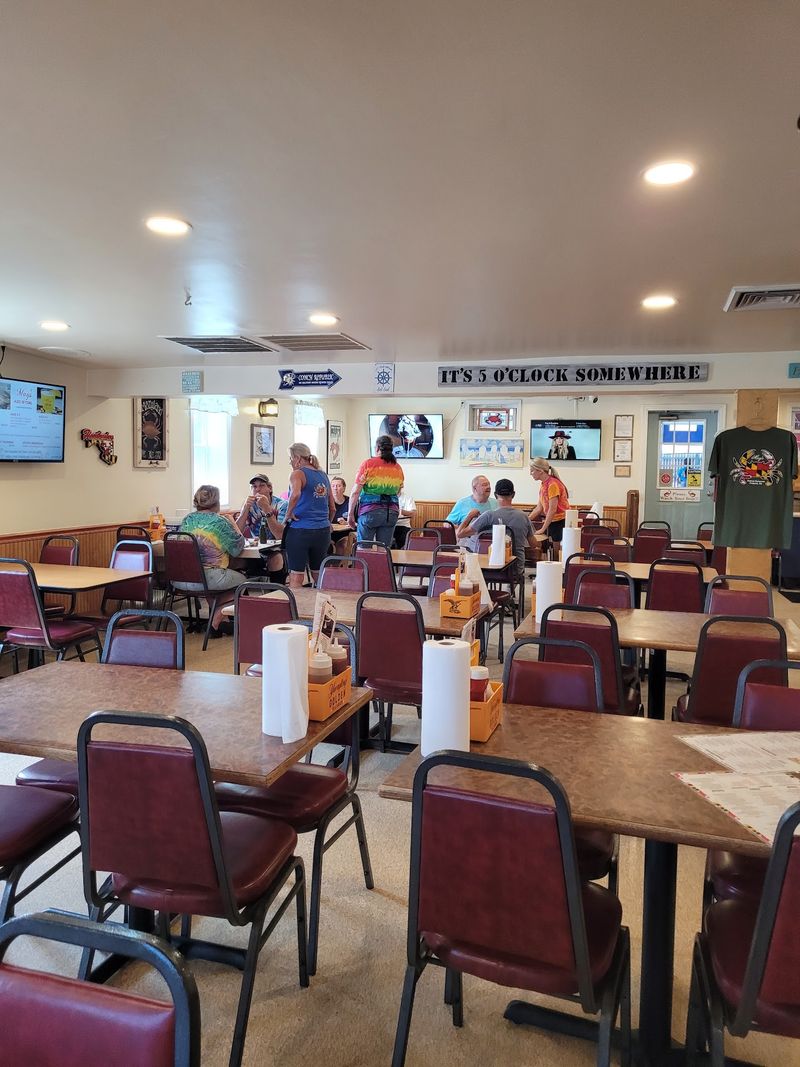
Comfort beats flash inside May’s. Wooden accents, warm tones, and soft lighting create a room that feels lived-in rather than designed by committee.
Nothing about the space demands dressing up, which suits a meal that involves mallets and crab shells.
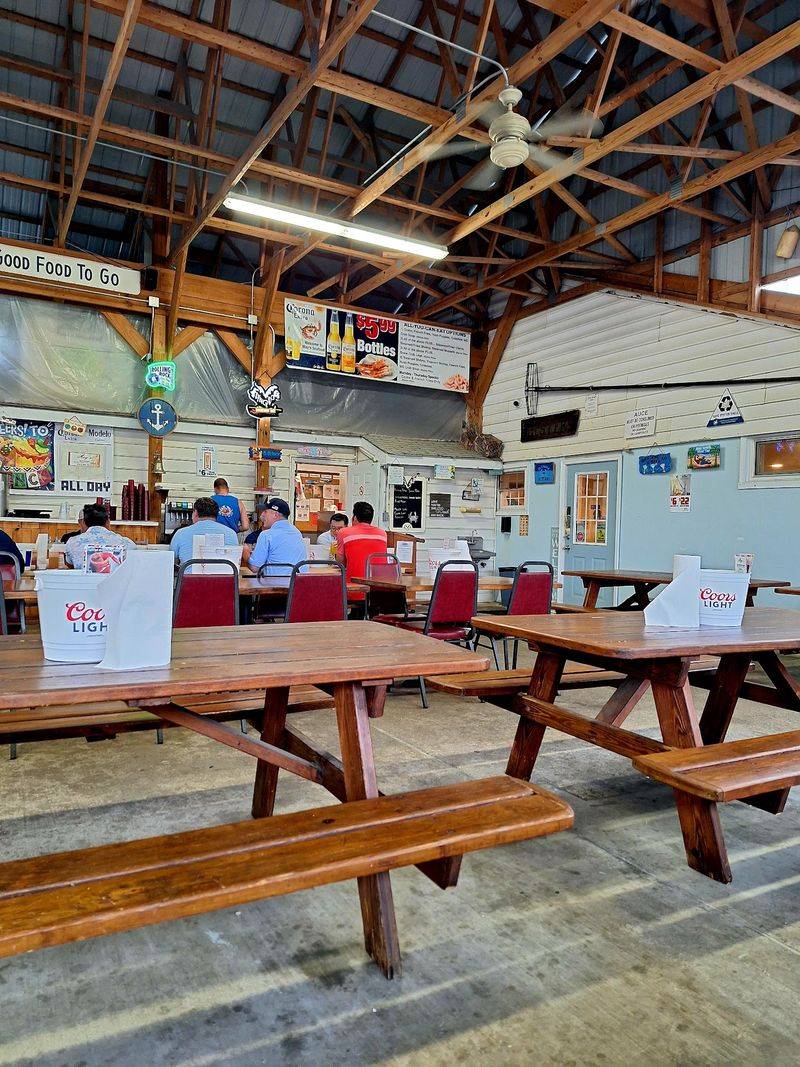
The open-air section is the sleeper pick. Frequently recommended for its laid-back, beachy feel, the outdoor area turns an ordinary weeknight dinner into something closer to a shore vacation without the drive to the coast.
Anyone visiting in spring, summer, or early fall should ask about seating there when walking in.
Noise levels stay conversational, which matters for families and groups who actually want to talk. Kids fit in comfortably, and a children’s menu keeps younger diners happy.
Local gathering spot describes the place better than tourist attraction. Neighbors, work crews, families, and longtime regulars fill the tables, giving the dining room a community feel that visitors notice right away.
Dress code is essentially nonexistent. Shorts and a t-shirt work perfectly well, especially on crab nights.
Practical advice for choosing a seat: indoor tables suit cold weather and quieter conversation, while the open-air area rewards mild evenings. Either way, ask about wait times when arriving during peak hours.
Atmosphere like this cannot be manufactured overnight. It builds slowly, through decades of repeat customers who treat the dining room as an extension of their own kitchen table.
Local Sourcing and a Hand in Chesapeake Oyster Recovery
Freshness has a geography, and Maryland is fortunate to sit right beside one of the most productive estuaries in the country. May’s sources crab, fish, and other seafood locally to keep its dishes rooted in the region.
Shorter distance from water to kitchen usually means better flavor and texture on the plate.
The restaurant also takes part in oyster recovery efforts supporting healthy Chesapeake Bay habitats. Recycled shells returned to the water give baby oysters, called spat, a surface to attach to and grow.
Why that matters is worth understanding. A single adult oyster filters many gallons of water each day, cleaning the bay and helping other species thrive.
Oyster reefs also serve as shelter for small fish and crabs, meaning restoration work benefits the same seafood that ends up on Maryland menus. Supporting restaurants that participate creates a helpful loop.
Diners can join in with small habits. Ask where the day’s seafood came from, choose in-season items, and support businesses that recycle shells rather than sending them to landfills.
Seasonality is a useful concept, too. Blue crabs peak in warmer months, while oysters traditionally shine during cooler stretches of the year.
Eating with the seasons generally means better quality and better prices. It also eases pressure on the bay during vulnerable periods, which keeps the Chesapeake producing the seafood Maryland is known for well into the future.
Key Lime Pie, Comfort Sides, and Options Beyond Seafood
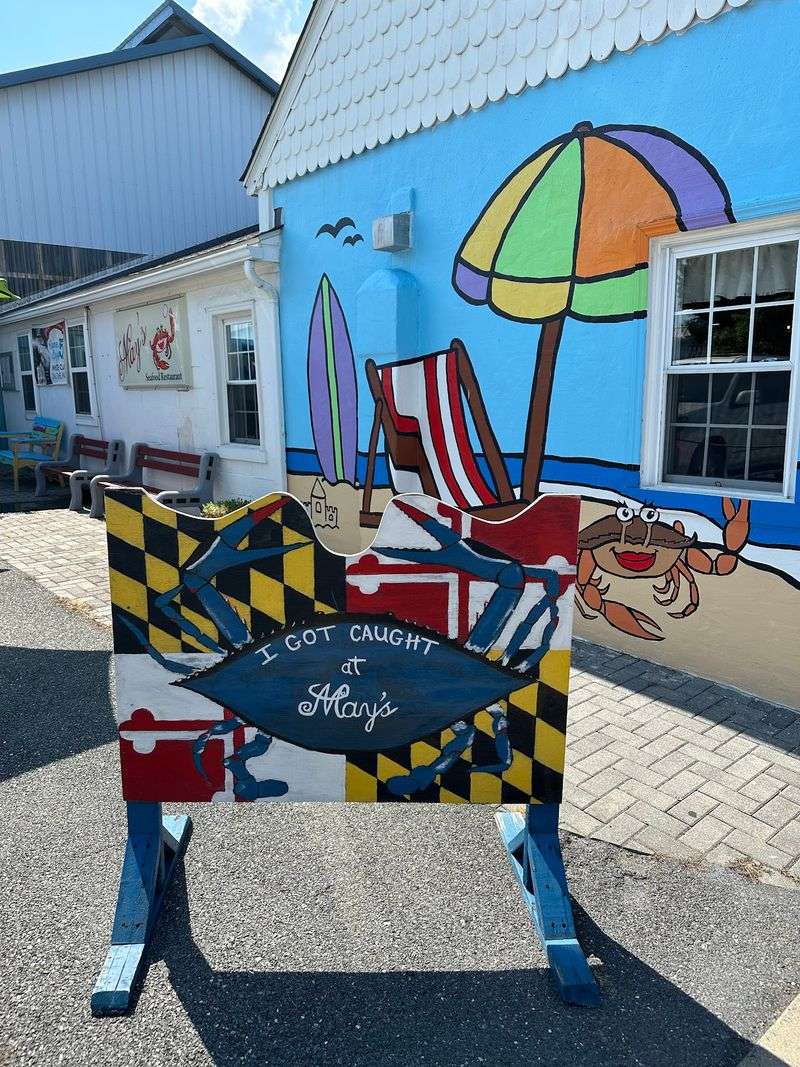
Dessert deserves a mention, especially the homemade key lime pie that has become a signature finish. Tart, cool, and creamy, it cuts nicely through a rich seafood meal.
Peanut butter cake offers the opposite approach for anyone craving something sweet and heavy.
Not every guest wants shellfish, and the menu accounts for that. Chicken entrees, steaks, and a range of sandwiches give non-seafood eaters real choices instead of an afterthought.
A children’s menu handles picky younger diners, which removes a common source of stress for families.
Starters cover a lot of ground as well. Creamy crab dip made with jumbo lump meat, buffalo bacon shrimp dip, bang bang shrimp, mussels, and clams all work nicely for sharing around the table.
Soup lovers get two Maryland classics. Cream of crab arrives rich and smooth, while Maryland crab soup brings a tomato-vegetable base with a peppery edge, and ordering a cup of each is a common move.
Practical planning matters at May’s since seating runs first-come, first-served with no reservations required. Arriving before the usual dinner rush shortens the wait considerably.
Weeknights outside of special-deal evenings tend to be the calmest windows. Larger groups should expect a longer wait for tables to combine.
Save room for pie, budget an extra fifteen minutes for parking and seating on busy nights, and the visit runs smoothly.
Address: 5640 Urbana Pike, Frederick, MD 21704
