Maryland has some famous lakes. The ones everyone knows about.
But this one? It sits quietly in a state park that most people drive right past.
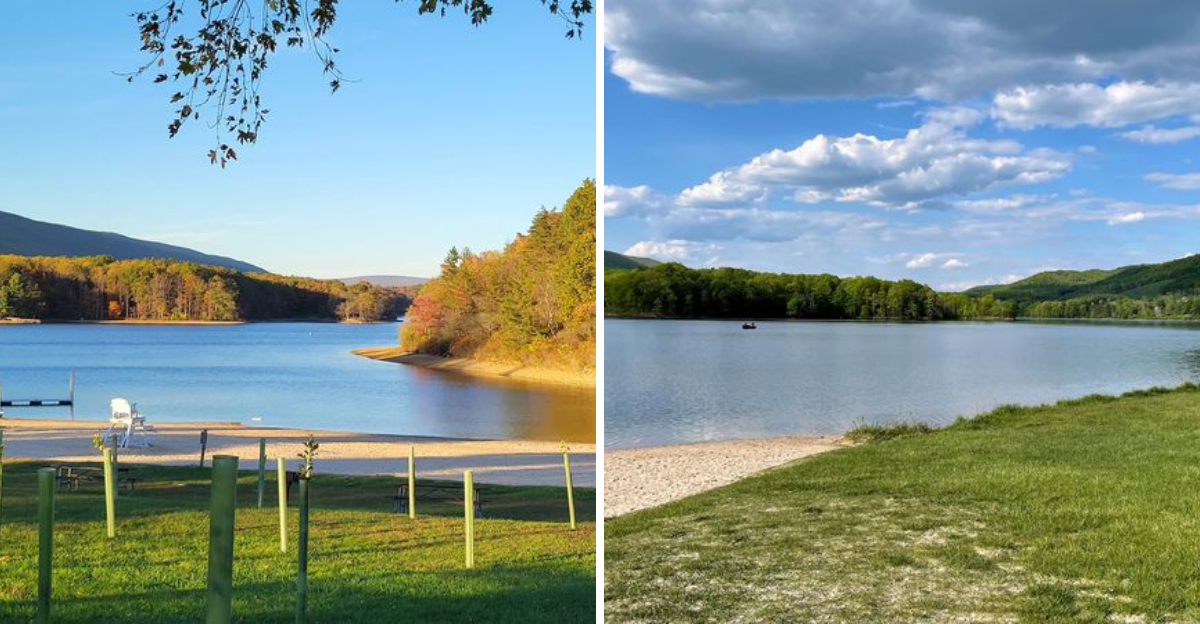
The water is a deep, clear blue, surrounded by forested hills that make you forget you are still in Maryland. You can kayak across its surface, hike along its edge, or just sit on a bench and watch the light change.
The best part is the peace. No crowded boat ramps, no jet skis buzzing past, just calm water and the sound of birds.
I spent an afternoon here and saw maybe three other people. It felt like having a private lake for the day.
The trails are well maintained, the views are stunning, and the whole place has a quiet energy that is hard to find anymore. If you are looking for a beautiful lake without the crowds, this Maryland state park is calling your name.
The Bluest Water in Maryland You Have to See to Believe
Most lakes in Maryland have that greenish-brown tint that comes with warm, shallow water. Lake Habeeb is a different story entirely.
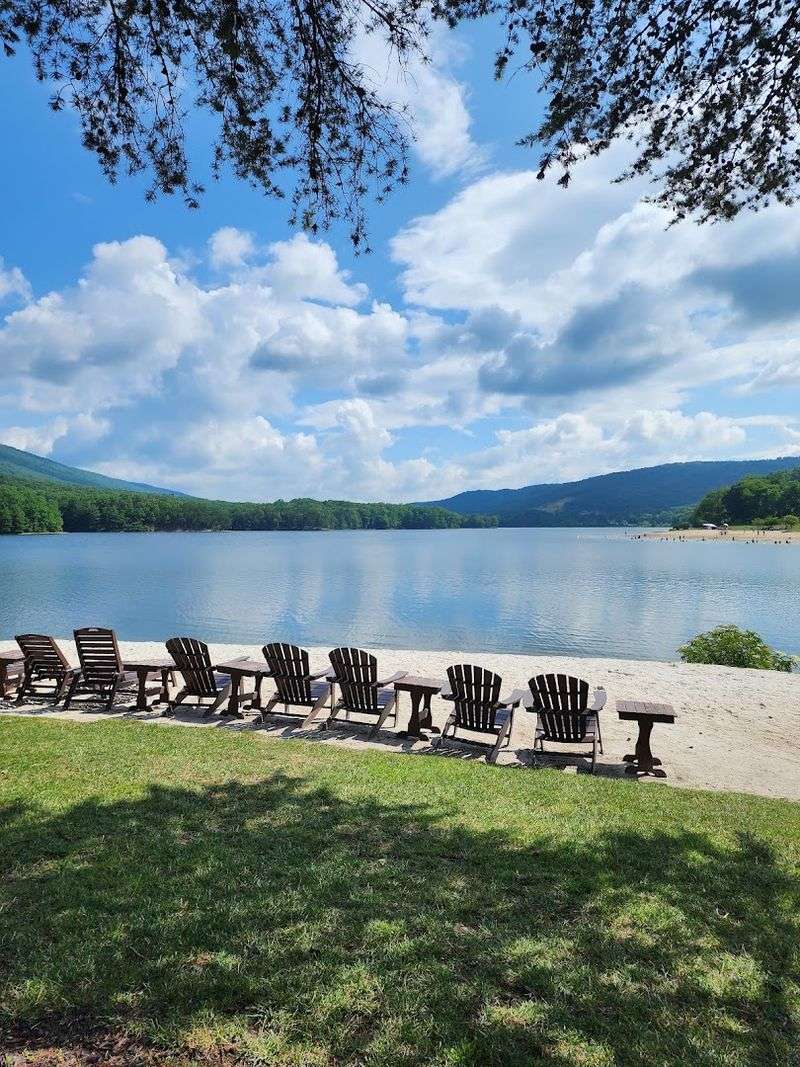
The water here runs a deep, vivid blue that genuinely catches you off guard the first time you round the trail bend and see it spread out before you.
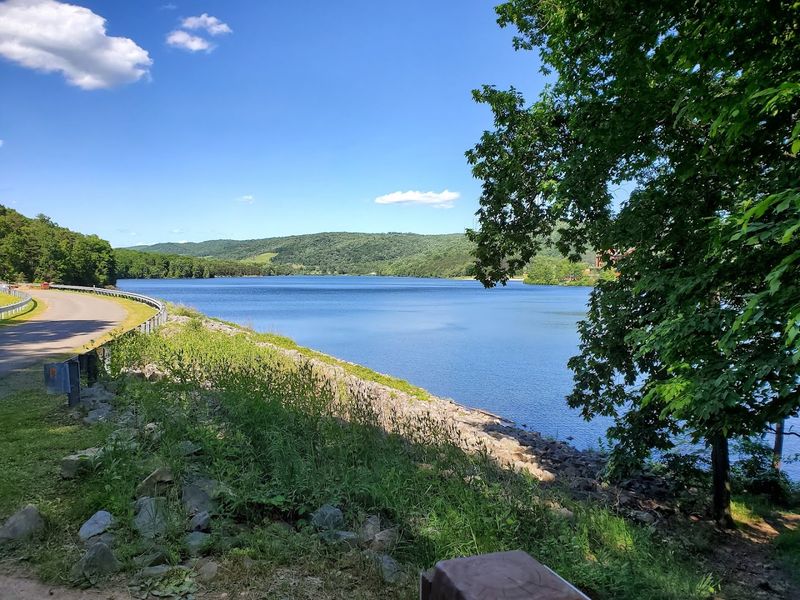
The lake covers 243 acres and reaches a maximum depth of 74 feet, which helps explain the remarkable clarity. It was created in 1970 when Rocky Gap Run was dammed, forming this stunning reservoir nestled at the base of Evitts Mountain.
The man-made origin does nothing to reduce its natural beauty.
Maryland has no natural lakes at all. Every lake in the state, including Habeeb, was created by a dam.
Knowing that makes the sheer visual impact of this place even more impressive. It is a feat of both engineering and geography working together in a surprisingly beautiful way.
The lake was named after Edward Habeeb, a man who played a key role in getting the park established. That is a legacy worth having.
On a clear morning, the reflections of the surrounding ridgelines on the water surface look almost painted.
You can see straight down through the water from a kayak or canoe, which is a rare treat. The combination of depth, clarity, and mountain backdrop makes this lake genuinely stand out among any body of water in the Mid-Atlantic region.
It earns every bit of the attention it rarely gets.
Paddling and Swimming, Two Ways to Own the Lake
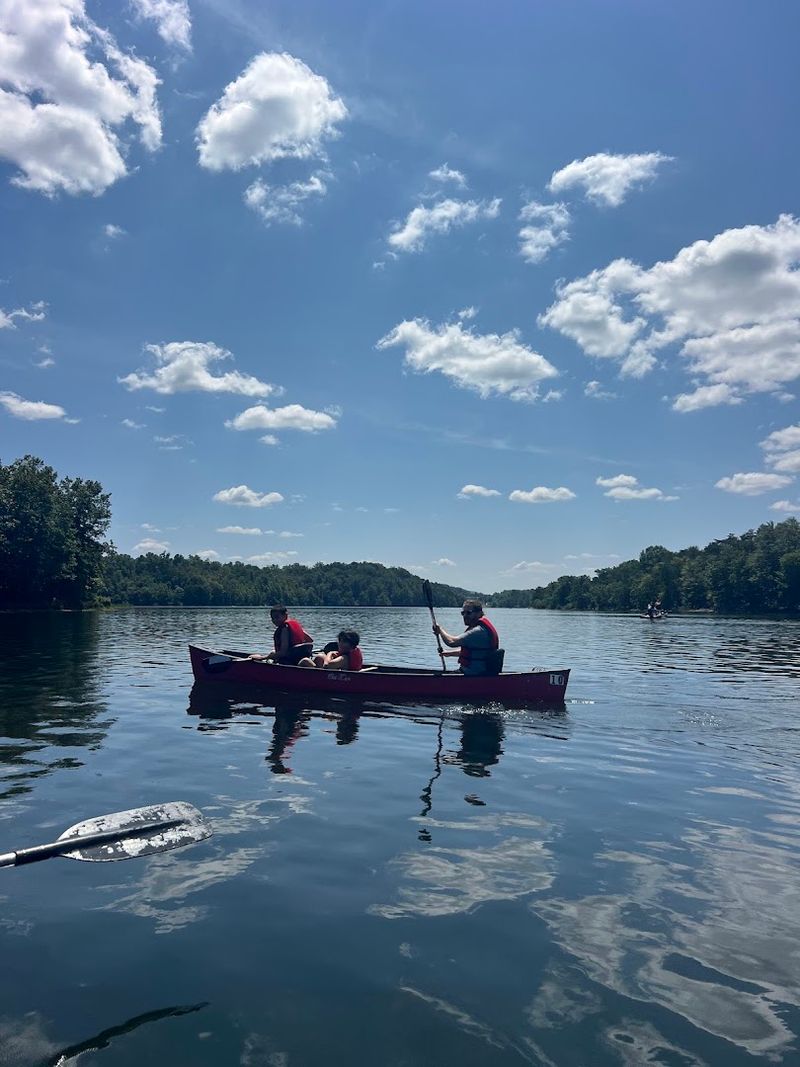
Getting out on the water here is one of those experiences that feels effortless in the best possible way. Canoe, kayak, and stand-up paddleboard rentals are typically available from Memorial Day weekend through Labor Day, so you do not even need to haul your own gear to enjoy it.
Non-gasoline powered boats are welcome on the lake around the clock, seven days a week. That means early morning paddlers can have the whole glassy surface to themselves before the day crowds arrive.
There is something genuinely peaceful about being on that water at dawn, with the mountain walls still in shadow and mist sitting low over the lake.
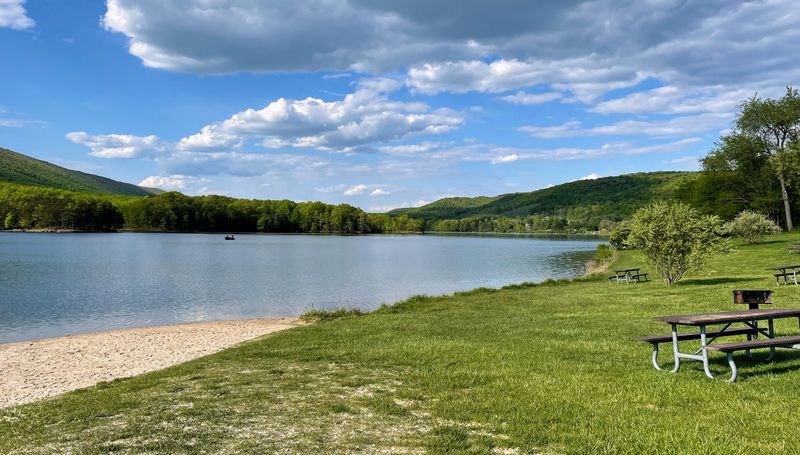
Swimming is available at two public day-use beaches, plus a separate beach reserved for campground guests. The swimming season runs from Memorial Day to Labor Day, with access from 7 AM until sunset.
Both beaches offer enough space to spread out without feeling cramped, even on busy summer weekends.
One detail that stands out is the dog-friendly swimming sections available at two of the beaches. Bringing your dog to a swimming spot is not always easy to arrange, so this is a genuinely thoughtful feature.
Watching a happy dog charge into that clear mountain water is its own kind of entertainment.
Whether you want to float lazily near shore or paddle all the way across the lake, the experience scales easily to whatever energy level you bring. The water temperature stays refreshing throughout summer without ever feeling punishing.
Fishing on a Lake Built for It
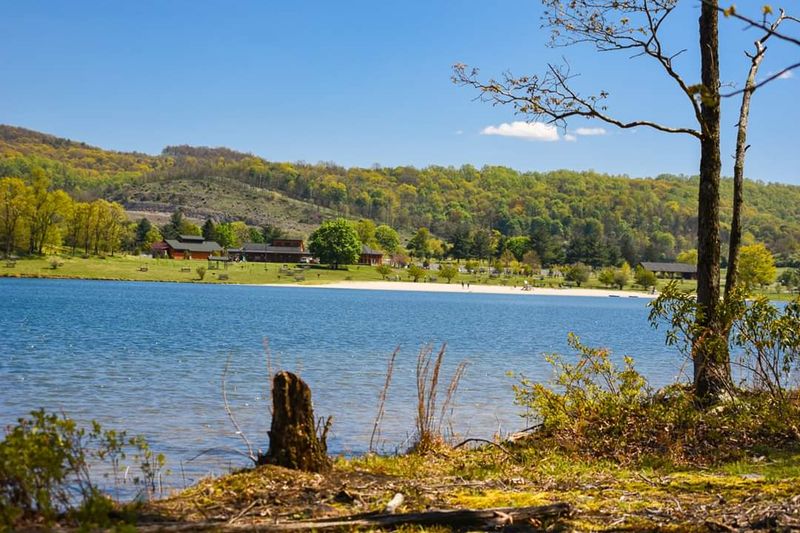
Fishing at Lake Habeeb is not an afterthought. The lake was designed with anglers in mind, and the evidence is literally underwater.
Artificial reefs are submerged throughout the lake to create varied habitat and draw fish to specific areas, which makes the whole experience more productive and interesting.
The species list here is solid. Panfish, trout, catfish, largemouth bass, and smallmouth bass all call this lake home.
That variety means you can adapt your approach depending on the season and what you are after. Trout fishing in the cooler months has a particularly devoted following among regulars.
Fishing is permitted 24 hours a day, seven days a week, all year long. That kind of unrestricted access is genuinely rare.
Early morning casts before the swimmers arrive, late evening sessions as the light fades over the ridgeline, even night fishing under a clear mountain sky, all of it is fair game.
Winter brings another option that surprises a lot of visitors. Ice fishing is possible on Lake Habeeb when conditions allow, adding a cold-weather dimension to the park that keeps it active well past summer.
Not every Maryland lake gives you that opportunity.
There is also a fishing dock connected to the Touch of Nature Trail, making it accessible for visitors of all ability levels. The combination of open access, diverse species, and thoughtfully placed underwater structure makes Lake Habeeb a genuinely rewarding fishing destination regardless of your skill level or experience.
Hiking Trails That Earn Their Views
Rocky Gap has a trail for almost every kind of hiker, and that range is one of the park’s strongest qualities. The Lakeside Loop Trail is the one most visitors gravitate toward first, and for good reason.
It circles the entire lake over 5.3 miles, offering continuous water views mixed with forested stretches that feel genuinely removed from the outside world.
The terrain on the loop shifts between dirt, gravel, and paved sections, with footbridges crossing over narrow inlets and rocky creek crossings. It is moderate in difficulty, suitable for most fitness levels, and also open to bikers.
Doing the full loop takes a few hours at a relaxed pace, which is honestly the right way to do it.
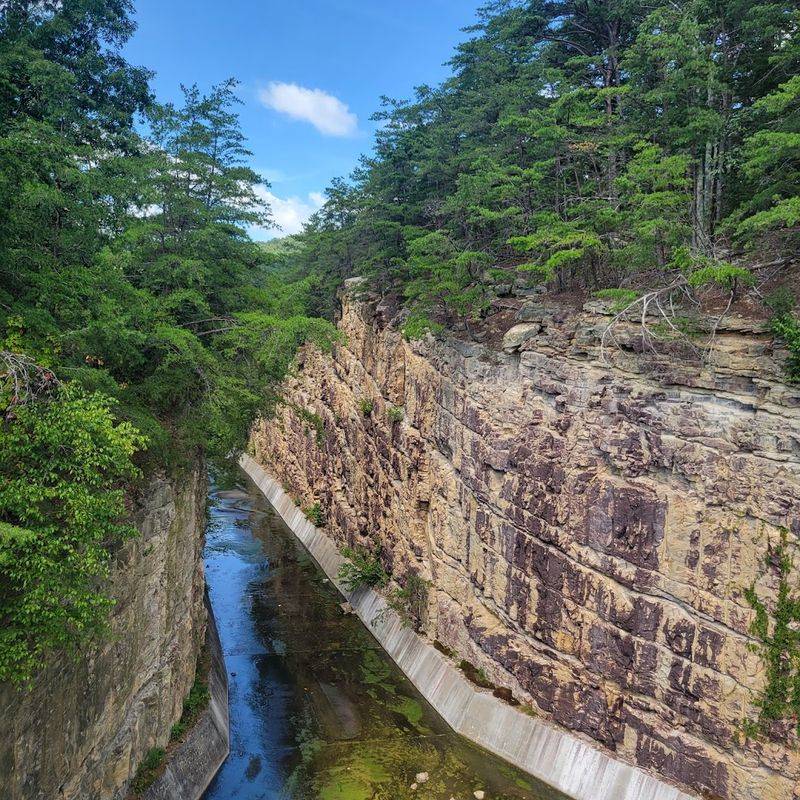
For something short and dramatic, the Canyon Overlook Trail delivers. This quarter-mile loop leads to a view of the mile-long gorge carved by Rocky Gap Run, with sheer cliffs dropping away below.
It is the kind of overlook that makes you stop talking mid-sentence.
The Evitts Homesite Trail is for those who want a real climb. It gains about 1,000 feet of elevation over 2.5 miles, pushing through hemlock groves, rhododendron tunnels, and cascading stream crossings before opening up to panoramic summit views.
It also passes through the 943-acre Rocky Gap Wildlands, a protected zone that limits development and keeps the trail experience genuinely wild.
There is also the Archaeological Rock Shelter Trail, which lets you see actual Indigenous American lodging sites. That alone makes it worth an afternoon.
Camping Among the Hemlocks, Right on the Water
Camping at Rocky Gap feels different from a lot of Maryland state parks because the setting is genuinely dramatic. Dense hemlock forests press in around the campsites, rhododendron grows thick along the edges, and the lake is never far away.
It does not feel like a parking lot with fire rings.
The park offers 278 individual campsites, 13 mini-cabins, and yurts. That range of options means you can go full tent camping or step it up slightly with a cabin without leaving the park.
Every camping loop includes bathhouses with hot showers, which matters more than people admit after a long day on the trail.
Certain loops are designated as pet-friendly, so bringing dogs along is entirely workable. Having a dedicated campground beach that is separate from the day-use beaches is a nice perk for overnight guests.
It keeps things a little more relaxed and less crowded during peak summer weekends.
Mornings in camp here have a particular quality that is hard to describe without experiencing it. The hemlock canopy filters the early light into something soft and greenish, and the air smells like cold mountain water.
You notice it before you have even had coffee. That is a good sign.
The proximity to trails, beaches, and the lake itself means you can fill multiple days without repeating yourself. Families tend to make this a multi-night trip because there is genuinely that much to do.
Booking ahead in summer is strongly recommended, as sites fill up fast once the season opens.
Scuba Diving in a Mountain Lake, Yes Really
Most people do not associate scuba diving with Maryland state parks, and that is exactly what makes this detail so unexpected. Lake Habeeb has an underwater scuba diving trail, a feature that is almost certainly unique among freshwater parks in the state.
It is one of those things that sounds made up until you look it up.
The combination of the lake’s 74-foot maximum depth and its excellent water clarity creates conditions that are genuinely worth exploring below the surface. The artificial reefs placed throughout the lake for fishing purposes also serve as interesting underwater structures for divers to navigate around.
It adds a whole dimension to the lake that most visitors never consider.
Freshwater diving has its own character compared to ocean diving. Visibility in Lake Habeeb can be impressive on calm days, and the cooler temperatures keep conditions comfortable during summer months.
The underwater landscape, shaped by the original creek valley that was flooded in 1970, has an eerie and fascinating topography.
For certified divers looking for a local option that is not a quarry or a reservoir with zero features, this trail offers something genuinely different. It is not widely advertised, which means crowds are not a concern.
You may have the entire underwater trail to yourself on a weekday.
It is worth checking with park staff about current access and any seasonal guidelines before planning a dive trip. The park is receptive to outdoor recreation in all its forms, and this one is no exception.
Not many mountain lakes offer this kind of layered experience.
Wildlife and Birdwatching in a Surprisingly Rich Ecosystem
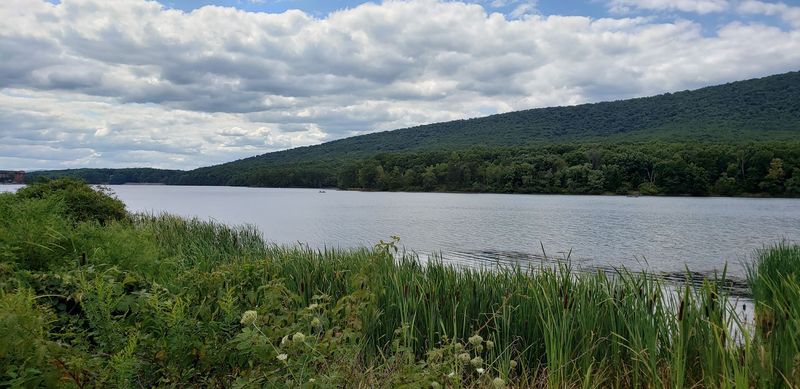
Rocky Gap State Park is not just scenically impressive, it is ecologically rich in ways that reward anyone who pays attention. Over 230 bird species have been reported within the park, making it a genuinely serious destination for birdwatchers.
Waterfowl gather on the lake throughout the year, and the forested ridgelines attract species you would not expect this far east of the Appalachian spine.
The park also features the Scales and Tales Aviary, which houses captive birds of prey and offers an up-close look at species that are hard to spot in the wild. It is particularly engaging for kids and for visitors who want a guaranteed wildlife encounter without hiking deep into the backcountry.
The plant life here adds its own layer of interest. Hemlock groves give the gorge a cathedral-like quality, especially in winter when the evergreen canopy holds its color.
Mountain laurel and rhododendron bloom in late spring and early summer, transforming the trailsides into something genuinely spectacular.
Black bears are present in the park. That is not a reason to stay away, but it is a reason to store food properly and stay aware on trails.
Encountering a bear at a reasonable distance in this kind of mountain setting is actually a memorable experience, even if it gets the heart rate up.
The park land itself has an interesting history, having once included dairy farms and a Civil War-era cemetery. That layered past adds a quiet weight to the landscape that you can feel even if you do not know the history.
Rocky Gap carries its stories well.
The Rocky Gap Gorge, a Geological Surprise Hidden in Plain Sight
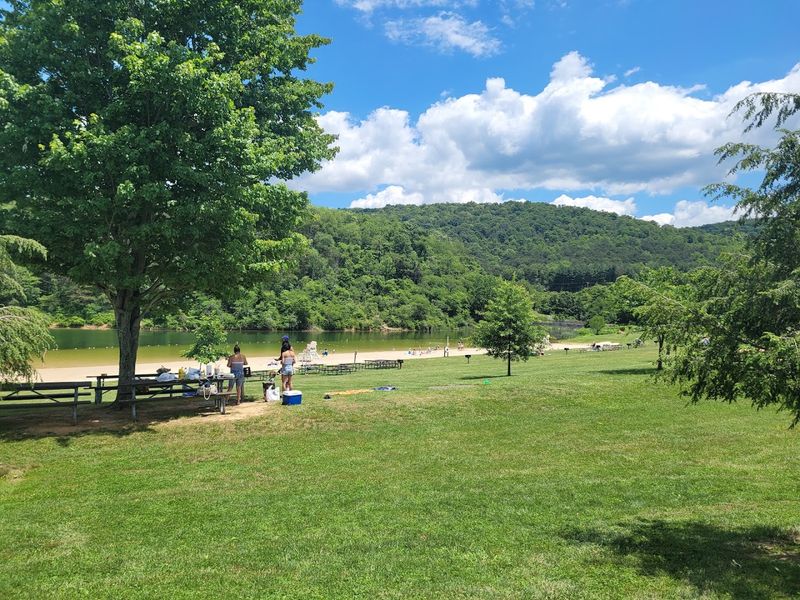
Before Lake Habeeb was created, Rocky Gap Run carved its way through a mile-long gorge that is still one of the most impressive natural features in the park.
The Canyon Overlook Trail gives you the elevated view, but getting down near the gorge floor offers a completely different perspective on the scale of it.
The cliffs here are composed largely of Tuscarora sandstone, a rock formation that tells a story of ancient sea floors and tectonic pressure stretching back hundreds of millions of years.
It sounds like a geology lecture until you are actually standing next to those walls, and then it becomes something else entirely.
The scale makes it personal.
Rocky Gap Run still feeds the lake and moves through the gorge with enough energy to create small cascades and pools along its length. In spring, when snowmelt pushes the flow higher, the sound of moving water fills the entire canyon.
It is the kind of ambient noise that makes everything else feel quieter by comparison.
The hemlock trees that line the gorge walls are dense and old-looking, their roots gripping the rock faces at improbable angles. Rhododendron fills in the gaps, creating a layered green wall that blocks the sky in the narrow sections.
It feels genuinely ancient in there, which is a rare sensation in a state park this close to a highway.
The gorge is one of those features that elevates Rocky Gap from a nice lake park to something with real geological and ecological character. It deserves more attention than it typically receives from casual visitors passing through.
How to Plan Your Visit and Make the Most of Rocky Gap
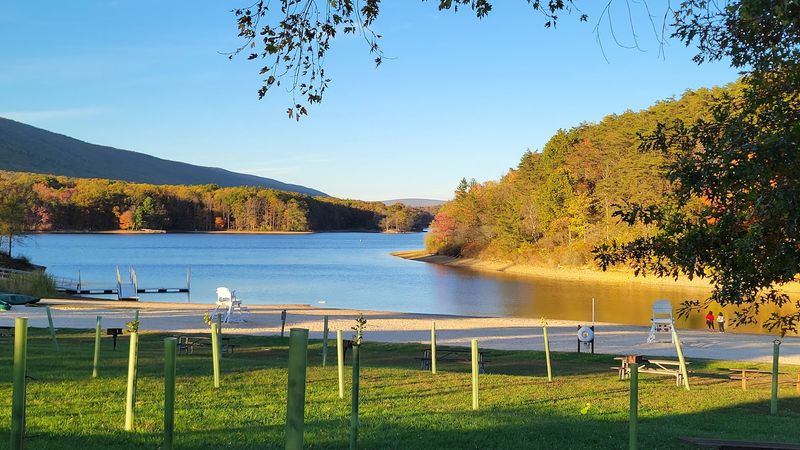
Rocky Gap State Park is located in Flintstone, Maryland, which is in the far western part of the state near the Pennsylvania and West Virginia borders. The drive from Baltimore takes roughly two hours, and from Washington D.C. it is a similar stretch.
The roads leading in are scenic, passing through mountain terrain that sets the mood well before you arrive.
The park is genuinely four-season friendly. Summer brings swimming, paddling, and full campground activity.
Fall delivers some of the most dramatic foliage in the state, framed perfectly by the lake and the ridgelines above. Winter opens up ice fishing, quieter trails, and a stillness that the warmer months never quite offer.
Parking is available near the beaches, trailheads, and boat ramp. Arriving early on summer weekends is a smart move, as the day-use areas can fill up by midmorning.
Weekday visits tend to be noticeably quieter, especially outside of peak summer weeks.
The nature center is worth a stop, particularly if you are visiting with younger kids. Interpretive programs, nature hikes, and children’s activities run throughout the season.
The Touch of Nature Trail, a paved quarter-mile path with benches and a fishing dock, is accessible for all ability levels and makes a gentle introduction to the park for first-time visitors.
Reservations for campsites, cabins, and yurts should be made well in advance for summer weekends. The park’s combination of water access, trail variety, wildlife, and sheer scenic quality makes it one of the most complete outdoor destinations in Maryland.
Address: 12900 Lakeshore Dr, Flintstone, MD 21530
