Fall has a way of making everything look better. The colors, the light, the crisp air.
One of the best ways to take it all in is from the window of a train. This Maryland ride offers one of the most stunning ways to experience the season, winding through landscapes that show off autumn at its peak.
You settle into your seat, the wheels start to turn, and the view unfolds in every direction. No traffic, no navigation, just the scenery rolling past.
The route passes through hills, valleys, and small towns that look even better with a dusting of fall color. Locals know the trip well, while visitors often call it a highlight of their season.
A reminder that sometimes the best views come when you let someone else drive.
Boarding Inside a 1913 Railway Station
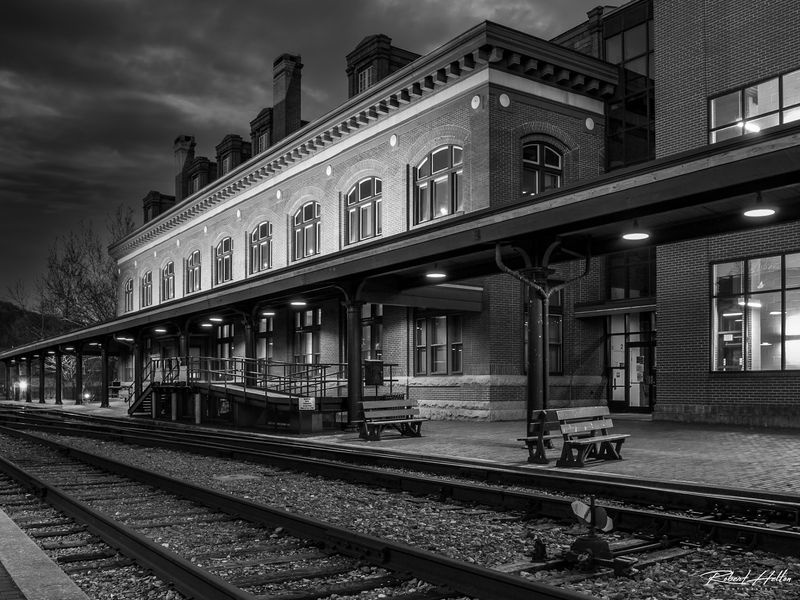
Old train stations have a particular kind of hush to them, and the one in Cumberland carries it well. Built in 1913, the Western Maryland Railway Station still functions as the starting point for every excursion, with ticket pickup handled on the second floor at 13 Canal St, Cumberland, MD 21502.
Arriving with time to spare is smart, though not because the line drags. Picking up tickets takes just a few minutes, and coach boarding tends to begin roughly twenty minutes before departure.
The extra time is better spent poking around the building itself. High ceilings, heavy woodwork, and the general grandeur of an era when rail travel was the big deal make for a nice warm-up to the ride.
Restrooms are here, and worth using before boarding since facilities on board are limited and cramped on certain cars. Little logistical details like that matter more than people expect.
Parking sits right beside the station, and on evening departures it becomes free after 5 PM, even though signs do not always say so. A small win.
Outside on the platform, the locomotive usually sits waiting, which is the moment most kids lose their minds a little. Steam engines are loud and hot and enormous in person.
Hours shift by season, with the railroad generally closed Monday through Wednesday and open Thursday through Sunday. Checking the schedule before driving out saves disappointment, especially since fall weekends fill quickly.
Consider the station part of the attraction, not just the place where the trip technically starts.
Sliding Through the Cumberland Narrows
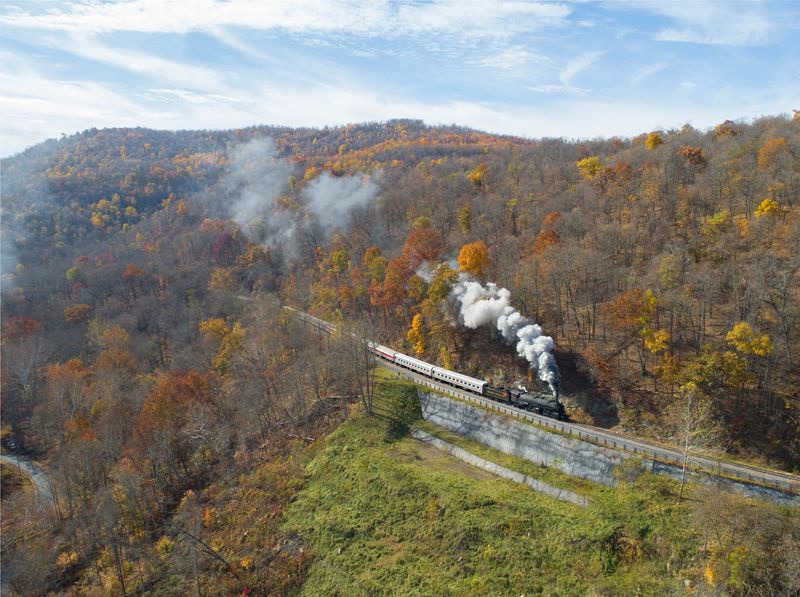
Barely a few minutes out of the station, the walls close in. The Cumberland Narrows is a water gap carved by Wills Creek, squeezed between Wills Mountain and Haystack Mountain, and the train threads right through the middle of it.
Geology nerds get a treat here. The rock layers tilt and fold in ways that make the whole gap look like something was pried open.
In autumn the effect doubles up, because those steep slopes are covered in hardwood forest that turns every shade of orange and rust. Looking up through the window means seeing color stacked hundreds of feet above the tracks.
Light plays tricks in the Narrows too. Sun filters in at odd angles, hitting patches of track and then vanishing behind a ridge.
The train moves slowly through this stretch, generally somewhere around 12 to 15 miles per hour, which is exactly the right speed for looking rather than blinking and missing it. Nobody comes on this trip for speed.
Seasoned riders often say the right side of the train offers better views heading toward Frostburg, since the valley opens up on that side. Worth keeping in mind when picking a seat.
What makes the Narrows so effective as an opening act is the contrast. One moment the view is a working railroad town, and the next it is mountain walls and creek water.
Consider it the door swinging open on the rest of the ride.
Helmstetter’s Curve and That Farm Below
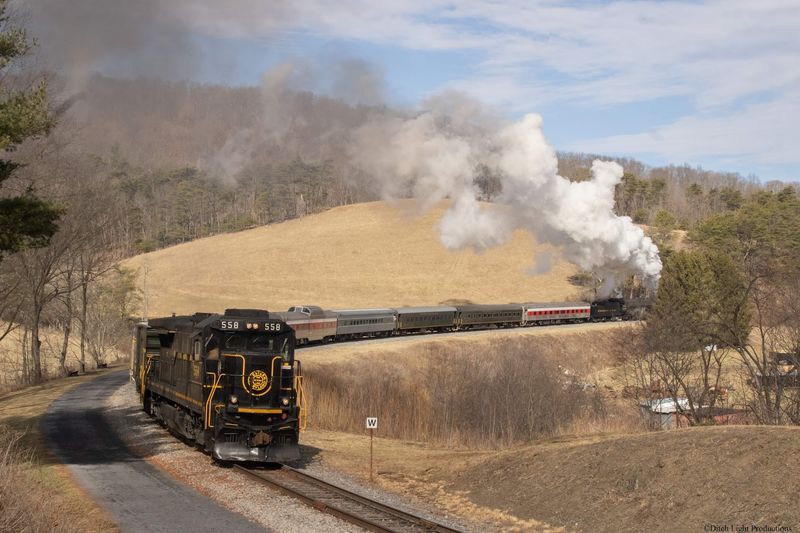
Photographers have been chasing this one spot for decades. Helmstetter’s Curve swings the train almost fully around an old farm in Cash Valley, and the resulting view is the shot that ends up on calendars and postcards.
The track bends so sharply that passengers near the back can look forward and see the locomotive working its way around. Steam trailing over the treetops adds to it.
Below, the valley opens wide. Fields, fence lines, and a farmhouse sit surrounded by forest that in October turns into a patchwork of gold and scarlet.
Cameras come out fast here, so having a phone or camera ready ahead of time helps. The curve does not last long.
A short distance beyond, the train dives into the Brush Tunnel, a 914-foot bore that runs beneath Piney Mountain. The temperature drops noticeably inside, and the air turns damp and cool.
Emerging back into daylight is a genuine jolt after that darkness. Bright leaves hit the eye all over again, somehow more vivid than before.
Fun detail worth knowing: the Great Allegheny Passage trail shares this same tunnel, so cyclists and hikers sometimes appear in the gloom alongside the tracks.
The curve-then-tunnel sequence is arguably the highlight of the whole northbound trip. Two very different sensations, back to back, within a couple of miles.
Riders in the open-air car feel this stretch most intensely, wind, sound, and all.
Climbing the Grade to Frostburg
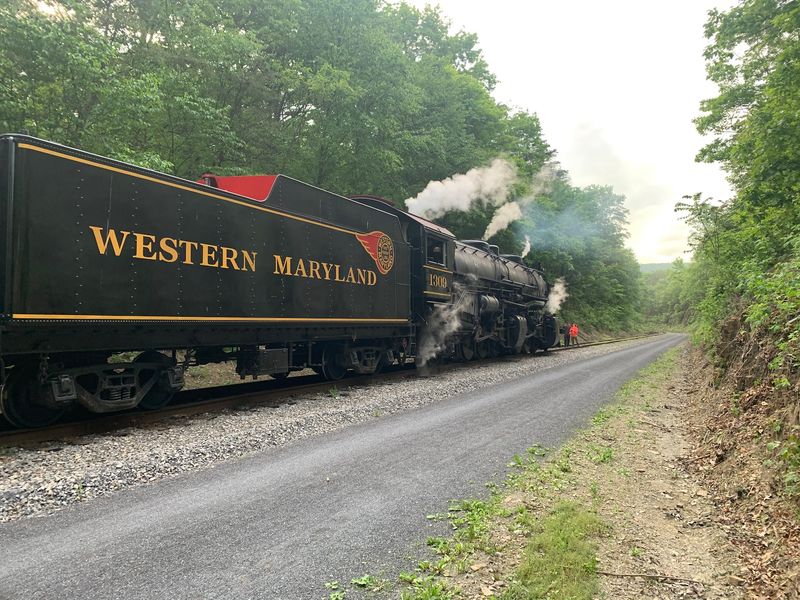
Hearing a steam locomotive work a grade is a sound that sticks with people. The climb from Cumberland to Frostburg covers 16 miles and gains 1,291 vertical feet, with sections hitting grades as steep as 2.8 percent.
That is serious work for any engine. The exhaust deepens, the pace steadies, and the whole train settles into a rhythm.
As elevation builds, the foliage shifts. Higher ridges often turn earlier and hold deeper color, so the view keeps changing in ways a level route never would.
A narrator talks through much of the ascent, pointing out landmarks and explaining the coal and iron history threaded through these hills. One highlight sits high above the village of Mount Savage, where the first rolled iron rails in the United States were manufactured back in 1844.
Hearing the narration in coach can be tricky when the car is full of chatty passengers and excited kids. Sitting closer to a speaker helps.
Bridges just below Frostburg deliver some of the best photo angles of the entire route, with the track curving out over the trees. Camera-ready riders should watch for them.
Motion sensitivity is worth considering too. The ride is smooth but slow and curvy, so anyone prone to queasiness should come prepared.
By the time the train pulls into Frostburg, the change in scenery from where it started feels dramatic. Same state, entirely different world.
Steam Power Versus Classic Diesel
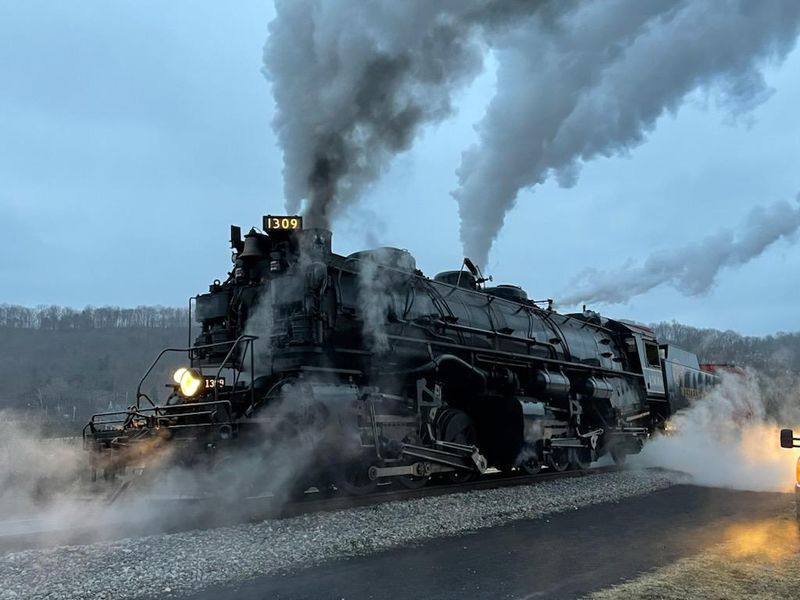
Ask any rail fan which engine to ride behind and the answer arrives instantly: steam. The Chesapeake & Ohio No. 1309, built in 1949, holds the title of largest operating steam locomotive of its type anywhere in the world, and seeing it move under its own power is a whole event.
It hisses, it thunders, and it leaves a trail of smoke over the treeline. Photographs never quite capture the scale.
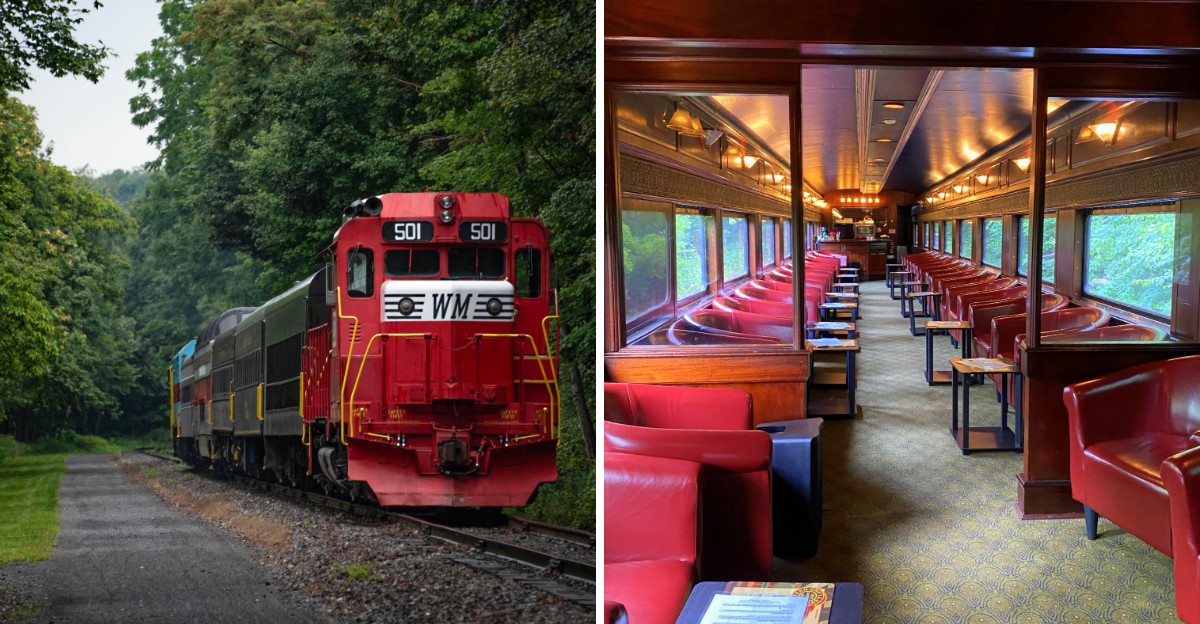
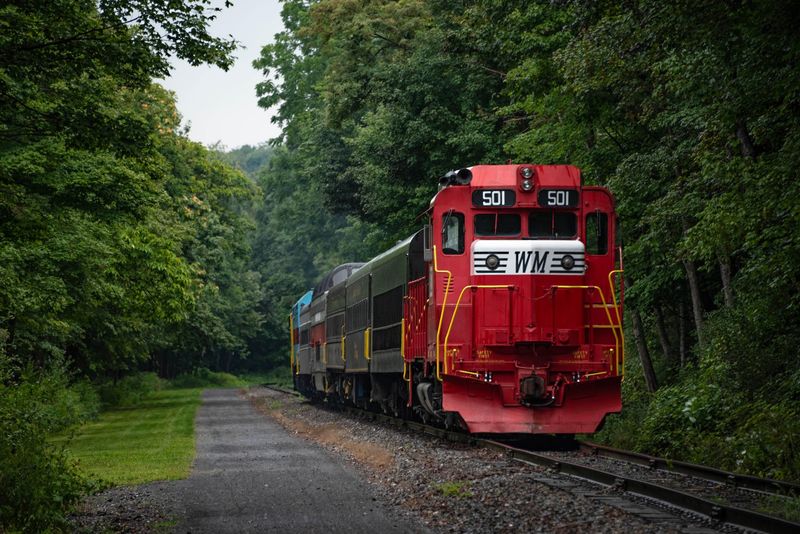
Diesel excursions run too, often behind Western Maryland No. 501, a GP30 dating to the 1960s. Those trips are quieter and a bit cleaner, with no coal dust drifting back over the cars.
Neither option changes the scenery, which is the reassuring part. The route and the views stay identical regardless of what is pulling.
Steam trips do sell out faster during peak fall weekends, so booking early matters if that is the goal. Schedules list which locomotive is assigned to each departure.
Crew members tend to be deeply knowledgeable about the equipment, and questions are usually welcomed rather than tolerated. Some departures have offered cab rides for an added charge, which train enthusiasts describe as a genuine thrill.
Honestly, the choice comes down to preference. Steam brings drama and nostalgia, diesel brings comfort and a smoother, sootless ride.
Both haul the same mountain, the same tunnel, the same blazing October hillsides. Hard to lose either way.
Picking the Right Car for the View
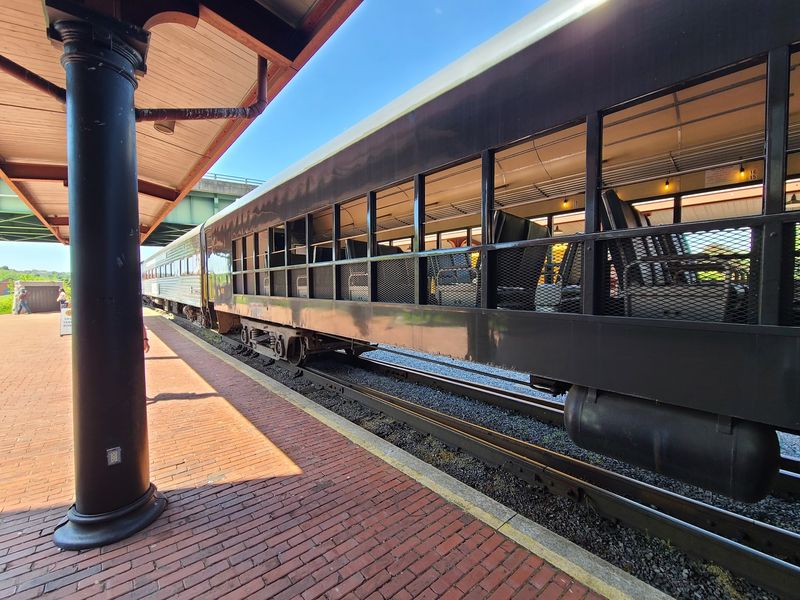
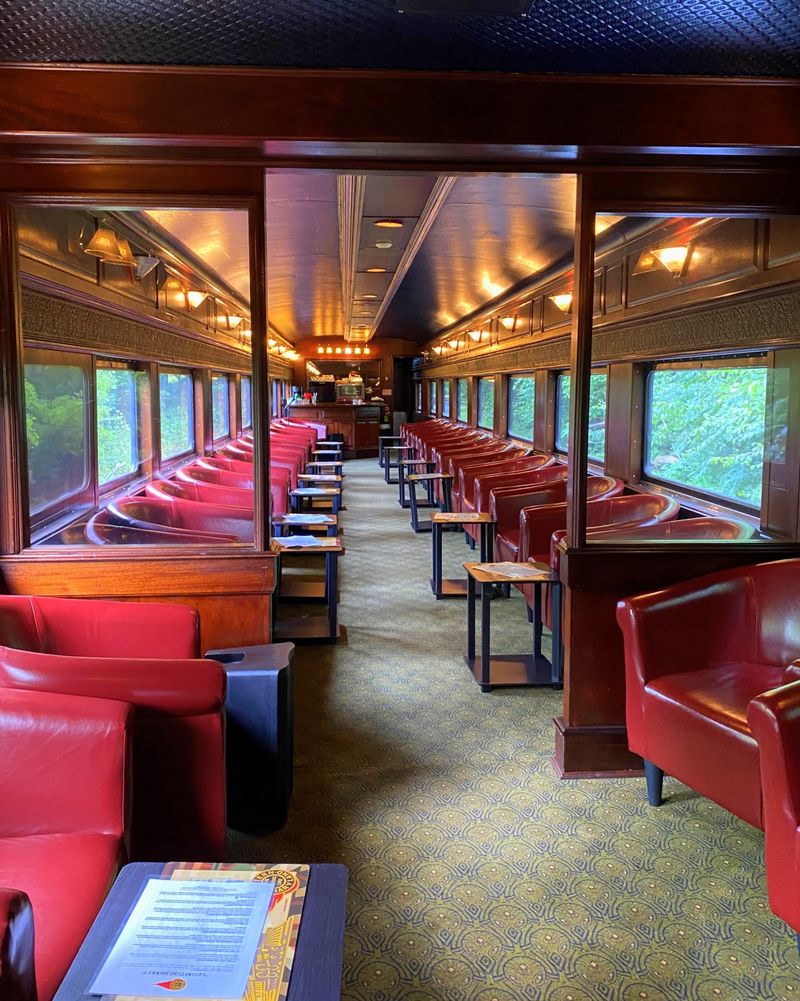
Seat choice shapes this whole trip more than most people realize. Standard Coach covers the basics with comfortable general seating, and it is perfectly pleasant, though it can get lively when families with small kids are aboard.
Lounge Class occupies a renovated car with a calmer, more spacious feel. Fewer passengers, more room to spread out.
Then there is the Open Air Class, which is exactly what it sounds like. No glass between passengers and the mountains, so the smell of damp leaves and wood smoke comes right in.
Riders in the open air behind the steam engine should expect a light dusting of coal grit. Sunglasses or protective eyewear are strongly encouraged, and honestly they make the experience more fun rather than less.
The Pleasure Dome Car, sometimes called the Mountain Vista Dome, was originally built for the Santa Fe Super Chief. Elevated seating and wraparound glass turn the ceiling into part of the view.
Dome tables run small, so anyone planning a full meal up there should know it feels cozy. The payoff is a 270-degree look at the foliage.
Food service varies by class, from lunch and brunch options to a simple snack bar. Skipping the meal and grabbing something quick is a completely valid plan.
One practical tip: parties of two booking a four-seat table may be seated with strangers. Sometimes delightful, sometimes not.
Ninety Minutes to Roam Frostburg
Reaching the top of the mountain comes with a bonus: roughly 90 minutes to wander before the return trip. Frostburg is a compact mountain town, and a free shuttle bus runs between the station area and the business district for anyone not wanting to make the walk uphill.
The standout stop is the Thrasher Carriage Museum, home to a rare and extensive collection of horse-drawn carriages. Entry is included with a train ticket, which makes skipping it feel a bit silly.
Staff there share detailed background on individual carriages, and the craftsmanship on display genuinely surprises people who arrived only for the train. Velvet interiors, hand-painted details, sleighs built for snow.
Not everything in town keeps consistent hours, especially on Sundays and holidays, so some shops and restaurants may be closed. Planning around that prevents a letdown.
An alternative worth considering is walking a stretch of the trail near the station and reading the coal miner memorial walls. Quiet, thoughtful, and very much rooted in this region’s story.
Local vendors sometimes set up near the depot during busy seasons, which is an easy way to grab a snack or a small souvenir.
The turntable operation, when running, is also fun to watch as the locomotive gets repositioned for the trip back down.
Ninety minutes goes faster than expected up here. Pick one or two things rather than trying to see everything.
Timing Peak Color and Stretching the Trip
Timing is everything with leaf season, and around here the sweet spot usually lands in mid to late October. Higher ridges along the route often color up earlier, which means even an early-October ride can deliver plenty of orange and gold.
Late October tends to produce the most postcard-worthy results. Mixed Allegheny hardwood forest gives the hillsides real variety instead of one flat shade.
Weekend departures during peak weeks book up well ahead, so reserving early is the practical move. Weekday trips, when available, come with thinner crowds.
Cyclists have a clever option. The Great Allegheny Passage runs parallel to the tracks, and bikes can be carried up the mountain aboard the train for a long, mostly downhill coast back toward Cumberland.
Rail biking through Tracks and Yaks operates in the area as well, offering another way to see the corridor under leg power rather than locomotive power.
Mountain Maryland holds around 70,000 acres of public land, including state parks and forests, which makes it easy to build a full weekend around one train ride. Hiking trails and scenic drives are everywhere.
Layers are essential in October. Mornings can be sharp and cold at elevation, especially in the open-air car, and afternoons often warm considerably.
Themed excursions run through the season too, from mystery dinner trips to holiday rides. Fall, though, belongs to the leaves and the long slow climb through them.
