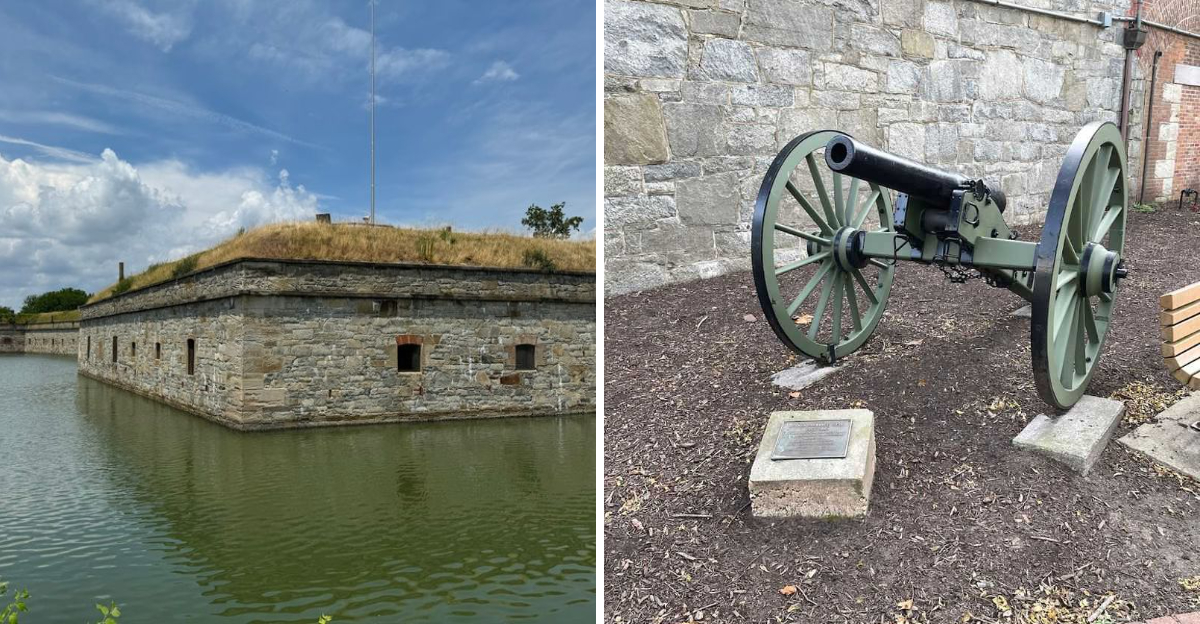
In Virginia, there stands a fortress that feels more like the setting of a gripping story than a simple military site. Massive stone walls rise in Hampton, built to protect a young nation yet later used to confine one of the most debated figures of the Civil War.
This monument brings together bold defense strategy, the struggle for freedom, and high-stakes political tension in one unforgettable place. Walking its grounds reveals layers of history that shift with every step.
It is not just a landmark but a place where unexpected turns shaped the course of a nation, leaving behind stories that still resonate today.
The Fortress That Took 15 Years To Build
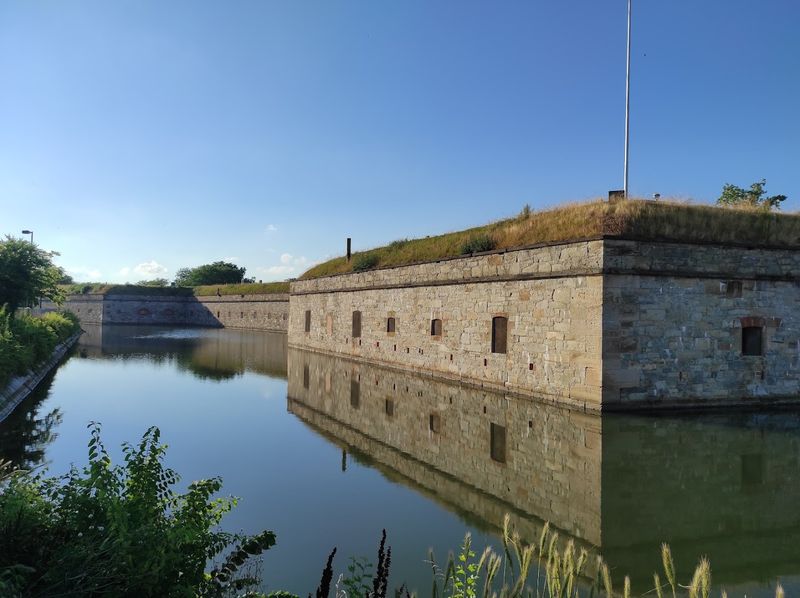
Some construction projects run a little over schedule. Fort Monroe ran over by years, and the result was so jaw-dropping that nobody complained.
Completed in the early 19th century after roughly 15 years of construction, this massive stone fortress stands as the largest of its kind ever built in the United States.
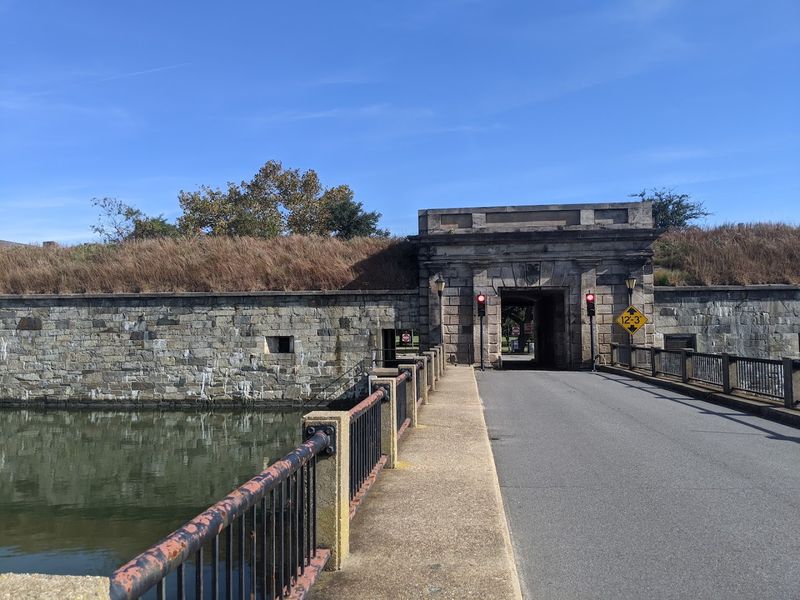
Designed by Simon Bernard, a brilliant French military engineer who once served as an aide to Napoleon Bonaparte himself, the fort was engineered to be practically impenetrable. Thick stone walls, a wide surrounding moat, and a strategic position at the mouth of the Chesapeake Bay made it a defensive powerhouse from day one.
Walking up to those walls today, the sheer scale of the place is genuinely staggering. Virginia has produced countless historical landmarks, but Fort Monroe stands in a category all its own.
The engineering precision visible in every stone course is a testament to the ambition of early American military planning. Standing inside the fort, looking up at walls that have survived wars, storms, and centuries, it is impossible not to feel a deep sense of awe at what human hands accomplished so long ago.
Simon Bernard’s Napoleonic Blueprint Comes To Virginia
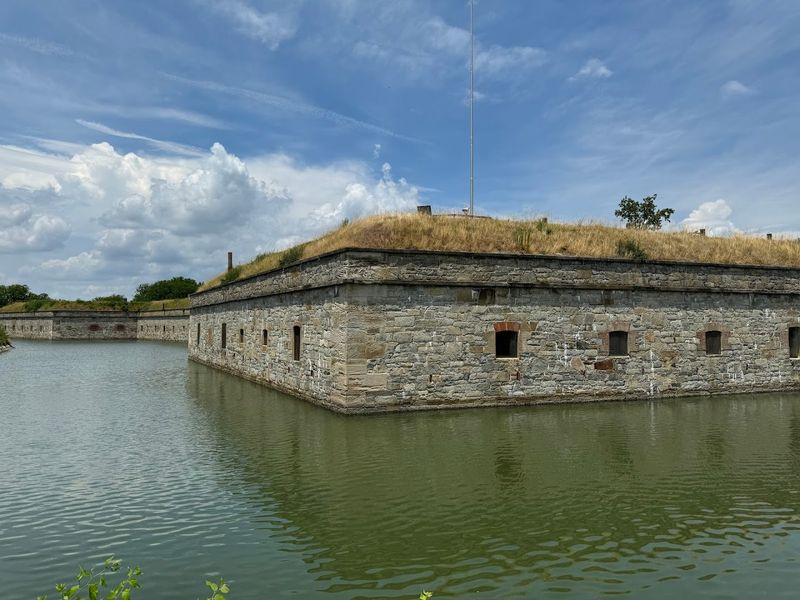
Not every fortress gets designed by someone who once advised the most famous military mind in European history. Fort Monroe carries that distinction with remarkable pride.
Simon Bernard brought his European expertise straight to the Virginia coastline, creating a fortification that blended Old World military science with New World ambition.
Bernard’s design incorporated a classic star-shaped layout, which was the gold standard of defensive architecture at the time. The shape allowed defenders to cover every angle of approach, eliminating blind spots that enemies could exploit.
Every detail was calculated, from the placement of gun emplacements to the depth of the surrounding moat.
What makes exploring Fort Monroe National Monument so rewarding is that so much of Bernard’s original vision is still visible. The casemates, the ramparts, and the overall layout remain remarkably intact.
Fort Monroe is essentially a living textbook of 19th-century military engineering, and Virginia should be endlessly proud to host such a treasure. Running your hand along those stone walls feels like a direct handshake with history, connecting the present moment to a world of cannons, strategy, and extraordinary craftsmanship.
The Moat That Still Surrounds The Fort Today
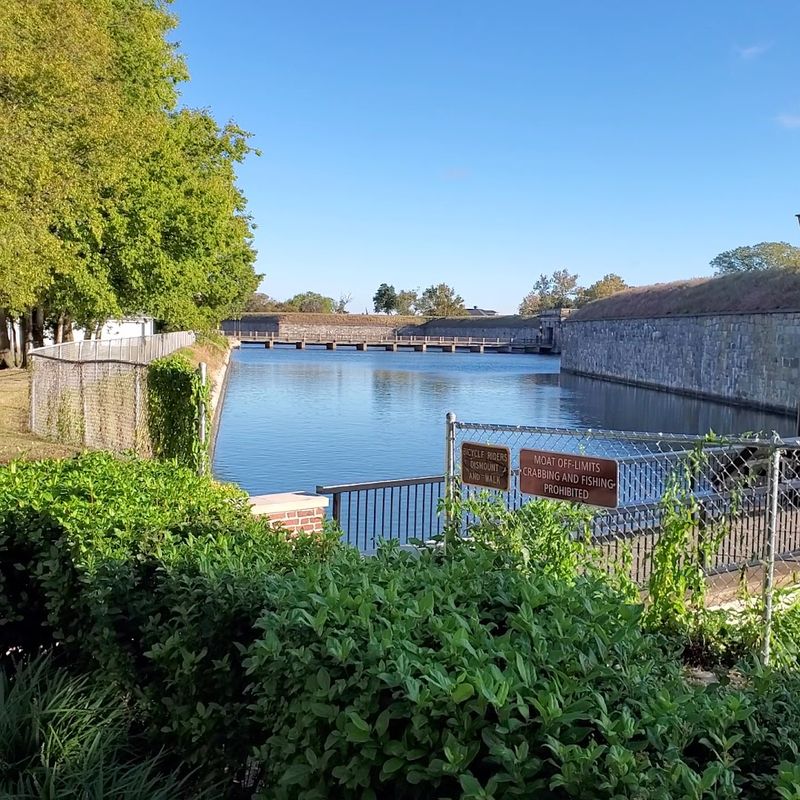
Most forts you visit are just buildings. Fort Monroe is a fortress wrapped in its own private body of water, and that moat is every bit as dramatic in person as it sounds.
Still filled with water today, the moat wraps around the entire perimeter of the fort, giving the whole structure an almost fairy-tale quality that photographs simply cannot capture.
Originally designed as a serious defensive obstacle, the moat was meant to slow down any attacking force long enough for defenders to unleash serious firepower. It worked beautifully as a concept, though Fort Monroe was never actually stormed by an enemy force.
The moat did its job by existing, and its sheer presence was enough to discourage any would-be attackers.
Today, walking the path that runs alongside the moat is one of the most peaceful experiences at Fort Monroe National Monument. The water reflects the stone walls above, and on calm mornings, the whole scene has an almost mirror-like quality.
Virginia sunrises seen from this vantage point are spectacular. Bring a camera, wake up early, and prepare to take the best photograph of your entire trip right here along this historic waterway.
Jefferson Davis Behind These Very Walls
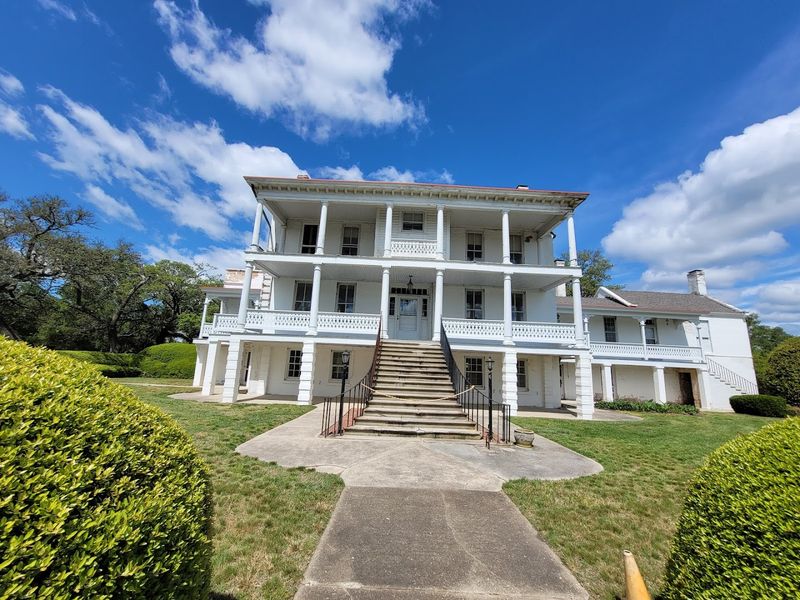
Here is the plot twist that makes Fort Monroe genuinely unforgettable. The fortress built to protect the United States eventually became the prison cell for the president of the Confederacy.
After the Civil War ended, Jefferson Davis was captured and brought to Fort Monroe, where he spent two years confined within a casemate cell inside these very walls.
Davis was held under strict conditions initially, with guards posted around the clock and limited freedoms. His imprisonment was deeply controversial, sparking debate about treason, justice, and what the reunified nation should do with its defeated enemies.
He was ultimately released without ever standing trial, a decision that left historians debating the outcome for generations.
The casemate where Davis was held is now part of the Casemate Museum at Fort Monroe National Monument, and stepping inside that small stone room is a genuinely eerie experience. The confined space, the thick walls, and the knowledge of who once paced those floors gives the room an atmosphere that is hard to shake.
Virginia has many Civil War sites, but none quite as dramatically charged as this particular corner of American history. It is sobering, fascinating, and absolutely worth your time.
The Contraband Decision That Changed American History
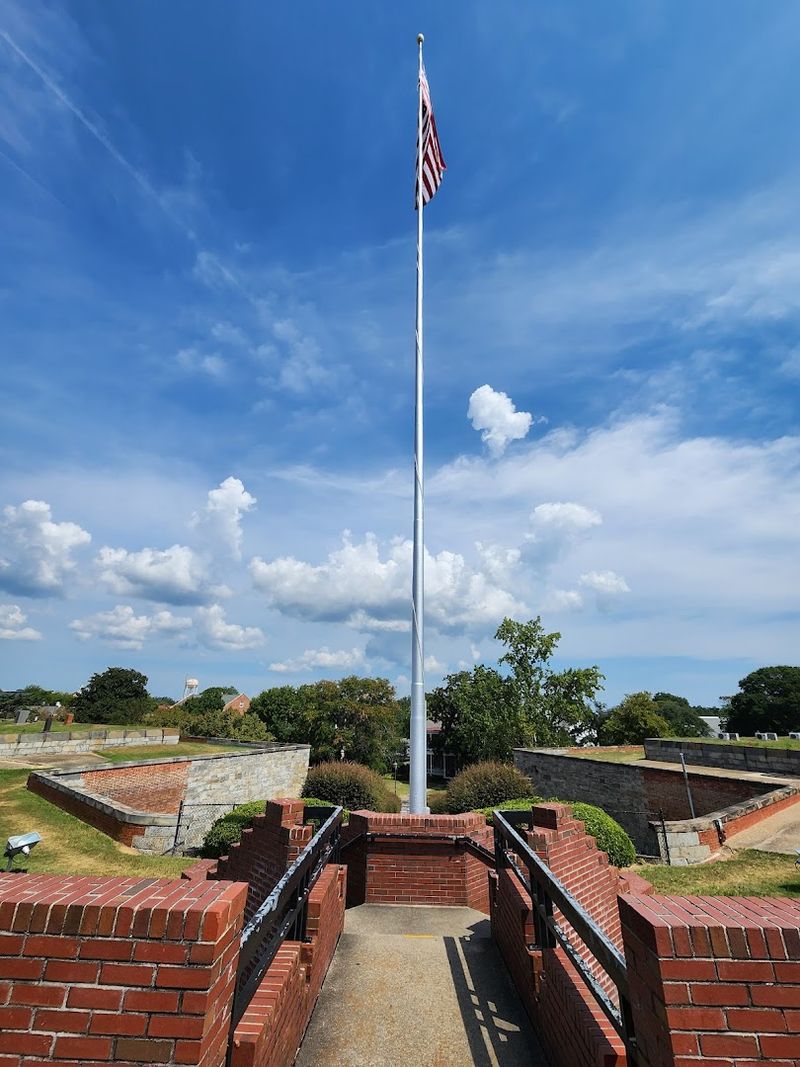
Long before Jefferson Davis arrived as a prisoner, Fort Monroe made history in a far more inspiring way. In 1861, Major General Benjamin Butler made a decision inside these walls that rippled across the entire Civil War.
Three enslaved men escaped to the fort seeking freedom, and Butler declared them ‘contraband of war,’ refusing to return them to bondage.
That single decision transformed Fort Monroe into a sanctuary. Word spread quickly, and hundreds, then thousands, of enslaved people made their way to the fort seeking protection.
The community that formed outside the walls became known as ‘Freedom’s Fortress,’ a name that carries enormous weight and meaning even today.
Fort Monroe National Monument honors this history with real depth and seriousness. The exhibits dedicated to the Contraband Decision are among the most moving in the entire facility, presenting the human stories behind the historical turning point with clarity and respect.
Virginia’s complicated relationship with slavery and freedom is confronted head-on here, making the monument an essential stop for anyone seeking to understand the full arc of American history. This chapter alone justifies the entire journey to Hampton.
The Casemate Museum And Its Incredible Collections
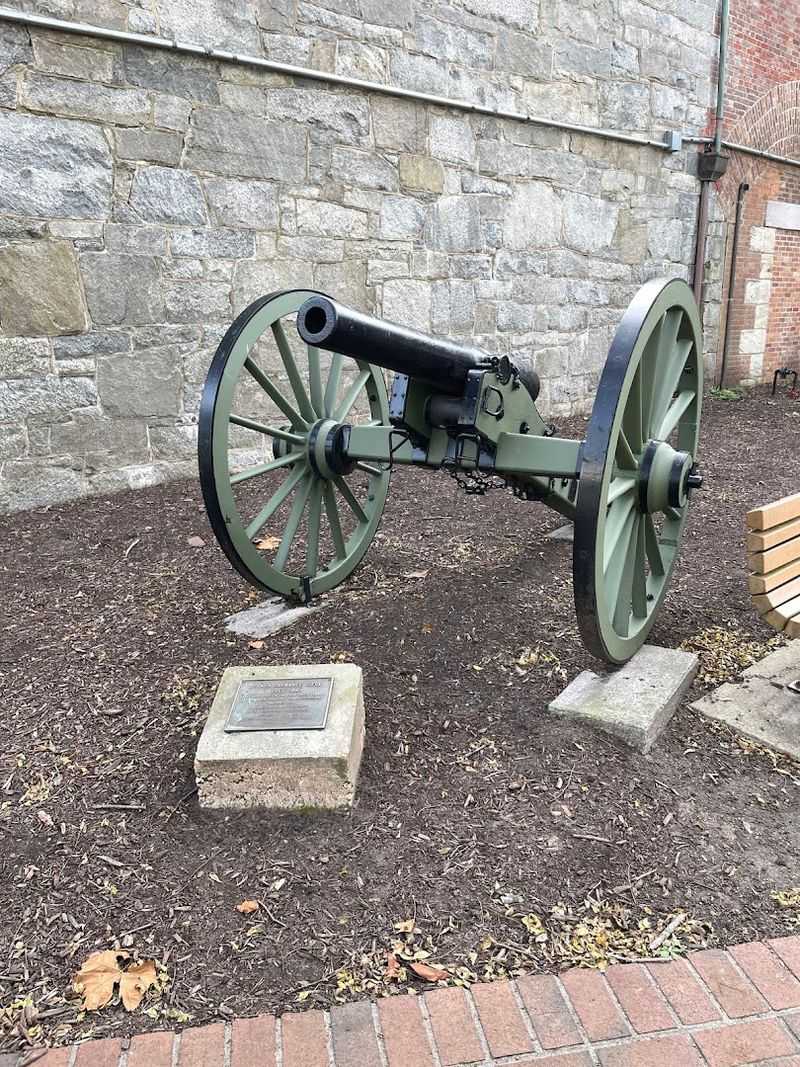
Tucked inside the thick stone arches of Fort Monroe National Monument, the Casemate Museum is the kind of place that makes history feel genuinely alive. The museum occupies the original casemate spaces within the fort, meaning the architecture itself is part of the exhibit before you even look at a single display case.
The collections span centuries of American military history, from the earliest days of the fort through the Civil War and well beyond. Weapons, uniforms, personal letters, and detailed scale models bring each era into sharp focus.
The Jefferson Davis cell is preserved as a key exhibit, but the museum extends far beyond that single story into dozens of equally compelling chapters.
Timed entry tickets are required for the museum, so planning ahead is strongly recommended. The walking tour that accompanies the museum visit adds tremendous context, guiding you through the various sections of the fort with informative stops at key locations.
Honestly, budget more time than you think you need here. Fort Monroe National Monument rewards slow, attentive exploration far more than a quick walk-through.
Virginia history runs deep, and this museum captures a remarkable slice of it with impressive care and expertise.
Walking The Ramparts With Chesapeake Bay Views
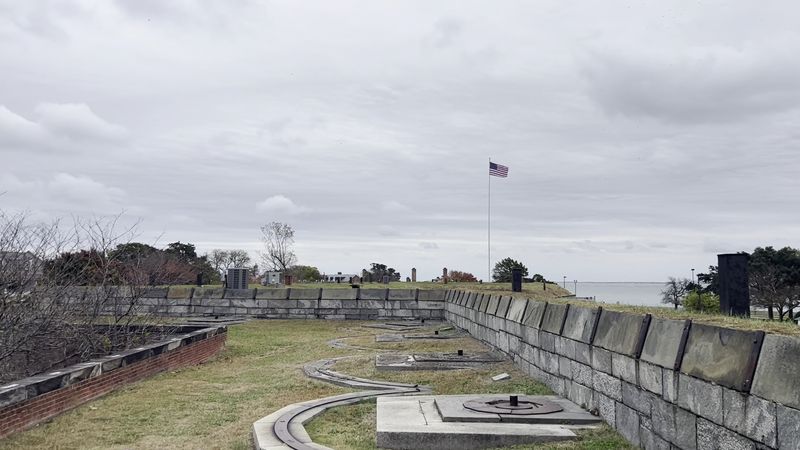
Climbing up to the ramparts at Fort Monroe and looking out over the Chesapeake Bay is one of those travel moments that stops you completely in your tracks. The view stretches wide and blue in every direction, with container ships gliding past in the distance and the Virginia coastline curving gently along the horizon.
The full circuit around the top of the fort covers just over a mile, which sounds modest until you realize how much there is to see along the way. Old gun positions, observation points, and even a fascinating pet cemetery used by soldiers stationed here over the decades all appear as you make your way around the perimeter.
The rampart walk is completely free and open to the public, making it one of the best value experiences in all of Virginia. Sunrise visits are particularly magical, with the early light turning the bay into a sheet of gold and the old stone walls glowing warm around you.
Dolphins have been spotted from these ramparts on calm mornings, which adds an entirely unexpected layer of delight to an already spectacular experience. Wear comfortable shoes and take your time, because rushing this walk would be a genuine shame.
Freedom’s Fortress and the Path To Emancipation
Fort Monroe carries a nickname that deserves to be far more widely known. ‘Freedom’s Fortress’ is not just a poetic phrase. It reflects a concrete historical reality that unfolded right here on this Virginia peninsula during the most turbulent years of American history.
The community of formerly enslaved people who gathered outside the fort’s walls grew into one of the most significant freedom communities of the Civil War era. Schools, churches, and family reunions took place in the shadow of these stone walls, creating a living, breathing society built on the foundation of Butler’s Contraband Decision.
The human energy of that moment is still palpable when you stand on these grounds today.
Fort Monroe National Monument dedicates significant interpretive resources to this story, recognizing that the path to emancipation ran directly through Hampton. The outdoor markers, interpretive panels, and museum exhibits work together to tell a story that is both heartbreaking and deeply inspiring.
Understanding this chapter transforms the entire experience of visiting the fort from a simple sightseeing trip into something far more meaningful and emotionally resonant. Virginia’s role in the story of American freedom is complex, and Fort Monroe presents that complexity with admirable honesty.
The Beaches, Wildlife, and Waterfront Charm
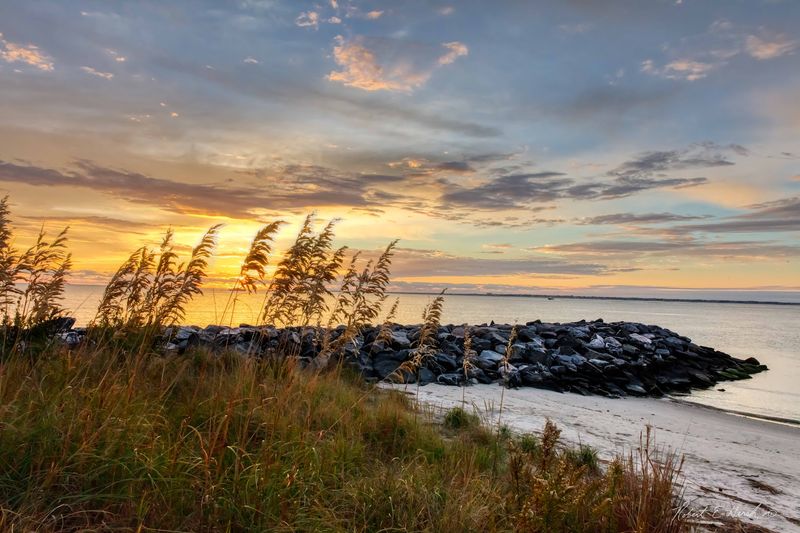
Fort Monroe is not all heavy history and solemn reflection. The waterfront side of the monument offers some genuinely lovely beach access, with calm, gentle waters that are perfect for a relaxed afternoon by the shore.
Container ships passing close offshore add a surprisingly dramatic backdrop to what would otherwise be a perfectly ordinary beach scene.
Wildlife enthusiasts will find plenty to get excited about here. Dolphins appear with reasonable regularity in the waters around the fort, and the birdlife along the shoreline is impressive throughout the year.
The large, ancient trees that shade the interior grounds provide habitat for all manner of birds, making a slow walk through the parade grounds a quiet pleasure for anyone paying attention to the canopy above.
The combination of beach, history, wildlife, and architecture in one compact location makes Fort Monroe National Monument genuinely unusual. Most places offer one or two of those things.
This spot delivers all of them simultaneously, which explains why locals return again and again throughout the seasons. Virginia’s coastal beauty is on full display here, and the relaxed, unhurried atmosphere of the grounds makes it the kind of place where an afternoon can stretch effortlessly into evening without anyone minding at all.
Plan Your Visit To Fort Monroe National Monument
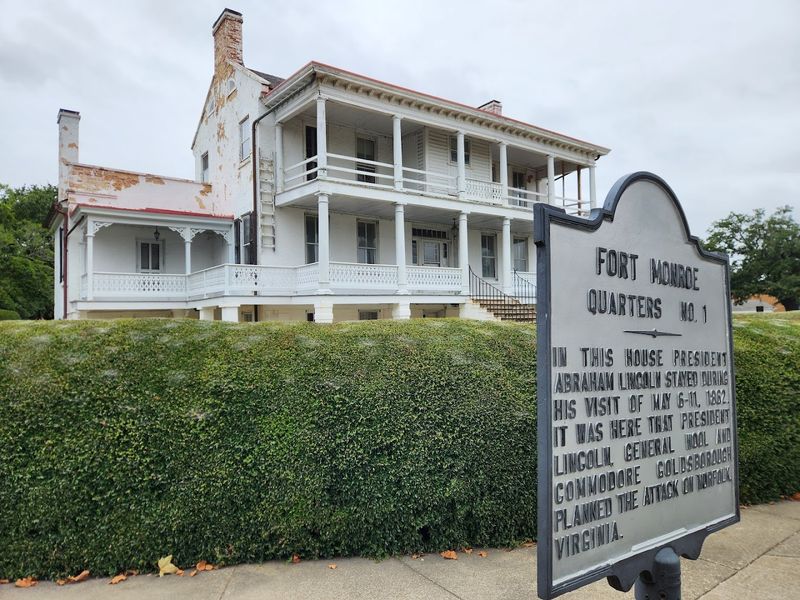
Getting to Fort Monroe National Monument is straightforward, and the best news is that entry to the grounds is completely free. The fort sits on a peninsula in Hampton, Virginia, easily accessible by car and open to the public during generous hours throughout the week.
Parking is available on site, and the grounds are welcoming to families, solo explorers, and dog walkers alike.
The Casemate Museum requires timed entry tickets, so securing those in advance through the visitor center is the smart move. Monday closures for the museum are worth noting if your schedule is flexible.
Restoration work is ongoing in certain sections of the fort, so some areas may have temporary detours, but the core experiences remain fully accessible.
The address for Fort Monroe National Monument is Fort Monroe, VA 23651, and the phone number for planning purposes is +1 757-722-3678. The official National Park Service website at nps.gov/fomr has the most current information on tours, museum hours, and any seasonal programming.
Virginia history does not get more layered or more dramatic than what unfolds at this extraordinary site. Pack a picnic, bring good walking shoes, and plan to stay far longer than you originally intended.
