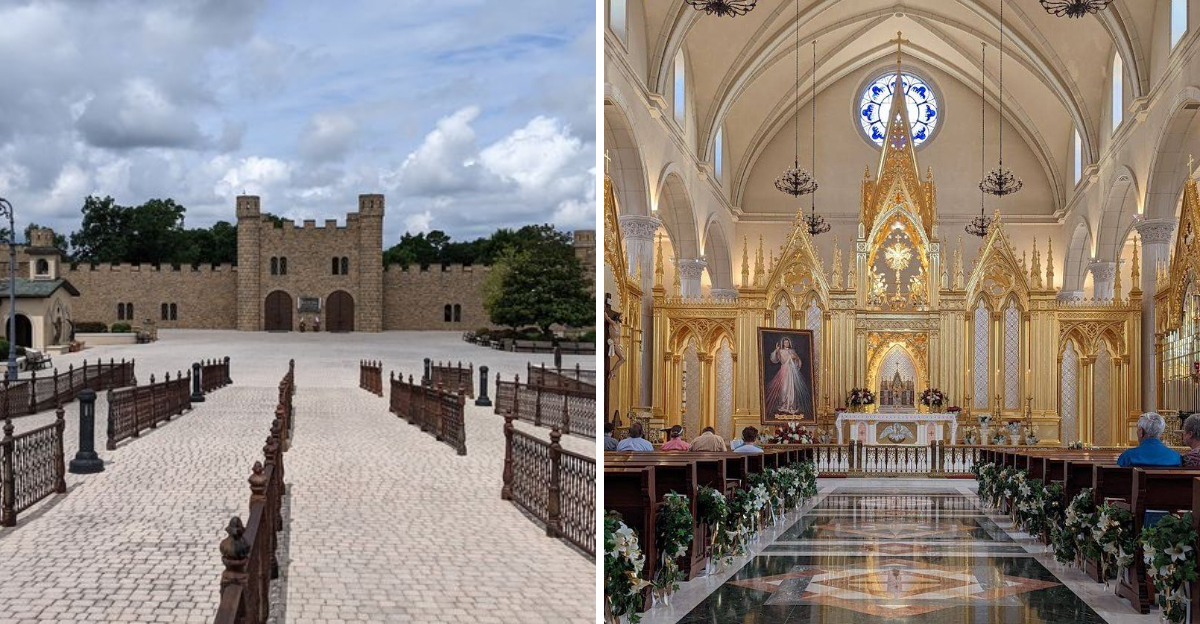
Alabama hides one of the country’s most striking sacred sites in its quiet northern hills. That landmark feels far more like a European pilgrimage destination than something you would expect to find in the American South.
Soaring interiors, intricate detailing, and a main altar highlighted by rich gold accents immediately capture your attention. The scale and craftsmanship create an atmosphere that feels both reverent and transportive.
I spent an afternoon walking through those halls, the light filtering through stained glass, and felt like I had stepped into a different world entirely.
Visitors who come for faith, art, history, or simply a moment of stillness will find that it leaves a lasting impression long after they have stepped back outside.
Architecture Inspired by 13th-Century Italian Churches
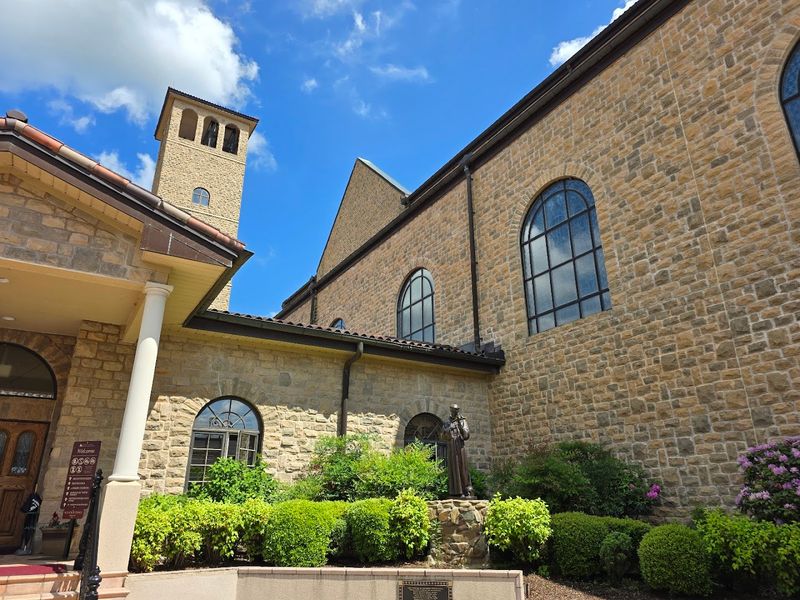
Mother Angelica, the foundress of EWTN and the driving force behind this shrine, had a very specific vision. She wanted a church that mirrored the sacred architecture of 13th-century Italy, particularly the Basilica of St. Francis of Assisi in Umbria.
What she built on 400 acres of Alabama countryside is genuinely astonishing.
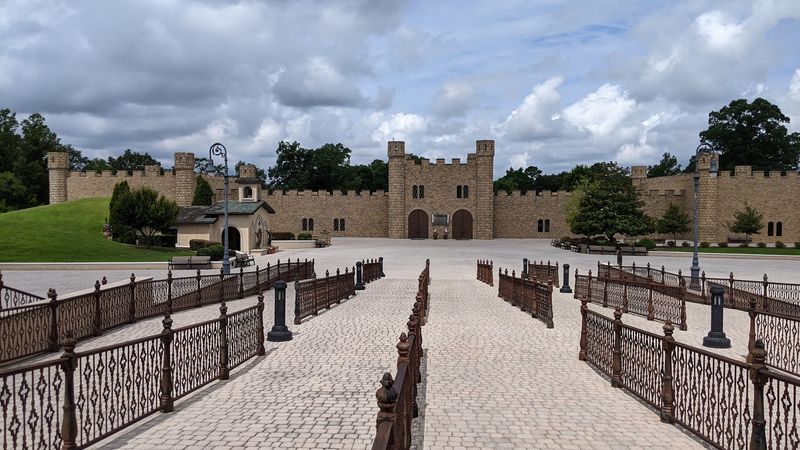
The piazza stretching in front of the shrine chapel measures roughly 259 feet by 289 feet, which is approximately two and a half football fields in size. Shaded colonnades wrap around the piazza, creating cool walkways that feel like something from an Italian monastery.
Cosmatesque design patterns appear throughout the complex, a decorative style associated with medieval Roman and Italian church craftsmanship.
The overall layout includes an esplanade, a plaza square, and multiple structures that work together as a unified architectural statement. Visitors who have traveled to Italy often say the comparison is not exaggerated.
The scale, the proportions, and the stonework all carry the weight of something that was built with genuine reverence rather than convenience. Located at 3224 Co Rd 548, Hanceville, AL 35077, the shrine is open daily from 6 AM to 8 PM, making it accessible for both morning pilgrims and late afternoon visitors who want to catch the light on the stone facade.
The Castle of San Miguel and Its Suits of Armor
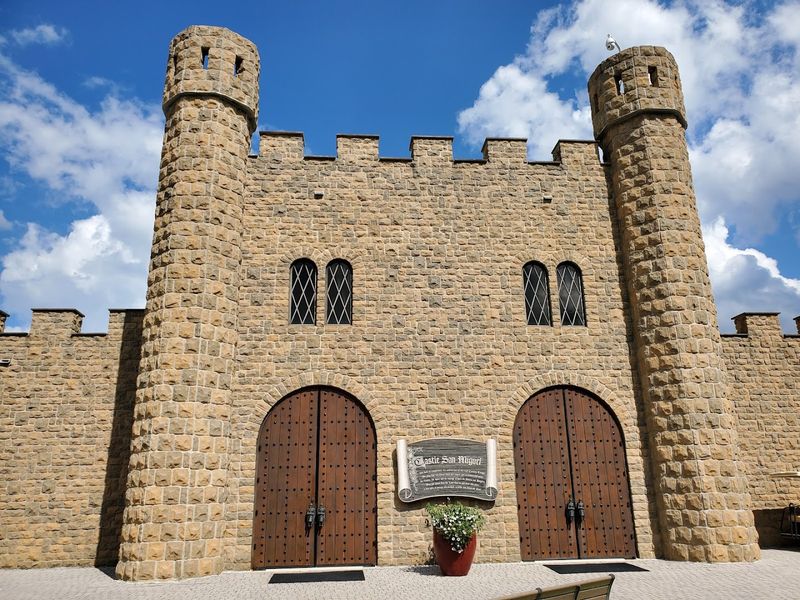
Before you even reach the shrine chapel, a castle greets you. Named San Miguel in honor of St. Michael the Archangel, this structure comes complete with battlement towers and the kind of stonework you would expect from a medieval fortress in Spain or southern France.
It is the first major building most visitors encounter, and it sets the tone for everything that follows.
Inside San Miguel, suits of armor are displayed in ways that feel genuinely evocative of the archangel’s warrior spirit. Halls dedicated to St. Gabriel and St. Raphael branch off from the main structure, creating a layered experience that rewards slower, more curious visitors.
The gift shop inside the castle is substantial, stocking a wide range of Catholic books, devotional items, and religious art that visitors regularly describe as one of the better Catholic gift selections they have found anywhere.
The castle also houses an exhibit featuring a replica of the Shroud of Turin, which many visitors call breathtaking. The combination of the armor, the angelic dedications, and the shroud exhibit makes San Miguel far more than an entry building.
It is its own destination within the larger complex. Give yourself enough time here before moving on to the chapel, because rushing through it means missing details that are genuinely worth slowing down for.
Perpetual Adoration and the 7.5-Foot Gold Monstrance
The Shrine of the Most Blessed Sacrament is specifically dedicated to the adoration of the Eucharist, and that purpose shapes everything about the experience inside. Christ is exposed for Perpetual Adoration, meaning the chapel maintains a continuous, unbroken prayer presence around the clock.
For anyone seeking genuine quiet, this is one of the most powerful rooms in the entire complex.
The gold monstrance used for Eucharistic Adoration stands 7.5 feet tall, making it one of the largest in the world. Seeing it in person is a different experience from seeing photographs of it.
The scale, the craftsmanship, and the context all combine into something that many visitors describe as unexpectedly moving, regardless of their faith background.
The Poor Clare Nuns of Perpetual Adoration live cloistered on the grounds and maintain this tradition of continuous prayer. During scheduled times, their chanting of the Holy Mass and the Divine Office carries through the space in a way that adds another layer of atmosphere to an already extraordinary setting.
Many visitors plan their trips specifically around the opportunity to hear the sisters pray and chant together. It is the kind of detail that you cannot fully appreciate until you are actually sitting in that room, listening, and letting the stillness settle around you.
The Gold Leaf Interior That Stops You in Your Tracks
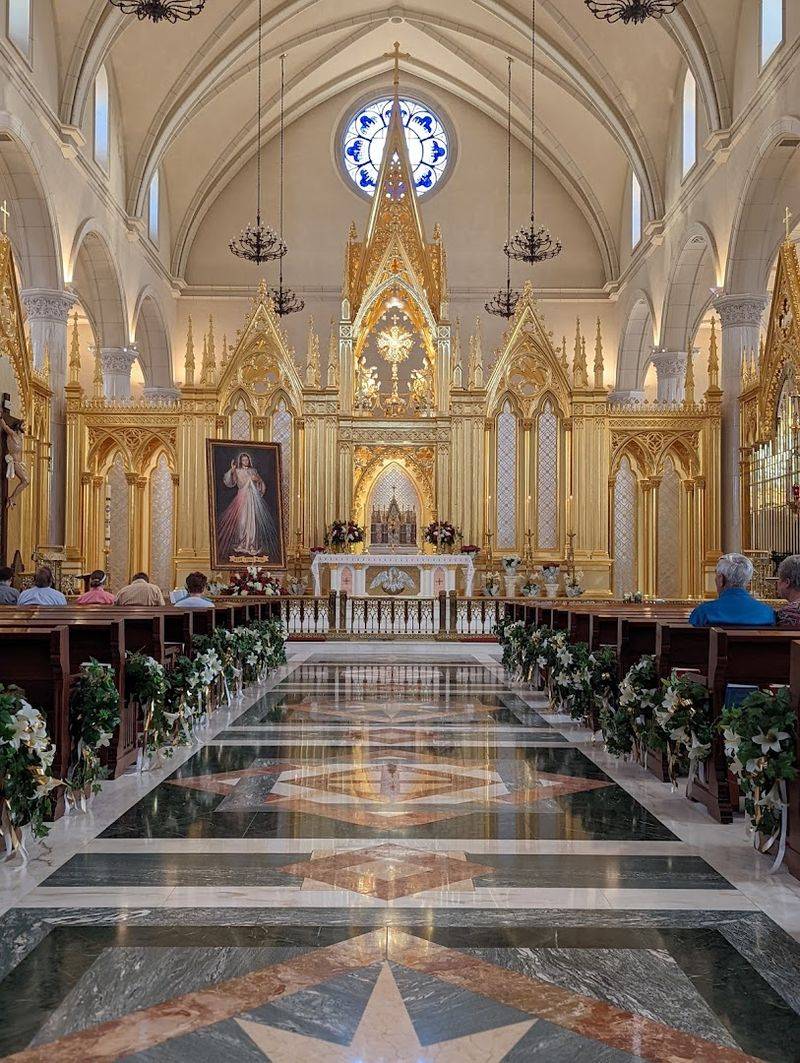
Walking into the main chapel at the Shrine of the Most Blessed Sacrament, the first thing you notice is not the size or the silence. It is the gold.
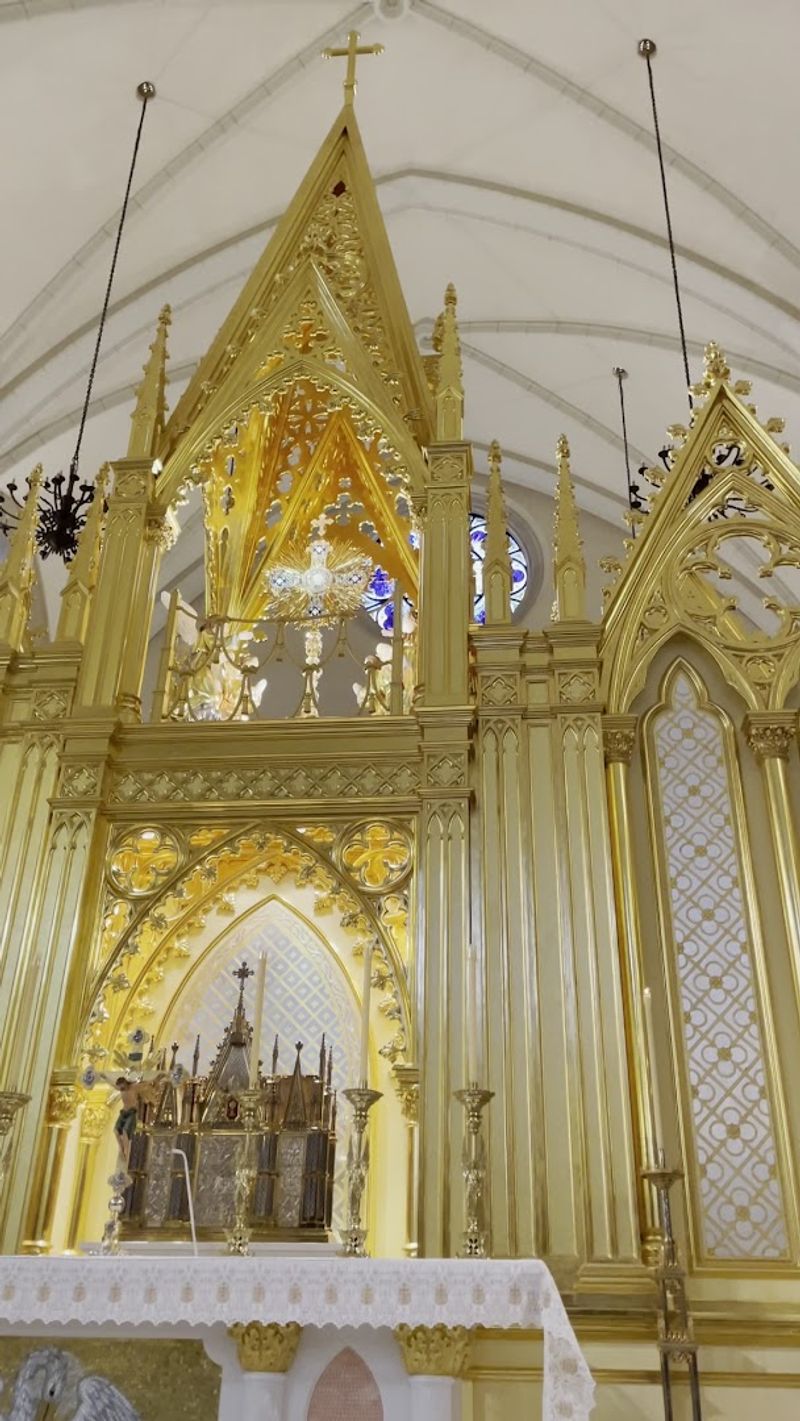
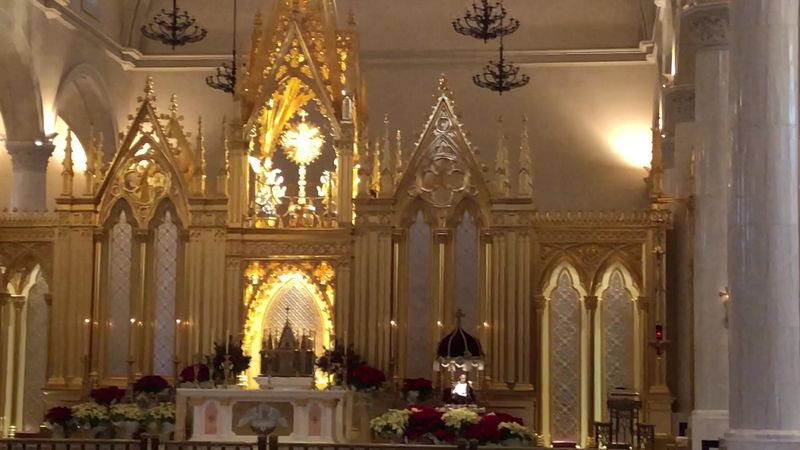
The hand-carved reredos rising 55 feet behind the main altar is ornamented entirely with 24-carat gold leaf, and it catches even the faintest light in a way that feels almost alive.
Spanish artisans crafted much of what you see inside, and their work is precise, layered, and deeply detailed. The side altars carry their own golden reredos, each one individually crafted with the same gold-leaf technique used on the main altar.
The effect is not gaudy or excessive. It is solemn and rich in a way that feels deeply intentional.
The tabernacle itself is a miniature replica of a Gothic cathedral, built entirely in gold to mirror the design language of the altarpiece above it. Photography is not permitted inside the shrine, which actually works in your favor.
Without a phone in your hand, you absorb every detail at your own pace. The interior designed by Spanish craftsmen is considered one of the most magnificent Catholic church interiors in the United States, and once you see it in person, that claim is very easy to believe.
Mother Angelica’s Crypt and the Story Behind the Shrine
Mother Angelica is buried in the crypt chapel beneath the main shrine, and for many visitors, paying respects at her tomb is the primary reason for making the trip. She founded both the shrine and EWTN, the global Catholic television network, and her influence on American Catholic media and devotion is difficult to overstate.
The crypt is quiet, well-maintained, and carries a different energy than the grand chapel above it.
Her biography, written by Raymond Arroyo, provides rich context for anyone who wants to understand how a cloistered nun from Canton, Ohio, ended up building a 400-acre Catholic complex in the hills of Alabama. Reading it before you visit changes how you see every building on the grounds.
The piazza, the castle, the chapel, and the gardens all become chapters in a story rather than simply impressive structures.
The crypt chapel also serves as a space for Mass, and attending a service there gives a more intimate experience than the main chapel above. Masses are offered at 7 AM daily, and the traditional style of worship reflects the founding vision of the shrine.
Visitors who attended services with the sisters consistently describe the experience as one of the most genuinely moving they have had in a church setting, and that is a description that holds up across a wide range of backgrounds and faith traditions.
The Grotto, Nativity Scene, and John Paul II Eucharistic Center
The grounds at the Shrine of the Most Blessed Sacrament offer more than most visitors expect to find in a single afternoon. A replica of the Grotto of Lourdes sits on the property, providing a contemplative outdoor space that draws pilgrims who have a particular devotion to Our Lady of Lourdes.
The natural Alabama landscape around the grotto adds a quietness to the experience that is hard to manufacture artificially.
A life-sized Nativity scene is housed in a dedicated room that plays Christmas music year-round. It sounds unusual until you are standing inside it, and then it makes complete sense.
The attention to detail in the figures and the setting is remarkable, and it draws visitors who are not necessarily making a religious pilgrimage but who appreciate craftsmanship and artistry.
The John Paul II Eucharistic Center is a separate building on the grounds featuring interactive exhibits dedicated to the life and papacy of St. John Paul II. Tours of the center are available and run approximately one hour, giving visitors a structured way to engage with the exhibits.
The outdoor Stations of the Cross is another feature that many visitors mention specifically, particularly the final station, which several people describe as unexpectedly powerful. With so much spread across 400 acres, a single visit rarely covers everything, and many people return multiple times to experience what they missed the first time around.
A Peaceful Day Trip from Cullman with Nearby Places to Know
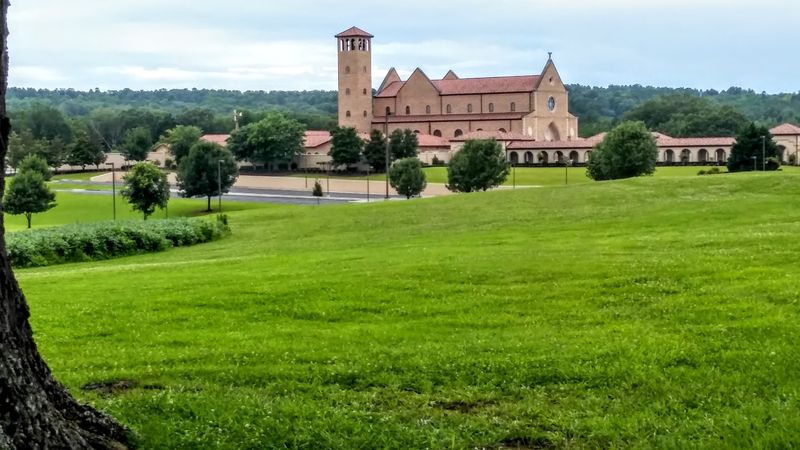
The drive to the shrine from Cullman is part of the experience. The road stretches out through rolling Alabama hills in a way that gradually shifts your mood before you even arrive.
Cullman itself is worth building into your trip, offering several places to eat and explore before or after your visit to the shrine.
Rumors Deli and Cafe at 210 1st Ave SE, Cullman, AL 35055, is a well-regarded local spot for a casual lunch with homemade soups and sandwiches that locals return to regularly. The Depot at 205 2nd Ave SW, Cullman, AL 35055, is another Cullman option with a relaxed atmosphere and Southern-influenced menu.
For anyone interested in the broader regional history, the Ave Maria Grotto at 1600 St Bernard Dr SE, Cullman, AL 35055, is a remarkable site featuring miniature stone replicas of famous religious structures from around the world, built by a Benedictine monk over several decades.
The shrine itself is free to visit, with no tickets or entry fees required for the chapel or grounds. Spending a full day between the shrine and the surrounding Cullman area gives you a genuinely complete experience of what this corner of Alabama has to offer.
Plan to arrive early, wear comfortable shoes, and bring more time than you think you need.
