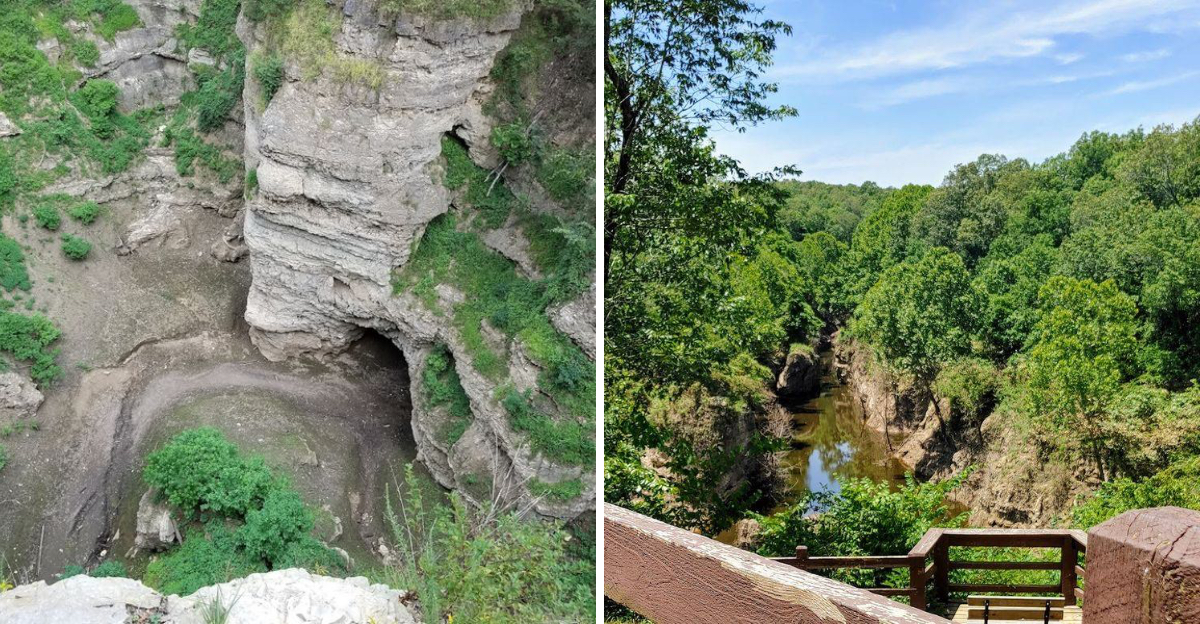
Missouri does not usually come to mind for canyon views, which is exactly why this place hits so hard. Hidden in the southern Ozarks, the landscape suddenly drops away into a massive gulf that looks completely out of place in the best way.
It stretches on longer than you expect, with steep walls and rugged edges that make you stop and take it in twice. What you are actually looking at is the remains of a collapsed cave system, which somehow makes it even more impressive.
Trails lead you along the rim and down into parts of it, giving you a close look at just how big it really is. It feels dramatic, a little unexpected, and far more memorable than most people realize Missouri has to offer.
The Geological Story Behind the Canyon
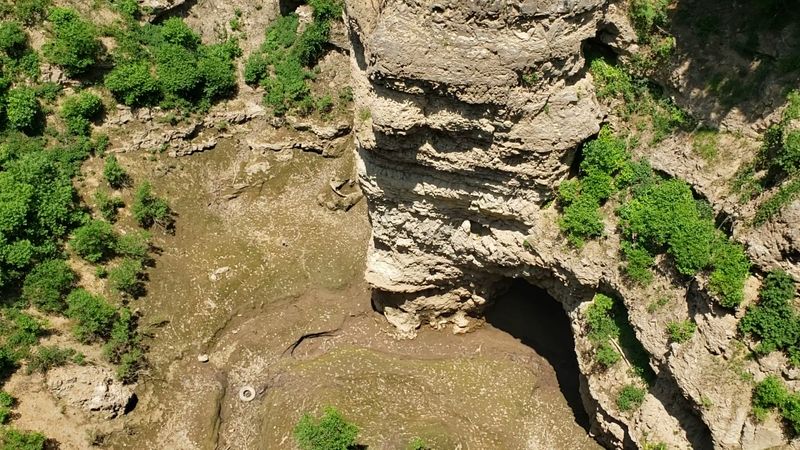
Long before anyone put a name on this place, water was doing something remarkable underground. Grand Gulf State Park sits on top of what was once a massive cave system carved out of Ozark limestone over millions of years.
The roof of that cave eventually gave way, and what you see today is the result of that slow, dramatic collapse. The process is called karst topography, and the Ozarks are one of the best places in the country to see it up close.
Standing at the rim, you can see layered rock walls that tell the whole story without a single word. The canyon runs close to a mile in length, drops up to 130 feet in some sections, and stretches roughly 75 feet across at its widest point.
What makes this spot especially fascinating is that it connects to a larger underground water system. Water that disappears into the gulf eventually resurfaces miles away at Mammoth Spring in Arkansas.
That underground journey makes every raindrop here part of something much bigger.
The Disappearing Stream Phenomenon
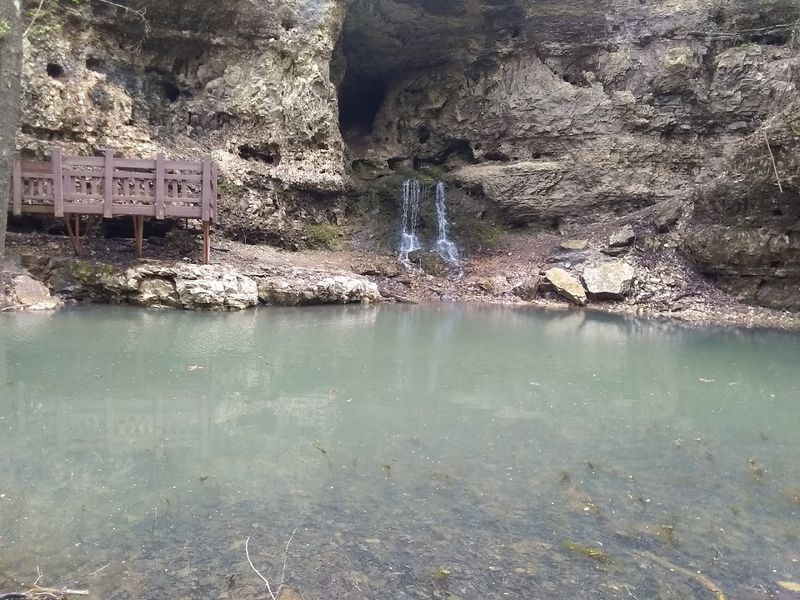
One of the most mind-bending features of Grand Gulf State Park is its disappearing stream. Water flows into the gulf from one end, vanishes into a cave opening, and travels underground for miles before reappearing at the surface somewhere else entirely.
On a dry day, the canyon floor looks like a quiet, rocky riverbed. But when rain hits, the transformation is fast and dramatic.
Signs at the park note that water levels can rise in under two hours during heavy rainfall, which makes timing your visit something worth thinking about.
The cave opening at the far end of the canyon is called the natural bridge, and it is one of the most photographed spots in the park. Water rushes through it during wet seasons, creating a scene that feels more like a fantasy landscape than a Missouri state park.
This hydrological connection to Mammoth Spring, has fascinated geologists for decades. The underground route that water takes from here covers an impressive distance, making Grand Gulf a key piece of a much larger natural puzzle hiding beneath the Ozark hills.
The Natural Bridge That Spans the Gulf
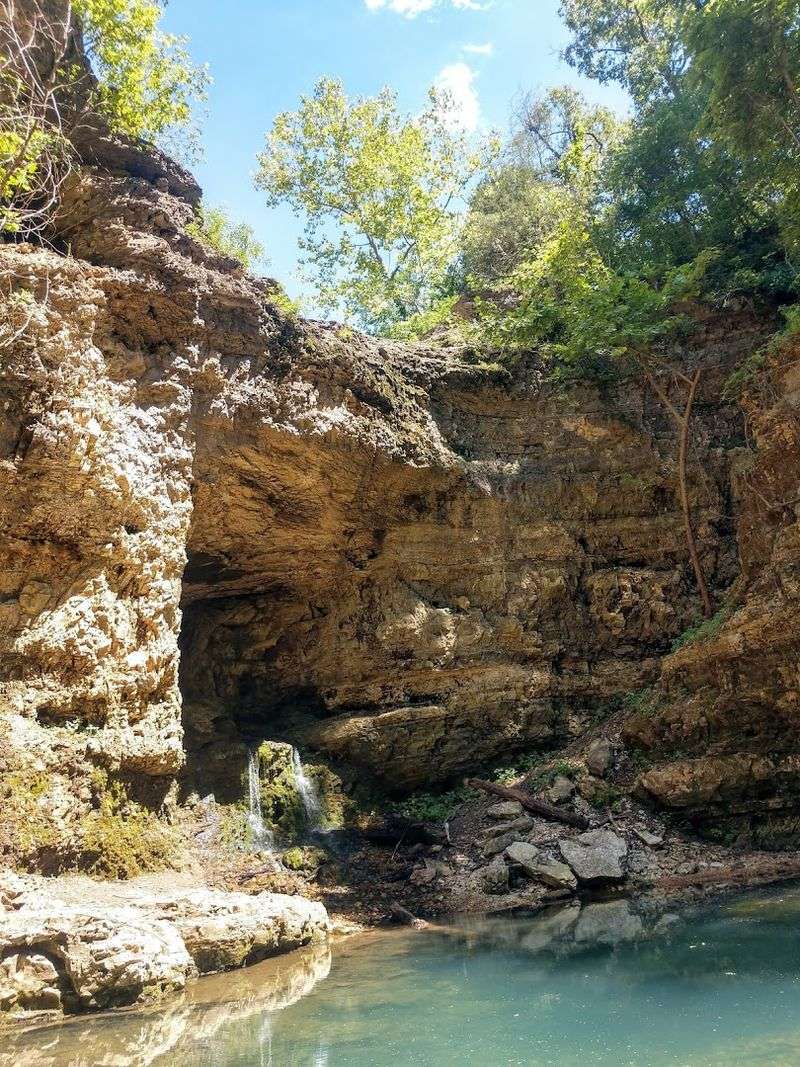
Few natural features in Missouri stop people in their tracks quite like the natural bridge at Grand Gulf. It is a massive arch of limestone that spans the canyon, formed when part of the cave ceiling refused to collapse along with the rest.
The bridge sits near the downstream end of the gulf, and depending on the season, you might find water rushing beneath it or a dry, silent passage of smooth stone. Either version is worth the walk to get there.
Getting a good view of the bridge requires taking the red trail, which winds along the canyon rim and offers several overlook points before descending toward the structure. The trail is well-maintained and includes boardwalk sections that make the walk accessible for most fitness levels.
The sheer scale of the bridge is hard to appreciate until you are standing next to it. It stretches wide enough to feel genuinely impressive, and the rock walls on either side rise dramatically above your head.
This is the kind of geological feature that reminds you that Missouri has more going on beneath its rolling hills than most people ever stop to discover.
Hiking the Red Trail Along the Rim
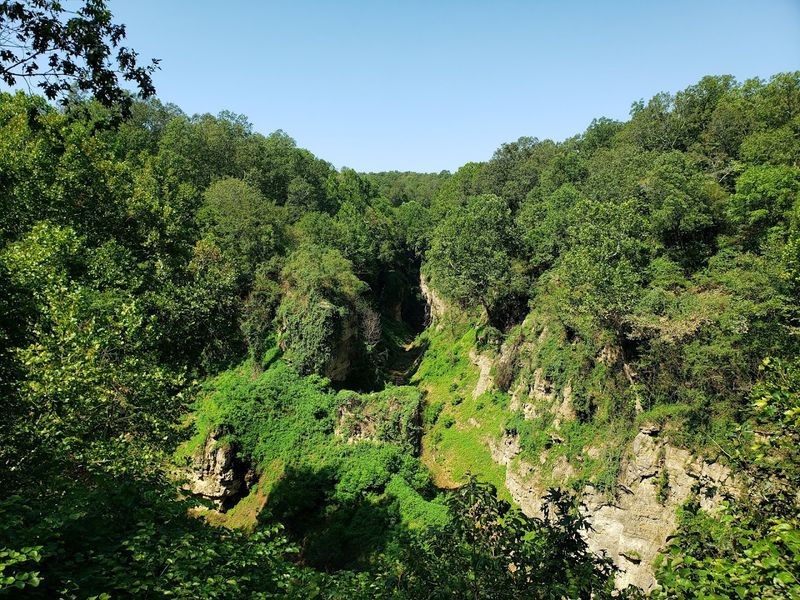
The red trail at Grand Gulf State Park is the one most people come for, and it delivers on every promise. It runs along the canyon rim for about a mile, offering overlook platforms, boardwalk sections, and up-close views of the canyon walls.
The trail is rated easy to moderate, which means most people can handle it without any special gear or serious fitness preparation. There are steps in several sections, so comfortable shoes with good grip are a smart choice before you head out.
Two main overlook platforms give you the best views of the canyon floor below. From up here, the scale of the gulf becomes real in a way that photos simply cannot capture.
The drop is steep, the walls are textured with layers of Ozark limestone, and the forest on the far side frames everything in deep green.
The full loop takes roughly 40 minutes at a relaxed pace, making it a perfect afternoon outing. You are not rushing through anything, and there is enough to look at along the way to keep the walk interesting from start to finish.
Grand Gulf proves that Missouri can hold its own against more famous canyon destinations.
Exploring the Blue Trail Through the Woods
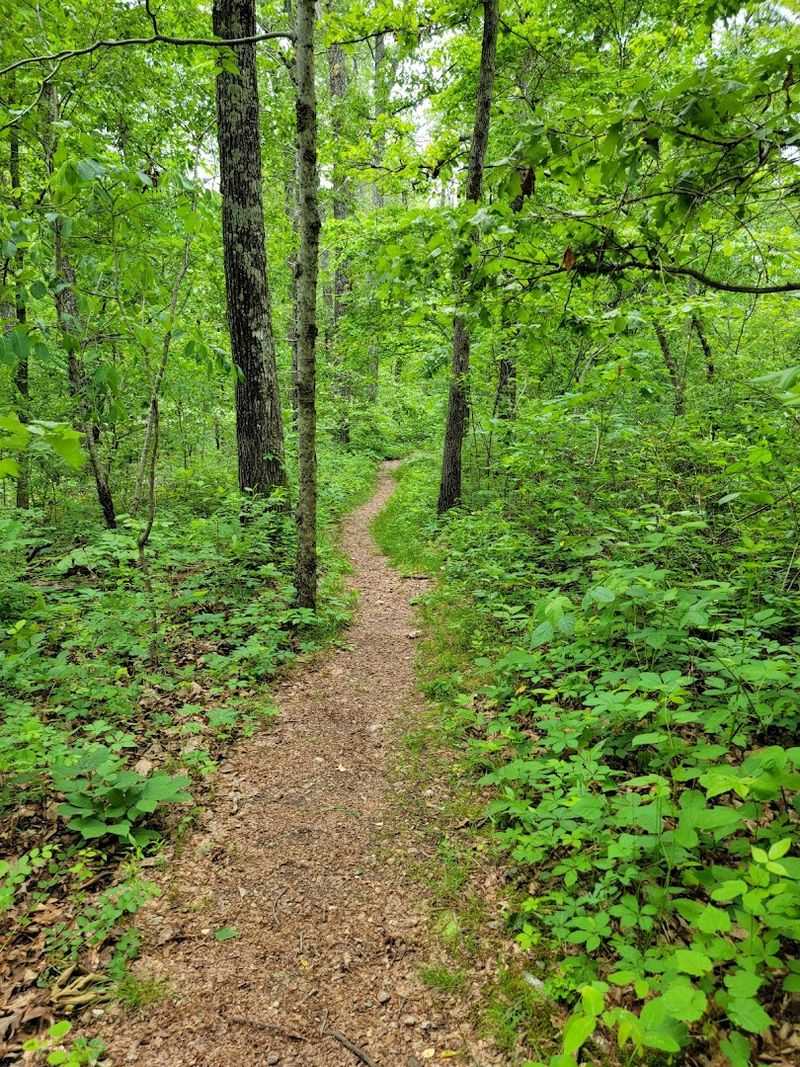
Not every great trail needs a dramatic canyon view to be worth your time. The blue trail at Grand Gulf takes a different approach, looping through the dense Ozark forest that surrounds the gulf and giving you a feel for the wider landscape.
This trail is mostly flat and wooded, making it a quieter, more contemplative walk compared to the rim experience on the red trail. The forest here is thick and green, full of oak, hickory, and cedar that create a canopy overhead during the warmer months.
Spring wildflowers push up through the leaf litter in April and May, adding color to a walk that might otherwise feel purely green. The sounds of birds and rustling leaves replace the dramatic visuals of the canyon, offering a completely different kind of enjoyment.
The blue trail is ideal for people who want a longer outing or who have already done the red trail and want to keep moving. Combined, both trails give you a well-rounded picture of what Grand Gulf State Park has to offer beyond just the canyon itself.
The Best Time of Year to Visit
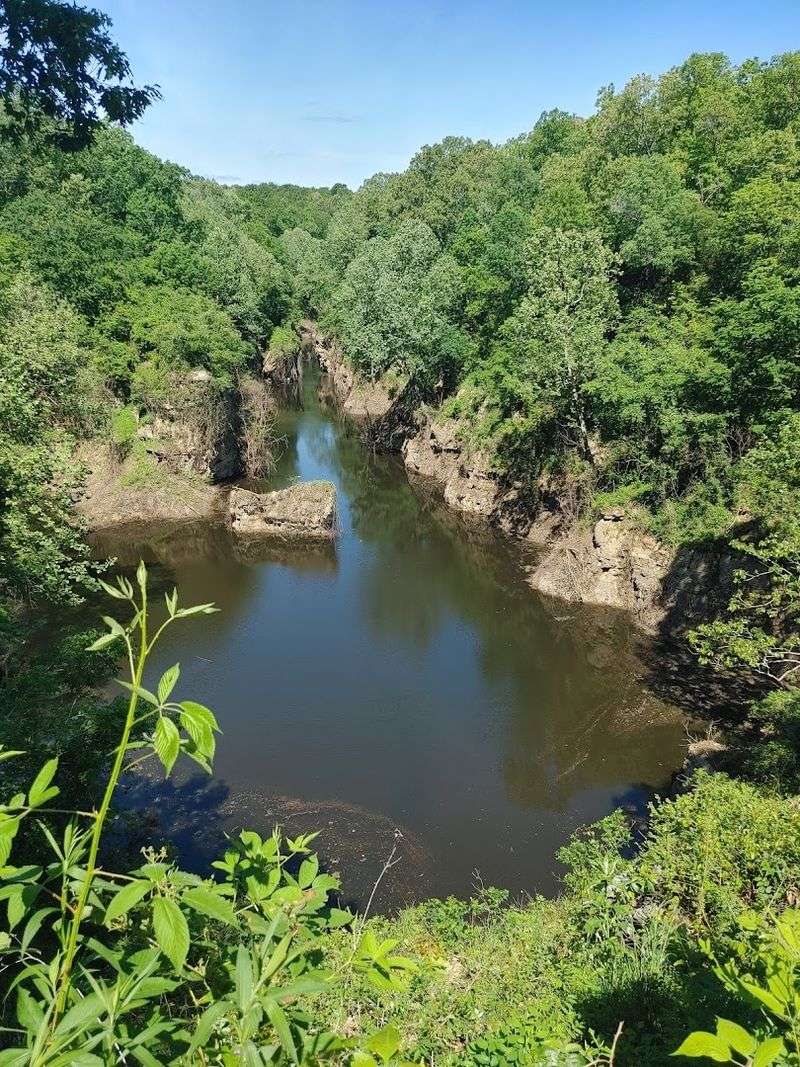
Timing your trip to Grand Gulf State Park can make a real difference in what you experience. Spring is widely considered the best season, and it earns that reputation for good reasons.
From March through May, the forest is at its most vibrant, wildflowers bloom along the trails, and there is a solid chance the stream will be running through the canyon floor.
Seeing water flow through the gulf and disappear into the cave opening is one of those moments that makes the geology feel alive rather than just educational.
Summer brings full green canopy cover, which makes the trails shady and pleasant even on warm days. The canyon walls stay cool, and the overlooks offer dramatic contrast between the dark rocky depths and the bright sky above.
Fall is a sleeper hit for this park. The Ozark hardwoods turn red, orange, and gold in October, framing the canyon in colors that feel almost theatrical.
Winter visits are quiet and raw, with bare trees opening up longer sightlines into the canyon. Grand Gulf shares this seasonal personality with many natural areas across the Ozarks.
Getting to Grand Gulf and What to Expect on Arrival
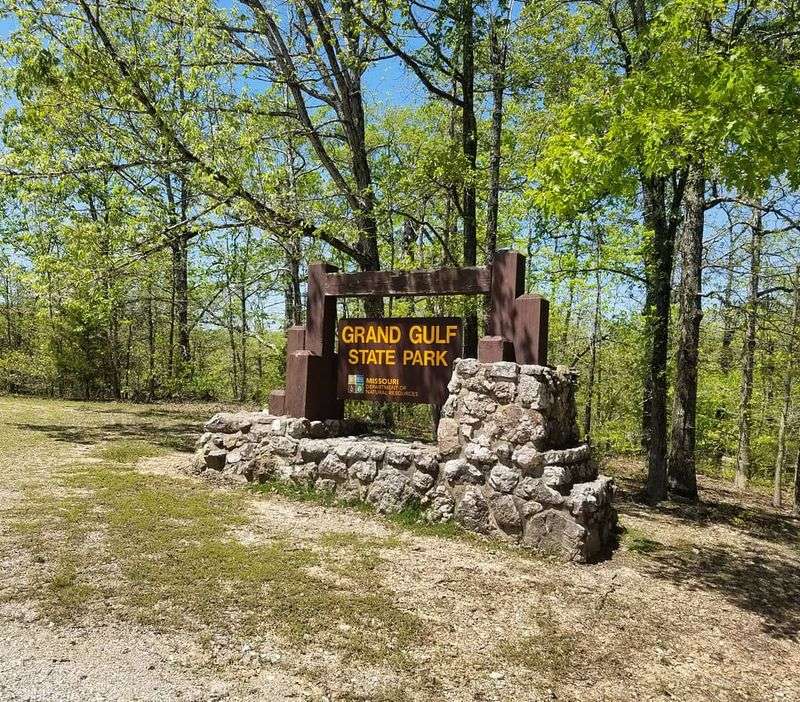
Grand Gulf State Park sits on State Highway W near Koshkonong, Missouri 65692, in the southern Ozarks. The drive in is part of the experience, winding through county roads that cut through rolling hills and quiet farmland.
The roads leading to the park are paved but narrow, and some of the county roads in the area can be rough. A standard passenger car handles the route fine, but it is worth slowing down and paying attention on the final stretch.
Cell service is essentially nonexistent once you get close, so downloading directions or a map before you leave is a genuinely useful move.
The parking area is small but well-maintained, with clean restrooms and a picnic table available on-site. An information kiosk at the trailhead provides background on the geology and trail options, though bringing your own research helps fill in the gaps.
There is no entry fee for Grand Gulf State Park, which makes it one of the better free outdoor experiences in Missouri. The remoteness is part of the appeal.
You are not fighting crowds here, and the quiet adds something to the experience that more popular parks simply cannot offer.
The Connection to Mammoth Spring and Underground Water Systems
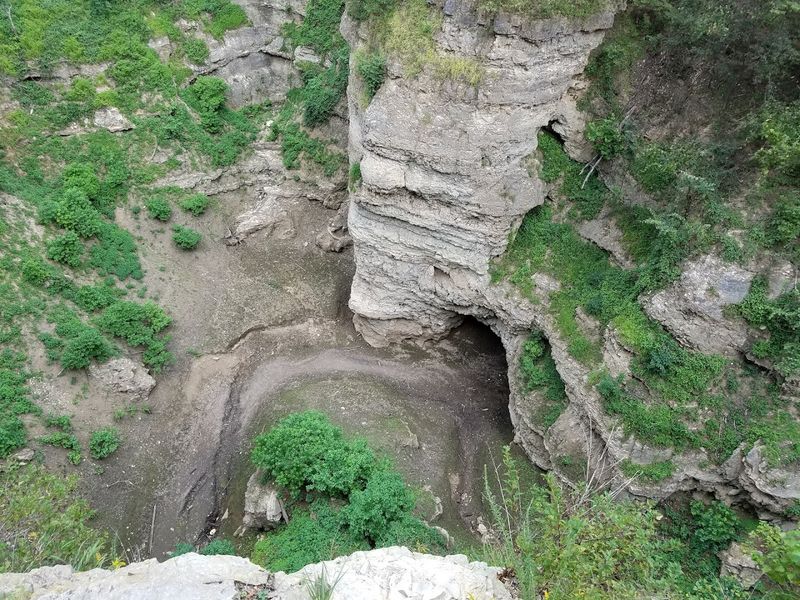
One of the most remarkable facts about Grand Gulf is where its water ends up. The stream that disappears into the cave at the bottom of the gulf does not just vanish.
It travels underground through a network of limestone passages and eventually emerges at Mammoth Spring in Arkansas.
Mammoth Spring is one of the largest springs in the United States, pumping out millions of gallons of water per day. Knowing that some of that water started its journey here in a Missouri canyon makes the connection between these two places feel almost personal.
This underground hydrological link places Grand Gulf within a much larger natural system that spans the Ozark Plateau across Missouri, Arkansas, and areas near Oklahoma.
The karst geology that shapes this region creates hidden waterways that move silently beneath the surface, connecting distant points in ways that are invisible from above.
Scientists and geologists have traced these connections using dye tracing, a process where a harmless dye is released into a sink and then detected at spring outlets miles away.
The results confirmed what many suspected: Grand Gulf feeds directly into one of the most productive springs in the entire region, making it a hydrological landmark that goes well beyond its visual drama.
Wildlife and Plant Life Around the Canyon
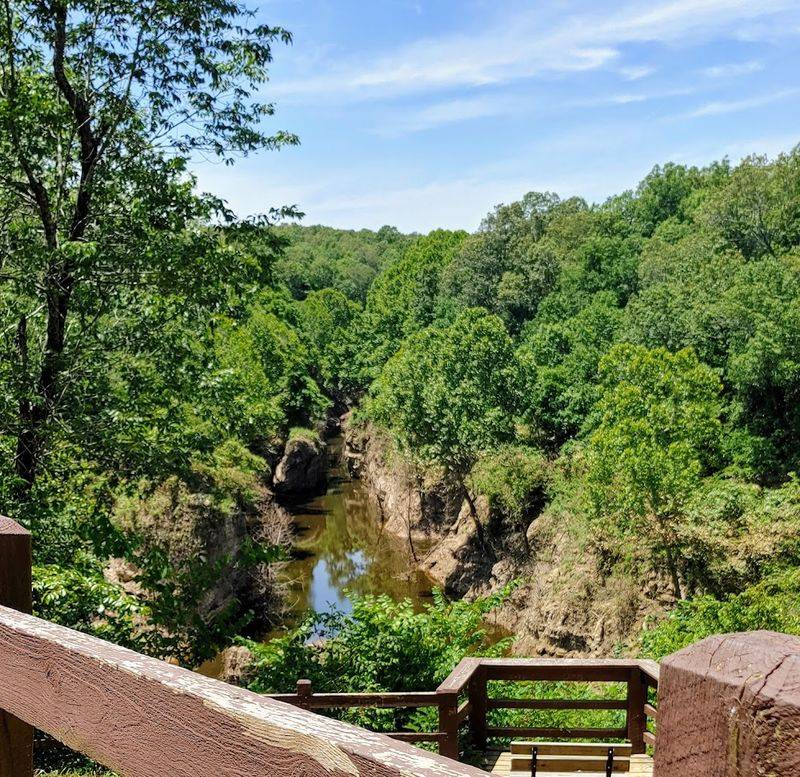
The forest surrounding Grand Gulf is alive in ways that go well beyond the geology. The Ozark landscape here supports a rich variety of wildlife and plant life that adds texture to every visit.
White-tailed deer move through the woods in the early morning and late afternoon. Red-tailed hawks circle overhead, using the canyon’s updrafts to cruise effortlessly above the rim.
In spring, the air fills with birdsong from warblers, thrushes, and woodpeckers working through the trees.
Along the canyon floor and walls, mosses and ferns cling to the damp limestone, creating patches of vivid green against the gray rock. Wildflowers push up through the trail edges in April and May, including trillium, wild ginger, and various native violets that add unexpected color to the walk.
The canyon’s moisture and shade create a microclimate that supports plants not commonly found in surrounding drier uplands. This ecological variety is one of the quieter pleasures of a visit here.
You come for the canyon and stay for the layers of life packed into every corner of the place. The Ozarks have long been recognized as a biodiversity hotspot hiding in plain sight.
Tips for Making the Most of Your Visit
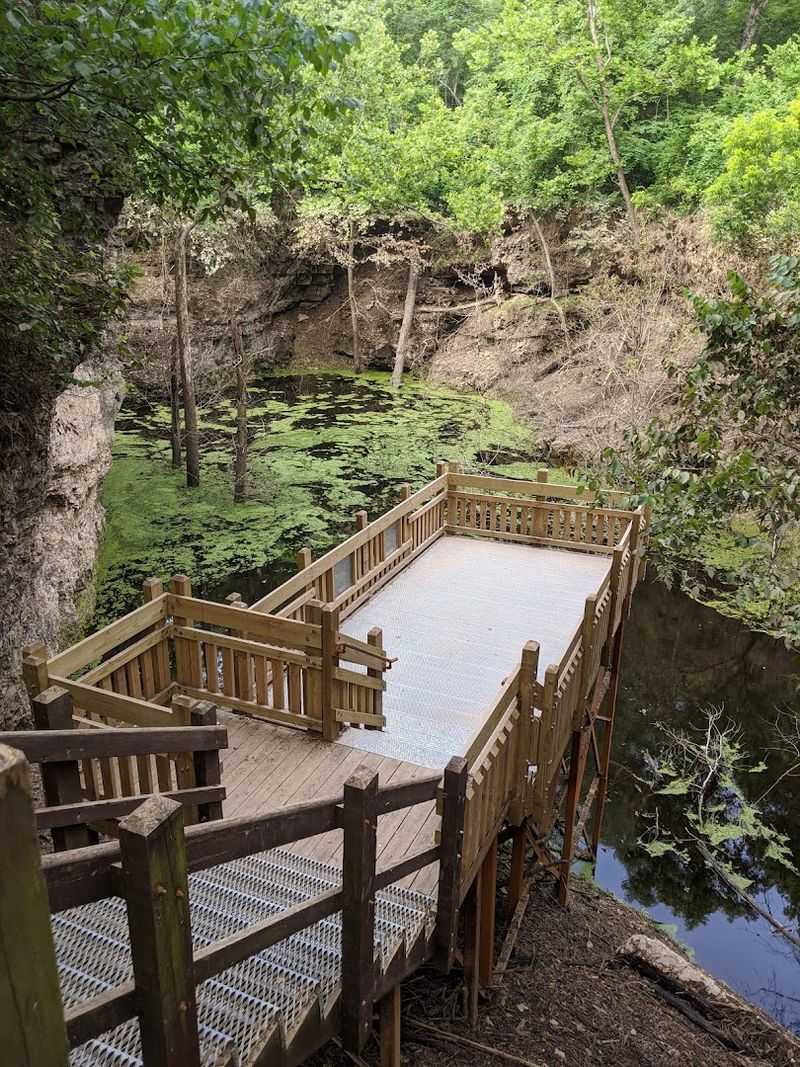
A little preparation goes a long way at Grand Gulf State Park. The park is remote, the cell service is unreliable, and the trails involve steps and uneven terrain, so arriving ready makes the whole experience smoother.
Wear sturdy shoes with good grip. The boardwalk sections are easy, but the areas near the canyon rim and descent points involve rocky ground that rewards traction.
Bring water, especially in summer, since there are no water fountains or vendors anywhere on the property.
Bug spray is worth packing for visits between May and September. The wooded trails can get buggy, particularly on the blue trail loop where shade and moisture create ideal conditions for insects.
A small backpack with snacks, a first aid kit, and a fully charged phone covers most situations.
Arrive early in the morning for the best light on the canyon walls and the most peaceful experience. Weekdays are quieter than weekends, though even on busy days the park rarely feels crowded.
Download offline maps before leaving your last area of cell coverage, which may be as far back as a town along the highway. Grand Gulf rewards the prepared visitor with an experience that stands well apart from anything else in Missouri.
Dear Reader: This page may contain affiliate links which may earn a commission if you click through and make a purchase. Our independent journalism is not influenced by any advertiser or commercial initiative unless it is clearly marked as sponsored content. As travel products change, please be sure to reconfirm all details and stay up to date with current events to ensure a safe and successful trip.
