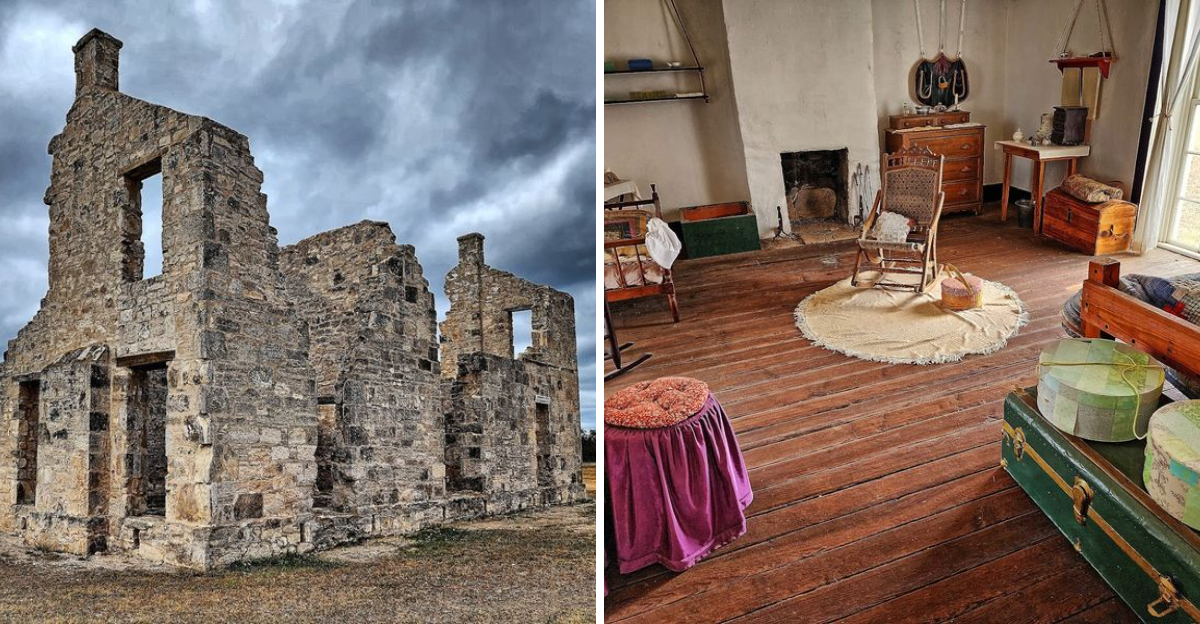
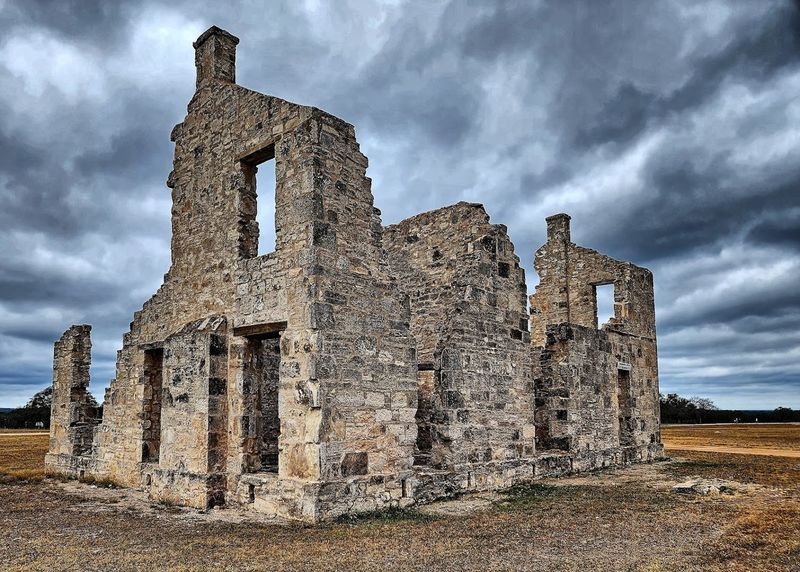
A fort that feels like a time machine is a rare find. This Texas frontier fortress was once a key outpost on the edge of the unknown, and its original stone buildings still stand.
Walking through the ruins, a person can almost hear the echoes of soldiers and settlers. The walls have withstood weather, neglect, and time.
The site is well preserved, offering a view of what life was like on the Texas frontier. It is not a re-creation or a themed attraction.
It is the real thing. The wide open spaces around the fort add to the feeling of remoteness.
A visit here makes a person grateful for modern plumbing and air conditioning. Texas history is written in stone, and this fort is a prime chapter.
A Fort Built From the Land Itself
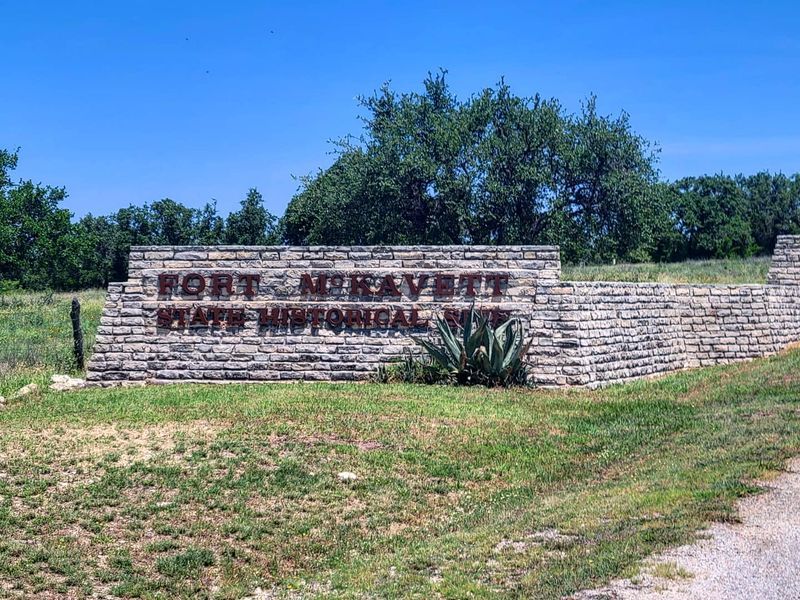
Most frontier forts from the 1800s were thrown together with whatever wood or adobe was nearby, but Fort McKavett took a different approach entirely. The builders used locally quarried limestone to construct the buildings, which is a huge part of why so many of them are still standing today.
That stone has a warmth to it, almost golden in the afternoon light, and it gives the whole site a sense of permanence that feels rare for something this old.
Established in 1852, the fort was originally set up to protect migrants heading to California and settlers pushing into West Texas. The location along the San Saba River was not accidental.
Fresh water, open sight lines, and access to quality building stone made it a genuinely smart choice for a military post.
What strikes me most about the construction is how intentional it feels. These were not temporary shelters.
The people who built Fort McKavett were planning to stay, and the limestone walls reflect that commitment. A lime kiln on the property was used to process stone pulled from a nearby quarry, meaning almost everything you see was made from materials found right on the land.
That kind of self-sufficiency is impressive by any era’s standards. The site feels rooted in its landscape in a way that wooden forts simply cannot replicate, and that connection between place and structure is something you feel before you even read a single exhibit panel.
General Sherman Called It the Prettiest Post in Texas
High praise tends to mean more when it comes from someone who has seen a lot. In 1871, General William T.
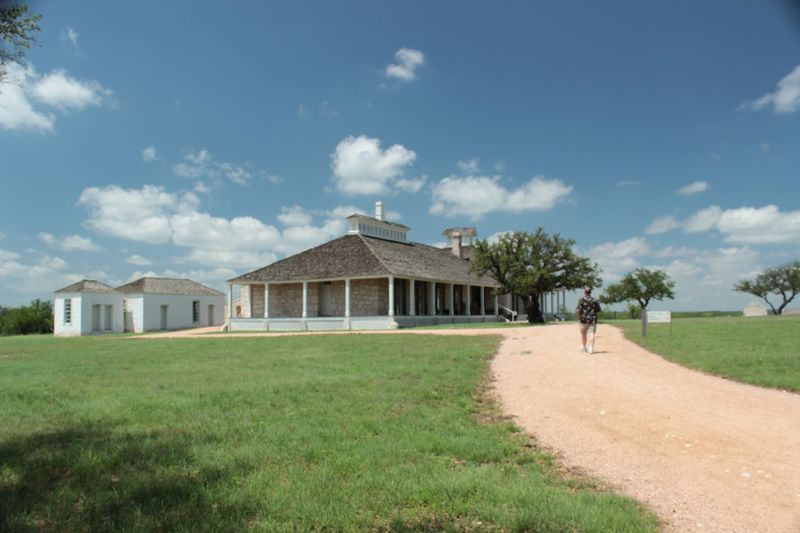
Sherman, Commanding General of the United States Army, visited Fort McKavett during an inspection tour and declared it the prettiest post in Texas. That quote has stuck around for over 150 years, and once you see the place, it is not hard to understand why he said it.
The layout of the fort is genuinely beautiful. Buildings are arranged with a sense of order and intention, set against rolling hills and open sky that stretch out in every direction.
The San Saba River valley gives the whole scene a softness that feels unexpected in this part of Texas, where the landscape can be harsh and unforgiving.
Sherman was not exactly known for handing out compliments casually. He was a practical, battle-hardened military man, so when he said Fort McKavett stood out among Texas posts, people paid attention.
Visiting today, I kept thinking about what he must have seen during that 1871 inspection, whether the same quality of light fell across those stone walls, whether the same breeze moved through the grounds. Some things about a place do not change no matter how many decades pass.
The layout, the proportions of the buildings, the way the site sits in its landscape, all of it feels considered and cohesive in a way that earns Sherman’s old compliment all over again.
The Buffalo Soldiers Who Shaped This Place
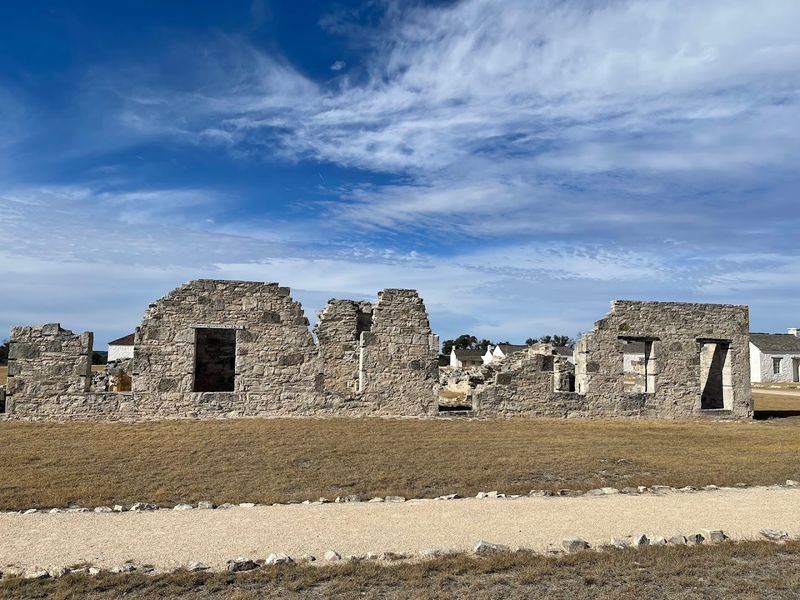
Fort McKavett holds a significant and often underappreciated chapter of American military history. All four Buffalo Soldier regiments were stationed here at various points during the Indian Wars between 1850 and 1875.
These were African-American soldiers who served with documented courage and skill, and their presence at Fort McKavett is woven into nearly every part of the site’s story.
One name stands out above the rest. Sergeant Emanuel Stance of the 9th Cavalry earned the Medal of Honor for his service at Fort McKavett, becoming the first African-American soldier to receive that honor after the Civil War.
That is not a footnote in history. That is a landmark moment, and it happened right here in this remote corner of West Texas.
The exhibits inside several of the restored buildings do a good job of bringing this history to life without oversimplifying it. You get a real sense of what daily life looked like for these soldiers, the routines, the challenges, and the responsibilities they carried.
They were not just defending settlers. They were also conducting military campaigns, supporting scientific explorations, and keeping supply lines running across a vast and difficult landscape.
Learning about the Buffalo Soldiers at Fort McKavett feels less like a history lesson and more like meeting people whose stories deserve far more attention than they typically get in popular accounts of the American frontier.
The Hospital That Became a Gateway to the Past
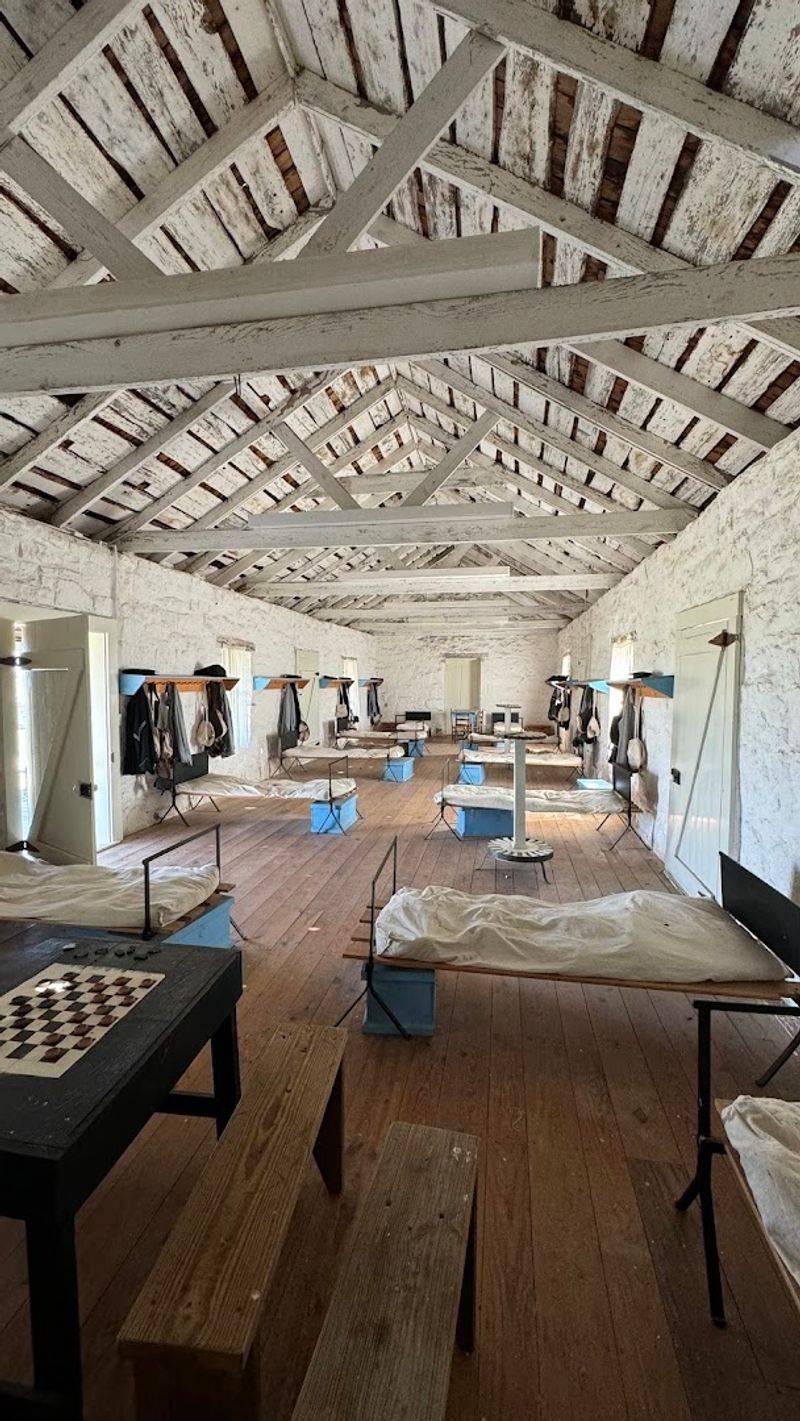
The Visitor Center at Fort McKavett is housed in the original 1874 hospital building, and that detail alone sets the tone for the whole visit. You are not walking into a modern interpretive center built to look old.
You are walking into a 150-year-old limestone structure that has been carefully adapted to welcome visitors while preserving its original bones.
Inside, there is a museum, a gift shop, and a research library. The museum displays include artifacts like old surgeon’s tools, period clothing, and documents that give you a real feel for what medical care looked like on the frontier.
It is not glamorous. It is honest, and that honesty makes it compelling.
I spent more time here than I expected to. The research library is a quiet gem, the kind of place where you can feel the weight of the primary sources sitting on the shelves.
The staff are genuinely knowledgeable and happy to answer questions without making you feel rushed. Getting a solid orientation at the Visitor Center before heading out to the other buildings makes the self-guided tour significantly more rewarding.
You start to see the connections between structures and understand why things were placed where they were. The hospital building itself is beautiful, with thick walls that keep the interior cool even on warm days, which is a practical reminder of how well those frontier builders understood their environment.
19 Structures and Every One Tells a Story
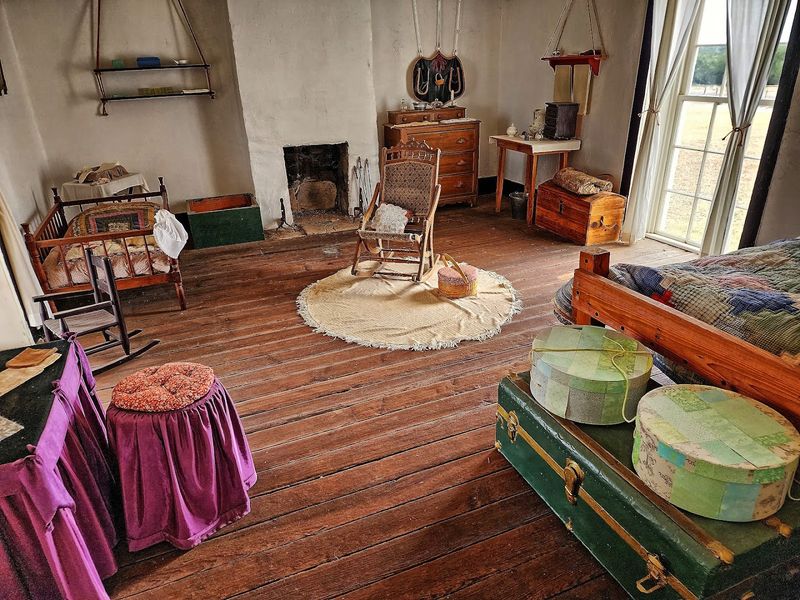
Nineteen surviving historic structures is not a small number for a site this age. Fort McKavett is considered one of the best-preserved and most intact examples of a Texas Indian Wars military post in existence, and walking through the grounds makes that reputation feel completely earned.
Each building has its own character and its own chapter of the story.
The barracks are a highlight. One of them was once the longest military building west of the Mississippi River, which is a staggering fact to sit with as you walk its length.
Some buildings have been restored with period-specific furnishings, giving you a layered sense of how soldiers and officers lived, worked, and spent their off-hours. The schoolhouse is a quieter, more domestic kind of space that reminds you families and children were part of this community too.
Officer’s quarters feel almost elegant compared to the enlisted barracks, which reflects the strict hierarchy of 19th-century military life in a very tangible way.
Moving from one building to the next, you start to understand Fort McKavett less as a single landmark and more as a small, functioning town that happened to be organized around military purpose.
After the Army left in 1883, civilian settlers actually moved into these buildings and lived in them until 1973. That long continuum of human habitation is part of what makes the site feel so alive, even now.
Nature Trails, Lime Kilns, and a Spring That Fed a Fort
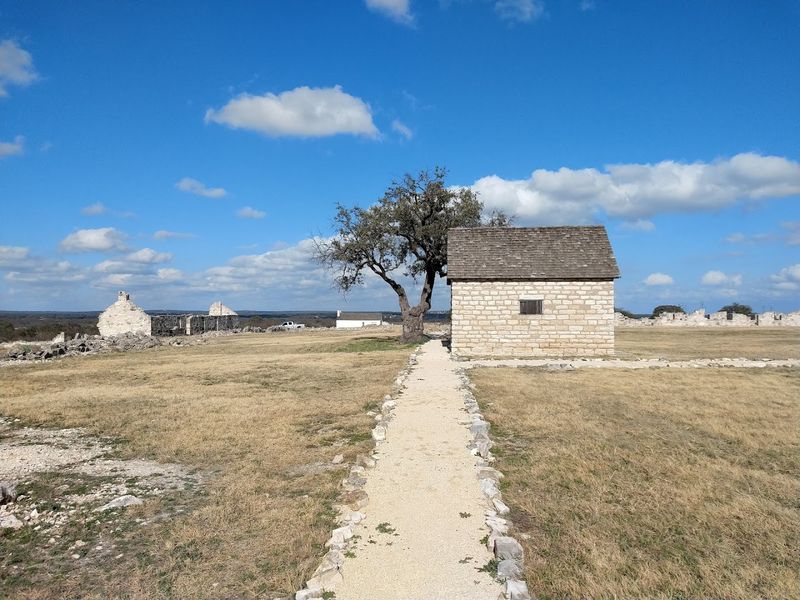
Beyond the buildings, Fort McKavett has a nature trail that leads you to some genuinely fascinating remnants of frontier industry. The lime kiln, the stone quarry, and Government Springs are all accessible on foot, and each one adds a different layer to the story of how this fort was built and sustained.
Government Springs is where the fort got its water supply. Standing next to it, you get a visceral sense of how critical that spring was to the entire operation.
Water determined everything on the frontier, where settlements could exist, how long they could survive, and how many people they could support. The spring still flows, which feels almost miraculous given how much time has passed.
The lime kiln is a more industrial kind of discovery. It is where raw limestone was processed into the lime used in mortar and construction, and seeing the actual structure helps you understand the scale of effort that went into building the fort.
This was not a quick project. It was a years-long construction effort that required its own on-site manufacturing operation.
The quarry nearby shows the marks of that labor in the cut stone faces still visible today. Golf carts are available to rent if walking the full site feels like too much, but the nature trail is worth the effort for anyone who can manage it.
The landscape out there is quietly stunning.
A Town That Grew Inside a Fort
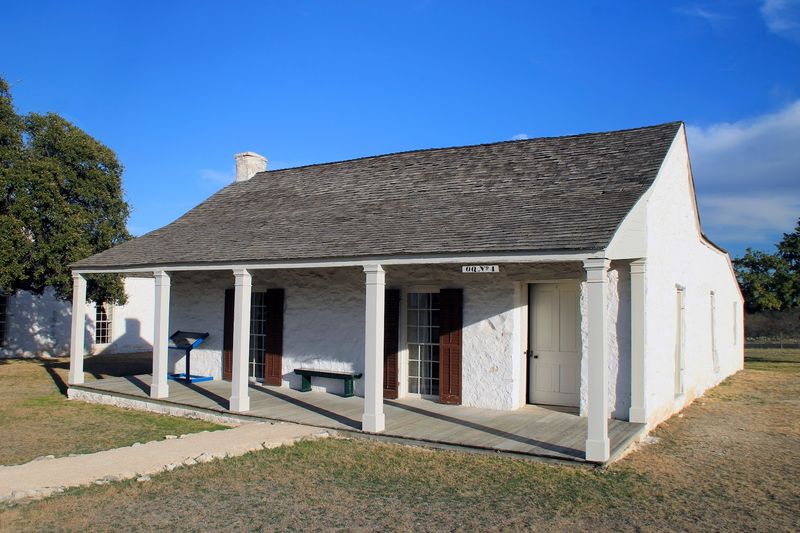
Most military forts, once abandoned, simply crumble. Fort McKavett took a different path.
After the Army permanently left in June 1883, civilian settlers moved into the existing stone buildings and essentially built a small town within the fort’s footprint. That is an unusual story, and it explains a lot about why the structures survived as well as they did.
People lived in those original buildings for nearly a century after the military left. The last residents moved out in 1973, just a few years after preservation efforts began in 1967.
That overlap between living history and institutional preservation is rare, and it gives Fort McKavett a layered quality that you do not find at sites that were simply sealed off and left to decay.
Walking through the grounds, you can occasionally spot small domestic details that hint at the civilian era, a window placement that does not quite match military function, a doorway that seems more suited to family life than barracks living.
The town of Fort McKavett still exists as a small community nearby, carrying the name of the fort into the present.
That continuity feels meaningful. This was never just a relic to be studied from a distance.
It was a place where real people kept on living, farming, raising families, and going about their days long after the soldiers rode out for the last time.
Planning Your Visit to Fort McKavett
Fort McKavett State Historic Site is open daily from 8 a.m. to 5 p.m., with the last entry for self-guided tours at 4 p.m. That window gives you plenty of time to explore if you arrive reasonably early.
The site is located at 7066 Farm to Market Rd 864, Fort McKavett, TX 76841, which puts it in a genuinely remote part of West Texas, so filling your gas tank before heading out is a smart move.
Admission is affordable and there are different rates for families, adults, seniors, veterans, teachers, and youth. Guided tours are also available if you prefer a more structured experience.
Self-guided tours work well too, especially if you pick up a map at the Visitor Center and take your time moving through the buildings in a logical order.
Golf carts are available to rent for those who want to cover more ground with less walking, which is especially handy on hot Texas afternoons. Wear comfortable shoes regardless, because even with a cart, you will want to step inside the buildings and walk portions of the nature trail.
The site rewards curiosity. The more questions you bring with you, the more satisfying the visit tends to be.
Fort McKavett is not the kind of place that announces itself loudly. It earns your attention quietly, through the weight of its stones and the depth of the stories layered into every wall.
