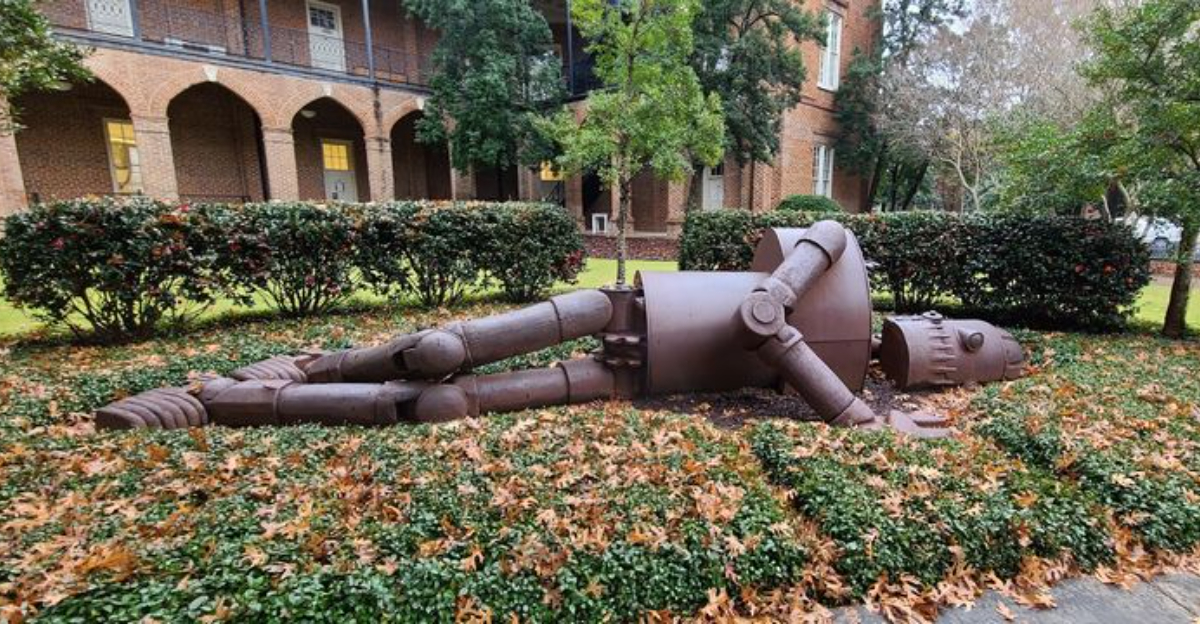
Somewhere on the campus of the University of Alabama, a massive rusted robot lies on its side like it just crashed from another world. This striking sculpture stretches more than 20 feet long and weighs several tons, making it nearly impossible to ignore once it comes into view.
Created from scrap iron cast at the historic Sloss Furnaces, it serves as both a work of public art and a tribute to the state’s industrial heritage. Its weathered appearance and unusual design give it a personality that feels playful, mysterious, and larger than life all at once.
Students, visitors, and curious passersby often stop to take photos or simply figure out what they are looking at.
Whether you are interested in art, local history, or unusual roadside attractions, this giant metal figure offers a memorable glimpse into a creative side of Alabama that many people never expect to find.
Come See the Story Behind the Name
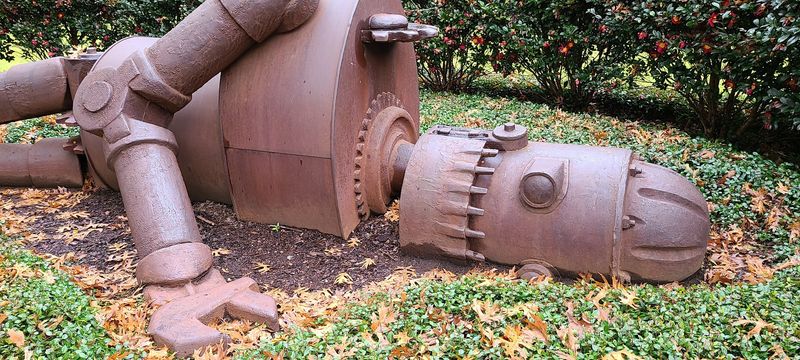
Every great piece of art has a story, but Goldie’s name origin is one of the most unexpected you will ever hear. While artist Joe McCreary was working on the sculpture, a welder left graffiti on the piece during its creation.
That graffiti simply read “Goldie.” McCreary kept the name, and it stuck permanently.
The “1971” in the name carries equal weight. That year marks when the Sloss Furnaces in Birmingham stopped operations, ending a major chapter in Alabama’s steel and iron industry.
McCreary tied the name directly to that moment in history, making the sculpture both a personal piece and a public memorial.
Knowing this backstory changes how you look at the sculpture. What might seem like a quirky robot suddenly becomes a tribute to thousands of workers who spent their lives in the heat and noise of iron smelting.
McCreary, who earned his MFA from the University of Alabama in 2011, built Goldie in 2009 before the university purchased and installed it in 2010. The story behind the name is not printed on a big sign nearby, so most visitors miss it entirely.
Learning it before you visit makes the whole experience richer and more meaningful. It transforms a cool photo opportunity into a genuine connection with Alabama’s working-class heritage.
Plan a Visit Around the Sloss Furnaces Connection
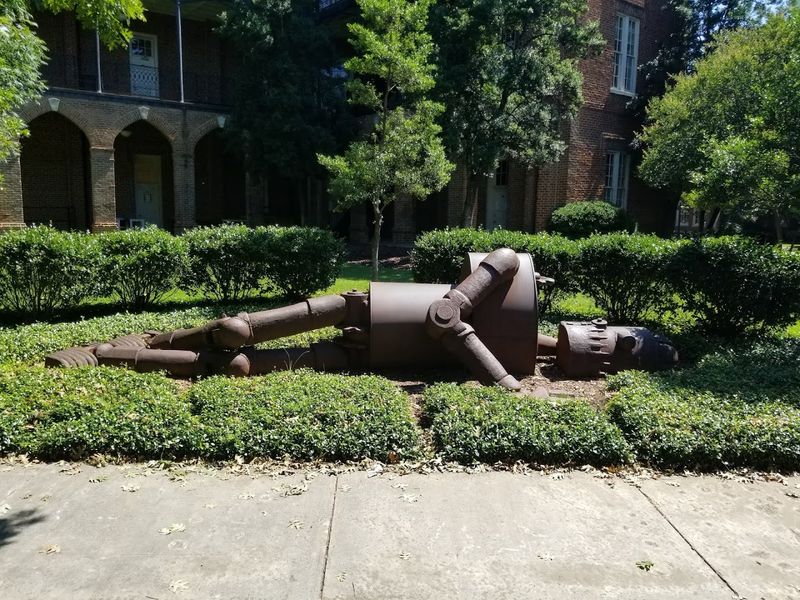
The iron used to build Goldie 1971 did not come from a hardware store or a factory catalog. It was cast at the Sloss Furnaces in Birmingham, one of the most historically significant industrial sites in the entire American South.
That connection makes Goldie far more than just a campus art piece.
Sloss Furnaces operated for nearly 90 years before shutting down in 1971. At its peak, the facility produced pig iron that supported industries across the country.
When it closed, thousands of workers lost their livelihoods, and an entire era of Birmingham’s identity came to an end. Goldie was built using material from that same place, giving the sculpture a physical and symbolic link to that history.
Pairing a visit to Goldie with a trip to the Sloss Furnaces National Historic Landmark in Birmingham creates a fuller picture of what this sculpture represents. The furnaces are located at 20 32nd Street North, Birmingham, AL 35222, and they are open to the public.
Seeing the actual site where Goldie’s iron was cast adds layers to the experience.
You start to understand the industrial scale of what once happened there, and then you return to Tuscaloosa with a completely different appreciation for why a fallen robot made of that iron means so much to so many people in Alabama.
You Can Stand Next to a 23-Foot Giant
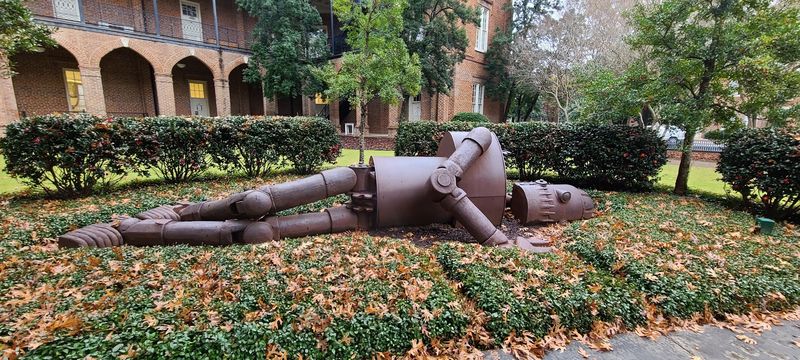
Scale matters when you are standing next to something this enormous. Goldie 1971 stretches an impressive 23 feet from head to toe, and the moment you walk up to it, your brain takes a second to process just how large this thing really is.
Most public art installations are meant to be admired from a distance, but Goldie pulls you in close.
You can walk right up and look at every rusted detail. The texture of the iron, the weight of the limbs, and the sheer presence of the fallen figure create a feeling that photos simply cannot capture.
Standing next to it makes you feel genuinely small in the best possible way.
Located in Woods Quad at the University of Alabama in Tuscaloosa, Alabama, this sculpture sits just outside the Department of Art and Art History. Getting there is straightforward, and the open quad gives you plenty of room to step back and take in the full view.
Families, students, and solo travelers all find themselves pulling out their cameras almost immediately. The size alone makes this a must-see stop, and the experience of being physically near something so massive and so raw is something you carry with you long after you leave the campus grounds.
Make Time to Explore Woods Quad Art
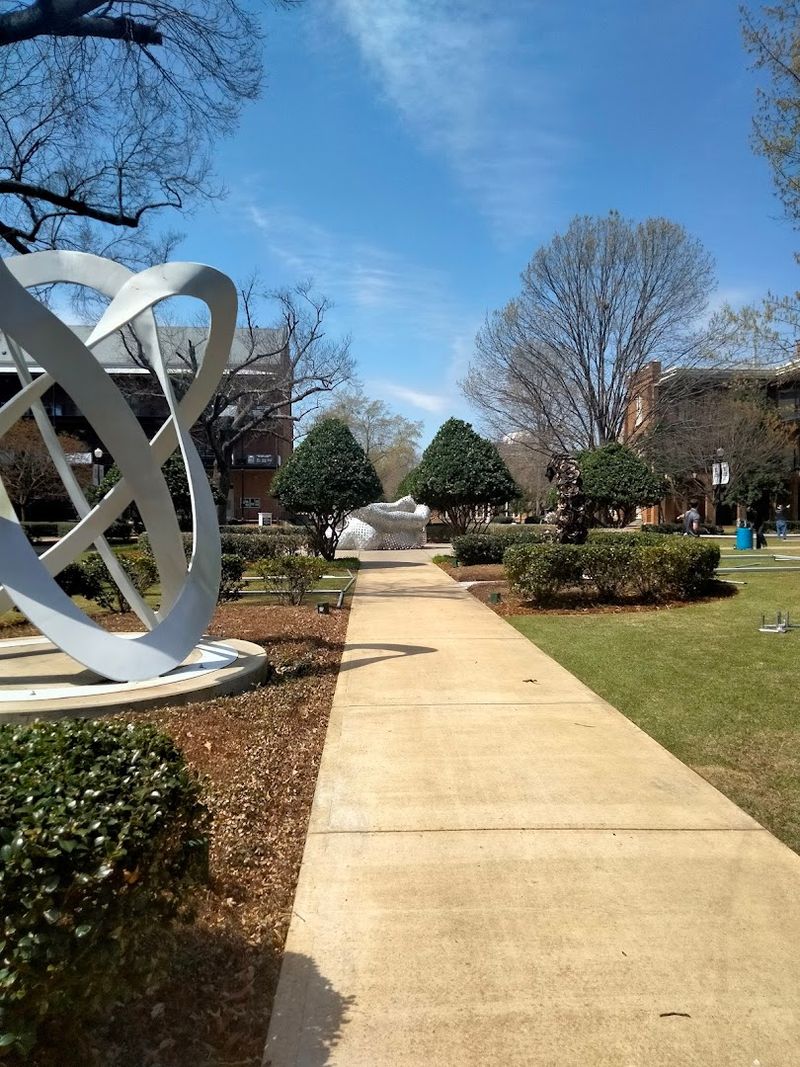
Goldie 1971 does not stand alone. The Woods Quad at the University of Alabama is home to a broader outdoor art collection that rewards visitors who take the time to explore beyond the famous fallen robot.
The quad sits in a pleasant, walkable area of campus with mature trees and open green space.
Art pieces are placed throughout the area, and discovering them feels a bit like a casual scavenger hunt. Some are abstract, others are figurative, and each one has its own story and style.
The proximity to the Department of Art and Art History means the whole space feels curated and intentional rather than random.
Walking the quad takes maybe 20 to 30 minutes if you stop and look carefully at each piece. It is a free experience that requires no tickets or reservations, which makes it an easy addition to any Tuscaloosa itinerary.
The campus itself is visually appealing, with classic brick architecture and wide open walkways. Goldie is the centerpiece that draws most people in, but the surrounding sculptures add depth to the visit.
Families with kids especially enjoy the interactive quality of walking an outdoor art space. You get fresh air, cultural exposure, and genuine visual interest all in one relaxed afternoon stroll through one of Alabama’s most welcoming university campuses.
Try Spotting Every Rusted Detail Up Close
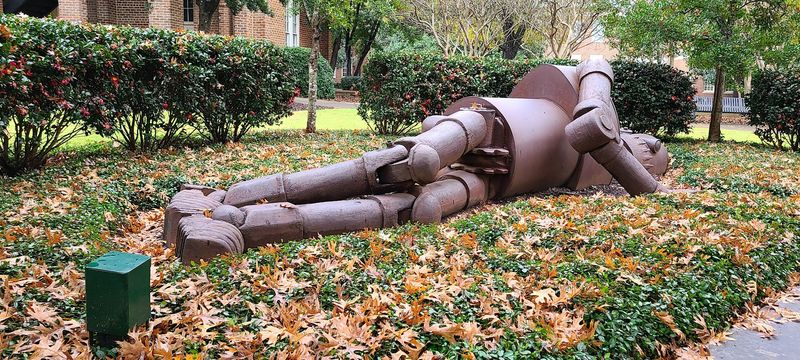
Up close, Goldie 1971 is a completely different experience than from a distance. The sculpture is built from scrap iron that was cast at the Sloss Furnaces, and that material tells its own story through texture, color, and weight.
Rust patterns form irregular shapes across the surface, and no two sections look exactly the same.
Running your eyes along the body of the figure reveals the craft behind the construction. Joints, limbs, and the humanoid form are all shaped with deliberate intention by creator Joe McCreary.
The rusted finish was not an accident or a sign of neglect. It is part of the visual language of the piece, connecting it visually to old industrial machinery and the weathered tools of labor.
Photography enthusiasts find Goldie especially rewarding because the surface detail photographs beautifully in natural light. Morning light and late afternoon sun both create dramatic shadows across the iron, making each photo feel different depending on when you visit.
The scale and the texture together create something genuinely cinematic. Many visitors describe the sculpture as looking like it belongs in a science fiction film, and that impression only grows stronger the closer you get.
Bringing a camera with a decent zoom or macro setting will help you capture the kind of detail that makes your photos stand out from the typical tourist snapshot of the whole figure.
Skip Nothing and Learn the Industrial History
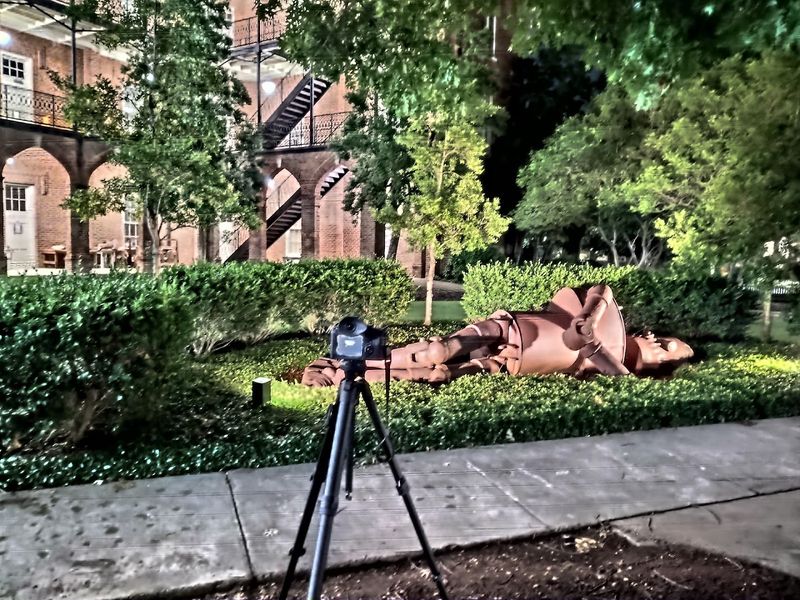
Alabama’s industrial history is not always easy to find in a way that feels personal and immediate. Most museums keep it behind glass.
Goldie 1971 puts it right in front of you in the most dramatic way possible, a collapsed iron giant that literally embodies the fall of an industry.
The steel and pig iron industry powered Alabama’s economy for generations. Birmingham became known as the “Pittsburgh of the South” because of its massive iron and steel output.
When the Sloss Furnaces closed in 1971, it signaled a broader shift that affected workers, families, and entire communities across the state. Goldie captures that collapse in physical form.
Understanding this history before your visit makes the sculpture hit differently. You are not just looking at a cool robot.
You are looking at a monument to people who worked brutal, dangerous jobs to build something that eventually disappeared. McCreary honored those workers by using the very iron they once processed to create a figure that now lies fallen, just as the industry itself fell.
That layered meaning is rare in public art. Most sculptures are beautiful or interesting.
Goldie is both of those things, but it also carries real emotional and historical weight. For anyone interested in American labor history or Southern industrial heritage, this sculpture offers one of the most accessible and visually powerful entry points you will find anywhere in the region.
Do Not Miss This Free Roadside Attraction
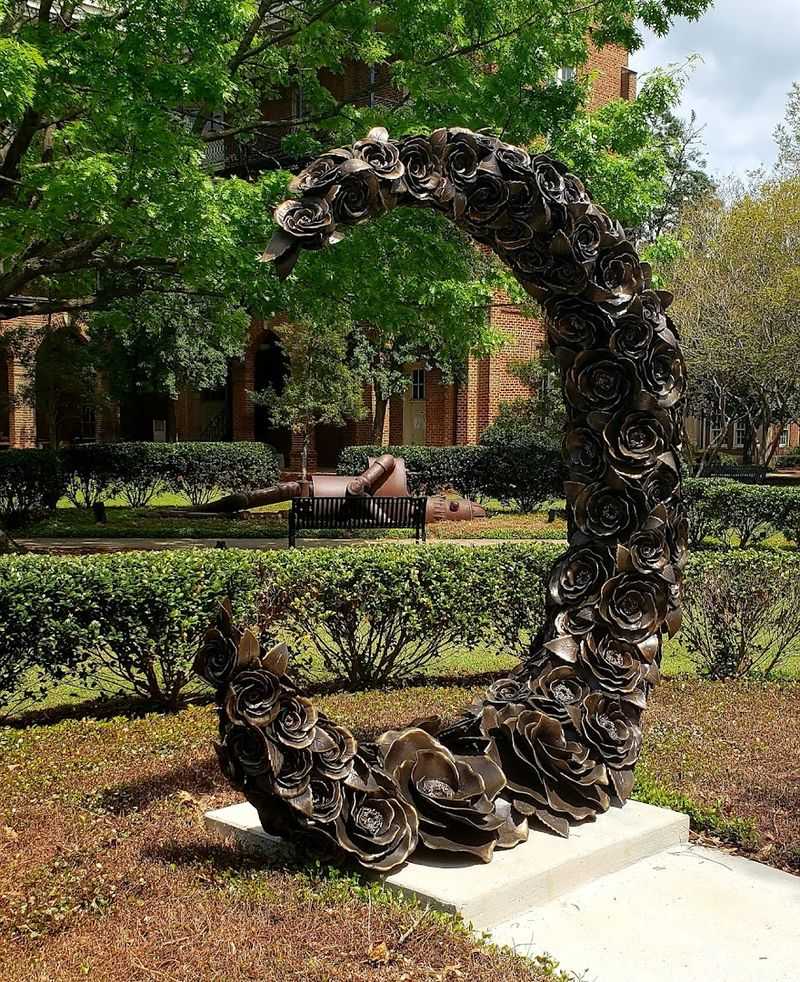
Not every worthwhile destination requires a ticket, a reservation, or a long drive off the highway. Goldie 1971 is completely free to visit and sits on a public university campus that welcomes visitors year-round.
You simply show up, walk to Woods Quad, and there it is.
The sculpture gained attention on Atlas Obscura, a popular platform for unusual and offbeat travel destinations. That kind of recognition brought visitors from across the country who were already passing through Tuscaloosa on road trips.
Many described it as a welcome and unexpected highlight of their journey. The address is Woods Quad, Tuscaloosa, AL 35401, and parking on or near the University of Alabama campus is generally accessible for visitors during the day.
Free attractions that are also genuinely impressive are rare. Goldie manages to be both without any hype or marketing machinery behind it.
It exists simply because an artist made something meaningful, and a university recognized its value. There are no gift shops, no guided tours, and no admission booths.
Just a massive fallen robot lying in a quad, waiting for you to come and figure out what it means to you. Whether you are a local Tuscaloosa resident who has never made the trip or a traveler passing through Alabama for the first time, this is one stop that belongs on every itinerary without question.
