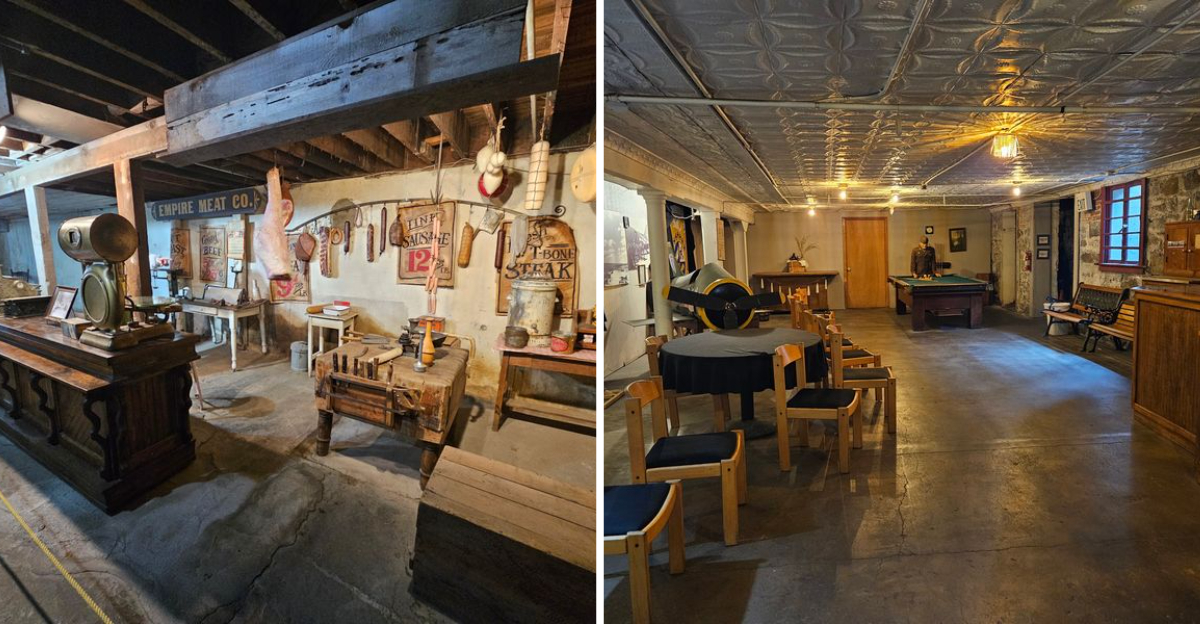
What if I told you that beneath a seemingly ordinary city street lies an entire world of strange and wonderful treasures? That’s exactly what awaits at this hidden underground attraction in the state. Most people walk right over it every single day without having any clue what lurks just below their feet.
The moment you descend those stairs, you enter a realm that feels completely detached from the world above. Dimly lit tunnels stretch out in every direction, crammed with bizarre artifacts that defy all logical explanation.
Guides lead you through the dimly lit corridors while spinning tales that will leave your head spinning. You’ll find yourself constantly asking whether what you’re seeing is real or some elaborate illusion. I promise Oregon’s best-kept underground secret is waiting.
The Hidden World Beneath Pendleton’s Streets
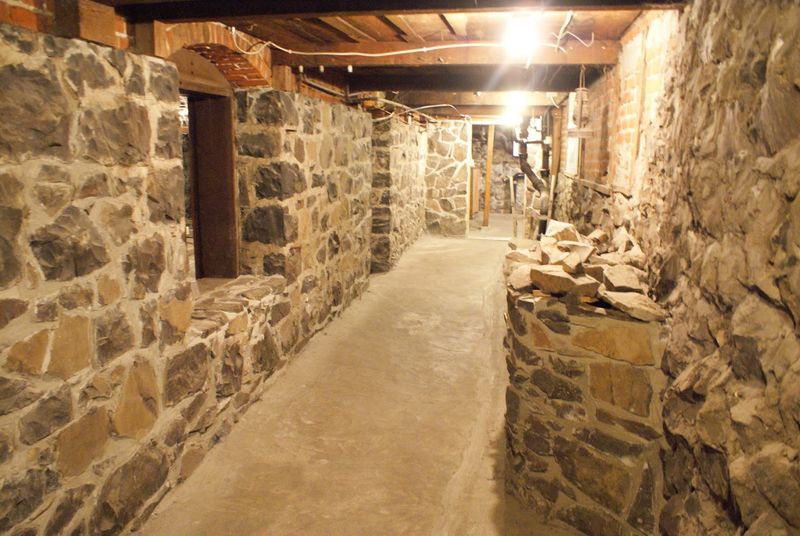
Most people walk right over Pendleton’s underground without ever suspecting what lies below. The tunnel network stretches beneath the downtown area. It connects rooms that once served a surprisingly active community of businesses and residents who preferred to operate out of sight.
The Pendleton Underground Tours are run by a non-profit organization that has worked hard to preserve these spaces since 1989. Before that, the tunnels sat mostly forgotten until city road crews stumbled across them during repairs in the 1970s and 1980s. That rediscovery changed everything.
The underground was not just a hiding place. It was a functioning world where people lived, worked, and moved through their daily lives in a city with a complicated relationship with its own rules. Pendleton in the late 1800s had roughly 3,000 people.
It still managed to support 32 drinking establishments and 18 brothels. That tells you a lot about the town’s character and appetite for a good time.
Hop Sing’s Chinese Laundry and the Chinese Community’s Story
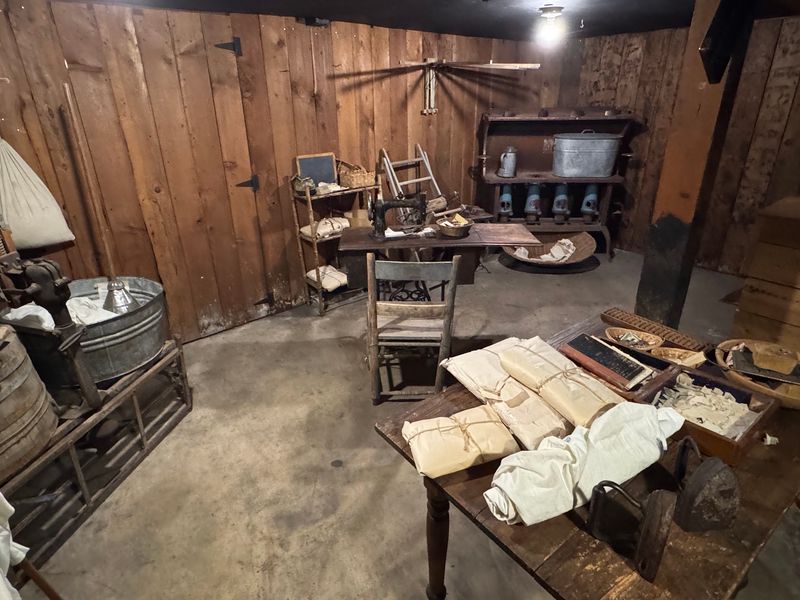
One of the most quietly moving stops on the tour is Hop Sing’s Chinese Laundry. This reconstructed space brings the daily life of Pendleton’s Chinese residents into sharp focus. Between 1881 and 1905, Chinese workers built and occupied many of the buildings in this district.
They left behind a physical record of their presence that survived long after the community pushed them out.
The Chinese community faced severe discrimination in Pendleton and much of the American West during this era. The underground spaces offered some protection from that hostility, providing places to live, work, and move around the city with a degree of privacy that the streets above did not offer.
Architectural evidence suggests Chinese immigrants did not originally build these spaces as an extensive tunnel network. But their presence and contributions shaped the underground significantly.
Seeing the living quarters and work areas laid out before you makes the history feel immediate and real. It is sobering in the best possible way.
The Shamrock Card Room and Its Clever Tricks
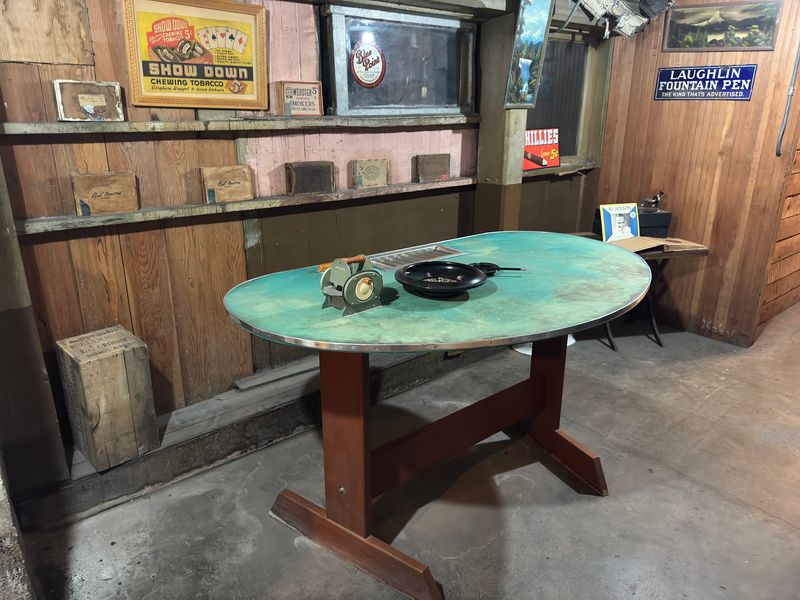
The Shamrock Card Room has a personality all its own. It feels a little rough around the edges, which is exactly right for a place where the house had every advantage and was not shy about using it.
Guides on the tour explain how bartenders in the card room would sweep the floor with practiced efficiency, collecting gold dust that had fallen from miners’ pouches during games. It sounds almost too clever to be true.
The room itself is reconstructed with period-appropriate details, giving you a real sense of how cramped and atmospheric these underground gambling spots actually were. There was nothing glamorous about it.
The lighting was low, the air was close, and everyone at the table knew the game was tilted. Yet people kept coming back, because Pendleton in those days was a place where entertainment and risk went hand in hand.
The Secret Prohibition Card Room and Its Hidden Passageways
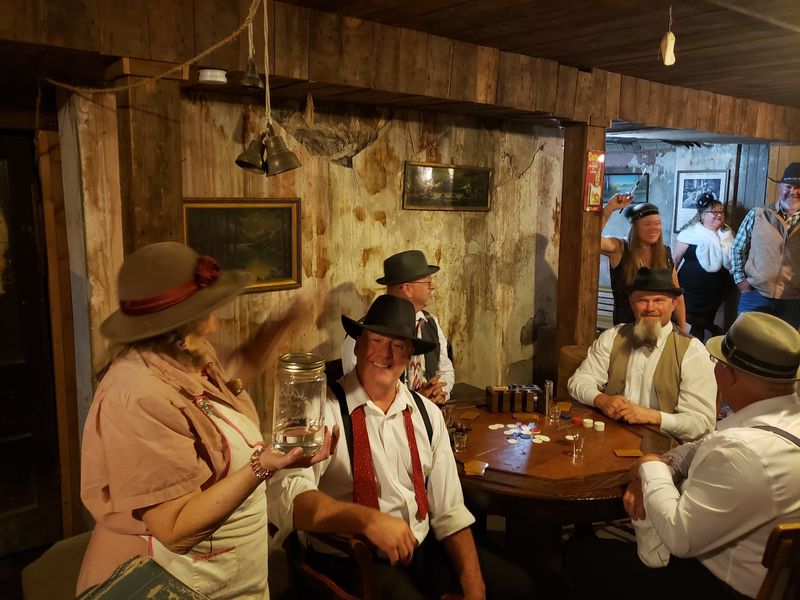
Hidden behind a concealed entrance, the Prohibition-era card room is the kind of discovery that makes you feel like you have stumbled into a movie set. Except none of this was staged for entertainment back then.
People genuinely needed secret rooms to keep doing what they wanted to do when the law said otherwise.
The passageways leading to this room are narrow and atmospheric. I found myself instinctively lowering my voice as the guide walked us through, even though there was obviously no longer any need for secrecy. The space just has that effect on you.
Prohibition-era spaces like this one are fascinating because they reveal how creative and determined people get when faced with restrictions they find unreasonable. The hidden card room was not about criminality for its own sake.
It was about community, habit, and the very human desire to gather and play games in peace. The fact that it required a secret door just made it more interesting to the people who knew where to look.
The Vintage Duck Pin Bowling Alley
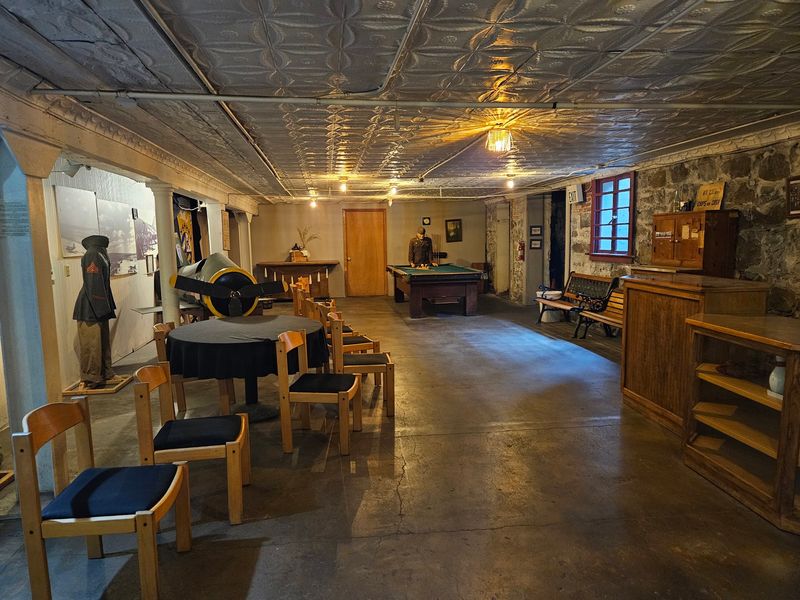
Nobody expects to find a bowling alley underground. That is part of what makes this stop so unexpectedly delightful. The vintage duck pin bowling alley tucked into the Pendleton Underground is one of those details that shifts the whole experience from interesting to genuinely surreal.
Duck pin bowling uses smaller balls and shorter, stubbier pins than standard bowling, making it a slightly different game with its own particular charm. The alley here is old enough that it feels more like an artifact than a recreation.
It also serves as a reminder that the underground was not just about illicit activity. People down here were also just having fun, playing games, and socializing in spaces that felt removed from the pressures of the world above. The bowling alley captures that spirit perfectly.
It is playful and a little unexpected, and it makes you appreciate how much life was actually happening beneath Pendleton’s feet.
The Empire Ice Cream Parlor and Meat Market
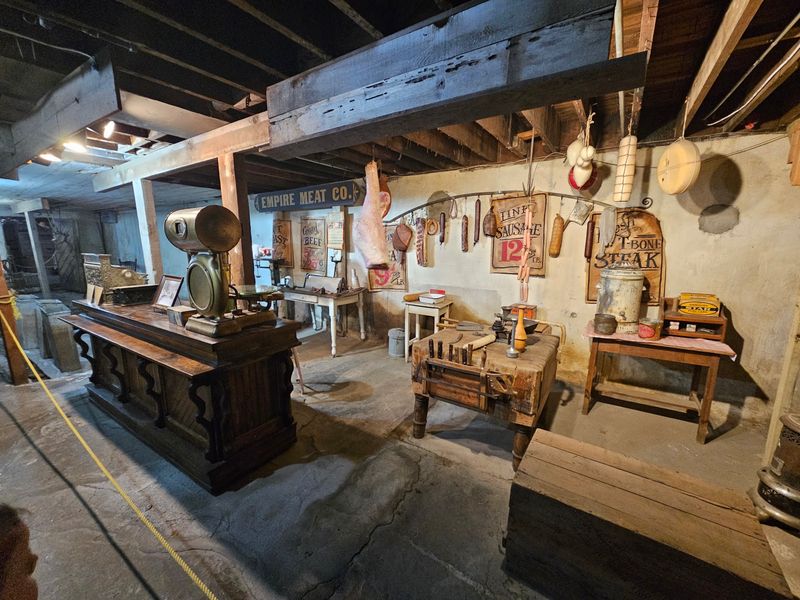
Not everything underground was secretive or scandalous. The Empire Ice Cream Parlor and the Empire Meat Market are proof that the underground also hosted completely ordinary commerce, the kind of everyday business that any town would have needed to function.
The ice cream parlor is a charming stop on the tour. There is something almost funny about finding a sweet, wholesome business tucked into the same underground network that housed gambling dens and hidden passageways. It humanizes the whole experience in a nice way.
The meat market next door adds another layer of practical history. These were real businesses serving real customers. The fact that they operated underground says as much about Pendleton’s layout and economics as it does about secrecy.
Merchants used the underground for storage and movement because it was practical and efficient, not always because they were hiding something. Seeing both stops together gives you a more complete picture of how the underground functioned as a genuine commercial district.
The Cozy Rooms and the Stories of Madame Stella Darby
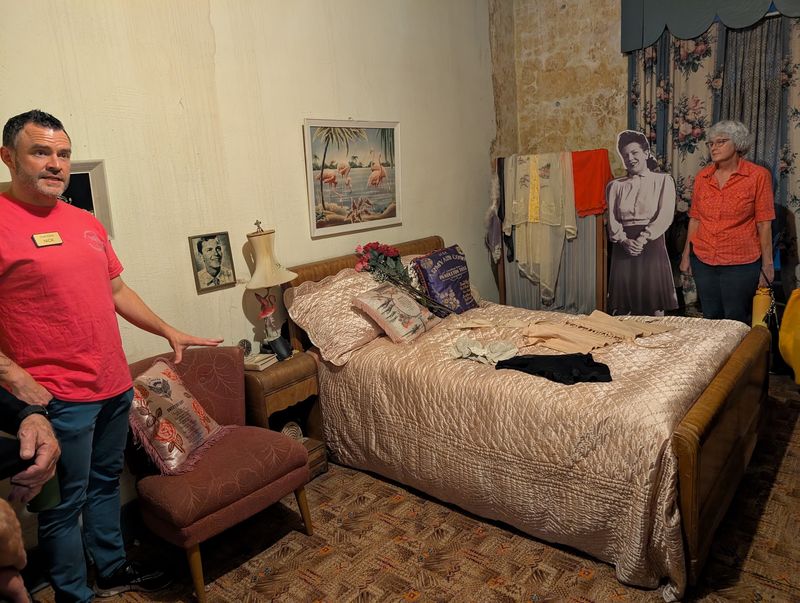
The Cozy Rooms are one of the most talked-about stops on the Pendleton Underground tour, and the guides handle the subject with a mix of historical honesty and genuine respect.
These rooms once served as one of Pendleton’s many bordellos. The stories shared here center on the women who lived and worked in them.
Madame Stella Darby is one of the figures whose story comes up during this part of the tour. The details shared about her life and work give a human face to a part of Pendleton’s history that is easy to reduce to statistics or scandal. These were real people navigating difficult circumstances.
The rooms themselves are reconstructed with period furnishings and mannequins that give you a sense of the physical space without sensationalizing it. The guides are thoughtful and informative, making this one of the more emotionally resonant stops on the entire tour.
The Chinese Living Quarters and the Underground Jail
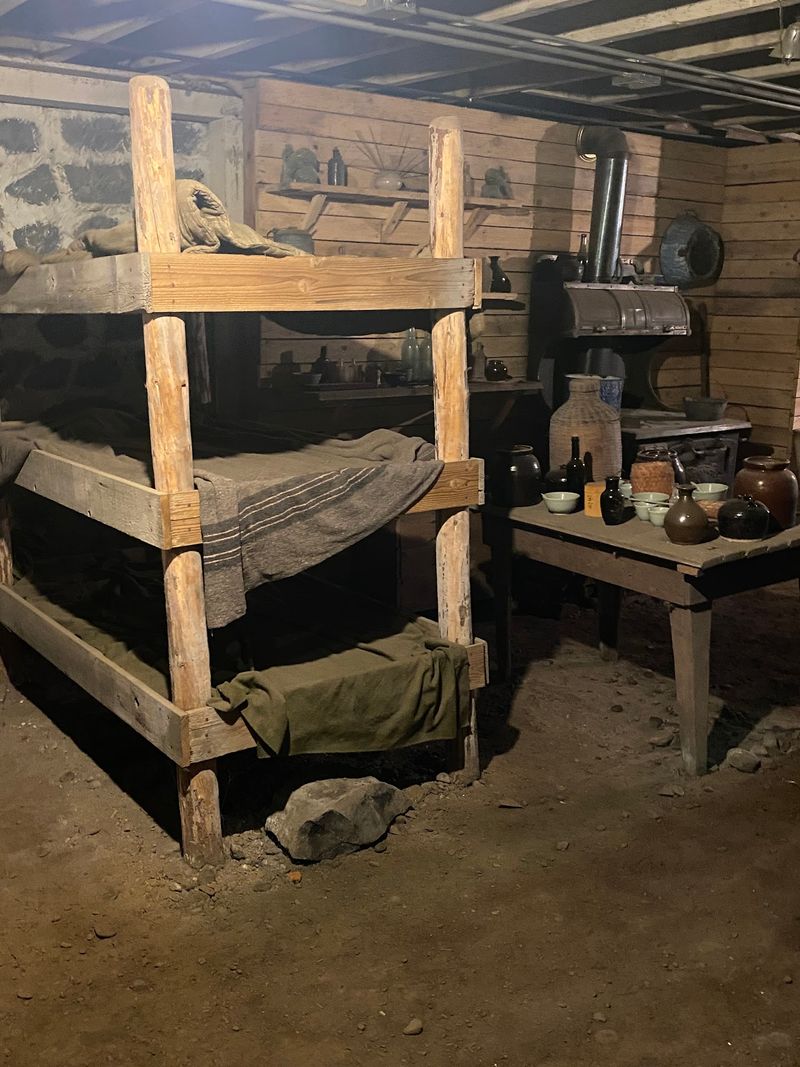
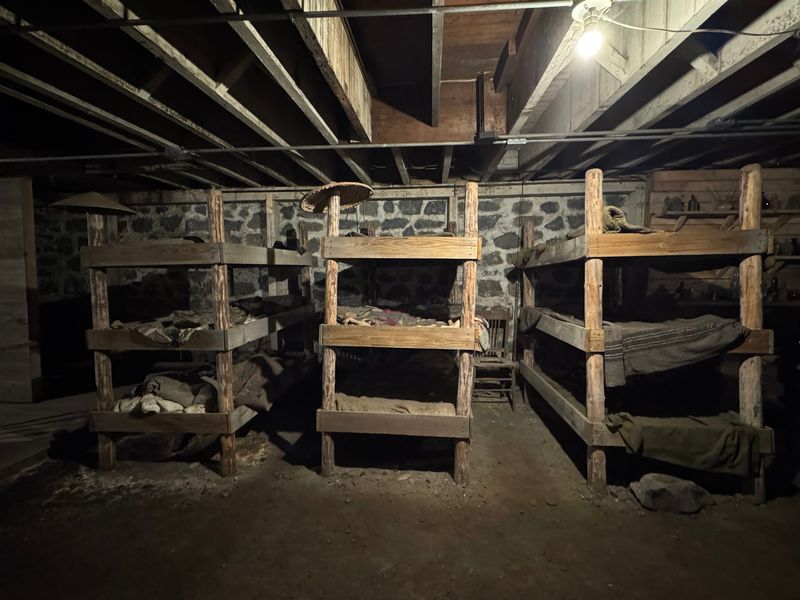
Deeper into the tour, the spaces become more stripped down and the history becomes harder to look away from. The Chinese living quarters are small, spare, and remarkably intact in terms of their basic layout.
Seeing them in person makes you understand just how confined and isolated life underground could be for the people who had no other safe options.
Right nearby, the underground jail is another sobering sight. A small, dark cell with iron bars, it serves as a physical reminder that law enforcement in Pendleton also had an underground presence. The jail was used to hold people before they could be moved to the main facility above ground.
These two stops together form one of the most historically significant parts of the tour. They speak to the layers of power and vulnerability that existed in Pendleton during its frontier years.
The Chinese community built much of this underground world and yet had the least protection from the forces that shaped it. That contrast stays with you long after the tour ends.
The Opium Dens and What They Reveal About Frontier Life
The opium dens are among the tour’s most visually striking stops. They open up a conversation about frontier life beyond what most history books cover. These dens were part of the underground landscape during Pendleton’s most active years.
They reflected patterns common across many Western towns during this period.
The reconstruction here is detailed without being exploitative. Guides explain the historical context carefully, placing the dens within the broader story of the Chinese community and the social conditions that shaped daily life underground.
It is history told with nuance, which makes it more interesting rather than less.
What strikes me most about this stop is how it forces you to think about the full complexity of a place like Pendleton. The town above ground presented one face to the world. Below, an entirely different set of realities played out.
The opium dens are part of that complete picture, uncomfortable as they may be. Honest history is almost always more compelling than a cleaned-up version.
The Prism Glass Pavement and How Light Reached the Underground
One of the most quietly magical details on the entire tour is the prism glass embedded in the pavement above. At certain points during the tour, you get to stand directly beneath these glass blocks and look up as natural light filters through them.
The glass tiles were a practical solution to a real problem. Underground spaces need light, and before electric lighting became reliable and affordable, prism glass was an elegant way to bring daylight into rooms below street level.
The technology was used in cities across North America during the late 1800s and early 1900s.
Seeing it in action here gives the whole experience an unexpectedly poetic quality. You are underground, surrounded by history, and yet a thin column of natural light connects you directly to the street above. It is a small detail that carries a lot of weight.
Address: 31 SW Emigrant Ave, Pendleton, Oregon.
