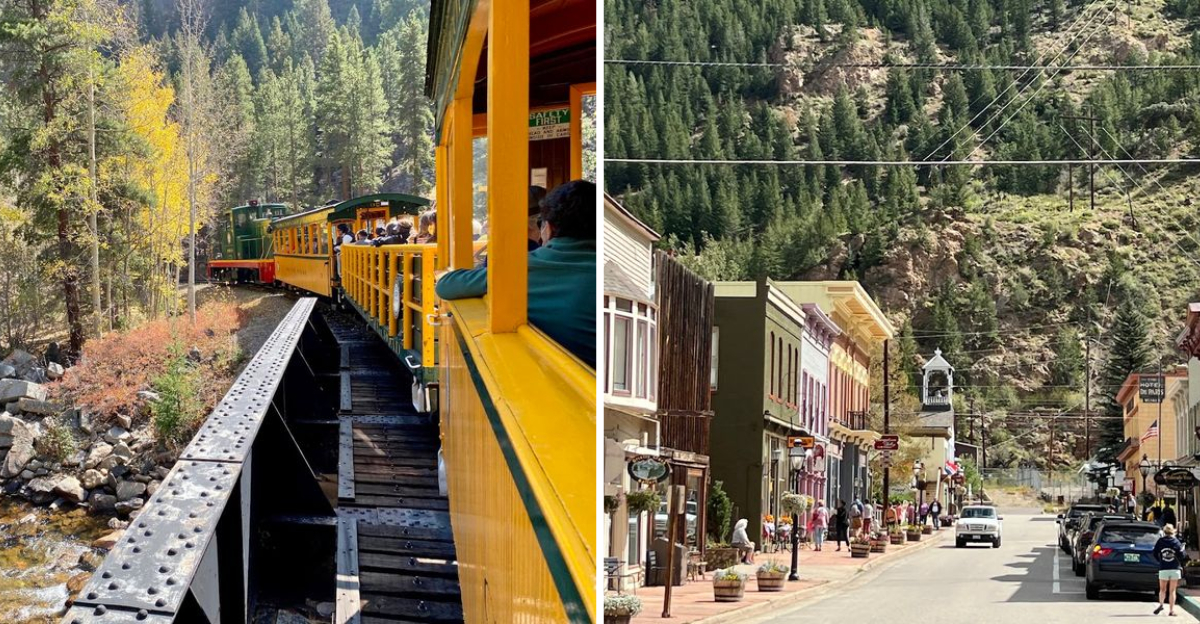
High in the Rocky Mountains along a steep canyon, a Colorado town sits like time politely forgot it. The moment you step off a narrow-gauge steam train and look around at the rows of restored Victorian buildings, something clicks.
Over 200 19th-century buildings line the streets, preserved so carefully that the whole area was designated a National Historic Landmark District back in 1966.
I arrived on the train, winding 4.5 miles through mountain terrain to gain over 600 feet in elevation, and stepped out into a place that felt like it belonged to another era entirely.
The old mining town earned its “Silver Queen of the Rockies” nickname for a reason, and every corner of it still carries that old-world energy.
History lovers, train enthusiasts, or just anyone who appreciates a genuinely beautiful mountain town will find something rare and completely unforgettable here.
The Georgetown Loop Railroad, A Steam-Powered Journey Through History
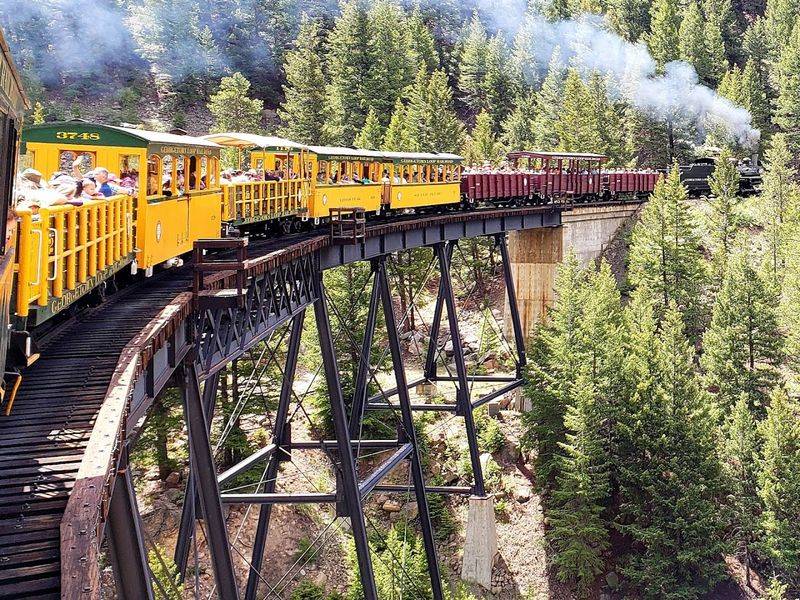
There is nothing quite like hearing a steam whistle echo off canyon walls as a century-old locomotive rounds a mountain curve. The Georgetown Loop Railroad is not just a tourist ride.
It is a working piece of Colorado history that has been hauling passengers through Clear Creek Canyon since its original completion in 1884.
The engineering behind this railroad was genuinely ahead of its time. Because Georgetown and Silver Plume sit only two miles apart but differ by over 600 feet in elevation, builders designed a “corkscrew” route stretching 4.5 miles to manage the climb gradually.
The train crosses the famous Devil’s Gate High Bridge, a 95-foot structure that still impresses everyone on board.
Steam locomotives typically run from Memorial Weekend through early October, with diesel engines covering late fall and winter journeys. The full ride lasts about one hour and fifteen minutes during peak season.
Riders get sweeping views of canyon walls, mountain peaks, and dense forest the whole way through.
Many tickets include an optional walking tour of the Lebanon Silver Mine, located midway along the route. That mine tour takes you into an actual 1870s tunnel, which is a genuinely cool bonus you would not expect from a train ride.
The Devil’s Gate Station sits at 1520 Argentine Street, near Georgetown, and serves as the main departure point.
Honestly, the ride alone is worth the trip up from Denver. It hits differently when you realize the original line was built to haul silver ore, not sightseers.
Silver Boom Legacy, How Georgetown Became the Silver Queen of the Rockies
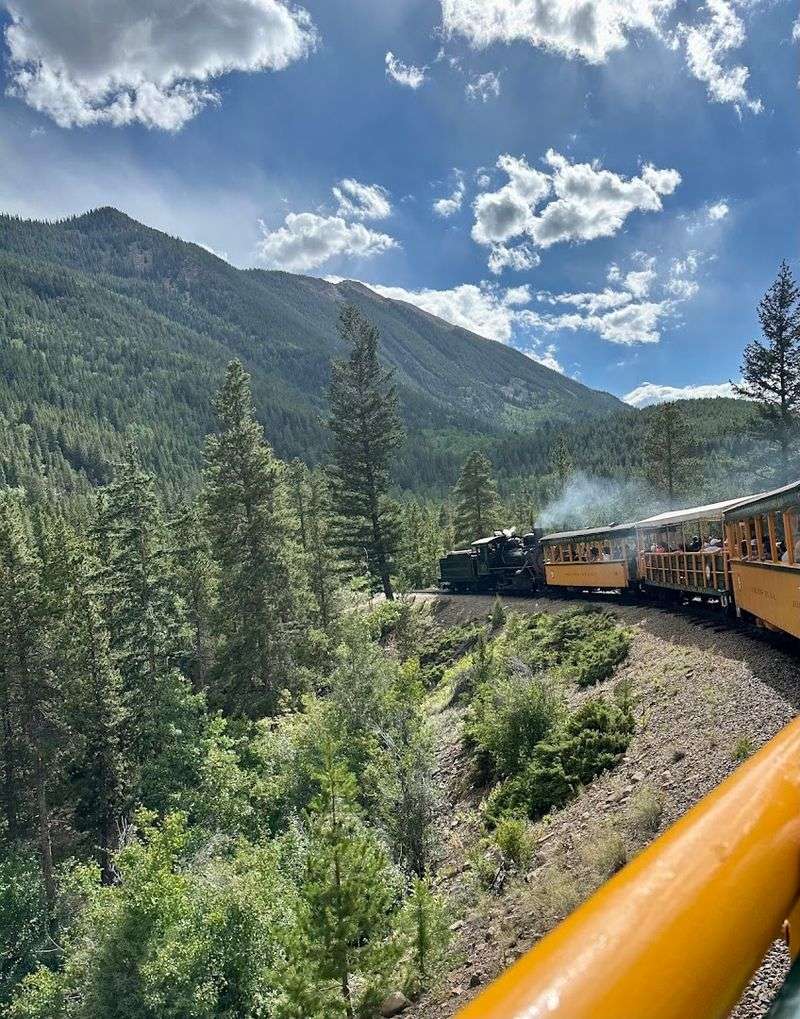
Gold brought the first wave of settlers to Georgetown in 1859, when prospector George Griffith staked his claim and gave the town its name. But silver changed everything.
The discovery of rich silver deposits in 1864 launched a boom that turned this small canyon settlement into one of the most prosperous towns in the entire Rocky Mountain West.
By the 1880s, Georgetown had a population approaching 5,000 people. Hotels, banks, newspapers, and even an opera house filled its streets.
The nickname “Silver Queen of the Rockies” was not exaggeration. It was a genuine reflection of the wealth and ambition flowing through this mountain community during its peak years.
The Silver Crash of 1893 hit hard and fast. Prices collapsed, mines shut down, and the boom gave way to a long, quiet period of decline.
Georgetown survived where many mining towns did not, largely because its residents chose preservation over demolition when rebuilding was no longer financially attractive.
That preservation instinct turned out to be the town’s greatest asset. More than 200 original 19th-century buildings still stand today, many of them fully restored.
The entire district was recognized as a National Historic Landmark in 1966, cementing Georgetown’s place as one of the best-preserved silver mining towns in American history.
Walking 6th Street now, you get a real sense of what boom-era prosperity looked like. The scale of the buildings tells the story better than any museum exhibit could.
Hotel de Paris and Hamill House, Museums That Actually Feel Alive
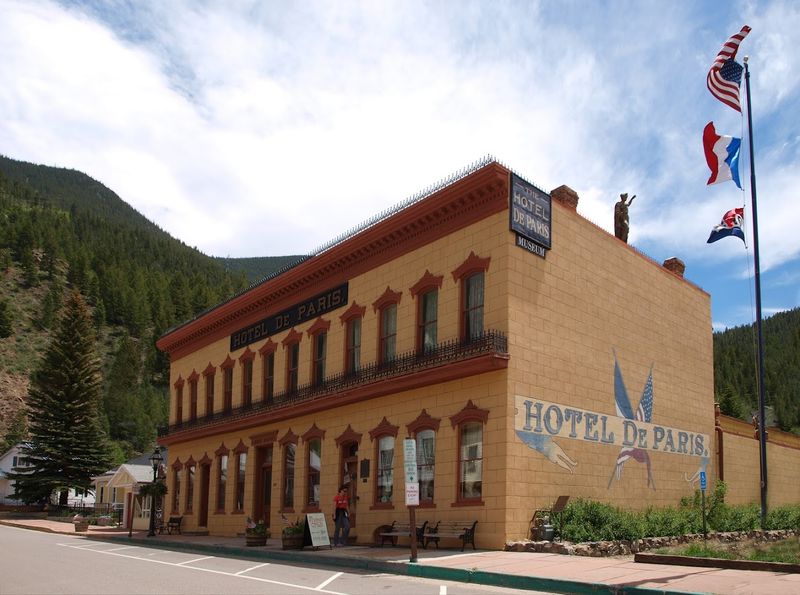
Most historic house museums feel a little stiff. Georgetown’s two flagship museums are a refreshing exception.
The Hotel de Paris Museum and the Hamill House Museum both carry that rare quality of feeling genuinely inhabited, like the people who lived there just stepped out for the afternoon.
The Hotel de Paris started life in 1875 as a French inn built by Louis Dupuy, a former miner who wanted to bring European hospitality to the Colorado mountains. The restored interior still has its original French furnishings, ornate wallpapers, and kitchen equipment.
It is a surprisingly elegant space for a mining town, and that contrast is a big part of what makes it so interesting.
Hamill House tells a different story. Built in 1867 and expanded significantly by silver baron William A.
Hamill in 1879, the home reflects the kind of wealth that the silver boom produced at its height. The Gothic Revival architecture, the formal parlors, and the carefully preserved outbuildings all point to a man who wanted the world to know he had made it.
Both museums are managed with real care and attention to historical detail. Guided tours add context that you would miss just wandering through on your own.
The staff at both locations tend to be genuinely knowledgeable and enthusiastic, which makes a big difference.
If you only have time for one, the Hotel de Paris edges ahead for sheer novelty. A French luxury inn in a Rocky Mountain silver town is exactly as unexpected as it sounds.
Lebanon Silver Mine Tour, Going Underground on the Railroad Route
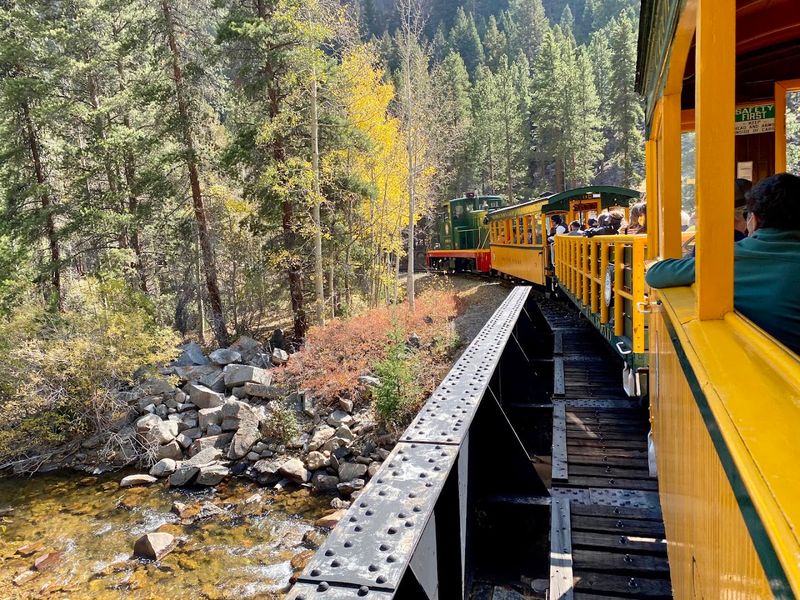
The Lebanon Silver Mine sits midway along the Georgetown Loop Railroad route, and it is the kind of add-on that completely reframes the whole experience. You board the train thinking it is mainly about the scenery and the bridge.
Then you step into a real 1870s mine tunnel and realize the history here runs much deeper than the landscape.
The mine tour takes you through an actual working-era tunnel carved into the mountainside during Georgetown’s silver boom. Guides explain how miners worked, what tools they used, and what daily life underground actually looked like.
The temperature drops noticeably inside, which makes the whole thing feel that much more immersive.
Silver ore veins are visible in the tunnel walls, which is something you genuinely do not expect to see up close. Seeing the raw geology that drove an entire economic boom puts the railroad, the Victorian buildings, and the whole town into sharper focus.
It connects the dots in a way that reading about it never quite does.
The tour is included with many Georgetown Loop Railroad tickets, which makes it an easy decision. Kids tend to love it, but adults are usually just as absorbed.
There is something universally compelling about going underground into a place that real miners once called their workplace.
After the mine tour, the train ride back feels richer somehow. You find yourself looking at the canyon differently, thinking about the people who carved a town out of these mountains with nothing but picks, determination, and the occasional lucky strike.
Historic Main Street and Georgetown’s Living Streetscape
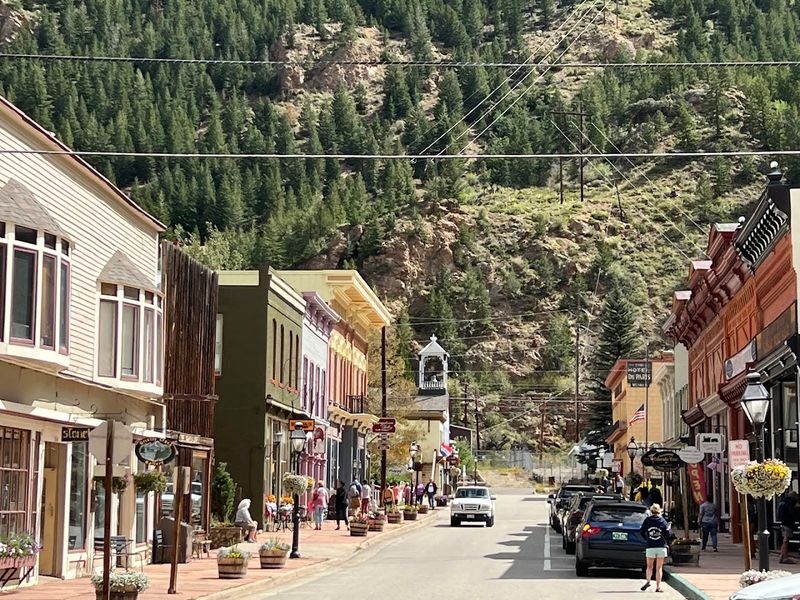
Georgetown’s 6th Street is the kind of main street that actually delivers on the promise of its postcard image. The Masonic Hall, the Fish Block, and the Monti and Guanella Building line the road like characters in a story that never quite ended.
Each building has its own history, and the whole street reads like a timeline of what the silver boom looked like at ground level.
The Alpine Hose No. 2 Firefighter Museum is one of those small gems that surprises you. It preserves a piece of Georgetown’s civic life that often gets overlooked in favor of the mining narrative.
The Georgetown Energy Museum offers another unexpected angle, focusing on the town’s early hydroelectric history, which is genuinely fascinating for a community this size.
The Old County Courthouse now functions as a community center and tourist information office, which feels like exactly the right use for it. Stopping in there is a good move if you want maps, local recommendations, or just a sense of how the town operates today.
The staff are friendly and happy to point you toward things you might otherwise miss.
Georgetown does not feel like a theme park version of a historic town. People actually live here.
Small businesses operate year-round. The population sits around 1,300, which keeps the streets from feeling overwhelmed even during busy tourist seasons.
The Georgetown Gateway Visitor Center near the I-70 exit welcomes nearly 450,000 visitors annually. That number says a lot about how much people want to experience a place this well-preserved and this genuinely beautiful.
Guanella Pass and the Outdoor Side of Georgetown
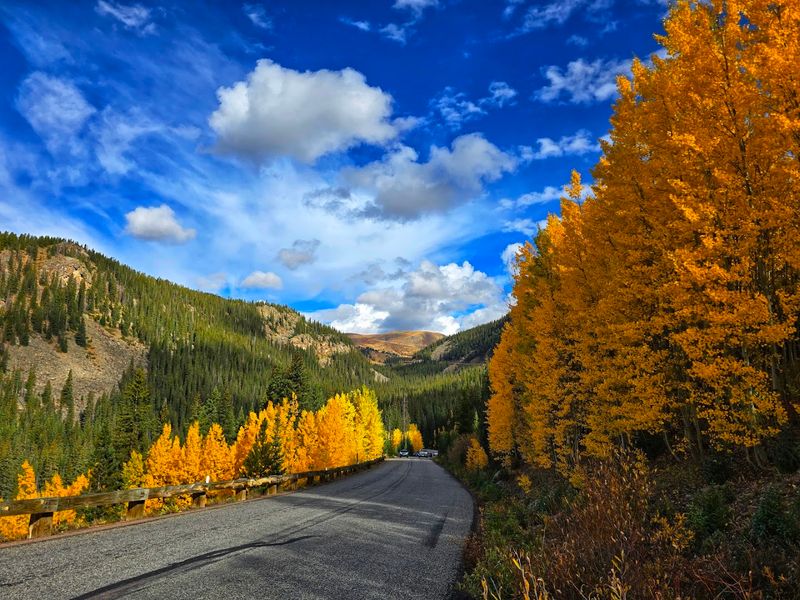
Georgetown’s historic buildings and railroad are the headliners, but the landscape surrounding the town deserves equal billing. The Guanella Pass Scenic Byway starts right at the edge of town and climbs into some of the most dramatic alpine terrain in the entire state.
The drive is stunning in every season, but fall turns it into something almost unreal.
Bighorn sheep are a regular sighting along the byway, particularly in the higher elevations. Spotting a group of them picking their way across a rocky slope while the mountains stretch out behind them is one of those moments that makes you glad you looked up from your phone.
The pass tops out at 11,669 feet, offering views that stretch across multiple mountain ranges.
For hikers, the area around Georgetown offers trails that range from easy canyon walks to more demanding summit routes. Clear Creek itself runs right through town, and the sound of it follows you almost everywhere you go.
It is the kind of ambient detail that makes the whole place feel alive in a way that purely historic towns sometimes do not.
Winter brings a different energy to Georgetown. The surrounding peaks attract snowshoers and cross-country skiers, and the town itself takes on a quieter, more intimate character.
The Georgetown Loop Railroad runs diesel-powered winter excursions that offer a completely different perspective on the canyon landscape.
Georgetown sits at about 8,500 feet elevation, so the air has that crisp, thin quality that reminds you quickly that you are deep in the mountains. That feeling never really gets old.
Address: 404 6th St., Georgetown, CO 80444
