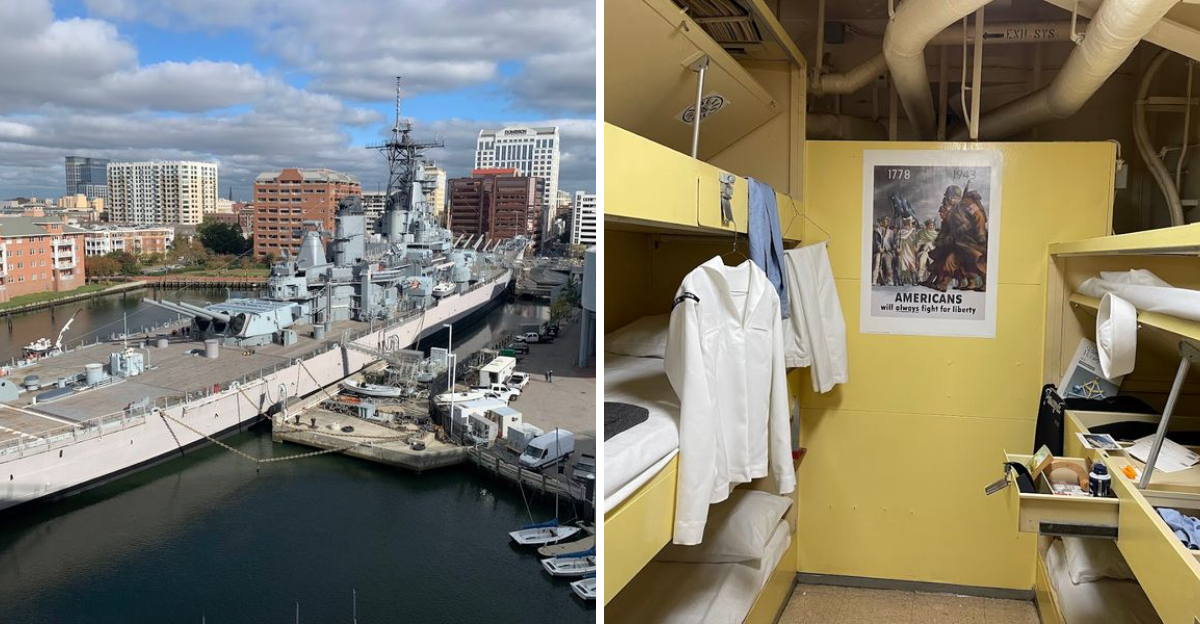
You do not fully understand the word “massive” until you stand next to this thing. I have seen plenty of ships in movies and documentaries, but nothing prepared me for the USS Wisconsin.
It stretches longer than a football field by a lot. The guns are the size of small buildings.
And the whole thing just sits there in Virginia, quiet now, retired from service, letting visitors wander through its hallways and imagine what it was like when it meant business. You can walk the same decks where sailors slept, ate, and waited for orders.
You can touch the steel that survived actual combat. History feels different when you are standing on top of it.
A Ship Built to Dominate the Seas
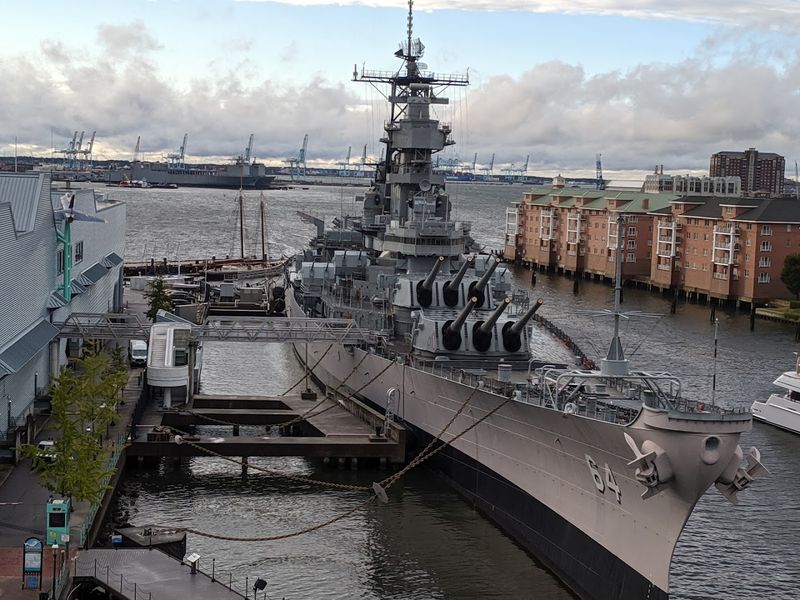
Nothing quite prepares you for that first glimpse of USS Wisconsin BB-64 rising above the Norfolk, Virginia skyline like a floating steel fortress. Authorized by Congress back in 1938, her keel was laid at the Philadelphia Naval Shipyard and she was commissioned in the spring of 1944.
From day one, this ship meant serious business.
Stretching an extraordinary 887 feet from bow to stern and displacing over 57,000 tons at full load, she ranks among the largest battleships ever constructed by any nation. Four geared steam turbines pushed her through the ocean at speeds that still seem impossible for something so massive.
Sailors who served aboard her often described the sensation as riding a fast-moving island.
The Iowa class represented the absolute peak of American battleship engineering, and the Wisconsin stood at the very top of that class in terms of capability and combat record. Walking her main deck today, you can almost feel the engineering ambition that went into every rivet, every weld, every carefully calculated angle of her armored hull.
Virginia is lucky to call her a permanent resident.
Nine 16-Inch Guns That Changed Naval Warfare
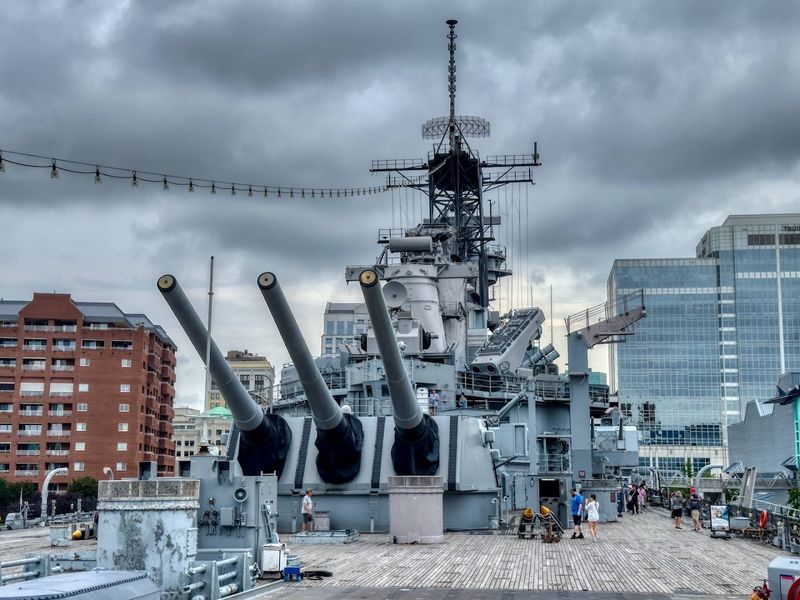
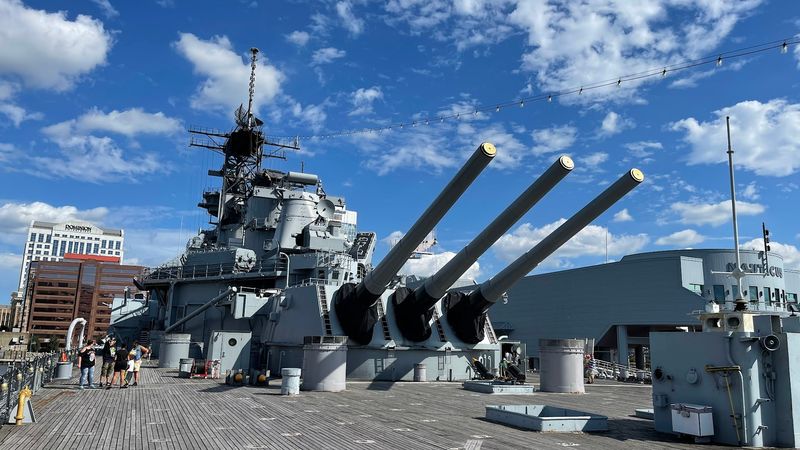
Ask any naval historian what made the Iowa-class battleships truly terrifying, and the answer comes instantly: those nine 16-inch guns arranged in three triple turrets. Each barrel could hurl a shell weighing more than one ton across distances that seem almost fictional.
The USS Wisconsin BB-64 carried all three turrets in perfect, devastating harmony.
Standing next to one of these turrets on the main deck is a genuinely humbling experience. The barrels alone are longer than most city buses, and the machinery required to operate them filled entire compartments below deck.
Crews trained obsessively to load and fire with precision under the worst possible battlefield conditions.
During World War II and later conflicts, these guns proved their worth repeatedly against fortified positions, enemy ships, and coastal installations. The sheer psychological impact of a broadside from the Wisconsin was enough to shake morale on the opposing side.
Today, those turrets sit silently on the Norfolk waterfront, but they still carry an unmistakable air of raw, unconditional power that no photograph fully captures. You absolutely have to stand beside them in person.
World War II Glory in the Pacific Theater
Few ships earned their place in history as dramatically as USS Wisconsin BB-64 did during World War II. Deployed to the Pacific Theater, she participated in some of the most consequential campaigns of the entire war, including operations around the Philippines, Iwo Jima, and Okinawa.
Her firepower helped shape the outcome of battles that defined the modern world.
Perhaps most remarkably, the Wisconsin was part of the fleet that conducted bombardments of the Japanese home islands themselves in 1945. That level of reach, projecting American naval power directly onto enemy soil, signaled that the war was entering its final, decisive chapter.
Sailors aboard described those missions with a mixture of professional focus and quiet awe.
Today, the exhibits aboard the ship in Norfolk bring these Pacific campaigns to life through photographs, artifacts, and firsthand accounts from veterans who were actually there. Walking through those below-deck compartments while reading the stories of the men who fought in them creates a connection to history that no textbook can replicate.
Virginia preserves this legacy with genuine pride, and the ship honors it every single day.
Korean War Service and Cold War Readiness
After a brief postwar decommissioning, USS Wisconsin BB-64 was called back into action in 1951 when the Korean War demanded serious naval firepower along the peninsula. Her mission was straightforward but critical: deliver accurate, devastating gunfire support to United Nations and South Korean ground forces pushing back against North Korean positions.
She delivered, consistently and powerfully.
Operating in Korean coastal waters, the Wisconsin bombarded enemy supply lines, troop concentrations, and fortified positions with the kind of precision that only a ship of her caliber could achieve. Ground commanders quickly learned to appreciate having her in the theater.
Her reputation for reliable, heavy support made her one of the most requested assets in the conflict.
After Korea, the ship entered a period of Cold War readiness, representing American naval strength during one of the most tense eras in modern history. Decommissioned again in 1958, she sat in reserve but was never truly forgotten.
The Navy knew her value, and so did the adversaries who kept a careful eye on American fleet movements. That legacy of deterrence is part of what makes touring the Wisconsin in Norfolk such a layered, thought-provoking experience.
Operation Desert Storm and a Final Blaze of Glory
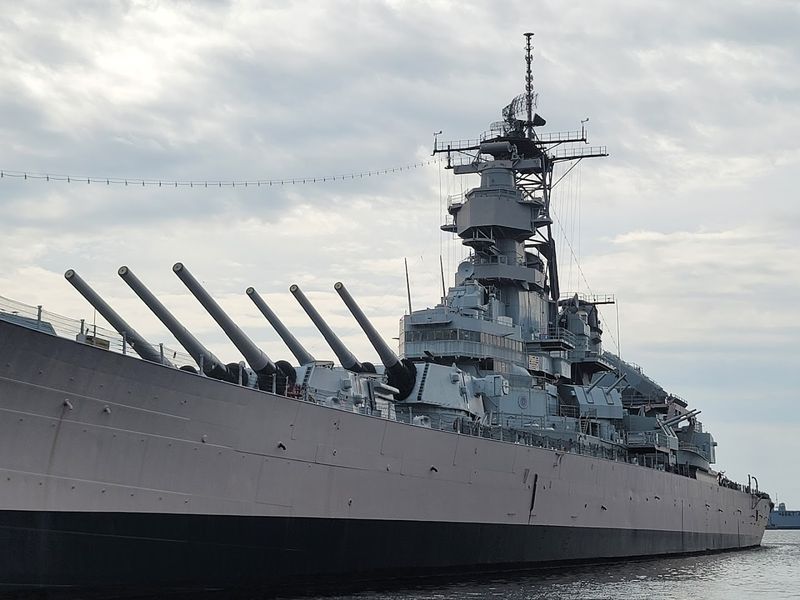
Most battleships go out quietly. The USS Wisconsin BB-64 went out with Tomahawk missiles blazing.
Reactivated in 1986 and fitted with modern weapons systems alongside her classic armament, she was modernized for a new era of naval conflict. When Operation Desert Storm launched in 1991, the Wisconsin was there, ready for one last chapter of combat history.
Firing Tomahawk cruise missiles at Iraqi targets and providing naval gunfire support during the Gulf War, she proved that a battleship designed in the late 1930s could still punch with devastating effectiveness in the modern battlefield. Military analysts watching the operation were genuinely impressed by her performance and versatility.
It was a triumphant final act for one of the greatest warships ever built.
After Desert Storm concluded, the Wisconsin was decommissioned for the final time in 1991, closing a nearly five-decade chapter of active service. The exhibits aboard the ship today dedicate significant space to this Gulf War chapter, including Tomahawk launch systems and detailed accounts of her final combat missions.
Standing in Virginia at the site where she now rests permanently, it is hard not to feel genuine admiration for everything this ship accomplished across three very different wars.
Life Below Deck: How Sailors Actually Lived
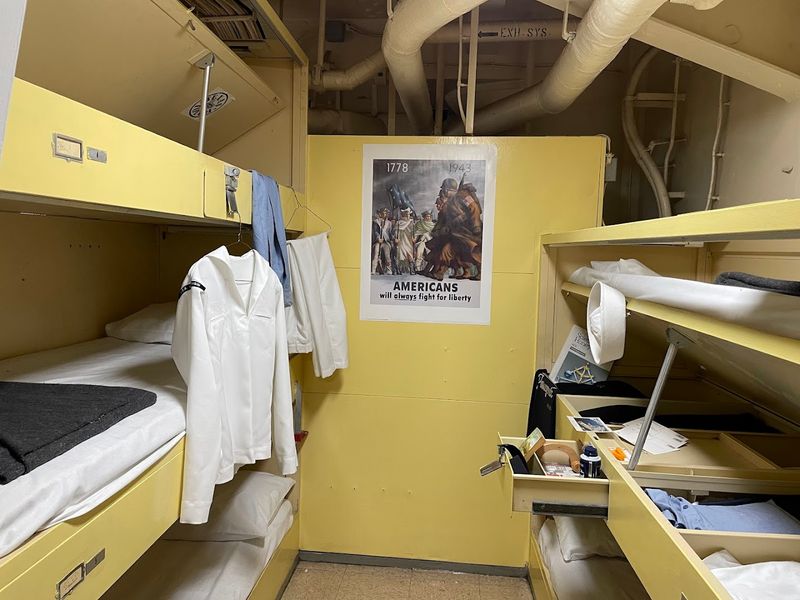
One of the most surprising things about touring USS Wisconsin BB-64 is discovering just how much of the ship is open for exploration below deck. Crew quarters, mess halls, command spaces, and machinery rooms tell the story of daily life aboard a vessel that was essentially a self-contained floating city.
Thousands of sailors called this ship home during some of the most intense periods of the twentieth century.
Narrow bunks stacked three high, compact workspaces, and labyrinthine passageways paint a vivid picture of what life at sea actually looked like for the men who served here. Privacy was a luxury nobody had.
Noise, heat, and the constant hum of machinery were the soundtrack of every single day. Yet sailors developed fierce loyalty to the Wisconsin and to each other.
The ship’s museum-quality preservation means that many of these spaces look remarkably close to their original condition. Docents stationed throughout the below-deck areas are passionate about sharing the human stories behind the hardware.
Plan to wear comfortable shoes, because navigating the steep ladders and tight hatches is a genuine physical workout. Virginia has done an outstanding job of keeping this floating community accessible and authentic for every visitor who steps aboard.
The Nauticus Museum Connection
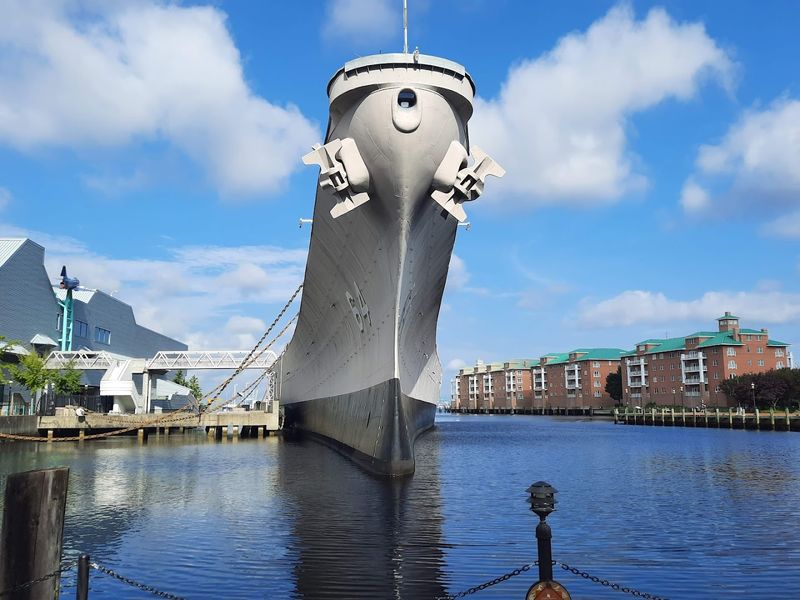
The USS Wisconsin BB-64 does not stand alone on the Norfolk waterfront. She is the centerpiece attraction of Nauticus, a maritime museum that wraps her historical significance in a broader context of naval science, ocean exploration, and American sea power.
Together, the ship and the museum create an experience that easily fills an entire day without ever feeling repetitive.
Nauticus itself features interactive exhibits on naval technology, ocean ecosystems, and the strategic importance of waterways to American commerce and defense. The combination of hands-on science displays and the raw, steel reality of the battleship parked right outside creates a fascinating contrast that appeals to kids and adults equally.
My personal recommendation is to start with the museum and work your way out to the ship so the scale hits you all at once.
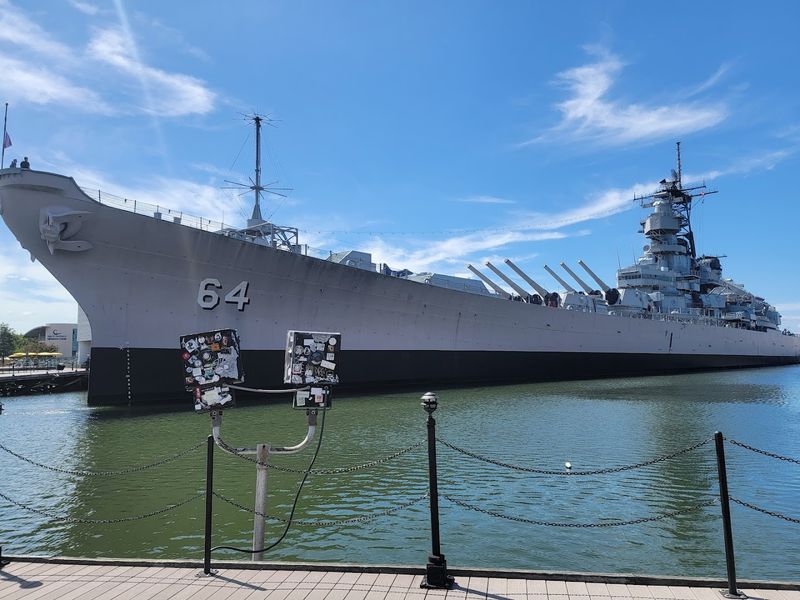
Located at 1 Waterside Drive in Norfolk, Virginia, the complex sits right on the Elizabeth River with harbor views that are genuinely spectacular on a clear day. The waterfront setting adds an extra layer of atmosphere to the visit, particularly in the early morning when light bounces off the water and illuminates the Wisconsin’s massive gray hull.
Norfolk knows how to frame its greatest attraction beautifully.
Guided Tours That Take You Places Others Cannot Go
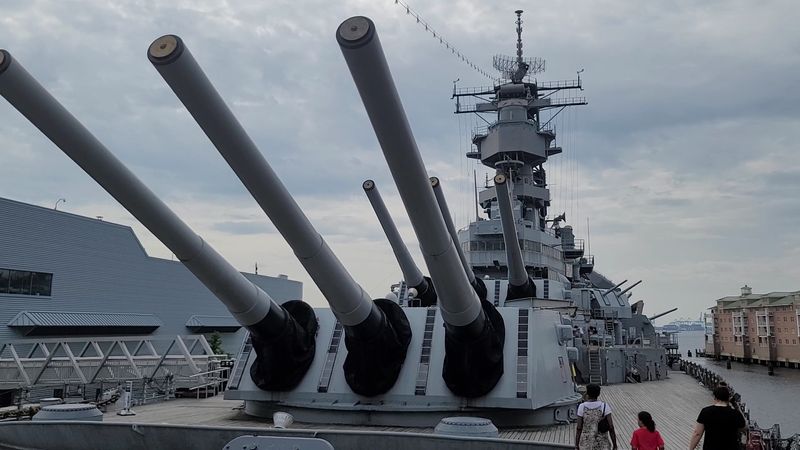
Self-guided exploration of the USS Wisconsin BB-64 is genuinely rewarding, but the guided tours unlock a completely different level of access and understanding. Specialty tours take small groups into areas that general admission simply does not cover, including the Combat Engagement Center and other command spaces that saw real operational use during the ship’s active service years.
Many of the guides are Navy veterans who served on Iowa-class ships themselves, which means their commentary goes far beyond what any printed placard could offer. They remember the sounds, the smells, the procedures, and the camaraderie.
Listening to someone describe operating these systems from personal experience transforms a museum visit into something closer to a conversation with living history.
Booking a guided tour in advance is strongly recommended, especially during peak seasons when slots fill up quickly. The investment in a specialized tour pays off enormously in terms of depth and access.
Even for repeat visitors who have done the self-guided route before, a guided experience aboard the Wisconsin reveals entirely new details and perspectives. Virginia naval history enthusiasts in particular tend to find the guided options worth every penny, returning multiple times to catch different tours with different storytellers.
Overnight Stays Aboard a Living Legend
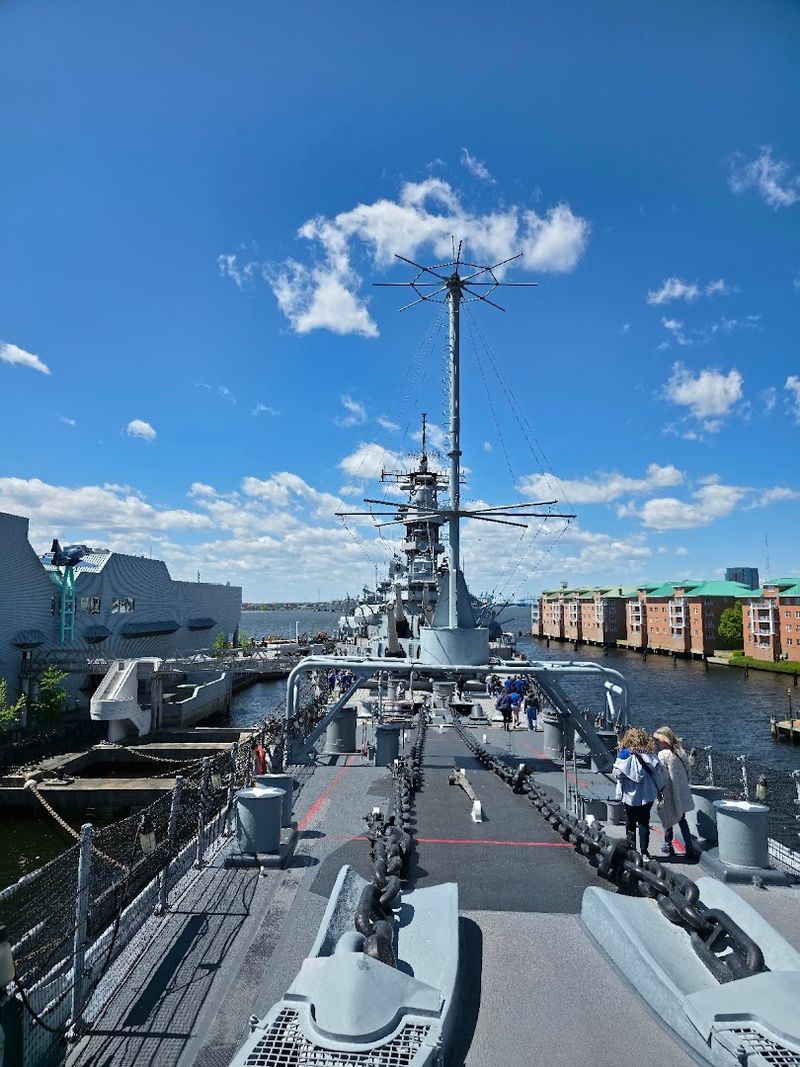
Spending a night aboard the USS Wisconsin BB-64 is the kind of experience that lands permanently in the memory bank. The ship offers overnight programs that allow small groups to sleep aboard, explore after regular hours, and experience the unique atmosphere of a historic battleship once the daytime crowds have gone home.
It is genuinely unlike anything else available in Virginia.
Scout troops, military history enthusiasts, and adventurous families have all taken advantage of the overnight program, and the feedback is consistently remarkable. The stillness of the ship at night, broken only by the gentle sounds of the Norfolk harbor, creates a meditative connection to the sailors who once slept in these same spaces during wartime deployments.
It is peaceful and powerful simultaneously.
Booking requires advance planning and coordination with the Nauticus team, but the process is straightforward and the staff are exceptionally helpful throughout. Participants get access to areas and perspectives that daytime visitors simply cannot experience.
Waking up on the deck of a battleship as the Virginia sun rises over the Elizabeth River is the kind of morning that makes you genuinely grateful to be alive and curious enough to seek out experiences like this one.
Plan Your Visit to Norfolk’s Greatest Attraction
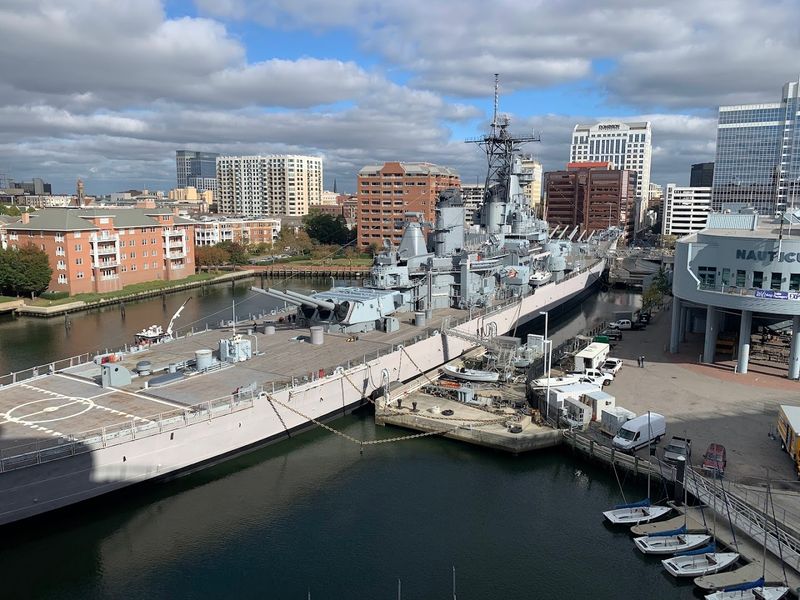
Getting to the USS Wisconsin BB-64 is straightforward. The ship is docked at 1 Waterside Drive in Norfolk, Virginia, right in the heart of the downtown waterfront district.
Parking is available in a nearby garage that offers free entry for the first couple of hours, making the logistics refreshingly uncomplicated for a major attraction of this caliber.
The ship and museum are open seven days a week from 9 AM to 5 PM, giving visitors a solid window to explore at a comfortable pace. Plan for at least three hours if you want to cover the main decks and key interior spaces, and budget a full day if you are the type who reads every placard and lingers in every room.
Comfortable shoes are non-negotiable given the steep ladders and uneven surfaces throughout the ship.
Tickets tend to sell out about a week in advance during busy periods, so booking online ahead of your trip is genuinely wise advice. The experience is accessible to families, history enthusiasts, veterans, and curious travelers of all backgrounds.
Virginia has produced many remarkable attractions over the centuries, but few match the sheer scale, historical weight, and immersive power of spending an afternoon aboard this extraordinary ship.
