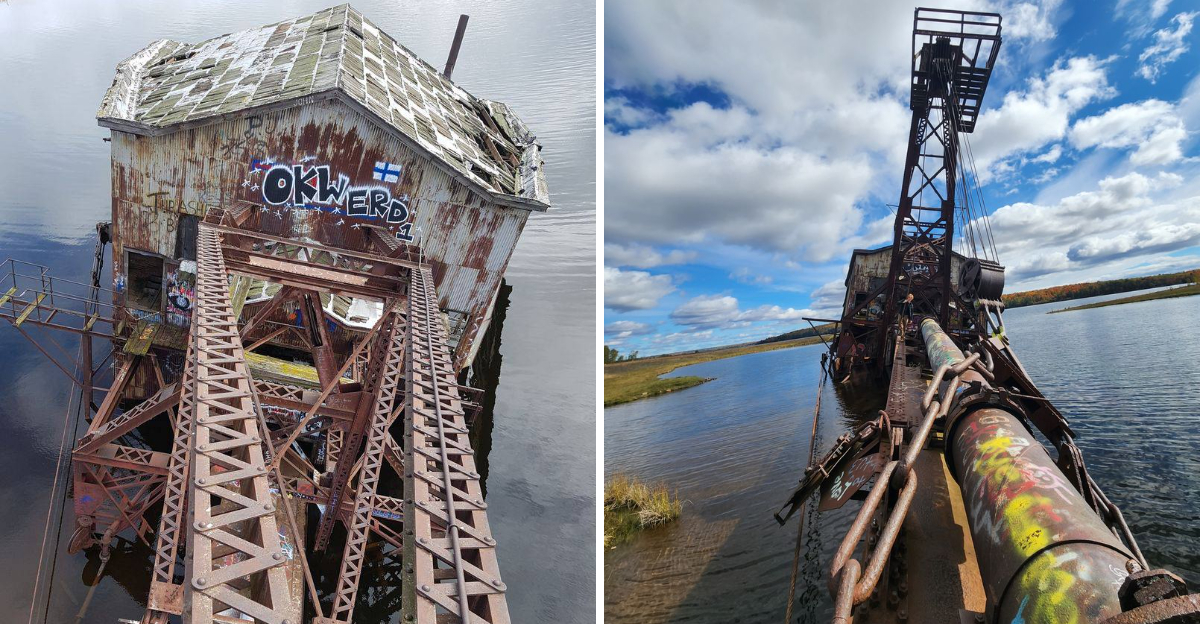
Michigan’s Quincy Dredge #2 looms like a rusting giant along the Keweenaw Peninsula.
Once a powerhouse of copper mining, it now sits abandoned, half-sunk yet unforgettable.
Locals call it eerie, but adventurers see it as a desert-like wonder rising from the water.
Its massive steel frame tells stories of industry, grit, and the passage of time.
Photographers flock here for surreal shots of decay meeting natural beauty.
This rusting relic proves that even forgotten giants can become attractions worth visiting more than once.
First look at the rusted colossus

The first glimpse of Quincy Dredge Number Two stops you in your tracks with its hulking steel and quiet resolve.
Perched beside the Hancock – Lake Linden Trail near Hancock, Michigan, the dredge rises like a museum without walls.
You feel the scale immediately as rivets, beams, and angled gantries shape a silhouette that commands the shoreline.
Built to claw copper rich sands from the lakebed, the dredge once labored day and night, turning sediment into livelihood.
Now the machinery slumbers in open air, and the patina tells a patient story of industry, weather, and time.
The lake laps against twisted plates while gulls trace lazy loops above the skeletal boom.
Walk the gravel and you notice textures that photographs rarely catch, including layered rust that flakes like bark.
Graffiti is sparse around the main shell, and the weathered panels carry an austere dignity that invites careful viewing.
The site feels safe in daylight, yet common sense matters, so mind footing near uneven rocks and broken edges.
Michigan seasons shape every visit, with summer clarity revealing color and winter frost sharpening lines like ink.
Morning light yields soft contrast that flatters the hull while late afternoon stretches shadows across the trail.
On calm days reflections ripple faintly and frame the dredge in liquid silver that brightens even muted skies.
Signage is minimal, so context helps, and the linked Wikipedia entry provides a concise overview of its working life.
Local volunteers occasionally clean litter, though the structure remains a relic rather than an interactive exhibit.
You will not find ticket booths or rangers here, but you will find silence that rewards a slow, curious pace.
How to reach the shoreline safely
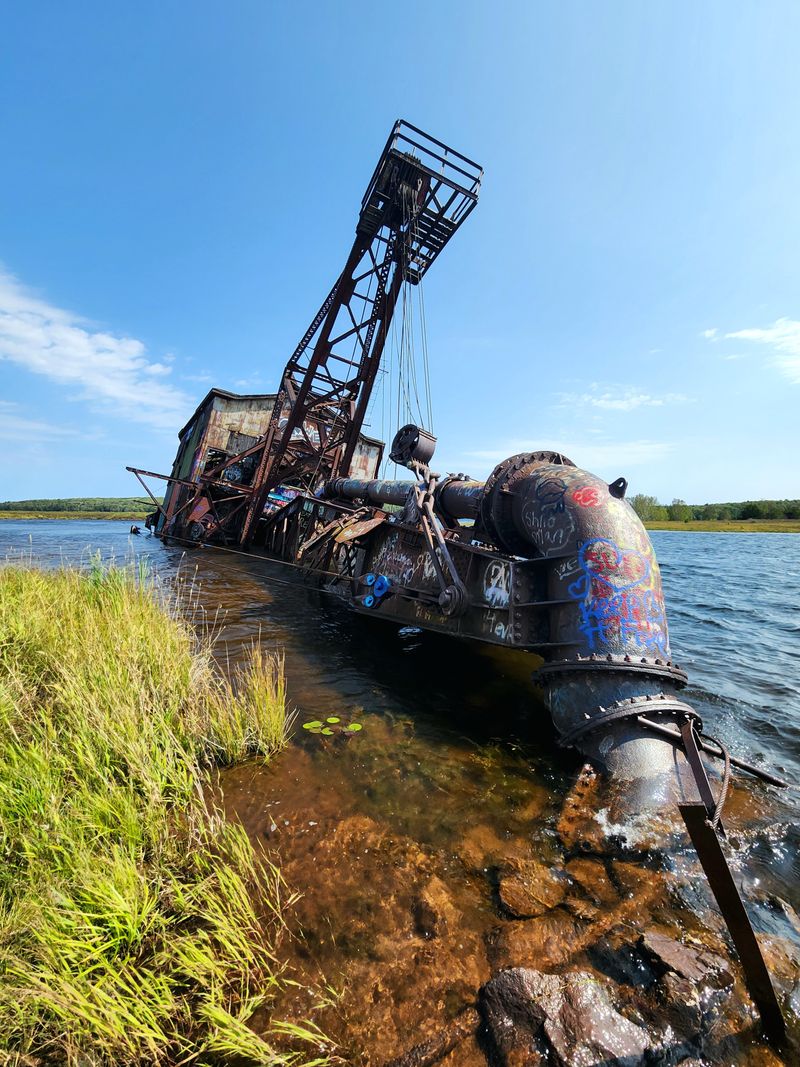
Approach the dredge from the Hancock – Lake Linden Trail and you will notice worn side paths leading toward the water.
Surfaces change quickly from packed gravel to loose stones, so steady shoes with good tread make a real difference.
Watch for broken boards, exposed metal, and occasional puddles that mask slick algae along nearshore slabs.
There is no staffed entrance or gatehouse here, which means you set your pace and your safety standards.
Give structural edges a respectful buffer and resist the urge to climb, since steel ribs can flex and slice.
Families do visit, but adults should scout the line ahead and pick smoother lines for smaller steps.
Winter brings snow crust and hidden ice sheets, and spring thaw converts gullies into surprise rivulets.
Summer conditions are friendlier, though heat softens tar patches and wakes biting insects near brush.
Carry a small light if you plan golden hour viewing because shadows turn openings into tricky voids.
Keep to clear footprints where possible since those lines usually mark the least awkward gradient.
Weather changes fast across the Keweenaw, and lake breezes can push chilled air inland without warning.
It helps to check radar before committing, especially during shoulder seasons in Michigan when squalls blow through.
Parking is informal along segments of the trail, so be courteous and avoid blocking access or maintenance space.
Do a quick gear check, bring water, and stow loose straps that can snag on rust scales.
You will reach the best viewpoints by staying ground level, moving slowly, and reading the terrain like a map.
What to know before you go
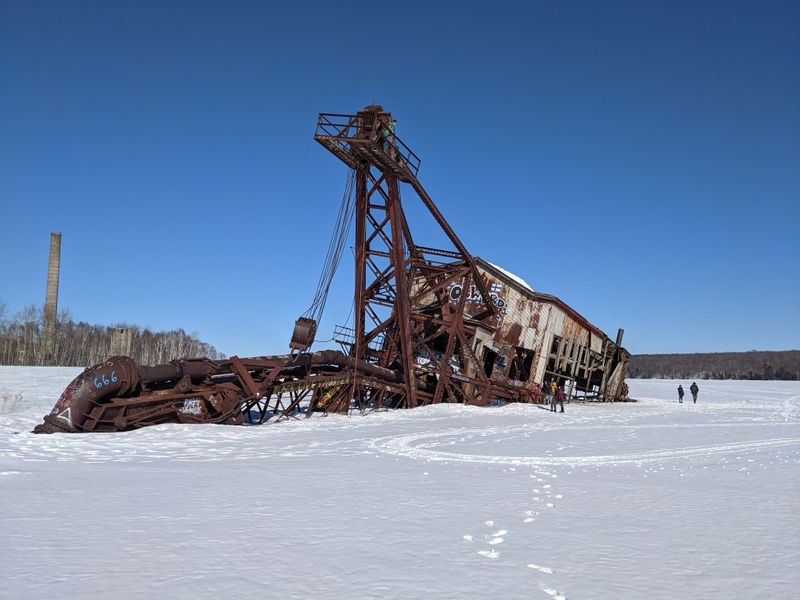
Quincy Dredge Number Two is listed on Google as open 24 hours, which reflects unfenced public access rather than staffed oversight.
There is no official visitor center on site, so information lives online and in local history collections around the Keweenaw.
Cell service along the shoreline is generally fair, but coverage can dip behind trees and metal massing.
Bring sturdy footwear, a light jacket, and gloves if you plan to steady yourself on rough surfaces.
Tripods are welcome in practice, though be mindful of others and avoid blocking narrow approaches.
Leave no trace principles keep the experience pleasant, so pack out trash and skip souvenir rust flakes.
Winter photography rewards patience because wind chill bites hard and batteries drain faster in the cold.
Summer afternoons can feel bright and flat, so consider sunrise or late day for texture rich angles.
The dredge sits near Hancock, Michigan, which anchors lodging and supplies across the Portage Lake Lift Bridge.
Local museums in Houghton and Hancock provide context that deepens any self guided wander at the shoreline.
If you plan night shots, bring a friend or share a live location since footing is uneven and visibility limited.
There are no restrooms at the artifact, and the nearest facilities depend on town amenities and open hours.
Respect adjacent private property by staying on public paths and visible open shoreline corridors.
Weather resistant clothing matters more than fashion here, and soft layers help regulate shifting lake breezes.
A little homework makes the site richer, and a flexible plan keeps the visit calm and rewarding.
A short history you can see

The dredge worked the tailings of copper operations, reclaiming metal from lakebed sands long after the richest ore was mined.
Its task was simple in concept and monumental in effort, feeding buckets through slurry and sorting concentrate from waste.
What remains today is a steel body that hints at conveyors, winches, and power systems that once thumped steadily.
The structure is widely associated with the Quincy Mining Company, a titan in Keweenaw copper history.
Dates and exact configurations vary by source, so you will notice broad agreement on purpose but nuance on timelines.
That uncertainty fades when you stand beside the hull and feel the blunt logic of industrial design.
Riveted plates map the craft era when heavy parts were fabricated locally and assembled in pragmatic layers.
Each flange, gusset, and beam reads like a page from a textbook on early twentieth century extraction.
Power once came from engines tucked within the superstructure, driving the bucket line through pulleys and guides.
Water pumped through pipes to move sediment where separators and jigs sifted value from the slurry.
The work was wet, gritty, and loud, yet it paid wages that sustained households across this part of Michigan.
Today the noise is gone, replaced by wind shushing through openings like a careful librarian.
You can trace the process by walking the length of the frame and imagining material flow from bow to stern.
Interpretive boards are minimal on site, so a prior museum stop helps decode unfamiliar mechanisms.
History meets landscape here, and the lake carries those memories in ripples that glitter under patient light.
Photo spots and angles that work
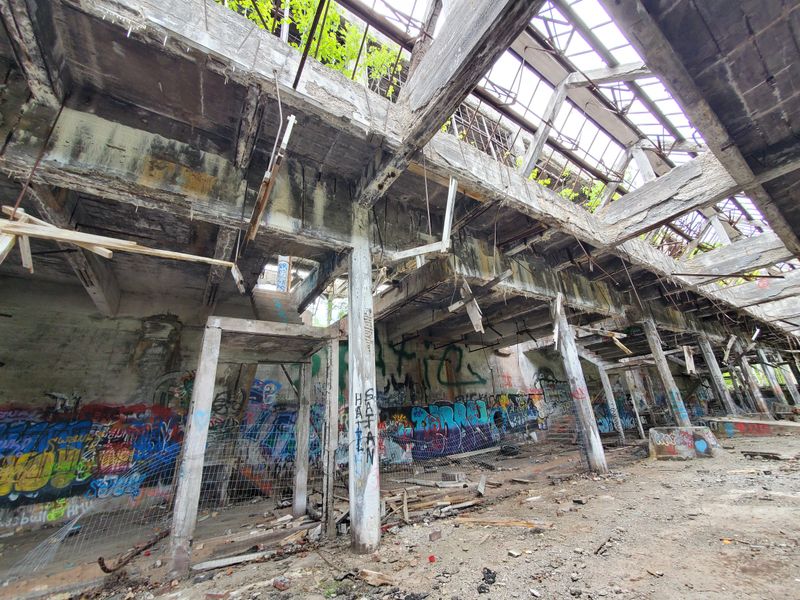
Start with a wide frame from the trail where the hull fills the middle ground and the shoreline stones anchor the foreground.
Shift low to let rounded rocks lead the eye, then tilt slightly to stack the boom against layered clouds.
Side lighting near sunset pulls rust tones forward and carves shadows around bolts and ribs.
Bring a polarizer if you want to control glare across water or boost contrast along the steel skin.
Backlit shots can sing when thin clouds soften the sun and rim the edges without harsh flare.
Move a few steps at a time and watch for cables that form clean diagonals through the frame.
Rain leaves micro reflections on flat plates that behave like mirrors for moody close studies.
On calm days a symmetrical reflection appears nearshore, which pairs well with centered compositions.
After snowfall, focus on negative space where drifts trace structural geometry like chalk lines.
Macro details reward patience, especially layered rust that suggests topographic maps in miniature.
Keep tripods low during breezy weather to cut vibration and sharpen long exposures at dusk.
Phones handle this site well, though manual exposure helps keep sky and hull balanced.
Use people only as scale markers if they stay clear of hazards and remain on safe ground.
Avoid trespassing and respect property signs that occasionally appear near adjoining parcels.
Every angle here is a lesson in restraint, and small adjustments usually improve results more than bold moves.
Safety and preservation etiquette

This is an outdoor relic with no active supervision, so your judgment matters as much as your gear.
Do not climb the hull or enter openings because hidden edges, falling debris, and unstable footing exist.
Gloves help when steadying yourself on rocks, but do not touch or pry at corroded panels.
Packing out trash keeps the site welcoming, and picking up a few extras pays the favor forward.
Pets should stay leashed near waterline turns where waves and steel fragments can surprise paws.
Stay alert for fishing hooks near the shoreline since locals cast from rocks when conditions are calm.
Spring brings nesting birds that appreciate distance, so give them space and shift viewpoints quietly.
Winter safety means traction devices, a spare layer, and daylight planning to avoid twilight slips.
Share the area with cyclists on the trail by announcing passes and keeping tripods clear of the lane.
Respect private land boundaries and any temporary closures that protect habitats or manage erosion.
Report hazards to local authorities if you spot fresh collapse or exposed rebar in active paths.
Graffiti removal is difficult on corroded steel, so resist the urge to tag and leave surfaces alone.
Sound travels across the water, and a calm tone keeps the experience peaceful for everyone nearby.
Michigan pride shows in how visitors treat historical sites, and care today preserves stories for tomorrow.
You will leave with photos and memories, and the dredge will remain for the next curious traveler.
Nearby context without losing focus
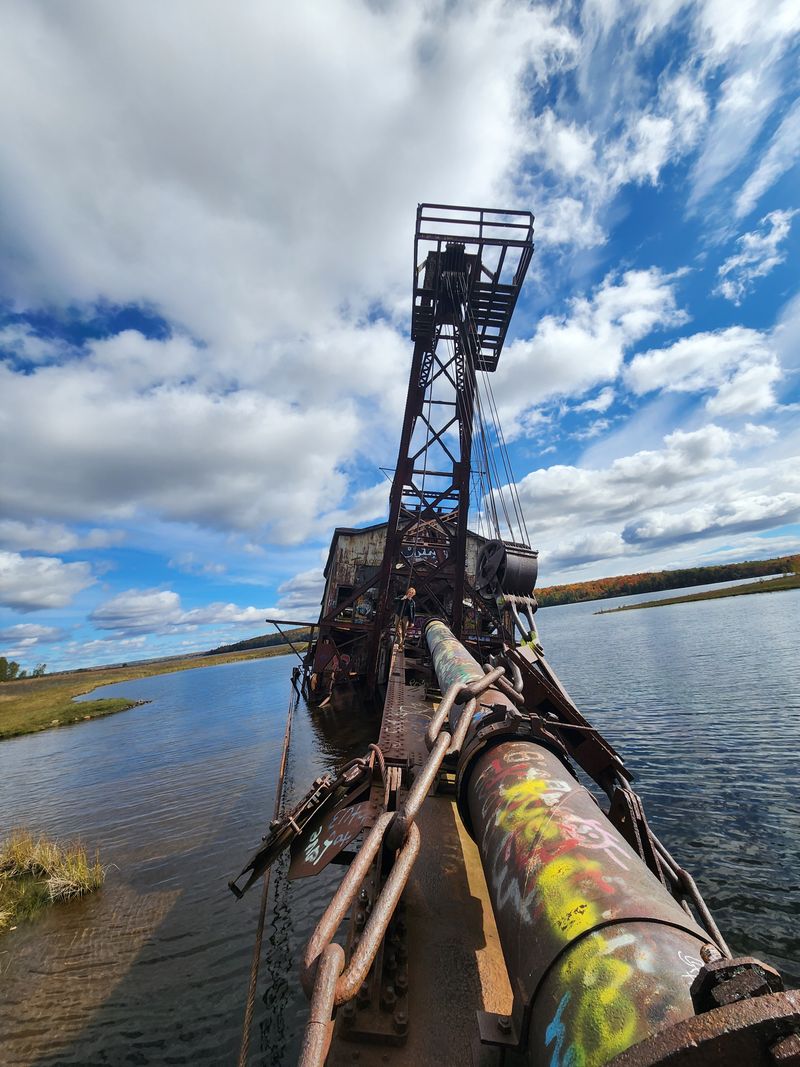
The shoreline setting helps you understand why a dredge was practical here and how tailings reshaped the coast.
Old industrial corridors thread through this part of the Keweenaw, and the trail follows those arteries with steady ease.
You can stand by the hull and imagine rail spurs and conveyors feeding ore to mills along the water.
Today the scene feels open and chill, and the quiet carries a very different cadence than its working past.
Boats drift in the distance on calm days, adding motion that softens the site without stealing attention.
Inland hills collect hardwoods that flame in autumn, framing the steel with warm color and cool shadows.
Snow wraps the landscape in minimalist shapes, which turns the dredge into a black line drawing.
Wildflowers in June punch color through gravel, and butterflies flicker around the edges of the frame.
Breezes shift scents between pine, wet stone, and faint metal, and those details complete the memory.
The lack of heavy signage means the artifact remains the star while nature composes the supporting cast.
Occasional anglers work from the rocks, and their patience mirrors the slow storytelling of the place.
Cyclists glide by and glance across the water, then continue toward shade and smoother track ahead.
Clouds stack neatly over the lake and add scale that flatters wide angle shots just beyond the trail.
This context keeps the focus on Quincy Dredge Number Two while explaining the rhythms that surround it.
You leave with a stronger picture of how industry and landscape met and how Michigan continues to honor that legacy.
Practical planning and weather timing

Lake effect weather writes its own script along this shoreline, so flexible plans deliver the best results.
Check a reliable radar app and watch the wind forecast since gusts drive waves and chill the air fast.
Cloud breaks often arrive in short windows that reward patient waiting on the trail.
Summer brings long light that suits extended golden hour walks and multiple compositions without rush.
Autumn is crisp and photogenic, though showers appear abruptly and carry cool air behind them.
Winter can be magical with clean contrast, yet extreme cold makes metal slick and batteries short lived.
Spring rides a mix of thaw, mud, and sudden brilliance when the sky clears after a passing squall.
Plan clothing in modular layers so you can adapt when the breeze shifts direction over the lake.
Water levels vary seasonally, which changes the angle of reflection and the look of nearshore rocks.
Mosquitoes surge near calm pools in early evening, so bug net caps can save concentration and comfort.
Sunrise is quiet with cool tones, while sunset amplifies rust to copper hues that feel grounded and warm.
Night visits are possible with caution, and red light preserves night vision without blinding your companions.
Tripods with spiked feet handle shoreline gravel better than rubber tips in shifting patches.
If weather turns suddenly, retreat to the trail and regroup instead of pushing for one more frame.
A small plan paired with patience delivers the kind of visit that keeps Michigan memories vivid for years.
Responsible exploration and local learning
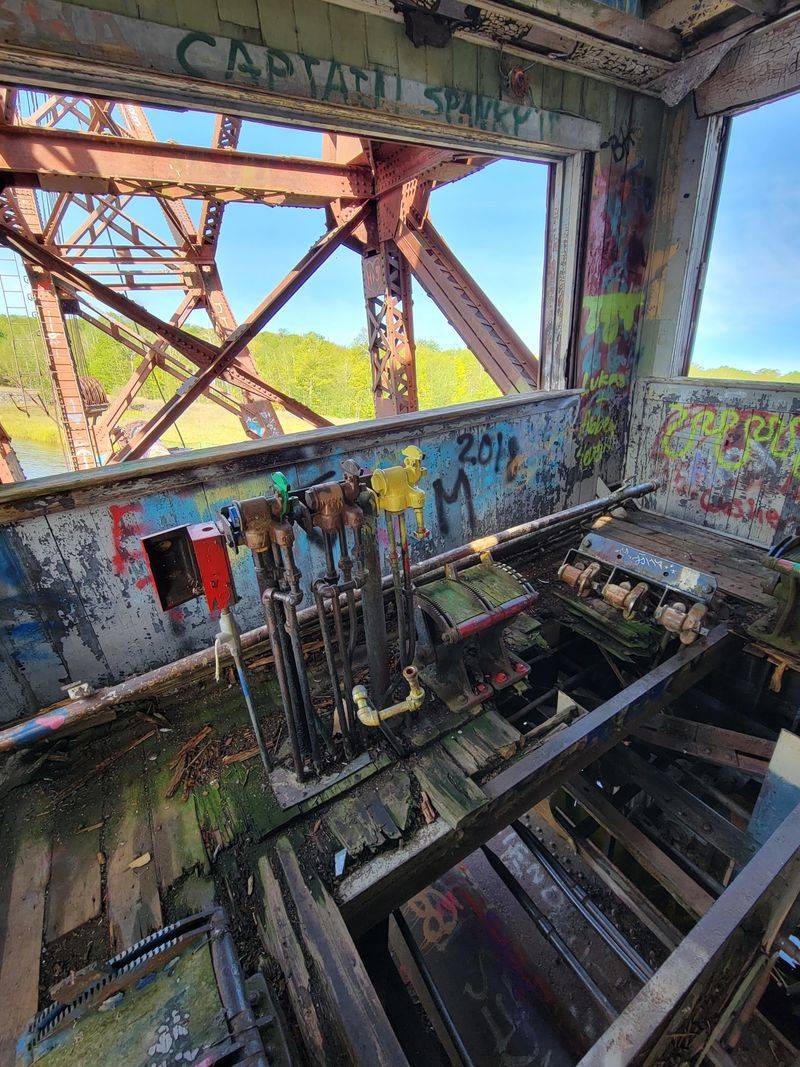
You will get more from the dredge by pairing your walk with research from credible local sources.
Museums in the area hold archives and displays that translate jargon into plain language and connect dates to places.
When details conflict across websites, treat them as clues and look for consensus among historical societies.
Local stories describe long shifts, cold spray, and the rhythm of engines that beat like mechanical hearts.
Those accounts carry emotion while official records anchor names, ownership, and production figures.
Label lore as lore when sharing with friends so tall tales do not harden into mistaken facts.
Volunteer groups sometimes organize cleanups, and a quick search can surface upcoming dates for lending a hand.
Educators may use the site for lessons on engineering, geology, and the economics of resource extraction.
Artists and photographers often return through seasons, building a body of work that respects place and history.
Writers find metaphors in rust and water, though restraint keeps the story grounded rather than grandiose.
Add your voice with care, credit sources, and avoid repeating unverified claims about construction specifics.
If someone asks for directions, share safety notes along with the general path from the trail.
Remember that unsealed surfaces evolve, and conditions you meet today may shift after storms or freeze thaw cycles.
Michigan communities value thoughtful visitors who treat heritage with curiosity and kindness.
You will leave the shoreline with a fuller sense of place and a desire to keep learning.
Dear Reader: This page may contain affiliate links which may earn a commission if you click through and make a purchase. Our independent journalism is not influenced by any advertiser or commercial initiative unless it is clearly marked as sponsored content. As travel products change, please be sure to reconfirm all details and stay up to date with current events to ensure a safe and successful trip.
