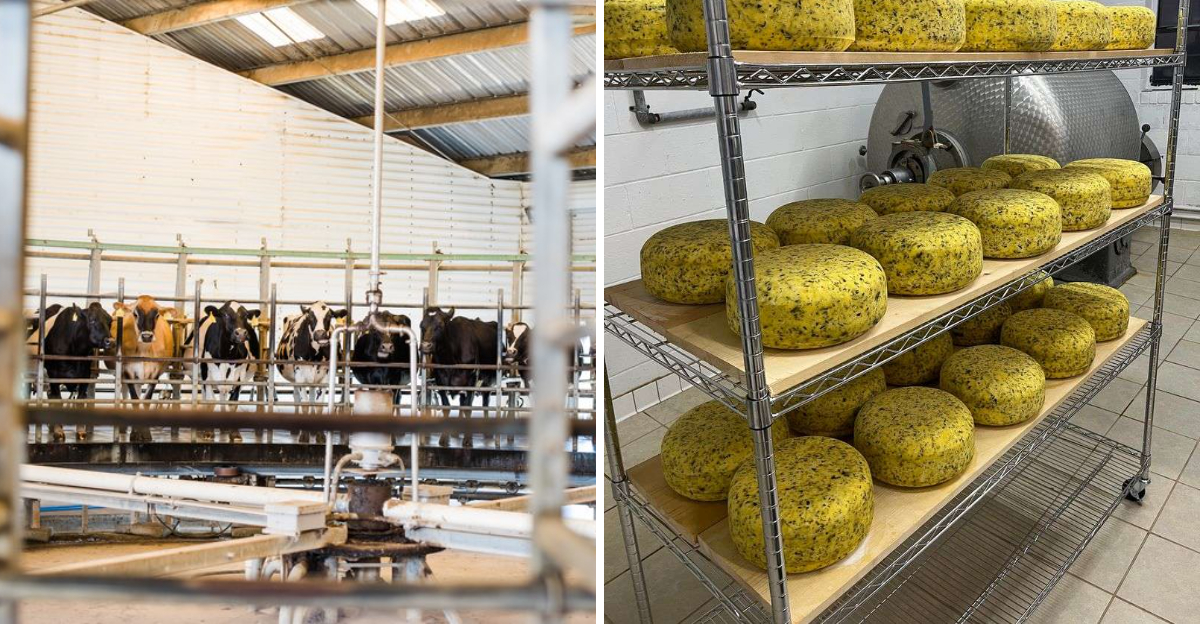
The cheese comes with a pasture attached. Not metaphorically.
The cows here spend their days grazing across 550 acres, and the milk eventually makes its way into small batches of handmade cheese shaped one wheel at a time.
This Alabama farm has followed that slower approach since 1991, when a Dutch family took over the operation and built it around organic farming.
Visitors can simply pull in during milking and watch the process without making an appointment. That feels almost suspiciously easy.
There is a little farm store, samples to try, and no elaborate tourist performance waiting behind the door. Just a working dairy doing things at its own pace.
Alabama’s Only Certified Organic Dairy Sits at the End of a Country Road
Slocomb sits in Geneva County, tucked into Alabama’s Wiregrass region, where peanut fields and pine stands outnumber traffic lights. Getting to Working Cows Dairy means committing to the drive.
Highway 103 rolls past farmhouses and fence lines until the pastures open up and the herd comes into view. The address, 5539 North State Highway 103, Slocomb, Alabama 36375, is easy enough to plug into a phone, though cell service out that way can be moody.
What makes the trip worth it is the rarity of the place. Alabama has plenty of farms, but this one holds a title no other operation in the state can claim as of 2025, standing as its first and only Certified Organic dairy.
Certification is not handed out casually. It covers what the cows eat, how the land is treated, and what does and does not go into the soil.
Layer on the 100 percent grass-fed certification and Animal Welfare Approved status, and the paperwork behind those pastures gets thick. Most visitors never think about that part.
They just see cows in grass and a barn in the distance. Still, knowing the standards behind the scenery changes how the whole place lands.
Rural Alabama does not usually get credit for organic pioneering, which makes this quiet corner of Geneva County a genuinely surprising stop.
A Dutch Family Story That Started With a Change of Heart
Jan and Rinske de Jong began dairy farming back in 1985, bringing Dutch farming roots with them. In 1991 the operation moved to Slocomb, and the family has been there ever since.
For roughly fifteen years, the farm ran the way most commercial dairies run, chasing volume and following conventional practice. Then came the shift.
Dissatisfaction with those methods pushed the family toward organic certification, a decision that meant rebuilding nearly every routine on the property. Cows had to graze differently.
Fields had to be managed differently. Income had to be rethought.
Anyone who has ever quit something comfortable to chase something better will recognize the shape of that choice. The farm’s stated philosophy leans on two words, hard work and purpose, and the phrase shows up in the way things are done rather than just on a sign.
Doing it the right way instead of the easy way is the stated goal, and easy is definitely not what a small organic dairy looks like at five in the morning.
Second and third generations now help keep the operation running, which gives the place a lived-in feel rather than a manufactured one. Visitors picking up butter in the farm store are essentially buying into a decades-long family decision.
That backstory quietly seasons everything sold there, cheese included.
Cheese Wheels Shaped by Hand, Ten Varieties Deep
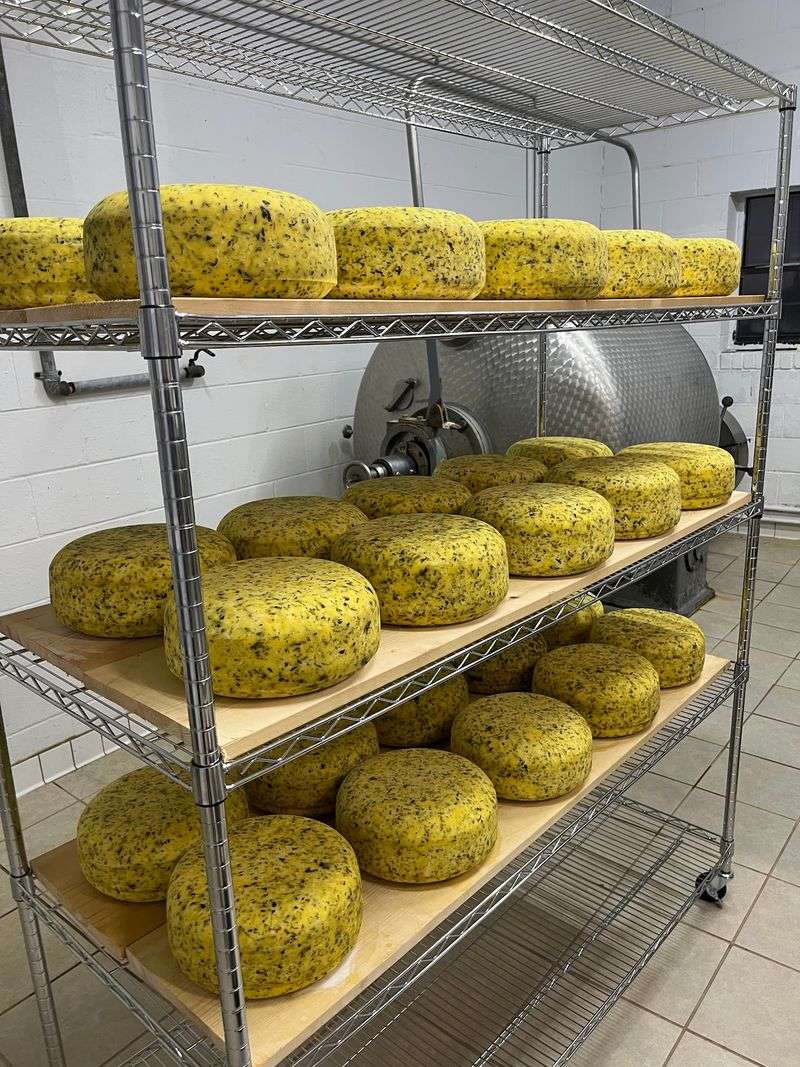
Around ten different cheeses come out of the small creamery here, and none of them roll off an industrial line. Curds get cut, pressed, molded, salted, and aged in batches small enough to keep track of.
Griene Tsiis carries a Dutch name and a Dutch influence, a nod to the family’s homeland cheesemaking traditions. Slocomb Tomato-Garlic goes the opposite direction entirely, packing in flavors that taste like a southern summer garden.
Farmstead Cheese rounds out the trio of award winners, straightforward and creamy in a way that pairs with almost anything. The lineup shifts a bit depending on the season and what the milk is doing, which is a normal reality on grass-fed farms.
Pasture changes through the year. Milk changes with it.
Cheese follows along.
That variability is the whole point of small-batch production, and it means a wheel bought in spring may taste subtly different from one bought in fall. Free samples of cheese and butter are set out in the farm store, so tasting before choosing is not just allowed, it is expected.
Grab a cracker, try a few, then decide. Cheese lovers who normally shop grocery-store shelves tend to notice the difference immediately in texture alone.
Bring a cooler if the drive home stretches past an hour.
Watch the Milking Without Making a Single Phone Call
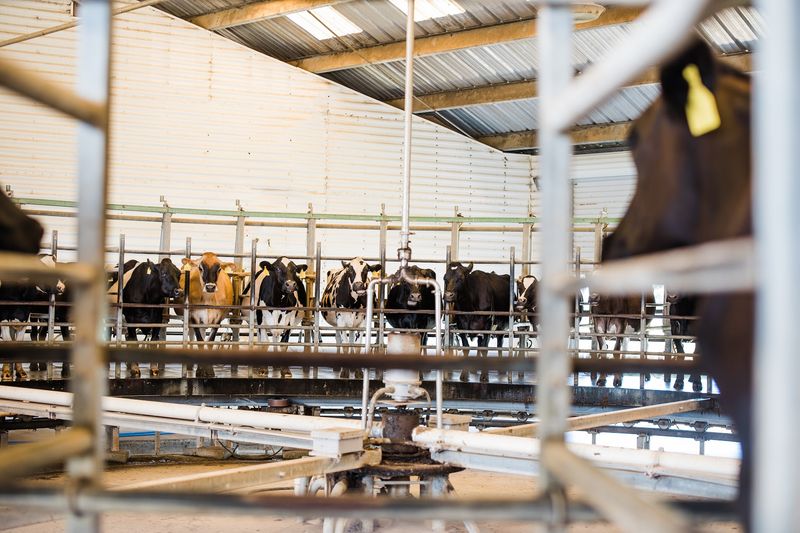
Most farm tours require reservations, deposits, and a scheduled window. Not here.
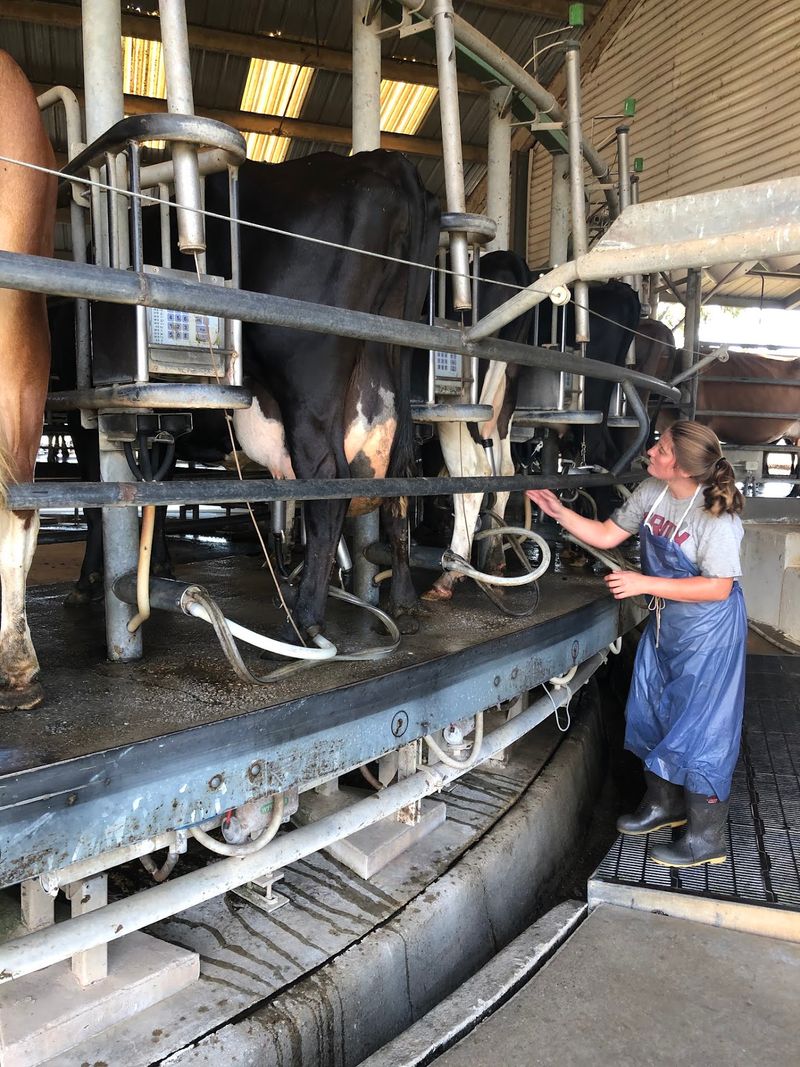
Visitors are welcome to stop by and watch the milking process without an appointment, which flips the usual agritourism formula on its head. Milking tours are offered as well, giving a closer look at how milk moves from cow to tank.
The parlor hums with a rhythm that becomes oddly hypnotic after a few minutes. Cows file in, get settled, get milked, and head back out to pasture like they have done it a thousand times, because they have.
Kids tend to be transfixed. Adults usually are too, though they pretend otherwise.
Seeing the process up close makes the label on a milk bottle mean something concrete instead of abstract. There is a smell to a working dairy, warm and grassy and unmistakably alive, and it is part of the experience.
Closed-toe shoes are a smart call. So is a willingness to step around a puddle or two.
Timing matters more than planning, since milking happens on the cows’ schedule rather than a visitor’s. Arriving mid-morning or late afternoon generally lines up better than midday.
Ask questions if someone is around and not elbow-deep in work, because the people here tend to enjoy explaining what they do.
The Honor System Farm Store That Never Closes
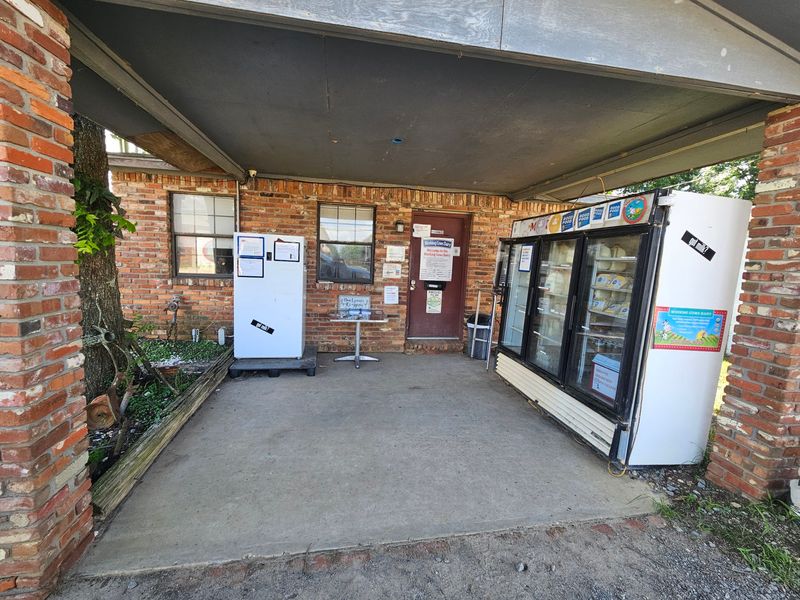
Trust is a currency in short supply these days, which makes the retail setup here genuinely charming. The on-farm store operates on an honor system, open 24 hours a day, seven days a week.
Payment happens by cash, check, or Venmo, dropped or sent by the customer without anyone hovering nearby. Coolers hold the milk and cream.
Shelves hold the rest.
Shoppers grab what they want, tally it up, and settle the bill themselves. Late-night travelers passing through Geneva County can stock up at eleven at night if that is when they happen to roll by.
Free samples of cheese and butter sit out for tasting, and that small gesture says a lot about how the farm views the people who show up. Beyond the cheese, the store carries organic grass-fed butter, whole milk, chocolate milk, heavy cream, and beef.
Raw milk is available too, sold specifically for pet consumption under Alabama law. The chocolate milk has a reputation of its own among regulars.
Bringing exact change or having Venmo ready saves a little fumbling at the box. Products also turn up at stores around Alabama, including Whole Foods, and online ordering exists, but buying directly at the source keeps more of the value on the farm.
550 Acres, Sprinklers in Summer, and Cows That Actually Look Comfortable
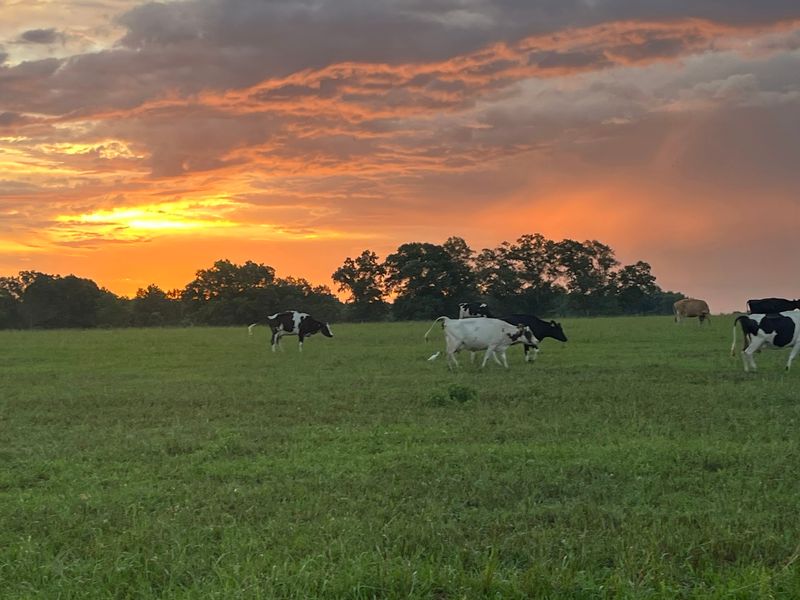
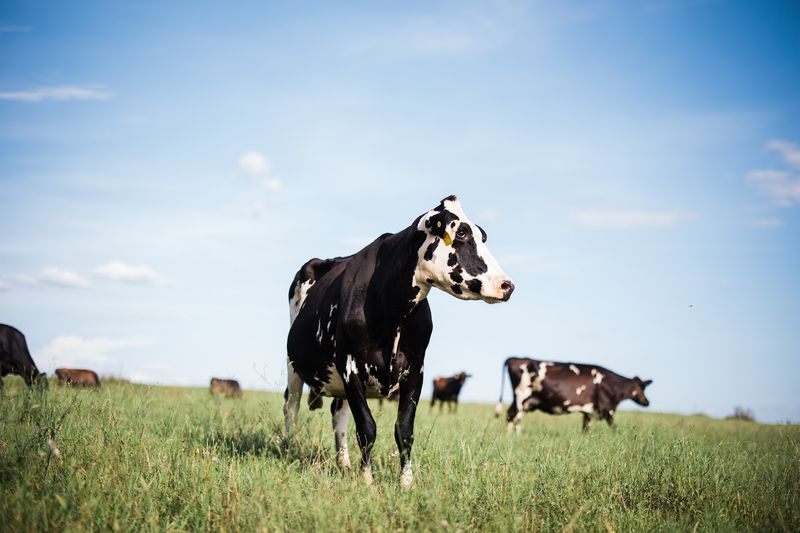
Cows here get room to spread out, roughly 550 acres of pasture to wander through. Grass is the diet, start to finish, verified by certification rather than just claimed on a label.
Alabama summers do not mess around, so the farm installed water sprinklers and fans to keep the herd cool when the heat settles in thick. Watching cows stand under a mist on a July afternoon is a small, satisfying sight.
The herd is closed, meaning no new animals get brought in from outside operations, which keeps disease pressure low. No vaccines are used.
Roughly 95 percent of the cows carry the A2 protein type, something a growing number of dairy drinkers pay close attention to. Animal Welfare Approved certification adds an outside layer of accountability to all of it.
In 2017 the farm became only the second dairy operation in the United States to earn Certified Grassfed by A Greener World status, a label requiring an entirely grass and forage diet, outdoor pasture living, and independent family ownership.
Those standards are not decorative. They shape fencing, rotation schedules, and daily labor.
Visitors walking the property see the results rather than reading about them. Cows lying in shade, chewing steadily, unbothered by the car that just pulled in.
Milk That Skips the Homogenizer and Tastes Like It
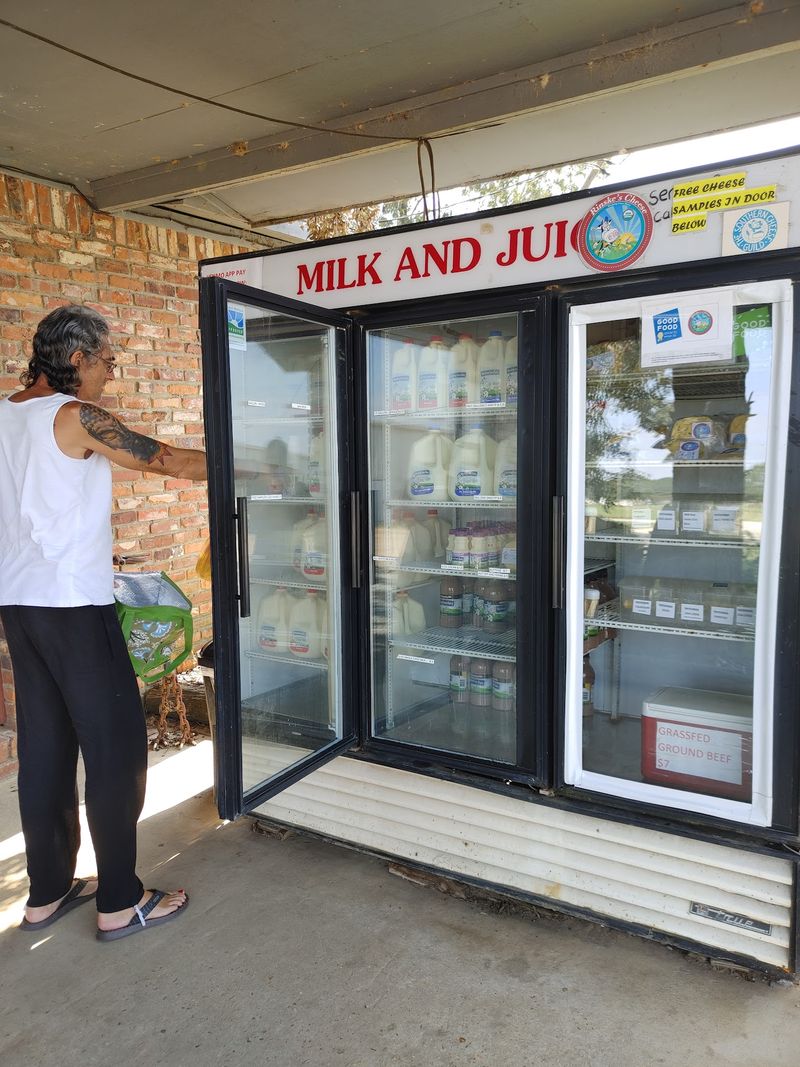
Pop the cap on a bottle of milk from this farm and there is a cream line right at the top. Non-homogenized milk separates naturally, exactly the way milk did before machines started breaking fat molecules apart.
Shake it before pouring, or skim the cream off for coffee. Both approaches have their loyalists.
Low-temperature pasteurization is used here rather than the high-heat method common in large-scale processing, a choice that preserves more of the milk’s original character. The taste difference tends to surprise first-timers, richer and rounder than what most refrigerators hold.
Chocolate milk made with that same base has developed a quiet following. Heavy cream from the farm whips into something noticeably thicker.
Butter carries a deeper yellow color, a direct result of cows eating green grass instead of stored feed. Beef is sold as well, from the same grass-fed, organically managed herd.
Raw milk sits on the shelf too, labeled for pet consumption in keeping with state regulations. For anyone curious about how dairy tasted before consolidation reshaped the industry, this stop offers a practical answer instead of a theory.
Pack a cooler, budget an hour for the visit, and plan the drive so the return trip keeps everything cold. Slocomb makes a fine detour off any Wiregrass road trip.
