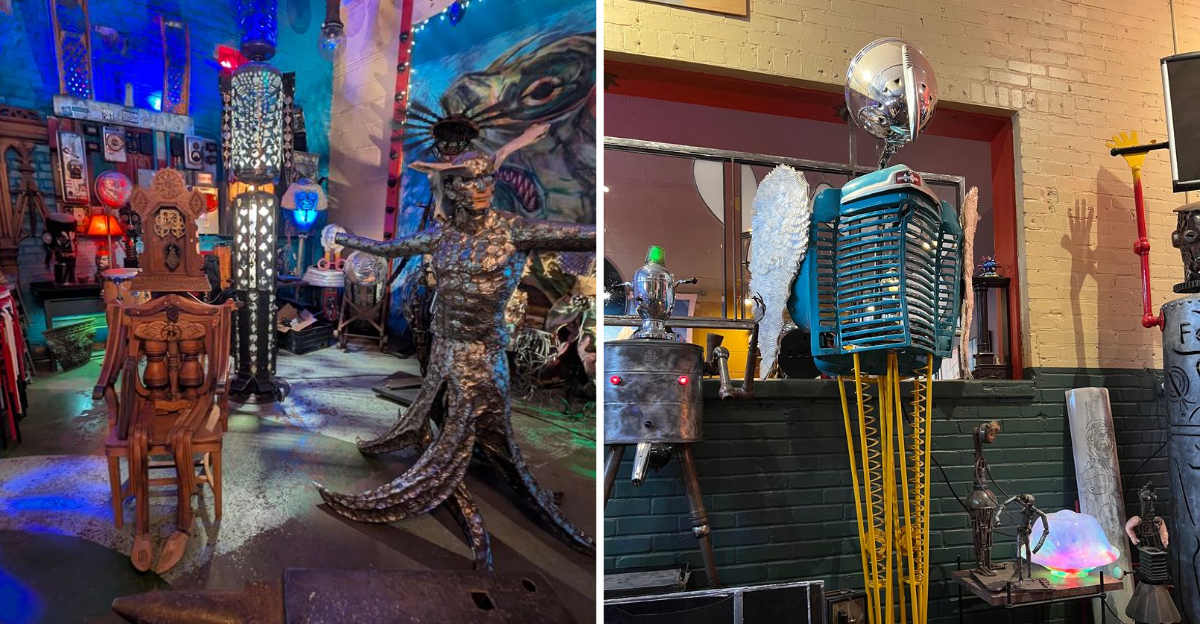
We all love a good roadside oddity – the kind of place that makes you pull over, tilt your head, and ask yourself if what you’re seeing is actually real. Minnesota has plenty of quirky attractions, but this one might just take the crown. And yes, the name is exactly as strange as it sounds.
Inside, bowling balls are carved into expressive faces. Car parts morph into towering sculptures. A turtle shell somehow becomes art. It’s the kind of place where you walk in curious and leave smiling, still trying to process what you just saw.
No velvet ropes, no stuffy gallery rules – just pure creative chaos from an artist who clearly follows his own instincts.
Bring your sense of wonder and prepare for something completely unexpected. Minnesota’s weirdest attraction is waiting to prove that art doesn’t have to be serious to be unforgettable.
The Building That Used to Fix Cars
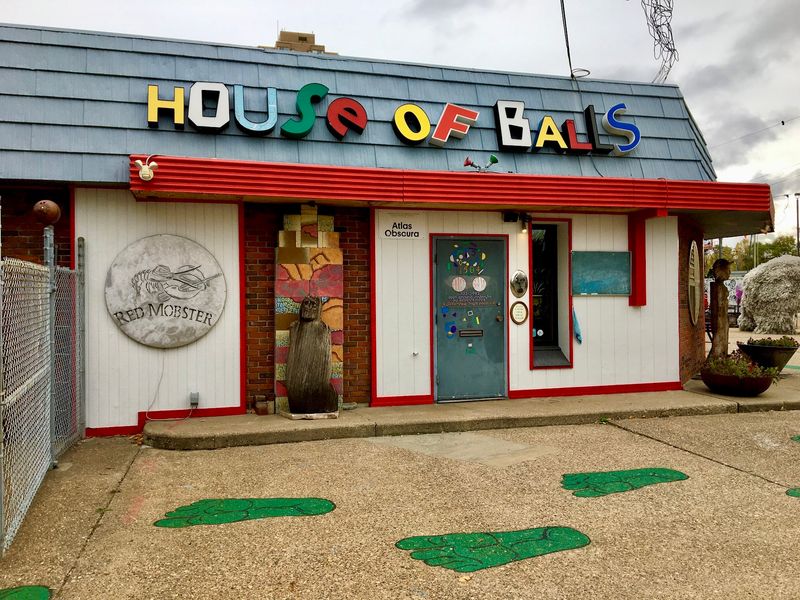
Long before it held sculptures, the structure was a working car mechanic garage. Traces of that history are still visible in the concrete floors, the wide doors, and the general feeling that this is a place where things get built rather than displayed.
The transformation is what makes it fun. Instead of scrubbing away the industrial bones, the space leans into them, letting welding sparks and gallery lighting share the same room.
Parking sits right on the property, which surprises a lot of first-time visitors who expect to circle the block hunting for a spot. Street parking works too.
Approaching from the sidewalk, the exterior already starts the show with metal shapes fixed to fencing and walls. Some visitors arrive on days when the doors are closed and still find plenty worth photographing outside.
Knowing the building’s past adds something. The place proves that a plain box of a structure can become a landmark when someone decides to fill it with imagination.
Bowling Balls With Personalities
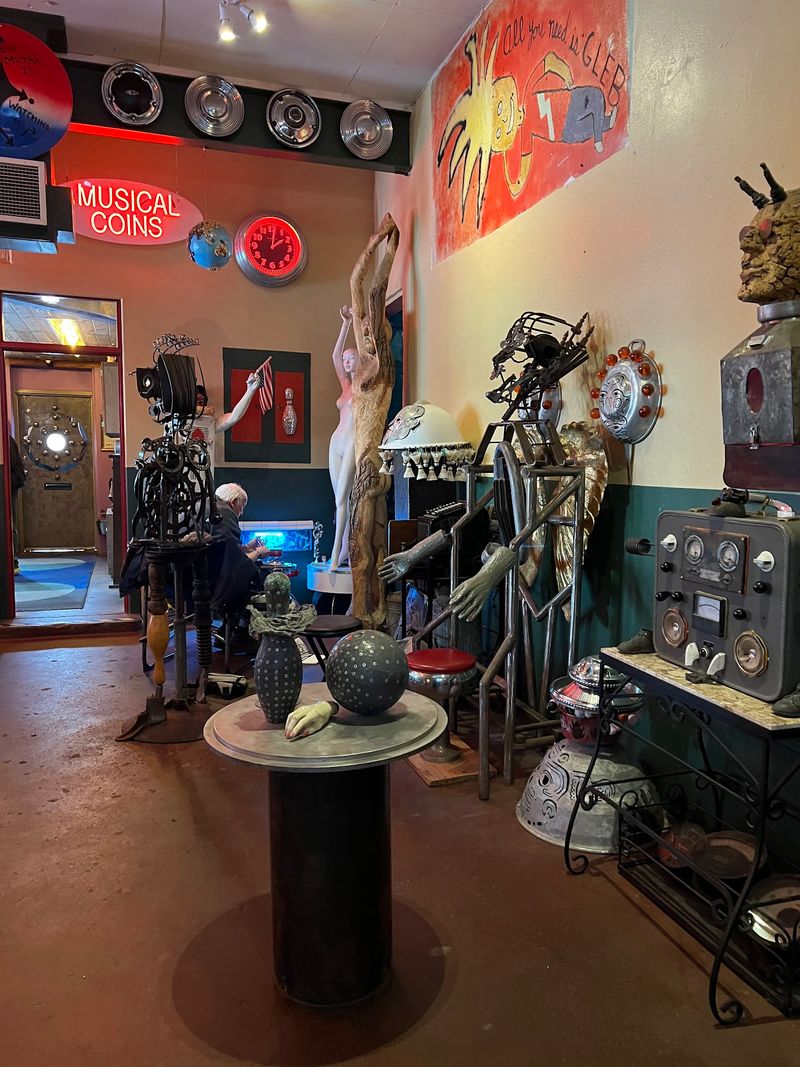
The name is not a joke or a riddle. Bowling balls really are the signature material here, carved and shaped into faces that seem caught mid-thought. Some grin. Some scowl. A few look genuinely startled, as though they were not expecting company.
What makes the collection stick in memory is how different each one feels despite starting from the same round, heavy object. Small changes in the eyes or mouth completely change the mood of a piece.
Rows of them together create an odd little crowd, and visitors tend to slow down and study individual faces the same way they might scan people on a bus. The effect is funny and slightly eerie at once.
Bowling balls are dense and stubborn, so shaping them takes real effort and patience. That physical labor is part of what makes the finished faces impressive rather than gimmicky.
Children usually spot them first and start naming them. Adults follow a minute later, doing exactly the same thing.
Meeting Allen Christian, the Artist Behind It All
Most galleries keep the artist somewhere far away, maybe in a biography printed on a wall card. Not here. Allen Christian is often on site, moving between projects and happy to explain how a particular piece came together. Conversations start easily and tend to run longer than expected.
Visitors describe him as welcoming, humble, and quick to laugh, and the responses he leaves for people who write about their visits carry that same warm tone. His wife, Mary Jane, is also part of the space and greets guests kindly.
Talking with the maker changes how the work lands. A sculpture that seemed random suddenly makes sense once you hear which discarded object it started as. Ask questions. That is genuinely part of the experience, and curiosity is rewarded rather than shushed.
Because this is a working studio, the schedule follows real life. Hours run midday through the early afternoon most days, with Sunday off, so calling ahead at 612-332-3992 is a smart move.
Junk Reborn as Something Wonderful
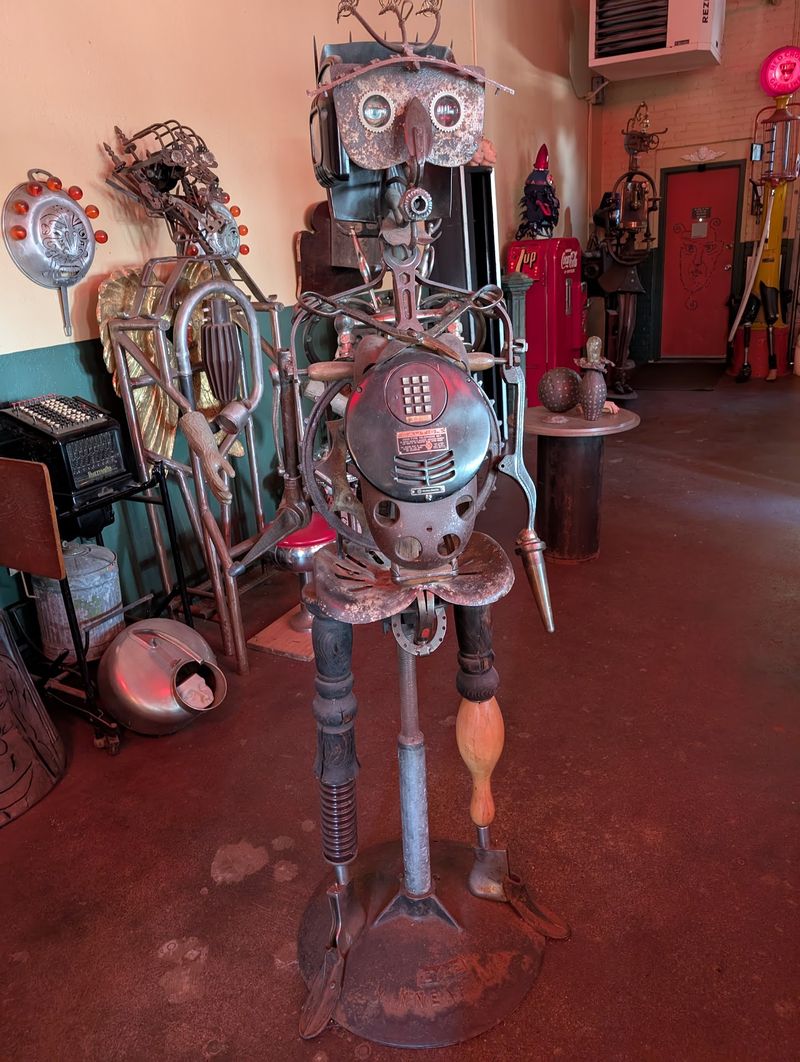
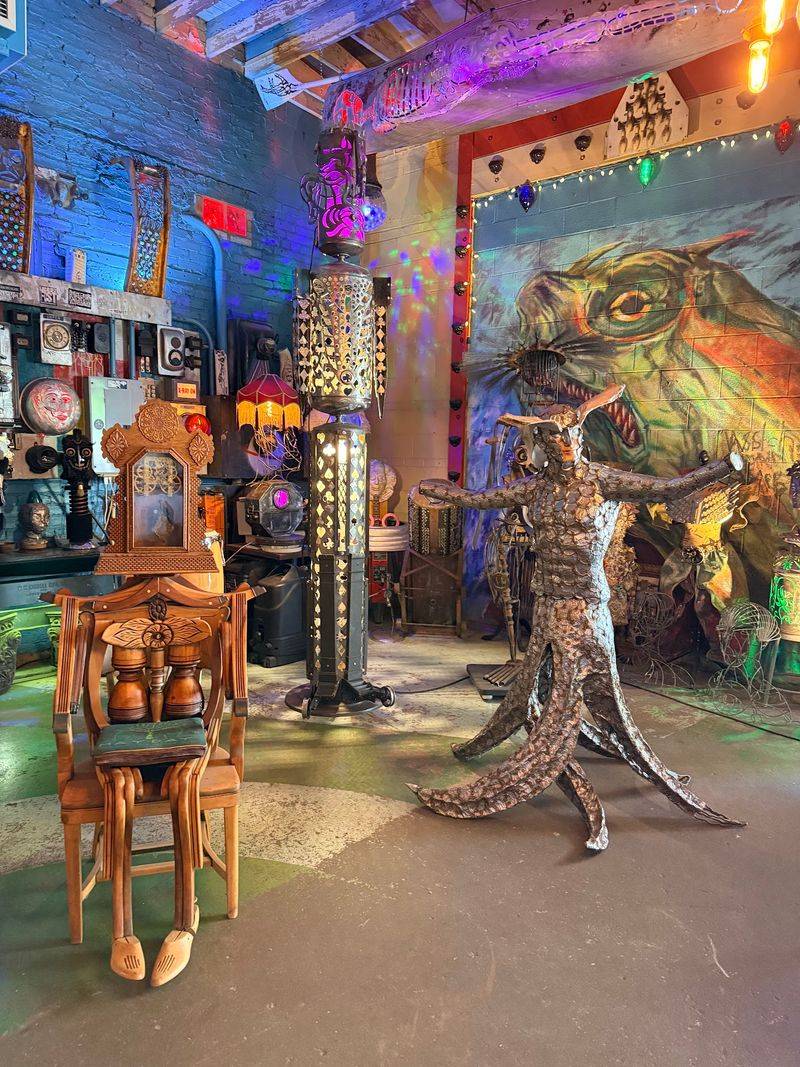
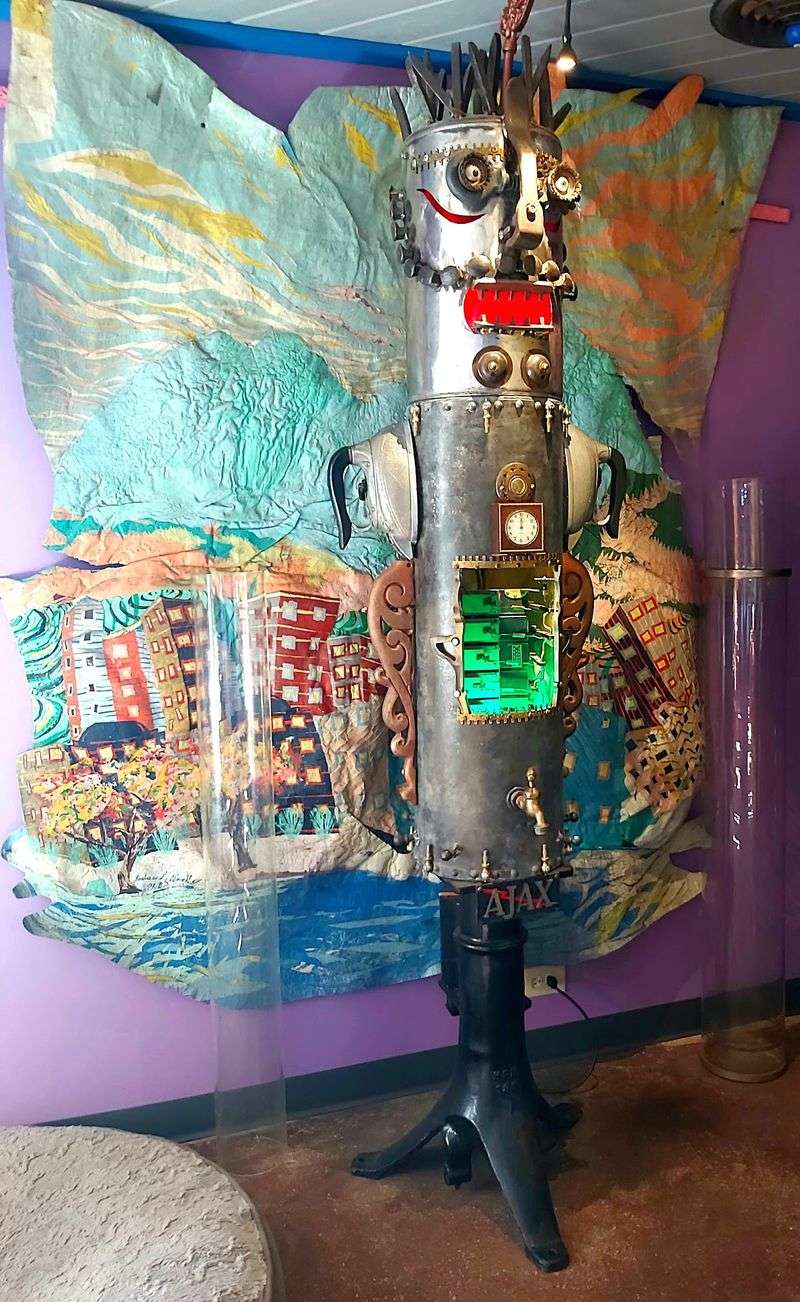
Old typewriter keys, bicycle chains, springs, gears, mannequin limbs, kitchen tools. Individually, all of it is trash headed for a landfill. Assembled here, the same materials turn into figures, faces, and machines that seem to have their own opinions.
Recognizing the raw ingredients is half the fun. You catch yourself squinting at a torso and realizing it used to be part of a furnace or a garden rake. The approach has a practical message tucked inside it. Reuse is not just thrifty, it is a creative challenge that forces surprising solutions.
Artists and craft-minded visitors often leave with new ideas rattling around, because seeing salvage handled this confidently makes your own junk drawer look promising. Teachers bring students for exactly that reason.
There is no lecture attached, though. Nothing preaches at you about sustainability. The work simply demonstrates what happens when someone refuses to accept that an object is finished being useful, and that quiet argument lands harder than a sign ever could.
Push the Buttons, Touch the Art
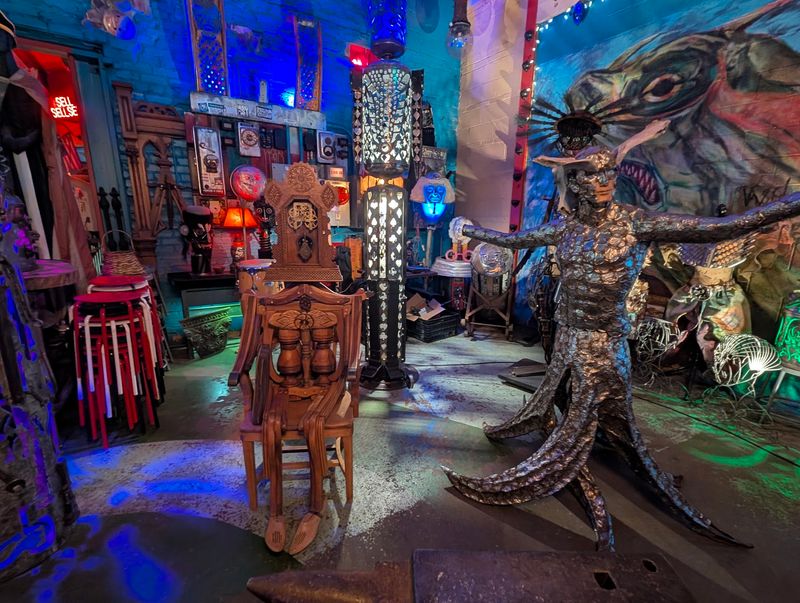
Museums spend a lot of energy telling people not to touch things. Here the opposite happens. Buttons invite pressing, levers ask to be pulled, and motion-activated pieces wake up as you walk past them.
Sculptures rattle, spin, clack, and occasionally startle you into laughing out loud. A room that seemed still one moment becomes noisy the next.
Kinetic elements make the visit feel more like play than viewing, especially for kids who normally lose interest in galleries within four minutes. Families report spending well over an hour without anyone getting restless. Grown-ups get pulled in just as fast, though most pretend they are only supervising.
Take your time with the mechanical pieces. Watching how a linkage transfers motion from a crank to a nodding metal head is oddly satisfying, and it reveals the engineering hiding behind the humor.
Being allowed to interact also removes that stiff, hushed gallery feeling. You relax, you experiment, and the art stops being precious and starts being fun.
That Secret Door in the Back
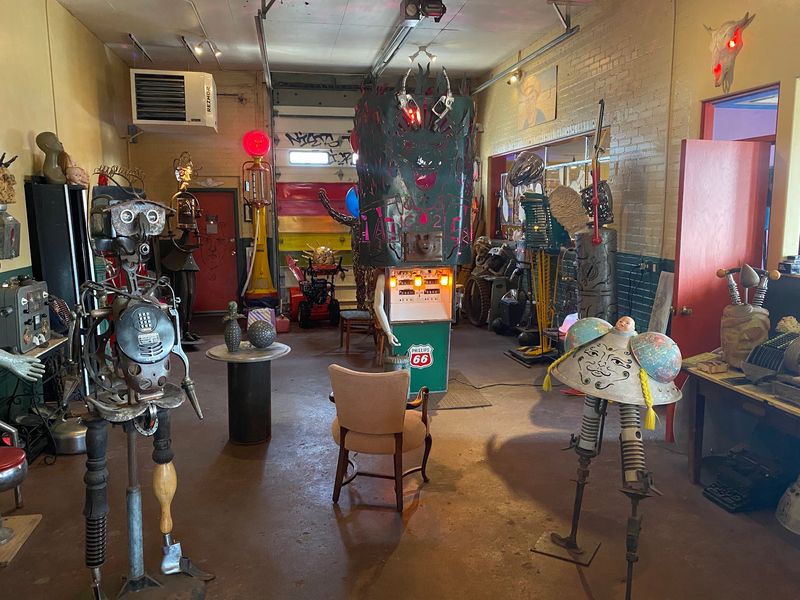
Somewhere toward the rear of the gallery there is a door that does not look like a door. Finding it feels like solving a small puzzle. Step through and the building keeps going, opening into more rooms packed with work that first-time visitors often assume they had already seen everything of.
Hidden passages sound like a theme park trick, but here it fits the personality of the place. Nothing is arranged in a straight line, so a concealed entrance is just the building being honest about itself. The back areas tend to hold larger and stranger pieces, plus the working mess of an active studio.
Ask if you are unsure whether a space is open. Access can depend on the day and what is currently underway.
Repeat visitors mention discovering things they missed the first time, and the layout is a big reason why. Corners double back, sightlines shift, and each pass through a room reveals something that hid behind something else.
Free to Enter, Easy to Support
No ticket booth. No admission counter. You walk in, and that is that. Donations are accepted and clearly appreciated, but nobody hovers or pressures you toward a box.
An open-door policy like this changes who gets to experience art. Students, families on a budget, and travelers just passing through can all step inside without doing quick math first.
Leaving something behind still feels right after you have spent an hour poking at sculptures. The space runs on one person’s labor and materials, and small contributions help keep the lights on.
Some pieces are available to take home as well, and visitors have walked out with items like a hand-built Jacob’s ladder toy. Plan your visit around the posted hours, since midday to early afternoon is the window most days. Sunday is the one day off.
Arriving with time to spare matters more than arriving early. Rushing through would waste the best part, which is noticing details slowly.
The Outdoor Sculptures Nobody Expects
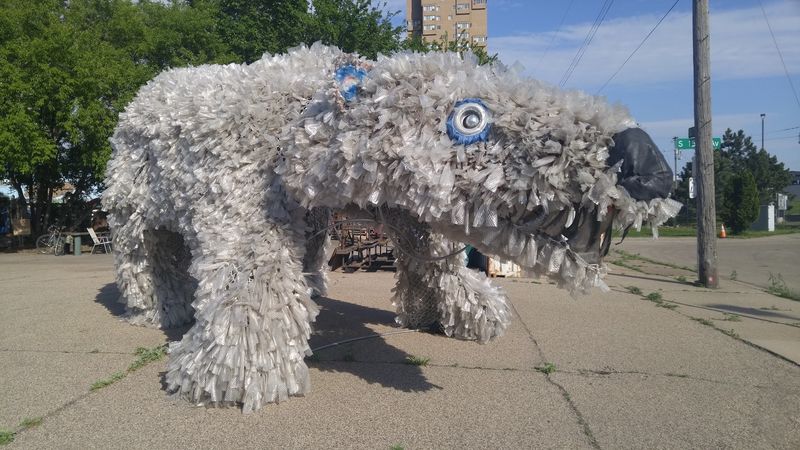
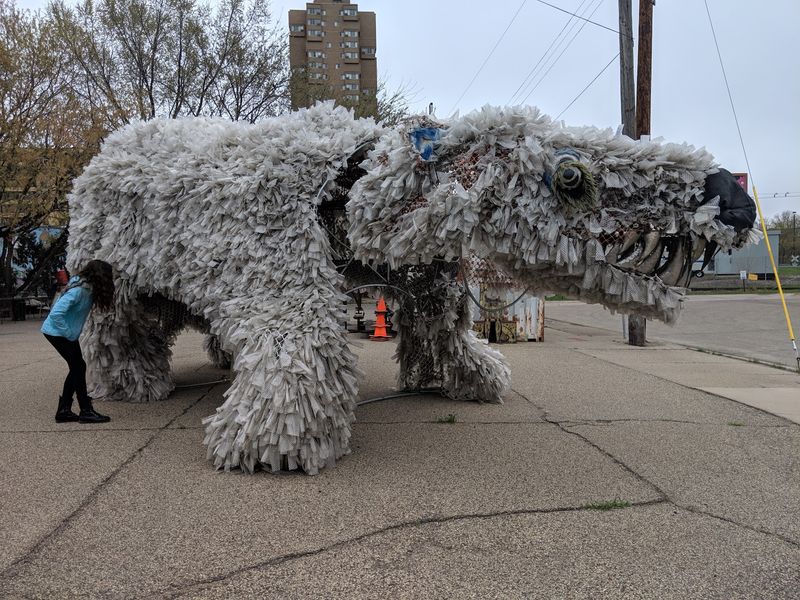
The art does not stop at the walls. Outside, the property carries its own collection of welded figures, tall metal forms, and odd shapes tucked along fences and parking areas.
Summer is the best season for this part. Warm weather makes wandering the grounds comfortable, and the pieces catch sunlight in ways that indoor lighting cannot copy.
Even visitors who arrive during closed hours find something to look at, which is a rare kindness for a small gallery.
Walking the perimeter slowly pays off. Sculptures peek out from behind corners, and a few are easy to miss if you head straight for the entrance. Bring a camera. The mix of rust, bright paint, and everyday urban backdrop photographs beautifully.
Snow changes everything too, half-burying shapes and turning familiar figures into something stranger. Locals who pass by regularly get a slow-moving seasonal show without ever paying attention on purpose, and that is a pretty good deal for a neighborhood block.
A Studio Where Work Actually Happens
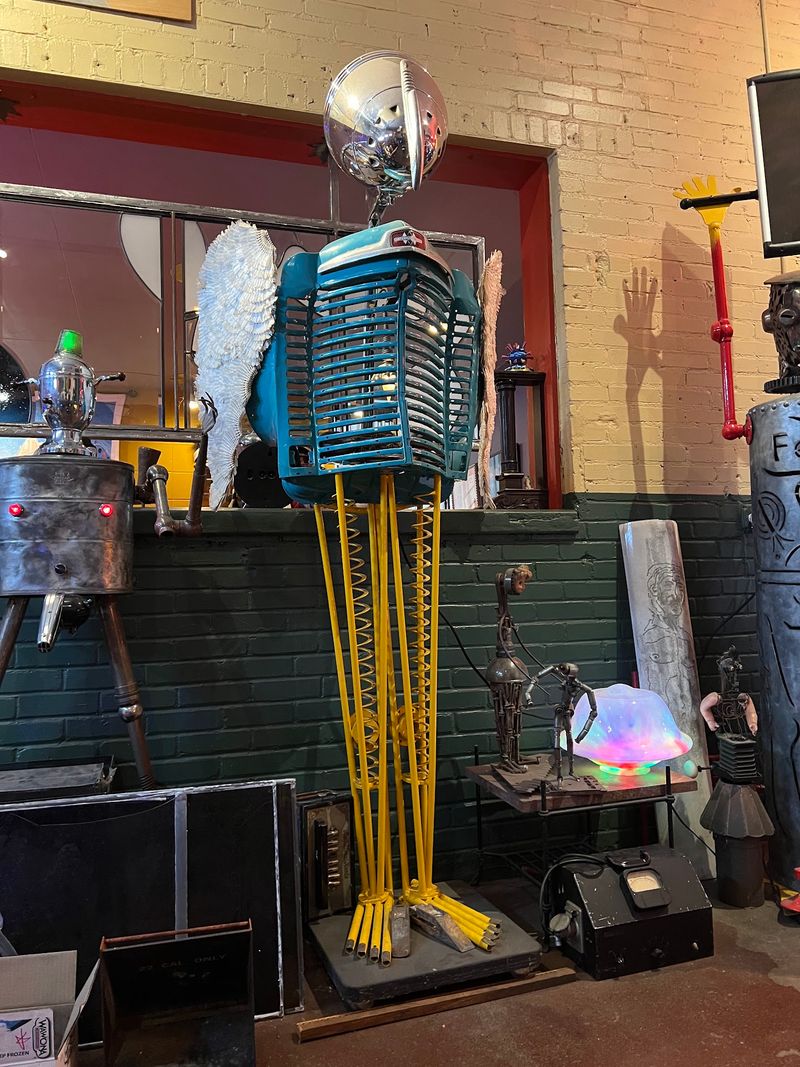
Half gallery, half workshop, and the line between the two is blurry on purpose. Tools sit near finished pieces, and bins of raw material wait for their turn. Seeing projects in progress is one of the more interesting parts of the visit. You get a sense of the sequence, from pile of parts to recognizable form.
The atmosphere stays relaxed. Nothing feels curated for visitors, which is exactly why it holds attention.
Because it is a live workspace, the arrangement shifts over time. Come back in six months and rooms will look noticeably different, with new work occupying spots you remember differently. That churn keeps the place from ever feeling like a museum frozen in place.
Anyone who makes things will find the setup inspiring in a very practical way. Ideas about mounting, joining, and repurposing are all sitting right there in plain view, no artist statement required to understand them.
Sketch notes on your phone if inspiration hits. It usually does.
Fitting It Into a Minneapolis Day
Location helps a lot here. Sitting near Cedar-Riverside and close to the University of Minnesota’s West Bank, the gallery slots easily into a wider day of exploring the city.
Downtown Minneapolis and the Mississippi riverfront are both a short hop away, so pairing a visit with a walk along the water works nicely. Budget more time than seems necessary. An hour is the minimum, and plenty of people stay longer once conversation starts.
Check the hours before heading over, because the doors open at noon and close in the afternoon, with Sunday closed entirely. A quick phone call removes any guesswork.
Bring anyone who claims they do not like art galleries. Odds are good they will change their mind somewhere between the third bowling ball face and the first button they press.
Weird in the best possible way, warm because of the people running it, and genuinely unlike anywhere else in the state.
Address: 1504 7th St. S, Minneapolis, MN 55454, United States
