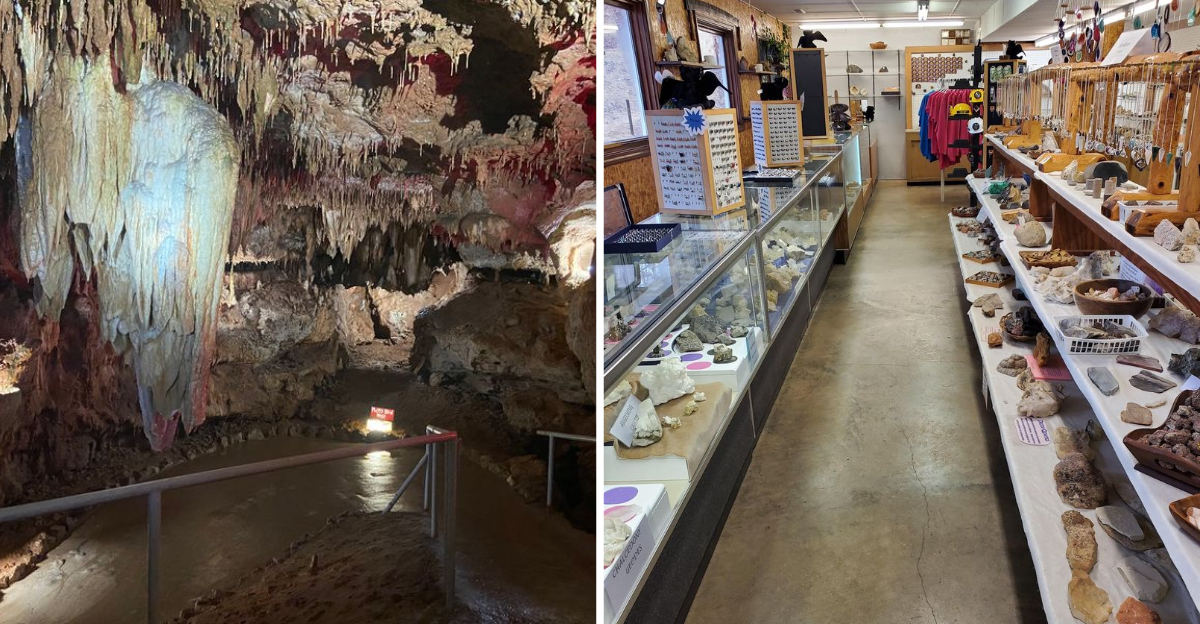
That air rolled out of the cave entrance like someone had left a refrigerator door open in the middle of an Ozarks summer, and I actually laughed out loud. I had driven out on a narrow ribbon of highway with cattle on one side and hills on the other, not entirely sure what waited at the end of the gravel lot.
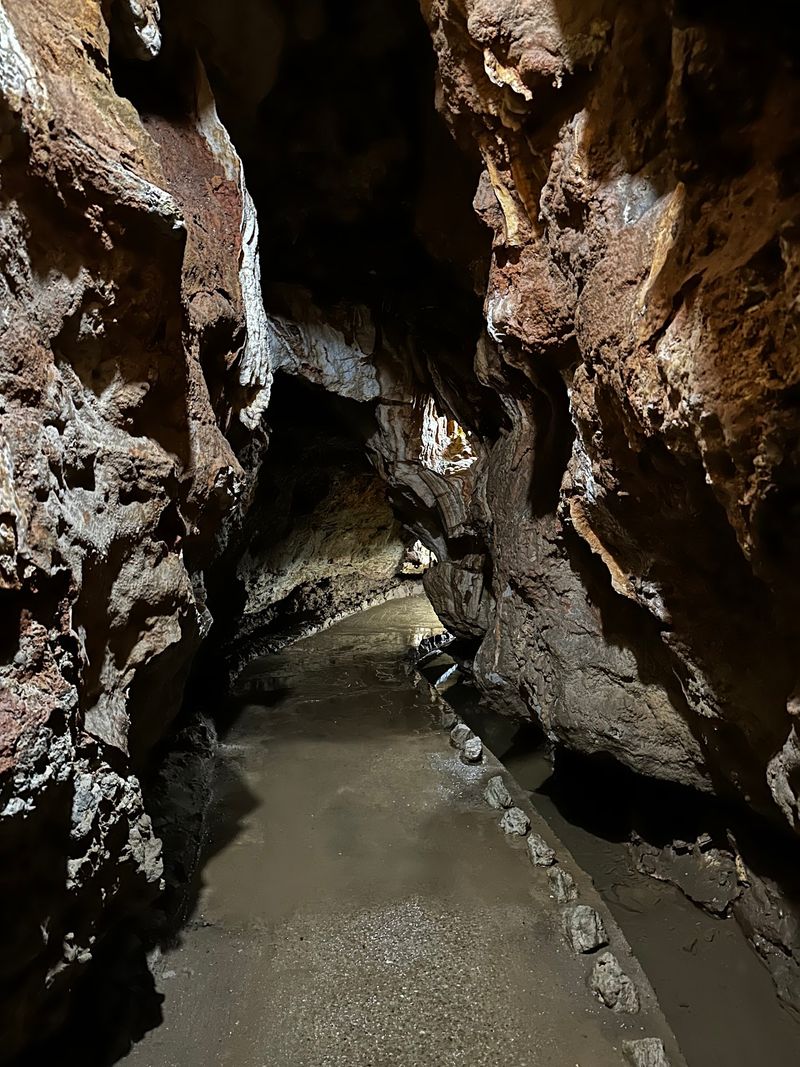
What I found was a mile of smooth, paved, step?free pathway winding under the hills, lit just enough to show off soda straws and stalactites without spoiling the mystery. The temperature sits at 53 degrees no matter what the calendar says, which makes it a cool escape in July and a surprisingly cozy one in January.
This Missouri cave has been open to the public since the 1950s, and it remains one of the few fully accessible walk?through caves in the state. I wandered through chambers where the rock formations seem to grow in slow motion, each drip of water adding another layer to the story.
By the time I came back up into the sunlight, I was already thinking about who I would bring next.
A Flat Path That Welcomes Everyone
Most cave tours I have taken involved stairs. Lots of them, usually damp and slick, with a handrail that felt more like a suggestion than a safety feature.
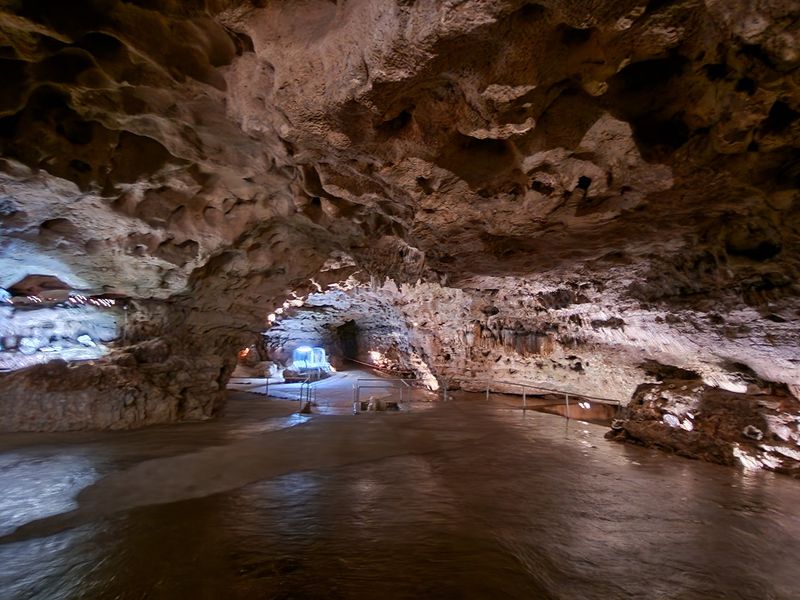
Jacob’s Cave skips all of that. The entire mile-long route is paved and level, with no steps anywhere along the way, which makes it the rare Missouri walk-through cave that people using wheelchairs or pushing strollers can genuinely enjoy.
I watched a grandmother, a toddler in a stroller, and a teenager in sneakers all move through the same passage without anyone struggling. The staff even keep wheelchairs and strollers on hand if you need one.
The path does dip low in a couple of spots, so tall folks will duck their heads once or twice. My advice is to watch the ceiling more than your feet, since the ground stays predictable the whole way.
What surprised me most was how much the flat path changed the mood of the tour. Nobody was breathing hard or counting stairs, so everyone actually listened to the guide and looked around.
Handrails run along stretches where the floor curves, and the lighting stays steady enough that you never feel like you are guessing where to step. Sturdy shoes still help because the pavement can be slightly damp.
If mobility has ever kept you or someone you love out of a cave, place this one at the top of the list. Accessibility here is not an afterthought, it is the whole design.
Fifty-Three Degrees, Every Single Day of the Year
Missouri summers can be brutal. Ninety-five degrees with humidity that sticks to your shirt is a normal August afternoon around the Lake of the Ozarks.
Underground, none of that exists. The cave holds a steady 53 degrees no matter the season, which felt like walking into air conditioning turned up a little too high.
I brought a light jacket and used it about ten minutes in. Kids in shorts and t-shirts do fine for the first stretch, but by the halfway point most of them are hugging their arms, so a hoodie is worth tossing in the car.
In winter the equation flips. When the wind is howling across open farmland and the thermometer reads 20 degrees, that same 53 feels almost tropical.
The reason for the consistency is simple. Rock is an excellent insulator, and once you are far enough underground, the ground temperature settles near the yearly average for the region and basically stops moving.
Humidity stays high, which is why the air feels heavier than a dry 53 degrees above ground. Camera lenses fog for a minute when you first walk in, so give your gear a moment to adjust before you start shooting.
There is one section in the middle of the cave that stays noticeably dry, with almost no dripping at all. It caught me off guard after passing through so many damp, glistening passages, and it is one of those small details that sticks with you afterward.
Soda Straws, Draperies, and a Ceiling Full of Surprises
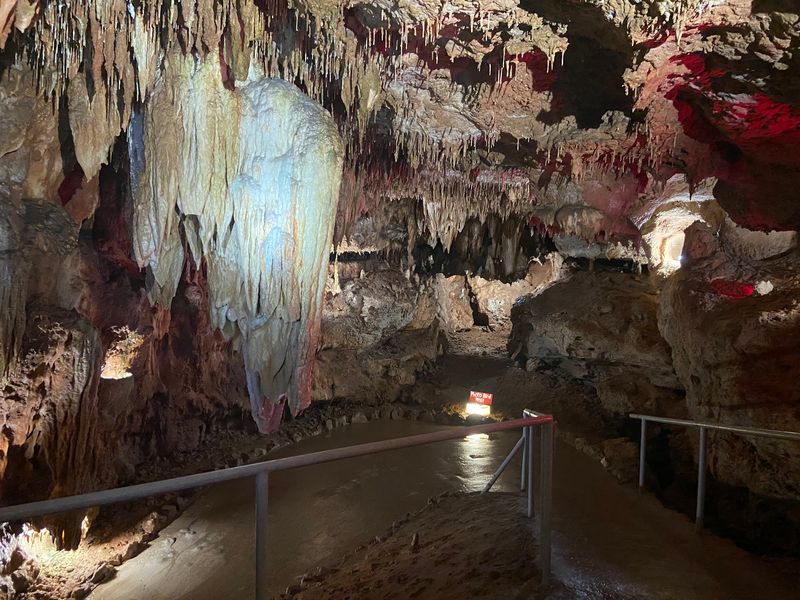
Millions of soda straws hang from the ceiling here, thin and hollow like glass drinking straws, and some of them are so delicate they look like a sneeze could snap them. Photos never quite capture the scale.
Alongside those, you get thick columns where a stalactite and stalagmite finally met after thousands of years of patient dripping.
Draperies ripple down the walls in wavy sheets that catch the light like curtains frozen mid-breeze. Then there are helictites, the oddball formations that twist sideways and upward, ignoring gravity entirely for reasons geologists still argue about.
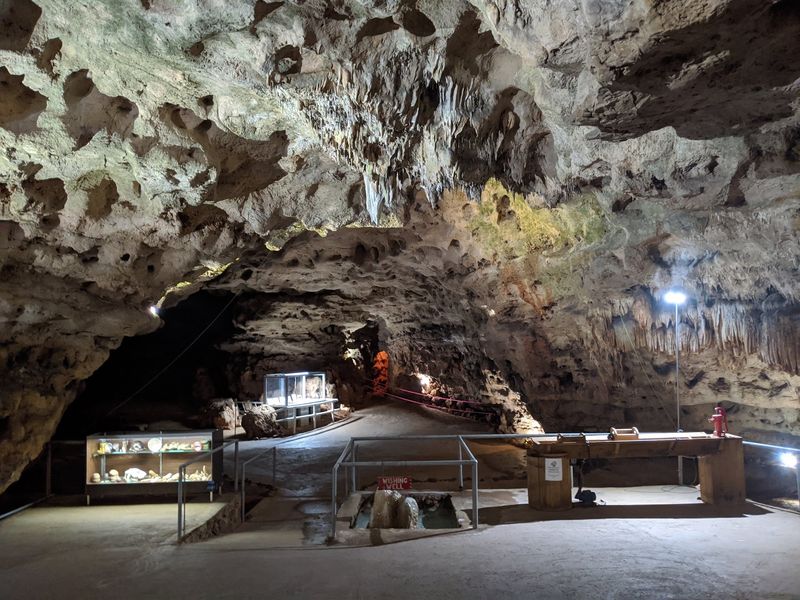
The ceiling in places shows sponge-work, a pitted honeycomb texture carved out by water long before the formations arrived. My guide pointed out fossilized coral overhead, a reminder that this whole region sat under a shallow sea an unimaginably long time ago.
Reflecting pools sit still and glassy along the route, doubling the formations above them so perfectly that I misjudged the depth more than once.
What I appreciated was how close you get. Many caves rope you off at a polite distance, but here the path curves right past the good stuff, and the lighting highlights texture without washing it out.
Guides also bring out a broken piece of formation you can hold, which is the moment most kids finally understand how heavy solid mineral really is. Just remember never to touch the formations on the walls, since oils from skin stop their growth permanently.
Bones From the Ice Age Sitting Right Beside the Trail
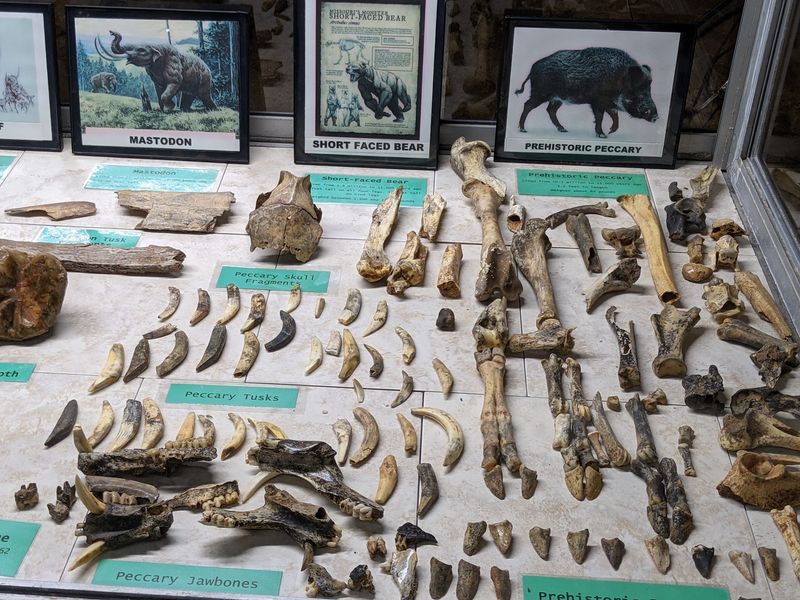
Mastodon teeth. That was the item that stopped me cold, sitting in a lit display case tucked into the rock wall like it was the most normal thing in the world.
When crews were developing the cave for visitors, they turned up prehistoric bones from mastodons, bears, and peccaries, ancient pig-like animals that roamed this part of North America long ago.
Instead of shipping everything off to a distant museum, several pieces stayed right here where they were found. Seeing a fossil in the same cave it came from hits differently than seeing it behind velvet rope in a city.
Guides explain how animals likely fell through openings in the ceiling and could not climb back out, which is grim but fascinating. The cave essentially became a natural trap and then a natural time capsule.
Beyond bones, there is petrified wood along the tour that visitors are sometimes allowed to touch. My hand expected wood and got stone instead, which is a strange little jolt.
Guides also point out evidence of six separate ice ages recorded in the rock layers, plus marks left behind by three earthquakes. One earthquake crack runs visibly through a section of the passage.
Kids who normally tune out during museum visits tend to lock in here, probably because the science is standing right in front of them instead of printed on a placard. If you have a dinosaur-obsessed child, this stretch of the tour will be the part they talk about all the way home.
From a Lead Miner’s Discovery to a 1930s Attraction
Back in 1875, a miner named Jacob Craycraft was hunting for lead ore and barite in these hills. What he found instead was a cave system that would eventually carry his name.
Mining did not pan out. The cave, however, stuck around, and in 1932 it opened its passages to the public as a tourist attraction.
That means people have been walking these chambers for well over ninety years, back when the roads out here were far rougher and a trip to see a cave counted as a real adventure. There is something grounding about knowing families in the 1930s stood in the same spots, staring up at the same soda straws.
Today it holds the title of largest cave in the Lake of the Ozarks area, which is saying something in a state nicknamed the Cave State.
One of the more talked-about features is a room described as the world’s largest geode, an enormous mineral-lined space that guides love to build anticipation for before revealing it.
The original entrance still exists too, small and rough, and adventurous visitors can pay a bit extra to crawl through it. Anyone taking that option should bring old clothes, a helmet, and a light, because mud is guaranteed.
I skipped the crawl and felt only mildly guilty. Watching a couple of teenagers emerge covered head to toe in orange clay was entertainment enough for one afternoon.
Planning Your Visit Without Any Guesswork
Timing matters more than you would think. Tours here start on schedule, so rolling in fifteen or twenty minutes early keeps you from watching a group disappear into the hillside without you.
Doors open at 9 AM and close at 4 PM Thursday through Tuesday, with Wednesday and Sunday closed, so check before you build a whole day around it.
The full walk takes roughly an hour at a relaxed pace. Nobody rushes you, and guides adjust their speed to whoever is in the group, which I appreciated when a small child in our tour wanted to examine every reflecting pool.
Parking is free and easy, with plenty of room even for larger vehicles. Restrooms near the entrance are clean, which is not a small thing after a long drive.
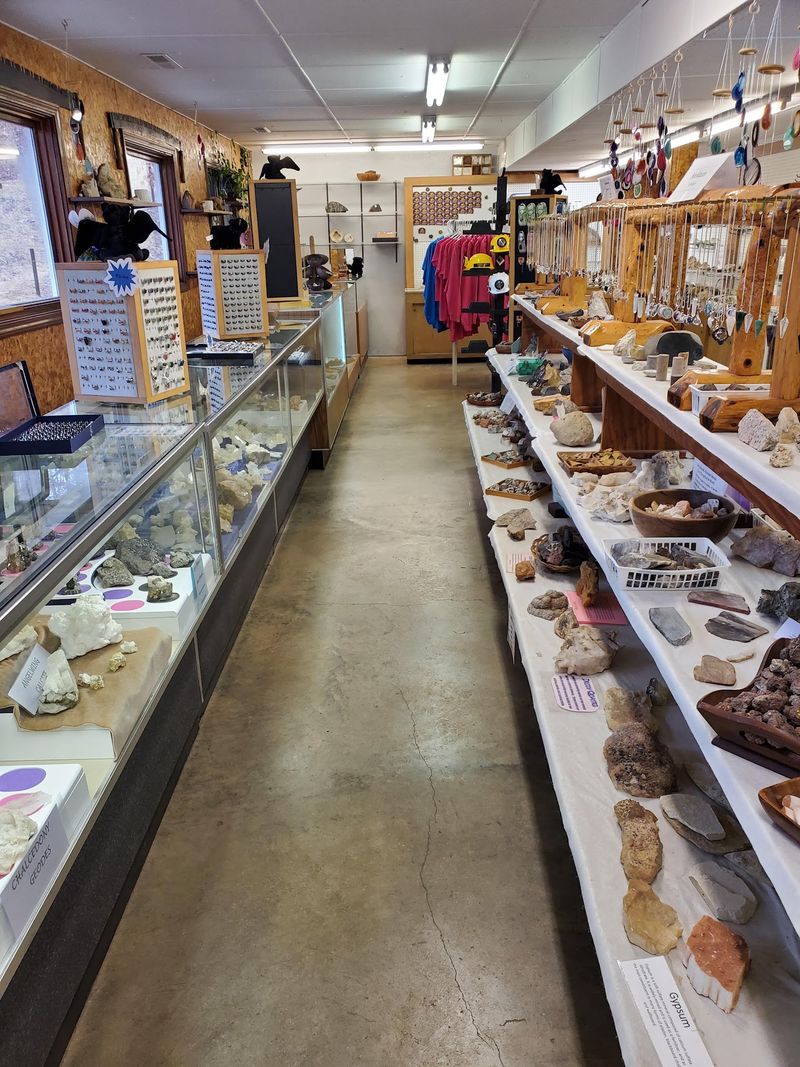
The gift shop leans heavily toward geodes, crystals, quartz, polished stones, and fossils rather than the usual keychain clutter. Rock hounds should budget extra browsing time.
Small pets are allowed if you carry them the entire way, so plan for an hour of holding rather than walking. There is also a peacock pen up the hill that makes for a fun detour afterward.
Getting there means heading between Versailles and Gravois Mills off Missouri Highway 5, then turning onto State Road TT. The route is scenic and simple, and the cave sits close enough to Lake of the Ozarks to pair with a beach day.
Address: 23114 State Highway TT, Versailles, Missouri
