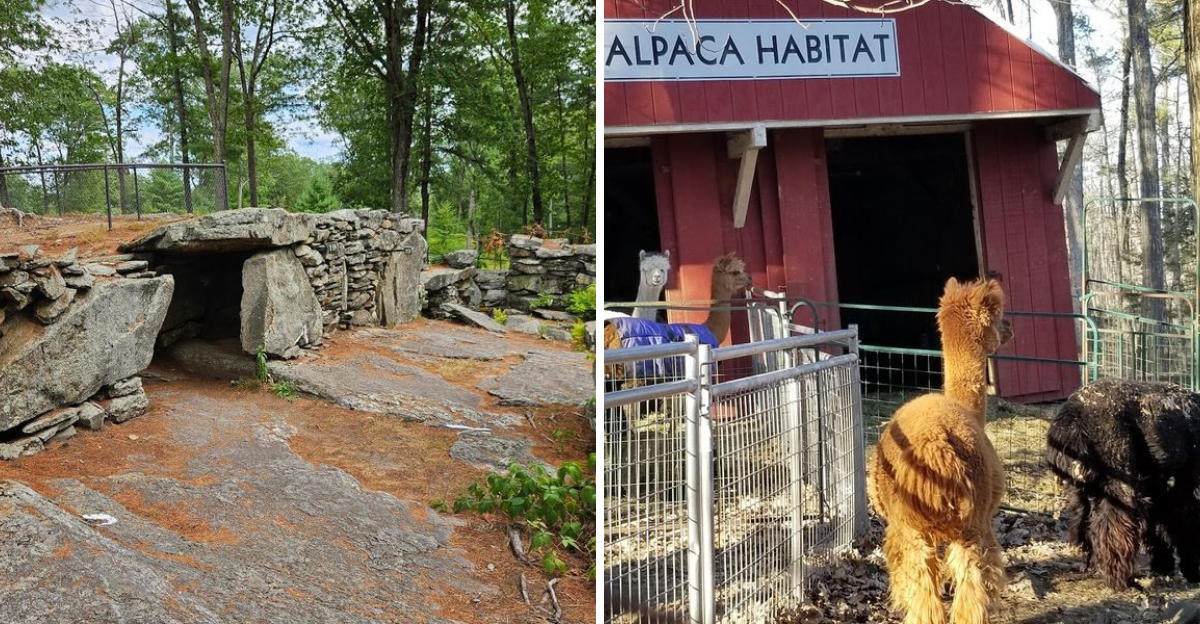
I have been to plenty of quirky attractions in New Hampshire. Some make you smile.
Some make you scratch your head. But I have never been anywhere that made me question everything I thought about history.
This place is hidden in the woods behind a fairly unremarkable entrance. There is a labyrinth of stone structures that someone built thousands of years ago.
Nobody has fully figured out why. The main event is a calendar carved into the rock.
It tracks the sun in ways that should not have been possible for people living in New Hampshire four millennia ago. I stood there while a guide pointed out how the stones align with the solstice.
I got actual chills. I walked through the maze of low walls and stone chambers feeling like I had stumbled onto a secret.
Archaeologists are still fighting about this place. I left with more questions than answers.
That is exactly how a place like this should make you feel.
The Stone Labyrinth That Defies Easy Explanation
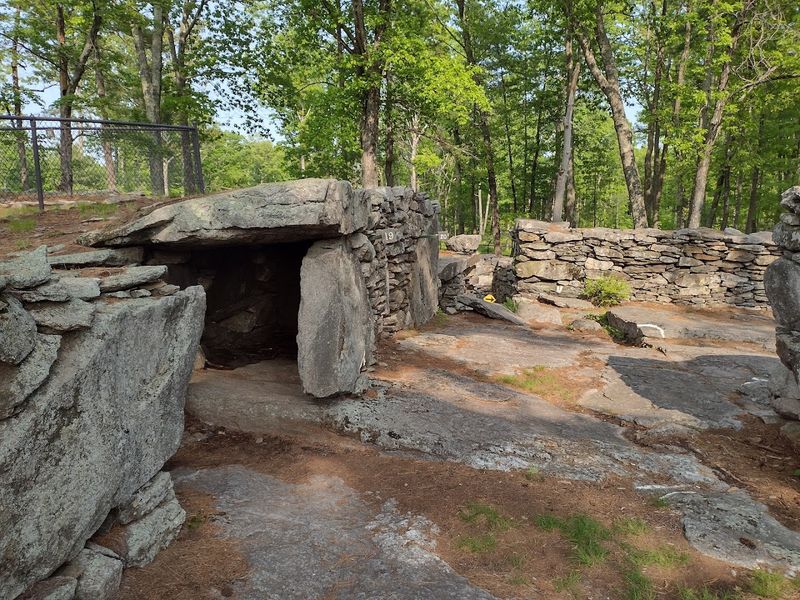
Walking into this site for the first time feels like stepping through a portal to a world that modern history forgot to document. The ground-level stone walls twist and curve in every direction, forming a sprawling network that covers roughly 30 acres of forested New Hampshire land.
Nothing about the layout feels accidental. Each passage leads somewhere deliberate, each chamber positioned with a purpose that researchers are still working to fully decode.
The structures include stone huts, covered rooms, narrow passageways, and open-air enclosures that create a genuinely labyrinthine experience.
America’s Stonehenge pulls you deeper with every turn, and that feeling of discovery never quite fades. You round a bend expecting more of the same, and instead find yourself face-to-face with a chamber that somehow still holds its ceiling after thousands of years.
The craftsmanship, if ancient, is remarkable. Even skeptics tend to slow down here, lower their voices, and start asking questions they did not expect to be asking on a casual weekend outing in New England.
A Calendar Written In Stone And Sunlight
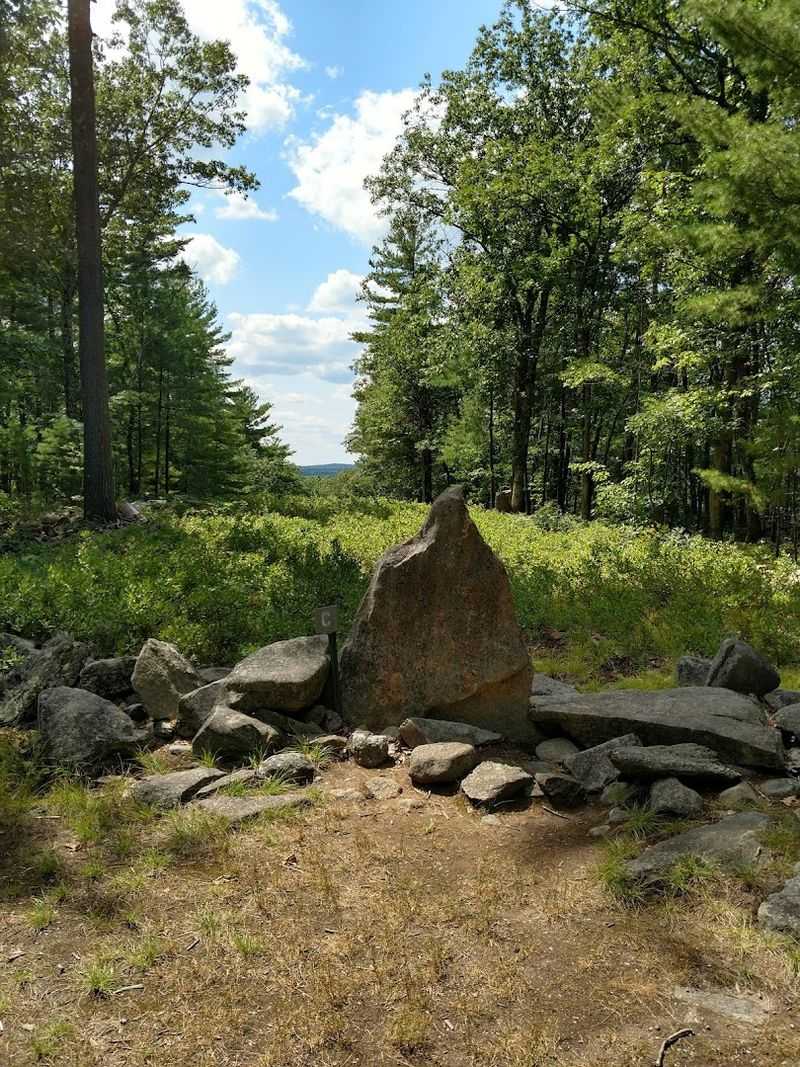
Imagine a calendar that requires no paper, no ink, and no electricity. The astronomical calendar at this site works exactly that way, using carefully positioned standing stones and monuments to track the sun and moon across the sky throughout the year.
The alignments cover major solar events including the Winter Solstice, Summer Solstice, Spring Equinox, and Fall Equinox. Cross-quarter days, which fall between solstices and equinoxes and were hugely important in ancient agricultural cultures, are also marked by dedicated monuments on the property.
What makes this genuinely jaw-dropping is the precision involved. These stones were not randomly placed.
Someone, at some point in history, understood celestial mechanics well enough to engineer a functional astronomical observatory using nothing but rock and open sky. New Hampshire does not often get mentioned in the same breath as ancient astronomical wonders, yet here it is.
America’s Stonehenge offers a front-row seat to one of the most unexpectedly sophisticated ancient calendars anywhere in the Western Hemisphere, and watching the light move across the stones during a solstice event is an experience that sticks with you.
Radiocarbon Dating And The 4,000-Year Mystery
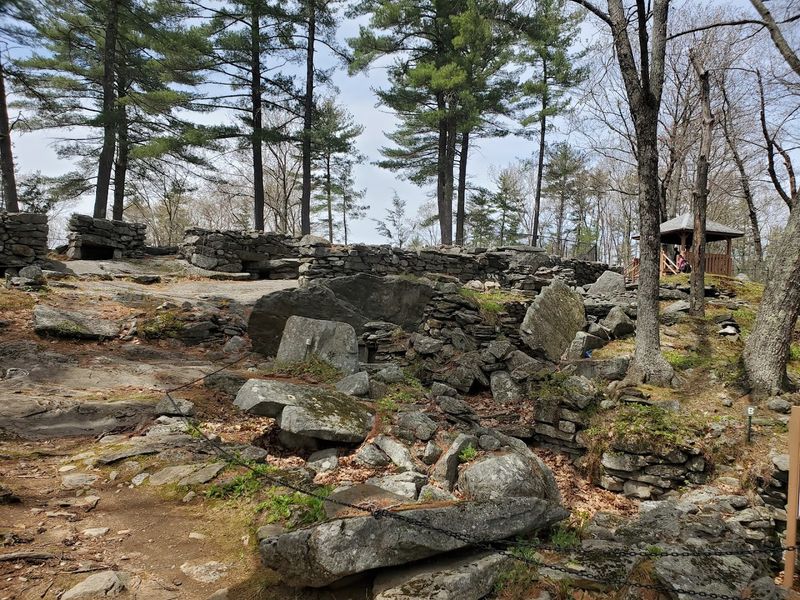
Science has weighed in on this place, and the results are not boring. Radiocarbon dating of charcoal samples found at the site points to human activity stretching back approximately 4,000 years.
That number alone is enough to make you stop and recalibrate your mental timeline for North American history.
Further analysis using Optically Stimulated Luminescence (OSL) dating and astrochronological methods has supported those ancient dates, suggesting that at least some of the structures were initially constructed around the same period. That puts potential construction activity well before many familiar ancient landmarks around the world.
The controversy, of course, is delicious. Mainstream archaeology has not reached a consensus on who built what and when.
Some researchers point to ancient indigenous peoples. Others suggest pre-Columbian European contact.
The complicating factor is that a previous property owner rearranged many of the stones in the early twentieth century, making definitive analysis frustratingly difficult. America’s Stonehenge sits in this glorious grey zone where science, history, and genuine mystery overlap, and honestly, that ambiguity makes exploring it even more compelling than a site with a neat, tidy explanation.
The Oracle Chamber That Keeps Its Secrets
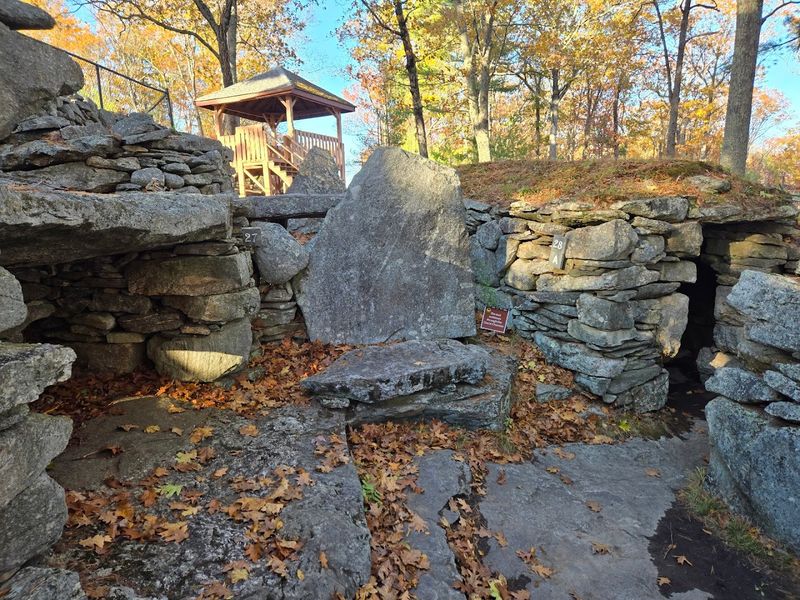
Of all the structures scattered across the site, the Oracle Chamber earns its dramatic name. This stone room features a speaking tube built directly into the structure, a narrow channel through which a person inside could project their voice outward to those standing at the main altar stone above.
The acoustics are not a coincidence. Whoever designed this feature understood something about sound projection and wanted to create a specific experience, possibly for ritual or ceremonial purposes.
Standing near it and hearing the effect firsthand is genuinely eerie in the best possible way.
The pre-colonial background of this chamber adds another layer of intrigue. Interpretive signs throughout America’s Stonehenge provide context and competing theories, but no single explanation has locked down the full story.
That open-ended quality is part of what makes this place so magnetic. New Hampshire has plenty of beautiful nature trails and historic sites, but very few that come loaded with this level of architectural mystery.
The Oracle Chamber alone justifies the trip, and it is just one of many structures waiting to raise questions you will still be turning over in your mind on the drive home.
The Watch House And Its Quartzite Light Show
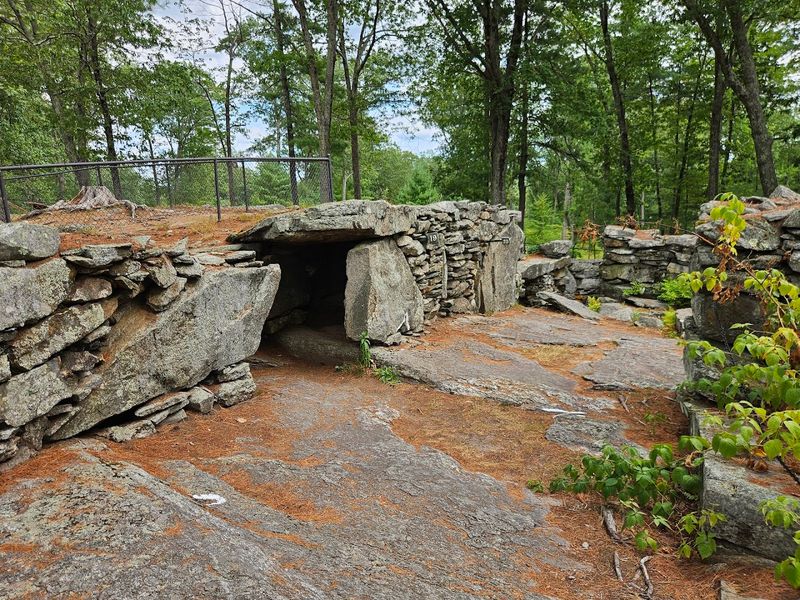
Twice a year, something quietly spectacular happens inside a modest-looking stone chamber called the Watch House. On the spring and fall equinoxes, sunlight enters the structure at precisely the right angle to illuminate a large quartzite stone positioned in the interior, flooding it with golden light.
From the outside, the Watch House looks like a simple stone room, easy to walk past without a second glance. But that equinox light show reveals a level of intentional design that is hard to dismiss as accidental.
Someone planned this, calculated sun angles, and built accordingly.
Visiting during an equinox is a bucket-list experience for anyone drawn to ancient astronomy or sacred architecture. The site does host special events around these astronomical milestones, drawing people from across New England and beyond who want to witness the alignments in real time.
America’s Stonehenge does not just tell you about ancient astronomical knowledge, it demonstrates it. Watching light behave exactly as ancient builders intended, thousands of years after construction, is one of those rare moments where history stops being abstract and becomes something you can feel standing right in front of you.
The Summer Solstice Stone And Its Transatlantic Connection
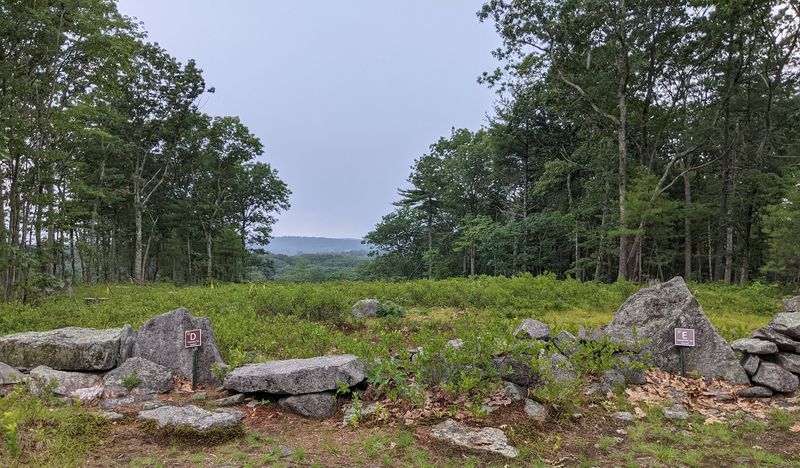
Among all the astronomical alignments at the site, the Summer Solstice Stone holds a particularly wild claim. Not only does it align with the Summer Solstice sunrise, marking that longest day of the year with architectural precision, but researchers have also noted that its orientation corresponds with Stonehenge in England.
That detail tends to spark lively debate. Whether the connection is intentional, coincidental, or the result of two cultures independently discovering the same celestial logic is a question that keeps archaeoastronomers busy.
Either way, the stone itself is a striking monument, tall and solitary in a forest clearing, commanding attention without trying.
Standing at America’s Stonehenge during the summer solstice and watching the sun rise in alignment with this ancient marker is an experience that feels genuinely ceremonial. The site draws enthusiastic crowds for solstice events, and the energy is electric.
New Hampshire in summer is already gorgeous, but add an ancient solar alignment and a crowd of curious minds, and you have something that feels more like a pilgrimage than a casual day trip. Pack comfortable shoes and arrive early on solstice morning.
The Controversial History Behind The Stones
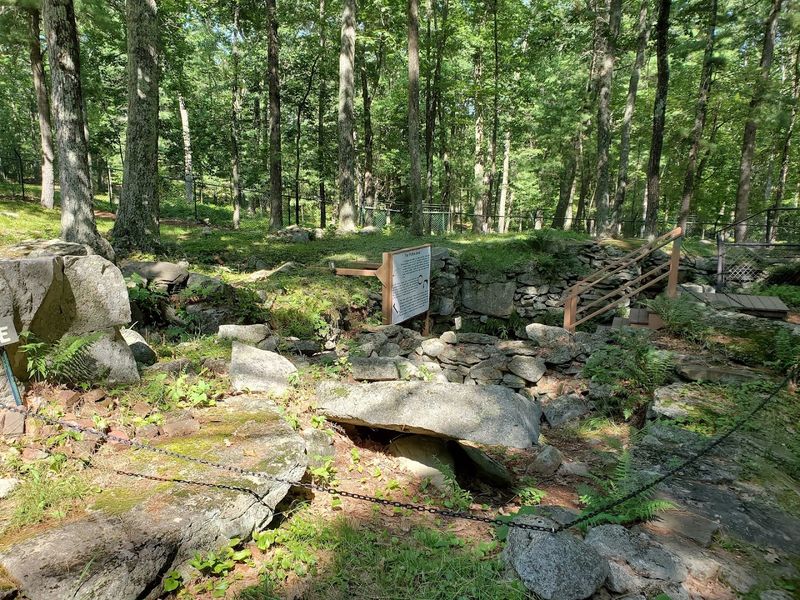
Every great mystery needs a good controversy, and this site delivers one with flair. The debate over who actually built the structures has been running for decades, featuring a cast of proposed builders that includes ancient indigenous peoples, Irish monks, Phoenician traders, and Gaelic settlers.
Adding fuel to the fire is William Goodwin, who purchased the property in 1937 and rearranged significant numbers of stones based on his own theories about the site’s origins. His well-intentioned interference made it much harder for later researchers to determine original layouts and draw firm conclusions from the archaeological record.
The Pattee family, who lived on the property during the eighteenth and nineteenth centuries, were once the leading suspects for construction. Closer examination of the structures revealed evidence of far greater age, pushing the timeline back dramatically.
America’s Stonehenge sits at the intersection of genuine archaeological inquiry and passionate amateur theorizing, and the result is a debate that never gets old. Multiple guided and self-guided tour options help visitors navigate these competing narratives, and the interpretive signage throughout the property does an admirable job of presenting multiple theories without forcing a single conclusion on curious minds.
The Self-Guided Trail Experience Through 30 Acres
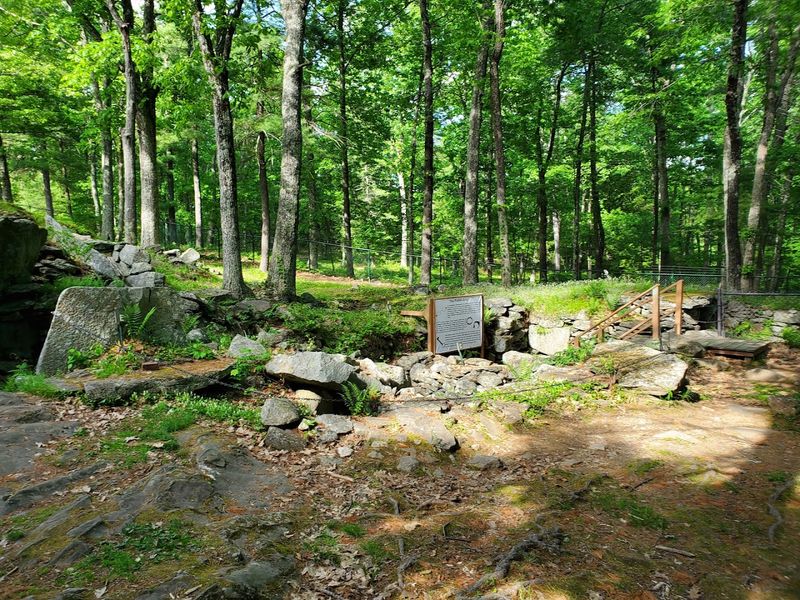
Getting around America’s Stonehenge is a genuine adventure in itself. The property spans roughly 30 acres, and the self-guided trail winds through forest, past stone structures, along ancient walls, and out to the outer astronomical ring where the standing stones mark celestial events.
A tour guide map available at the visitor center keeps you oriented, and a QR code on the map links to a mobile app with audio commentary for each stop along the route. The combination of physical signage and digital audio creates a layered experience that works well for casual explorers and detail-obsessed history fans alike.
Trail difficulty runs from easy to moderate, with most of the central area accessible on well-maintained paths. The outer wall section gets a bit rougher and could use clearer signage in spots, but it is manageable and absolutely worth the extra effort.
New Hampshire’s forest is gorgeous backdrop for this kind of exploration, and the site feels different with every season. A winter visit with fresh snow turns the stone chambers into something out of a fairy tale.
A fall visit with peak foliage is equally breathtaking. There is genuinely no bad time to walk these trails.
Alpacas, A Butterfly Garden, And Unexpected Delights

Nobody expects to encounter alpacas at an ancient archaeological site, and yet here we are. America’s Stonehenge keeps a small herd of alpacas near the visitor center, and they have become one of the most enthusiastically mentioned highlights of the entire experience.
Beyond the alpacas, the property includes a butterfly garden and a bluebird area, adding a layer of natural beauty that balances the ancient, weighty atmosphere of the stone structures. A pollinator garden featuring herbs and flowering plants brings an entirely different kind of sensory experience to the visit.
For families with younger children who might find ancient stone chambers a bit abstract, these living attractions provide something tangible and delightful to connect with. There is also a hands-on artifact dig activity designed specifically for kids, letting them channel their inner archaeologist in a supervised, engaging way.
The visitor center itself is warm and welcoming, with clean facilities, a small museum featuring artifacts found on-site, and a gift shop stocked with reasonably priced souvenirs. America’s Stonehenge manages to be genuinely educational, naturally beautiful, and unexpectedly charming all at once, which is a combination that is harder to pull off than it sounds.
Plan Your Visit To America’s Stonehenge In Salem
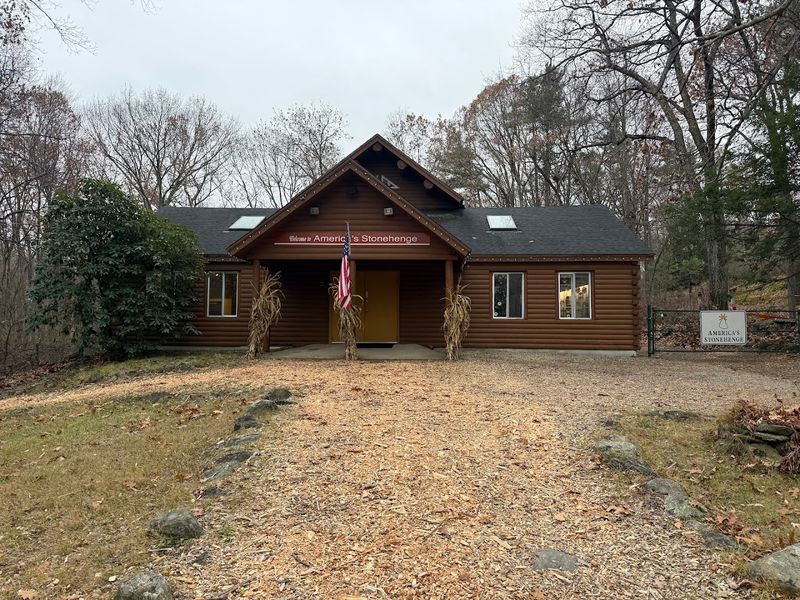
Tucked away at 105 Haverhill Rd, Salem, NH 03079, America’s Stonehenge is open daily from 9 AM to 5 PM, making it easy to slot into a weekend itinerary without any complicated logistics. The site is open year-round, which means every season brings a completely different atmosphere and a fresh reason to visit.
Buying tickets online in advance is a smart move, especially around solstice and equinox events when attendance spikes. The visitor center provides a great starting point with an introductory video that frames the history and competing theories before you head out onto the trails.
Snowshoe rentals are available in winter, and complimentary snow cleats have been offered during icy conditions, which shows a genuine commitment to making the site accessible across seasons.
Reach the team directly at +1 603-893-8300 or explore more at stonehengeusa.com before your visit. New Hampshire has no shortage of stunning destinations, but very few that combine genuine archaeological intrigue, natural beauty, astronomical wonder, and adorable alpacas under one roof.
Pack curiosity, wear comfortable shoes, download the app, and prepare to leave with far more questions than answers. That is exactly the point, and it is absolutely magnificent.
