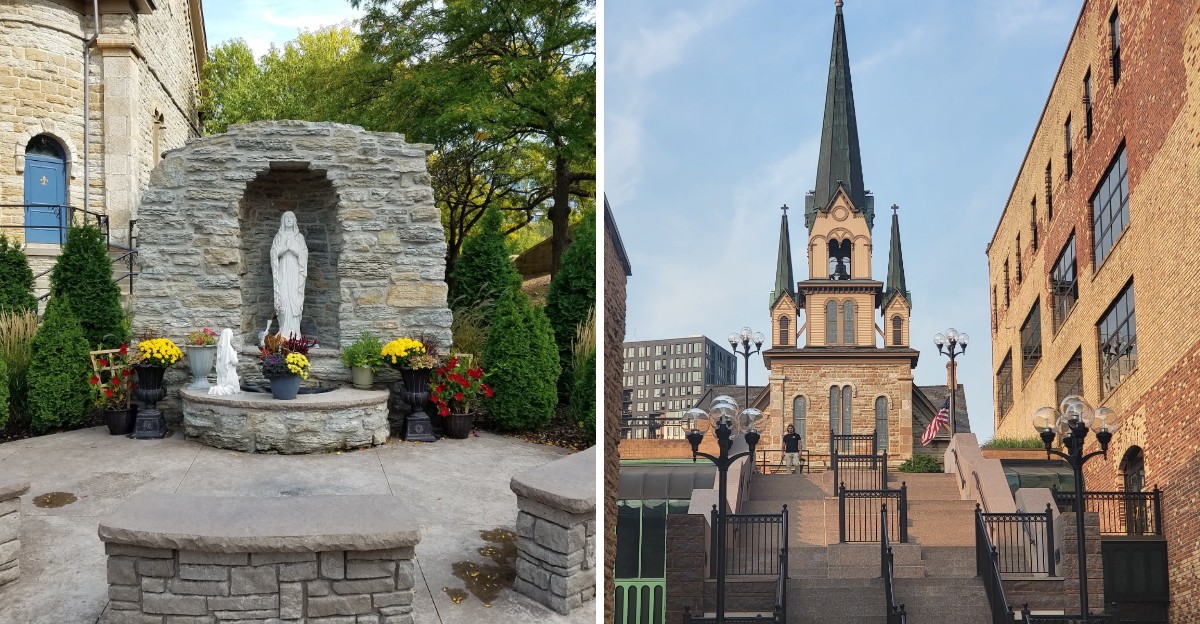
The stone walls of this church came from the banks of the Mississippi River, quarried just a few blocks away. That limestone has stood since the 1850s. It still holds up a working parish today.
I noticed that the building started life as a Universalist meeting house. Then French Canadian Catholics bought it in 1877 and gave it a bell tower. One building, two very different chapters.
I’m particularly drawn to its spot on the river’s east bank. This is the same stretch where St. Anthony Falls got its name back in 1680. Few churches in Minnesota can claim a front-row seat to that kind of history.
And yes, there are French meat pies involved. Curious how a riverside stone church ended up with a pie tradition? Stick around.
The Walls Literally Came From The Riverbank
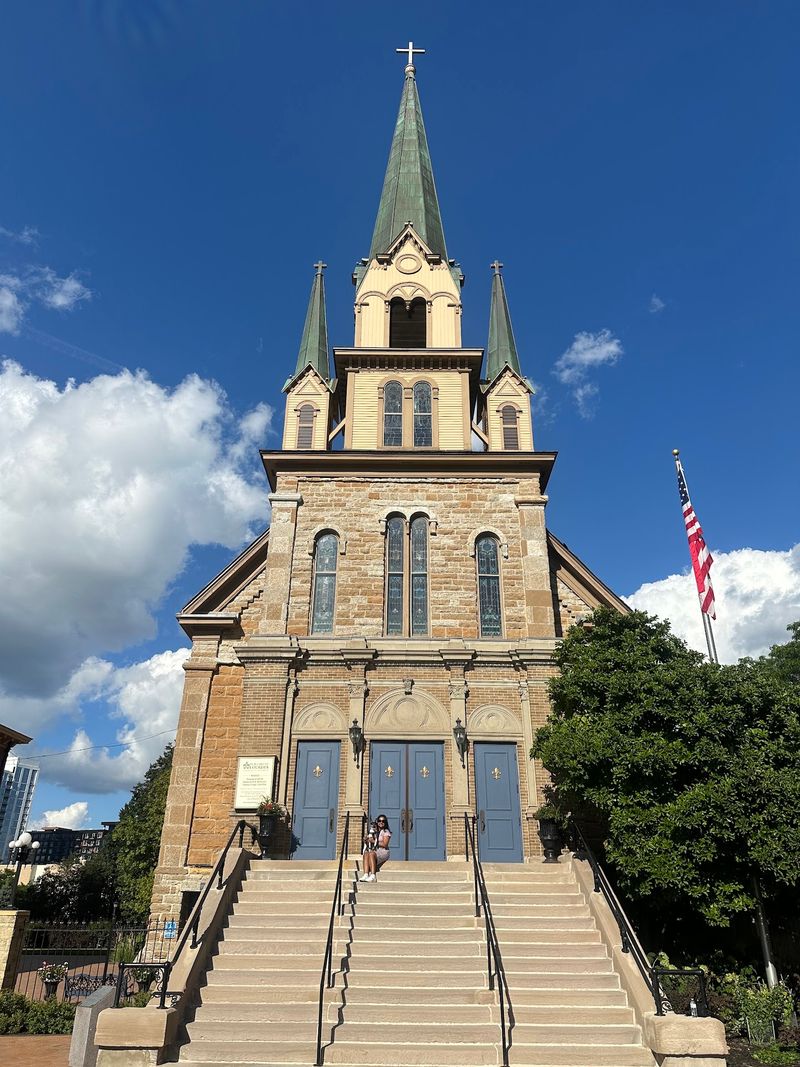
Most buildings borrow a view of the river. Our Lady of Lourdes Catholic Church borrowed the river’s actual rock.
Builders put up the original structure between 1854 and 1857. They used native limestone quarried just a few blocks away, along the Mississippi River.
That detail changes how you see the whole place. The church isn’t just near the river, it’s made from the same ground the water carved.
Limestone was a practical pick for early Minneapolis builders. It was close, sturdy, and didn’t need a long trip by wagon.
One detail I find worth mentioning is how local this choice really was. Shipping fancy stone from far away would have been costly for a young frontier town.
So the riverbank became the supply store. Pretty smart for a city that was still finding its feet.
When you look at those walls, you’re looking at a piece of the Mississippi’s own story. The stone sat by the water long before anyone stacked it into a church.
Take a slow lap around the outside if you visit. Notice the texture and color of the blocks.
It’s a quiet way to connect with the river without even seeing it. Geology class never felt this cozy.
Front-Row Seats To The Place St. Anthony Falls Got Its Name
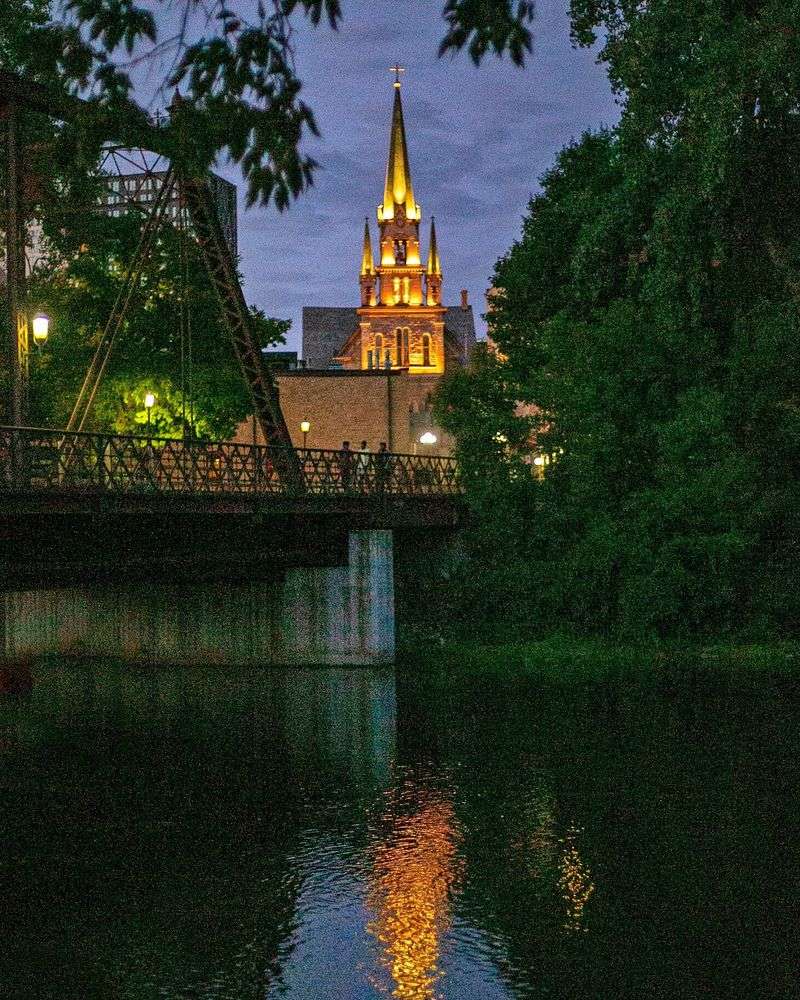
Back in 1680, Father Louis Hennepin spotted a roaring waterfall on the Mississippi. He named it the Falls of St. Anthony.
The area near the church is tied to that famous moment. That’s a long, long history for one neighborhood.
Our Lady of Lourdes Catholic Church sits on the river’s east bank. Today that area is part of the Nicollet Island and East Bank neighborhood.
The falls shaped everything that came after. Mills, workers, and new families followed the power of that rushing water.
I find it easy to appreciate how fitting this location feels. A Catholic priest named the falls, and a Catholic parish now stands close by.
Of course, the church building came much later. Still, the timeline connects in a way that feels almost planned.
Visiting here gives you a chance to stand where Minneapolis really began. The river was the reason the city grew at all.
Pair a church visit with some time near the water. The falls area makes a natural next stop.
You’ll leave with a better feel for how this Minnesota city started. And you’ll understand why the church’s address matters so much.
Two Styles, One Very Charming Building
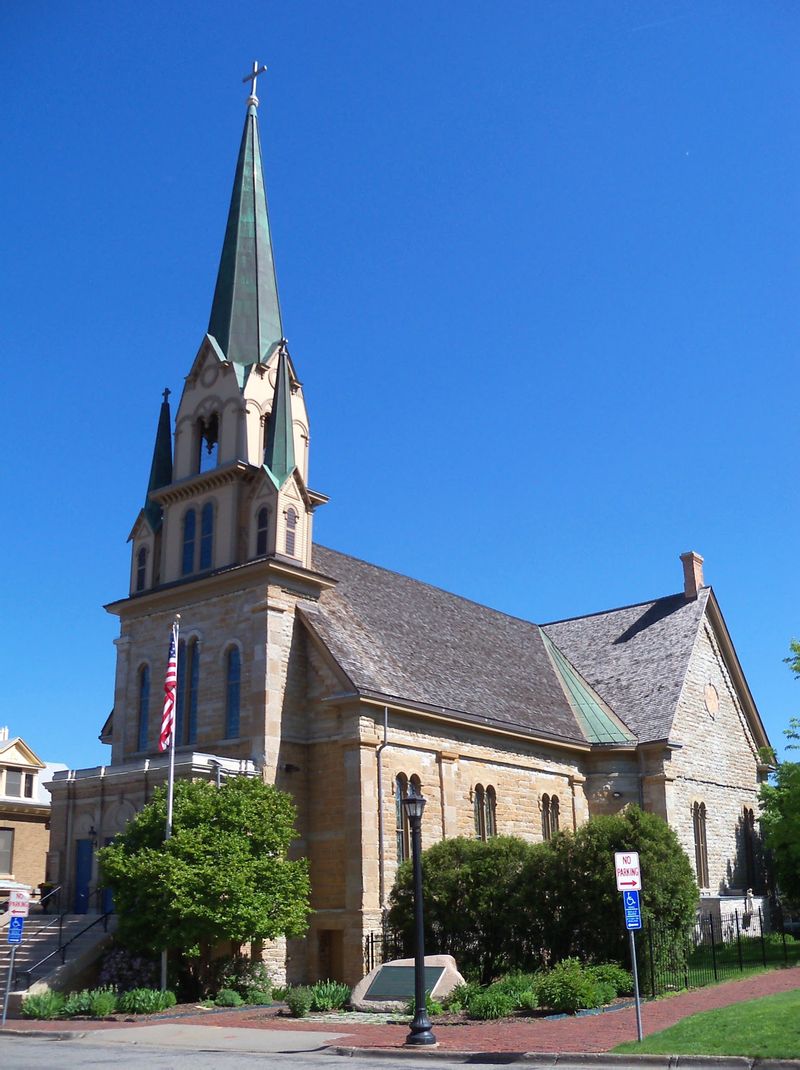
Greek temple meets French countryside. That’s the short version of this building’s look.
The first rectangular nave went up in a Greek temple style. It was built by the First Universalist Society in the 1850s.
Then 1877 arrived with big changes. The Catholic French Canadian community bought the building and added a mansard-style transept, bell tower, sacristy, and vestibule.
Those additions turned it into a French Provincial church. Some describe it as country-Gothic, mixing Gothic Revival with French Provincial touches.
Honestly, it sounds like a design debate that somehow worked out. Two eras shook hands and decided to share the space.
The result is a building you can read like a timeline. The older stone nave tells one story, and the added tower tells another.
Here’s a fun game for your visit. Try spotting where the original Greek-style section ends and the French additions begin.
It’s a great way to slow down and really look. Kids might even enjoy the challenge.
Architecture fans will have plenty to talk about here. Everyone else gets a pretty building with a surprisingly layered past.
Minneapolis Has Never Seen An Older Working Church
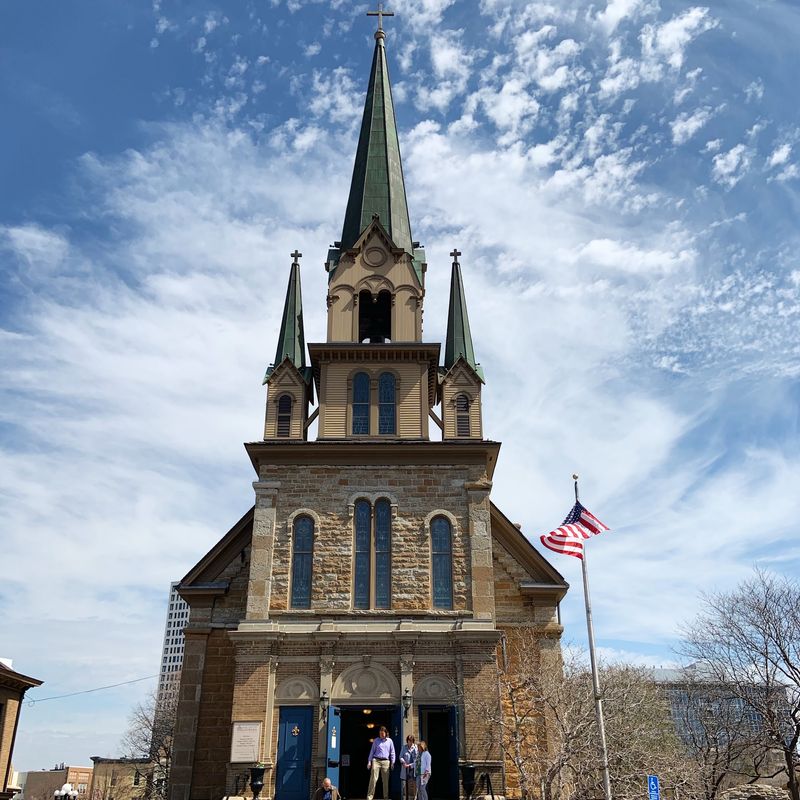
Plenty of old buildings get turned into offices or shops. Our Lady of Lourdes Catholic Church kept doing what it was built to do.
It holds the title of the oldest continuously used church building in Minneapolis. That’s a serious streak.
Think about everything the city has changed since the 1850s. Streets, bridges, and skylines have all shifted around this one stone building.
Yet the doors still open for worship. It remains an active parish in the Archdiocese of Saint Paul and Minneapolis.
That kind of steady use gives the place real weight. People have gathered inside for well over a century and a half.
The building also earned national attention along the way. It was designated a U.S. historic landmark in 1934.
In 1971, it joined the National Register of Historic Places. It counts as a contributing property in the St. Anthony Falls Historic District.
So this isn’t a museum piece behind glass. It’s a living part of Minnesota history that still hosts Mass.
That mix of old and active is rare. It’s also what makes a visit feel personal instead of distant.
A National First Hiding In Plain Sight
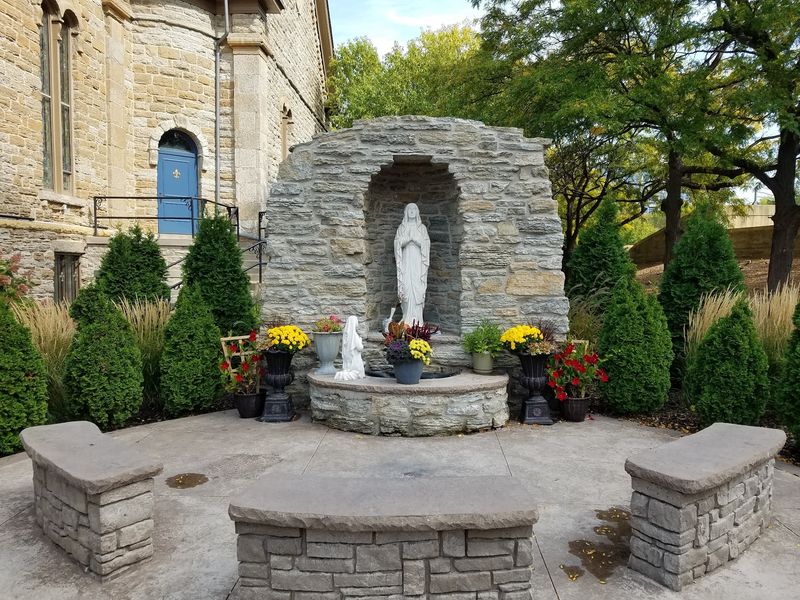
Here’s a trivia fact to pull out at dinner. This parish was the first in the United States named in honor of Our Lady of Lourdes.
That’s a pretty big claim for a modest stone church by the river. It gives the parish a special spot in American Catholic history.
The name points to Lourdes, a town in France. That French link fits nicely with the community that bought the building in 1877.
French Canadian Catholics brought their faith and traditions to this corner of Minneapolis. Naming the parish after Lourdes felt like a natural choice.
Later, in 1917, the Marist Fathers took charge of the parish. Their care added another chapter to the church’s long story.
I’m drawn to how quietly this honor sits. There’s no giant sign shouting about it.
You simply have to know. Now you do.
If faith history interests you, this detail makes the visit even richer. It connects Minnesota to a much larger story.
Even if you’re not Catholic, it’s a fun piece of national history. Not every city can say it got there first.
Stained Glass That Took Years To Finish
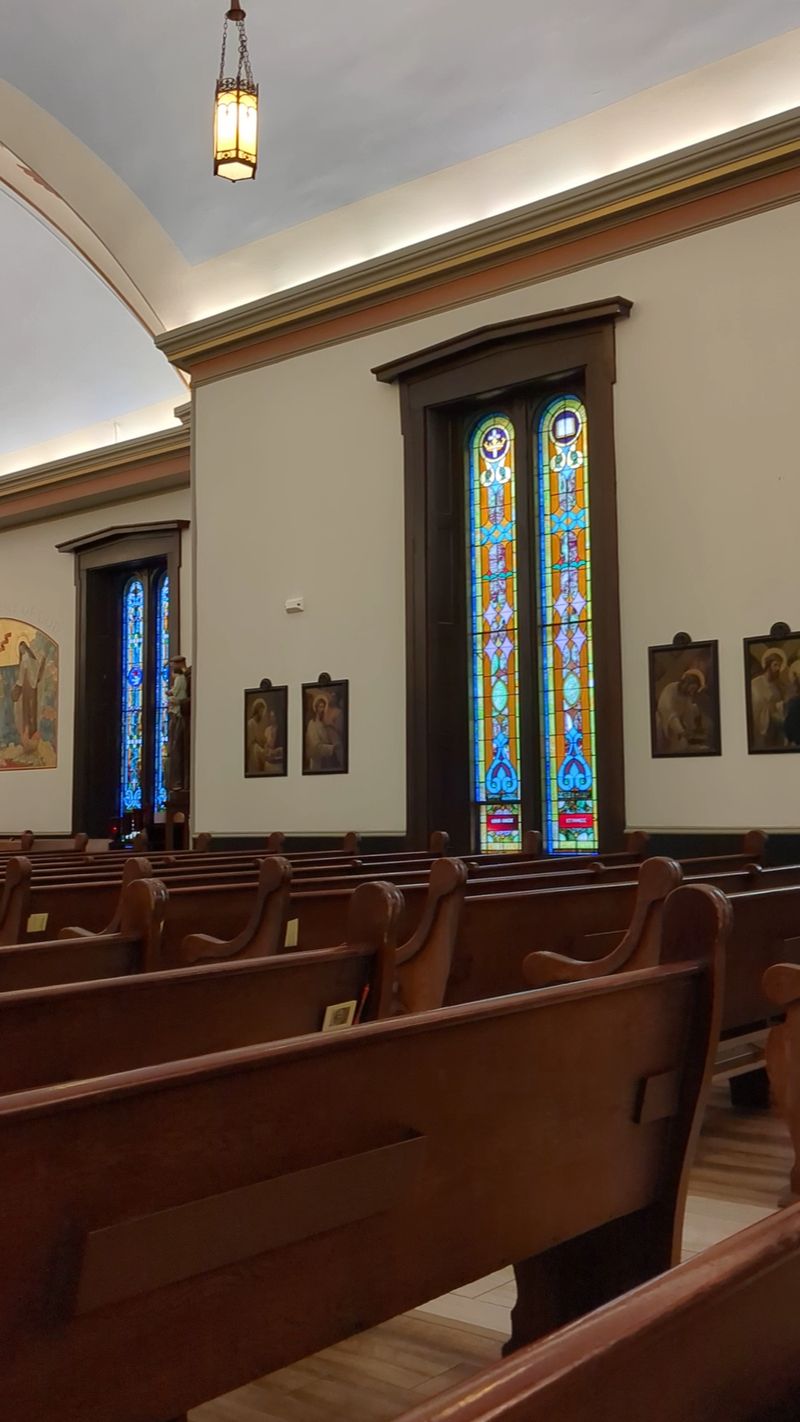
Good things take time, and these windows proved it. The stained glass was installed over a stretch from the late 1890s into the early 1900s.
That wasn’t a weekend project. The work spanned years as the parish added piece after piece.
One detail I find worth mentioning is the timing. By then, the French Canadian community had already reshaped the building with new additions.
The windows became the next layer of care. They added color and light to the stone walls from the riverbank.
Stained glass did more than look pretty back then. It helped tell stories of faith through pictures, especially for people who couldn’t read well.
When you visit, give your eyes a moment. Let them adjust and look up.
Sunny days are an obvious bonus for window fans. Light passing through old glass always makes a room feel different.
Photographers may want to bring a decent camera. Just remember to be respectful if a service is happening.
These windows are a reminder that the church grew slowly. Each generation left something behind for the next one to enjoy.
Yes, The Parish Office Sells French Meat Pies
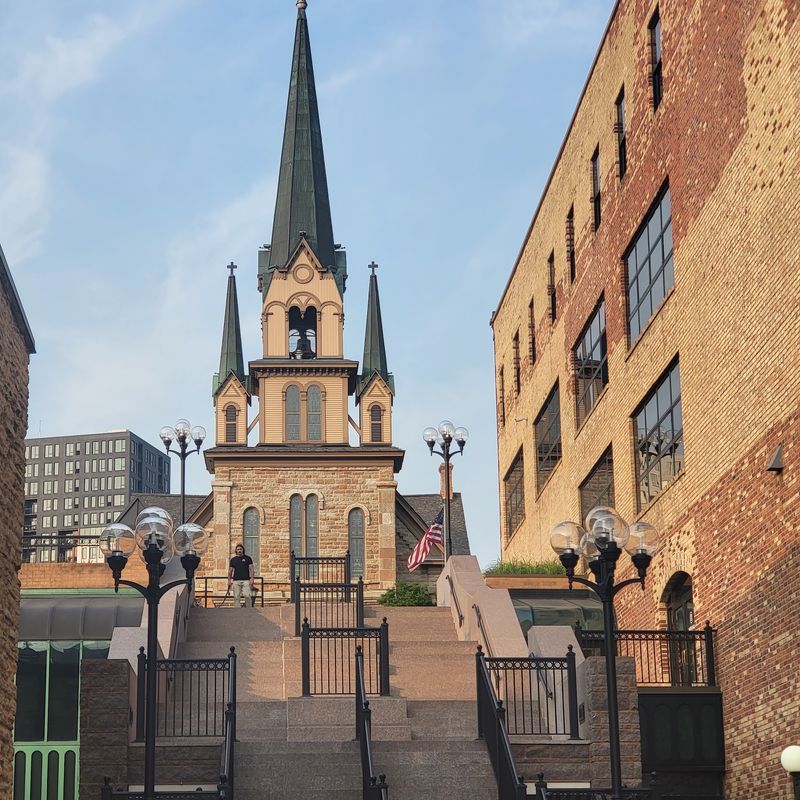
Not many churches come with a pie tradition. Our Lady of Lourdes Catholic Church happens to be one of them.
French meat pies are available for sale in the parish office. It’s a tasty nod to the French Canadian roots of the parish.
That heritage goes back to 1877. That’s when the French Canadian Catholic community bought the building and made it their own.
Food has a way of keeping culture alive. A pie can carry family memories farther than any history book.
So what should you know before going? The parish office keeps weekday hours, typically Tuesday through Friday.
Plan your pie run around those days. Showing up on a Monday might leave you hungry and a little sad.
Calling ahead is smart if you’re making a special trip. Availability can change, and nobody wants a pie-less drive.
These pies also make a fun gift. Bringing one to a family dinner beats another store-bought dessert.
Honestly, a stone church on the Mississippi selling meat pies sounds made up. Thankfully, it’s real, and your lunch plans just got better.
Finding The Church Is Half The Fun
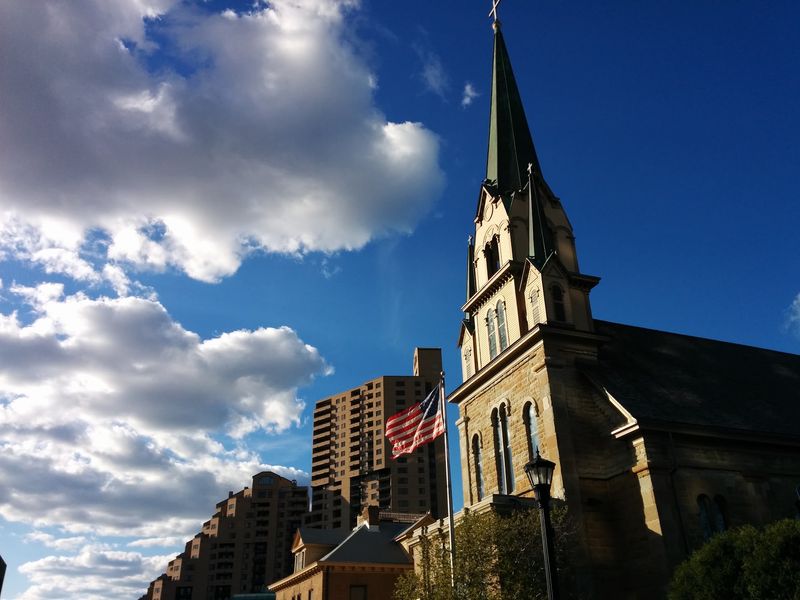
The address alone sounds charming. You’ll find the church at 1 Lourdes Pl, Minneapolis, MN 55414.
Yes, the street is named after the church. That tells you how long it’s been part of the neighborhood.
This spot sits in the Nicollet Island and East Bank area. It’s also inside the St. Anthony Falls Historic District.
That means plenty of history surrounds you before you even reach the door. The riverfront here helped build Minneapolis into a mill city.
Walking around the area is a great way to make a day of it. Nicollet Island sits close by, and the river views come easy.
My tip is simple. Wear comfy shoes and give yourself extra time to wander.
The neighborhood rewards slow explorers. Old buildings and river paths make every block feel worth a peek.
Visiting Minnesota in warmer months? This area really shines when you can stroll outside.
Winter visits work too, just bundle up. The Mississippi doesn’t stop being impressive when it gets chilly.
Either way, the church makes a perfect anchor for your outing. It’s the kind of stop that ties the whole riverfront story together.
Catch Mass In Person Or From Your Couch
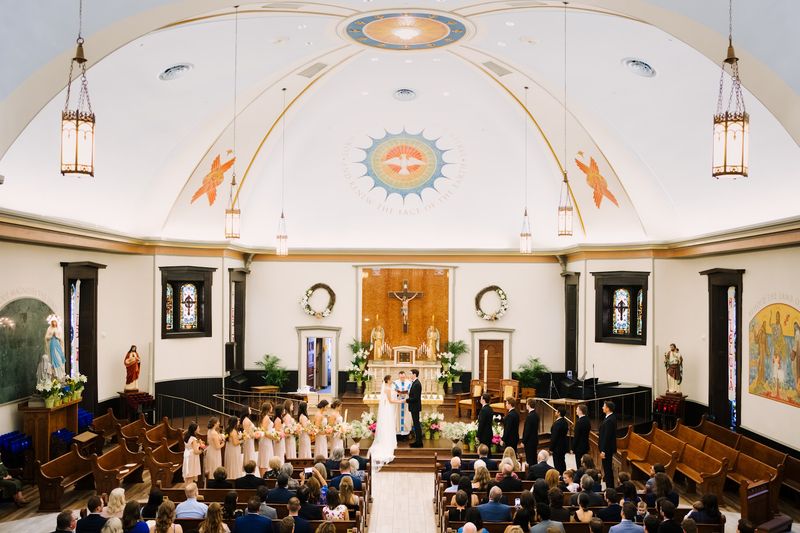
History buffs love the stones, but this is still a parish first. Our Lady of Lourdes Catholic Church holds regular Mass times for its community.
Visiting during Mass is the best way to see the space in action. You get the building and its purpose together.
Can’t make the trip? Sunday Mass is livestreamed and available on the parish YouTube channel.
That’s handy for anyone far from Minnesota. It’s also nice for folks who can’t get out on a cold Sunday morning.
Watching online also works as a sneak peek. You can check out the interior before planning an in-person visit.
A quick tip for weekday visitors matters here. The church doors aren’t always open throughout the day.
Checking the parish schedule before you go saves frustration. Mass times are your surest bet for seeing inside.
The church also hosts weddings, which makes sense given the setting. A riverside stone church with this much history is hard to beat.
However you visit, be respectful of worship. This old building by the Mississippi still has a job to do, and it’s been doing it beautifully for generations.
