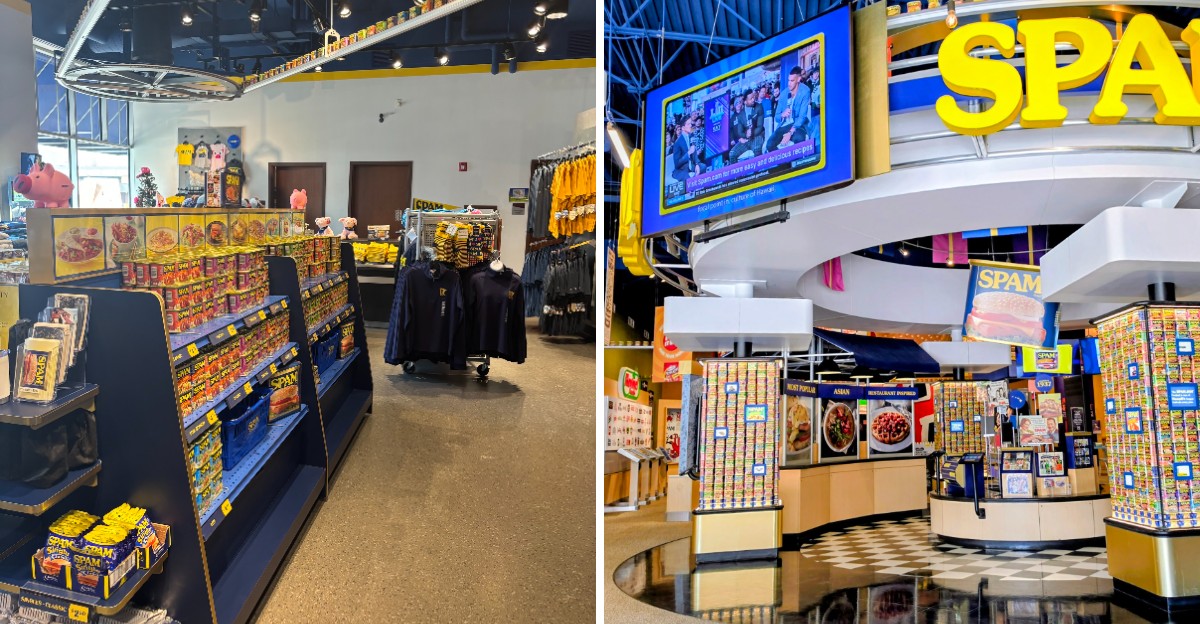
A 390-foot conveyor belt hangs from the ceiling, carrying cans of canned meat around the room on an endless loop. Nobody needs it to work that way. Somebody built it anyway, and I love that.
The same building holds a 12-foot rocket, guitars made from cans, and friendly volunteers handing out free bites on pretzel sticks. They even have a funny title for the job. The samples cost nothing, and neither does the door.
I like how this Minnesota stop treats one humble pantry staple like a global celebrity. It covers soldiers, Hawaii, comedy sketches, and a can design that keeps changing. Honestly, the story is bigger than the can.
You can learn a lot here and laugh the whole way through. So how did a can of pork earn its own museum, and why do so many travelers make the detour?
Free Admission Makes Saying Yes Way Too Easy
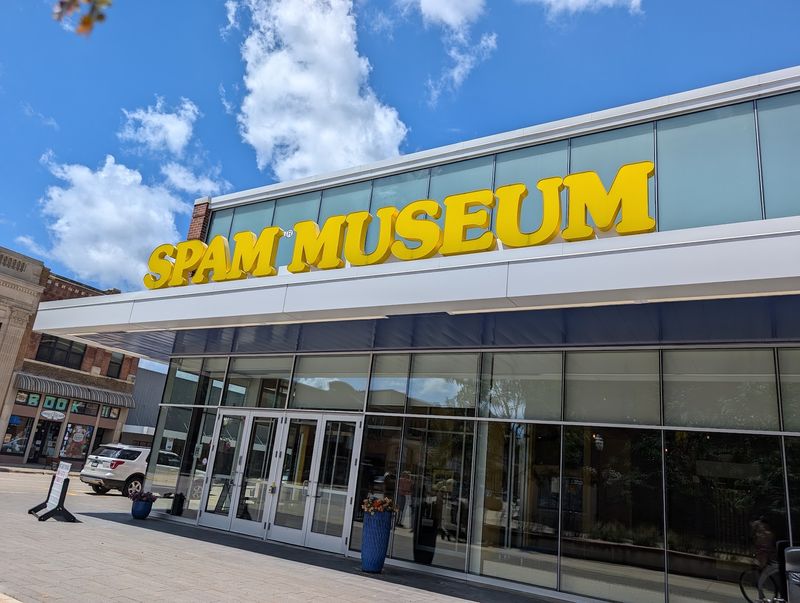
Zero dollars. That’s the cost to enter the SPAM® Museum, and it might be the best deal in the Midwest.
The museum sits in downtown Austin, Minnesota, a city often called the City of SPAM. Hormel Foods, the company behind the famous can, has its headquarters nearby. So this place isn’t some random tribute far from home.
The building covers roughly 14,000 square feet across seven main galleries. That’s plenty of room for history, games, and some truly odd displays. Yet it stays easy to see in a single visit.
Free entry changes how a trip feels. You don’t have to plan your whole day around it. You can pop in during a road trip and leave smiling.
Families especially benefit from that easy price tag. Kids can roam, play, and ask questions without anyone worrying about wasted tickets. Grandparents can enjoy the nostalgia at no cost either.
Hours can shift, so check the schedule before you go. Certain holidays also close the doors, including Thanksgiving and Christmas Day. A quick look ahead saves a disappointing drive.
My advice? Budget the money you saved for the gift shop. Trust me, you’ll find a reason to spend it there.
Your Snack Comes With A Spambassador
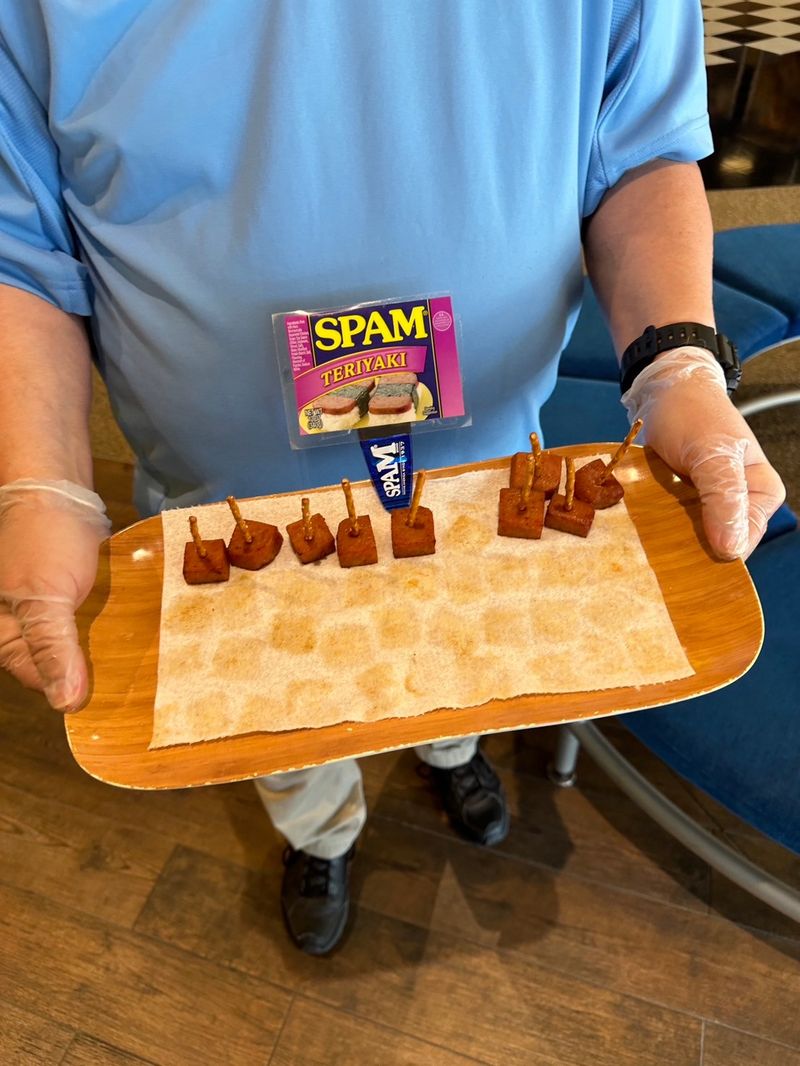
Volunteer guides at this museum carry one of the greatest job titles ever invented. They’re called Spambassadors, and yes, they lean into it.
These helpers roam the galleries, answer questions, and lead tours when visitors want one. Self-guided visits are welcome too. You can wander at your own pace and still grab help whenever curiosity strikes.
Then come the Spamples. That’s the museum’s name for free samples, and they show up throughout the building. Bites arrive on toothpicks or pretzel sticks, which feels both practical and a little clever.
Here’s why that matters. Plenty of people only know the classic flavor from a childhood breakfast. A sample lets you try something new without buying an entire can first.
Flavors rotate, so there’s no promise about which one you’ll get. That uncertainty is part of the fun. Maybe you’ll find a surprise favorite you never expected.
Don’t be shy about chatting with the guides. They know the history, the trivia, and the odd little stories hidden in every gallery. A good question can turn a quick stop into a much richer visit.
Honestly, being greeted with free food is a strong opening move for any museum.
Look Up Or You’ll Miss The Flying Cans
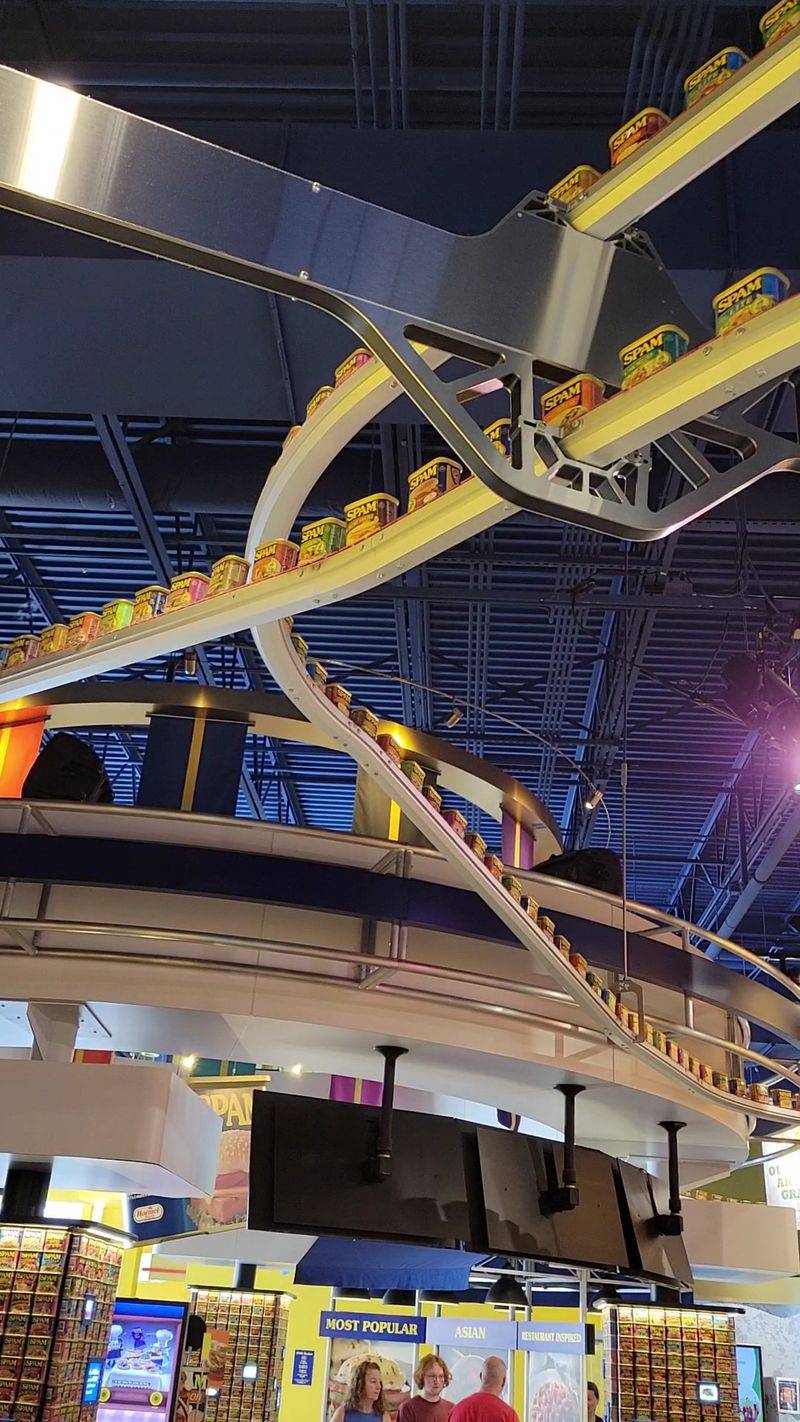
Most museums keep their treasures in glass cases. This one sends them sailing over your head.
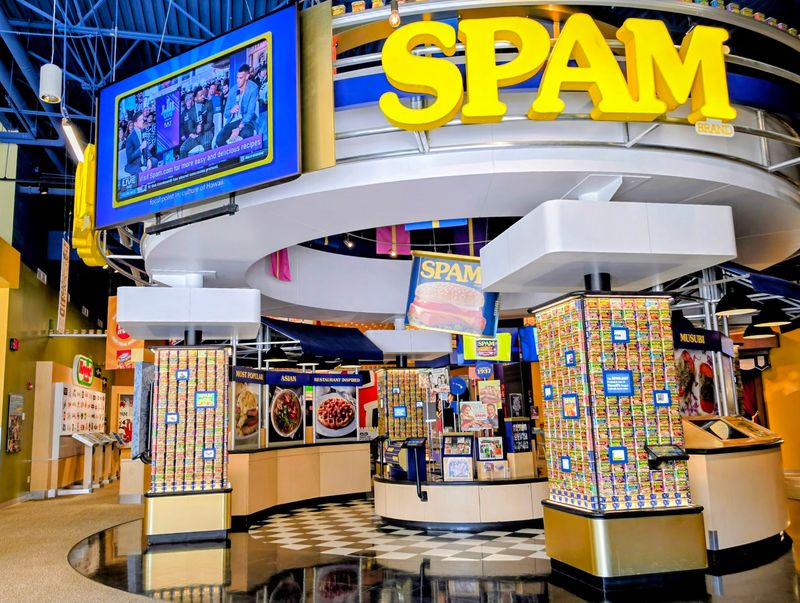
A 390-foot conveyor belt, nicknamed the can train, hangs from the ceiling. It carries 20 different varieties of SPAM® products around the room. One full trip takes about 18 minutes.
It’s a little silly, and that’s exactly the point. The moving cans give the whole space energy. Kids tend to spot it first, then point until everyone else looks up too.
Nearby, Can Chronicles traces how the famous can changed over the years. Designs shifted, labels evolved, and the look kept up with the times. It’s a fun crash course in packaging history.
You may never look at a grocery shelf the same way again. Something so familiar actually has decades of design choices behind it. That’s oddly fascinating once you notice.
Try a small game while you explore. Pick one can on the belt and see if you can find it again later. It sounds simple, but it’s surprisingly tricky with so many varieties rolling by.
And if anyone asks why you’re staring at the ceiling, just say you’re studying art.
A Pork Story That Started Back In 1891
Long before anyone sliced a can, George A. Hormel started a meat company in Austin in 1891. That small business grew into Hormel Foods, a name millions recognize today.
His son, Jay Hormel, introduced SPAM® in 1937. The idea helped use pork shoulder pieces left over from the company’s ham production. Smart thinking, with a very long-lasting payoff.
Exhibits inside walk you through that family story. You’ll see how a hometown business turned into a global brand. The details make the can feel less like a joke and more like an achievement.
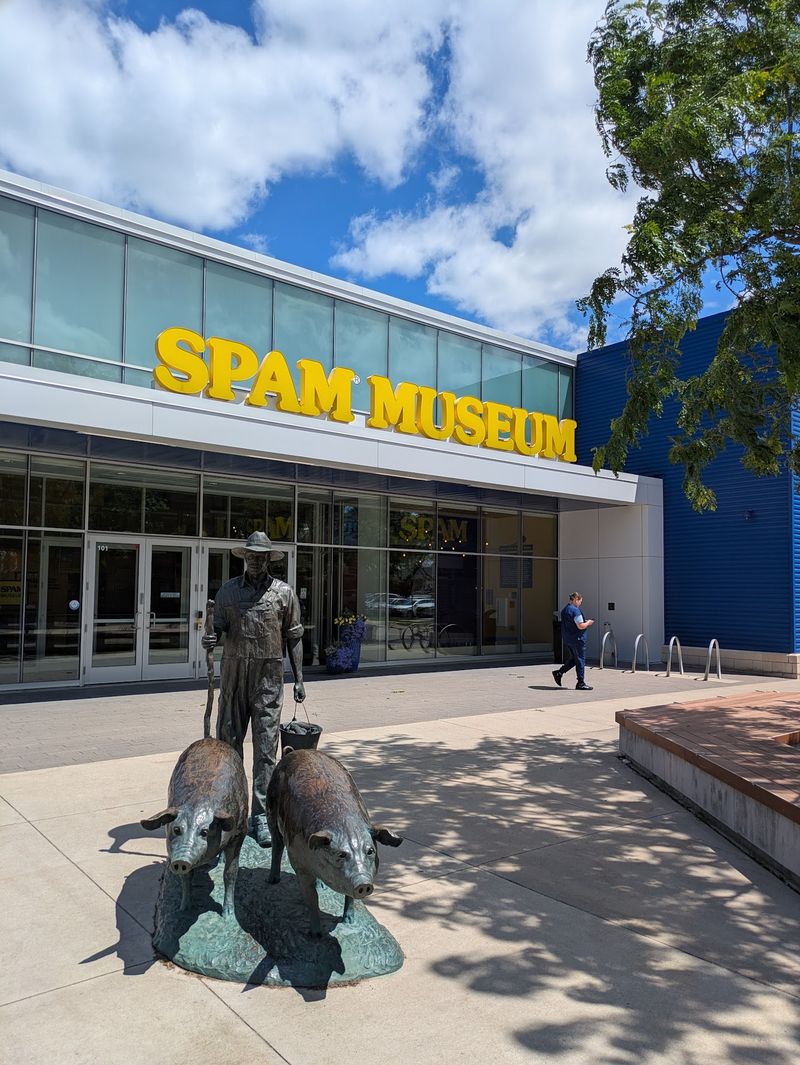
Outside, a bronze statue shows a farmer with two pigs. It honors the company’s roots in farming and hard work. It also makes a great photo spot before you head inside.
The museum itself has a history too. It began in 1991 as a small storefront exhibit in a local mall, celebrating Hormel’s 100th anniversary. A bigger version opened in 2001.
The current downtown building opened on April 22, 2016. Moving closer to the city center helped draw visitors into Austin itself. That’s a nice bonus for a town that clearly loves its famous product.
How A Humble Can Fed An Army
During World War II, American troops needed food that traveled well and lasted a long time. SPAM® fit that job almost perfectly.
A dedicated exhibit covers how the canned meat became a staple for soldiers. It also highlights Hormel’s role in supporting the military effort. The tone is respectful, informative, and easy to follow.
This section often surprises people. Many visitors arrive expecting goofy jokes and leave with real respect for the product. Feeding millions of service members is no small task.
The story also explains why SPAM® spread around the world. Troops brought it to new places, and local cooks made it their own. That ripple effect still shows up in kitchens today.
History fans should plan extra time here. There’s plenty to read, and the displays reward a slower pace. Kids can learn something too, especially if a grown-up helps connect the dots.
Got a veteran in your group? Mention it at the front desk when you arrive. It’s a kind way to start a visit focused partly on service.
Few snacks can claim a role in world history. This one earned its spot.
Take A World Tour Without Leaving Minnesota
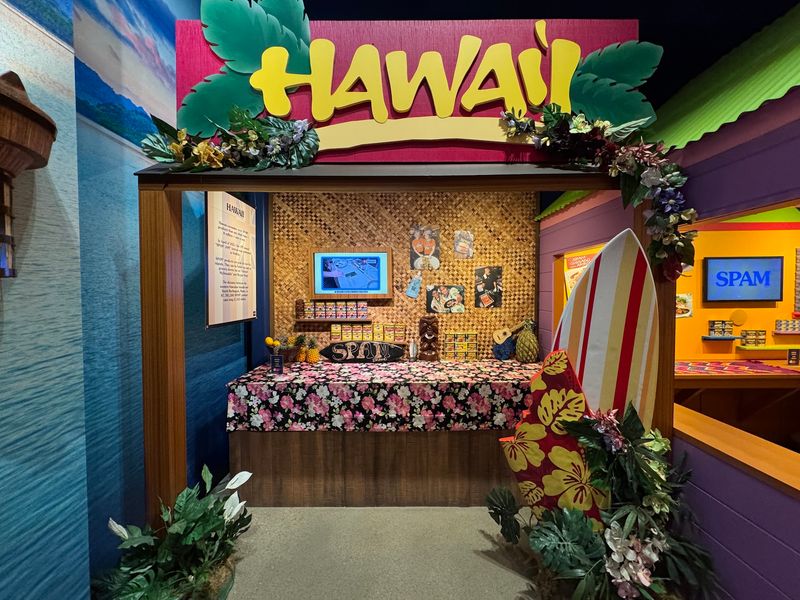
Hawaii, South Korea, the Philippines, Japan, the United Kingdom. That passport list belongs to a can of pork.
The World Market gallery shows how SPAM® became a favorite in more than 40 nations. Displays feature advertising and food traditions from many corners of the globe. Each stop reveals a different way people enjoy it.
Interactive games keep things lively. One lets you create a SPAM-inspired van tied to the Philippines. It’s playful, a bit wacky, and kids love making their own design.
I believe this gallery is the museum’s secret strength. It turns one product into a lesson about culture, cooking, and connection. That’s a lot to pack into one room.
Food lovers will find plenty of inspiration. You might spot a dish you’ve never tried before. Then you’ll probably want to try making it at home.
Here’s a tip for curious cooks. Can Central, near the heart of the museum, has a station where you can email yourself recipes. Save a few before you leave, so the ideas don’t vanish on the drive home.
Who knew a road trip in Minnesota could feel so international?
Games Turn Everyone Into A Little Competitor
Reading signs is fine. Racing your family to assemble a can of SPAM® is better.
The SPAM® Brand 101 area includes a game where families compete to put together mock cans. It’s quick, silly, and weirdly addictive. Expect at least one rematch.
That same area teaches you about the different varieties of SPAM® products. Maple SPAM, introduced in 2023, is among the newest additions. You’ll realize the lineup is much bigger than the classic blue can.
Can Central adds more fun. An interactive quiz, a social media feed, and recipe stations keep curious hands busy. Some visitors even discover which flavor matches their personality.
Younger kids get their own play area, too. That gives little ones a break from reading and a chance to move around. Parents will appreciate the breather.
The whole museum sits on one level and is wheelchair accessible. Wheelchairs are available to borrow, and motion-detected doors make entry easy. Everyone can join the action comfortably.
Planning a visit with kids? Let them lead the way through the games. Their excitement is contagious, and you might pick up a few facts along the way.
Pop Culture Got Weird Here, In The Best Way
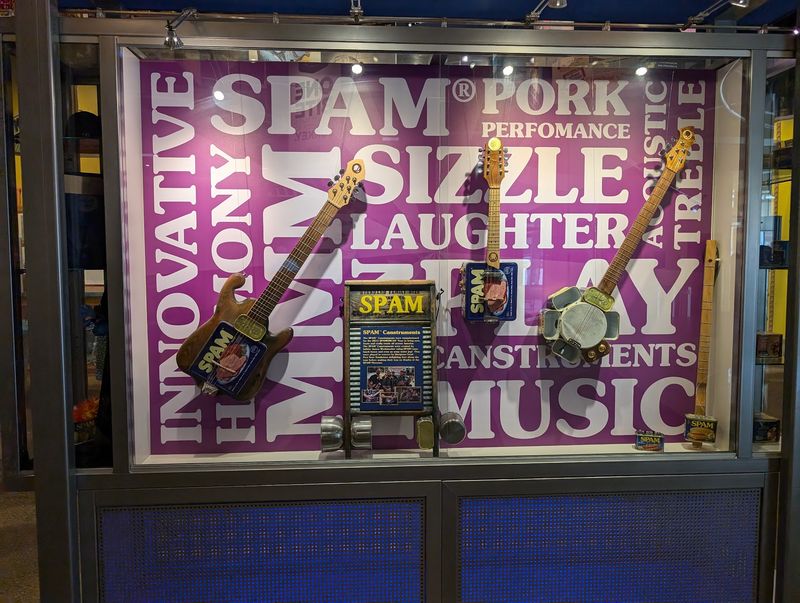
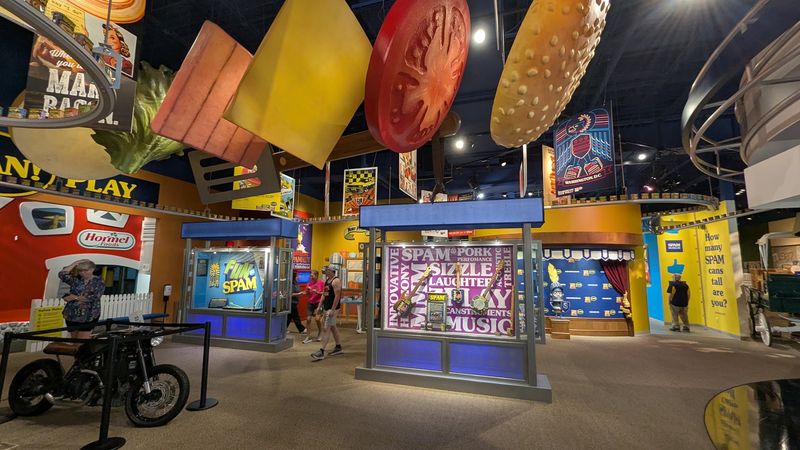
Bluegrass instruments built from SPAM® cans. A 12-foot rocket weighing 60 pounds. A nod to one of comedy’s most famous sketches. Yes, this is all real.
The museum embraces its quirky side with real joy. Displays mix food history with pop culture, and the result is pure fun. You’ll grin at things you never expected to see in a museum.
Comedy fans will want to find the Monty Python display. It recreates the famous SPAM sketch that made the word a running gag. That joke later inspired the name for junk email, too.
The can-made instruments are another crowd favorite. They prove that creativity can turn almost anything into art. Somebody clearly had a blast making them.
And that rocket? It’s exactly as eye-catching as it sounds. Snap a photo, because friends back home may not believe you otherwise.
I can’t imagine a more fitting tone for a museum about canned meat. Taking itself too seriously would miss the point. Instead, it celebrates the humor people have always attached to the brand.
Bring your camera and your sense of humor. Both will get a workout here.
Save Some Room For The Shop And Downtown Austin
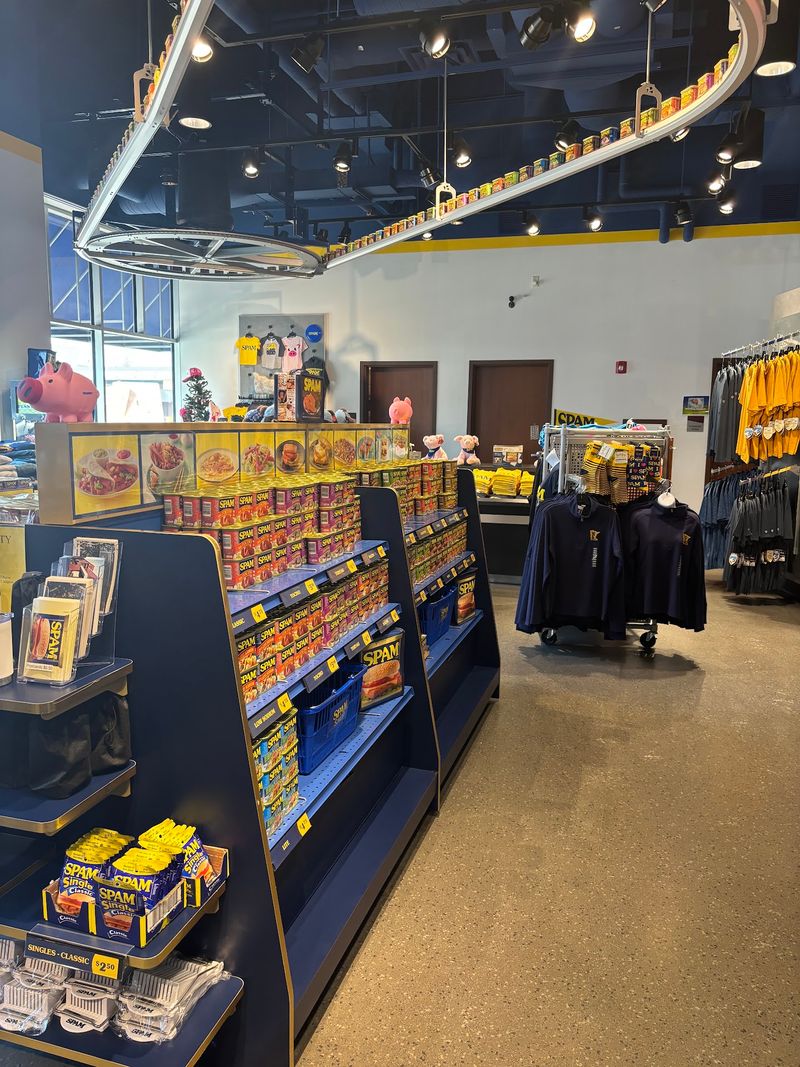
Leaving empty-handed is a challenge. The SPAM® Shop inside the museum is packed with branded merchandise, gifts, and plenty of flavor options.
Shop hours can differ slightly from the galleries, so check before you arrive. Planning a final stop there is smart. It wraps up the visit on a cheerful note.
You’ll find the museum at 101 3rd Ave NE, Austin, MN 55912. Parking is simple, and RV and bus parking sits behind the building. Road trippers with big rigs can breathe easy.
Don’t rush out of town afterward. The Sweet Reads bookstore sits right across the street. It’s a cozy spot to browse after all that excitement.
Austin has more to explore, too. The Hormel Historic Home shares more of the family story behind the brand. The Jay C. Hormel Nature Center offers a peaceful outdoor break.
Together, these spots make an easy half-day itinerary in southern Minnesota. Start with the free museum, grab souvenirs, then wander the rest of town. It’s an affordable outing with real variety.
So go ahead and plan that detour. A famous can, free entry, and a friendly downtown are waiting.
