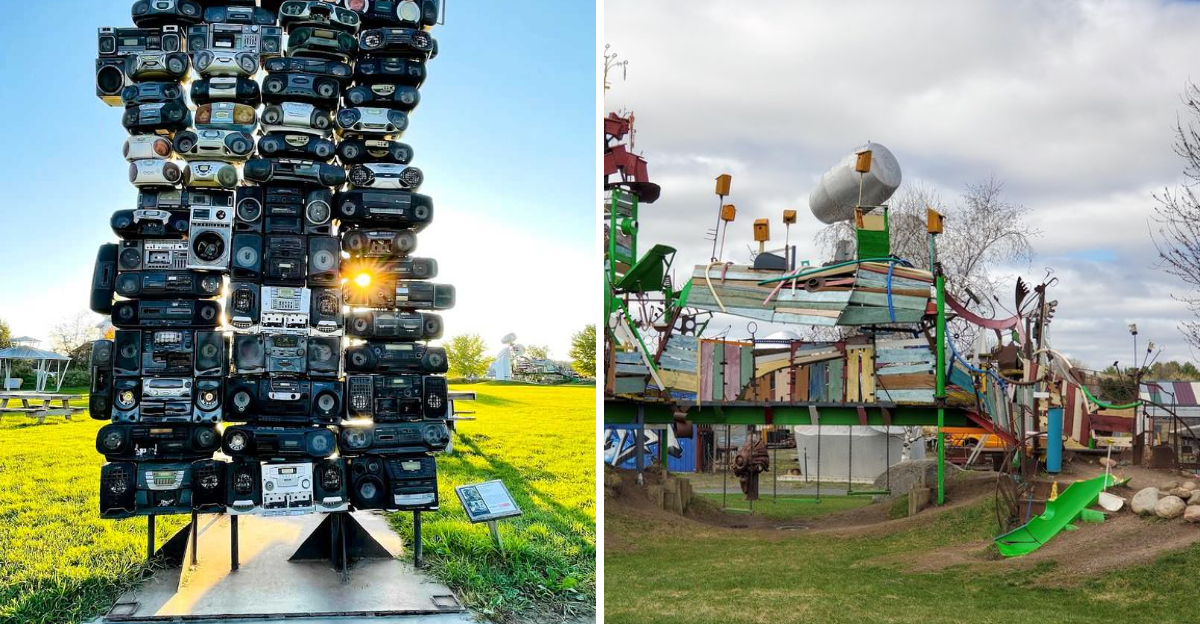
You know that moment when you look at something and think, “Wait, is that made from old car parts?” This Minnesota park delivers that feeling over and over again. Scattered across rolling fields, massive sculptures rise from the grass, each one crafted entirely from salvaged materials.
Old gears become expressive faces with character. Rusted metal twists into soaring figures that reach toward the open sky. Discarded farm equipment transforms into something entirely unexpected, and you’ll catch yourself smiling at the sheer creativity on display.
It’s the kind of place where you walk slowly, tilt your head from every angle, and appreciate the imagination behind each piece.
Wander through the fields and let your curiosity run free. Minnesota’s most inventive park is proof that one person’s junk is another person’s art.
Steel Giants Rising From the Prairie
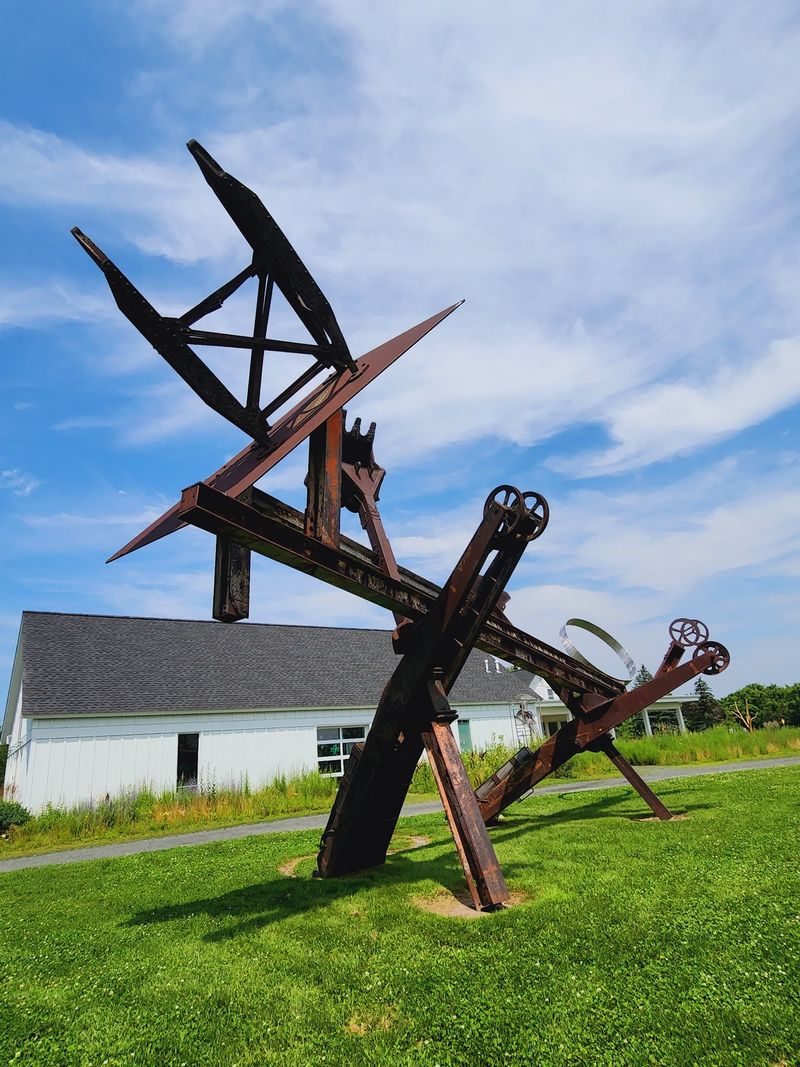
The first thing that grabbed me was a tower of welded metal leaning into a wide Minnesota sky. Scrap beams, old pipes, and bent sheets of steel, all stacked into something taller than a house.
More than a hundred sculptures spread across roughly forty-three acres, and plenty of them started life as salvage. A gear becomes a face. A discarded pipe becomes a spine.
What surprises people is the scale. These are not tabletop pieces you lean over politely; some rise two or three stories and throw long shadows across the grass by late afternoon.
Up close, the material tells its own story. Weather has worked on the metal, leaving orange rust bloom, chipped paint, and streaks no artist planned.
I liked that honesty. Nothing here pretends to be pristine, and the wear only makes the shapes feel more alive.
Bring a camera, because every sculpture shifts character depending on where you stand and how the light falls. Circle one twice and it reads differently the second time, which is half the fun.
Sculptures Built for Climbing, Crawling, and Touching
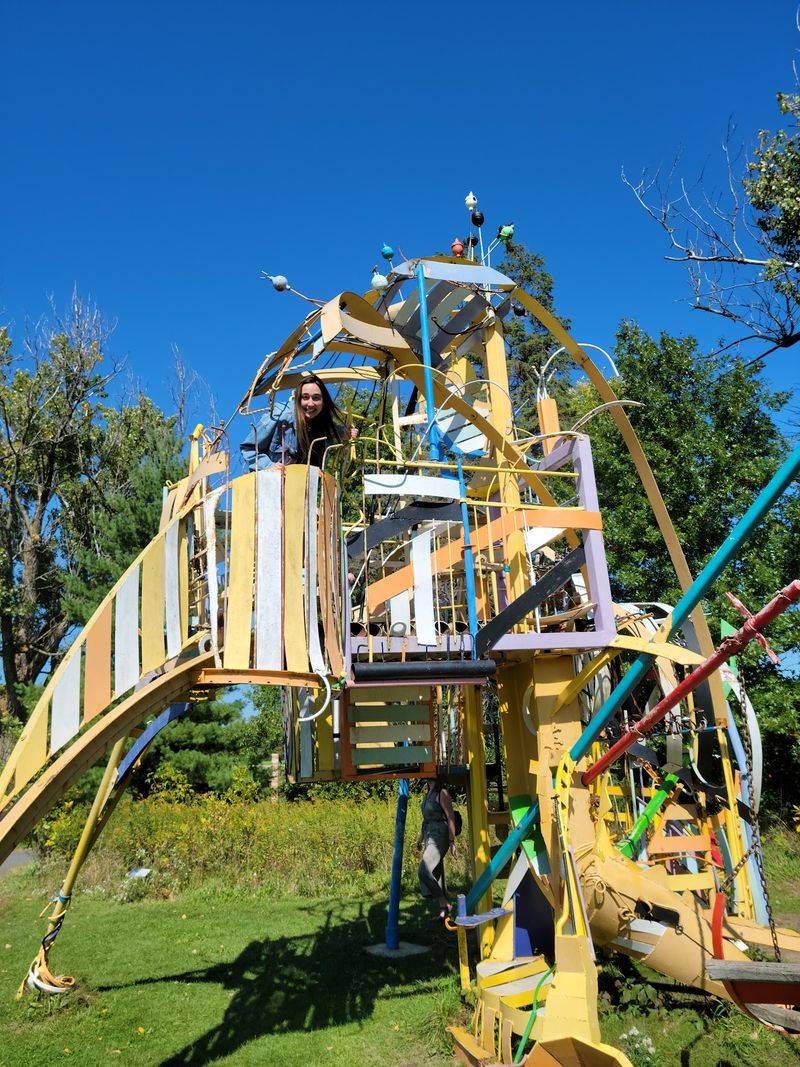
Touching art is usually forbidden. Here, some of it is practically an invitation.
Certain sculptures are made to be entered, climbed, or drummed on with an open palm, and signs spell out the rules piece by piece. Others carry a look-but-do-not-touch marker, which keeps things simple.
Crawling through a steel tunnel while sun striped the ground inside changed how I saw the whole park. Art stopped being something behind glass. Kids figure this out fast. Adults take a minute longer, then give in and start climbing too.
Wear shoes with grip, since metal warms up in July and gravel shifts underfoot in places. Long sleeves help if you plan to scramble.
Interactive works get talked about constantly by visitors, and for good reason. Physical contact teaches you a sculpture’s weight, its temperature, and the hollow sound of its insides.
Supervision matters with younger children, especially on taller structures. Still, the freedom is the point, and that small measure of trust is what I remembered most on the drive home.
Renting a Golf Cart to Cover the Distance
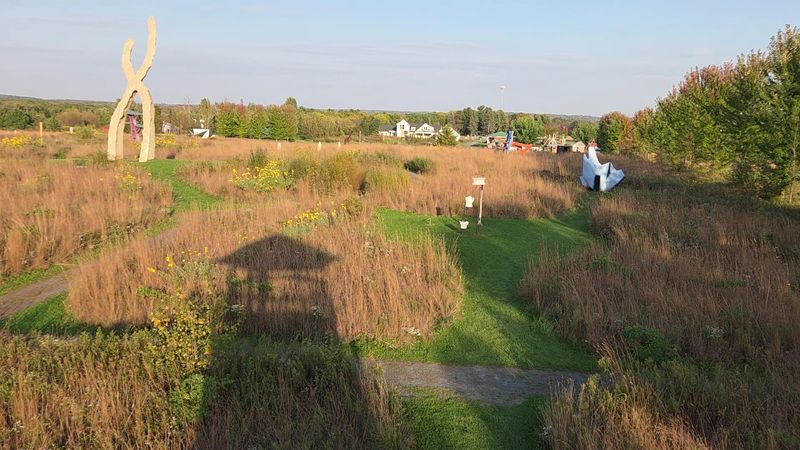
Forty-three acres sounds manageable until you are halfway across a sun-baked field with sculptures still stretching ahead.
Golf cart rental exists for exactly that reason, and plenty of visitors swear by it. Rolling slowly between pieces covers ground fast without skipping much.
Mobility is the bigger story, though. Someone with sore knees or limited stamina can still reach the far corners of the park, which feels genuinely fair. I walked, then started wishing for wheels around the second hour. No shame in it.
If you go the cart route, ask at the welcome center about availability, since carts get claimed quickly on busy weekend afternoons. Families with small children often mix both approaches, driving the long stretches and walking the clusters where sculptures sit close together.
Gravel and grass routes handle carts fine, and the slower pace lets you scan for pieces tucked behind tall grass. The main paths also work reasonably well for wheelchairs. Whatever you choose, plan for more time than you expect. The park is simply bigger than it looks from the parking lot.
Where Resident Artists Live and Build
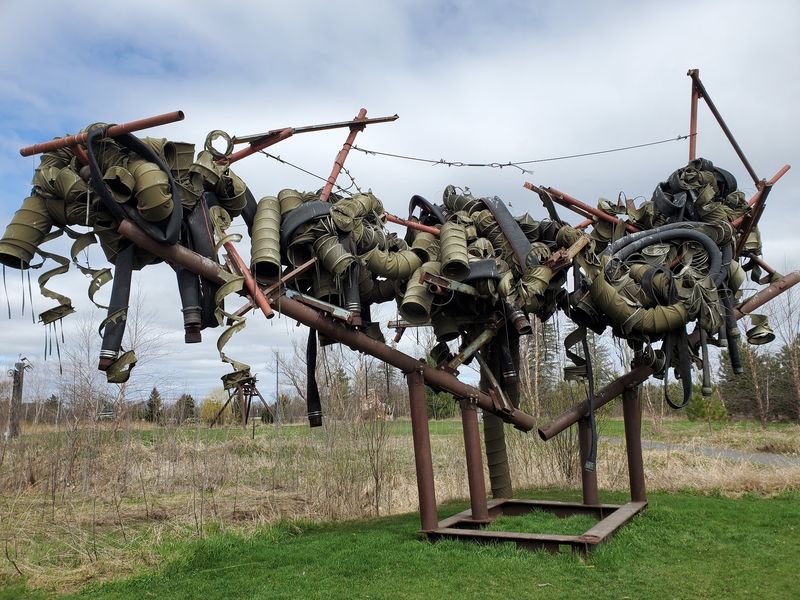
Tucked toward one edge of the grounds sits the working part of the park, where resident artists live and build. Seeing half-finished frames, welding gear, and raw material stacked nearby answered the question I had carried all afternoon about how any of this actually gets made.
Franconia has long functioned as more than a display space. Artists come to create on site, which means the collection keeps shifting. Pieces rotate out. New ones appear. Return a year later and the landscape reads differently.
Respect the working areas and stay on visitor paths, since fabrication zones are not open galleries. Watching from a distance still delivers, especially if someone happens to be cutting or grinding as you pass. The sound of metalwork drifting over a prairie is oddly perfect.
That living, in-progress quality explains why regulars keep returning instead of checking the park off a list. Nothing here is frozen. Art gets born in the same field where it eventually stands, and you can feel that connection while walking the loops.
Wildflowers, Grasses, and the Turn of the Seasons
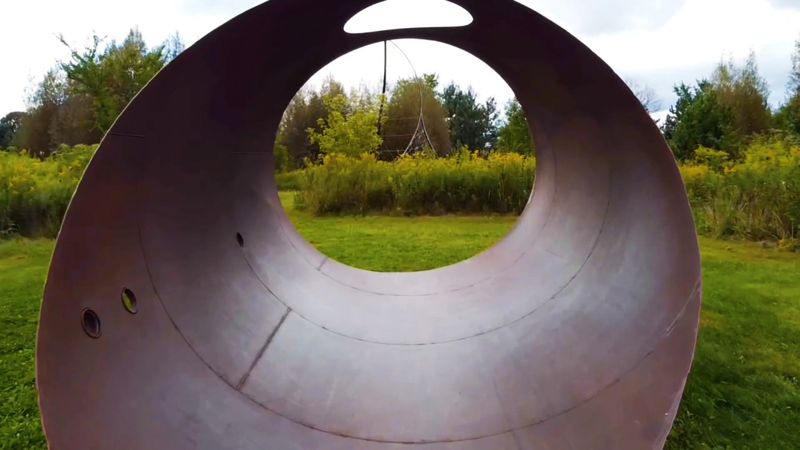
Prairie grass does something wonderful to a giant steel object. It softens the edges. Wildflowers grow in loose bands across the grounds, with evergreens marking certain corners and mown paths cutting between them.
Late summer brought coneflowers and tall stems brushing my shins as I walked, and bees worked the blooms without caring about the art at all. Autumn is the sleeper season here. Color arrives, crowds thin, and low gold light lands beautifully on the metal.
Winter turns the place stark and graphic, all dark shapes on white ground, though dressing warmly is non-negotiable. Spring can be muddy in spots, so decent footwear matters far more than fashion.
Shade is the honest weakness. Very little of the sculpture field sits under trees, which makes sunscreen and a hat basic equipment from June through August. Morning visits solve most of that, with cooler air and softer shadows for photos.
Nature and art share this space rather than compete, and that balance is why one hour stretched into two without any effort on my part.
Picnic Tables and Unhurried Afternoons
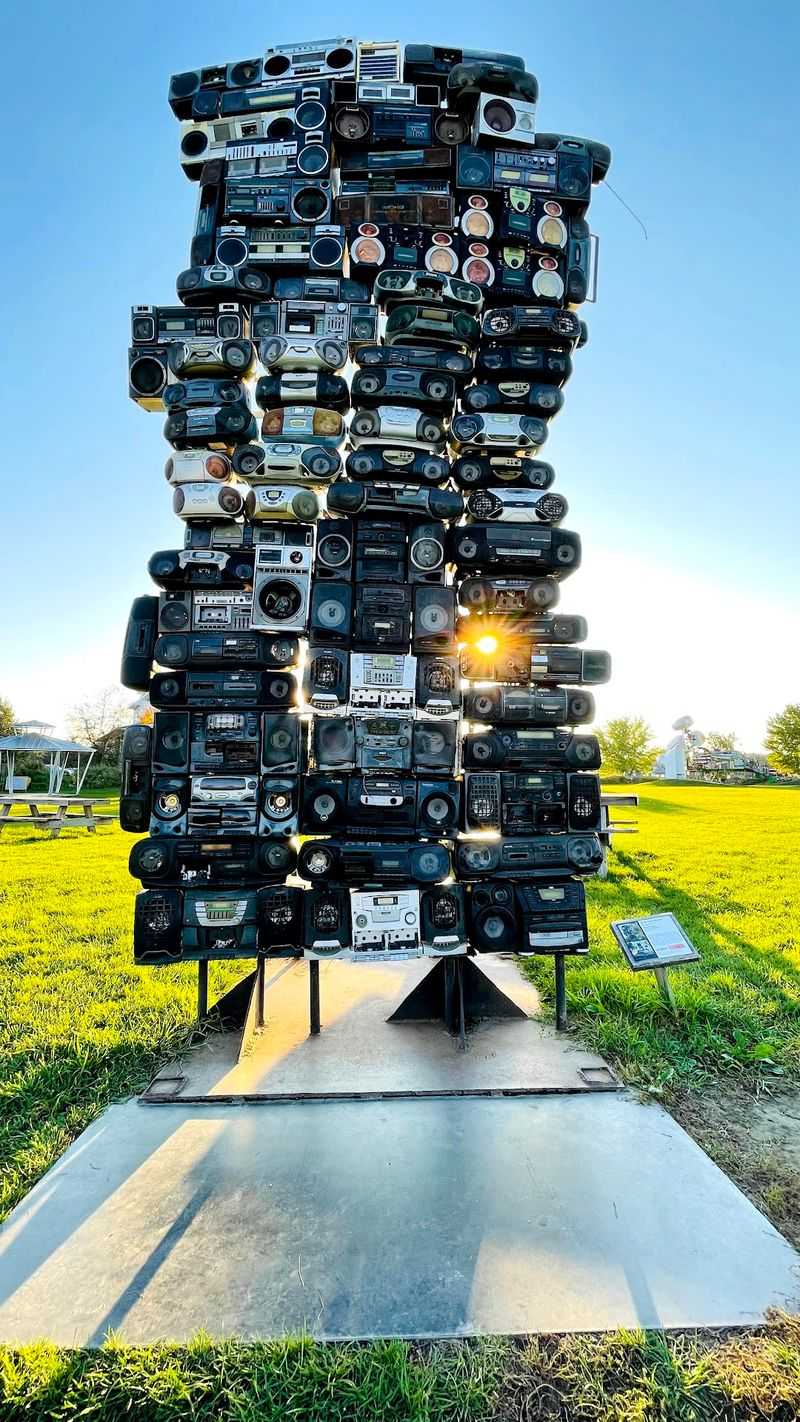
Bringing lunch is the move I wish I had planned in advance. Picnic tables sit scattered around the grounds, which changes the whole rhythm of a visit. Instead of a quick lap, you settle in.
Eating a sandwich while a two-story sculpture throws shade across your table is a very specific kind of pleasure. Families spread out easily because there is space between everything. Kids run. Nobody hushes them.
The open layout means even a busy Saturday rarely feels packed, since visitors scatter across dozens of acres. Pack water, snacks, and a blanket if you prefer grass to benches. The refill station inside the main building helps enormously on hot days.
Carry out whatever you carry in, out of simple respect for a place that runs on donations and goodwill. Afternoon light stretches long shadows between the pieces, which makes lingering genuinely worthwhile.
I ended up sitting for twenty minutes doing nothing but looking, and that unplanned pause became my favorite part of the day. Some places reward speed. This one rewards sitting still.
The Play Area That Doubles as Art
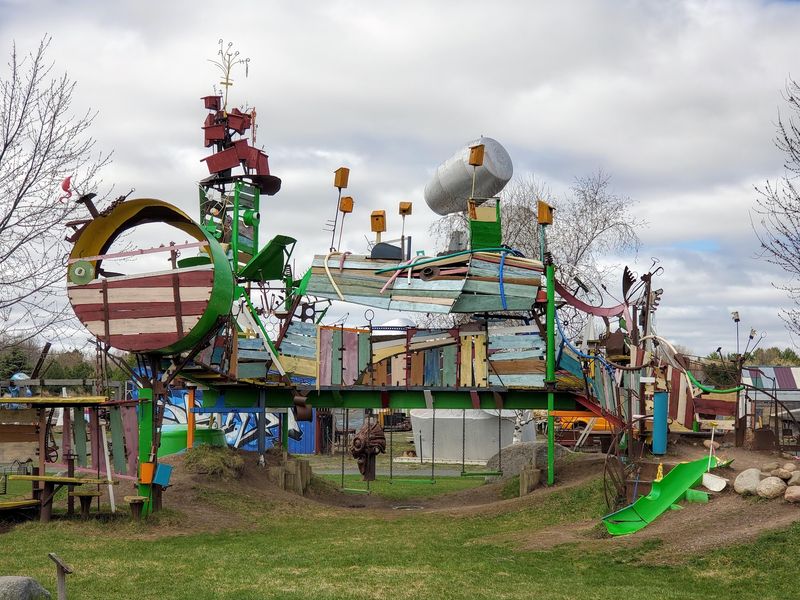
Ask any kid what they remember and the answer usually involves climbing something enormous. A large play area doubles as an interactive sculpture, with ladders, platforms, and odd angles built for scrambling.
It is not a standard municipal playground with rubber matting and rounded corners. That rough edge is exactly why children love it. Supervision is genuinely needed, especially with smaller kids on the higher sections.
Beyond the play structure, the park works for families because curiosity does the entertaining. Kids invent stories about what each sculpture is. One looks like a spaceship. Another looks like a bird skeleton. Nobody needs an art degree to enjoy that.
Strollers manage the main paths reasonably well, though grass sections take more muscle. Pack sunscreen, hats, and more water than seems necessary, because open fields heat up in a hurry.
Watching a group of children sprint from one giant shape to the next reminded me that art does not have to be quiet or serious to matter. Two hours vanished, and none of them involved a screen.
Bringing the Dog Along for the Walk
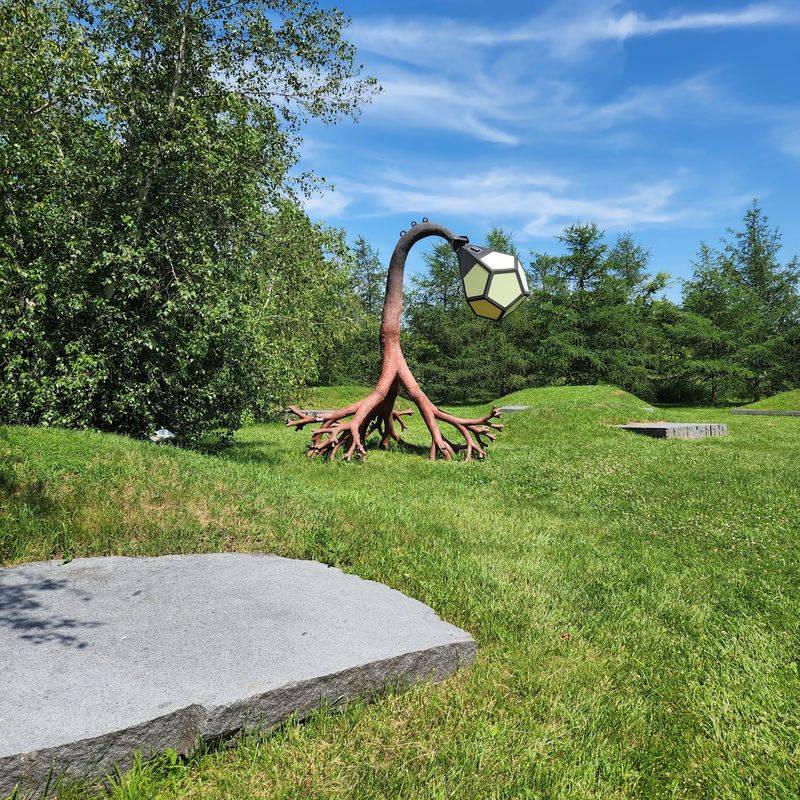
Leashed dogs are welcome, which makes this a rare art destination where the family pet gets a vote. Owners clean up after their animals, and the wide-open layout gives everyone plenty of room.
My favorite detail was how normal it felt to see a golden retriever sniffing the base of an abstract steel form. Paths run on gravel and mown grass, easy enough on paws in mild weather. Hot pavement is not an issue here, though sun-warmed metal can be.
Bring water for the dog too, since pet fountains are not scattered around the field. Keep leashes short near the interactive pieces where children climb. Plenty of visitors treat the park as a scenic walk first and an art visit second, and that approach works perfectly well.
Two or three miles of casual wandering adds up without ever feeling like exercise. Distances surprise people, dogs included, so watch for signs of tiredness on hot afternoons. A shaded break near the main building fixes most of it.
Planning the Drive and Making a Day of It
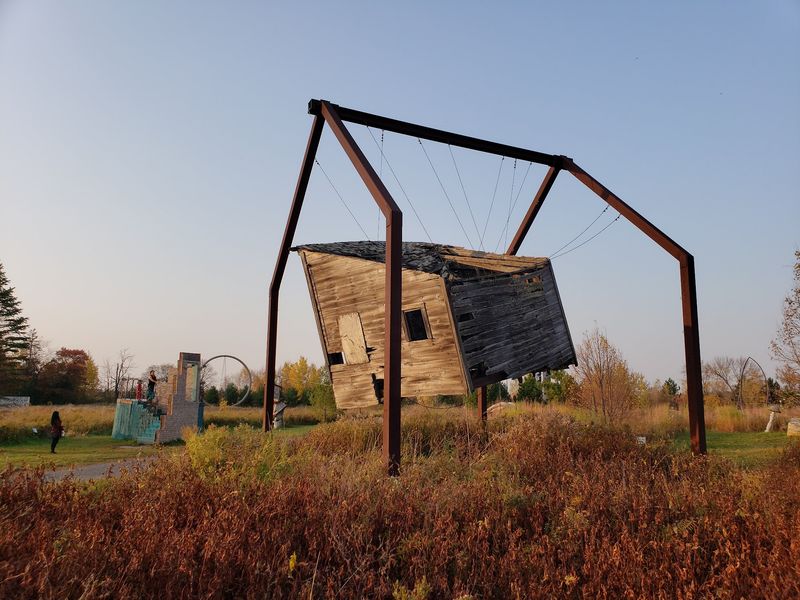
Roughly an hour northeast of the Twin Cities, the drive itself sets the mood as farmland opens up along the St. Croix valley. Gates open at 8 AM and close at 8 PM every day, which leaves room for early quiet or golden evening light.
Admission runs on donation, and so does parking, with a gravel lot right by the entrance. Taylors Falls sits just minutes away, so pairing the park with Interstate State Park makes a full, satisfying day trip. Autumn weekends are especially good for that combination.
Give yourself at least ninety minutes, longer if you like reading artist labels or circling back for a second look. Sunscreen, water, comfortable shoes, and a camera cover the essentials. Skip the flip-flops.
Questions about carts, events, or classes can go straight to the park by phone at 651-257-6668. I left with dusty shoes, a camera roll full of strange shapes, and a plan to return in a different season. Few places reward repeat visits this well.
Address: 29836 St Croix Trail N, Shafer, MN 55074
