That building stopped me before I even got through the front doors, all columns and domes and 1876 grandeur, looking like something borrowed from a European capital. Then I stepped inside and heard the happy chaos of hundreds of kids, which is exactly what a children’s museum should sound like.
This Pennsylvania museum was named one of the best in the country in early 2026, and after one visit I understood why. My afternoon there involved a century-old carousel, a pretend grocery store run entirely by toddlers, and a 40?foot torch built out of old toys.
The building itself has a history that predates the museum, having served as a memorial hall for a major centennial exhibition, and the architecture alone is worth the trip. The carousel is fully restored and still spins with the same music that played over a hundred years ago, and the grocery section is staffed by pint?sized shoppers who take their work very seriously.
The museum sits a little off the usual tourist path in a sprawling city park, which means it draws more locals than visitors, and that gives it a different kind of energy.
Anyone with small kids, or anyone who just enjoys watching small kids lose their minds with joy, deserves to spend a whole day here.
Memorial Hall, A World’s Fair Palace Turned Playground
Most museums for kids live in converted warehouses or shopping plazas. Not this one.
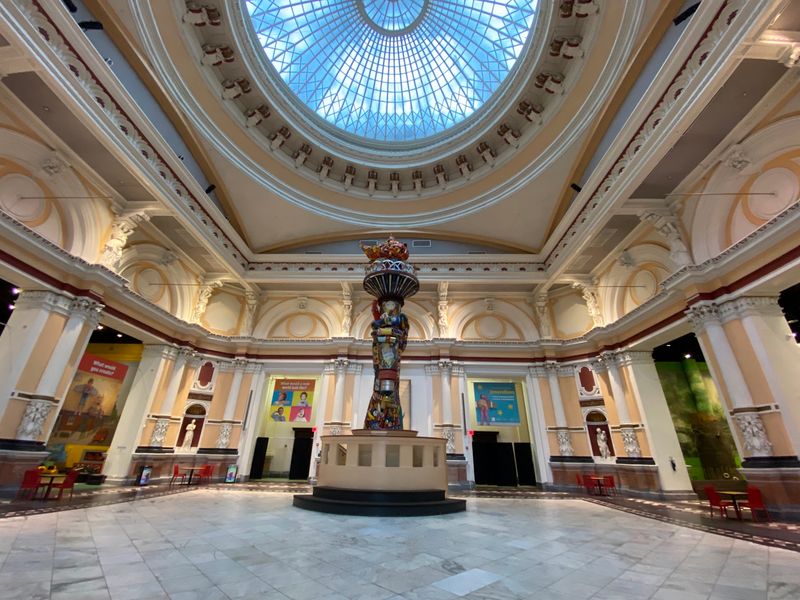
Pennsylvania’s Please Touch Museum occupies Memorial Hall, a National Historic Landmark that was built as the main Art Gallery for the 1876 Centennial Exposition, the very first World’s Fair held in the United States. Only two buildings from that fair are still standing, and this is the grandest of them.
I stood under the dome for a solid minute just looking up while a toddler sprinted past my legs. The contrast is fantastic: soaring Gilded Age architecture above, sticky handprints below.
The museum signed an 80-year lease on the building in 2005 and opened here on October 18, 2008, after a serious restoration effort. Before that, it started small, launching on October 2, 1976, inside a 2,200 square foot space at the Academy of Natural Sciences.
Down on the lower level there’s a handcrafted scale model of the entire 1876 fairgrounds, built at a ratio of one foot to 192 feet. Every hall, road, and building is there.
Grown-ups tend to linger at that model longer than the kids do, and nobody seems to mind.
Riding the Woodside Park Dentzel Carousel
Of all the things people mention about this museum, the carousel comes up more than anything else, and it earns that attention.
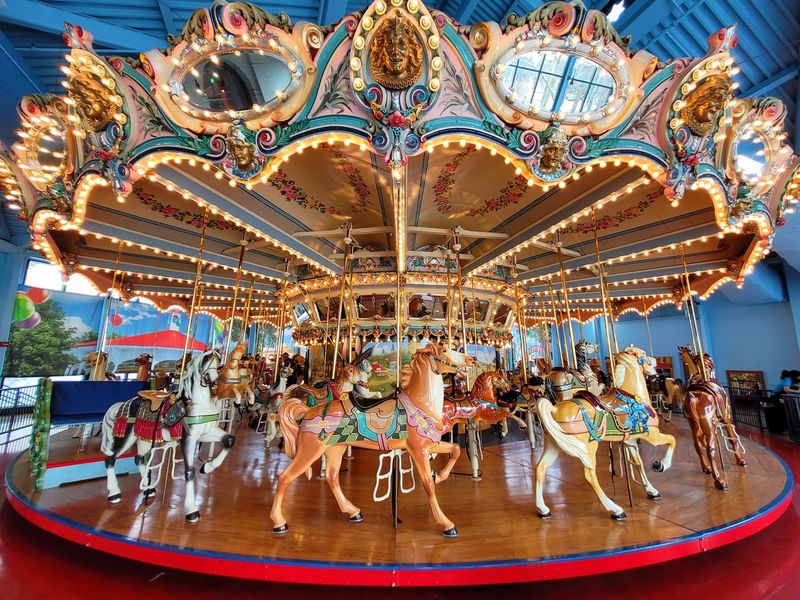
The Woodside Park Dentzel Carousel is over a century old and was originally built right here in Philadelphia. It went through a painstaking restoration, and now it spins inside its own pavilion where families line up for a turn.
What surprised me was the variety of animals. Alongside the expected horses you’ll find carved rabbits, cats, pigs, and goats, plus stationary chariots for anyone who wants a calmer seat.
It’s also wheelchair accessible, which matters for families who often have to skip rides like this elsewhere.
Parents I noticed nearby seemed relieved that it turns at a gentle pace without blaring music, so even nervous little ones handle it fine.
There’s an all-day carousel pass available if your child is the type who wants to ride nine times in a row, and plenty are.
Watching the painted animals rise and fall under those old ceilings is genuinely lovely. I rode it once myself and felt zero shame about it.
Wonderland and the Statue of Liberty Built From Toys
Two showstoppers sit near the heart of the museum, and they could not be more different from each other.
First, the torch. Artist Leo Sewell built a 40-foot-tall replica of the Statue of Liberty’s arm and torch using nearly 2,000 toys, and it towers in the great hall like a friendly monument to childhood clutter.
Get close and you start picking out individual pieces: game controllers, plastic figures, wheels, doll parts. My eyes kept finding toys I owned as a kid.
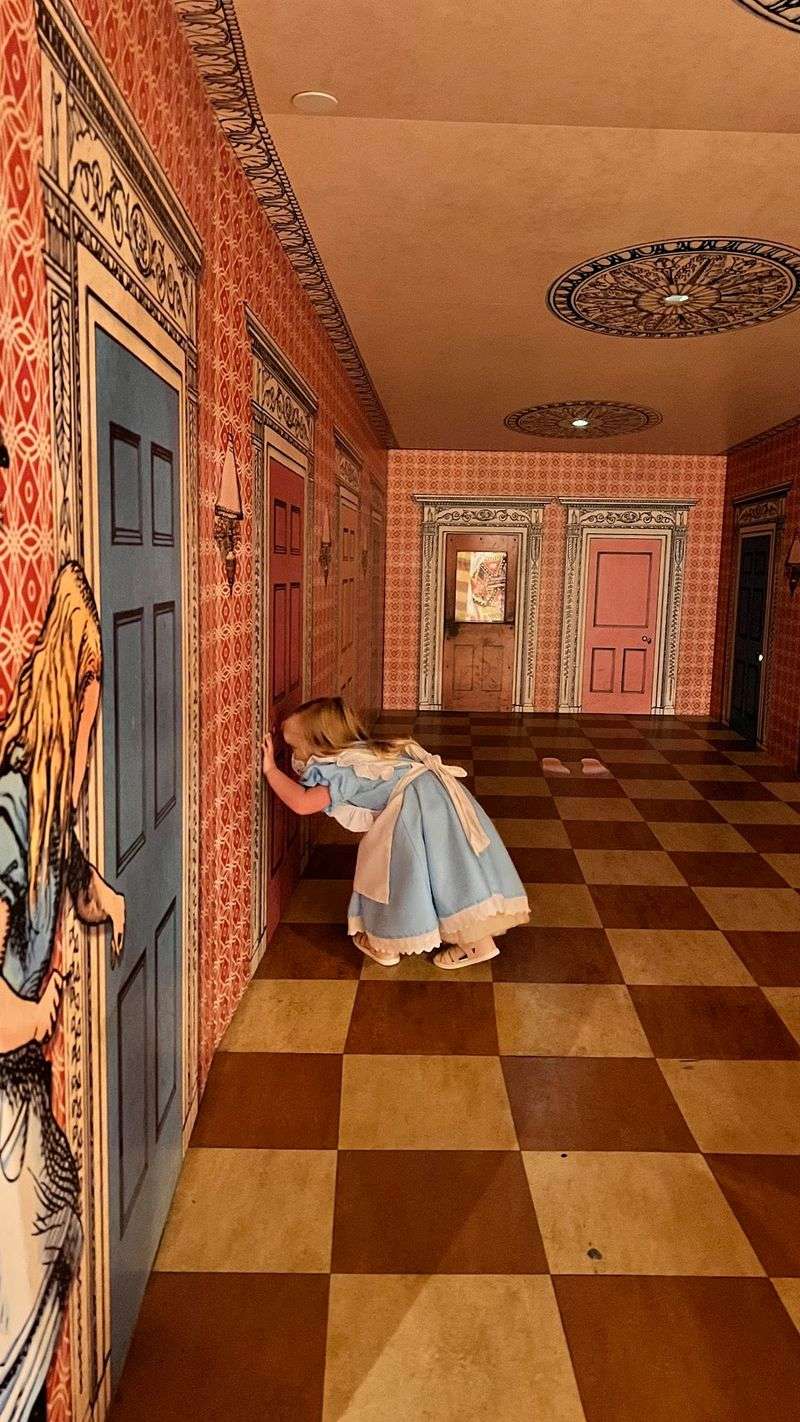
Then there’s Wonderland, which draws on Alice’s Adventures in Wonderland and turns the story into rooms you can walk through.
Kids wind through a hedge maze, sit down at a Mad Hatter’s tea party, squeeze along a shrinking hallway, and giggle at their reflections in the Hall of Mirrors.
Even visitors who found other parts of the museum familiar tend to single out Wonderland as the standout. The lighting and set design give it real atmosphere.
If your group splits up, this is a good meeting point, since everyone ends up circling back to it eventually.
Water, Wheels, and Groceries, The Hands-On Favorites
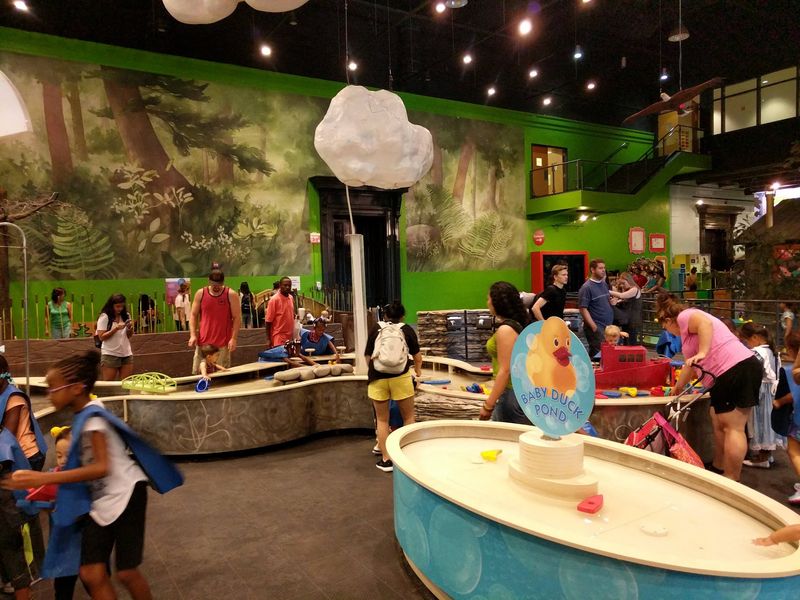
Bring a spare set of clothes. Trust me on that one.
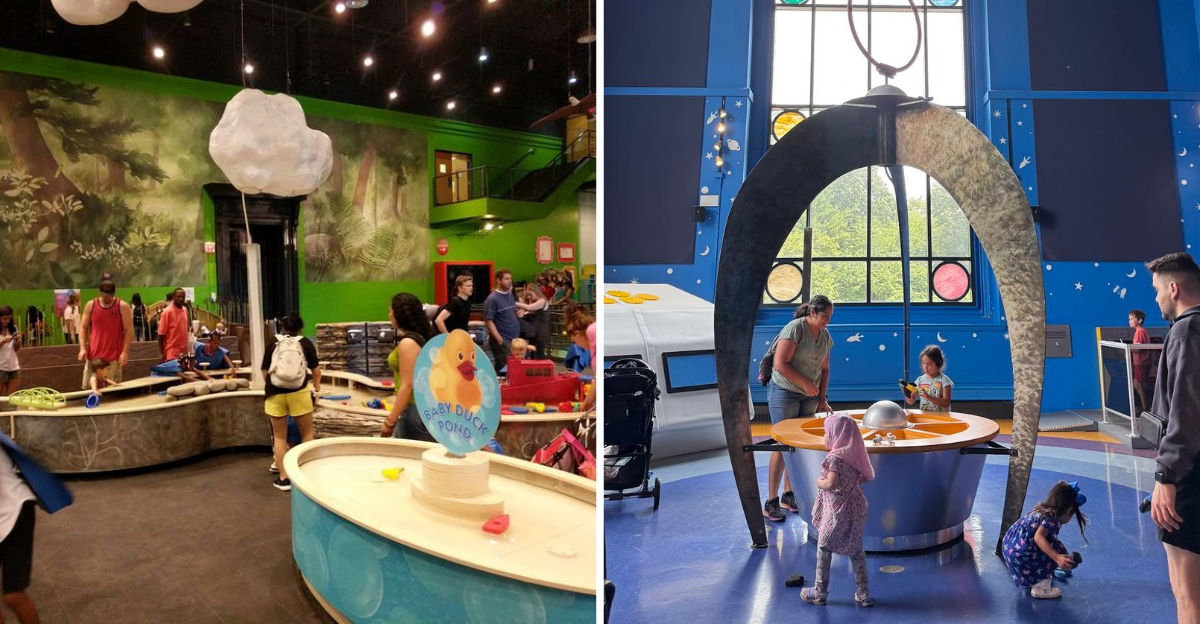
River Adventures is where kids race little sailboats down flowing channels, chase rubber ducks, and blow bubbles until their sleeves are soaked. Smocks and step stools are provided, though water still finds a way.
Over in Roadside Attractions, there’s a real bus that children can climb aboard and pretend to drive, along with model cars, trams, and trains that fascinate the vehicle-obsessed crowd.
The Supermarket, though, might be the sleeper hit of the whole place. Kids stock shelves, load carts with pretend produce, and ring up orders at working-looking registers.
I watched a toddler push a cart piled high with plastic bananas across half the museum, completely committed to the bit. Shelves empty out fast on busy days, which is part of the fun.
Food and Family expands on that idea with three connected zones: a market, a home and industrial kitchen, and a neighborhood festival area, all built around where food comes from and how people share it.
Practical play, big imagination, minimal instructions needed.
Quieter Corners for Making Things
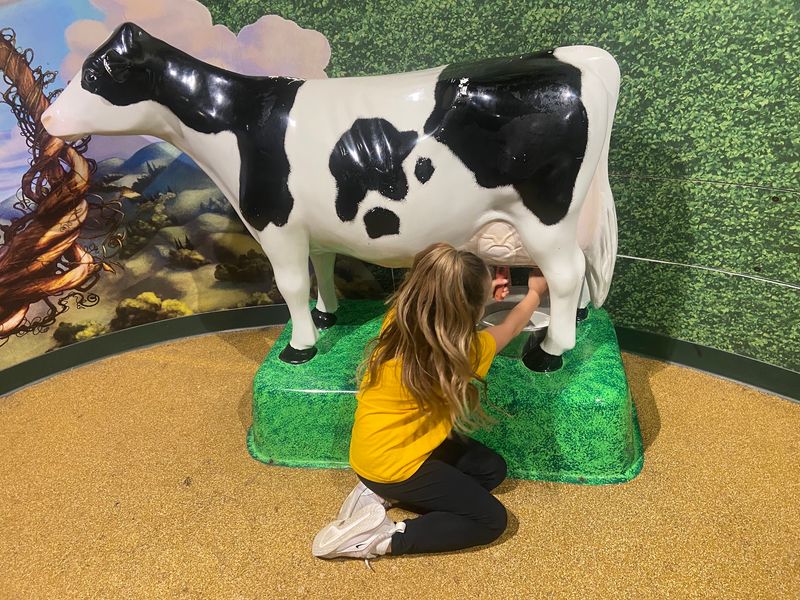
After a couple of hours of noise and motion, the lower level offers a welcome change of pace.
The Creative Arts Studio runs hands-on programming throughout the day, with a permanent clay station, mural-making, and space to build structures out of cardboard. It’s slower, messier in a satisfying way, and often less crowded.
I found the atmosphere down there noticeably calmer. Kids settle in, elbows on the table, actually focused.
Other permanent exhibits fill out this side of the building, including Adventure Camp, Centennial Innovations, Cents and Sensibility, Fairytale Garden, and Front Step. Cents and Sensibility introduces money in a way small children can grasp, complete with a toy ATM.
Staff members read stories to kids at scheduled times, which is a nice reset if someone in your group is heading toward a meltdown.
Getting downstairs is easy either way. There’s a stroller and wheelchair ramp on one side and stairs plus an elevator on the other.
Families who visit regularly tend to save these rooms for the tail end of the day, when energy is fading but nobody wants to leave yet. Smart strategy, honestly.
From a World’s Fair to a Child’s Wonderland
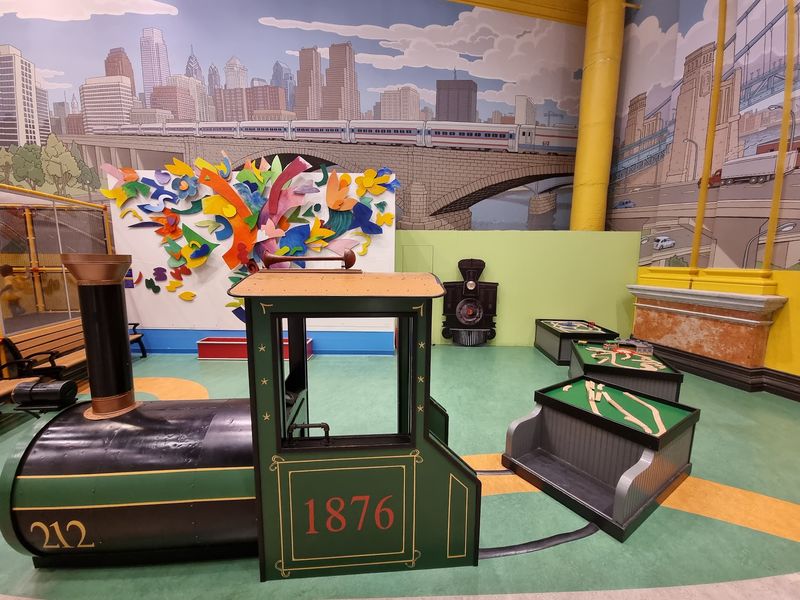
This museum wasn’t always a museum. Memorial Hall was built as the main art gallery for the 1876 Centennial Exposition, the first World’s Fair held in the United States.
Only two buildings from that fair are still standing, and this is the grandest of them.
The museum signed an 80-year lease on the building in 2005 and opened here on October 18, 2008, after a serious restoration effort. Before that, it started small, launching on October 2, 1976, inside a 2,200-square-foot space at the Academy of Natural Sciences.
Down on the lower level there’s a handcrafted scale model of the entire 1876 fairgrounds, built at a ratio of one foot to 192 feet. Every hall, road, and building is there.
Grown-ups tend to linger at that model longer than the kids do, and nobody seems to mind.
Standing under the dome while a toddler sprints past your legs is the kind of contrast that makes this place special: soaring Gilded Age architecture above, sticky handprints below.
Planning a Smooth Visit (and What’s Coming Next)
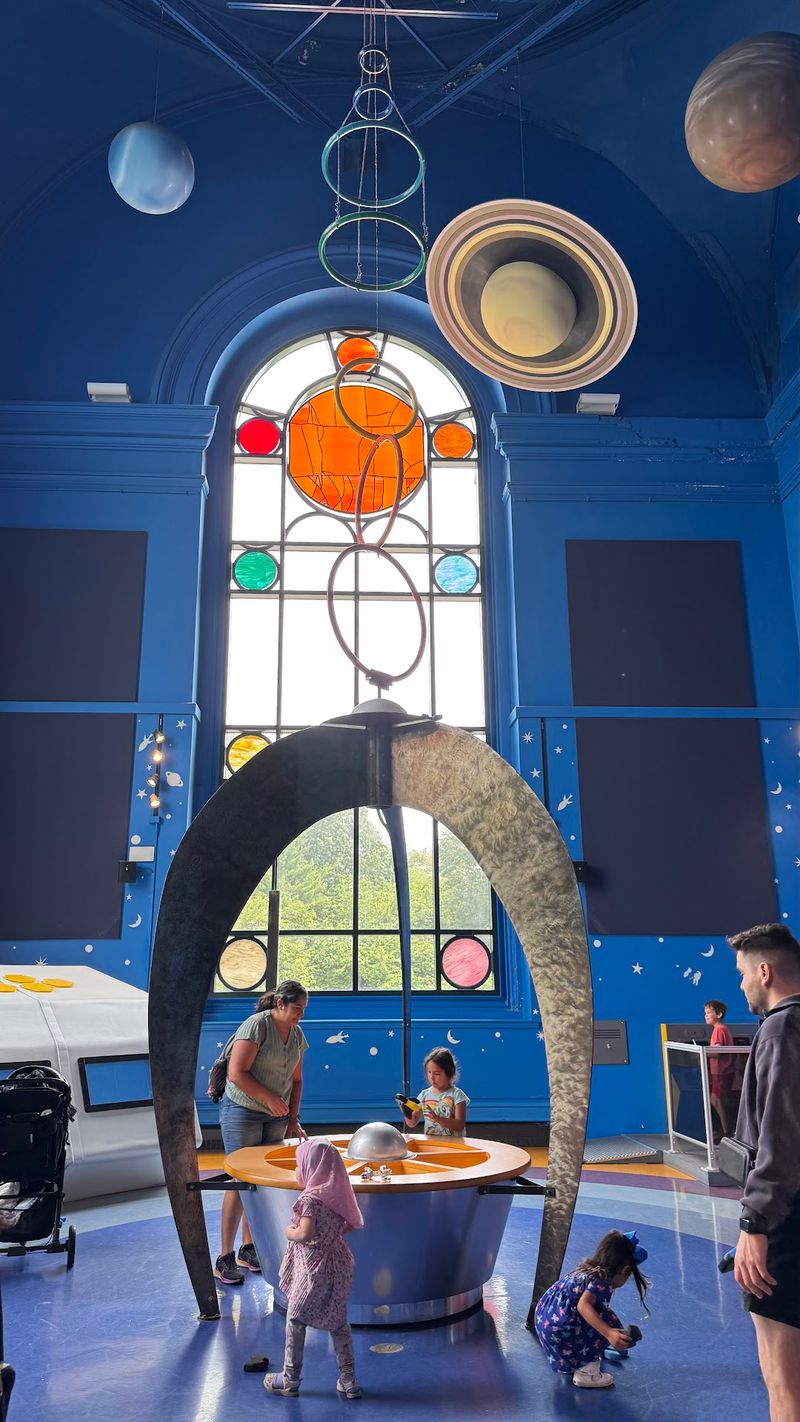
A little planning goes a long way here, mostly because the place is bigger than it first appears at 157,000 square feet with six interactive exhibit zones.
Four of those areas are built specifically for children aged three and under, and the museum generally suits kids from about six months through age eight. Older siblings often slide into a teaching role, which is fun to watch.
Doors open at 9 AM Wednesday through Sunday and close at 4:30 PM. The museum is closed Mondays and Tuesdays, so double-check before driving in.
Weekday mornings feel far more relaxed than holiday weekends. Arriving right at opening on a Friday gave me room to breathe.
You can bring your own food, and there’s outdoor garden seating that works nicely for a packed lunch. An on-site cafe exists too, though seating is limited.
Looking ahead, a major new permanent exhibit called Character Quest arrives in late 2026, featuring a 20-foot climbing structure with rope swings, slides, and nets for ages three to eight.
Free street parking can sometimes be found nearby if you circle a bit.
Address: 4231 Avenue of the Republic, Philadelphia, Pennsylvania 19131
