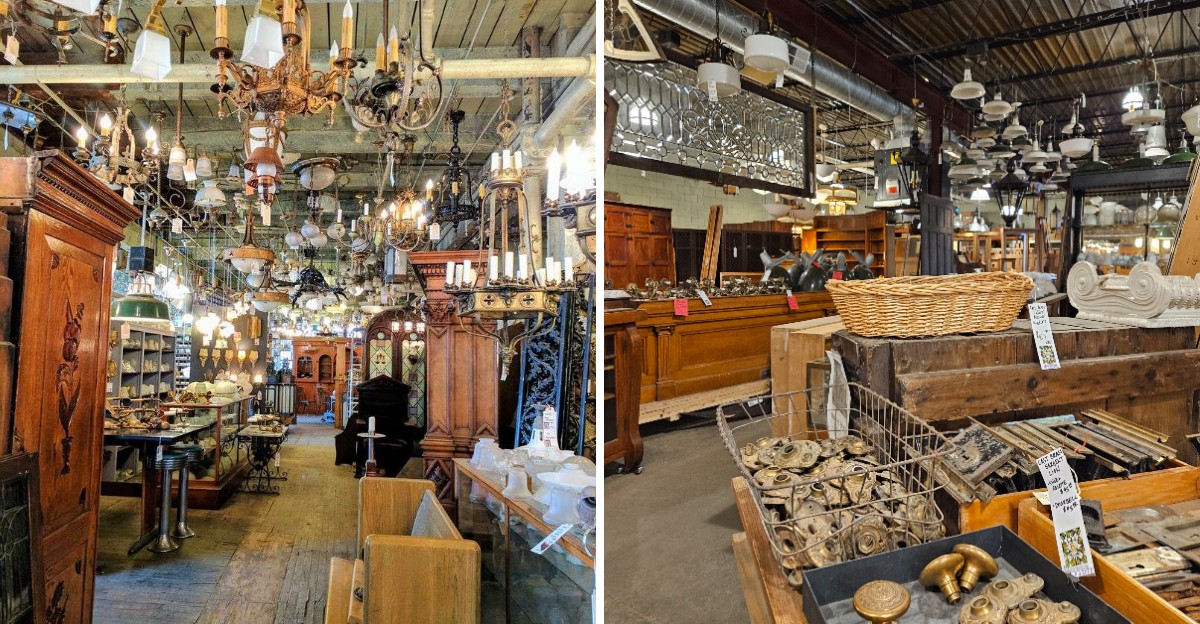
Doorknobs and stained glass don’t usually pile up quite this deep outside a warehouse built specifically for hoarding salvaged history.
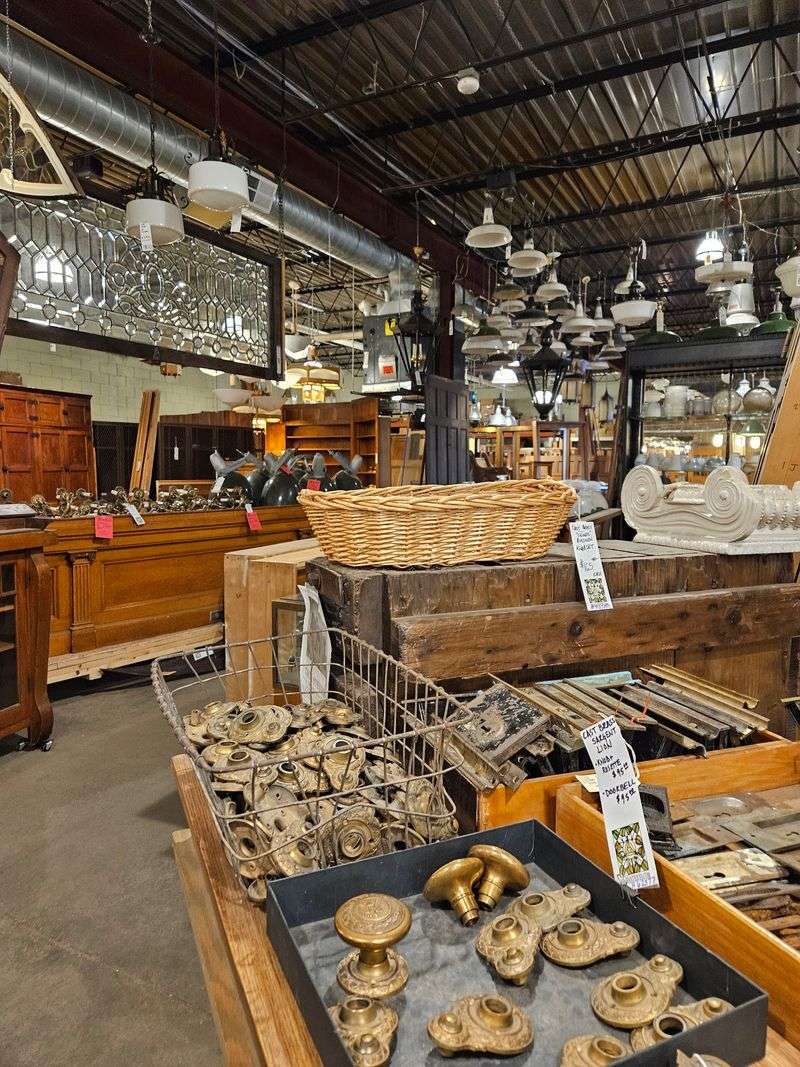
Rows of reclaimed hardware fill shelves here, pulled from buildings that no longer exist but somehow left pieces behind worth saving. Stained glass windows lean against walls too, each one waiting for someone with the right vision to give it a second life elsewhere.
Rescuing materials at this scale takes serious commitment most salvage operations abandon eventually. This shop built its entire identity around exactly that mission, turning what could’ve ended up discarded into something worth actively searching for.
Few places let history sit this literally within reach. Minneapolis holds onto its architectural past here, one reclaimed piece pulled off a shelf at a time.
A Warehouse That Feels Like a Walk Through Old Minneapolis
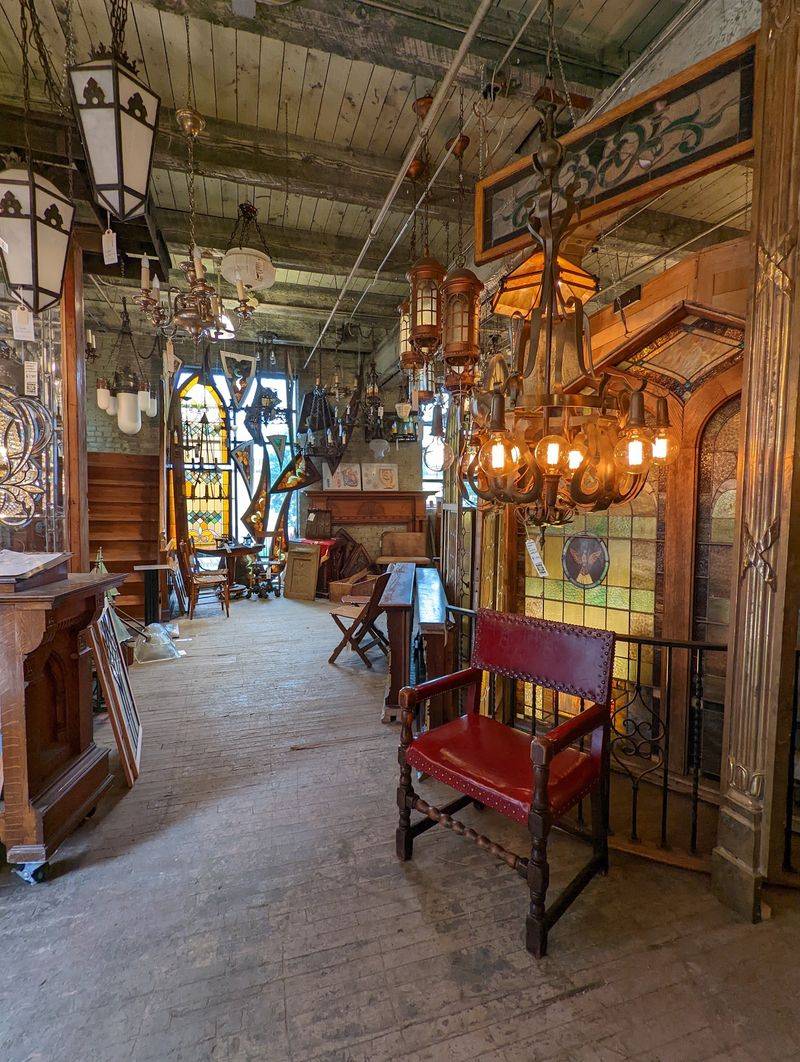
Old houses leave fragments behind, and this shop has become the place where many of those fragments land. Doors stacked in rows, mantels lined up like bookshelves, columns and railings resting against brick walls.
The scale surprised me. Ceilings climb high, and the aisles keep unfolding into new pockets of stock that were hidden from the entrance.
Visitors often compare the experience to touring a museum of vanished homes, and the comparison fits. Each item carries wear marks, layers of old paint, and small dents that say something about the hands that used it before.
Give yourself real time here. Rushing through means missing the smaller shelves tucked between the large statement pieces, and those shelves often hold the best surprises.
Shoppers restoring historic properties come with measurements and photos, while curious browsers wander in simply to look. Both groups fit comfortably.
Bring a notebook. Ideas pile up quickly once the building starts revealing what it holds, and remembering everything afterward is genuinely difficult.
Stained Glass Panels With Color Worth Chasing
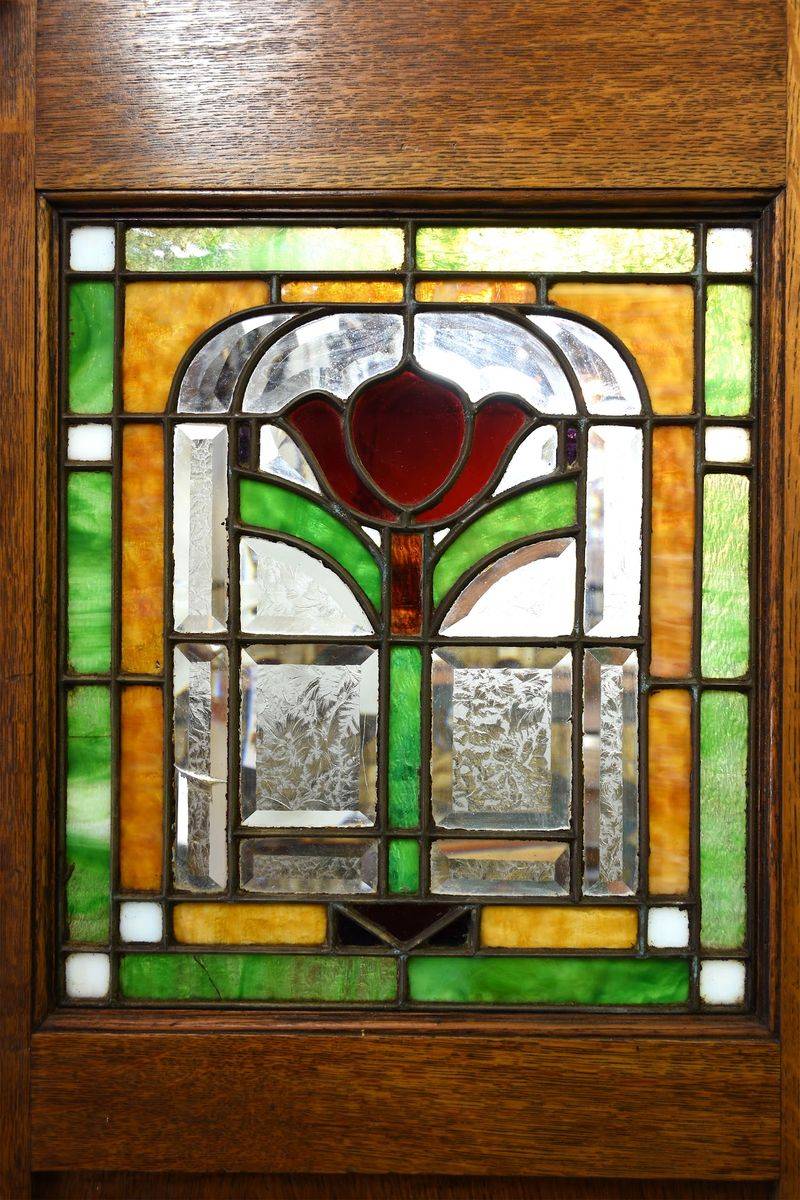
Sunlight hitting a row of salvaged stained glass does something no photograph really captures. Reds turn deep, greens glow, and the leaded lines cast thin shadows across the floor.
Panels here come in many shapes. Some are narrow transoms meant to sit above a door, others are large church style windows with detailed floral work.
Condition varies, and that is part of the appeal. Small bubbles, uneven glass, and slight waviness are signs of genuine age rather than flaws.
People use these panels in creative ways. Hanging one in front of an ordinary window brings instant character to a plain room, and a small panel can become a cabinet insert or a framed wall piece.
Ask about the weight before committing. Leaded glass is heavier than it looks, and proper hanging hardware matters more than most buyers expect. My favorite moment was watching the colors shift as clouds moved outside. The whole wall changed mood in seconds.
Vintage Door Hardware for That One Missing Piece
Anyone who has hunted for a single replacement doorknob knows the frustration. Old homes rarely surrender matching hardware, and modern versions look wrong next to century old woodwork.
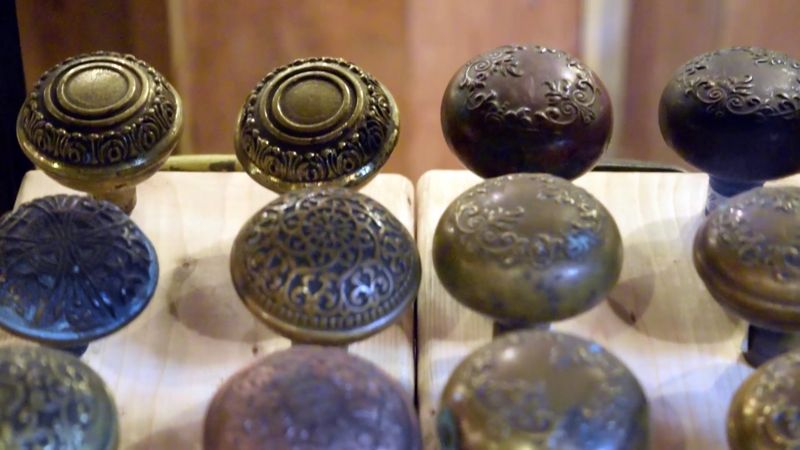
Here, the hardware trove solves that problem. Bins and shelves hold knobs, backplates, hinges, keyhole covers, latches, and bits that most people cannot even name.
Everything is sorted carefully, which makes the search far less overwhelming than a typical flea market pile. Browsing feels organized rather than chaotic.
Bring the original piece if one exists. Comparing side by side saves enormous time, and the staff can often point directly to the right drawer once they see what era you are working in.
Finishes range from polished brass to dark bronze to iron with honest patina. Some pieces show decorative patterns that were standard in Victorian homes and have not been manufactured for generations.
Small purchases like these make a surprisingly big difference. Swapping plain hardware for period pieces changes how an entire hallway reads.
Chandeliers and Light Fixtures That Steal the Show
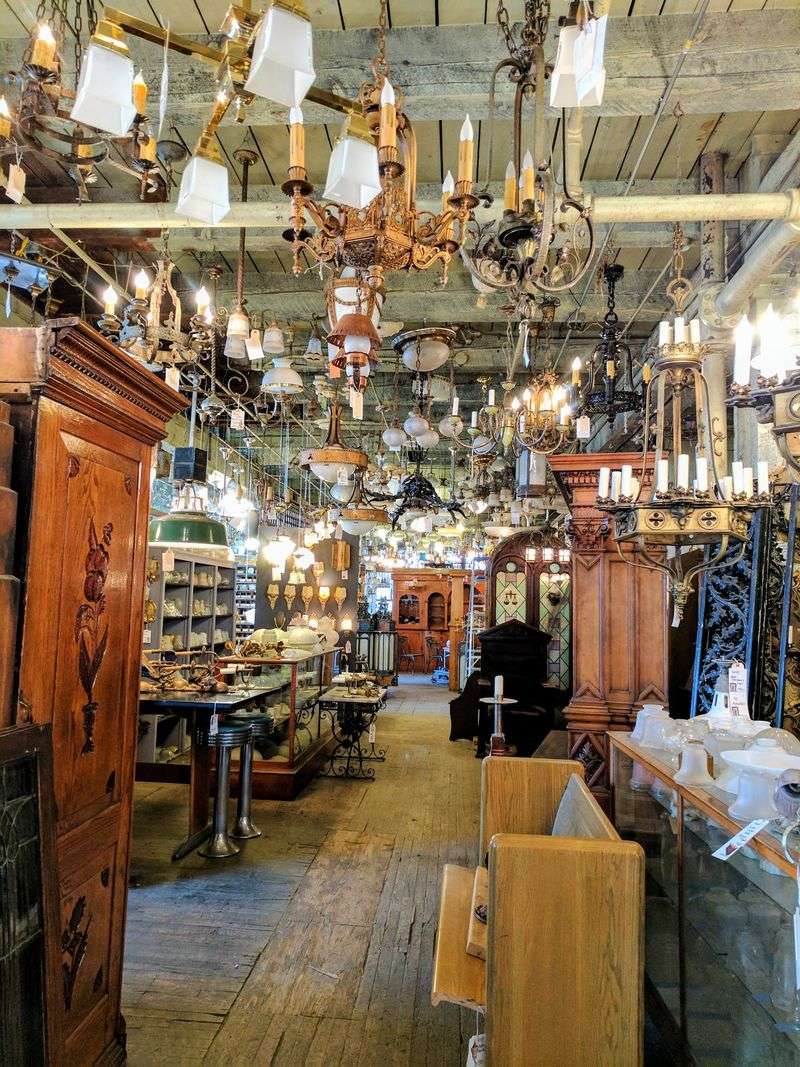
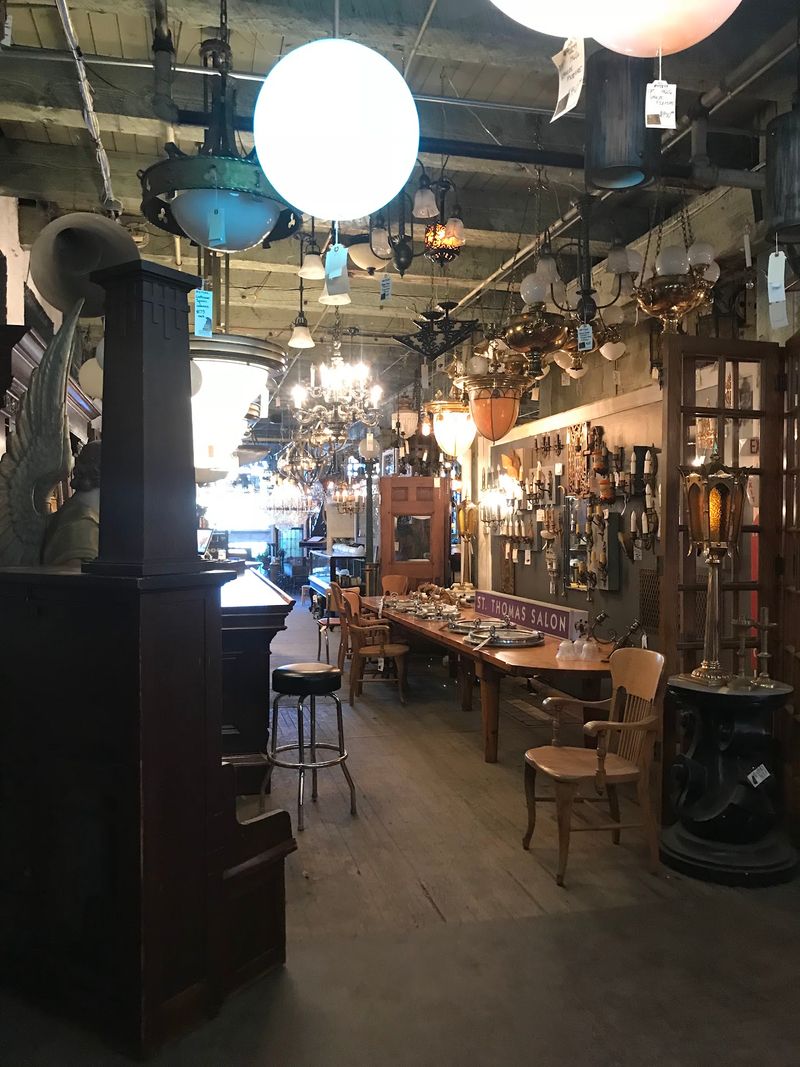
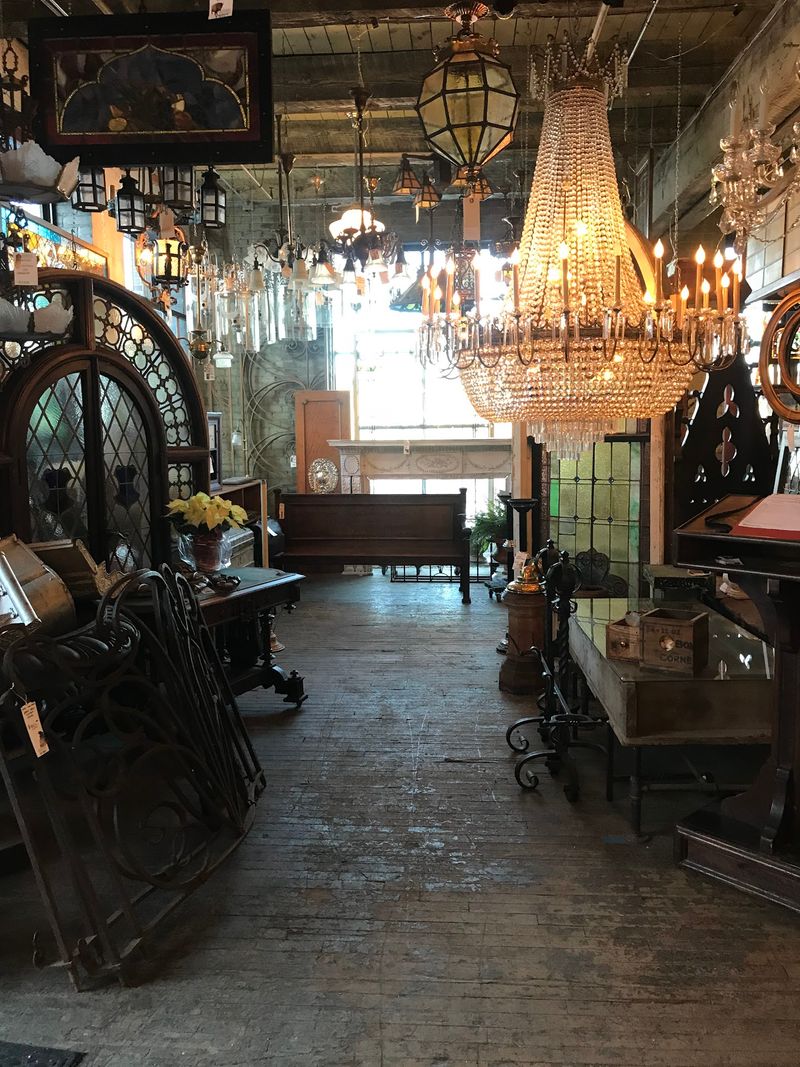
Lighting is the heart of this shop, and it shows the moment eyes drift upward. Chandeliers hang in clusters, some crystal, some brass, some heavy industrial fixtures that once lit factory floors.
Customers restoring homes from the early 1900s speak often about finding fixtures here that match their era precisely. That kind of match is nearly impossible at a big box store.
The team rewires pieces so they meet modern safety standards, which removes the biggest worry about buying vintage lighting. Ground wires, proper cording, and period appropriate details all get attention.
Sconces, pendants, and table lamps fill the lower shelves. Blown glass globes sit grouped by size and color, and matching a stray shade to an orphan lamp becomes a fun puzzle.
A tip worth following: photograph the room and note ceiling height before visiting. Staff can then steer suggestions toward fixtures that will actually fit the space. Even without buying, standing under all that glass and metal is a small pleasure on its own.
Ironwork With Victorian Flair
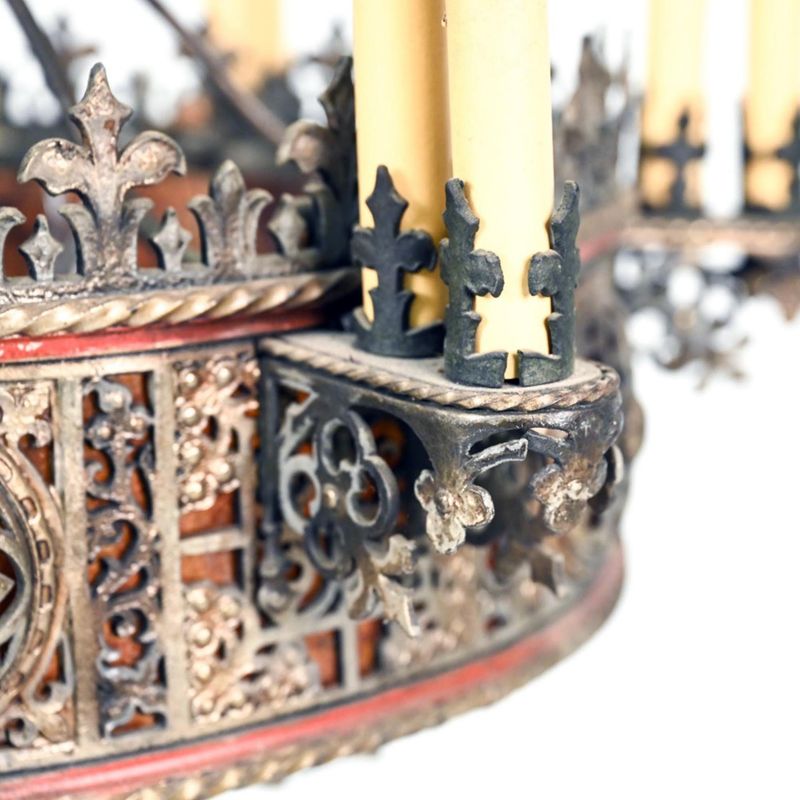
Heavy metal has a presence that lighter materials simply cannot match. Curling gates, fence sections, stair railings, and decorative panels rest throughout the shop, many showing scrollwork that took real skill to forge.
Victorian ironwork appears frequently, with leaves, vines, and geometric patterns worked into the metal. Later industrial pieces bring a blockier, sturdier look.
Garden lovers find plenty here. An old gate leaning against a hedge becomes a focal point, and a short railing section can frame a raised bed beautifully.
Rust is not automatically a dealbreaker. Surface rust often cleans up, though it is smart to check for structural weakness before planning anything that needs to bear weight.
Measuring matters with iron more than almost anything else. These pieces were made for specific openings, and adapting them takes planning. Honestly, some of it is just fun to look at. A single ornate bracket hanging on a wall carries more personality than most new decor ever will.
Salvaged Doors, Mantels and Big Statement Pieces
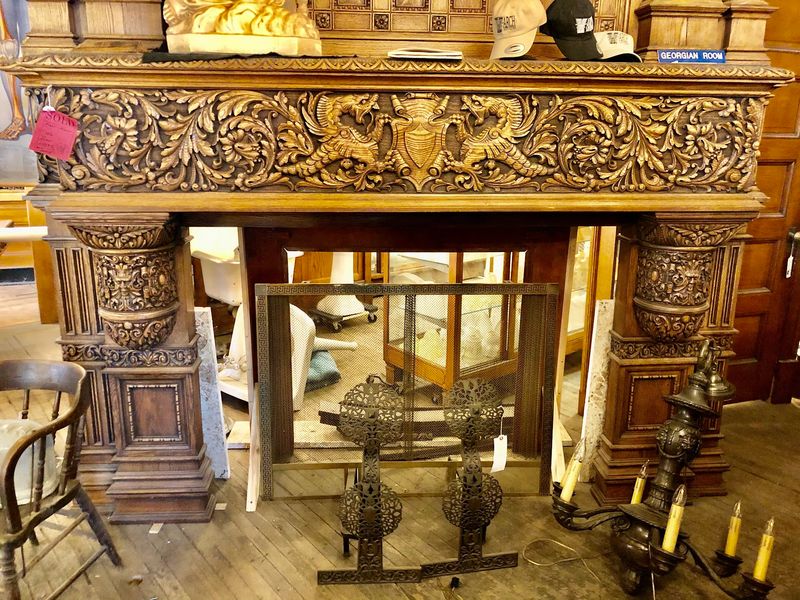
Some items here are simply enormous. Carved fireplace mantels, oversized entry doors, built in cabinetry, and even entire wall sections rescued from grand old buildings.
Reports of full library rooms, complete with shelving and paneling, give a sense of what occasionally passes through the doors. Nothing about the inventory is predictable.
Woodwork like this carries detail that modern production rarely attempts. Deep carving, thick stock, and joinery built to last generations. Planning is essential for the large stuff. Think about doorway widths at home, transport, and whether help will be available on delivery day.
Doors deserve special mention. Old ones tend to be solid rather than hollow, which changes both the sound and the feel of a room immediately. Finishes range from stripped raw wood to original varnish darkened by decades. Either can work depending on the look being chased.
Walking past these giants slowly is worthwhile even for browsers. They tell more about vanished architecture than any book could.
Staff Knowledge That Turns Browsing Into Learning
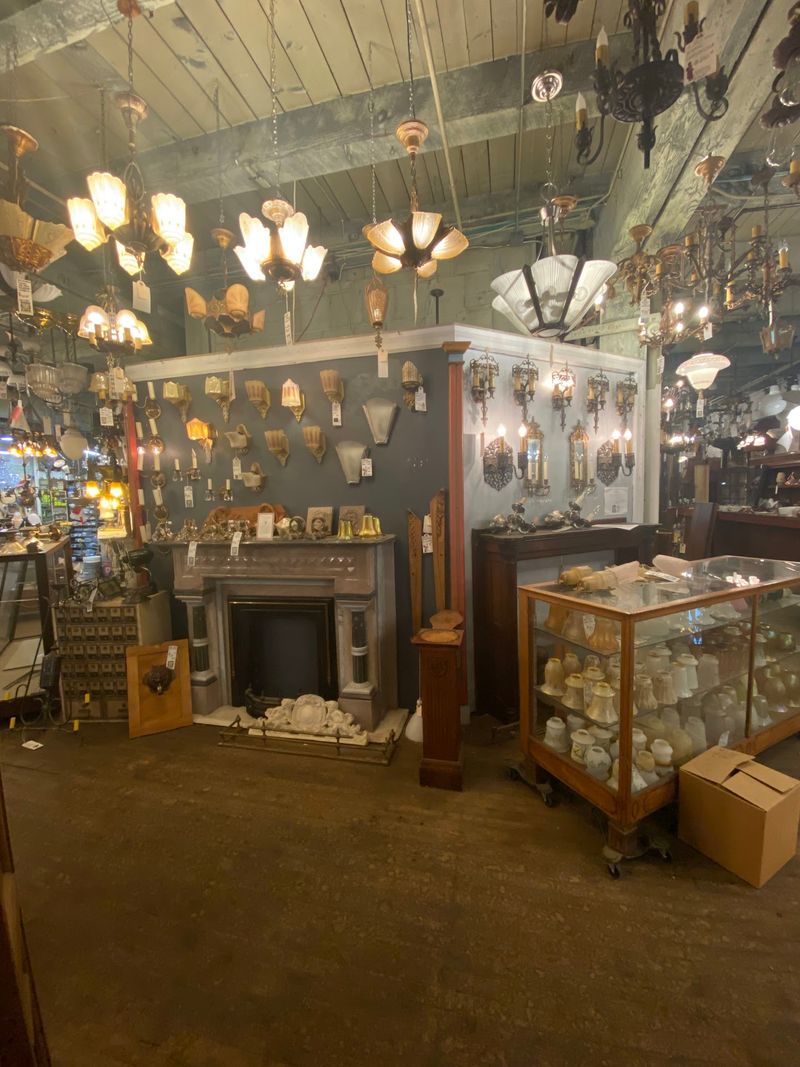
Conversation happens easily here, and that is a big part of why people keep coming back. Questions about age, origin, or how a fixture was originally used get thoughtful answers.
Restoration advice comes freely. Customers working on historic homes describe leaving with guidance on installation details they had not even thought to ask about.
Out of state buyers mention smooth shipping and careful packing, plus help troubleshooting from a distance. That kind of follow through is not common in the antiques world.
The team also handles repairs and adaptations. Rewiring lamps, fitting shades, and adjusting pieces so they work in modern spaces are regular parts of the job.
Newcomers should not feel shy. Even visitors with no project underway get the same friendly treatment, and plenty of people stop in purely to look. I came away with a better understanding of what makes a fixture period appropriate. That lesson stuck longer than any single item I admired.
Bathroom Fixtures With Genuine Character
Bathrooms are where reproduction fixtures usually give themselves away. Real vintage pieces have proportions and weight that copies never quite reach.
Clawfoot tubs, pedestal sinks, towel bars, hooks, and old faucet sets appear regularly in the inventory. Shoppers restoring early twentieth century homes rely on finds like these.
Porcelain often shows small chips or crazing. Minor wear usually adds charm, though checking drain fittings and overall soundness is a smart move before purchase.
A plumber familiar with older fixtures makes installation far easier. Threading and sizing standards have changed over the decades, and adapters are sometimes needed.
Smaller accessories are the easy entry point. A vintage towel bar or a set of hooks costs less commitment than a tub and still changes the room’s personality.
One customer restoring a home from the 1900s found lighting, a sink, and a bathtub across several visits. That kind of gradual collecting seems common here. Patience pays. Stock rotates, so returning trips often reveal what was missing last time.
Northeast Minneapolis Makes a Great Day Around the Visit
Location adds a lot to the experience. The shop sits in Northeast Minneapolis, a neighborhood known for brick warehouses, artist studios, and murals painted across old industrial walls.
Quincy Street itself is quiet, tucked away from the busier avenues, which makes arriving feel like finding something slightly secret.
Pairing the visit with a walk around the arts district works well. Nearby buildings share the same era and materials as much of the shop’s inventory, which makes the connection feel real.
Parking is generally manageable, a genuine relief compared to downtown. That alone lowers the stress of hauling a purchase to the car. Weekday mornings tend to be calmer. Saturdays bring more browsers, though the extra buzz can be enjoyable in its own way.
Photographers will find plenty outside too. Old signage, weathered brick, and loading docks give the whole area a texture that suits the treasure hunting mood. The neighborhood and the shop reinforce each other nicely.
Planning the Trip and Knowing What to Expect
A little preparation makes the visit far more rewarding. Hours run Tuesday through Friday from 10 am to 3 pm, with Saturday extending to 4 pm, while Monday and Sunday stay closed. Those shorter windows catch people off guard, so checking the schedule before driving over is wise.
Bring a tape measure, room photos, and any hardware needing a match. Those three things transform a vague browse into a productive hunt. Comfortable shoes help. The floor space is large, and thorough looking takes a while.
The online catalog is worth a scroll beforehand, since listings include detailed photos and descriptions that give a sense of what tends to be stocked. Treat the trip as an outing rather than a quick errand. Half the fun is discovering something never considered before walking in.
Find it all at Architectural Antiques, 1330 Quincy St NE, Minneapolis, MN 55413, where a century of Minnesota building history waits on the shelves.
