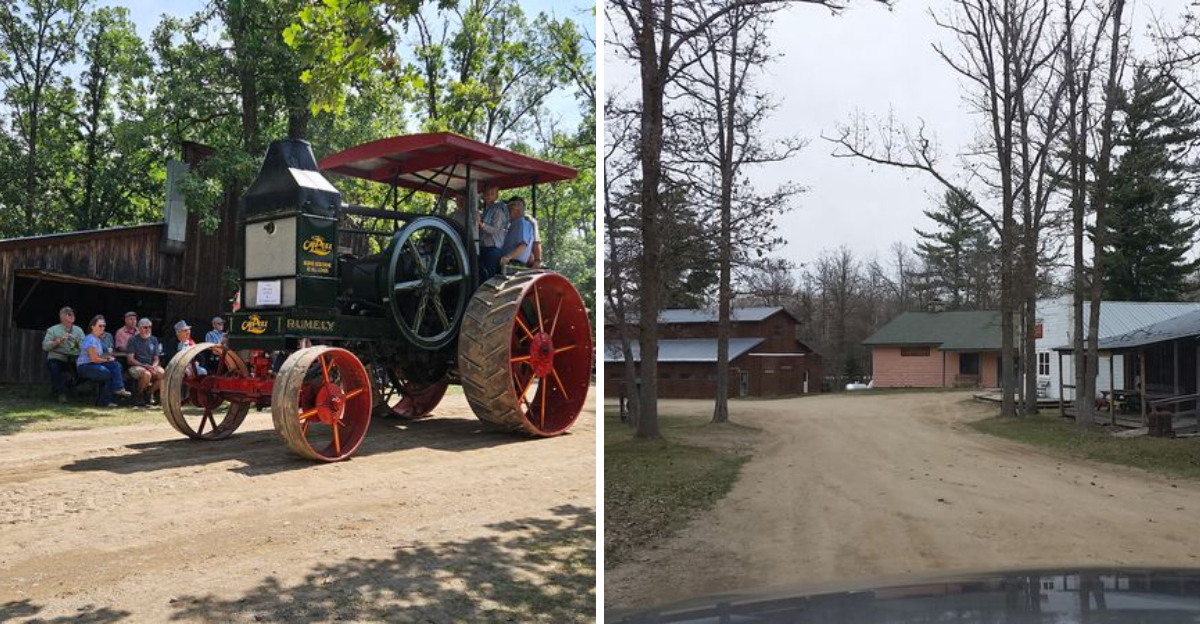
Steam whistles echo across acres of Minnesota showground, where the sound of antique engines and the smell of freshly cut wood fill the air. This living history site has been dedicated to keeping pioneer farming and logging traditions alive for decades.
Walking through the grounds feels like stepping back in time. You can watch a steam-powered sawmill slice through logs, see a blacksmith shape hot metal at the forge, and observe teams of horses moving massive timbers just as they did over a century ago.
A replica pioneer village includes a one-room schoolhouse and an old-fashioned grocery store. Kids can enjoy hands-on activities that make history fun and engaging.
Thousands of visitors attend the annual summer show to experience this working museum of rural life. Minnesota has many historical sites, but this one offers an immersive, multi-generational experience where the whole family can connect with the state’s farming and logging heritage.
Come see how things were done in the old days.
Sawmill Hill and the Steam-Powered Logging Band Saw
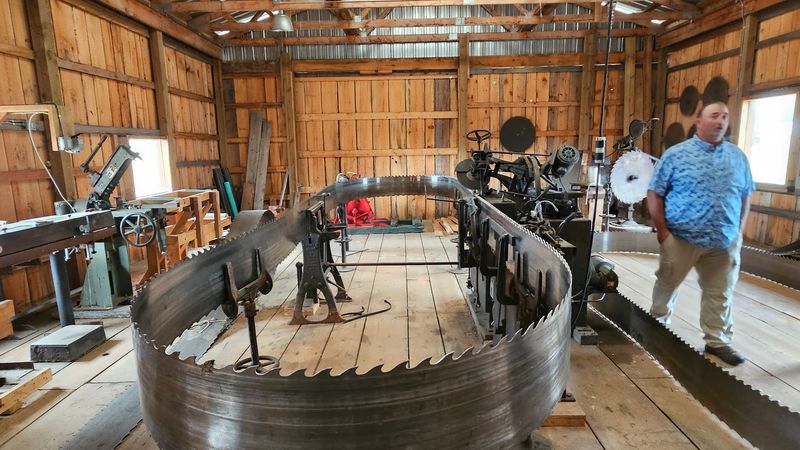
Sawmill Hill is the kind of spot that makes your jaw drop without warning. A massive 8-foot bandsaw, powered by a 350-horsepower Corliss steam engine, slices through logs with a sound you feel in your chest.
It is one of the most dramatic demonstrations on the entire property.
The Corliss engine itself is a mechanical marvel worth studying up close. Its slow, rhythmic motion powers the blade through timber that would challenge modern equipment.
Watching it work gives you a genuine appreciation for what early loggers accomplished with raw ingenuity.
Volunteers run the sawmill with obvious expertise and clear pride. They explain each step of the process and answer questions with patience and detail.
One visitor described getting a full tour of the sawmill from a knowledgeable guide as one of the most memorable experiences of their first Minnesota trip.
The smell of fresh sawdust drifts across Sawmill Hill all weekend long. It is one of those sensory details that sticks with you, grounding the experience in something real and physical rather than purely historical.
Kidz Place: Hands-On Crafts and Activities for Young Visitors
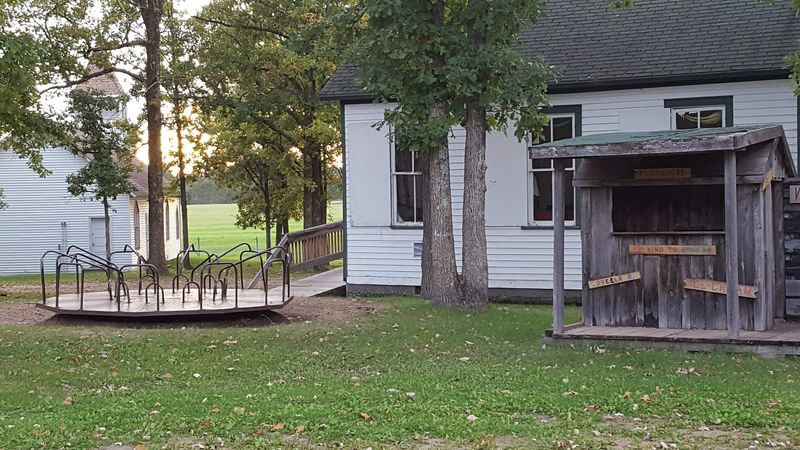
Kidz Place at LIRPF is where younger visitors really come into their own. Kids can build birdhouses, twist rope by hand, and explore activities that connect them directly to pioneer-era skills.
Most of these activities are included with admission or available for a small donation.
There is something refreshing about watching children engage with crafts that require patience and physical effort. No screens, no batteries, just hands working with wood and fiber to create something real.
Parents often end up just as absorbed as their kids at these stations.
Volunteers at Kidz Place are patient and encouraging, guiding young visitors through each step without taking over. The goal is always for the child to finish with something they made themselves.
That sense of accomplishment is visible on every face walking away from the craft tables.
Small train rides add another layer of delight for the youngest visitors. The combination of hands-on making and gentle rides keeps energy levels high and attention spans fully engaged.
LIRPF clearly put real thought into making history feel fun and accessible for every age group attending.
Antique Tractor Parades That Draw Crowds Year After Year
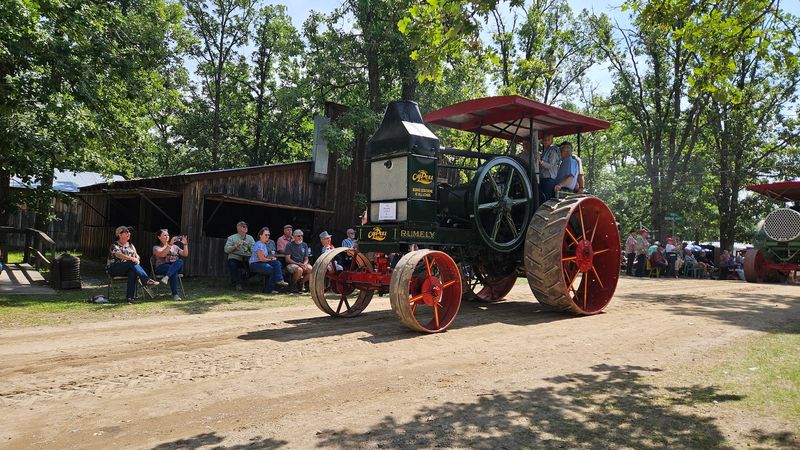
The tractor parade at LIRPF is one of those moments that surprises you with how genuinely exciting it gets. Rows of restored antique tractors roll slowly past cheering families, each machine representing decades of agricultural history.
Some of these tractors have been in the same family for generations.
Visitors who have attended for years say the tractor count keeps growing. The variety is impressive, ranging from small utility models to massive row-crop machines with gleaming paint and polished chrome.
Each one carries a story that its owner is usually happy to share.
The parade route gives everyone a clear view, and kids especially light up when the engines rumble past. There is something about the sound and scale of old iron that commands attention in the best possible way.
It feels celebratory and communal at the same time.
Families come back annually just for this parade. Some bring their own tractors to participate, turning attendance into active involvement.
That level of community ownership is exactly what keeps LIRPF feeling personal rather than purely commercial year after year.
Stationary Engine Displays in the Ole Berge Building
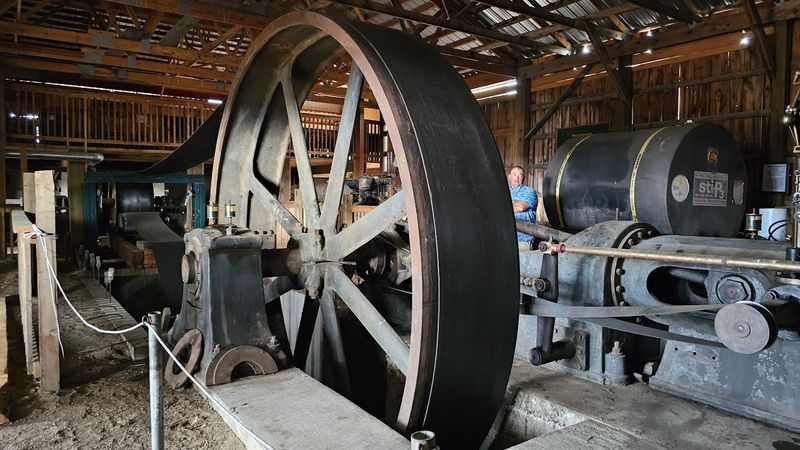
The Ole Berge Building holds a collection of stationary engines that could keep a mechanical enthusiast occupied for hours. These engines were the workhorses of early farms and small industries, doing everything from pumping water to powering grain mills.
Seeing them lined up and running is genuinely mesmerizing.
Each engine has a distinct personality, different rhythms, different sounds, different sizes. Some tick along quietly while others clatter with a satisfying mechanical urgency.
The variety shows just how creative early engineers were when solving practical problems with limited materials.
Longtime visitors remember coming as children to see their grandparents’ engines displayed in this very building. That generational connection gives the space an emotional depth that goes beyond mechanical admiration.
It is a place where family history and regional history overlap in a very tangible way.
Volunteers stationed throughout the building explain how each engine worked and what it was used for. Their knowledge runs deep, and their enthusiasm for sharing it is completely unforced.
Spending time in the Ole Berge Building feels like a conversation with the past rather than a passive exhibit experience.
Pioneer Food Traditions: Lefse, Corn on the Cob, and More
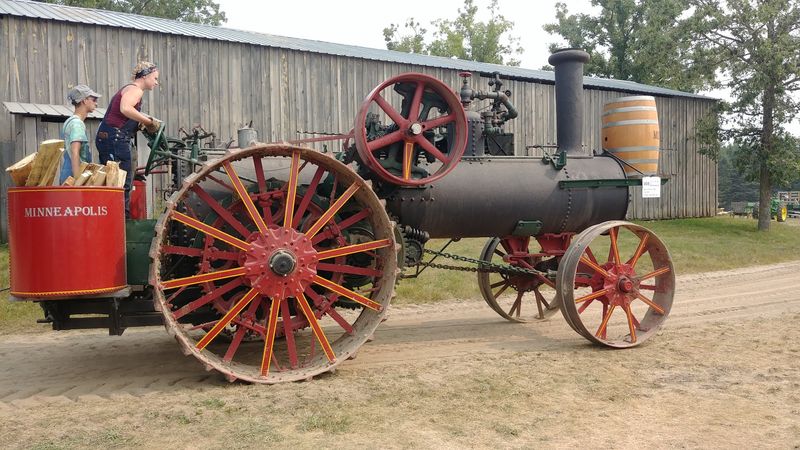
Food at LIRPF is not an afterthought. It is part of the whole experience, rooted in the same pioneer traditions the showground celebrates.
Homemade lefse, a soft Norwegian flatbread, comes off the griddle warm and fragrant, drawing a steady line of hungry visitors throughout the day.
Corn on the cob smoked in a barrel stove and dipped in a crock of butter is another crowd favorite that shows up in nearly every fond memory people share about the show. It is the kind of simple, honest food that tastes exactly right in this setting.
Simple ingredients, careful preparation, real flavor.
Fry bread, ice cream, and the famous potato wagon round out a food lineup that leans hard into comfort and tradition. Nothing feels rushed or mass-produced.
Everything connects back to the era LIRPF honors with such consistency and care.
The 84-Acre Showground That Feels Like a Living Museum
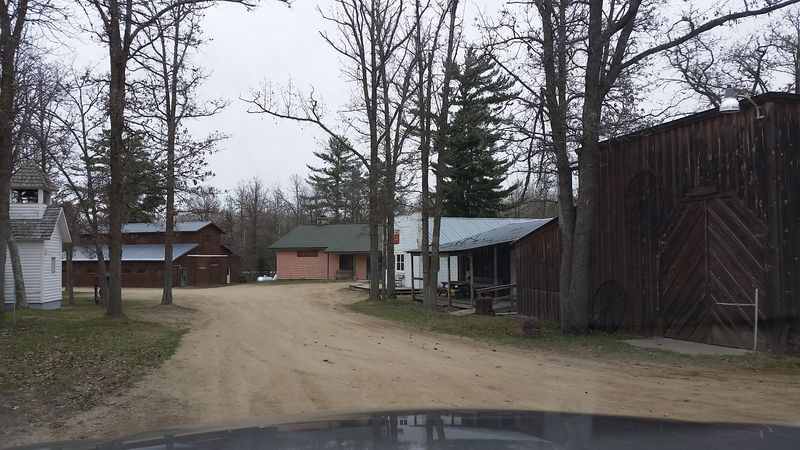
Walking onto the LIRPF grounds for the first time feels like crossing a threshold into another century. The sheer size of the property is the first thing that hits you.
Eighty-four acres of preserved history stretches out in every direction, filled with buildings, equipment, and stories.
The layout is surprisingly easy to navigate on foot. Gravel paths wind between structures, and open fields give you room to breathe.
You never feel rushed or crowded, even when the annual show draws large weekend crowds.
Historic buildings dot the landscape, each one telling a specific chapter of Minnesota’s pioneer past. Some were moved here from other locations and carefully reassembled by volunteers over many years.
That kind of dedication shows in every beam and bolt.
Children explore freely while adults linger over antique machinery. The grounds feel alive, not frozen.
LIRPF is not a museum behind glass. It is a working, breathing showground where history is handled, demonstrated, and passed forward with real hands and real pride every single season.
Blacksmithing and Threshing Demonstrations Up Close
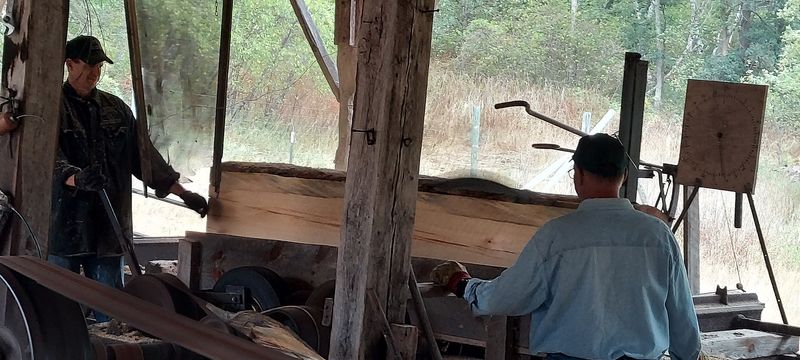
Watching a blacksmith work is one of those experiences that pulls you in before you even realize it is happening. The heat radiates outward, the hammer strikes ring out clearly, and a shapeless piece of metal slowly becomes something useful right before your eyes.
LIRPF makes this accessible to anyone willing to stand and watch.
Threshing demonstrations add another layer of agricultural authenticity to the weekend. Seeing grain separated from stalks using equipment that predates modern combines gives you a physical sense of how labor-intensive early farming truly was.
It reframes the harvest season in a completely different way.
Both demonstrations are run by people who clearly know their craft. They explain what they are doing as they work, making the process educational without ever feeling like a classroom.
The combination of skill, noise, and heat makes these among the most engaging moments on the grounds.
Standing close enough to feel the warmth of the forge or hear the thresher rattling through a bundle of grain is the kind of sensory detail that stays with you.
Antique Trucks, Excavators, and Farm Equipment on Display
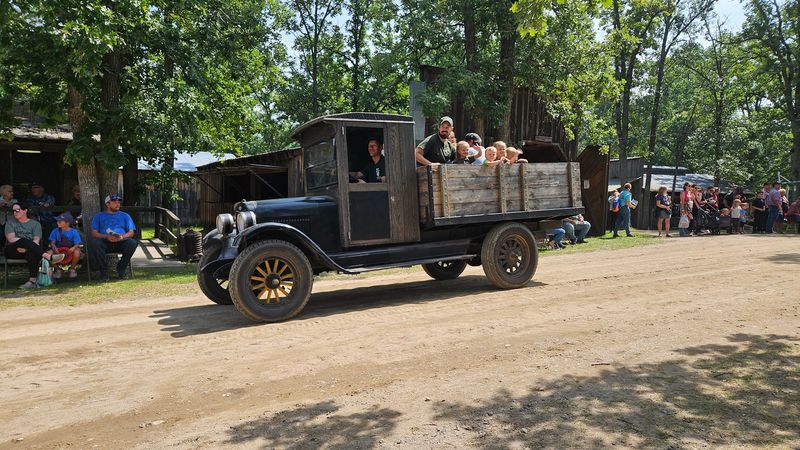
For anyone who loves old machinery, the equipment displays at LIRPF are a genuine highlight. Vintage trucks from the 1960s with straight-six engines sit alongside chain-driven excavators that look like they belong in an industrial museum.
The variety is broad and the condition of many pieces is impressive.
Wandering through the rows of equipment feels like browsing a mechanical timeline. Each decade of farming and logging technology is represented somewhere on the grounds, giving visitors a clear sense of how tools evolved alongside the industries they served.
It is history you can walk around and touch.
Some pieces are still operational and get fired up during the show weekend for live demonstrations. Hearing a decades-old engine turn over and run smoothly is always a crowd moment, met with spontaneous applause and wide eyes from younger visitors who have never seen anything like it.
The scale of the collection grows each year as members contribute new pieces to the display.
Annual Show Weekend: A Three-Day Family Tradition
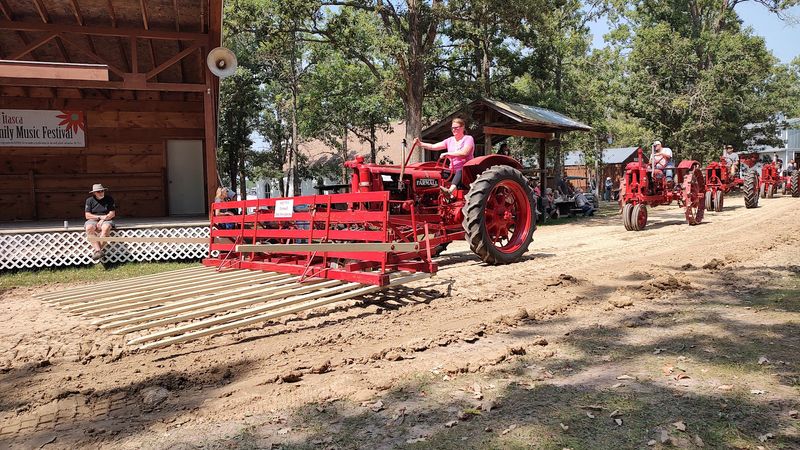
The annual LIRPF show takes place on the third weekend of August each year, and for many families it has become a tradition that spans multiple generations. Grandparents who attended as children now bring their own grandchildren, completing a loop that the founders of this organization would recognize with pride.
Three days is genuinely the right amount of time to absorb everything the showground offers. Between demonstrations, equipment displays, food, crafts, parades, and simple wandering, the hours fill up naturally without ever feeling rushed.
Camping within walking distance of the grounds makes the full weekend experience even more accessible.
The show draws volunteers and participants from across the region who return annually to demonstrate their skills, show their equipment, or simply be part of something meaningful. That consistency of community involvement is what gives the event its warm, unhurried atmosphere year after year.
First-time visitors often leave already planning their return.
Location Near the Mississippi Headwaters: Two Destinations in One Trip
One of the most practical and genuinely exciting things about visiting LIRPF is its location. The showground sits less than a mile from the north entrance of Itasca State Park, home to the headwaters of the Mississippi River.
Combining both stops makes for a full and deeply satisfying half-day outing.
Walking the sawmill trail from the state park toward the LIRPF grounds is a pleasant way to connect the two experiences on foot. The trail winds through northern Minnesota forest before opening onto the showground property, giving the visit a natural and unhurried rhythm from the very start.
Standing where the mighty Mississippi begins as a shallow, walkable stream is a remarkable contrast to the industrial-scale logging equipment just down the road. Together, the two sites tell a connected story about the land, the water, and the people who shaped this part of Minnesota over centuries.
Address: Lake Itasca Region Pioneer Farmers (LIRPF), 16914 N Entrance Dr, Park Rapids, MN 56470.
