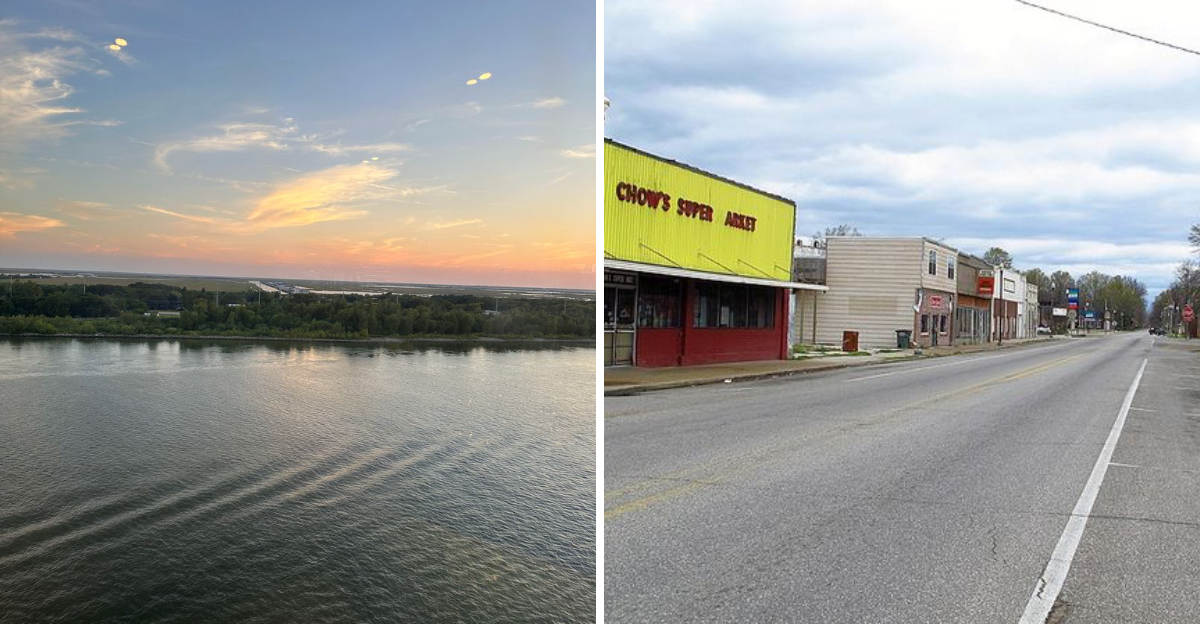
Tucked along the Mississippi River in Bolivar County, Rosedale exists in a kind of suspended stillness that feels almost forgotten by time.
The streets are quiet, the storefronts weathered, and the air thick with Delta humidity and stories that stretch back more than a century.
This small Mississippi town does not chase tourists or polish itself for Instagram feeds.
It simply remains, holding onto its blues roots, river history, and agricultural soul with a kind of stubborn grace that locals understand and protect.
Rosedale is not a place that shouts for attention.
Instead, it whispers through old cotton warehouses, levee roads, and juke joint memories, offering those who wander here a glimpse into the raw, unvarnished heart of the Delta.
For residents, that quiet authenticity is worth preserving.
They have watched other towns transform under the weight of tourism and development, losing their character in the process.
Here in Mississippi, Rosedale remains a refuge from that pressure, a place where the rhythm of life moves slowly and deliberately.
Visitors who arrive with curiosity rather than expectation often leave changed, touched by the honesty of a community that does not perform for outsiders.
It is that very quality that makes Rosedale so special, and why those who know it best hope it stays just a little bit hidden.
A River Town Shaped by Water and Time
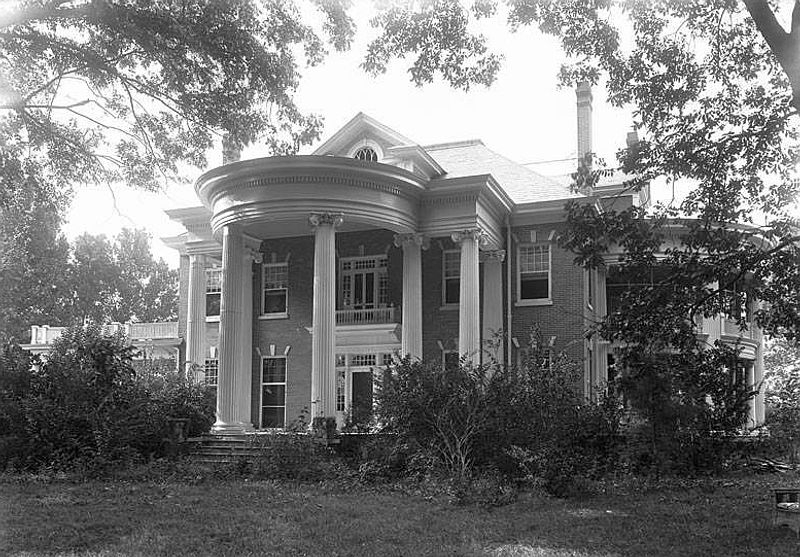
Rosedale grew up alongside the Mississippi River, and that relationship has defined everything about it.
The river brought commerce, floods, and opportunity in equal measure, shaping the town’s layout and its people’s resilience.
Early settlers recognized the fertile land and strategic waterway access, establishing a community that would become a vital hub for cotton and agriculture.
Over generations, the river has both blessed and battered this Mississippi town, leaving behind layers of history visible in the architecture and landscape.
Walking through Rosedale today, you can still see remnants of its riverboat era.
Old warehouses line streets that once bustled with trade.
The levee system, built and rebuilt after devastating floods, stands as a monument to persistence.
Locals speak of the Great Flood of 1927 with a kind of reverence, as it reshaped not just the physical town but the collective memory of everyone who calls this place home.
That flood drove thousands from their homes and left scars that took decades to heal.
Yet Rosedale rebuilt, quietly and without fanfare.
The town’s character is rooted in that quiet determination.
People here do not boast about their history or package it for tourists.
Instead, they live it, passing down stories through generations and maintaining a connection to the land and water that outsiders rarely understand.
The river remains central to daily life, even as modern infrastructure has tamed its wildest impulses.
Fishermen still cast lines from the banks, and farmers watch water levels with the same vigilance their grandparents did.
Rosedale’s identity is inseparable from the Mississippi River.
That bond creates a sense of place so strong that residents feel protective of it.
They understand that once a place becomes a destination, it risks losing the very qualities that made it special in the first place.
Blues Heritage That Runs Deep
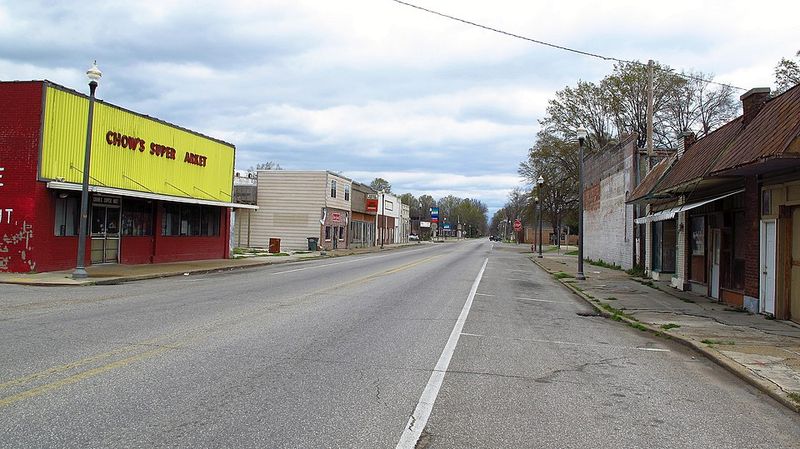
Robert Johnson supposedly sold his soul to the devil at the crossroads, and while several Mississippi towns claim that legend, the spirit of the blues runs undeniably through Rosedale.
The Delta blues tradition was born from hardship, joy, and the raw human experience of life in the cotton fields.
Rosedale contributed its own chapter to that story, producing musicians and hosting juke joints where the music flowed as freely as the whiskey.
The town’s blues heritage is not packaged into a museum or marketed on billboards.
Instead, it lives in the memories of older residents who remember when live music filled Saturday nights and musicians passed through on their way to bigger stages.
Some of those old venues still stand, though they no longer echo with guitar riffs and harmonicas.
Walking past them, you can almost hear the ghosts of performances that shaped American music.
Locals treasure this legacy without exploiting it.
They know the blues came from pain and struggle, and turning that into a tourist attraction feels disrespectful to the people who lived those experiences.
Younger generations in Mississippi still learn the old songs, keeping the tradition alive in living rooms and small gatherings rather than on commercial stages.
This authenticity is what makes Rosedale’s connection to the blues so powerful.
Visitors who come seeking that history find it not in glossy exhibits but in conversations with people who carry it in their bones.
The crossroads itself remains a simple intersection, unmarked and unadorned.
No signs direct tourists there, and locals prefer it that way.
They understand that some places are meant to be felt rather than photographed.
The blues tradition in Rosedale is a living thing, passed down through families and friendships.
Keeping it out of the spotlight preserves its soul.
Cotton Fields and Agricultural Roots
Cotton built the Delta, and Rosedale stands as proof of that legacy.
Fields stretch endlessly around the town, white bolls dotting the landscape in late summer like snow on dark soil.
Agriculture remains the economic backbone here, though the industry has changed dramatically from the days of hand-picking and plantation labor.
Modern machinery has replaced much of the backbreaking work, but farming still defines the rhythm of life in this Mississippi community.
Residents wake with the sun and plan their days around planting seasons, weather patterns, and harvest schedules.
The connection to the land runs deep, with families farming the same plots for generations.
That continuity creates a sense of identity that outsiders often struggle to understand.
For people here, cotton is not just a crop but a link to ancestors and a way of life that has survived economic shifts and cultural changes.
Walking or driving through the countryside around Rosedale offers a perspective on rural Mississippi that feels increasingly rare.
The scale of the fields is humbling, reminding visitors of the labor and dedication required to work this land.
Small farmhouses dot the landscape, some maintained and others slowly returning to the earth.
Grain elevators and equipment sheds punctuate the horizon, functional structures without pretense or decoration.
This agricultural landscape is not designed for beauty, yet it possesses a stark, honest elegance.
Locals appreciate that quality and worry that development or tourism could disrupt the delicate balance that keeps farming viable here.
They have seen other communities lose their agricultural character as land values rise and outside interests move in.
Rosedale’s residents hope to avoid that fate by maintaining their focus on the work itself rather than the image of it.
Cotton fields represent more than economics here.
They symbolize persistence, tradition, and a way of life worth protecting.
Levee Views and Flood History
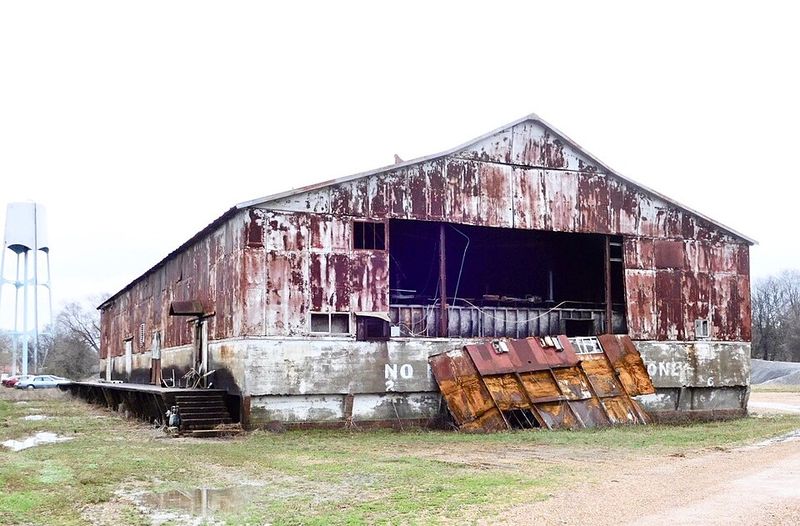
The levees around Rosedale tell a story of human determination in the face of nature’s power.
These massive earthen walls snake along the Mississippi River, holding back water that could easily reclaim the town.
Standing atop a levee offers a perspective that few outsiders experience, with the river on one side and the Delta flatlands stretching endlessly on the other.
The height and scale of these structures become clear only when you climb them.
Locals in Mississippi have a complicated relationship with the levees.
The barriers provide essential protection, making modern life possible in communities that would otherwise flood regularly.
Yet they also represent loss, as the natural flooding cycle that once enriched Delta soil has been interrupted.
Older residents remember when high water was both feared and expected, a seasonal rhythm that shaped agricultural practices and community life.
The Great Flood of 1927 remains the defining event in Rosedale’s flood history.
Water covered nearly everything, displacing thousands and destroying homes and businesses.
The disaster led to massive federal investment in flood control, including the levee system that now protects the town.
That history is not widely advertised, but it lives in family stories and old photographs preserved in living rooms and local archives.
Walking the levees provides a meditative experience, with long views and quiet interrupted only by wind and birdsong.
Few people use these paths for recreation, making them ideal for those seeking solitude.
The landscape visible from the levee top reveals the Delta’s unique geography, where human engineering and natural forces exist in constant negotiation.
Residents value the levees for their function rather than their scenic potential.
They do not promote them as tourist attractions or develop infrastructure to make them more accessible.
That restraint keeps the levees authentic, serving their original purpose without becoming something else.
For locals, protecting Rosedale means maintaining these barriers.
For visitors, exploring them offers rare insight into Delta life.
Fishing Culture and River Access

Fishing runs deep in Rosedale’s cultural DNA, connecting residents to the Mississippi River and its tributaries in ways that outsiders rarely understand.
This is not sport fishing with expensive gear and guided tours.
Instead, it is a practical activity that provides food, recreation, and a reason to spend time on the water.
Locals know the best spots, the seasonal patterns, and the techniques passed down through generations.
The river offers catfish, bass, and other species that thrive in these muddy waters.
Fishing here requires patience and knowledge rather than fancy equipment.
People fish from the banks, from small boats, and from spots accessible only to those who know the landscape.
These locations are not marked on maps or advertised online.
They exist in the collective memory of the community, shared through friendships and family connections.
For many residents in Mississippi, fishing represents more than a hobby.
It offers a connection to nature and a break from the demands of daily life.
Sitting on the riverbank with a line in the water creates space for reflection and conversation.
Fathers teach sons and daughters not just how to fish but how to read the water, understand weather patterns, and respect the river’s power.
These lessons extend beyond fishing, shaping how people relate to their environment.
The fishing culture in Rosedale remains largely invisible to visitors.
There are no charter services or fishing lodges marketing to tourists.
The infrastructure that exists serves locals rather than outsiders.
Boat ramps are functional rather than scenic, and access points lack the amenities that modern tourists expect.
This lack of development preserves the experience for those who value it most.
Locals prefer keeping their fishing spots quiet.
They have seen what happens when a good location becomes public knowledge, with crowds and trash ruining what was once pristine.
Protecting these places means being selective about what information gets shared and with whom.
Fishing in Rosedale offers a window into Delta life that cannot be purchased or packaged.
It requires invitation, trust, and respect.
Why Locals Want to Keep It Quiet
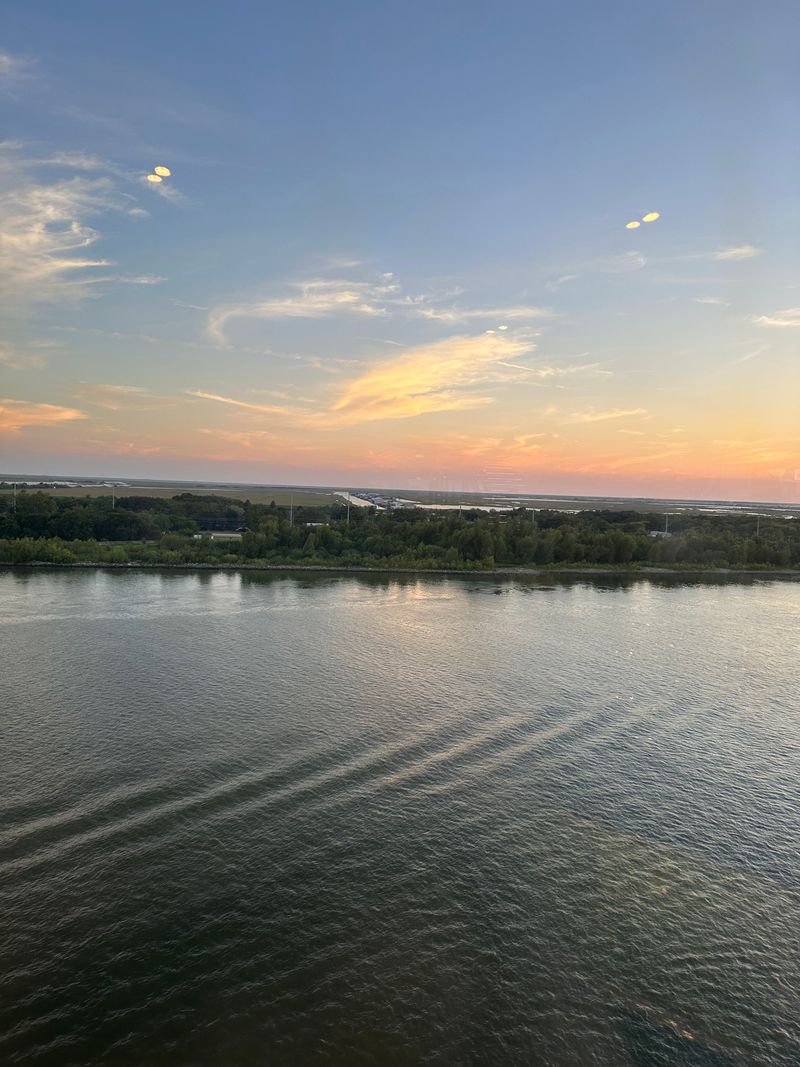
Residents of Rosedale have watched tourism transform other Mississippi Delta towns, and they are not convinced the changes have been positive.
They see how commercialization can strip away authenticity, replacing genuine culture with performances designed for visitors.
They worry about rising property values that could price out longtime residents and businesses that cater to tourists rather than local needs.
Most of all, they value the quiet dignity of their community and fear losing it to the demands of outsiders seeking experiences to consume and photograph.
The desire to remain undiscovered is not about unfriendliness or hostility toward visitors.
Rather, it reflects a deep understanding of what makes Rosedale special.
The town’s authenticity depends on its continued function as a real community where people live and work rather than a destination designed for tourism.
Locals have seen how places lose their character once they become popular, as infrastructure changes to accommodate visitors and local culture becomes secondary to tourist expectations.
Keeping Rosedale quiet also protects vulnerable aspects of community life.
Small businesses operate on thin margins and might not survive the disruption that comes with tourism development.
Social networks that provide essential support could be strained by an influx of newcomers who do not understand local customs.
The slow pace of life that residents treasure would likely accelerate under pressure to serve tourist demands.
These concerns are practical rather than paranoid, based on observation of what has happened elsewhere.
For people in Mississippi communities like Rosedale, maintaining their way of life requires some level of invisibility.
They understand that in the modern world, being discovered often means being changed.
Social media has made it nearly impossible to keep any place truly secret, but Rosedale benefits from its lack of obvious attractions.
There are no major landmarks, no famous restaurants, no scenic overlooks with convenient parking.
The town rewards those who take time to look closely, but it does not announce itself to casual passers-by.
That quality is worth preserving.
Visitors who respect Rosedale’s desire for quiet will find a warm reception.
Those who seek to exploit or change it will likely find themselves unwelcome.
The town exists for its residents first, and that priority is not negotiable.
Dear Reader: This page may contain affiliate links which may earn a commission if you click through and make a purchase. Our independent journalism is not influenced by any advertiser or commercial initiative unless it is clearly marked as sponsored content. As travel products change, please be sure to reconfirm all details and stay up to date with current events to ensure a safe and successful trip.
